| States banning credit scores for auto insurance | 5 (CA, HI, MA, MI, WA) (As of 2024; Washington's ban effective 2025) |
| States banning gender as a rating factor | 7 states (Including CA, HI, MA, MI, MT, NC, and PA (personal auto)) |
| States with prior approval rate filing requirements | Approximately 35 states (NAIC State Filing Requirements Survey, 2023) |
| Year California's Proposition 103 passed | 1988 (California Proposition 103, voter-approved) |
| Premium swing from credit score (permissive states) | 50%–100%+ (Consumer Federation of America research; varies by insurer and state) |
| States with explicit life-event credit exceptions | At least 4 (OR, MD, MN, NH) (State insurance department regulations; check your state DOI) |
| Year Massachusetts banned gender rating | 1978 (One of the earliest gender rating bans in the US) |
| Michigan's major reform law | 2019 (Michigan Public Act 21 of 2019) |
Why Rating Factor Restrictions Exist
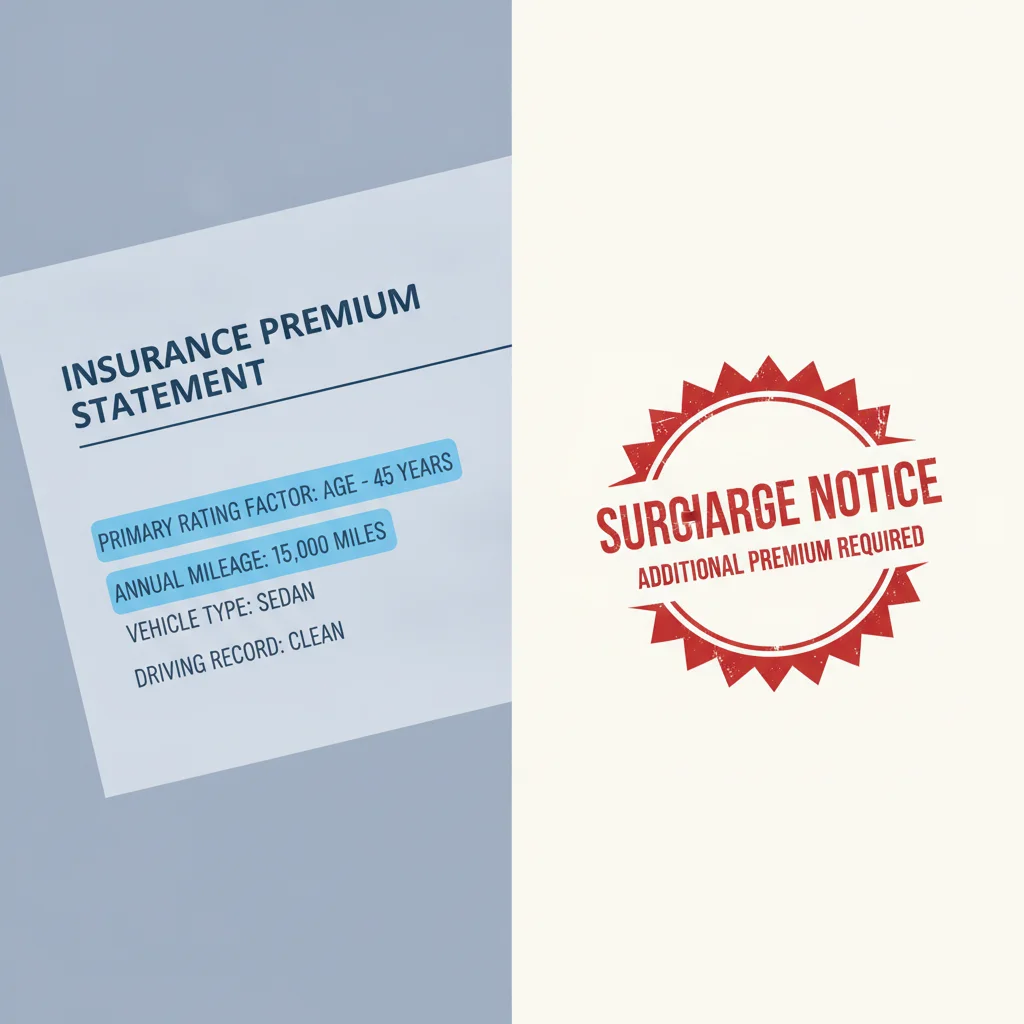
Auto insurance premiums are not random numbers. Insurers build them from a collection of variables — called rating factors — that actuaries use to predict the likelihood and cost of a future claim. Age, driving record, vehicle type, and annual mileage are among the least controversial inputs. But over the past four decades, states have increasingly scrutinized a second category of factors: socioeconomic and demographic proxies like credit scores, ZIP codes, gender, and occupation.
The regulatory debate is fundamentally about predictive value versus fairness. Insurers argue that credit-based insurance scores, for example, are statistically correlated with claim frequency — and that using them allows companies to price more accurately and reward low-risk customers. Consumer advocates counter that many of these factors correlate as strongly with race and income as they do with driving behavior, effectively penalizing people for circumstances outside their control.
Understanding the difference between rating factors and surcharges is a useful starting point — both affect your premium, but state regulators treat them under different legal frameworks. What matters here is the rating factor side: the baseline inputs used to generate your initial quote before any violation history is considered.
The result of this ongoing policy tension is a patchwork of state laws. In some states, insurers have wide latitude. In others, certain data points are entirely off-limits. Knowing which category your state falls into tells you a great deal about why your premium looks the way it does.

The Core Factors — and Which Ones States Restrict
Before mapping restrictions by state, it helps to catalog the major categories of rating factors that are either widely used or frequently contested:
| States banning credit scores for auto insurance | 5 (CA, HI, MA, MI, WA) (As of 2024; Washington's ban effective 2025) |
| States banning gender as a rating factor | 7 states (Including CA, HI, MA, MI, MT, NC, and PA (personal auto)) |
| States with prior approval rate filing requirements | Approximately 35 states (NAIC State Filing Requirements Survey, 2023) |
| Year California's Proposition 103 passed | 1988 (California Proposition 103, voter-approved) |
| Premium swing from credit score (permissive states) | 50%–100%+ (Consumer Federation of America research; varies by insurer and state) |
| States with explicit life-event credit exceptions | At least 4 (OR, MD, MN, NH) (State insurance department regulations; check your state DOI) |
| Year Massachusetts banned gender rating | 1978 (One of the earliest gender rating bans in the US) |
| Michigan's major reform law | 2019 (Michigan Public Act 21 of 2019) |
Driving record and claims history are universally permitted and rarely contested — nearly every state allows insurers to use at-fault accidents and moving violations to adjust premiums. The more controversial terrain involves:
- Credit-based insurance scores — Used by most insurers in states that allow it, these scores are distinct from your FICO score but derived from similar data.
- Gender — Young male drivers statistically file more claims, but several states have concluded that gender is an impermissible basis for pricing.
- ZIP code or territory — Insurers use geographic rating territories to account for local claim costs, theft rates, and traffic density. Critics call this redlining by another name.
- Occupation and education — Some insurers offer discounts to certain professions or degree holders, which has prompted regulatory pushback in states concerned about disparate impact.
- Homeownership status — A proxy for financial stability that some states have restricted.
- Marital status — Married drivers are statistically lower risk, but some states limit how much this can affect rates.
Some of these factors are within your control — and knowing which ones your state permits can help you identify exactly where your leverage lies.
Rating factor
A variable used by an insurer to calculate the base premium for a policy. Common examples include age, driving record, annual mileage, and vehicle type. States may permit, restrict, or ban specific rating factors.
Credit-based insurance score
A proprietary score derived from credit report data — including payment history, utilization, and account age — that insurers use to predict claim likelihood. It is distinct from a FICO or lending credit score, though it draws on overlapping inputs.
Actuarial justification
Statistical evidence demonstrating that a rating factor is correlated with claim frequency or severity. Many states require insurers to file actuarial support when using non-standard rating inputs.
Territorial rating
The practice of grouping geographic areas (by ZIP code, county, or broader zone) and charging different base rates based on local loss experience, traffic density, and theft rates.
Telematics
Technology that monitors real-time driving behavior — speed, braking, time of day, and mileage — typically via a mobile app or OBD-II device. Insurers use telematics data to personalize pricing based on actual driving habits rather than demographic proxies.
Prior approval state
A state where insurers must submit rate filings to the insurance commissioner and receive approval before implementing new rates or rating factors. California and New York are examples.
Managed competition
A regulatory model in which the state sets certain pricing parameters or approved rating factors while allowing insurers to compete on price and service within those bounds. Massachusetts uses this approach.
Disparate impact
A legal and regulatory concept in which a neutral-seeming policy or factor produces disproportionately negative outcomes for a protected class — such as race or income group — even without discriminatory intent.
State-by-State Breakdown of Notable Restrictions
The following represents the most significant state-level restrictions currently in effect. This is not an exhaustive regulatory summary for every state — it focuses on jurisdictions with meaningful, documented limits on insurer rating practices.
5
States that ban credit-based insurance scoring for auto policies
California, Hawaii, Massachusetts, Michigan, and Washington currently prohibit or severely restrict the use of credit scores in auto insurance pricing.
50–100%+
Premium difference between poor and excellent credit scores
According to Consumer Federation of America research, credit-based insurance scores can shift premiums by more than 100% in states that permit their use.
7
States that ban gender as an auto insurance rating factor
As of 2024, seven states prohibit insurers from using gender to price personal auto insurance policies.
1988
Year California's Proposition 103 became law
California's voter-approved Proposition 103 created the most restrictive auto insurance rating environment in the country, mandating that driving record top the rating hierarchy.
2019
Year Michigan's sweeping auto insurance reform took effect
Michigan's 2019 reform law banned credit scores, gender, occupation, education, and homeownership status as rating factors — a broader sweep than any other state reform in recent years.
California
California is the most restrictive auto insurance state in the country. Proposition 103, passed by voters in 1988 and significantly reinforced since, requires that the three primary rating factors be: (1) driving safety record, (2) annual mileage driven, and (3) years of driving experience. Any additional factors must be approved by the Insurance Commissioner and demonstrated to be actuarially justified.
Credit scores are prohibited as a rating factor. So are gender, ZIP code used in isolation, and education level. The state also bans the use of occupation as a standalone factor, though group affiliation discounts have survived legal scrutiny in limited forms. California's system is designed to make driving behavior — not socioeconomic status — the dominant determinant of price.
Michigan
Michigan restructured its auto insurance system dramatically with the 2019 reform law. The state now prohibits insurers from using credit scores, educational attainment, occupation, homeownership status, marital status, gender, and ZIP code alone to determine premiums. The law was explicitly designed to reduce disparate pricing in urban markets, particularly Detroit, where rates had been among the highest in the country. Geographic rating is still permitted at a broader territorial level, but tight ZIP code differentiation was curtailed.
Massachusetts
Massachusetts has prohibited gender as a rating factor since 1978 — one of the earliest such bans in the country. The state also prohibits credit-based insurance scores. Auto insurance in Massachusetts is written under a managed competition framework where the state sets certain parameters, including which rating factors are permissible, and insurers compete within those bounds.
Hawaii
Hawaii prohibits the use of credit scores and age as rating factors for auto insurance. The age restriction is particularly notable — in most states, young drivers pay dramatically higher premiums due to their actuarial risk profile. Hawaii limits how much age can be used to differentiate pricing, reflecting a state policy judgment that age-based pricing is discriminatory.
Montana
Montana law prohibits the use of gender as a rating factor. The state also has restrictions on how occupation and education can be applied, though these are less categorical than California's or Michigan's rules.
North Carolina
North Carolina prohibits the use of gender as an auto insurance rating factor. The state uses a residual market mechanism (the NCRB) that adds additional structure to how rates are filed and approved.
Pennsylvania
Pennsylvania allows credit-based insurance scoring but has specific restrictions on how it can be applied to renewal policies. Insurers cannot solely rely on a credit score decline to non-renew a policy or substantially raise premiums at renewal without other supporting factors.
States With Partial or Procedural Restrictions
A number of additional states have not banned specific factors outright but impose significant procedural hurdles:
- Washington — Has banned credit scores for insurance rating purposes starting in 2025, following emergency rules adopted during the COVID-19 pandemic that were then made permanent.
- Oregon — Restricts the use of credit scores during policy renewals in cases where a consumer's credit has worsened due to documented extraordinary life events (divorce, medical bills, job loss).
- Maryland, Minnesota, and New Hampshire — Require insurers to provide credit-based exceptions or alternative rating paths for consumers who can demonstrate that adverse credit is due to qualifying life circumstances.
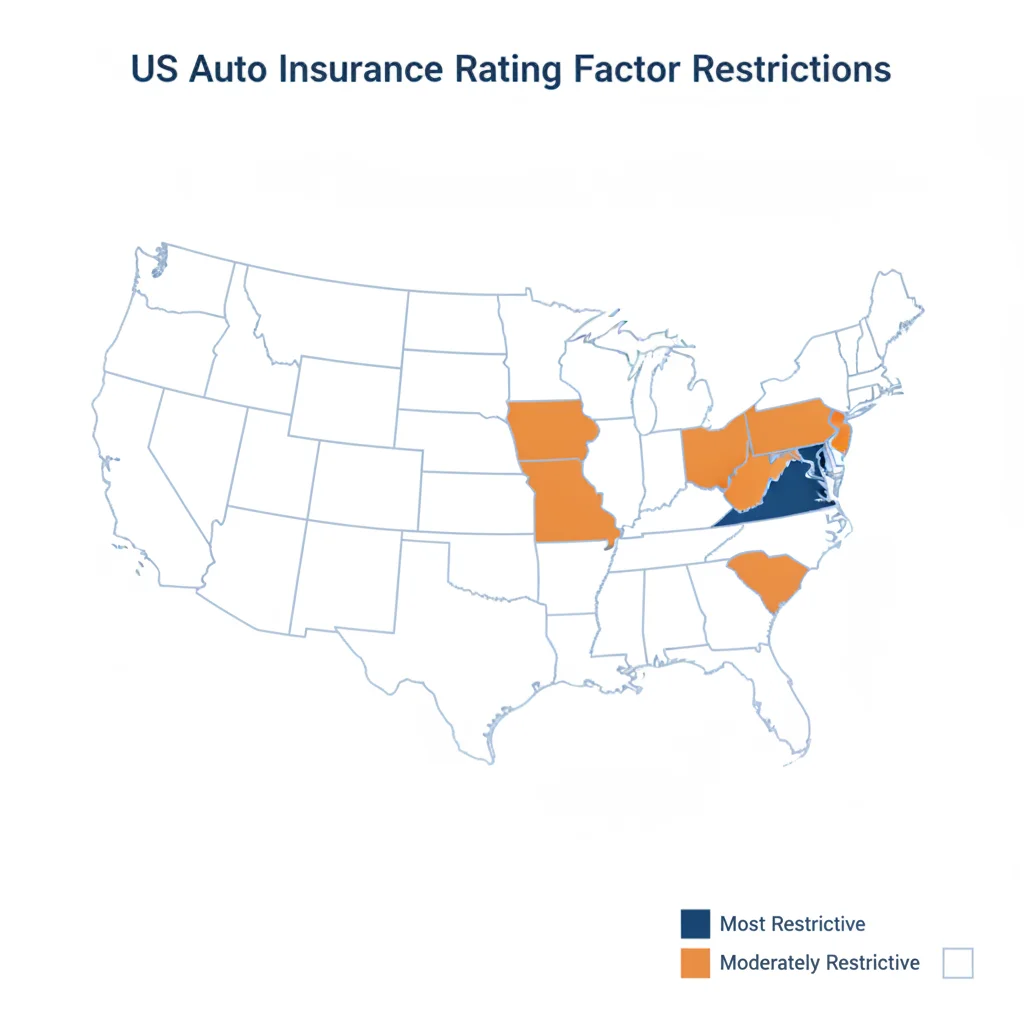
It's also worth noting that several states — including Florida, Texas, and New York — permit most rating factors but require detailed actuarial filings demonstrating the statistical justification for each factor used. This doesn't ban factors, but it creates a regulatory accountability layer that can slow or limit deployment of novel data inputs.
Credit Scores: The Factor With the Most State-Level Variation
No rating factor has generated more regulatory action than the credit-based insurance score. As of 2024, California, Hawaii, Massachusetts, Michigan, and Washington prohibit or severely restrict its use for auto insurance pricing. Every other state permits it to varying degrees, and in permissive states, it can be one of the most powerful inputs in your rate calculation.
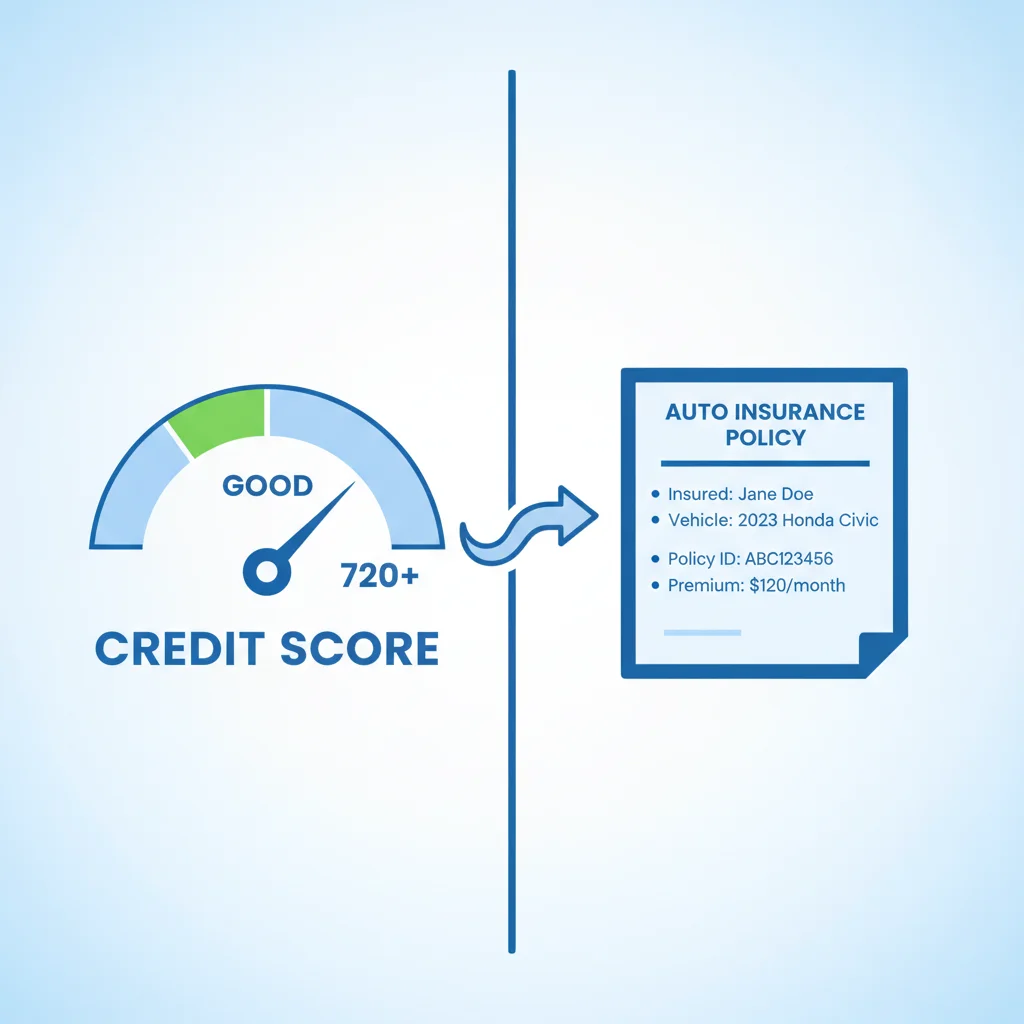
The mechanism behind credit-based insurance scoring is different from your lending credit score — it draws on overlapping data (payment history, utilization, length of credit history) but weights factors differently, and the output is a proprietary score used only for insurance pricing.
Credit Scores vs. Credit-Based Insurance Scores
The score insurers use is not your standard FICO score. Credit-based insurance scores are calculated by third-party vendors — primarily LexisNexis and Verisk — using credit file data weighted differently than lending scores. You will not find this score on a standard credit report pull, and improving your lending credit will generally improve your insurance score, but the two won't move in lockstep. Some insurers will disclose which vendor they use if you ask.
How to Request a Life-Event Credit Exception
If you live in a state that mandates exceptions (Oregon, Maryland, Minnesota, or New Hampshire), contact your insurer in writing before your renewal date and provide documentation of the qualifying event — medical bills, layoff notice, divorce decree. Each state defines qualifying events slightly differently, so check your state insurance department's website for the specific criteria. Insurers are generally required to respond to exception requests within a defined window.
Rules Change — Check Your State DOI
State insurance regulation is a moving target. Washington's credit score ban, for example, originated as an emergency COVID-era rule before becoming permanent. New state legislation, ballot initiatives, and commissioner orders can alter permissible rating factors without much national publicity. The most current and authoritative source is always your state's Department of Insurance website, where rate filings and regulatory bulletins are public record.
For drivers living in states that allow credit scoring, the practical implication is significant: the difference between a poor and an excellent credit-based insurance score can shift premiums by 50% to 100% or more, depending on the insurer and state. That's often a larger swing than the difference between a clean record and one at-fault accident.
In states that prohibit credit scores, the rating burden shifts more heavily to driving history, mileage, and vehicle characteristics. This can benefit consumers with poor credit and penalize those with excellent credit who might otherwise earn a substantial discount.
Gender Restrictions: Where They Stand and Why They're Contested
Seven states currently prohibit or substantially limit the use of gender as an auto insurance rating factor: California, Hawaii, Massachusetts, Michigan, Montana, North Carolina, and Pennsylvania (Pennsylvania's prohibition applies specifically to personal auto, with nuances for commercial).
The actuarial case for gender is straightforward: young male drivers, particularly ages 16–25, have significantly higher crash rates and claim costs than comparable female drivers. Insurers argue that not accounting for this difference forces low-risk female drivers to subsidize higher-risk male drivers.
The data behind gender-based rate disparities is relatively clear at the population level, but states that have banned the factor argue that gender is a protected class characteristic and that statistical correlation doesn't justify differential pricing when other factors — mileage, driving record, vehicle type — can capture much of the same predictive information.
In states where gender is banned, insurers typically compensate by placing greater weight on age brackets, vehicle use patterns, and telematics data where available.

A Note on Non-Binary and Transgender Drivers
An emerging regulatory question involves how insurers handle non-binary policyholders in states that do use gender as a factor. The National Association of Insurance Commissioners (NAIC) has been developing model guidelines, but implementation varies widely. In states that ban gender entirely, this becomes a non-issue for pricing purposes.
What This Means for Consumers — and How to Use This Information
Understanding your state's regulatory posture translates into practical action in several ways.
If You Live in a Restrictive State
In states like California, Michigan, or Massachusetts, your insurer cannot use credit scores, gender, or several other demographic variables. This shifts negotiating leverage toward factors you can influence: your actual driving record, annual mileage, the vehicle you choose, and how you structure your coverage. In these states, telematics programs — which monitor real-time driving behavior — have become particularly popular because they give insurers an alternative window into risk that regulators find less objectionable than socioeconomic proxies.
If You Live in a Permissive State
In states with few restrictions, your credit-based insurance score may be doing significant heavy lifting in your rate calculation. Improving your credit — paying down balances, correcting errors on your credit report — can have a measurable impact on your insurance premium, often without requiring any change to your coverage or vehicle. Your credit score also affects the loan rates you'll be offered, so improving it creates a double benefit if you're financing a vehicle.
When Moving Between States
If you're relocating, check whether your destination state has different rating factor rules. Moving from California to Texas, for example, means you'll enter a market where your credit-based insurance score suddenly matters — potentially dramatically. Conversely, moving from a permissive state to California means that score drops out of the equation entirely. State-specific rules affect more than just insurance — taxes, title timelines, and platform availability also shift when you cross state lines.
Requesting an Exception or Alternative Rating
In states that mandate exception processes (Oregon, Maryland, Minnesota, New Hampshire), if you've experienced a documented life event that damaged your credit — job loss, medical emergency, divorce — you have the legal right to ask your insurer to rate you without credit data for that renewal period. This is an underused protection that can result in meaningful savings during financially difficult years.
Credit Scores vs. Credit-Based Insurance Scores
The score insurers use is not your standard FICO score. Credit-based insurance scores are calculated by third-party vendors — primarily LexisNexis and Verisk — using credit file data weighted differently than lending scores. You will not find this score on a standard credit report pull, and improving your lending credit will generally improve your insurance score, but the two won't move in lockstep. Some insurers will disclose which vendor they use if you ask.
How to Request a Life-Event Credit Exception
If you live in a state that mandates exceptions (Oregon, Maryland, Minnesota, or New Hampshire), contact your insurer in writing before your renewal date and provide documentation of the qualifying event — medical bills, layoff notice, divorce decree. Each state defines qualifying events slightly differently, so check your state insurance department's website for the specific criteria. Insurers are generally required to respond to exception requests within a defined window.
Rules Change — Check Your State DOI
State insurance regulation is a moving target. Washington's credit score ban, for example, originated as an emergency COVID-era rule before becoming permanent. New state legislation, ballot initiatives, and commissioner orders can alter permissible rating factors without much national publicity. The most current and authoritative source is always your state's Department of Insurance website, where rate filings and regulatory bulletins are public record.
NAIC State Insurance Regulation Map
The National Association of Insurance Commissioners maintains a state-by-state regulatory resource center that tracks filing requirements, rating factor rules, and commissioner contact information. A reliable first stop for current regulatory status in any state.
Consumer Federation of America — Insurance Resources
The CFA has published extensively on credit-based insurance scoring, territorial rating, and disparate impact in auto insurance pricing. Their research is frequently cited in state regulatory proceedings and provides useful consumer-facing summaries.
Your State Department of Insurance
Every state's DOI maintains a consumer complaint portal, insurer rate filing database, and explanation of your rights as a policyholder. This is the authoritative source for what is and isn't permitted in your specific state.
Annual Mileage and Telematics Savings Calculator
If you drive fewer miles than average or want to understand the potential savings from a telematics program, a mileage-based rate estimator can show how behavioral factors — rather than demographic ones — might work in your favor regardless of your state's rules.
Finally, regardless of your state's rules, shopping multiple insurers remains the single highest-leverage action available to most policyholders. Because each company weights its approved rating factors differently — even within the same state — identical drivers can receive quotes that differ by hundreds of dollars annually from different carriers.

All claims are backed by peer-reviewed research. Sources on request.