Key Takeaways
Option A
Credit-Based Insurance Score
The risk predictor built specifically for underwriting insurance policies.
Best for: Insurers pricing auto and home policies based on predicted claims likelihood rather than repayment behavior.
Option B
Lending Credit Score (FICO)
The repayment predictor used by lenders to evaluate loan and credit applications.
Best for: Banks, credit unions, and auto lenders evaluating the probability that a borrower will repay a loan on time.
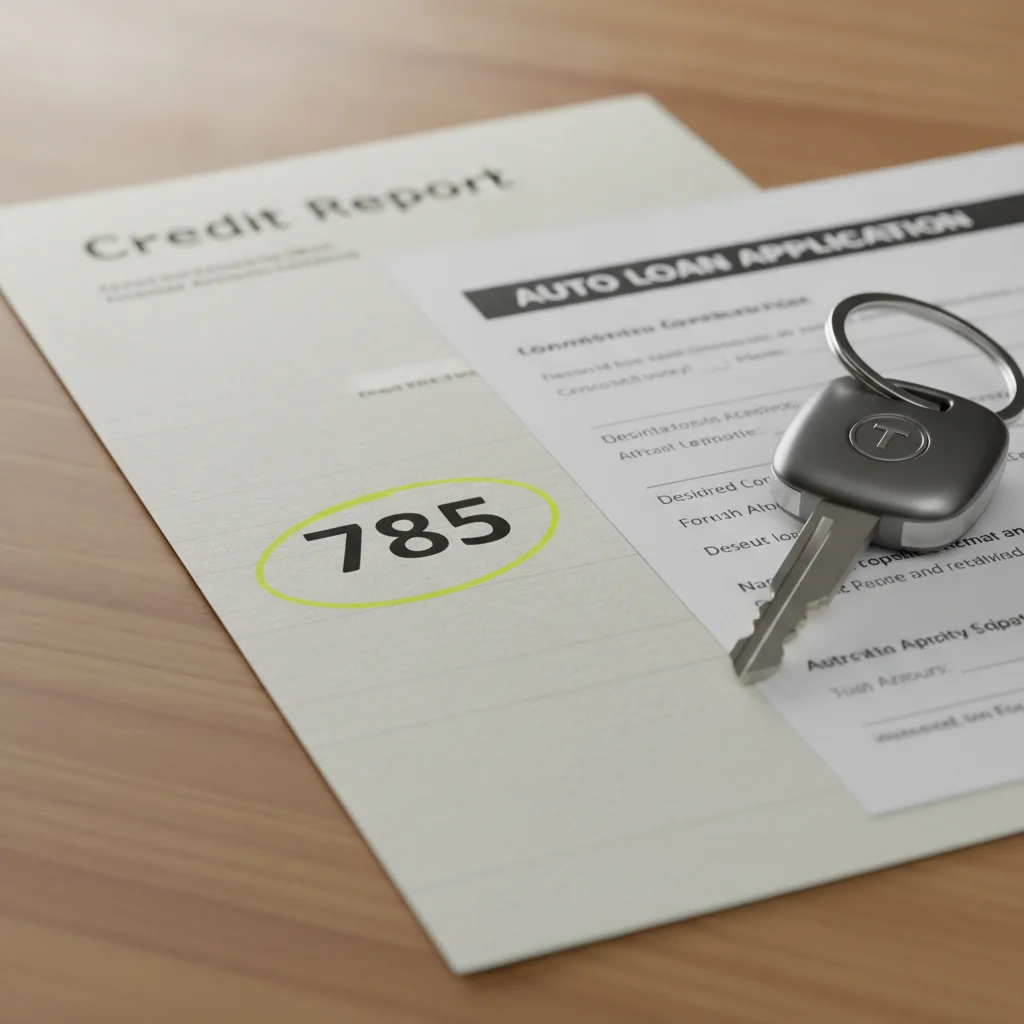
If you're shopping for an auto loan and want to know what lenders see
Lending Credit Score (FICO)
Auto lenders almost universally rely on FICO scores — often a specialized FICO Auto Score — to determine your rate and loan terms. Understanding your FICO score is the most direct lever you have before applying.
If you're comparing car insurance quotes and want to understand premium differences
Credit-Based Insurance Score
Insurers use insurance-specific scores that weight your credit data differently. Knowing what factors drive insurance scores — like payment history and account age — helps you interpret quote variations across carriers.
If you want a single credit improvement effort to benefit both scores
Credit-Based Insurance Score
Because insurance scores are highly sensitive to missed payments and high utilization — the same factors that drag down FICO scores — cleaning up those habits yields the broadest dual benefit.
If you live in California, Hawaii, or Massachusetts and are shopping for auto insurance
Lending Credit Score (FICO)
These states prohibit insurers from using credit-based scores in auto policy pricing, so your credit history is irrelevant to your premium. Focus your credit improvement energy on your FICO score for loan purposes instead.
Two Scores, One Credit Report
Walk into a car dealership and apply for financing, and a lender will pull your credit score. Call your insurer to add a vehicle to your policy, and they may pull something that sounds almost identical — a credit-based insurance score. Both numbers trace back to the same underlying credit report from Equifax, Experian, or TransUnion. But the similarity largely ends there.
The distinction matters because millions of Americans assume that a high FICO score automatically signals to an insurer that they're a low-risk customer. That assumption is partially correct but routinely oversimplified. The variables each model emphasizes, the scale each score uses, and the outcomes each score predicts are meaningfully different — and understanding those differences can help you make smarter decisions whether you're financing a vehicle or shopping for coverage.
Think of it this way: your credit report is the raw dataset. The lending score and the insurance score are two different algorithms running on that same dataset, each optimized to answer a completely different question.

What Each Score Is Designed to Predict
This is the foundational difference, and it shapes everything else.
A lending credit score — most commonly a FICO score — is calibrated to predict the probability that a borrower will become 90 or more days delinquent on a credit obligation within the next 24 months. It answers the question: Will this person pay back what they borrow? Lenders use it to decide whether to approve a loan and at what interest rate. As explained in our guide on what your credit score actually means to a car lender, the number directly translates into the APR you're offered — a difference of 50 points can cost or save thousands of dollars over the life of an auto loan.
A credit-based insurance score, by contrast, is calibrated to predict the likelihood that a policyholder will file a claim — and the expected cost of that claim — during a policy period. It answers the question: Will this person generate insurance losses? Insurers use it not to approve or deny coverage in most cases, but to set the price of that coverage. Research from the Federal Trade Commission and various actuarial bodies has consistently found that credit-based insurance scores are statistically correlated with claims frequency and severity, which is why regulators in most states permit their use.
| Criterion | Credit-Based Insurance Score | Lending Credit Score (FICO) |
|---|---|---|
| Primary purpose | Predict claims likelihood and cost | Predict loan repayment probability |
| Used by | Auto and home insurers | Banks, credit unions, auto lenders |
| Common score range | Varies by model (e.g., 150–950) | 300–850 |
| Consumer access | Generally not disclosed to consumers | Freely accessible via banks and apps |
| Weight on inquiries | Low — often excluded | Moderate — temporary score impact |
| Weight on utilization | High — signals financial stress | High — signals default risk |
| State restrictions | Banned in CA, HI, MA for auto | No state prohibitions |
| Governing law | FCRA + state insurance regulations | FCRA + ECOA |
| Major scoring models | LexisNexis Attract, FICO Insurance Score | FICO Score 8, FICO Auto Score |
| Impact of rate shopping | None — no hard inquiries generated | Minimal if clustered within 45 days |
95%
U.S. auto insurers using credit data
According to the Federal Trade Commission, the vast majority of U.S. auto insurers incorporate credit-based insurance scores into their underwriting or pricing processes.
3
States banning auto insurance credit scoring
California, Hawaii, and Massachusetts currently prohibit insurers from using credit-based scores when pricing personal auto insurance policies.
~67 pts
Average FICO score gap between credit tiers
The difference between adjacent FICO lending tiers (e.g., subprime to near-prime) can translate to several percentage points of APR on an auto loan, per Experian's State of the Automotive Finance Market reports.
30%
Credit utilization threshold for score impact
Industry guidance from FICO and consumer credit research consistently identifies keeping revolving utilization below 30% as a key threshold for maintaining strong scores in both lending and insurance models.
How the Variables Are Weighted Differently
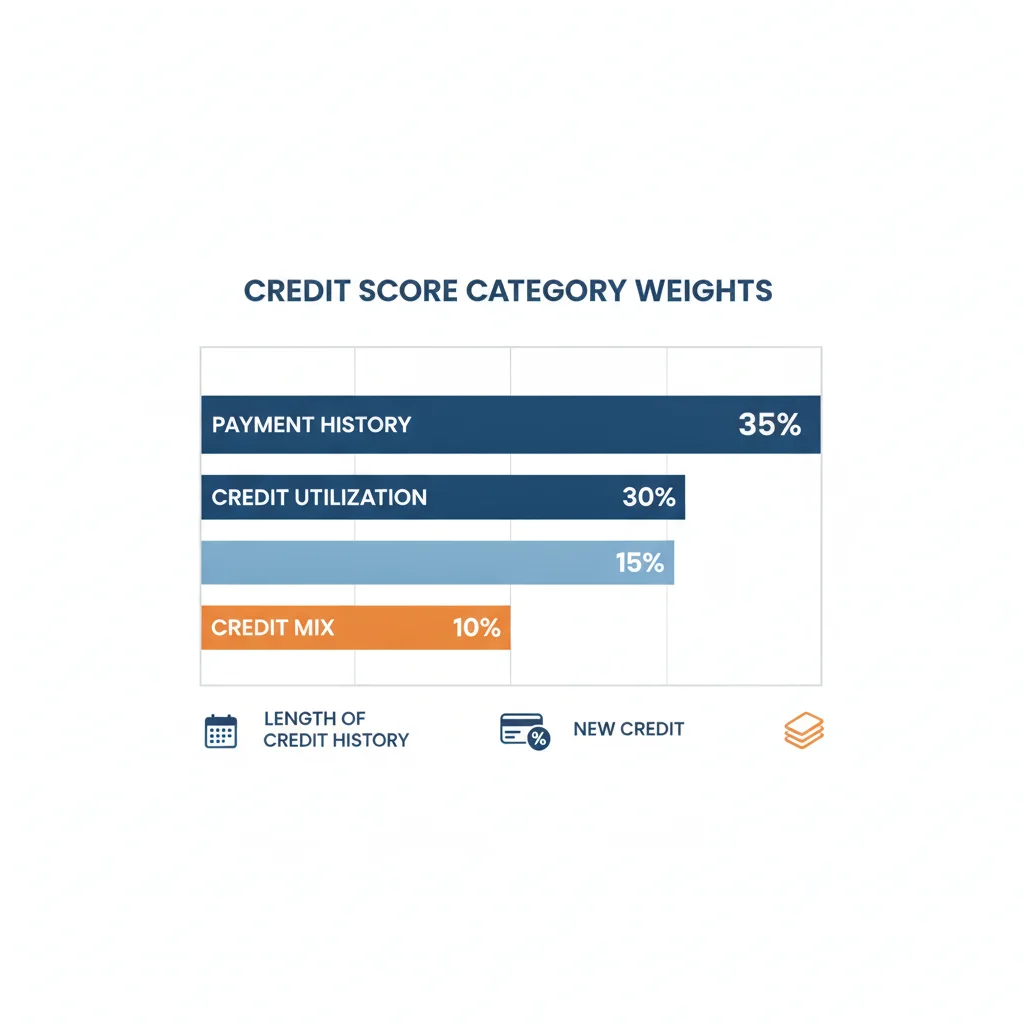
Both scores analyze the same categories of credit data — payment history, amounts owed, length of credit history, new credit inquiries, and credit mix — but they assign different weights to each category based on which behaviors best predict their respective outcomes.
Payment History
In the standard FICO Score 8 model, payment history accounts for roughly 35% of your score. In most credit-based insurance scoring models, payment history carries similar or even higher weight. A single 30-day late payment can damage both scores significantly, but insurance models tend to be especially sensitive to patterns of missed payments rather than isolated incidents.
Credit Utilization
For FICO lending scores, amounts owed — primarily measured as credit utilization on revolving accounts — represents about 30% of the calculation. Insurance scoring models also examine utilization, but the relationship is less linear. Where a lender sees high utilization as a default risk signal, an insurer interprets it as a proxy for financial stress, which research associates with distracted driving and deferred vehicle maintenance.
Length of Credit History
Lending scores reward longer credit histories because they provide more data points on repayment behavior. Insurance scores similarly favor established credit histories, but the emphasis on account age can differ across proprietary models.
New Credit Inquiries
Hard inquiries for new credit — such as applying for an auto loan — can temporarily reduce a FICO score. Insurance scores typically treat inquiries differently: most insurance score models either discount new credit inquiries or exclude them entirely, since opening new accounts is considered less predictive of claims behavior than repayment patterns. This is one area where a borrower's insurance score can diverge noticeably from their lending score.
Credit Mix
FICO models reward having a diverse mix of credit types (installment loans, revolving credit, etc.). Insurance scoring models generally give this factor less weight, focusing instead on the overall pattern of financial management.
The practical consequence of these weighting differences: a consumer who recently opened several new credit accounts might see a modest dip in their FICO score from the hard inquiries, while their insurance score remains relatively stable. Conversely, someone who carries high utilization across multiple cards but has never missed a payment may have a better lending score than their insurance score suggests — because the financial stress signal embedded in high utilization registers more acutely in the insurance model.
For a deeper look at how lending-specific score variations work, our piece on the auto-specific FICO score explains why even among lending scores, the number an auto lender sees may differ from the general FICO you check on a consumer site.
Insurance Inquiries Don't Hurt Your Credit Score
When an insurer pulls your credit data to generate an insurance score, it is classified as a soft inquiry — not a hard inquiry. Soft inquiries are invisible to other creditors and have zero effect on your FICO lending score. This means you can shop multiple insurance quotes without any concern about credit score impact, unlike auto loan rate shopping where each application typically triggers a hard inquiry.
Your Insurance Score Can Be Rechecked Over Time
Many insurers re-run credit-based insurance scores at policy renewal — typically every 6 or 12 months. This means that improving your credit habits can eventually work in your favor at renewal time even if your current-term premium was set based on an older, weaker score. Some states also allow consumers to request a credit rescore if their credit profile has improved significantly since the policy was written.
Score Ranges, Access, and Transparency
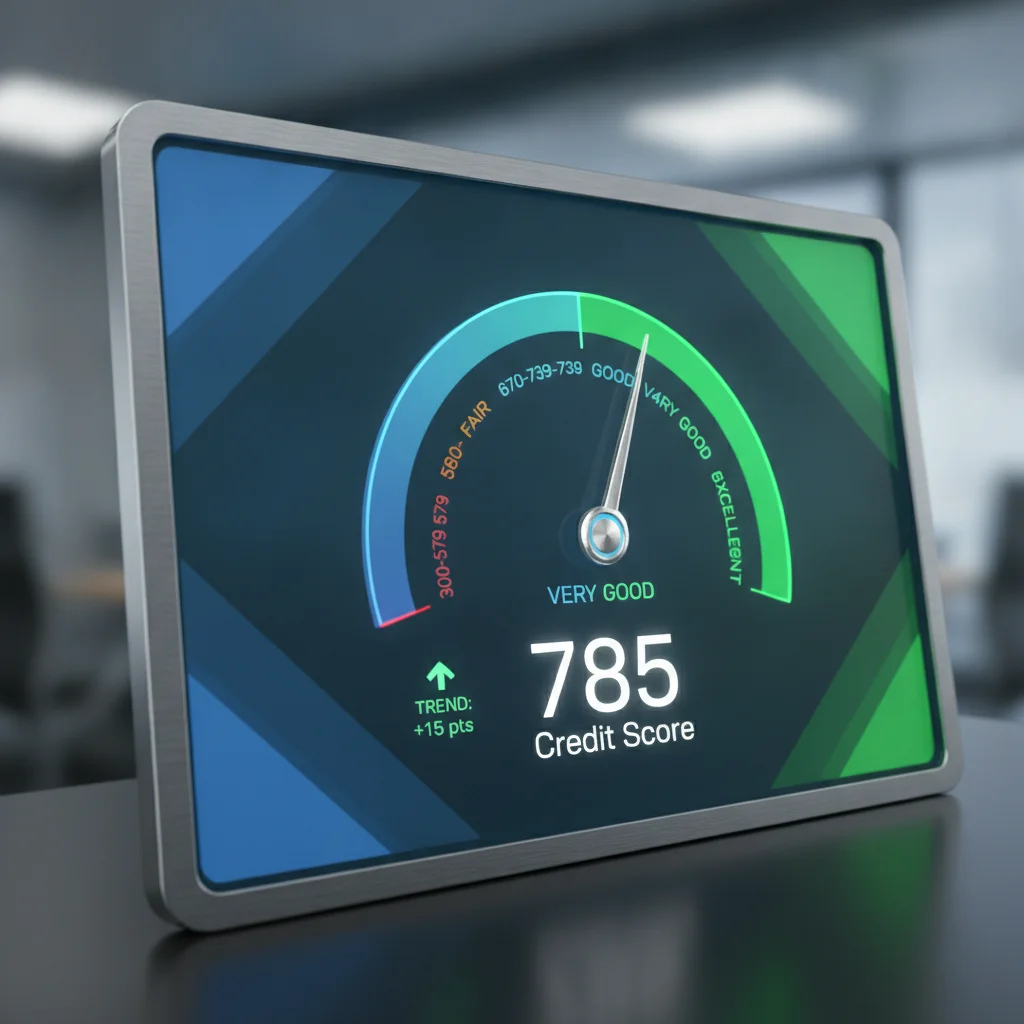
Standard FICO lending scores range from 300 to 850. Most consumers know their general tier — prime, near-prime, subprime — and can access their FICO score for free through many banks, credit card issuers, and services like AnnualCreditReport.com. The credit score ranges lenders use are fairly standardized: super prime typically starts above 720, prime from roughly 660 to 719, and subprime below 620.
Credit-based insurance scores are less transparent. The two dominant models are the LexisNexis Attract Score and the FICO Insurance Score, but several major insurers also use proprietary in-house models. Scale ranges vary by model — some run 150 to 950, others use entirely different numeric ranges. More importantly, insurers in most states are not required to disclose your exact insurance score number, though they are typically required to notify you if adverse action was taken based on credit information.
This asymmetry in access creates a knowledge gap. You can pull your FICO score, monitor it, and take specific steps to improve it before applying for a loan. You generally cannot see your insurance score with the same precision, which makes the underlying credit behaviors — the inputs both scores share — the most actionable lever you have. Our article on the relationship between credit score and car insurance premiums breaks down how insurers actually use this data to adjust your premium line by line.
Legal Landscape: Where Insurance Scoring Is Restricted
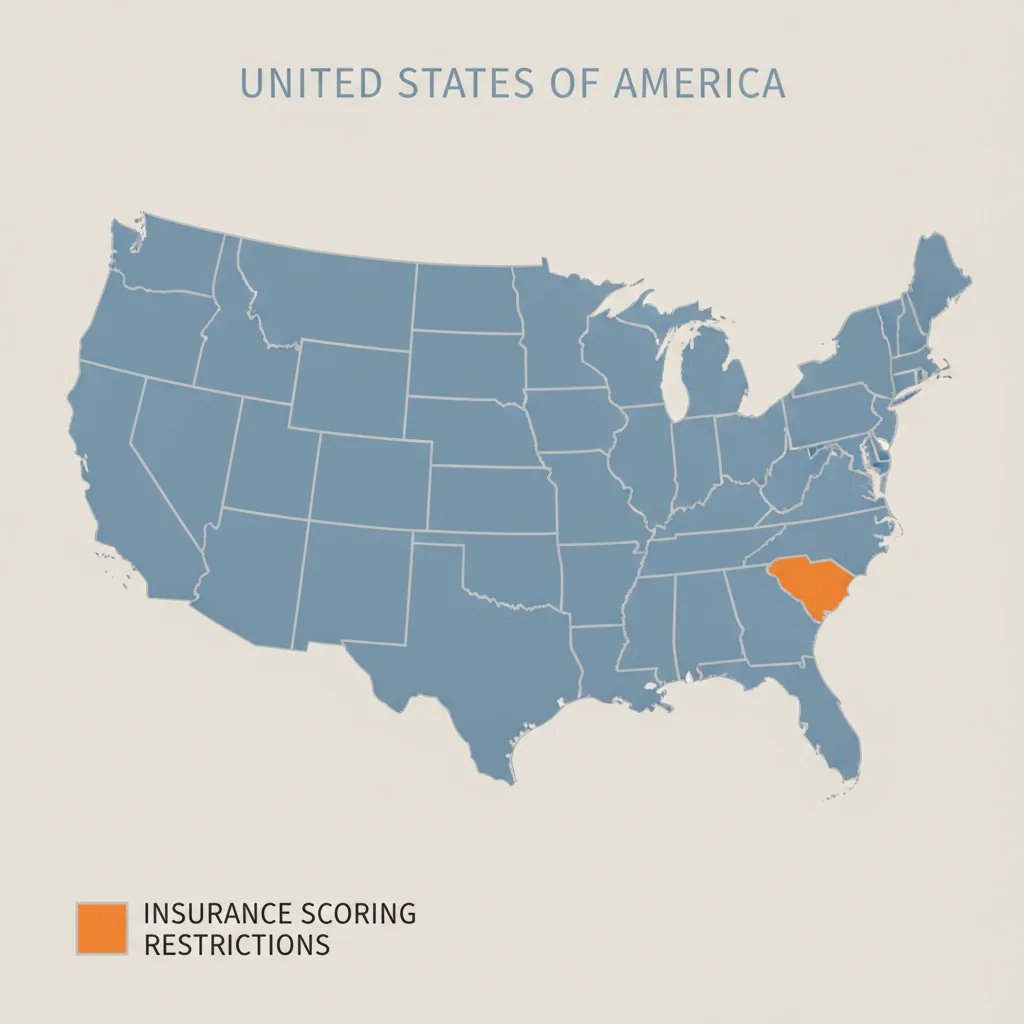
The regulatory environment around credit-based insurance scoring is more contentious than the rules governing lending scores. Three states currently prohibit auto insurers from using credit-based scores in policy pricing:
- California — banned since Proposition 103 in 1988, which predates modern insurance scoring models
- Hawaii — prohibits credit scoring for auto insurance
- Massachusetts — prohibits credit scoring for auto insurance
Several other states — including Michigan, Maryland, and Oregon — have enacted partial restrictions or specific consumer protections around how insurance scores can be used, particularly prohibiting their use as the sole basis for non-renewal or cancellation.
For lending credit scores, no comparable state-level prohibitions exist on using credit data. The Equal Credit Opportunity Act (ECOA) and Fair Credit Reporting Act (FCRA) govern how lenders use credit information, but the use of credit scores in lending decisions is universally permitted across all 50 states.
If you live in California, Hawaii, or Massachusetts, your credit history is legally irrelevant to your auto insurance premium. Your insurer must price your policy based on driving record, vehicle type, and other approved factors. This makes comparing insurance quotes in those states a fundamentally different exercise than in most of the country — see our guide to comparing auto insurance policies for a state-aware approach to quote shopping.
It's also worth understanding that credit-based scoring is distinct from other pricing adjustments. Rating factors and surcharges are separate mechanisms insurers use — our explainer on the difference between a rating factor and a surcharge clarifies how those elements interact with your base premium separately from your insurance score.
Improving Both Scores: What Actually Moves the Needle
Because both scores draw from the same credit report, the core habits that strengthen one tend to benefit the other. But the specific priorities differ enough that it's worth being deliberate.
For your lending credit score (FICO), prioritize:
- Payment history above everything else. No single action improves a FICO score faster than eliminating late payments. Set up autopay for at least the minimum on every account.
- Reducing credit utilization below 30% — ideally below 10% if you're preparing for a major loan application. Paying down revolving balances is the fastest lever available for most consumers.
- Avoiding new hard inquiries in the 6–12 months before applying for an auto loan. Each inquiry creates a small, temporary drag.
For your credit-based insurance score, prioritize:
- Consistent on-time payment history across all accounts. Insurance models are particularly sensitive to patterns of delinquency.
- Reducing overall debt load and utilization, because high balances signal financial stress to insurance underwriters.
- Maintaining old accounts in good standing rather than closing them, which preserves average account age.
The overlap is significant. A consumer who pays every bill on time, keeps balances low relative to limits, and avoids opening unnecessary new accounts is doing the most important work for both scores simultaneously. The differences are at the margin — for instance, rate shopping for an auto loan within a 45-day window clusters multiple hard inquiries as one event in FICO's scoring model, protecting your lending score. That same window is largely irrelevant to your insurance score since insurance applications don't generate hard inquiries at all.
For a broader look at how the FICO score compares to VantageScore — another lending model some lenders use — that separate comparison is worth reviewing if you're preparing a loan application and want to understand which number your specific lender is likely to see.

The bottom line is that credit-based insurance scores and lending credit scores are tools built for distinct industries with distinct risk questions. Treating them as interchangeable — or assuming one strong score guarantees the other — is the kind of oversimplification that can lead to unpleasant surprises at the insurance quote stage or the loan application desk. Understanding the mechanics of each puts you in a position to manage both proactively.

All claims are backed by peer-reviewed research. Sources on request.