Key Takeaways
Comprehensive Coverage & Theft Risk
Comprehensive auto insurance covers your vehicle against non-collision losses — including theft, vandalism, weather damage, and animal strikes. When your car model appears frequently on national stolen vehicle lists, insurers treat it as a statistically higher-risk asset and price your comprehensive premium accordingly. This means two drivers with identical records and zip codes can pay different rates simply because one drives a car thieves prefer.
Insurers apply actuarial loss data — including theft frequency and average claim payouts by make, model, and year — when setting comprehensive rates. This is separate from your driving record and applies even if you've never filed a claim.
Why Your Car Model Is an Insurance Variable
When an insurer prices your comprehensive premium, they're not just evaluating you as a driver — they're evaluating your car as an asset. Every make, model, and year carries its own actuarial fingerprint, built from years of claims data that tells underwriters exactly how often a given vehicle gets stolen, how much it costs to replace, and how likely a claim is in any given policy period.
This is why two drivers with clean records, the same deductible, and houses on the same block can pay meaningfully different comprehensive rates. If one is driving a vehicle that thieves target disproportionately, that driver's insurer is pricing in a documented statistical risk — not a hunch.
The source data feeding those actuarial models comes primarily from the National Insurance Crime Bureau (NICB) and law enforcement reporting compiled by the FBI's Uniform Crime Reporting program. Each year, the NICB releases its Hot Wheels report ranking the most stolen vehicles in the country. Insurers don't just read that report — they've already been building it into their rate filings.

Understanding this connection matters practically: if you're shopping for a car and two models are otherwise equivalent, the one that ranks higher on the stolen vehicle list will likely cost more to insure comprehensively. That cost difference can persist for years. See how theft fits into the broader pricing picture in our guide to how insurers calculate collision and comprehensive premiums.
The Most Stolen Cars in America Right Now
Theft trends shift over time, but certain vehicles have maintained stubborn positions on the hot list for decades. Others have surged recently for reasons that have less to do with desirability and more to do with exploitable vulnerabilities.
1,020,729
Motor vehicles stolen in the U.S. in 2023
According to FBI crime statistics, U.S. vehicle theft topped one million for the first time in nearly two decades in 2023.
#1
Ford F-Series rank on NICB stolen vehicle list
The Ford F-Series has ranked as the most stolen vehicle by total count in NICB's annual Hot Wheels report for multiple consecutive years.
741%
Increase in Hyundai thefts in some U.S. cities
Cities including St. Louis and Milwaukee reported theft increases of over 700% for certain Hyundai and Kia models following the viral USB-exploit trend (Insurance Information Institute, 2023).
$13,000+
Average comprehensive theft claim payout
The Insurance Research Council estimates the average auto theft claim exceeds $13,000 when factoring in vehicle value and associated costs.
5–25%
Potential comprehensive discount for anti-theft devices
Discount ranges vary by insurer and device type, but GPS tracking systems and factory immobilizers consistently produce the largest savings on comprehensive premiums.
Full-Size Pickups Dominate by Volume
Year after year, the Ford F-Series ranks as the single most stolen vehicle in the United States by raw count. The Chevrolet Silverado and Ram pickups follow closely. Part of this is pure math — these are also the best-selling vehicles in the country, so larger fleet numbers mean more stolen units. But theft rate per-vehicle also matters, and full-size trucks score high on that metric too.
Thieves target trucks for multiple reasons: the resale market for truck parts is robust, catalytic converters on trucks are valuable, and older model years often lack modern immobilizer technology.
The Hyundai-Kia Surge
Perhaps no theft trend has been as dramatic — or as widely publicized — as the surge in Hyundai and Kia thefts that began gaining momentum around 2022. A specific vulnerability in certain model years (roughly 2011–2021) allowed vehicles without push-button ignitions to be started with a USB cable after the steering column was exposed. The method spread virally via social media, and theft rates for affected models spiked by several hundred percent in some cities.
Hyundai and Kia issued software patches and steering-wheel lock programs in response, and insurers took notice almost immediately — adjusting rates for affected models in high-theft markets.
Older Vehicles Stolen for Parts
A common misconception is that thieves prefer newer, more valuable cars. In practice, older high-volume vehicles — particularly the Honda Accord, Honda Civic, and Toyota Camry — consistently appear on the NICB list. These models are targeted not for resale as complete cars but because their parts are in high demand at salvage yards and through gray-market channels. A 1998 Honda Accord may not be worth much as a whole vehicle, but its engine components, transmission, and body panels have a ready market.
“Theft is one of the purest actuarial signals we have. Unlike accident frequency, which correlates with driver behavior, theft frequency correlates almost entirely with the vehicle itself — the model, the security technology on it, and where it's parked.”
— David Glawe, President and CEO, National Insurance Crime Bureau
For comprehensive purposes, the insurance industry treats both trends the same way: if your model generates frequent theft claims, rates reflect that frequency regardless of whether the thefts are chop-shop-driven or opportunity crimes.

How Theft Data Flows Into Your Comprehensive Rate
The mechanics of how actuarial theft data becomes your premium are worth understanding, because they reveal which factors you can influence — and which you can't.
The Loss Cost Model
Insurers use a concept called loss cost: the expected average payout per insured vehicle per year for a given coverage type. For comprehensive, loss cost combines two variables:
- Claim frequency — how often vehicles of your make, model, and year result in theft claims
- Claim severity — the average dollar amount paid out when a theft claim is filed
A vehicle with both high frequency and high severity (like a late-model luxury pickup in a major metro) will carry a substantially higher loss cost than a vehicle with low frequency and moderate severity.
Loss Cost vs. Your Personal Claims History
Comprehensive rates based on vehicle theft profiles are set at the model level, not the individual driver level. This means even if you've never filed a theft claim, you may pay a higher comprehensive rate simply because your vehicle model has a high industry-wide loss cost. Conversely, a clean claims history won't fully override a high-risk vehicle profile, though some insurers offer loyalty or claims-free discounts that partially offset the difference.
Actual Cash Value vs. Replacement Cost
Comprehensive pays actual cash value — the market value of your vehicle at the time of loss, accounting for depreciation. This is not the same as what you paid for the car or what it would cost to buy a comparable replacement today. Drivers who want replacement cost coverage should ask about new-car replacement or gap insurance, which are separate products.
Geographic Layering
National theft data establishes the baseline, but insurers then layer local data on top. Your zip code feeds into a geographic risk multiplier. If you're in a city where auto theft rates exceed the national average — as is true in metros like Denver, Albuquerque, and Memphis in recent years — your comprehensive rate reflects both the model-level risk and the location risk simultaneously.
This geographic adjustment is why identical vehicles can carry very different premiums in different states or even different neighborhoods within the same city. Our guide on what comprehensive insurance covers that collision never will explains how location-specific risks interact with each coverage type.
Model Year Matters More Than You Might Think
Insurers don't just look at make and model — they look at specific model years. A 2019 Kia Soul and a 2022 Kia Soul may carry different theft profiles because of manufacturing changes, software updates, or historical claims patterns. This granularity also means a theft-prone model can see its comprehensive rates improve over time as the older vulnerable years age off the road and newer ones incorporate better security.
Check Theft Rates Before You Buy
Before purchasing any vehicle, run the make, model, and year through the NICB's free VINCheck tool and cross-reference against the most recent Hot Wheels report. If the model ranks high, request a comprehensive-only quote from your insurer before signing anything. The premium difference between a high-theft and low-theft model in the same price class can be $200–$500 per year.
Tell Your Insurer About Every Security Feature
Don't assume your insurer has automatically applied an anti-theft discount. Proactively report factory immobilizers, aftermarket GPS trackers, and visible deterrents like steering-wheel locks when you buy the policy or add a vehicle. Some discounts require documentation or a VIN lookup to confirm factory-installed security systems — it's worth a five-minute phone call to verify you're getting credit.
Review Comprehensive Costs When Moving
If you're relocating to a different city or zip code, ask your insurer to re-quote your comprehensive premium before you finalize coverage. Moving from a low-theft suburb to an urban core — or vice versa — can shift your comprehensive rate materially. In high-theft metros, it may also be worth increasing your anti-theft measures before the move.
What You Can Do About It
Driving a high-theft vehicle doesn't mean you're locked into an outsized comprehensive premium with no recourse. Several strategies can meaningfully reduce your exposure — both financial and physical.
Anti-Theft Devices and Discounts
This is the most direct lever available to drivers. Insurers recognize both factory-installed and aftermarket anti-theft systems when setting rates, though the discount structure varies by company. Common qualifying devices include:
- Factory-installed electronic immobilizers
- GPS vehicle tracking systems (like LoJack or aftermarket equivalents)
- Audible alarm systems
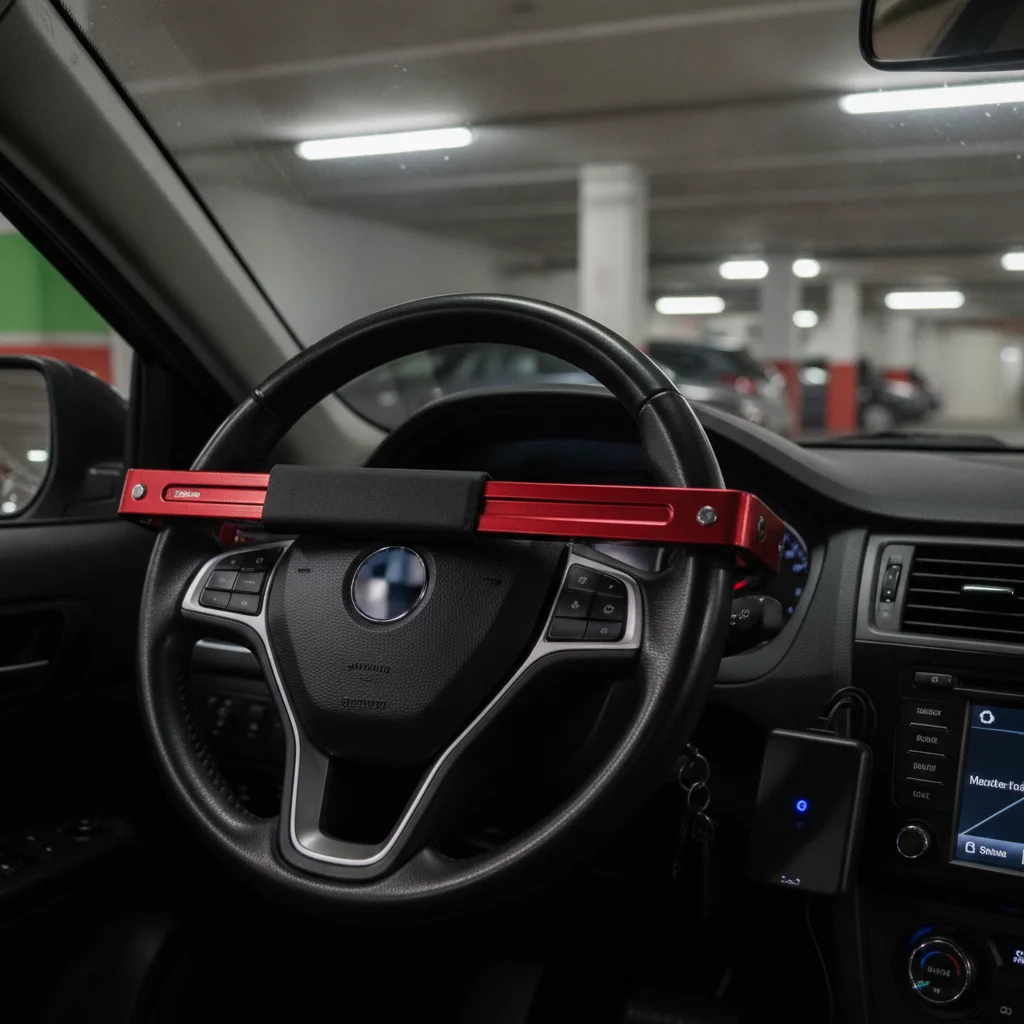
- Steering-wheel and brake-pedal locks
- Wheel locks and tire clamps
The discount on the comprehensive portion of your policy can range from modest (5%) to substantial (up to 25% with some carriers for GPS tracking systems). See the full breakdown in our piece on how anti-theft devices affect your car insurance premium.

Choosing Your Deductible Strategically
Raising your comprehensive deductible from $250 to $1,000 can reduce the premium significantly — sometimes by 30–40%. If your vehicle sits in the middle range of value (say $10,000–$18,000) and is on a theft list, a higher deductible essentially converts comprehensive into catastrophic loss coverage. You absorb small risks; the insurer covers total loss. Whether that trade-off makes sense depends on your cash reserves and risk tolerance.
Where You Park
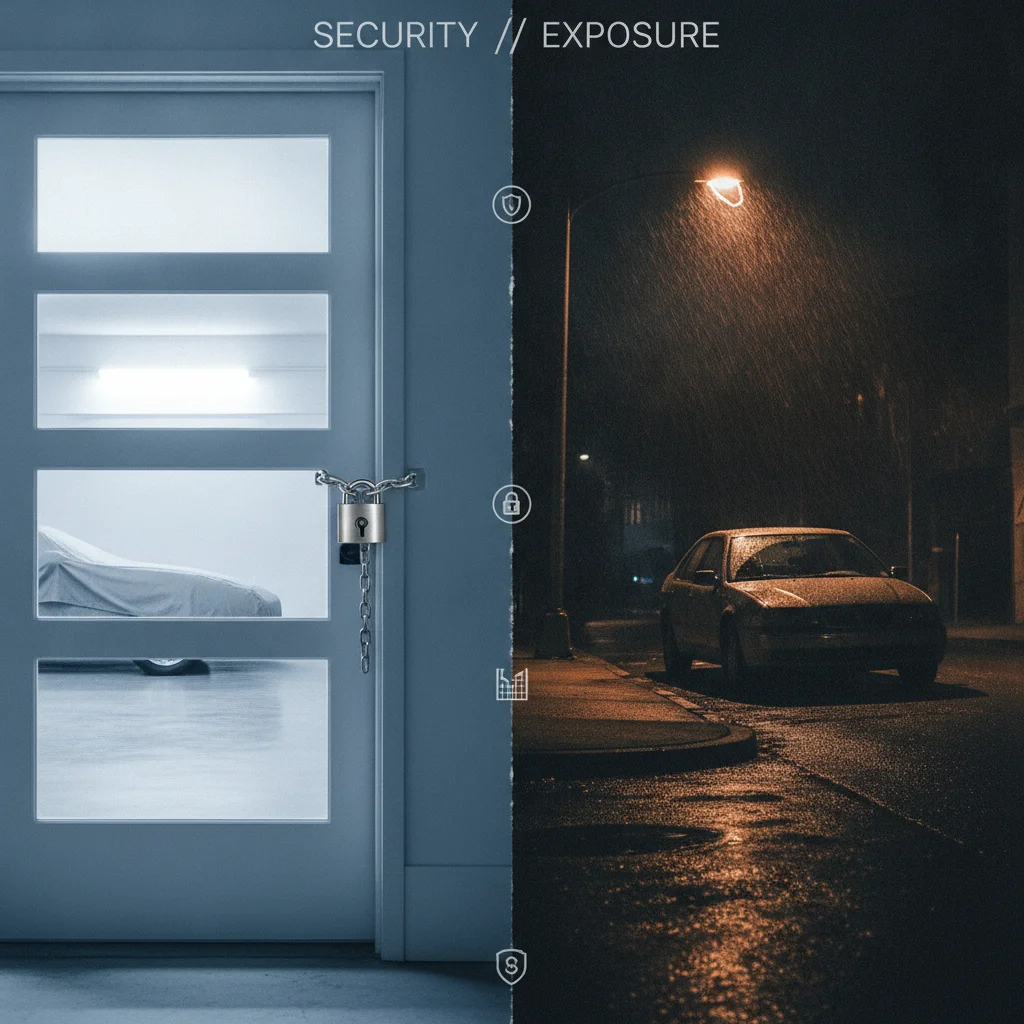
Parking inside a locked garage reduces both theft risk and, often, your insurance rate. Many insurers ask about overnight parking location during the quote process. A carport or driveway doesn't offer the same protection as a locked structure, but it still outperforms street parking in a high-crime corridor. If you live in a dense urban environment and have access to a private garage, documenting that access with your insurer is worth doing.
Don't Assume Dropping Comprehensive Saves Money
Some owners of older high-theft vehicles consider dropping comprehensive to save on premiums. The math rarely works in their favor when the vehicle is still worth several thousand dollars. If a $9,000 car gets stolen and you carry no comprehensive, you absorb the entire loss. If the annual comprehensive premium is $400 and the deductible is $500, you're paying $900 per year for up to $8,500 in protection. Over a three-year period, that's $2,700 in premiums versus up to $8,500 in exposure — a trade-off that favors keeping the coverage.
Comprehensive Coverage in the Broader Theft Context
It's worth being precise about what comprehensive covers and what it doesn't when theft is the scenario. Comprehensive pays the actual cash value (ACV) of the vehicle at the time of theft, minus your deductible. It does not pay replacement cost — so if your five-year-old SUV is worth $22,000 today but you paid $35,000 for it new, you'd receive the $22,000 (minus deductible), not the purchase price.
Loss Cost vs. Your Personal Claims History
Comprehensive rates based on vehicle theft profiles are set at the model level, not the individual driver level. This means even if you've never filed a theft claim, you may pay a higher comprehensive rate simply because your vehicle model has a high industry-wide loss cost. Conversely, a clean claims history won't fully override a high-risk vehicle profile, though some insurers offer loyalty or claims-free discounts that partially offset the difference.
Actual Cash Value vs. Replacement Cost
Comprehensive pays actual cash value — the market value of your vehicle at the time of loss, accounting for depreciation. This is not the same as what you paid for the car or what it would cost to buy a comparable replacement today. Drivers who want replacement cost coverage should ask about new-car replacement or gap insurance, which are separate products.
Personal property inside the vehicle — a laptop bag, tools, child's car seat — falls outside comprehensive entirely. Those items would need to be claimed under renters or homeowners insurance, subject to that policy's deductible and coverage limits.
There are also non-theft scenarios where the theft-adjacent nature of comprehensive matters. Vandalism — broken windows, keyed paint — is covered under comprehensive, not collision. If a thief breaks your window while attempting a theft but doesn't take the car, comprehensive applies. Situations where comprehensive coverage surprisingly applies covers the full range of these less-obvious scenarios.
For a complete side-by-side of what comprehensive handles versus collision, the Collision & Comprehensive hub provides a clear framework for understanding how these two coverages divide the risk landscape.
The core takeaway is that if you own a vehicle on the stolen list — or you're considering buying one — comprehensive coverage is exactly the protection designed for that risk. The premium impact is real, but so is the financial exposure of going without it. The smarter move is to keep the coverage, layer it with deterrence, and let your insurer know about every anti-theft measure you take.
Check Theft Rates Before You Buy
Before purchasing any vehicle, run the make, model, and year through the NICB's free VINCheck tool and cross-reference against the most recent Hot Wheels report. If the model ranks high, request a comprehensive-only quote from your insurer before signing anything. The premium difference between a high-theft and low-theft model in the same price class can be $200–$500 per year.
Tell Your Insurer About Every Security Feature
Don't assume your insurer has automatically applied an anti-theft discount. Proactively report factory immobilizers, aftermarket GPS trackers, and visible deterrents like steering-wheel locks when you buy the policy or add a vehicle. Some discounts require documentation or a VIN lookup to confirm factory-installed security systems — it's worth a five-minute phone call to verify you're getting credit.
Review Comprehensive Costs When Moving
If you're relocating to a different city or zip code, ask your insurer to re-quote your comprehensive premium before you finalize coverage. Moving from a low-theft suburb to an urban core — or vice versa — can shift your comprehensive rate materially. In high-theft metros, it may also be worth increasing your anti-theft measures before the move.

All claims are backed by peer-reviewed research. Sources on request.