Key Takeaways
Collision & Comprehensive Premiums
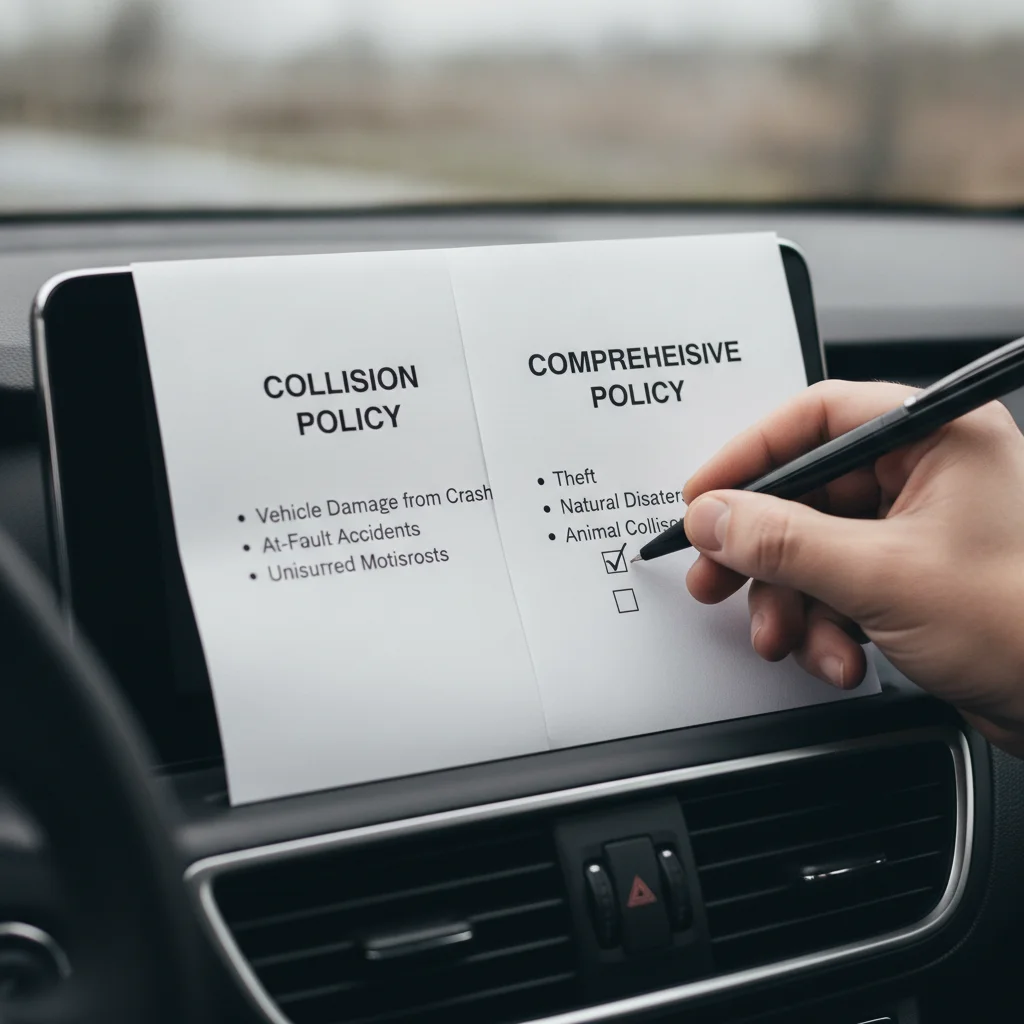
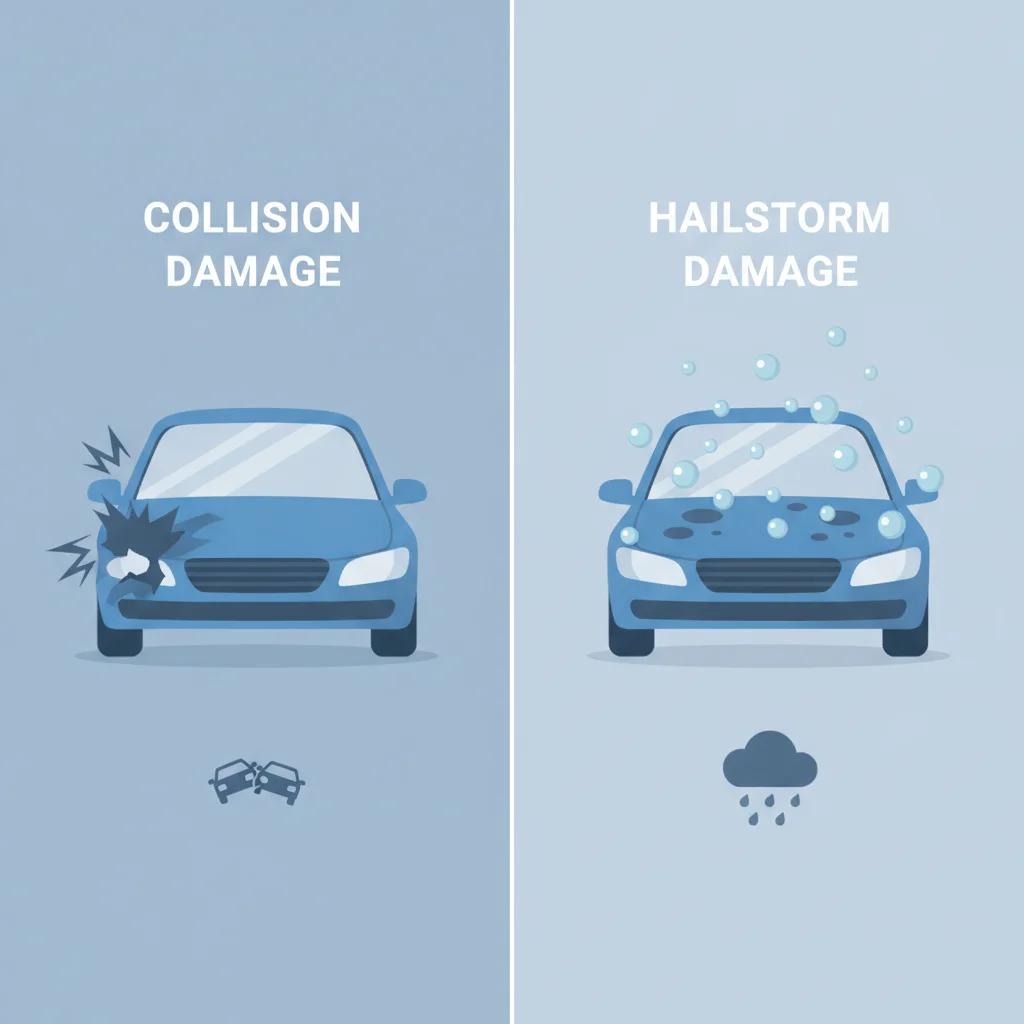
Collision and comprehensive premiums are the amounts you pay — typically monthly or semi-annually — for physical damage coverage on your vehicle. Collision covers damage from crashes with other vehicles or objects, while comprehensive covers non-collision events like theft, hail, and flooding. Insurers calculate each premium separately, using a mix of vehicle-specific and driver-specific data.
Both coverages are priced against the vehicle's actual cash value (ACV), which means depreciation directly reduces the maximum payout and, to some extent, the premium you owe over time.
Why Physical Damage Pricing Works Differently Than Liability
When you buy auto insurance, you're actually purchasing a bundle of distinct coverage types, each priced on its own logic. Liability insurance — which pays for injuries and property damage you cause to others — is priced primarily around your behavior and risk profile as a driver. Physical damage coverage, by contrast, is priced around both you and your asset: the vehicle itself.
This distinction matters because collision and comprehensive premiums are calculated differently from each other and differently from liability. If you've ever wondered why your comprehensive rate rose after moving to a new ZIP code, or why buying a sports car nearly doubled your collision premium, the answer lies in how insurers separate and model these risks. For a deeper look at how liability pricing works, see how insurers calculate your liability premium.
Physical damage claims are bounded by the vehicle's actual cash value — meaning the insurer will never pay more than what the car is worth at the time of loss. That ceiling shapes almost every aspect of how these premiums are set.
The Role of Actual Cash Value in Premium Calculation
Actual cash value (ACV) is the estimated market value of your vehicle at the time of a loss — what a willing buyer would pay a willing seller for your specific car, in its current condition, in your local market. For insurers, ACV functions as a natural ceiling on what they'll pay out, which directly informs how much they charge you upfront.
A brand-new $45,000 SUV carries a far higher collision premium than a six-year-old version of the same vehicle worth $18,000 — because the maximum exposure for the insurer is much larger. As the car depreciates, your premiums typically drift downward, though not proportionally, because repair costs don't depreciate along with the vehicle's value.
~$522
Average annual collision premium in the U.S.
According to the National Association of Insurance Commissioners (NAIC) most recent data, the average collision premium nationwide is approximately $522, though this varies significantly by state and vehicle.
~$182
Average annual comprehensive premium in the U.S.
The NAIC reports that comprehensive coverage costs drivers an average of roughly $182 per year nationally — typically less than half the cost of collision coverage.
15–40%
Premium reduction from raising deductible to $1,000
Industry estimates suggest drivers can reduce their collision or comprehensive premium by 15–40% by raising their deductible from $250 to $1,000, depending on the carrier and vehicle.
30–50%
Typical collision rate increase after an at-fault accident
Consumer reporting and insurer data consistently show that a single at-fault accident raises collision premiums by 30–50% at renewal in most U.S. markets.
Top 10
Most-stolen vehicles face higher comprehensive rates
The NICB's annual Hot Wheels report identifies the ten most stolen vehicle models; owners of these models typically pay a meaningful theft surcharge on their comprehensive premium.
Insurers use industry valuation tools — drawing on data from sources like Kelley Blue Book, Edmunds, and NADA — to establish ACV for underwriting and claims purposes. You can get a sense of your own vehicle's standing using valuation tools like KBB and Edmunds before shopping for coverage or evaluating whether your current premium makes sense.
One important nuance: if your loan balance exceeds your car's ACV, you have a gap exposure. Gap insurance covers the difference between what your insurer pays and what you still owe the lender. For more on how claims settlements work, see actual cash value vs. replacement cost in collision and comprehensive claims.
ACV Is Not What You Paid
Actual cash value reflects current market value after depreciation — not your purchase price, not your loan balance, and not what it would cost to buy the same car new today. A vehicle can lose 20% or more of its value in its first year. Understanding this distinction helps set realistic expectations for what a total-loss claim will pay out, and why gap insurance exists.
Rate Filings Are State-Specific
Insurers must file and receive approval for their rating plans from each state's insurance department before using them. This means the same carrier can use different factor weights in Texas than it does in Ohio. It also means that some factors — like credit score — are prohibited in certain states even if they're standard practice in others. Always compare quotes in the context of your own state's regulatory environment.
How Collision Premiums Are Calculated
Collision coverage applies when your vehicle is damaged in a crash — whether with another car, a guardrail, a pothole-triggered rollover, or a single-vehicle accident. Because collision events are largely influenced by driver behavior, insurers weight several driver-centric variables heavily in pricing this coverage.
Driving Record and Claims History
An at-fault accident typically raises your collision premium at renewal. Insurers look back three to five years, depending on the carrier and state. A single at-fault crash can increase collision rates by 30–50% in many markets. Multiple incidents compound the effect significantly. Moving violations — speeding tickets, reckless driving citations — also raise rates, as they predict future crash likelihood.
Vehicle Make, Model, and Trim
Not all vehicles cost the same to repair after a collision. A luxury sedan with aluminum body panels and a complex driver-assistance system costs substantially more to fix than a domestic pickup with steel panels and standard components. Insurers maintain loss data by vehicle symbol — an internal code that clusters cars by their historical claim costs — and price accordingly. High-performance trims of otherwise ordinary models often carry a collision surcharge for the same reason.
Repair Costs and Parts Availability
Labor rates at body shops in your area, the cost of OEM parts, and how frequently your vehicle model appears in crash statistics all feed into collision pricing. Some European and Japanese luxury brands carry notably higher repair costs per incident than domestic models, even when the vehicles are similarly priced.
Ask About Repair Shop Affiliations
Some insurers negotiate preferred-shop rates with body shop networks, which can reduce their average repair cost and — in some cases — result in lower collision premiums for policyholders who agree to use network shops for claims. Ask your carrier whether a direct repair program affects your pricing.
Reassess Coverage After Significant Depreciation
Pull a current valuation from a tool like Kelley Blue Book or Edmunds every year or two as your car ages. When your vehicle's value has dropped to a point where the annual premium plus deductible approaches 10% of that value, it's worth doing the math on whether dropping or reducing physical damage coverage makes financial sense for your situation.
Deductible Selection
The deductible is the portion of a covered loss you pay before insurance kicks in. Choosing a $1,000 deductible instead of a $250 deductible transfers more risk to you, which reduces your premium. The relationship isn't linear — the savings from raising a deductible from $500 to $1,000 are typically smaller than going from $0 to $500. Choosing the right deductible requires balancing your premium savings against your ability to absorb out-of-pocket costs after a claim.
How Comprehensive Premiums Are Calculated
Comprehensive coverage addresses damage from events outside your control as a driver: theft, vandalism, hail, flooding, fire, falling trees, and animal collisions. Because these losses are tied more to environment and geography than driver behavior, the rating factors shift accordingly.
Geographic Location and Garaging Address
Where you park your car overnight — your garaging address — is the dominant geographic variable in comprehensive pricing. Insurers map ZIP-code-level data on auto theft rates, severe weather frequency, wildfire risk, and flood zones to establish baseline comprehensive rates for each area. A car kept in a high-theft urban neighborhood can carry a comprehensive premium two to three times higher than the same car parked in a low-risk suburban ZIP code.
Theft Risk by Vehicle Model
The National Insurance Crime Bureau (NICB) publishes annual data on the most stolen vehicles. Older model years of high-demand pickup trucks and certain SUVs consistently top the list, largely because their parts are valuable and older models lack modern immobilizers. If you drive one of these vehicles, expect a meaningful theft surcharge on your comprehensive rate. Some insurers also factor in whether anti-theft devices — factory or aftermarket — are installed.
Weather and Natural Disaster Exposure
States in Tornado Alley (Oklahoma, Kansas, Nebraska) and coastal states subject to hurricanes carry elevated comprehensive rates compared to inland, weather-stable markets. After significant catastrophe years — widespread hail events in Texas, flooding from a major hurricane — insurers often adjust rates in affected regions at the next filing cycle.
“Comprehensive is essentially property insurance for your car against the world — weather, theft, animals, fire. What you pay for it reflects the risk profile of where your car sits more than how you drive it.”
— Robert Hunter, Former Director of Insurance, Consumer Federation of America
Driving Record's Limited Influence
Unlike collision, your driving record has minimal effect on comprehensive pricing. An at-fault accident tells underwriters something meaningful about your collision risk; it says very little about whether a hailstorm will hit your car. That said, a history of comprehensive claims — multiple theft reports, repeated weather losses — may trigger a rate review with some carriers.
Shared Factors That Affect Both Coverages
Several variables influence both collision and comprehensive premiums simultaneously.
Credit-Based Insurance Score
In most states, insurers incorporate a credit-based insurance score — distinct from a standard credit score — when pricing auto coverage. Research from the Federal Trade Commission and independent actuarial studies has consistently found a statistical correlation between credit history and claim frequency and severity. Drivers with lower insurance scores pay more across nearly all coverage types, including physical damage. California, Hawaii, and Massachusetts prohibit use of credit in auto insurance pricing by law.
Annual Mileage
The more you drive, the more exposure you accumulate — both to collision events and, to a lesser extent, comprehensive risks like parking-lot vandalism or commute-route road hazards. Many insurers now ask for annual mileage estimates upfront and offer lower rates for lower-mileage drivers. Usage-based insurance programs that monitor actual mileage via telematics have made this factor more precise.
Coverage Limits and Policy Structure
Both collision and comprehensive are first-party coverages, meaning they cover your vehicle up to its ACV minus your deductible. There's no separate bodily injury or property damage limit to choose for these coverages — the vehicle value sets the ceiling. However, endorsements like new-car replacement or gap coverage modify how the loss is settled and may affect your premium accordingly.
For a broader look at all the variables that shape your auto insurance rates, the rate factors hub provides an organized overview of how age, driving history, location, and vehicle type interact in pricing models.

How Insurers Actually Run the Numbers
Auto insurance pricing is not a simple formula you can reverse-engineer with a calculator. Insurers use proprietary actuarial models that incorporate dozens of variables simultaneously, weighted against historical loss data from their own book of business and industry sources like ISO (Insurance Services Office) and Verisk Analytics.
The process works roughly like this: a base rate is established for a given coverage type in a given state, then multiplicative or additive factors are applied for each rating variable — vehicle symbol, driver record, garaging ZIP code, deductible, credit score, and so on. The result is a risk-adjusted premium that reflects the insurer's best estimate of expected loss cost plus a margin for expenses and profit.
Because every insurer uses different models and weights different variables differently, the same driver with the same car can receive quotes that vary by hundreds of dollars annually from different carriers. That spread is the practical argument for comparison shopping, particularly after major life changes — a move, a new vehicle, a change in driving record, or a significant credit improvement.
ACV Is Not What You Paid
Actual cash value reflects current market value after depreciation — not your purchase price, not your loan balance, and not what it would cost to buy the same car new today. A vehicle can lose 20% or more of its value in its first year. Understanding this distinction helps set realistic expectations for what a total-loss claim will pay out, and why gap insurance exists.
Rate Filings Are State-Specific
Insurers must file and receive approval for their rating plans from each state's insurance department before using them. This means the same carrier can use different factor weights in Texas than it does in Ohio. It also means that some factors — like credit score — are prohibited in certain states even if they're standard practice in others. Always compare quotes in the context of your own state's regulatory environment.
State insurance regulators must approve the rating plans insurers use, which provides a measure of oversight. But approved doesn't mean identical — carriers can and do use meaningfully different factor weights within approved frameworks.
To understand how these calculations fit into the full picture of physical damage insurance, the comprehensive guide to collision and comprehensive insurance covers how claims work, when each coverage applies, and how to evaluate whether your coverage levels are appropriate.
When to Reassess Your Physical Damage Coverage
Because both collision and comprehensive premiums are anchored to your vehicle's value, they warrant regular reassessment as your car ages and depreciates. A coverage level that made financial sense at purchase may be less rational several years later.
A widely cited rule of thumb: if your annual premium for a given coverage, plus your deductible, exceeds roughly 10% of the vehicle's current ACV, the coverage may no longer be cost-effective. At that point, in the event of a total loss, you're paying relatively high premiums for a payout that may not meaningfully offset the loss.
Ask About Repair Shop Affiliations
Some insurers negotiate preferred-shop rates with body shop networks, which can reduce their average repair cost and — in some cases — result in lower collision premiums for policyholders who agree to use network shops for claims. Ask your carrier whether a direct repair program affects your pricing.
Reassess Coverage After Significant Depreciation
Pull a current valuation from a tool like Kelley Blue Book or Edmunds every year or two as your car ages. When your vehicle's value has dropped to a point where the annual premium plus deductible approaches 10% of that value, it's worth doing the math on whether dropping or reducing physical damage coverage makes financial sense for your situation.
Other moments that warrant a review:
- After a move: Your garaging address changes both your comprehensive and collision rates. A move from a high-theft urban ZIP to a suburban or rural address could reduce your comprehensive premium noticeably.
- After paying off a loan: Lenders typically require collision and comprehensive coverage for financed vehicles. Once you own the car outright, the coverage decision is yours — though dropping it entirely creates real financial exposure if you can't self-insure a total loss.
- After a significant credit improvement: If your credit-based insurance score has improved substantially, shopping your policy could yield meaningful savings on physical damage premiums as well as other coverages.
- After a clean driving streak: If prior at-fault accidents are aging off your record (typically three to five years back), your collision rate should decrease at renewal. Verifying this with your insurer — or shopping competitors — ensures you're capturing that benefit.
If you're newer to auto insurance and still working through the basics of how these coverages function, what collision and comprehensive actually mean is a solid starting point before diving into premium mechanics.


All claims are backed by peer-reviewed research. Sources on request.