Key Takeaways
Anti-Theft Device Discount
An anti-theft device discount is a reduction in your auto insurance premium awarded by insurers when your vehicle is equipped with qualifying security hardware or technology. These discounts apply specifically to the comprehensive portion of your policy, which is the coverage that pays out if your car is stolen. Insurers offer these savings because security devices measurably reduce the risk that a vehicle will be stolen or increase the odds of recovery if it is.
Discount eligibility and size vary by insurer, device type, and state regulations. Some states mandate that insurers offer anti-theft discounts; others leave it to carrier discretion.
Why Anti-Theft Devices Matter to Your Insurer
Car theft in the United States remains a significant and costly problem. According to the FBI's Uniform Crime Reporting data, nearly 1 million vehicles are stolen annually in the U.S. — a figure that directly drives up comprehensive insurance costs for everyone, not just theft victims. Insurers price comprehensive coverage based on the statistical likelihood that your vehicle will be stolen, which means anything that meaningfully reduces that risk translates into a lower expected payout for the insurer and, ideally, a lower premium for you.
Anti-theft devices work through two mechanisms that insurers recognize and reward. Deterrence reduces the probability that a thief selects your vehicle in the first place — a visible steering wheel lock or flashing alarm LED signals that this car is more trouble than it's worth. Recovery improves the odds that a stolen vehicle is returned, minimizing the insurer's total loss payout. GPS trackers and telematics-based systems fall into this second category, and they tend to earn the largest discounts precisely because they reduce the severity of a theft loss, not just the frequency.
This distinction matters when you're shopping for devices. A cheap visible deterrent may get you a modest discount. A certified recovery system could cut your comprehensive premium by 15% or more. Understanding what your insurer is actually valuing helps you make a smarter investment.
It's also worth understanding how anti-theft discounts fit into the broader landscape of rate factors that shape your premium. Vehicle security is one piece of a larger puzzle that includes your driving record, location, credit score, and the make and model of your car. Anti-theft devices are a factor you can control — which makes them worth paying attention to.
Types of Anti-Theft Devices and the Discounts They Typically Earn
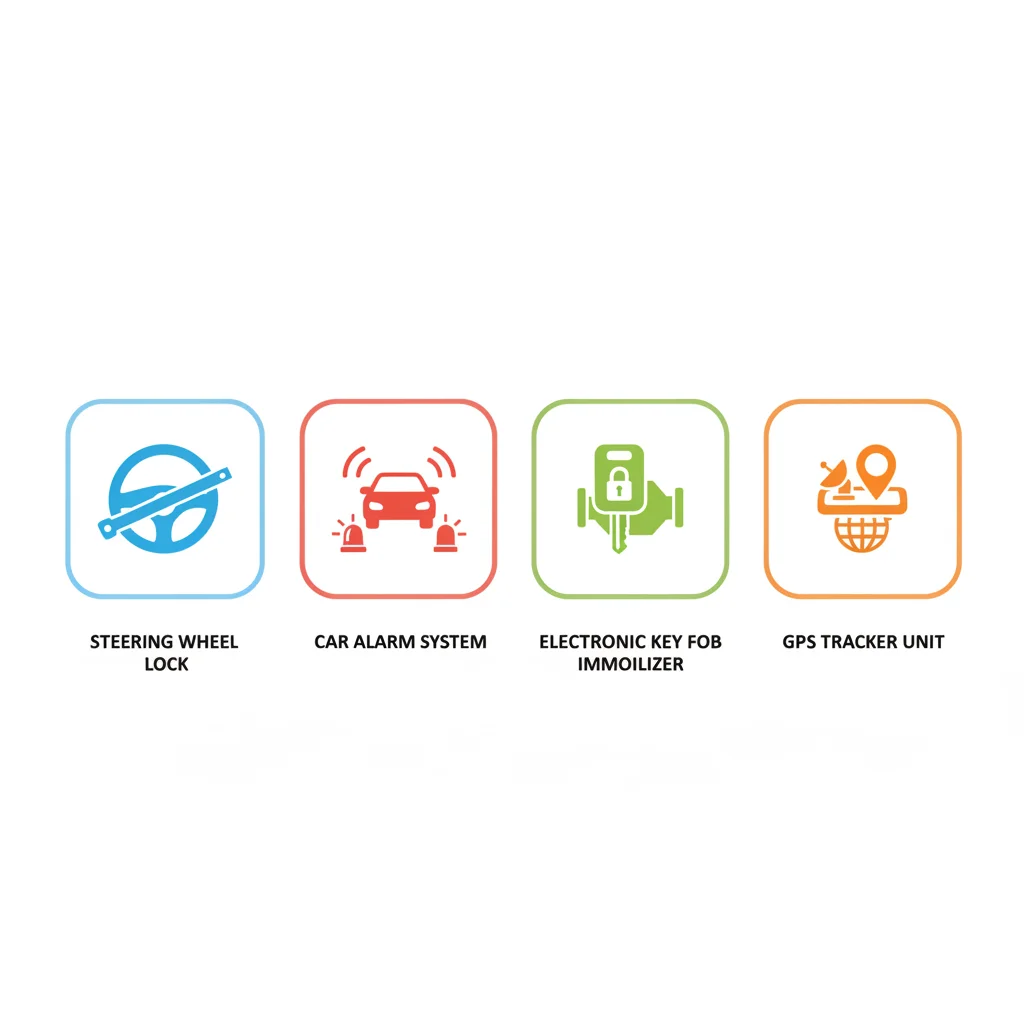
Not all security hardware is treated equally by insurers. Here's how the major categories break down:
Passive vs. Active Systems
Insurers make an important distinction between passive and active anti-theft systems. A passive system activates automatically when you turn off the ignition and exit the vehicle — no button to press, no code to enter. An active system requires you to manually engage it. Because passive systems eliminate human error (forgetting to activate the alarm), insurers reward them with higher discounts. If you're choosing between two similarly priced devices, lean toward the passive option.
Visible Deterrents
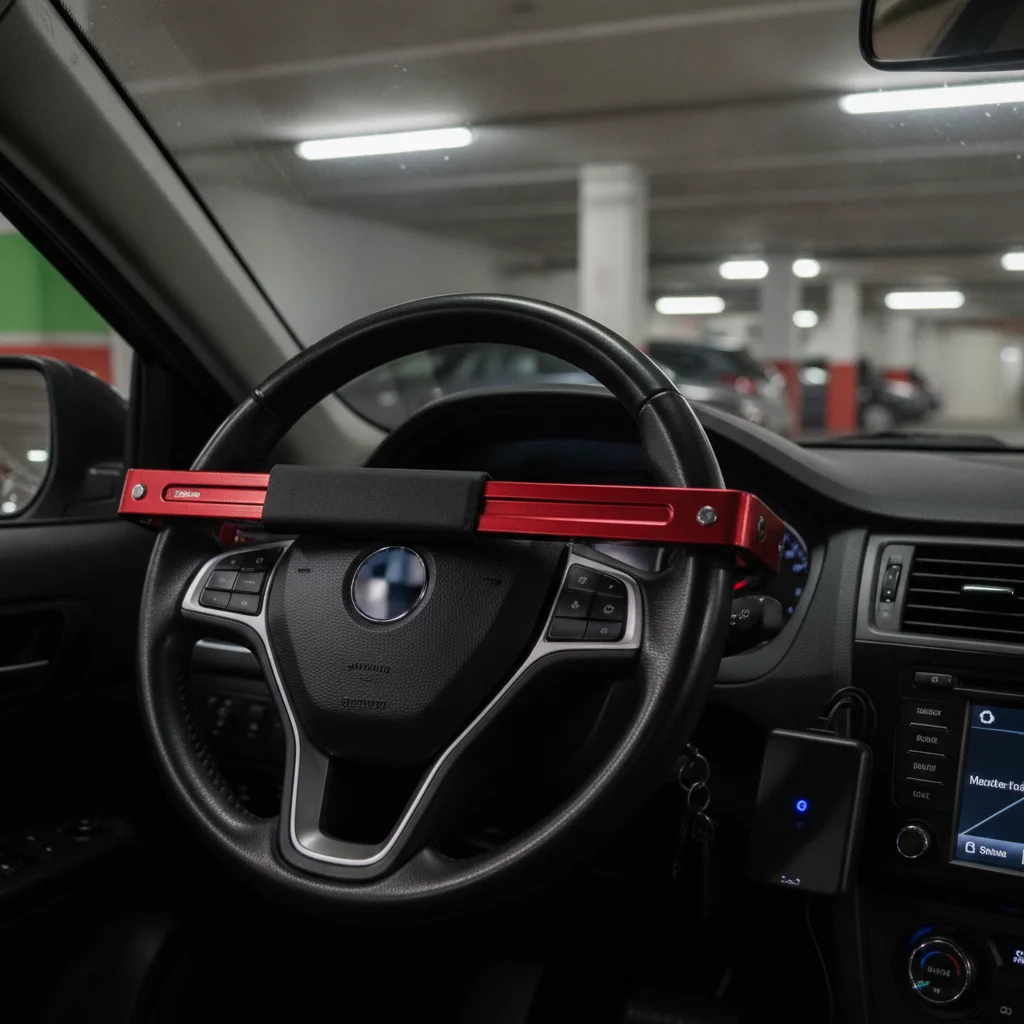
Steering wheel clubs, tire locks, and gear shift locks physically prevent a vehicle from being driven even if a thief gains entry. They're inexpensive, require no installation, and are immediately recognizable to any would-be thief. Insurance discounts for these are typically in the 2–5% range on the comprehensive portion. Not enormous, but the device itself might cost $30–$60, so the math can work in your favor within the first year or two.
Alarm Systems
Factory or aftermarket alarm systems — those that trigger a loud audible alert when unauthorized entry is detected — are standard on most modern vehicles. If your car has a factory alarm, there's a reasonable chance your insurer has already factored it in. Aftermarket alarms may earn 5–10% discounts, particularly if they include features like pager notifications or smartphone alerts.
~1M
Vehicles stolen annually in the U.S.
FBI Uniform Crime Reporting data estimates nearly one million vehicles are stolen in the United States each year, a key driver of comprehensive insurance costs.
Up to 25%
Discount on comprehensive premium for GPS recovery systems
Insurers including major national carriers offer discounts of up to 25% on the comprehensive portion of premiums for certified vehicle recovery systems.
5–15%
Comprehensive discount for electronic immobilizers
Electronic immobilizers — including factory transponder keys on most post-2005 vehicles — typically qualify for 5–15% comprehensive discounts depending on the insurer.
2–5%
Typical discount for visible deterrents like steering clubs
Low-cost visible deterrents such as steering wheel locks earn modest discounts, but their low purchase price means payback periods can still be short.
$10,281
Average cost of a stolen vehicle claim
The Insurance Information Institute estimates the average auto theft claim exceeds $10,000, underscoring the financial incentive insurers have to reward theft-prevention investments.
Electronic Immobilizers
An immobilizer cuts the circuit that allows the engine to start, rendering the vehicle impossible to drive without the correct key or transponder. Most vehicles manufactured after the mid-2000s have factory-installed transponder keys that function as immobilizers. These are highly valued by insurers because they are effective — a car with an active immobilizer is dramatically less likely to be successfully hot-wired. Discounts can range from 5–15% on comprehensive coverage, depending on the insurer and device certification.
GPS Trackers and Recovery Systems
This is where the biggest discounts live. Systems like LoJack, or OEM telematics platforms from manufacturers like OnStar, allow law enforcement to locate and recover a vehicle in real time. Some insurers offer 15–25% discounts on comprehensive premiums for vehicles equipped with a certified recovery system. The rationale is straightforward: if a stolen car can be recovered quickly, the insurer may avoid paying a total loss claim entirely.
If your vehicle is a high-theft-risk model, investing in a GPS recovery system is worth serious consideration. See our article on the most commonly stolen cars and their insurance costs to find out whether your vehicle is on that list.
“Devices that actually recover stolen vehicles are worth far more to an insurer than devices that merely deter theft. A GPS tracker turns a total loss into a recovery — and that difference is reflected in the discount.”
— Mark Romano, Director of insurance products, Insurance Bureau of Canada (frequently cited in cross-border auto theft research)
OBD-II Port Devices and Kill Switches
Aftermarket devices that plug into the OBD-II diagnostic port can disable vehicle functions or alert you when your car is moved unexpectedly. Kill switches — which cut power to the fuel pump or starter — are a more mechanical approach to the same goal. Both can qualify for discounts, though not every insurer recognizes OBD-II devices specifically. Always check before you buy.
How to Actually Claim the Discount
Having the device installed is only half the job. Here's the process for making sure it actually shows up on your policy:
- Contact your insurer directly. Ask your agent or call the customer service line and ask specifically which anti-theft devices qualify for a discount on your policy. Get the list in writing if possible. Don't assume — discount structures vary significantly between carriers.
- Document your device. For aftermarket devices, you'll typically need an installation receipt, a product brochure or spec sheet, and possibly a photo of the installed unit. Factory systems are usually verified via VIN lookup, but confirm this with your insurer.
- Check for device certification requirements. Some insurers only recognize devices approved by organizations like the National Insurance Crime Bureau (NICB) or the Theft Prevention Industry Association. Recovery systems like LoJack are often specifically named in carrier discount programs.
- Request a policy review after installation. If you've recently added a device, don't wait until renewal. Call your insurer and ask for the discount to be applied immediately — you may be eligible for a prorated credit on your current policy term.
- Ask about bundling discounts. Anti-theft savings can typically be stacked with other discounts. A good comprehensive discount review should cover your full policy, not just the theft-related savings.
Don't Wait Until Renewal to Ask
If you install an anti-theft device mid-policy, contact your insurer right away and request that the discount be applied immediately. Many carriers will prorate the savings for the remainder of your current policy term, meaning you don't have to wait months to start benefiting. A quick call or online policy update is all it typically takes.
Verify Device Eligibility Before You Buy
Not every GPS tracker or alarm system qualifies for an insurance discount. Before purchasing an aftermarket device with the goal of earning savings, call your insurer and ask specifically which devices or device categories are recognized on your policy. Some carriers maintain approved product lists; others require NICB certification. Knowing the answer before you spend money avoids disappointment.
It's also worth noting that for EVs, the theft dynamic is genuinely different. Digital key fobs, over-the-air access, and the absence of a traditional ignition cylinder change the security calculus considerably. If you drive an electric vehicle, see our piece on EV theft and how insurers approach it for a more tailored perspective.
Running the Numbers: Is It Worth Installing an Anti-Theft Device?
The honest answer is: it depends on your specific situation. Here's the framework to think through it.
Start With Your Comprehensive Premium
Anti-theft discounts apply only to the comprehensive portion of your policy, not to liability, collision, or any other coverage. If your annual comprehensive premium is $300 and you qualify for a 15% discount, that's $45 in annual savings. If your comprehensive premium is $800 — more likely if you drive a newer vehicle in a high-theft metro area — that 15% discount is worth $120 per year.
Factor in Device Cost
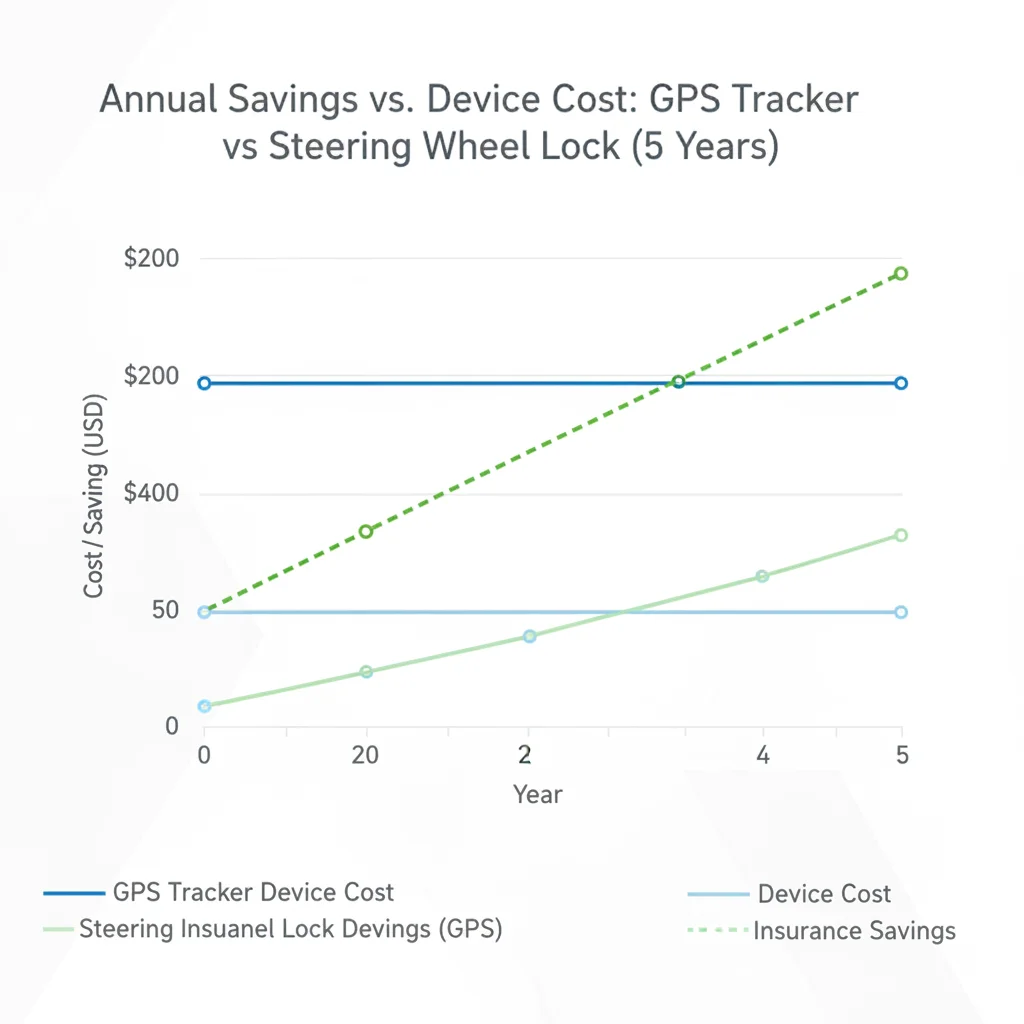
A quality GPS recovery device might cost $200–$400 upfront plus a monthly subscription fee. A steering wheel club costs $30–$70 one time. Run a simple break-even calculation: divide the device cost by your expected annual savings. If a $200 GPS tracker saves you $100 per year on comprehensive, you break even in two years — and continue saving thereafter, while also benefiting from the genuine security protection.
Consider Your Vehicle's Theft Risk Profile
If you drive a high-theft vehicle — older Honda Civics, pickup trucks, and certain Hyundai and Kia models have historically topped the stolen vehicle lists — your comprehensive premium is likely already elevated. A meaningful anti-theft discount on an already-high base premium produces a larger dollar savings than the same percentage off a low-risk vehicle's modest comprehensive cost. The math works best for drivers whose vehicles are already expensive to insure against theft.
Your vehicle's make and model affects your comprehensive rate in multiple ways beyond just theft — repair costs, parts availability, and claim frequency all factor in. Our article on how your car shapes your insurance rate goes deeper on this relationship.
Comprehensive-Only Discounts: A Key Limitation
It's important to understand that anti-theft discounts apply exclusively to the comprehensive portion of your auto insurance premium — the coverage that pays for non-collision losses including theft, vandalism, and weather damage. If you've chosen to drop comprehensive coverage on an older vehicle, anti-theft devices won't reduce your bill. And if comprehensive is a small slice of your total premium, even a generous discount produces modest dollar savings.
State Regulations May Affect Discount Availability
In some states, insurers are required by law to offer anti-theft discounts for specific device categories. In others, it's entirely at the carrier's discretion, which means discount availability and size can vary significantly depending on where you live. If your insurer doesn't offer a particular discount, it's worth shopping your policy — another carrier in your state may have a more generous anti-theft discount structure.
Don't Forget the Non-Insurance Value
A GPS recovery system doesn't just save you money on insurance — it genuinely increases the likelihood of getting your car back if it's stolen. Comprehensive coverage will pay out your vehicle's actual cash value if the car is a total loss, but there are real hassles involved: deductibles, depreciation, and the time and inconvenience of replacing a vehicle. Prevention and recovery have tangible value beyond the premium discount alone.
Anti-Theft Discounts in Context: The Bigger Picture
Anti-theft device discounts are real and worth pursuing, but it's important to keep their scale in perspective. Even the most generous GPS recovery discount typically applies only to comprehensive coverage, which is one component of a full auto insurance policy. If comprehensive represents 15% of your total premium, a 20% discount on that slice is a 3% reduction in your overall bill. That's meaningful over time, but it won't transform your insurance costs the way improving your credit score, moving to a lower-theft zip code, or eliminating a at-fault accident from your record would.
The most effective strategy is to pursue every legitimate discount simultaneously. Anti-theft savings are one piece of that broader effort. If you haven't had a full discount review with your insurer recently, that conversation is worth having — carriers don't always proactively flag every discount you qualify for.
It's also worth understanding the relationship between your anti-theft setup and your coverage choices. If your car is stolen, only comprehensive coverage pays the claim — not liability, not collision. If you're driving without comprehensive coverage to save money, no anti-theft device will help you financially. Our article on why comprehensive is the only coverage that addresses theft explains the coverage mechanics in full detail.
Finally, anti-theft devices are only one of several vehicle-specific factors that influence your rate. Advanced driver assistance systems (ADAS) and strong crash-test safety ratings can also unlock premium discounts, and they work through a different mechanism — reducing collision risk rather than theft risk. If your vehicle is equipped with lane-keeping assist, automatic emergency braking, or similar tech, see our piece on safety ratings and ADAS discounts to make sure you're capturing those savings too.

All claims are backed by peer-reviewed research. Sources on request.