Key Takeaways
Why Insurers Don't Hand You the Full List
Insurance companies operate on actuarial models and margin. Discounts exist because they reduce risk profiles or lower administrative costs — not out of generosity. Insurers advertise the discounts that drive acquisition, like multi-policy bundles and good driver credits, while quietly maintaining a longer list of niche savings that require a customer to ask. This isn't necessarily deceptive; it's a product of sprawling state-by-state regulatory environments and hundreds of pricing variables that differ by carrier.
The result: most policyholders leave money on the table at every renewal. A J.D. Power study on customer satisfaction consistently finds that policyholders who proactively engage with their insurer report lower premiums and higher satisfaction — not because the insurer changed its behavior, but because the customer did.
Understanding the full landscape of what's available is a prerequisite. How auto insurance discounts work and why insurers structure them the way they do gives you the conceptual grounding. This guide gives you the conversation script.

The key shift in mindset: stop asking "Are there any discounts I'm missing?" That question is too open-ended and puts the burden on the rep to be thorough — which they often aren't. Instead, ask about specific categories. Named discounts are harder to dodge, and they prompt the rep to actually look in your file.
What You Need Before You Call
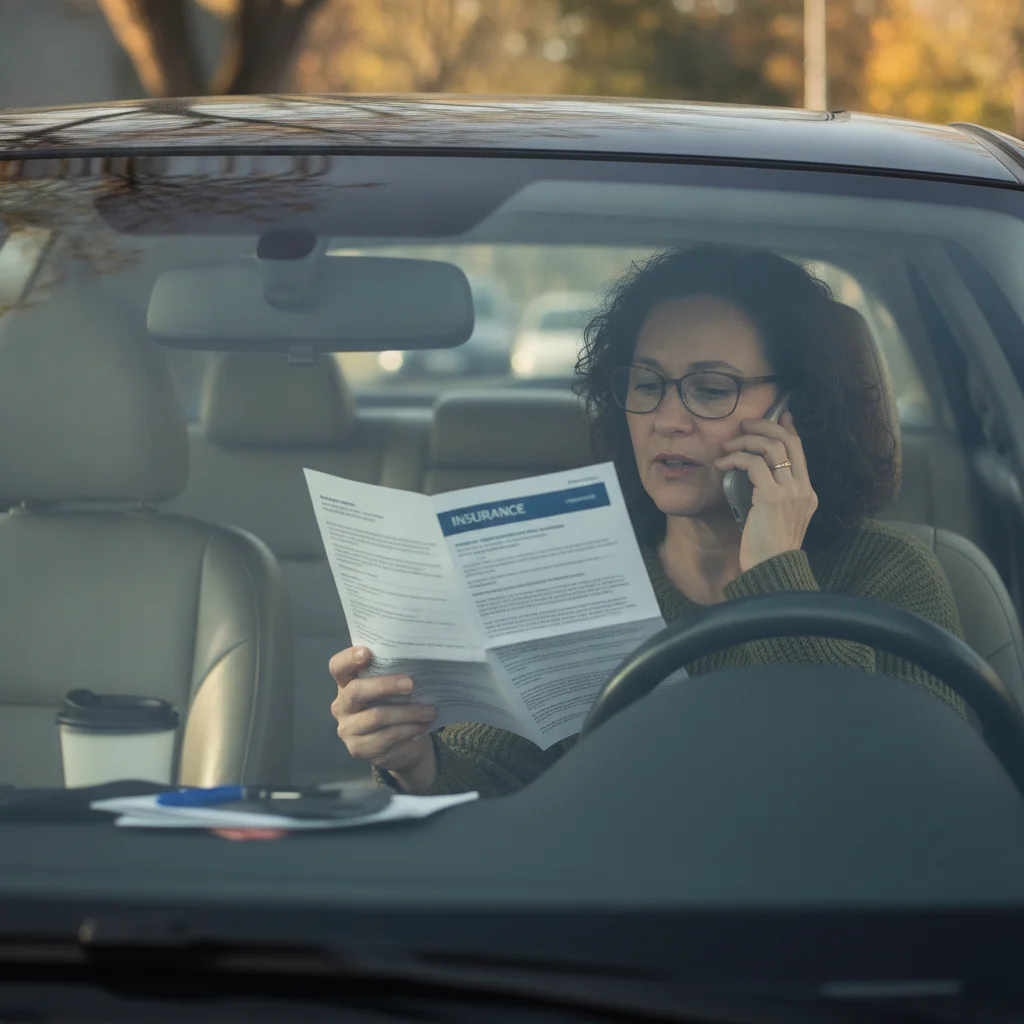
Walking into this conversation unprepared wastes time and limits what you can claim. Gather the following before you dial or open the chat window:
What you will need
Once you have these in hand, you're positioned to verify eligibility, push back if something seems wrong, and take notes that will serve you at your next renewal or when shopping competitors. If you'd rather start by reviewing your current policy before calling, this policy audit checklist walks through your declarations page line by line.
Current declarations page
Lets you verify which discounts are already coded so you don't waste time on credits you already have.
Vehicle VIN
Allows the rep to look up your exact trim level and factory safety features against the carrier's discount schedule.
Pen and notepad (or notes app)
For recording each discount discussed, current status, dollar value, and any eligibility requirements you need to meet.
State DMV driving record
Confirms your clean driving history when disputing eligibility for safe driver or accident-free discounts.
Student transcript or GPA documentation
Required proof for good student discount claims — most carriers ask for a current report card or transcript.
Military service documentation (DD-214 or ID)
Verifies veteran or active-duty status for military-specific discount eligibility.
The Step-by-Step Conversation
Work through these steps in order. Each step targets a category of discounts that is commonly missed or undersold. Don't rush — a methodical approach yields far better results than a single sweeping question.
State your purpose clearly at the start
When the rep picks up, don't open with a generic complaint about your rate. Say something specific: "I'd like to do a discount review on my policy. I want to go through each discount category and verify I'm receiving everything I qualify for."
This frames the conversation as collaborative and signals that you know what you're doing. Reps are more thorough when they sense an informed customer. Ask the rep to pull up your full policy file before you start.
Ask about every driver-behavior discount by name
Work through this list explicitly, one item at a time:
- Safe driver / good driver discount: "Am I currently receiving a safe driver credit, and what's the lookback period you use?"
- Accident-free discount: Distinct from safe driver at some carriers — verify both.
- Defensive driving course credit: "If I completed a state-approved defensive driving course, would that apply a discount, and how much?"
- Telematics / usage-based program: "What does your driving monitoring program offer, and is there a guaranteed discount just for enrolling?"
What qualifies for a good driver discount and what doesn't explains exactly how carriers evaluate your record for these credits, so you know what to expect before you ask.
Ask about vehicle-specific discounts
Your car's features can generate multiple separate discounts, but only if they're coded correctly in your policy. Ask:
- "Does my policy reflect a discount for anti-lock brakes, airbags, or automatic emergency braking?"
- "Is there a credit for my vehicle's anti-theft system or tracking device?"
- "Does my car's safety rating with NHTSA or IIHS affect my rate, and is that reflected?"
- "If I drive an electric or hybrid vehicle, is there an alternative-fuel discount available?"
Have your Vehicle Identification Number (VIN) ready so the rep can cross-reference your specific trim level and factory options against their discount schedule.
Ask about policy structure discounts
These discounts relate to how your policy is set up rather than who you are or what you drive:
- Multi-policy (bundle) discount: "If I move my homeowners or renters insurance to you, what discount applies, and what does that combined premium look like?"
- Multi-vehicle discount: "Are all vehicles on this policy receiving a multi-car rate?"
- Paid-in-full discount: "What discount applies if I pay my six-month or annual premium upfront?"
- Paperless / auto-pay discount: "Am I receiving credits for electronic statements and automatic payment?"
- Early renewal discount: "If I renew before my current policy expires, is there a discount for doing that?"
Ask about affiliation and membership discounts
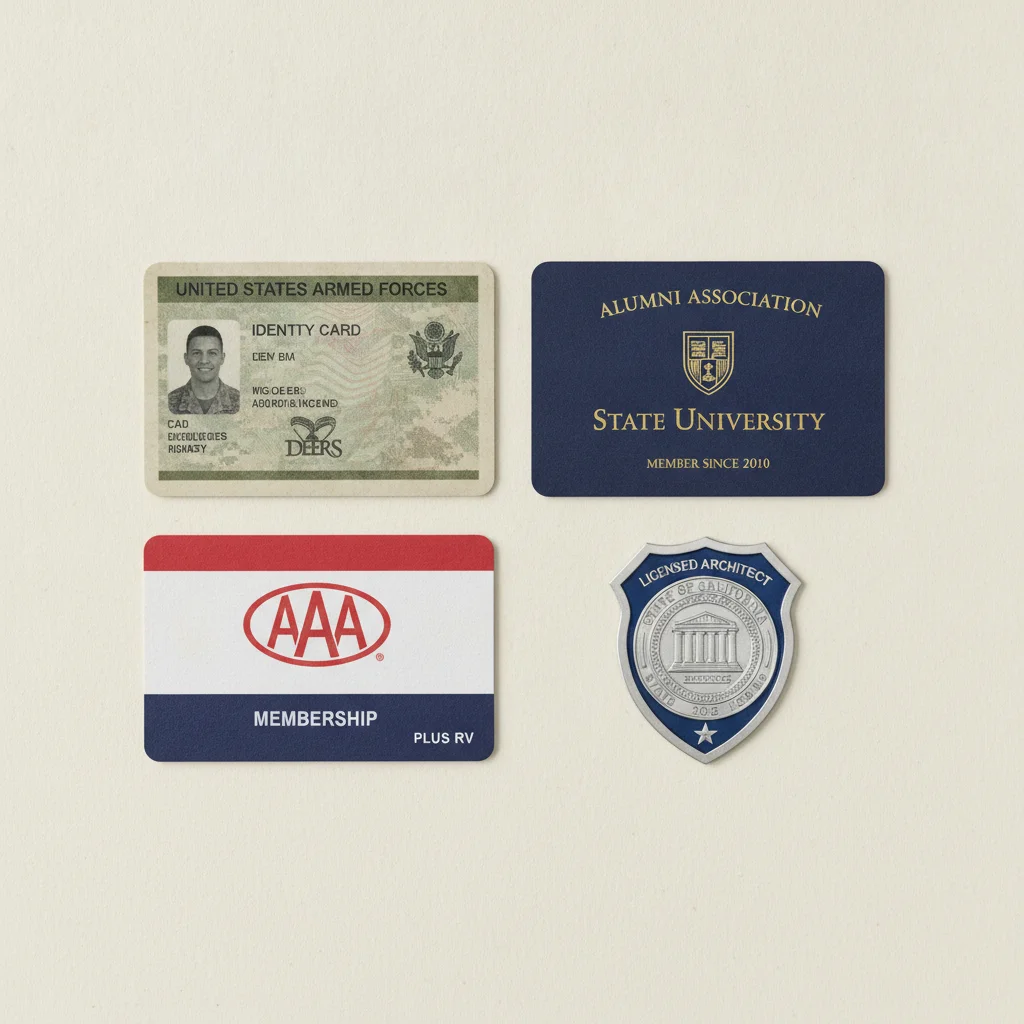
This is the category most reps skip unless directly prompted. Run through your affiliations:
- Current employer or professional license (teachers, nurses, engineers, lawyers, CPAs, and others often qualify)
- Alumni association of any college or university
- AAA or other roadside assistance membership
- Credit union membership
- AARP or other age-based membership organizations
- Military or veteran status (active duty, reserve, National Guard, or veteran discharge)
- Fraternal organizations, civic groups (Rotary, Elks, etc.)
Ask: "Do you have affinity or group discounts tied to employers, professional associations, alumni groups, or memberships? Let me tell you what organizations I belong to." Then list them. See the full breakdown in our guide to every auto insurance discount worth knowing about.
Ask about household and life-stage discounts
Your household composition and recent life events can trigger credits that don't appear on any standard discount checklist:
- Good student discount: For full-time students (typically under 25) with a B average or better
- Distant student discount: College students living more than 100 miles from home without a car at school
- Newly married discount: Some carriers adjust rates favorably at marriage
- Homeowner discount: Even if you don't bundle, some carriers offer a small credit for homeowners
- Mature driver discount: Drivers over 55 who complete a certified refresher course
Ask: "Are there any credits tied to changes in my household or life situation — new drivers, students, marriage, home purchase — that I should verify are reflected?"
Request a written summary and confirm your revised premium
Before you end the call, ask the rep to summarize every discount currently applied to your policy and the dollar or percentage value of each. Then ask: "Is there any discount we discussed that I don't currently qualify for, and what would change my eligibility?"
Request a confirmation email or updated declarations page. If any new discounts were added during the call, verify that your revised premium reflects them before your next billing date. Keep this documentation — it becomes your baseline for the next renewal conversation and for comparison shopping.
Categories Most Drivers Forget to Ask About
Even drivers who do ask often skip these categories. They're worth a dedicated mention because they represent real money for a significant portion of the insured population.
Military and Veteran Discounts
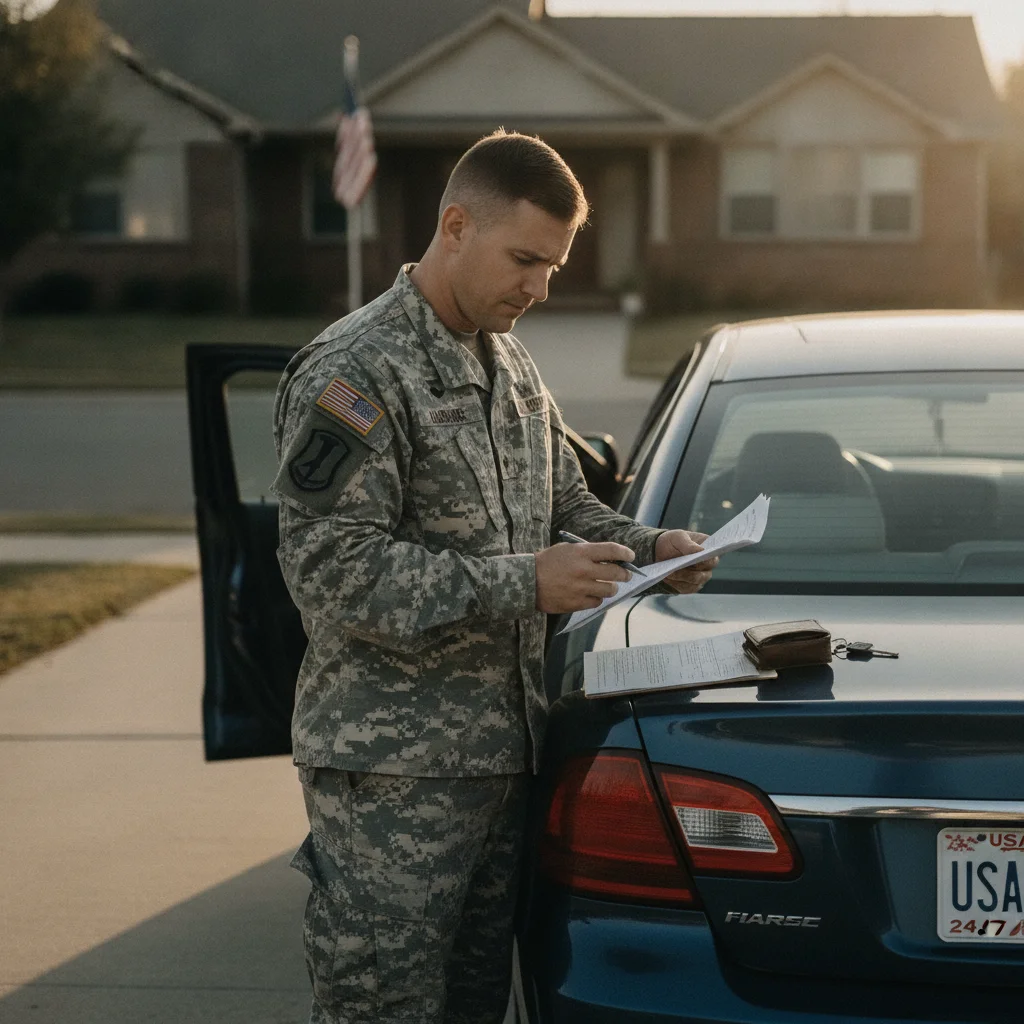
Several major carriers — GEICO, USAA (exclusively), Liberty Mutual, and others — offer discounts for active duty service members, veterans, and in some cases immediate family members. These discounts are rarely advertised on mainstream channels. Military and veteran auto insurance discounts breaks down what's available by carrier and how to document eligibility.
Professional and Membership Affiliations
Doctors, engineers, teachers, lawyers, and members of specific professional associations often qualify for affinity group pricing. The same applies to alumni associations, credit unions, and some employer benefit programs. Most people have never connected their professional identity to their insurance bill. Professional and membership discounts most drivers never think to ask about covers the full scope of who qualifies.
Young Driver-Specific Credits
If you have a young driver on your policy, good student discounts, distant student discounts (for college students who don't have a car at school), and driver training credits can each apply simultaneously — but you typically have to verify eligibility for each one separately. Which discounts actually move the needle for young drivers shows you which ones produce the biggest premium impact.
Vehicle Safety and Anti-Theft Features
Factory-installed features like automatic emergency braking, lane-keeping assist, adaptive cruise control, and anti-theft systems each have separate discount codes at most carriers. If your vehicle was manufactured in the last five years, there's a good chance your rep hasn't coded every applicable feature on your policy. Ask specifically: "Does my policy reflect all available credits for my vehicle's safety and anti-theft technology?"
Don't Assume Safety Features Are Auto-Coded
Carriers rely on vehicle databases to identify factory features, but these databases are imperfect — especially for model years 2019 and newer where ADAS features varied significantly by trim. Always ask explicitly rather than assuming your vehicle's features are accurately reflected in your rate.
Some Discounts Require Annual Recertification
Good student discounts, defensive driving credits, and some telematics discounts require periodic verification. If you received one of these credits and never submitted updated documentation, it may have quietly expired. Ask the rep to confirm which discounts on your policy require renewal, and when.
Low-Mileage and Usage-Based Options
If you work from home, retired, or simply don't drive much, you may qualify for a low-mileage discount with nothing more than a self-reported annual mileage figure — or a telematics plug-in that verifies your actual driving. Some carriers offer both, and they don't always stack, so ask which option produces a better rate for your specific situation before enrolling.
After the Call: What to Do With What You Learned
The conversation is only valuable if you act on it. Here's how to close the loop:
- Request a revised quote in writing. If the rep applied new discounts during your call, ask for a confirmation email or updated declarations page showing the revised premium. Verbal commitments can get lost.
- Note every discount you were told you don't qualify for, and why. Eligibility criteria change. A safe driving discount you don't qualify for today because of a 2022 speeding ticket may be available in 12 months. Set a calendar reminder.
- Use the information to shop. Now that you know which discounts you legitimately qualify for, you can ask competing carriers the same questions from a position of knowledge. Comparing auto insurance policies effectively gives you a framework for doing that apples-to-apples comparison.
- Check for discounts hiding in your current policy that weren't mentioned. Discounts hiding in plain sight on your auto insurance policy covers credits that sometimes appear on declarations pages without clear labels — verify yours line by line.

Set an Annual Discount Review Reminder
Put a recurring calendar event 60 days before each renewal date. That's the window where you have the most leverage — you can shop competitors and negotiate from a position of knowledge. Life changes between renewals, and discounts you didn't qualify for last year may apply now.
Online Chat Can Be More Effective Than Phone
Many carriers' chat agents have the same system access as phone reps, and the written format naturally creates a transcript you can reference later. If you prefer documentation over real-time conversation, chat is a reliable alternative — just confirm the agent's name and the date at the start of the session.
Your Independent Agent Can Do This Work For You
If you work with an independent broker who represents multiple carriers, they can run a discount audit across several insurers simultaneously. This is one of the clearest practical advantages of the independent agent model over buying direct.
Finally, repeat this process at every renewal — not just when rates go up. Your life circumstances change. A new job title, a completed defensive driving course, a teen who graduated, a new vehicle model year — each of these can open a discount category that didn't apply last year. The insurers who benefit most from customer inertia are counting on you not to make this call.

All claims are backed by peer-reviewed research. Sources on request.