
Key Takeaways
The Discount Category Most Drivers Skip Entirely
When drivers think about cutting their car insurance bill, they usually think about the obvious levers: a clean driving record, bundling home and auto, or raising their deductible. What most people never consider is the professional or organizational group they belong to — and whether that membership quietly entitles them to a reduced rate.
Insurers call these affinity discounts or group discounts, and they exist because insurers have found that members of certain professional and civic organizations statistically file fewer claims. That actuarial edge gets passed back to members in the form of a rate reduction. The problem is that carriers don't advertise these credits the way they promote safe-driver or multi-policy discounts. You won't find a banner on their website saying "AARP members save 8%." You have to know to ask.
The good news: asking takes about three minutes. The potential payoff can be $50 to $400 per year depending on your insurer and how many qualifying affiliations you have. For a broader view of the full discount landscape, see Every Auto Insurance Discount Worth Knowing About — this article focuses specifically on the affiliation-based credits that most drivers never think to claim.

Below are the membership and professional categories most likely to unlock a discount, along with what to say when you call your insurer.
Your Employer or Corporate Affiliation
Large employers — particularly Fortune 500 companies, government agencies, and major hospital systems — frequently have negotiated group insurance rates with one or more carriers. This isn't charity; it's a volume arrangement. The insurer gets access to a pool of potentially lower-risk, financially stable customers, and the employer gets to offer a workplace perk that costs them nothing.
How to find out: check your HR benefits portal or ask HR directly whether any insurance carriers have a corporate arrangement. Even if auto insurance isn't listed as a formal benefit, your employer's name alone may qualify you for a discount with certain carriers. Geico, for instance, maintains a list of hundreds of employer affiliates through its Federal employee and partner programs. Liberty Mutual has similar corporate discount arrangements.
If you work for a university, a healthcare network, a large retailer, or a government entity at the federal, state, or local level, the probability that at least one major insurer recognizes your employer as an affinity group is high. All you have to do is ask.
Large employers often have negotiated group rates with insurers — check with HR before your next renewal.
Alumni Associations and University Affiliations
Your college or university alumni association is one of the most commonly overlooked discount sources in auto insurance. Many alumni associations have partnership agreements with major carriers, and the discount is available not just to recent graduates but to any member of the association — which often means anyone who attended the school, regardless of whether they graduated.
Alumni associations at large state universities frequently partner with carriers like MetLife Auto & Home, Liberty Mutual, or Farmers to offer members a rate reduction, sometimes paired with additional perks like waived fees or accident forgiveness. In some cases, the discount is available simply by being an active dues-paying alumni member. In others, the association membership itself is free and the insurance benefit is available to all.
[in_content_images:1]To check: log into your alumni association portal or call their member services line. Ask whether they have a preferred auto insurance partner and what the discount entails. If you're a member of multiple alumni associations — say, a state school for undergrad and a private university for graduate school — check both.
University alumni associations frequently negotiate group auto insurance rates that any member can access.
Professional Licensing and Occupational Groups
Certain licensed professions carry implicit credibility with insurers. Nurses, physicians, teachers, engineers, lawyers, accountants, and first responders are among the occupational categories that multiple carriers treat as preferred risks. The logic is straightforward: these professions are associated with lower average claim frequency and severity in actuarial data.
This discount may show up in two distinct ways. First, some carriers apply an occupational discount directly based on your stated profession when you apply for a policy — no association membership required. Second, your professional licensing body may have a formal partnership with a carrier. The American Nurses Association, the National Education Association, and various state bar associations all have (or have had) preferred insurance arrangements for members.
When you're getting a quote or calling to review your policy, state your occupation clearly. Ask: "Do you offer any discount for [nurses / teachers / licensed engineers / etc.]?" The answer may surprise you. And if you belong to a professional licensing board or a state professional association, ask them directly whether they have an insurance partner offering member discounts.
Teachers, nurses, engineers, and first responders often qualify for occupational discounts that don't require any membership.
Unions and Labor Organizations
Union members are a significant and underserved group when it comes to auto insurance discounts. Major labor unions — including the AFL-CIO affiliates, the Teamsters, the United Auto Workers, and public sector unions like AFSCME — have negotiated group benefits for members that can include auto insurance discounts through partner carriers.
These arrangements are worth pursuing for two reasons. First, the discount itself can be meaningful — often 5% to 10% off base premiums. Second, union-negotiated insurance programs sometimes include additional protections or features, such as enhanced roadside assistance or locked-in rate guarantees for the duration of your membership.
Check your union's member benefits page or contact your local union rep. Ask specifically about auto insurance partnerships. If your union's national organization doesn't have one, your local chapter or regional affiliate might have its own arrangement with a regional carrier.
Union members often have access to negotiated group auto insurance rates — check your member benefits portal.
AARP and Age-Based Membership Organizations
AARP is the most prominent example of a membership organization that functions as a major insurance affinity group. Through its partnership with The Hartford, AARP members have access to auto insurance products specifically designed for drivers 50 and older, often at rates that reflect favorable claims data for this demographic. The AARP program includes features like accident forgiveness and a rate lock guarantee that many standard policies don't offer.
But the AARP-Hartford partnership isn't the only option in this category. Other organizations serving older adults — including AAA chapters, some YMCA affiliates, and various state-based senior advocacy organizations — may also have insurance partner arrangements.
If you're over 55 and haven't specifically looked into what your memberships offer, this is worth 20 minutes of research. The discount may be layered on top of a senior driver discount your insurer already applies, compounding your total savings.
AARP's partnership with The Hartford offers drivers 50-plus meaningful rate advantages beyond standard senior discounts.
AAA Membership
AAA is simultaneously a roadside assistance provider and an insurance carrier in many states. But even drivers who don't buy their auto insurance through AAA may find that their AAA membership qualifies them for a discount with their current insurer. Several major carriers recognize AAA membership as a positive affinity indicator and apply a modest rate reduction as a result.
More importantly, if you're not currently an AAA member and you're evaluating whether to join, the math often works in your favor: an annual AAA membership costs roughly $50 to $100 depending on your membership tier and region, and the combined value of roadside assistance coverage, travel discounts, and any insurer credit for membership can exceed that cost in the first year alone.
This one is worth checking with your insurer explicitly: "Do you offer a discount for AAA members?" Some carriers will apply it; others won't. And if yours doesn't, buying AAA insurance directly through the organization may still net you favorable pricing. Note that AAA insurance availability and pricing varies by state and local club.
AAA membership may earn you a discount with your current carrier — a question worth asking in under a minute.
Military and Veteran Service Organizations
Active duty service members, veterans, and their immediate families are among the best-positioned groups for auto insurance discounts, but many never claim what they're entitled to. This goes beyond the well-known USAA and GEICO military discounts. Veterans' service organizations — including the American Legion, Veterans of Foreign Wars (VFW), Disabled American Veterans (DAV), and AMVETS — often have insurance partnership arrangements or at minimum can connect members to preferred pricing programs.
GEICO explicitly advertises discounts for active military and members of certain military associations. USAA is the benchmark carrier for military families in terms of both pricing and coverage quality. But the discount opportunities from VSOs are less publicized and frequently overlooked.
If you or an immediate family member has served, start with a thorough review of what your VSO membership includes. For a detailed breakdown of what's available across the military discount landscape, Military and Veteran Auto Insurance Discounts: A Field Guide covers the territory in depth.
Veterans' service organizations have insurance partnerships that most members never investigate — start there.
Warehouse Clubs and Consumer Membership Retailers
Costco, Sam's Club, and similar warehouse retailers have expanded their member benefits well beyond bulk groceries and discounted gasoline. Costco in particular operates an auto insurance program through CONNECT, powered by American Family Insurance, that's available exclusively to Costco members and is regularly competitive with or better than rates available to the general public.
These programs work because the insurer pays the retailer an affinity fee for access to the member base — a cost the insurer factors into pricing. The result is that member pricing can be genuinely favorable, not just a marketing gloss over standard rates.
If you're already a Costco or Sam's Club member, getting a quote through their member insurance program costs nothing and takes the same amount of time as any other online quote. Do it at your next renewal. You may find that a membership you already pay for is worth more than you thought.
[in_content_images:2]Costco's member-only insurance program through American Family is worth a quote at every renewal.
Fraternal Organizations and Civic Groups
This is perhaps the least obvious category on this list, but it's real. Fraternal organizations — including Elks, Moose Lodge, Knights of Columbus, and similar civic groups — sometimes have group insurance arrangements with carriers as a member benefit. The same applies to certain religious organizations and service clubs like Rotary or Lions International chapters, depending on the local or national affiliate.
These discounts tend to be smaller and less consistently available than employer or alumni credits. But if you're already a member, the cost of asking is zero. Contact your organization's national office or check the member benefits section of your membership account.
Also worth noting: some of these organizations may not have a direct insurance partnership but may have a preferred broker or agent who has negotiated favorable rates for members on an informal basis. A conversation with your local chapter leadership is usually the fastest way to find out.
Fraternal organizations like the Elks or Knights of Columbus sometimes include group insurance benefits most members overlook.
Credit Unions and Financial Institution Memberships
Credit unions exist to serve their members at cost, and many have extended that mandate into insurance. A substantial number of credit unions offer auto insurance products directly or maintain referral partnerships with insurance carriers that come with rate advantages for members. Some credit union insurance programs are administered through TruStage (formerly CUNA Mutual Group), which serves the credit union movement broadly and provides auto coverage to members at competitive rates.
If you bank with a credit union, log into your account and look for insurance options under member benefits. Even if your credit union doesn't sell insurance directly, they may have a preferred carrier relationship that earns you a discount elsewhere.
Beyond credit unions, some traditional banks — particularly regional and community banks — have similar referral arrangements with insurance partners. This is worth checking even if you don't expect it, because these partnerships sometimes produce genuinely favorable pricing for account holders who ask.
Credit union members often have access to insurance through TruStage or carrier partnerships that undercuts open-market rates.
How to Actually Claim These Discounts
Finding out you qualify is step one. Getting the discount applied to your policy is step two — and they're not automatic.
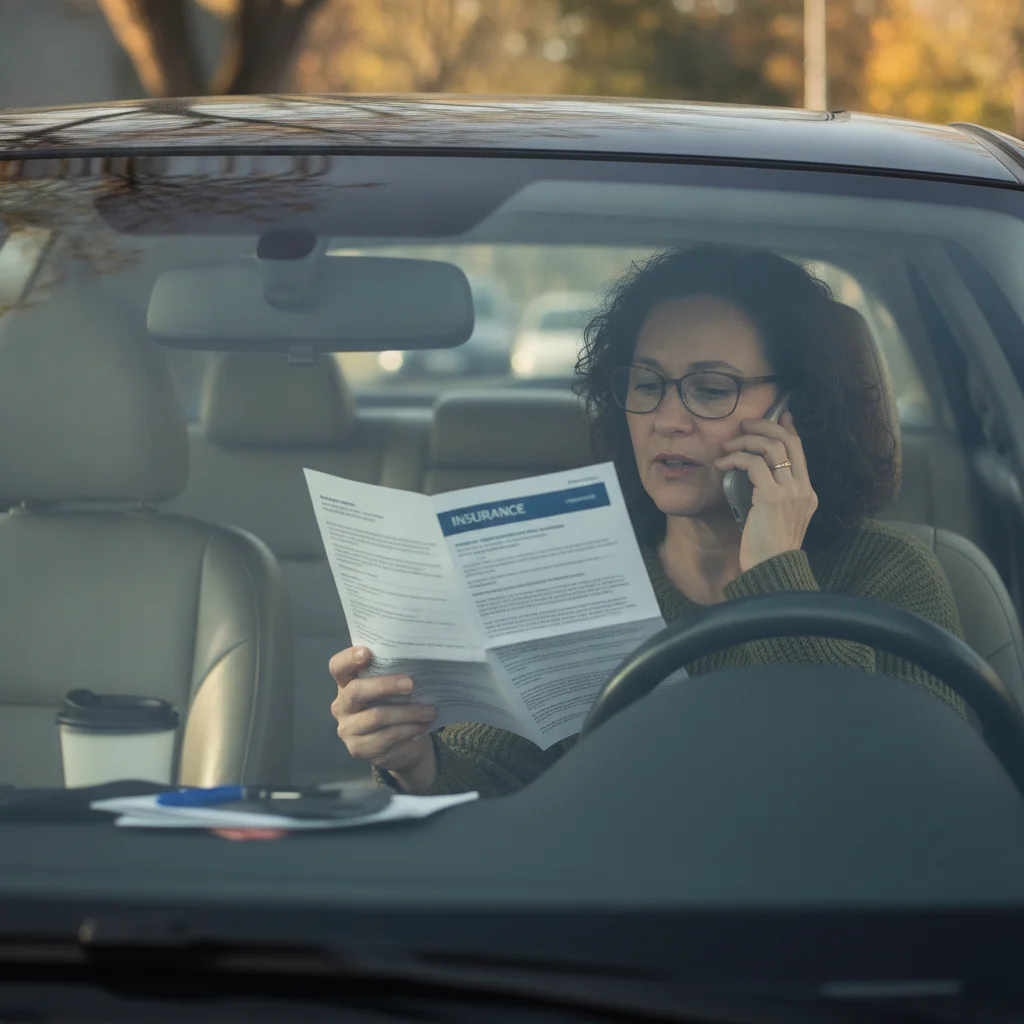
Start by contacting your insurer directly, either through your agent or the company's customer service line. Ask explicitly: "Do you offer discounts for members of , employees of , or alumni of ?" Don't ask a vague open-ended question like "what discounts do I qualify for?" — that rarely surfaces affinity credits. Specificity forces the rep to actually check. For a full list of sharp questions that surface hidden savings, see Asking Your Insurer the Right Questions to Surface Hidden Discounts.
You'll likely need to provide documentation — a pay stub, membership card, alumni ID, or a letter from your professional association. Keep this ready. Once the discount is applied, it typically carries forward automatically at each renewal, but it's worth verifying annually, especially if your employment or membership status changes.
Discounts Vary by State and Carrier
Not every affinity discount is available in every state. Insurance is regulated at the state level, and some discount programs that a carrier offers nationally may be restricted or unavailable in certain jurisdictions. Always confirm availability in your state when you inquire. Your insurer or agent can tell you which credits are approved for your specific location.
Membership Must Typically Be Current
Most affinity discounts require active, current membership in the qualifying organization. A lapsed alumni association membership or an expired union card generally won't qualify you for the discount. If your membership has lapsed and the renewal cost is modest relative to the insurance savings, rejoining may be worth the math. Run the numbers before deciding.
One final note: if your current insurer doesn't participate in your group's affinity program, a competing carrier might. That's a legitimate reason to shop your policy. Loyalty to a carrier that doesn't recognize your credentials costs you money. Check whether your professional association has a preferred insurer partnership — those deals are often negotiated at favorable rates that even a direct quote comparison wouldn't reveal.
Ask at Every Renewal, Not Just Once
Insurer partnerships with affinity groups change over time — new ones get added, old ones get restructured. Even if your insurer said no to a group discount last year, it's worth asking again at your next renewal. Five minutes of follow-up once a year is a reasonable investment for a potential rate reduction that applies indefinitely.
Don't Assume Your Current Carrier Is the Best Fit
If your current insurer doesn't recognize any of your affiliations, that's a real reason to shop. Run a competing quote through a carrier that does have a partnership with your employer, alumni group, or professional association. The combination of a new-customer rate and an affinity discount can produce meaningfully lower premiums than a loyalty discount from your current carrier.
Also worth noting: affinity discounts don't replace other savings — they stack. Combine a group discount with a good driver credit and a multi-policy bundle, and the cumulative effect can be substantial. And if you've been meaning to check what else is buried in your current policy, Discounts Hiding in Plain Sight on Your Auto Insurance Policy is a useful companion read.

All claims are backed by peer-reviewed research. Sources on request.