Key Takeaways
Auto Insurance Discounts
Auto insurance discounts are reductions to your base premium that insurers apply when you meet certain qualifying criteria — things like maintaining a clean driving record, bundling multiple policies, or equipping your car with safety technology. They are applied as a percentage reduction to one or more coverage components of your policy. Discounts do not change your coverage; they reduce what you pay for the same protection.
Insurers file their discount programs with state insurance regulators, so the discounts available to you — and their maximum allowable value — can vary significantly by state. Discounts are typically applied multiplicatively, not additively, which means stacking five discounts rarely results in a 5x reduction.
Why Insurers Offer Discounts at All
It might seem like insurers are leaving money on the table every time they slash a premium. In reality, discounts are a pricing precision tool — a way to attract and retain lower-risk customers while keeping the overall book of business profitable.
Every discount an insurer offers is backed by actuarial data. When a company offers a good driver discount, it's because data shows that drivers with clean records file significantly fewer claims than drivers with violations. The discount is, in a sense, the insurer passing along the projected savings from reduced claims costs. The same logic applies across the board — bundling policies reduces administrative overhead and churn, anti-theft devices lower vehicle theft claims, and telematics programs allow insurers to price risk with far greater precision than blunt demographic proxies.
There's also a competitive dimension. The personal auto insurance market is intensely competitive in most states. Discounts serve as marketing tools that attract price-sensitive shoppers without forcing an insurer to lower its base rates across the board. A driver who qualifies for eight discounts feels like they're getting a personalized deal — and in many ways, they are.
“Discounts are not charity. Every discount an insurer offers has been stress-tested against loss data. If they're offering it, they've determined that the customers who qualify for it cost them less money — and they're willing to share part of that savings to win the business.”
— J. Robert Hunter, Former Texas Insurance Commissioner and Director of Insurance, Consumer Federation of America
Understanding this underlying logic helps you as a consumer. It tells you that discounts aren't random giveaways — they're tied to behaviors and attributes that genuinely reduce your insurer's exposure. If you can demonstrate that you are a lower-risk customer, you have real leverage to lower your bill.
The Major Discount Categories Explained
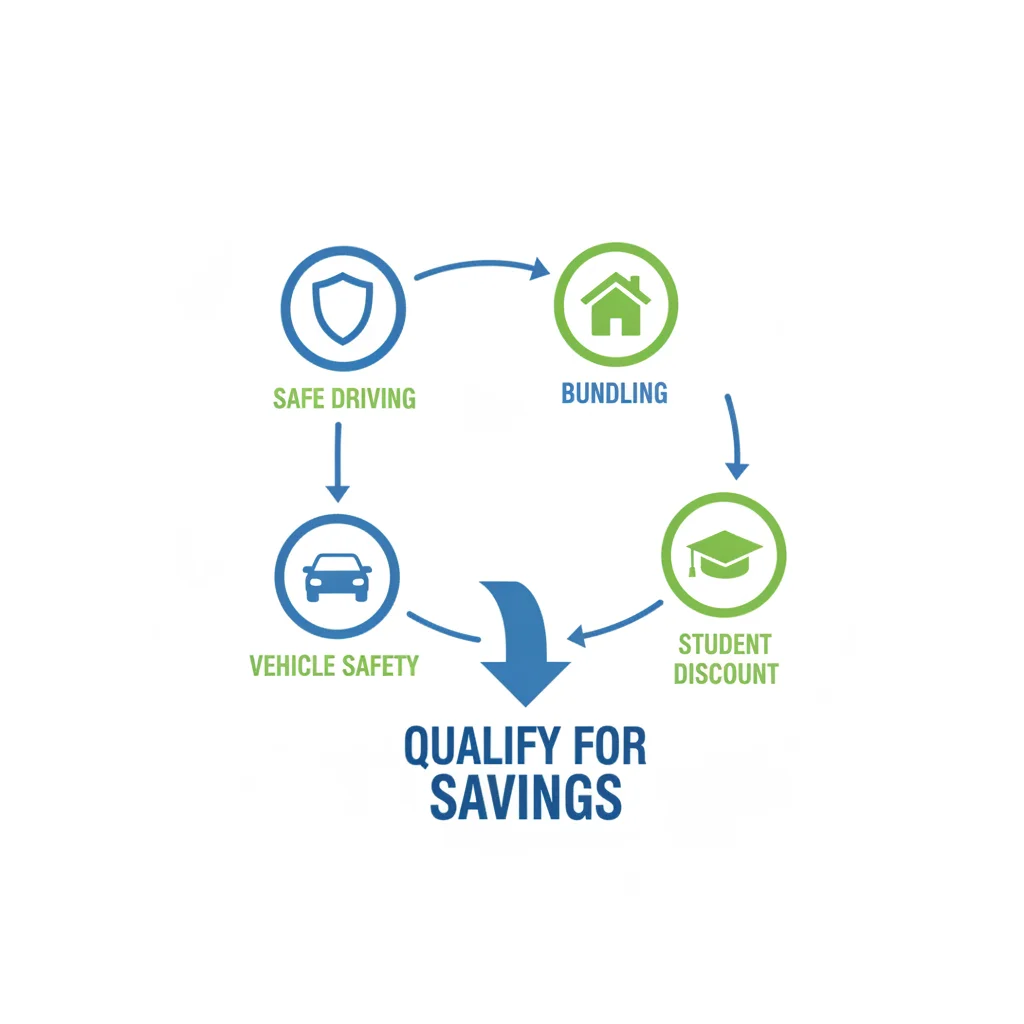
While every insurer has its own discount menu and branding, the industry largely organizes savings into a handful of core categories. Knowing these buckets helps you systematically audit your own policy.
Driving Behavior and Record
This is the oldest and most universal category. A clean driving record — no at-fault accidents, no moving violations — qualifies you for what most companies call a good driver, safe driver, or accident-free discount. The longer your clean record, the larger the discount in many cases. For a deep dive into exactly what criteria insurers use, see our Good Driver Discounts Explained article.
Telematics and Usage-Based Insurance (UBI)
Telematics programs use a mobile app or plug-in device to monitor how you actually drive — speed, braking, cornering, nighttime driving, and mileage. Safe behavior earns a discount, typically applied at renewal after a monitoring period. Low-mileage drivers also benefit from pay-per-mile programs, which charge a base rate plus a per-mile fee. These programs have exploded in adoption because they benefit both parties: you save money if you drive safely and sparingly; the insurer prices your risk more accurately.
Policy and Loyalty Incentives
Bundling your auto policy with homeowners, renters, or life insurance from the same carrier — often called a multi-policy or bundling discount — is one of the most consistently valuable discounts available, routinely saving 5–25%. Insuring multiple vehicles on one policy (multi-car discount) follows the same logic. Paying your premium in full upfront, going paperless, setting up automatic payments, and signing up before your current policy expires (advance purchase or early signing discount) are additional policy-structure savings.
Vehicle Safety and Anti-Theft Features
Cars equipped with airbags, anti-lock brakes, electronic stability control, and factory-installed anti-theft systems typically qualify for vehicle safety discounts. Newer vehicles with advanced driver-assistance systems (ADAS) — automatic emergency braking, lane departure warning, adaptive cruise control — are increasingly triggering discounts at forward-thinking insurers. The rationale is direct: these features reduce crash severity and theft rates.
Driver Demographics and Affiliations
Students maintaining a B average or better commonly qualify for a good student discount. Mature driver discounts reward drivers over a certain age (often 55+) who complete an approved defensive driving course. Military members, federal employees, educators, and members of certain professional associations or alumni networks may qualify for group affiliation discounts. These are among the most commonly overlooked discounts — see our guide on discounts hiding in plain sight for the full picture.
Up to 25%
Typical bundling discount range
According to industry surveys, multi-policy bundling discounts range from 5% to 25% depending on the insurer and state, making it one of the most valuable single discounts available.
~20%
Average good driver discount
Major national insurers commonly advertise good driver or accident-free discounts averaging around 20%, though eligibility periods and exact percentages vary by carrier.
30%+
Maximum telematics discount at some carriers
Some usage-based insurance programs, such as those from Progressive and Allstate, advertise potential savings exceeding 30% for drivers who demonstrate consistently safe behavior during the monitoring period.
10–30
Distinct discount categories at major insurers
Large national carriers typically offer between 10 and 30 separately coded discount programs, though driver eligibility for all of them simultaneously is uncommon.
Over 50%
U.S. drivers enrolled in telematics programs by 2025
Industry analysts at LexisNexis estimate that telematics-based programs have crossed into mainstream adoption, with more than half of new personal auto policies involving some form of usage data collection.
Ask for the Full Discount Checklist
When calling your insurer at renewal, ask the agent to read through their complete discount checklist with you line by line. Many agents won't proactively volunteer every possible discount — they respond to what you tell them. Being explicit about your job, your vehicle's safety features, your affiliations, and your driving habits puts you in control of the conversation.
Opt Into Telematics Before You Dismiss It
Many drivers avoid telematics programs out of privacy concerns or assumption that they'll drive poorly during monitoring. In practice, most programs only reward safe behavior — they don't penalize bad driving with a surcharge (check your insurer's specific terms). If you're a low-mileage or careful driver, opting in is almost always worth it.
How Discount Stacking Actually Works
One of the most common misconceptions about auto insurance discounts is that they add up linearly. If you have a 10% good driver discount and a 10% bundling discount, many people assume they're getting 20% off. That's not how it works.
Insurers typically apply discounts multiplicatively and sequentially against the premium, not the original base rate. Here's a simplified example:
| Discount Applied | Running Premium |
|---|---|
| Base Annual Premium | $1,800 |
| Good Driver (−10%) | $1,620 |
| Multi-Policy (−12%) | $1,426 |
| Paperless + AutoPay (−5%) | $1,354 |
| Anti-Theft Device (−5%) | $1,287 |
The total reduction looks like 32%, but the actual savings from the original $1,800 is about 28.5%. Each discount is applied to an already-reduced number. The practical takeaway: stacking discounts is absolutely worth doing — the savings are real — but your final bill won't be as low as simply adding all the percentages together.
Also note that discounts are not always applied uniformly across all coverage components. A good driver discount might reduce your liability premium but not your comprehensive or collision rates. Some discounts apply to the total policy premium; others are targeted. Read the fine print or ask your insurer directly which coverages each discount touches.
Discounts Are State-Regulated
Insurance is regulated at the state level, and each insurer must file its discount programs with the state's department of insurance. This means a discount available to a driver in Ohio may not exist for a driver in California with the same insurer. Always verify discount availability in your specific state rather than assuming what you've read nationally applies to you.
Multiplicative Stacking Has a Floor
In most states, insurers cannot discount a policy below a minimum premium threshold set by their filed rating plan. This means that even if you technically qualify for a dozen discounts, there is a floor below which your premium will not fall. This rarely affects typical drivers, but it is worth knowing if you have an unusually favorable risk profile.
Why the Same Driver Gets Different Discounts at Different Insurers
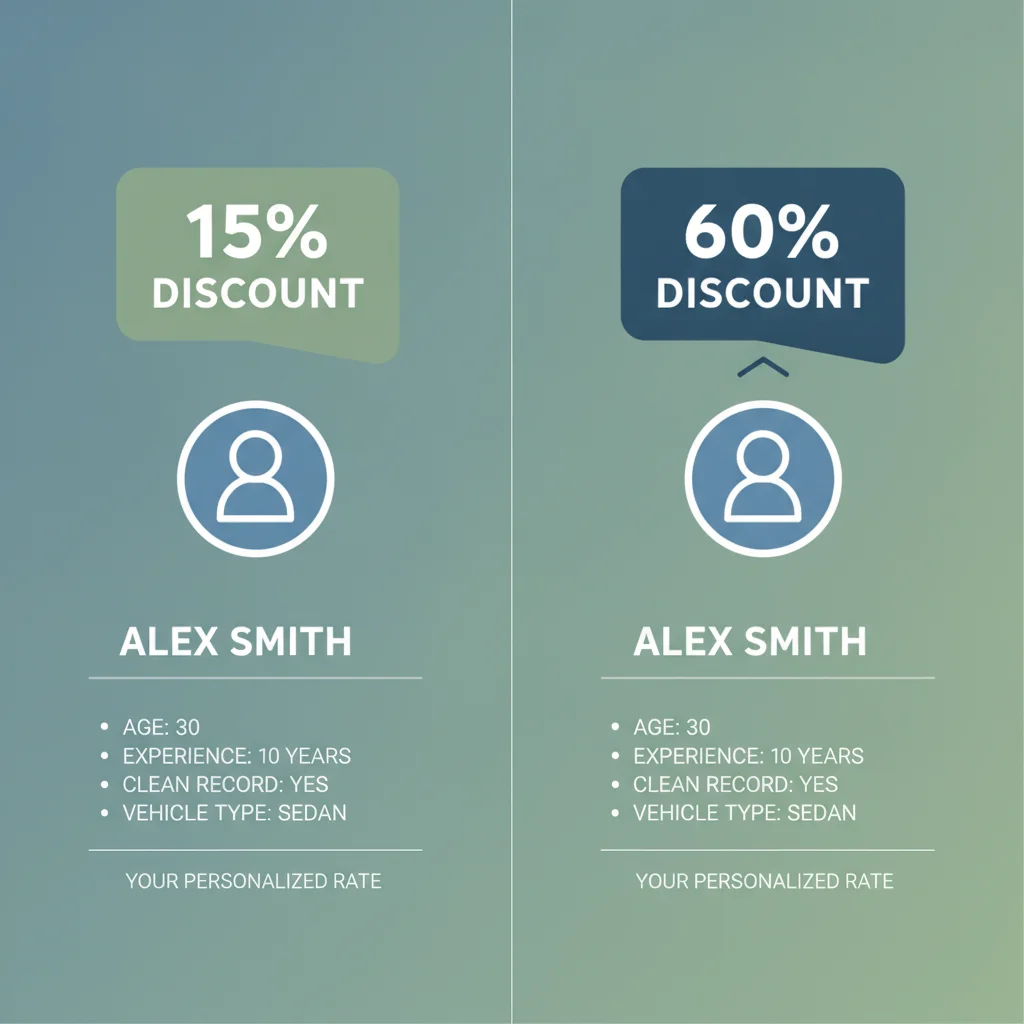
Here's a frustrating reality that trips up a lot of drivers: the exact same person can receive wildly different discount percentages — and end up paying very different premiums — at competing insurers. This isn't a glitch. It's by design.
Each insurer files its own rating plan with state regulators, and that plan includes its own discount structure, eligibility thresholds, and maximum values. One company might offer a 25% good driver discount; another might cap it at 10%. One insurer might have a robust telematics program that rewards safe drivers generously; another might not offer telematics at all. Group affiliation discounts vary enormously — Insurer A might partner with your alumni association; Insurer B might not.
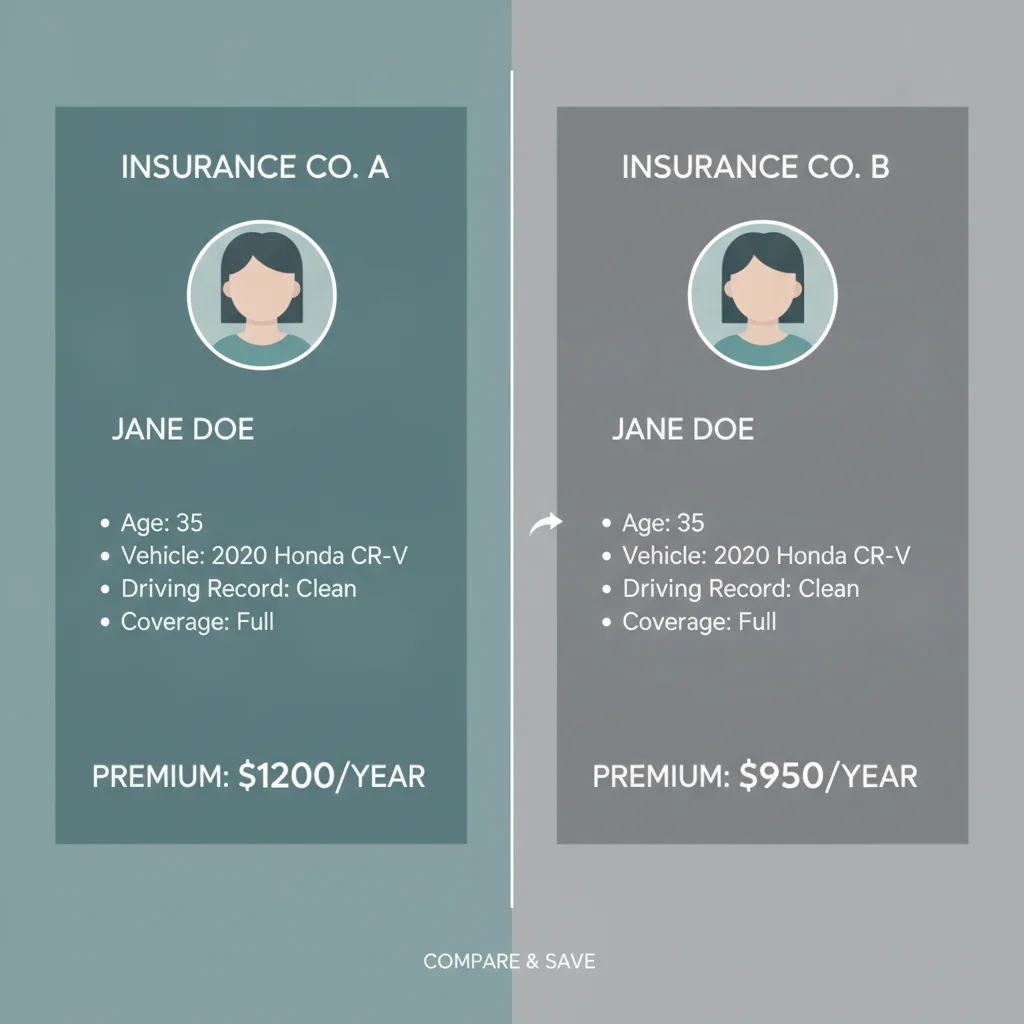
There's also variation in what each insurer considers its "base rate" before discounts are applied. A company advertising larger discounts might have a higher base rate, meaning the net premium after discounts is actually comparable to — or higher than — a competitor with smaller advertised discounts but a lower starting point. This is precisely why comparing final quoted premiums across multiple insurers is more important than comparing discount menus. See the full explanation of this pricing dynamic in our article on why discount rates vary so much between insurers.
The bottom line: don't anchor to your current insurer's discount program. Use a structured policy comparison process to evaluate what you'd actually pay elsewhere — discounts and all — before assuming you're getting the best deal.
How to Systematically Claim Every Discount You Qualify For
The insurance industry operates largely on a passive disclosure model: most insurers will apply discounts you explicitly qualify for during the quote process, but they are not required to proactively audit your policy for missed savings after the fact. That means the burden falls on you.
At the Quote Stage
When shopping for new coverage, don't just fill out the online form and accept the generated quote. Call the insurer or work with an independent agent and specifically ask: "What discounts am I being given, and what other discounts do you offer that I might qualify for?" Have documentation ready — your driving record, proof of a monitored alarm system, your student's GPA, membership cards for professional associations.
At Each Renewal
Your life changes. You might have gotten married, moved, paid off your car, installed a new security system, or had a prior accident fall off your record. Each of these life events can unlock new discounts or remove surcharges. Make a habit of reviewing your discount eligibility every 12 months. A quick call to your insurer before renewal is often all it takes.
Don't Overlook the Full Discount Landscape
For a comprehensive inventory of every discount category worth pursuing, the full auto insurance discount guide covers everything from alumni credits to vehicle storage discounts. It's worth cross-referencing your current policy against that list annually.
Ask for the Full Discount Checklist
When calling your insurer at renewal, ask the agent to read through their complete discount checklist with you line by line. Many agents won't proactively volunteer every possible discount — they respond to what you tell them. Being explicit about your job, your vehicle's safety features, your affiliations, and your driving habits puts you in control of the conversation.
Opt Into Telematics Before You Dismiss It
Many drivers avoid telematics programs out of privacy concerns or assumption that they'll drive poorly during monitoring. In practice, most programs only reward safe behavior — they don't penalize bad driving with a surcharge (check your insurer's specific terms). If you're a low-mileage or careful driver, opting in is almost always worth it.
Consider Whether Coverage Add-Ons Are Offsetting Your Savings
While stacking discounts can meaningfully reduce your premium, it's also worth checking whether you're carrying optional coverage add-ons you no longer need. Removing unnecessary riders can generate savings that rival or exceed what discounts alone deliver.

All claims are backed by peer-reviewed research. Sources on request.