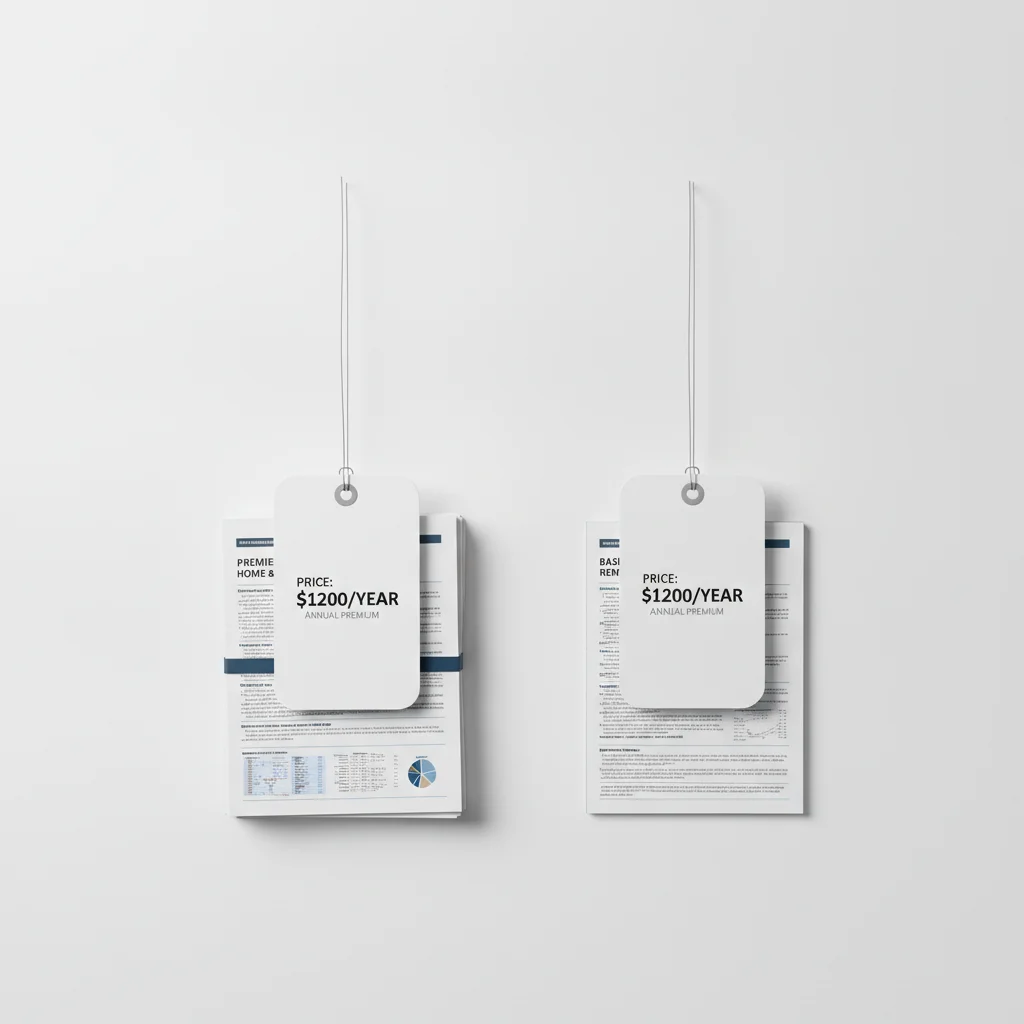
Key Takeaways
Coverage Quality vs. Price
Coverage quality refers to the actual protection a policy provides — including liability limits, deductibles, exclusions, and add-ons — rather than just its monthly premium. Two policies at the same price can offer dramatically different levels of financial protection. A cheap policy saves money upfront but may leave you exposed to thousands of dollars in out-of-pocket costs after a claim.
Insurers compete on price by adjusting coverage sub-limits, endorsement availability, and claims-handling processes — all of which are invisible in a standard quote comparison tool.
Why the Premium Is the Wrong Place to Start
When you're comparing auto insurance quotes, it's tempting to sort by price and call it done. But the premium you see on a quote is the result of dozens of decisions an insurer made about what to include, what to cap, and what to exclude entirely. Two drivers can be quoted the same price by two different companies — and end up with wildly different financial protection.
Quotes show you a price, not a policy. What actually determines whether you're covered in a serious accident is the liability limit on your bodily injury coverage, not the headline number on the comparison site. Start there — not with the premium.

This article breaks down the specific terms, limits, and features that separate a genuinely protective policy from one that merely looks affordable until you need it.
Liability Limits: The Number That Actually Protects You
Liability coverage pays for the other person's medical bills, lost wages, and property damage when you're at fault in an accident. Every state requires some minimum, but those minimums are dangerously low. Many states require only $25,000 per person in bodily injury liability — which is less than a single ER visit for a serious injury.
1 in 8
Drivers on US roads are uninsured
According to the Insurance Research Council's most recent national estimate, approximately 12.6% of motorists carry no auto insurance.
$25,000
Minimum bodily injury limit in many states
More than half of U.S. states allow minimum bodily injury limits of $25,000 per person — less than the average cost of a single emergency hospitalization.
14–21 days
Average vehicle repair time after major accident
Industry data from CCC Intelligent Solutions shows repair cycle times have lengthened significantly due to parts delays, making rental reimbursement coverage more critical than ever.
~18%
Average depreciation in year one for new cars
Edmunds data consistently shows new vehicles lose roughly 15–20% of their value in the first year, making gap coverage essential for most financed buyers.
3x
Cost difference between minimum and adequate liability coverage
Consumer advocates estimate that upgrading from state-minimum to 100/300/100 liability limits typically costs less than three times as much — often only $20–$40 more per month.
If you cause an accident that injures multiple people and your limits are exhausted, you're personally responsible for the remainder. That means your savings, home equity, and future income can be targeted in a lawsuit. A cheap policy often achieves its low price simply by selling you those state minimums.
The benchmark worth targeting is 100/300/100: $100,000 per person, $300,000 per accident for bodily injury, and $100,000 for property damage. If you have significant assets, go higher. Umbrella policies can extend coverage further for surprisingly little additional cost.
Match Liability Limits to Your Net Worth
A quick rule of thumb: your liability limits should roughly equal your net worth. If you own a home, have retirement savings, or have significant income, state minimums leave all of that exposed. Work with an independent agent to calculate the coverage level that actually protects your assets.
Bundle Discounts Shouldn't Drive Coverage Decisions
Bundling home and auto with one insurer can save you 10–15% on premiums, but only if the underlying coverage is solid. Don't let a bundling discount convince you to accept inadequate limits or missing coverages. Confirm the declarations page terms first, then look at available discounts.
Two policies at the same premium can have completely different liability structures — comparing only the total price will never reveal that gap.
Uninsured and Underinsured Motorist Coverage: Non-Negotiable Protection
About one in eight drivers on American roads has no auto insurance. In some states, that figure is closer to one in five. Uninsured motorist (UM) coverage pays your medical bills and lost wages when an uninsured driver hits you. Underinsured motorist (UIM) coverage kicks in when the at-fault driver has insurance, but not enough to cover your damages.
Both are frequently stripped out or minimized in low-cost policies. Some states don't require either. If a policy quote doesn't explicitly list UM and UIM coverage with meaningful limits, ask why — because if a driver with a $25,000 bodily injury limit causes $90,000 in medical costs to you, the difference comes out of your pocket without UIM coverage.
State Minimums Are a Legal Floor, Not a Recommendation
State minimum liability requirements exist to protect other drivers, not you. They represent the least an insurer can sell you — not what financial planners or legal experts recommend. Treating the minimum as a baseline is one of the most common and costly misunderstandings in auto insurance.
Complaint Ratios Are Public Information
Every state's department of insurance publishes a complaint ratio for each licensed insurer — a number that shows how many complaints were filed relative to how many policies were written. A ratio above 1.0 means the insurer receives more complaints than average for its size. This is one of the most useful tools drivers never use when shopping for coverage.
UM and UIM coverage typically adds very little to your premium — often $20–$50 a year — because the risk pool is large. If a cheaper quote is omitting this coverage entirely, the savings you're seeing aren't real savings.
Deductibles, Exclusions, and the Hidden Gaps in Cheap Policies
A deductible is the amount you pay out of pocket before your insurance pays anything on a claim. Low-cost policies often carry very high deductibles — sometimes $2,000 or more on comprehensive and collision coverage. At that level, you're essentially self-insuring for any minor to moderate damage, making the coverage almost theoretical for common incidents like fender-benders or hail damage.
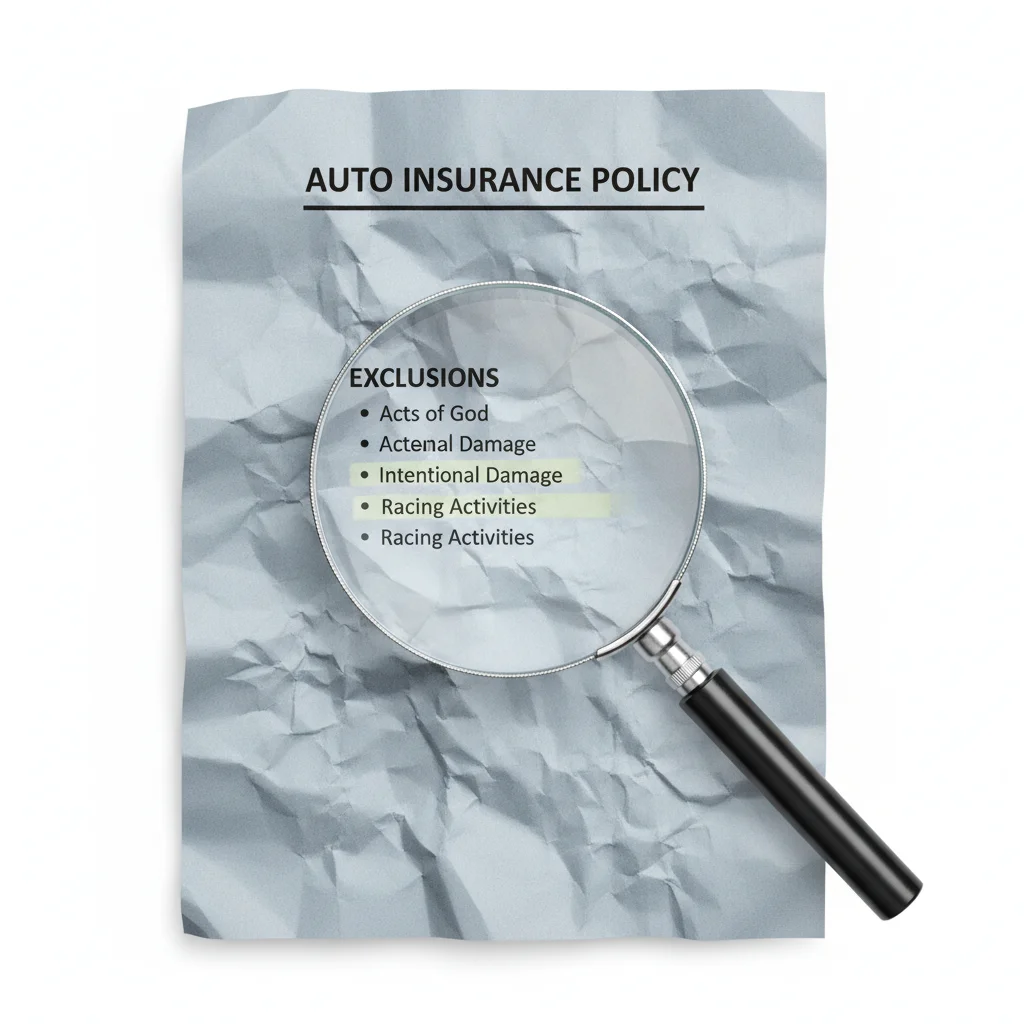
Exclusions are the coverage gaps that don't appear anywhere on the quote page. They're buried in the policy document — the actual contract. Common exclusions on budget policies include:
- Rental car reimbursement — if your car is in the shop after a claim, you pay out of pocket for transportation
- Custom equipment — aftermarket upgrades, electronics, or modifications often aren't covered under standard policies
- Rideshare use — personal auto policies typically exclude incidents that occur while driving for Uber or Lyft unless you have a rideshare endorsement
- Business use — using your car regularly for work-related tasks can void a standard personal policy claim
The only way to find these exclusions is to read the declarations page and policy document — not the marketing summary. Most drivers overlook the add-ons and exclusions that define real policy value until they file a claim and discover the gap.
“The policy document is the contract. The quote is an advertisement. If you're making a coverage decision based only on the price you see on a comparison website, you're not actually comparing insurance — you're comparing marketing.”
— J. Robert Hunter, Former Federal Insurance Administrator and Director of Insurance at the Consumer Federation of America
The Add-Ons That Turn a Basic Policy Into Real Coverage
Good policies include optional coverages that genuinely change your outcome after a loss. These aren't upsells — they're features that experienced drivers specifically seek out because they've learned what a bare-bones policy actually covers.
Gap Insurance
If you financed your vehicle and it's totaled, your insurer pays actual cash value — what the car is worth today, not what you paid or what you owe. If you owe $28,000 and the car is worth $22,000, gap insurance covers that $6,000 difference. Without it, you're making loan payments on a car you no longer have.
Rental Reimbursement
When your car is in the shop following a covered claim, rental reimbursement pays for a loaner — typically $30–$50 per day up to a limit. Most basic policies don't include this. Repair times after a serious accident can run two to four weeks.
Roadside Assistance
Battery jumps, flat tire changes, lockouts, and fuel delivery are covered under roadside assistance endorsements. This is worth including if you don't already have it through a membership service.
New Car Replacement
Some insurers offer new car replacement coverage for vehicles within the first year or two of purchase. Instead of paying actual cash value after depreciation, the policy pays to replace your car with a comparable new one. This is especially relevant for EV buyers — EV-specific coverage features require their own careful comparison.
Match Liability Limits to Your Net Worth
A quick rule of thumb: your liability limits should roughly equal your net worth. If you own a home, have retirement savings, or have significant income, state minimums leave all of that exposed. Work with an independent agent to calculate the coverage level that actually protects your assets.
Bundle Discounts Shouldn't Drive Coverage Decisions
Bundling home and auto with one insurer can save you 10–15% on premiums, but only if the underlying coverage is solid. Don't let a bundling discount convince you to accept inadequate limits or missing coverages. Confirm the declarations page terms first, then look at available discounts.
Claims Handling: The Coverage Detail You Can't See in a Quote
A policy is ultimately a promise that an insurer will pay when something goes wrong. How reliably they keep that promise — and how quickly — is not captured anywhere in a standard quote comparison. But it matters enormously.
An insurer with a poor claims reputation might dispute liability, undervalue your vehicle, delay processing, or offer lowball settlements knowing many policyholders won't push back. The difference between a smooth claim settlement and a protracted dispute can cost you weeks of rental car fees, missed work, and stress that no premium discount justifies.
To evaluate claims quality, use two specific sources:
- J.D. Power Auto Claims Satisfaction Study — published annually, ranks major insurers by policyholder satisfaction after claims
- State insurance department complaint ratios — show the number of justified complaints relative to the insurer's market share; your state's department of insurance publishes this data free
Common myths about cheap auto insurance often ignore claims handling entirely — focusing on price while ignoring insurer behavior is one of the most expensive mistakes drivers make.
State Minimums Are a Legal Floor, Not a Recommendation
State minimum liability requirements exist to protect other drivers, not you. They represent the least an insurer can sell you — not what financial planners or legal experts recommend. Treating the minimum as a baseline is one of the most common and costly misunderstandings in auto insurance.
Complaint Ratios Are Public Information
Every state's department of insurance publishes a complaint ratio for each licensed insurer — a number that shows how many complaints were filed relative to how many policies were written. A ratio above 1.0 means the insurer receives more complaints than average for its size. This is one of the most useful tools drivers never use when shopping for coverage.
How to Actually Compare Two Policies Side by Side
Here's a practical framework for comparing policies without being misled by the headline price:
- Pull the declarations page — not the quote summary. This is the legally binding document that lists your actual coverage types and limits.
- Compare liability limits first — note the per-person, per-accident, and property damage figures. Reject anything at state minimums unless budget truly forces your hand.
- Check UM/UIM coverage — is it included? At what limits? Match it to your liability limits if possible.
- Compare deductibles on collision and comprehensive — calculate your break-even point: how many years of premium savings does it take to offset the higher deductible if you file one claim?
- List what's excluded — read through the exclusions section and flag anything that applies to your actual driving habits (rideshare, business use, custom parts).
- Check available add-ons — does the insurer offer gap, new car replacement, rental reimbursement, and roadside? At what cost?
- Look up the complaint ratio — one number that quickly separates reliable insurers from problematic ones.
Discounts can reduce premium costs without cutting coverage — bundling, good driver discounts, and telematics programs are worth exploring after you've established you're comparing equivalent protection.

The goal isn't to find the cheapest policy. The goal is to find the best value — defined as the most protection per dollar, from an insurer that will actually pay when you need them to.

All claims are backed by peer-reviewed research. Sources on request.