Key Takeaways
Coverage Value vs. Premium Price
Two auto insurance policies can carry the exact same monthly or annual premium while providing dramatically different levels of financial protection. The price you pay reflects what an insurer charges based on your risk profile, not the depth or quality of coverage you receive. Structural differences in deductibles, liability limits, exclusions, and add-ons can make one identically priced policy far more valuable than another when a claim actually happens.
Insurers price policies using actuarial risk models that may produce the same premium output from very different coverage configurations — a lower liability limit paired with a rich add-on package can price identically to a higher liability limit with stripped-down features.
The Illusion of the Equal Premium
When you're shopping for auto insurance and two quotes come back at the same number — say, $142 a month — it's tempting to treat them as functionally equivalent and just pick the one with the better app or the carrier you've heard of. That instinct will cost you.
The premium you pay is an output of your insurer's risk calculation. It tells you what they think you cost them, not what they've agreed to cover. Two insurers can reach the exact same premium number through completely different configurations of limits, deductibles, and exclusions. The price is the intersection point; everything underneath it can diverge substantially.
Think of it like two restaurant meals priced at $22. One is a full entrée with sides. The other is a small plate with premium ingredients but half the portion. Both cost the same. You only discover the difference when the food arrives — or in insurance terms, when you file a claim.
Premium-first shopping is a flawed strategy precisely because the quote page shows you a single number while obscuring the dozens of structural decisions that produced it. Understanding those decisions is how you shop smarter.
The Four Structural Variables That Create the Gap
Strip any auto insurance policy down to its skeleton and you'll find four variables that do most of the heavy lifting in determining real-world protection. Same-priced policies diverge most dramatically across these four dimensions.
38%
Drivers who choose minimum liability limits
According to the Insurance Research Council, roughly 38% of insured U.S. drivers carry only state-minimum liability limits, leaving significant personal financial exposure in at-fault accidents.
$500K+
Potential liability in a serious multi-injury accident
Insurance industry data indicates that serious multi-vehicle accidents involving injuries can generate liability claims exceeding $500,000, far above the minimums most drivers carry.
1 in 8
U.S. drivers are uninsured
The Insurance Research Council estimates roughly 1 in 8 drivers on U.S. roads carries no insurance — making uninsured motorist coverage limits a critical differentiator between same-priced policies.
$6,000+
Average gap between loan balance and ACV on totaled vehicles
Industry data from vehicle finance studies suggests the average shortfall between what is owed and what insurers pay on totaled financed vehicles is approximately $6,000–$8,000 in the first two years of ownership.
72%
Buyers who compare only premium when switching policies
A J.D. Power insurance shopping study found that approximately 72% of auto insurance shoppers cite price as the sole or primary factor when switching carriers, with coverage quality a secondary consideration.
1. Liability Limits
This is the most consequential variable and the one most commonly glossed over during comparison shopping. Liability coverage pays third parties — other drivers, passengers, pedestrians — when you're legally responsible for an accident. It comes in two forms: bodily injury liability (BI) and property damage liability (PD).
Limits are expressed as three numbers, such as 50/100/50. That means $50,000 per person for bodily injury, $100,000 per accident for bodily injury, and $50,000 for property damage. A competing same-priced policy might carry 25/50/25 — half the protection. If you're at fault in a serious accident and costs exceed your limits, you're personally liable for the remainder. That gap between 25/50 and 50/100 could represent your savings account, your home equity, or your wages.
2. Deductibles
Your deductible is the amount you pay out of pocket before insurance kicks in on a comprehensive or collision claim. A policy with a $250 deductible and a $500 deductible priced identically will have different liability limits or exclusions somewhere else — the insurer had to balance the equation. Lower deductibles feel safer, but they're often funded by reductions in coverage quality elsewhere.
3. Exclusions
Every policy has language specifying what it does not cover. These exclusions are where same-priced policies diverge in the least visible way. Common exclusions that vary by policy include: intentional damage, business use of a personal vehicle, rideshare driving without a specific endorsement, aftermarket or custom parts, and mechanical breakdown. One policy might define a covered accident broadly; another might narrow it in ways that leave common scenarios unprotected.
4. Coverage Add-Ons and Endorsements
Rental reimbursement, roadside assistance, gap coverage, new car replacement, and accident forgiveness are not standard on every policy. Some insurers bundle several of these into a base package at a competitive price; others strip them out to compete on premium and charge separately for each. These add-ons are among the most overlooked features when drivers compare quotes — and the most meaningful in everyday use.
State Minimums Are a Floor, Not a Standard
Every state mandates a minimum level of liability coverage, but those minimums were often set decades ago and haven't kept pace with medical costs or vehicle values. Meeting the state minimum means your policy is legal — it doesn't mean you're adequately protected. Most insurance professionals recommend bodily injury limits of at least 100/300 for drivers with meaningful assets or income to protect.
The Full Policy Document vs. the Summary
Insurance carriers are required to provide the full policy document upon request before or after binding coverage. The summary or quote sheet you see during shopping is a marketing document — it highlights favorable terms and compresses or omits exclusion language. Always request the full document when you're making a final comparison between two same-priced policies. Exclusions and definitions sections are where the real differences live.
How Insurers Build Policies to Hit the Same Price Point
Insurers don't set prices arbitrarily. They run actuarial models that estimate how much a given driver profile will cost them in claims over a policy period. The premium is calibrated to that expected cost, plus overhead and profit margin. But here's the key insight: the same expected cost can be satisfied by very different coverage architectures.
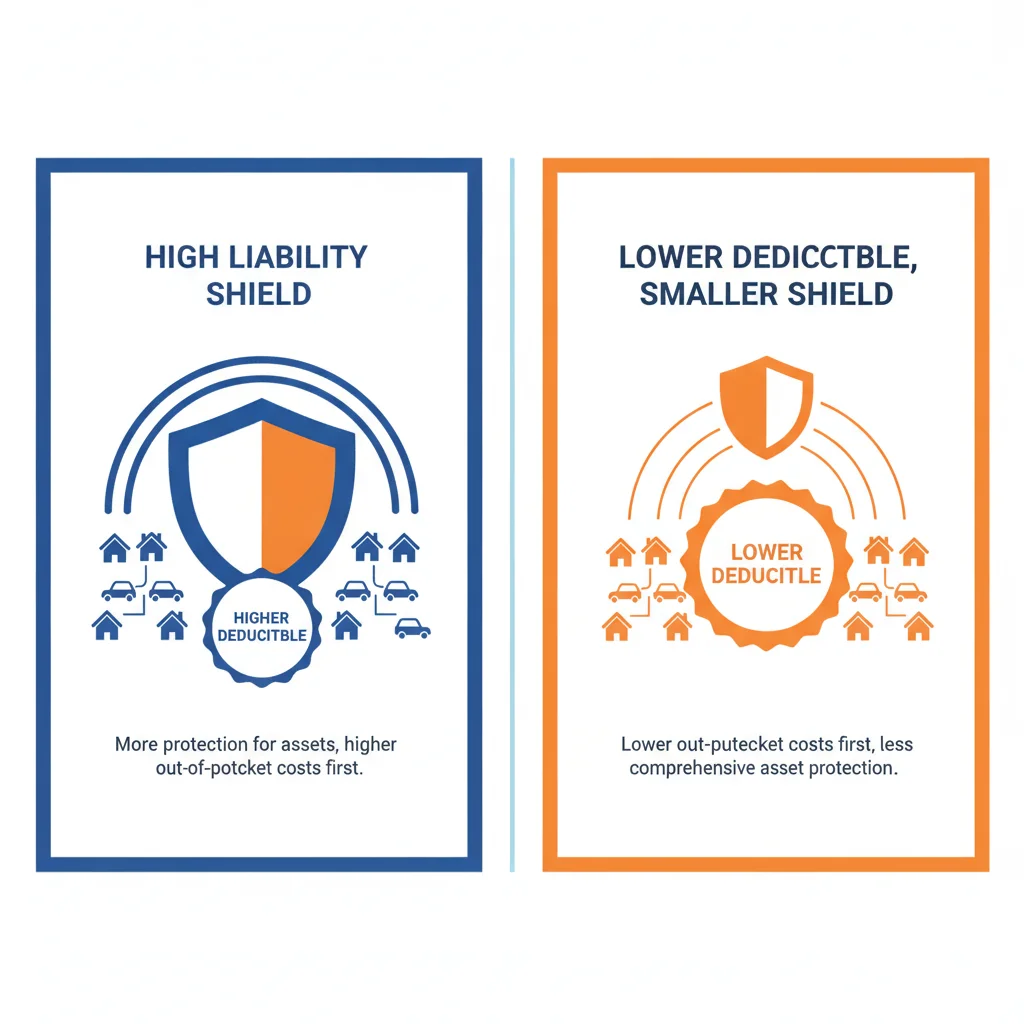
An insurer optimizing for competitive pricing on comparison sites might strip liability limits to state minimums, raise deductibles to $1,000, and exclude optional coverages entirely — then advertise an aggressively low premium. Another insurer competing on quality might hold liability limits at 100/300/100, include roadside assistance, and still price within dollars of the stripped policy by accepting a thinner margin on certain risk segments.
The result is two identically priced products with wildly different protective value. Neither insurer is being dishonest — they're making different bets on different customer relationships. Your job as a buyer is to understand which bet you're accepting.
“The premium tells you what the insurer thinks you'll cost them. The policy document tells you what they've actually agreed to do for you. Those are two very different things, and most drivers never read the second one.”
— J. Robert Hunter, Former Federal Insurance Administrator and Director of Insurance at the Consumer Federation of America
State minimum liability requirements make this problem worse, not better. Minimums were set decades ago and vary dramatically by state. In many states, minimum bodily injury coverage is $25,000 per person — an amount that can be exhausted by a single emergency room visit. A policy priced at minimum coverage will look identical on a quote comparison page to a policy with limits four times higher, if the rest of the risk profile happens to balance out the same way.
The specific coverage terms and limits that reveal whether a low-cost quote is actually a good deal aren't visible on summary pages. You have to go deeper.
Real-World Scenarios Where the Difference Surfaces
Abstract comparisons are useful, but the stakes become concrete when you run same-priced policies through actual claim scenarios. Here are the situations where identical premiums reveal their structural differences most sharply.
These scenarios aren't edge cases. A multi-car accident, a totaled vehicle with an outstanding loan balance, or a fender-bender that requires a rental while your car is in the shop — these are everyday insurance events. The policy that costs you nothing extra on the quote page but leaves you unprotected in one of these moments has failed at its core purpose.
Run Both Policies Through Your Most Likely Claim Scenario
Before you decide between two same-priced policies, mentally walk through the accident scenario most realistic for your driving habits — a fender-bender in a parking lot, a highway collision, or a weather-related total loss. Apply each policy's limits, deductibles, and exclusions to that scenario and calculate your actual out-of-pocket exposure. This exercise often makes the better policy obvious in minutes.
Check Insurer Complaint Ratios Before You Bind
Your state's department of insurance publishes annual complaint ratios for every licensed carrier. This ratio measures the number of complaints per dollar of premium written, normalized so you can compare large and small insurers fairly. A carrier with a complaint ratio significantly above the median is a red flag regardless of how competitive their premium looks. Take five minutes to look this up — it's free public data that most buyers ignore.
The Declarations Page: Your Starting Point for a Real Comparison
The fastest way to cut through premium-price noise is to request the declarations page — commonly called the dec page — for each policy you're evaluating. This single document summarizes every coverage type, its limit, and its deductible. It's the difference between comparing policy summaries (which are marketing) and comparing actual terms (which are binding).
When you lay two dec pages side by side, look at these fields in order:
- Bodily Injury Liability: per person / per accident limits
- Property Damage Liability: per accident limit
- Uninsured/Underinsured Motorist Coverage: limits and whether stacking is permitted
- Comprehensive Deductible
- Collision Deductible
- Medical Payments or PIP: limit and whether it's primary or excess
- Listed Endorsements: what's included vs. excluded vs. priced separately
Reading two auto insurance quotes side by side requires a structured method — dec pages give you the raw material, but you need a disciplined process to avoid missing critical differences buried in the endorsement section or exclusion language.

Don't stop at the dec page. The full policy document — the one most buyers never open — contains the exclusion language that defines exactly when coverage applies and when it doesn't. Requesting it before you bind coverage is the single most underused tool in smart insurance shopping.
State Minimums Are a Floor, Not a Standard
Every state mandates a minimum level of liability coverage, but those minimums were often set decades ago and haven't kept pace with medical costs or vehicle values. Meeting the state minimum means your policy is legal — it doesn't mean you're adequately protected. Most insurance professionals recommend bodily injury limits of at least 100/300 for drivers with meaningful assets or income to protect.
The Full Policy Document vs. the Summary
Insurance carriers are required to provide the full policy document upon request before or after binding coverage. The summary or quote sheet you see during shopping is a marketing document — it highlights favorable terms and compresses or omits exclusion language. Always request the full document when you're making a final comparison between two same-priced policies. Exclusions and definitions sections are where the real differences live.
Beyond the Document: Insurer Quality as a Coverage Variable
Even when two policies are structurally identical on paper, the insurer behind them is not a neutral variable. The policy is a promise to pay — and how aggressively, fairly, and quickly that promise gets honored varies considerably by company.
An insurer with a high complaint ratio (measured by your state's insurance department as complaints per premium written) may dispute claims more often, delay settlements, or interpret exclusion language more narrowly than a competitor. This means a structurally weaker policy from an insurer with a stellar claims reputation might outperform a structurally stronger policy from a carrier that fights every claim.
When you're comparing same-priced policies, add these data points to your evaluation:
- State insurance department complaint ratio: Available free from your state's department of insurance website. Lower is better.
- J.D. Power Auto Insurance Study rankings: Measures customer satisfaction by region, weighted toward claims experience.
- AM Best financial strength rating: Indicates whether the insurer has the financial reserves to actually pay large claims. Look for A- or better.
Rate factors</a> that drive your premium are only half the equation. The other half is whether the company pricing that premium will actually perform when you need them to.
Run Both Policies Through Your Most Likely Claim Scenario
Before you decide between two same-priced policies, mentally walk through the accident scenario most realistic for your driving habits — a fender-bender in a parking lot, a highway collision, or a weather-related total loss. Apply each policy's limits, deductibles, and exclusions to that scenario and calculate your actual out-of-pocket exposure. This exercise often makes the better policy obvious in minutes.
Check Insurer Complaint Ratios Before You Bind
Your state's department of insurance publishes annual complaint ratios for every licensed carrier. This ratio measures the number of complaints per dollar of premium written, normalized so you can compare large and small insurers fairly. A carrier with a complaint ratio significantly above the median is a red flag regardless of how competitive their premium looks. Take five minutes to look this up — it's free public data that most buyers ignore.
Making the Call: How to Decide Between Two Same-Priced Policies
After you've compared dec pages, read exclusion language, and looked up insurer ratings, you still need a decision framework. Here's how to think about it:
Prioritize Liability Limits Above Everything Else
If one policy offers 100/300/100 liability and another offers 50/100/50 at the same price, the higher-limit policy wins — full stop — unless there's a catastrophic exclusion buried elsewhere. Your liability exposure in a serious at-fault accident can reach into the hundreds of thousands. Protecting your personal assets is the primary purpose of auto insurance.
Match Deductibles to Your Financial Reality
A $1,000 deductible only makes sense if you can absorb $1,000 out of pocket without financial hardship. If a same-priced policy offers a $500 deductible with slightly lower liability limits, run the numbers on your actual financial exposure. For most drivers, robust liability protection is worth more than a lower deductible.
Value Add-Ons Based on Your Usage Pattern
Gap coverage matters enormously if you financed your vehicle and owe more than its current market value. Rental reimbursement matters if you have no backup transportation. Roadside assistance matters if you drive long distances or in remote areas. These features are easy to overlook when comparing quotes but can be decisive based on your individual circumstances.
Weight the Insurer's Track Record
If coverage is genuinely equivalent but one insurer has a demonstrably better claims reputation, that's worth something — even if it's hard to quantify on a spreadsheet. A policy that pays quickly and fairly is more valuable than one that requires you to fight for every dollar.
The bottom line: same-priced policies are never interchangeable. Treating premium as the primary decision variable is a strategy optimized for saving money on the quote page and losing it at claim time. The driver who understands what's inside the policy — not just what it costs — is the one who ends up genuinely protected.


All claims are backed by peer-reviewed research. Sources on request.