Key Takeaways
Before enrolling in a telematics program, spend two weeks tracking your own driving habits manually. If you brake hard frequently in traffic or drive after midnight regularly, the monitoring data may raise your rate rather than lower it.
Telematics programs are asymmetric for some drivers — the upside is capped and the downside is a rate increase at renewal. Knowing your patterns in advance lets you make an informed choice.
When shopping for competing quotes, provide the same precise coverage limits and deductibles to every insurer — and explicitly list every discount you believe you qualify for. Many online quoting tools under-apply discounts; a direct conversation with an agent closes that gap.
Discount application is inconsistent across quoting channels. Agents working directly with underwriters can apply credits that automated tools miss, especially for affinity and occupational discounts.
Ask your insurer to run a VIN-based safety feature verification on your vehicle. Many drivers assume their car's standard features are already accounted for, but carriers sometimes miss factory-installed systems — especially on used cars where the original documentation wasn't transferred.
Safety feature discounts are applied based on documented features, not assumed ones. A quick VIN check can uncover credits for automatic braking, stability control, and advanced airbag systems that were never applied.
Why Auto Insurance Discounts Matter More Than You Think
The average American pays roughly $1,700 per year for full-coverage auto insurance, according to industry benchmarks. That number isn't fixed — it's a starting point that carriers systematically reduce based on dozens of qualifying factors. The problem is that insurers don't volunteer every discount you're eligible for. You have to know what to ask, and you have to ask at the right time.
Think of auto insurance pricing as a sticker price at a dealership. The base rate is built from actuarial tables and risk models, but the final number you pay depends heavily on how many legitimate price reductions you claim. Most drivers who haven't done a discount audit in the past two years are almost certainly leaving money on the table.
$1,700+
Average annual full-coverage auto premium (U.S.)
Based on industry benchmarks from major rating aggregators, reflecting 2023–2024 national averages.
Up to 30%
Maximum telematics discount for safe drivers
Leading usage-based programs from Progressive, Allstate, and State Farm advertise savings of up to 30% for top-tier safe drivers.
10–25%
Typical bundle discount on each bundled policy
Industry data from J.D. Power and insurer disclosures consistently show multi-policy bundling saves 10–25% per policy.
~40%
Combined discount potential when stacking multiple credits
Drivers who systematically claim all applicable discounts — driving, vehicle, policy, and affinity — can see effective reductions exceeding 40% off base rates.
5–15%
Alumni and affinity group discount range
Affinity programs negotiated by universities and professional associations typically deliver 5–15% off standard quoted rates.
This guide covers every major discount category — not just the obvious ones — so you can walk into your next renewal or shopping conversation armed with the full picture. For a deeper look at how the discount structure is designed from the insurer's side, see how insurers structure these savings.
Safe Driver and Usage-Based Discounts
Driving behavior is the single largest discount category by potential value. Insurers reward low-risk behavior because it directly reduces their claims exposure — which means the savings they pass on are meaningful.
Clean Driving Record Discount
If you've had no at-fault accidents and no moving violations in the past three to five years (the lookback window varies by carrier), you qualify for a safe driver or good driver discount. The savings typically range from 10–26% depending on the insurer. Some states — California prominently among them — mandate that a good driver discount of at least 20% be offered to eligible drivers.
For full details on how insurers define eligibility, including how long a prior incident stays on your record, see good driver discounts explained.
Before enrolling in a telematics program, spend two weeks tracking your own driving habits manually. If you brake hard frequently in traffic or drive after midnight regularly, the monitoring data may raise your rate rather than lower it.
Telematics programs are asymmetric for some drivers — the upside is capped and the downside is a rate increase at renewal. Knowing your patterns in advance lets you make an informed choice.
When shopping for competing quotes, provide the same precise coverage limits and deductibles to every insurer — and explicitly list every discount you believe you qualify for. Many online quoting tools under-apply discounts; a direct conversation with an agent closes that gap.
Discount application is inconsistent across quoting channels. Agents working directly with underwriters can apply credits that automated tools miss, especially for affinity and occupational discounts.
Ask your insurer to run a VIN-based safety feature verification on your vehicle. Many drivers assume their car's standard features are already accounted for, but carriers sometimes miss factory-installed systems — especially on used cars where the original documentation wasn't transferred.
Safety feature discounts are applied based on documented features, not assumed ones. A quick VIN check can uncover credits for automatic braking, stability control, and advanced airbag systems that were never applied.
Telematics and Usage-Based Insurance (UBI)
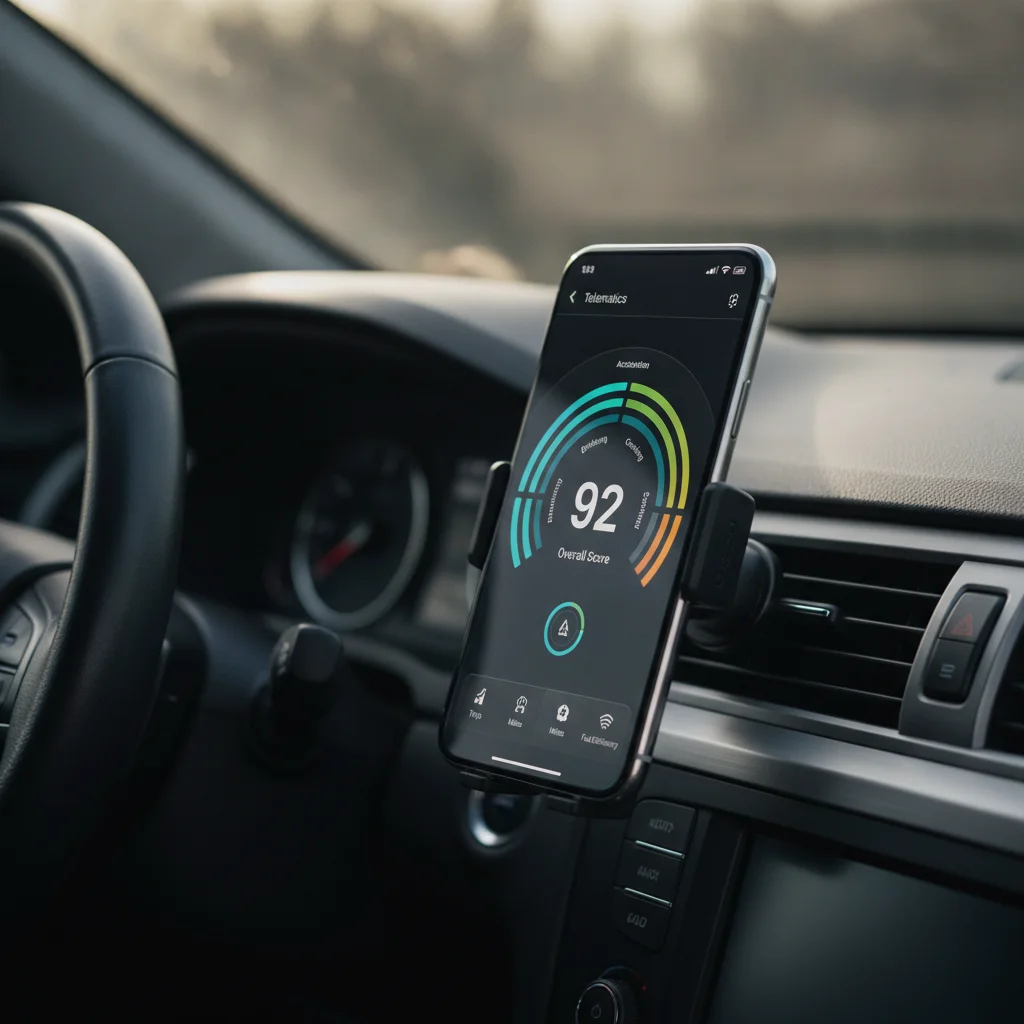
Telematics programs — offered under names like Snapshot (Progressive), DriveWise (Allstate), and Drive Safe & Save (State Farm) — monitor your actual driving through a mobile app or plug-in device. They track metrics like hard braking, acceleration, cornering, nighttime driving, and miles driven. Safe drivers can earn discounts of 10–30%; some programs offer a guaranteed enrollment discount of 5–10% just for signing up.
Low-mileage drivers get a double benefit: usage-based programs reward fewer miles driven, and some insurers offer a standalone low-mileage discount (often called a pay-per-mile option) for drivers under a certain annual threshold — typically 7,500–10,000 miles per year.
Defensive Driving Course Discount
Completing an approved defensive driving or accident prevention course can earn you a 5–15% discount depending on the insurer and your state. Many courses are available online for under $30. For drivers 55 and older, AARP and AAA both offer recognized programs. The discount typically applies for three years before requiring a refresh.
Telematics Can Cut Both Ways
Usage-based insurance programs are not guaranteed savings. If the app records hard braking, rapid acceleration, late-night trips, or phone use while driving, your rate at renewal can increase — even if your formal motor vehicle record is spotless. Read program terms carefully and opt out within the trial window if your driving patterns put you at risk of a rate hike.
Don't Let Loyalty Override Shopping
Long-tenured policyholders are statistically more likely to be overcharged than new customers. Insurers often reserve their sharpest rates for new business. If you haven't compared rates in more than two years, your loyalty credit is almost certainly smaller than what you could save by switching.
Vehicle-Related Discounts
Your car itself — what it is, how old it is, and what safety technology it carries — determines eligibility for a meaningful set of discounts.
Vehicle Safety Feature Discounts
Modern vehicles equipped with anti-lock brakes, electronic stability control, lane-departure warning, forward-collision warning, automatic emergency braking, and adaptive cruise control may qualify for safety equipment discounts. These are separate from good driver credits and are applied based on the vehicle identification number (VIN). Insurers typically verify features automatically when you add the vehicle — but it never hurts to confirm which features your car has documented.
Anti-Theft Device Discount
Factory-installed and aftermarket anti-theft systems — including GPS tracking devices, vehicle immobilizers, and audible alarm systems — qualify for discounts that typically range from 5–25% on the comprehensive portion of your premium. Passive systems (those that activate automatically) usually earn larger credits than active systems you must arm manually.
New Vehicle Discount
Some carriers discount new vehicles — typically those three years old or newer — because newer cars are less likely to have pre-existing mechanical issues and often carry more advanced safety systems. This discount is distinct from safety feature credits and may be applied automatically at point of purchase.
Electric and Hybrid Vehicle Discount
Several major insurers — including Farmers, Travelers, and MetLife — offer a green vehicle or EV discount for insuring a hybrid or all-electric vehicle. The discount typically runs 5–10%. Not all carriers offer it, and it isn't available in every state, so it requires a direct ask during quoting.

Garage Parking Discount
If your vehicle is garaged — meaning it sleeps in an enclosed structure rather than on the street or in an open lot — some insurers will reduce your comprehensive rate. Garaged vehicles face lower risk of theft, vandalism, and weather damage, and carriers price accordingly.
Document Your Vehicle's Safety Features
Before your next renewal or quote, pull your vehicle's window sticker or use the NHTSA database to document every factory-installed safety system. Bring that list to your insurer conversation — it gives you a concrete checklist to verify against the credits on your policy.
Set a Discount Audit Calendar Reminder
Schedule a 30-minute discount review 30 days before every policy renewal. Use the category checklist in this guide as your template. Life changes — new memberships, a cleared driving record, a child leaving for college — create new eligibility every year.
Ask Specifically, Not Generally
When calling your insurer, name each discount you're asking about rather than asking "do you have any discounts?" A generic question often gets a generic answer. Asking "Do you offer a discount for IEEE members?" or "Is there a credit for my anti-theft GPS tracker?" forces a specific response.
Policy and Loyalty Discounts
How you manage your policy — not just how you drive — generates a significant cluster of savings opportunities.
Multi-Policy (Bundle) Discount
Bundling your auto insurance with a homeowners, renters, condo, or life insurance policy from the same carrier is consistently one of the highest-value discounts available. The typical savings run 10–25% on each policy. If you're currently keeping policies with separate insurers, the bundle math almost always favors consolidation — though it's worth running the numbers, since a cheaper standalone auto rate can occasionally beat the bundled price.
“Bundling is the lowest-effort, highest-return move in personal insurance. Most people are already planning to keep both a home and an auto policy — putting them with the same carrier is a nearly effortless way to cut costs on both.”
— J. Robert Hunter, Former Insurance Commissioner and Director of Insurance at the Consumer Federation of America
Multi-Vehicle Discount
Insuring two or more vehicles on the same policy earns a per-vehicle discount that typically ranges from 8–25%. This applies to any combination of cars, trucks, motorcycles, or RVs depending on the carrier. Even if you don't use one of the vehicles often, keeping it on a shared policy is almost always cheaper than insuring it separately.
Paid-in-Full Discount
Paying your annual or semi-annual premium in a single lump sum instead of monthly installments saves 5–10% in most cases and eliminates installment fees. If cash flow allows, this is one of the simplest no-effort discounts available.
Paperless and Auto-Pay Discounts
Enrolling in paperless billing and setting up automatic payment each earn small credits — typically $2–10 per month each, which adds up to $50–$120 per year. Minor individually, but they're essentially free money for opting into behaviors that cost you nothing extra.
Early Renewal (Advance Quote) Discount
Shopping for a new policy — or allowing your current insurer to lock in your renewal — more than seven to fourteen days before your policy expires can trigger an advance-shopping discount. The exact threshold varies, but starting the conversation at least two weeks before your renewal date is a consistent best practice.
Loyalty Discount
Long-tenured customers often receive incremental loyalty credits that grow with each year they stay. However, loyalty discounts are frequently smaller than the savings available by switching carriers. Run a competitive quote at every renewal — loyalty shouldn't cost you money.
Discount Availability Varies Significantly by State
Auto insurance is regulated at the state level, and not every discount is approved in every jurisdiction. California, for example, restricts how heavily insurers can weight occupation and education. New York limits certain affinity discounts. Always verify which discounts are available in your specific state before assuming they apply.
Discount Labels Don't Equal Identical Value
Two insurers can both advertise a "good driver discount" but apply it at dramatically different percentages — one may credit 10% while another credits 26%. The label is not the number. Always ask for the specific percentage, not just confirmation that a discount exists.
Driver Profile and Life Stage Discounts
Who you are and where you are in life affects your eligibility for a range of discounts that many drivers never think to claim.
Good Student Discount
Full-time students under 25 who maintain a B average (3.0 GPA) or better qualify for good student discounts at most major carriers. The savings typically run 8–25%. The discount applies while the student is enrolled full-time, and carriers usually require a transcript or report card annually. This discount alone can meaningfully offset the high base rates young drivers face.
Student Away at School Discount
If a young driver on your policy attends school more than 100 miles from home without a car, many carriers will significantly reduce the rate for that driver on the family policy. They're counted as an occasional driver rather than a primary one. This is one of the most underused discounts among families with college-age children.
Mature Driver / Senior Discount
Drivers 55 and older may qualify for mature driver discounts, particularly after completing an approved refresher course. Carriers including AARP-partnered insurers and AAA offer these programs directly. Seniors often pay more due to increased accident risk in statistical models, but completing a course actively demonstrates competence and offsets the rating factor.
Occupation and Education Level Discounts
Many insurers quietly factor in your occupation and level of education when calculating your base rate, and some translate that into explicit discounts. Teachers, scientists, engineers, nurses, and military personnel frequently appear on carrier lists as preferred occupations associated with lower claim frequency. Similarly, having a college or graduate degree can reduce your rate even if no formal discount is labeled as such.
Occupation and Education Discounts Are Not Universal — and Controversial
Using occupation and education level as rating factors is banned or restricted in several states, including California, Hawaii, and Michigan, on consumer fairness grounds. If you live in a restricted state, be aware that what works in other states may not apply to you. Conversely, if you're in an unrestricted state and in a favored profession, failing to disclose your occupation accurately is a missed opportunity.
Discounts Don't Replace Rate Shopping
Discounts reduce your rate relative to a carrier's base price — but if a competitor's base rate is 30% lower, their discounted rate may still be cheaper even after you've exhausted every credit at your current insurer. Discounts and competitive shopping are complementary strategies, not substitutes for each other. Run a full market comparison at least every two years.
Military and First Responder Discounts
Active duty military, veterans, and their immediate families receive discounts at USAA (which serves exclusively this population), Geico, Liberty Mutual, and others. Discounts can reach 15% or more. First responders — police, firefighters, and EMTs — are recognized by several carriers including Farmers and Liberty Mutual.
Membership, Professional, and Affinity Discounts
This is the category where the most money gets left on the table. Most drivers don't know their employer, alumni association, or professional organization may have negotiated group insurance rates on their behalf.
Employer Group Discounts
Some large employers negotiate group auto insurance rates with carriers as part of their benefits package. The discount may be available even to part-time employees and retirees. HR departments often don't publicize this — it pays to ask directly.
Alumni Association Discounts
Hundreds of universities have affinity agreements with insurers — Liberty Mutual and Farmers have among the broadest networks. If you're an alumnus of any four-year institution, check whether your alumni association lists an auto insurance partner. The discount is often 5–15%, and it stacks with most other credits.
Professional Association and Union Discounts
Members of recognized professional associations — the ABA (attorneys), AMA (physicians), IEEE (engineers), and dozens of others — frequently qualify for group auto rates. Union membership (Teamsters, UAW, SEIU, and others) can carry similar benefits. These discounts aren't advertised to the general public because they're negotiated as private group arrangements. Professional and membership discounts deserve a full audit — most drivers in eligible groups have never asked.
AAA and Costco Membership Discounts
AAA membership entitles members to discounts at several partner insurers, and AAA itself underwrites auto policies in many states. Costco members have access to Connect, powered by American Family, which offers competitive group rates. Both programs are legitimate pathways to below-market pricing for qualifying members.
Credit Union Membership
Credit unions frequently partner with carriers like TruStage (CUNA Mutual) to offer member-exclusive auto insurance rates. If you bank with a credit union, check whether they have an insurance partner before your next renewal.

How to Stack Discounts for Maximum Savings
The real power of auto insurance discounts isn't in any single credit — it's in the cumulative effect of applying every discount you legitimately qualify for at the same time. Insurers generally allow discounts to stack, though the math usually works multiplicatively rather than additively. This means a 20% discount followed by a 10% discount doesn't equal 30% off — it's closer to 28%. Still, the combined effect can be substantial.
The Stacking Strategy
- Audit your current policy first. Call your insurer and ask a direct question: "What discounts am I currently receiving, and what discounts does this carrier offer that I'm not currently getting?" Write down everything.
- Cross-reference every category in this guide against your actual situation — driving record, vehicle features, living situation, memberships, life stage, payment preferences.
- Get competing quotes with the same discount mix. Different carriers weight the same discounts differently. A 10% good driver credit at one insurer may be worth less than the same label at a competitor with a lower base rate.
- Negotiate on bundling last. Lead with driving record and vehicle discounts, then layer in bundle, loyalty, and payment discounts at the end. Bundling can sometimes mask a less competitive base rate on the auto side.
For a detailed look at discounts that may already be hiding on your existing policy, see discounts hiding in plain sight.
Before enrolling in a telematics program, spend two weeks tracking your own driving habits manually. If you brake hard frequently in traffic or drive after midnight regularly, the monitoring data may raise your rate rather than lower it.
Telematics programs are asymmetric for some drivers — the upside is capped and the downside is a rate increase at renewal. Knowing your patterns in advance lets you make an informed choice.
When shopping for competing quotes, provide the same precise coverage limits and deductibles to every insurer — and explicitly list every discount you believe you qualify for. Many online quoting tools under-apply discounts; a direct conversation with an agent closes that gap.
Discount application is inconsistent across quoting channels. Agents working directly with underwriters can apply credits that automated tools miss, especially for affinity and occupational discounts.
Ask your insurer to run a VIN-based safety feature verification on your vehicle. Many drivers assume their car's standard features are already accounted for, but carriers sometimes miss factory-installed systems — especially on used cars where the original documentation wasn't transferred.
Safety feature discounts are applied based on documented features, not assumed ones. A quick VIN check can uncover credits for automatic braking, stability control, and advanced airbag systems that were never applied.
Document Your Vehicle's Safety Features
Before your next renewal or quote, pull your vehicle's window sticker or use the NHTSA database to document every factory-installed safety system. Bring that list to your insurer conversation — it gives you a concrete checklist to verify against the credits on your policy.
Set a Discount Audit Calendar Reminder
Schedule a 30-minute discount review 30 days before every policy renewal. Use the category checklist in this guide as your template. Life changes — new memberships, a cleared driving record, a child leaving for college — create new eligibility every year.
Ask Specifically, Not Generally
When calling your insurer, name each discount you're asking about rather than asking "do you have any discounts?" A generic question often gets a generic answer. Asking "Do you offer a discount for IEEE members?" or "Is there a credit for my anti-theft GPS tracker?" forces a specific response.
Discounts That Aren't Worth the Trade-Off
Not every discount delivers net savings. A few common ones come with hidden costs or conditions that undermine the apparent benefit.
Telematics Programs for High-Risk Driving Patterns
Telematics programs are excellent for genuinely safe drivers. But if your commute involves heavy stop-and-go traffic, late-night driving, or frequent highway merging at speed, the monitoring data can actually increase your rate at renewal — even if your formal driving record is clean. Read the program terms before enrolling.
Accident Forgiveness
Accident forgiveness is often marketed alongside discounts but it isn't one. It's a paid add-on or earned benefit that prevents your first at-fault accident from raising your rate. Understanding what you're actually buying matters here. For a clear breakdown, see what accident forgiveness actually does to your rate.
Loyalty at the Expense of Competitive Rates
Loyalty discounts are real, but they're frequently smaller than the savings available by switching. Carriers rely on inertia — most policyholders don't shop at renewal. Don't let a modest loyalty credit prevent you from comparing the market. A new-customer discount at a competing insurer often exceeds your accumulated loyalty credit.
Occupation and Education Discounts Are Not Universal — and Controversial
Using occupation and education level as rating factors is banned or restricted in several states, including California, Hawaii, and Michigan, on consumer fairness grounds. If you live in a restricted state, be aware that what works in other states may not apply to you. Conversely, if you're in an unrestricted state and in a favored profession, failing to disclose your occupation accurately is a missed opportunity.
Discounts Don't Replace Rate Shopping
Discounts reduce your rate relative to a carrier's base price — but if a competitor's base rate is 30% lower, their discounted rate may still be cheaper even after you've exhausted every credit at your current insurer. Discounts and competitive shopping are complementary strategies, not substitutes for each other. Run a full market comparison at least every two years.
Before accepting any discount at face value, it's worth checking common auto insurance discount myths that lead drivers to make poor decisions.

Your Action Plan: Claiming Every Discount You Deserve
The gap between what most drivers pay and what they could pay isn't mysterious — it's largely a function of whether they've done the work of asking. Here's a practical, step-by-step framework for conducting a full discount audit and acting on what you find.
Step 1: Pull Your Current Policy Declarations Page
Your declarations page lists every discount currently applied to your policy. If you've never looked at this page closely, start here. Most carriers make it available online through their policyholder portal.
Step 2: Run Through Every Category in This Guide
Go category by category — driving record, vehicle features, policy structure, life stage, memberships — and flag every discount for which you might qualify but that doesn't appear on your declarations page.
Step 3: Contact Your Current Insurer
Call or chat with your insurer's customer service team. Ask specifically about each discount you've flagged. Be explicit: "I'm a member of — do you offer a group discount for that?" Don't ask generically whether discounts are available; ask about each one by name.
Step 4: Get at Least Three Competing Quotes
Use the same coverage levels across all quotes so you're comparing apples to apples. Apply every discount you've identified when getting each quote. Carriers vary significantly in how they weight individual credits, so a side-by-side comparison often reveals a clear winner.
Step 5: Revisit Annually
Your life changes — your car ages, your driving record clears, your household situation shifts, you join a new organization. Discount eligibility changes with it. Set a calendar reminder 30 days before your renewal date every year.
NHTSA Vehicle Safety Features Database
Look up your vehicle's factory-installed safety systems by VIN. Use this to verify which features your insurer should be crediting on your policy.
Discounts Hiding in Plain Sight on Your Policy
A focused guide to the most commonly missed discounts already available on existing policies — useful for drivers who haven't done a recent audit.
Professional and Membership Discounts Guide
A detailed breakdown of employer, alumni, and association discounts that most drivers never think to ask about, with a list of commonly qualifying organizations.
Auto Insurance Discount Myths
Debunks the most costly misconceptions about how auto insurance discounts work, so you don't make decisions based on misinformation.
State-by-State Insurance Discount Availability Reference
A reference tool for understanding which discount categories are permitted, restricted, or banned in your specific state — essential before starting your audit.
Annual Insurance Rate Comparison Calculator
Compare your current total premium against competing quotes side by side with the same coverage parameters, factoring in all applicable discounts.
The most important thing to remember: discounts are not automatically applied. Insurers aren't required to tell you about savings you haven't asked about. The drivers who pay the least are the ones who ask the most.

All claims are backed by peer-reviewed research. Sources on request.