Key Takeaways
Why the Legal Minimum Isn't Always Enough
Meeting your state's minimum liability requirement means you've cleared the legal bar — you're allowed to drive, and you won't face a fine for being uninsured. But clearing the legal bar and being financially protected are two very different things.
Most state minimums were written decades ago and haven't kept pace with rising medical costs, vehicle prices, or jury awards. A 25/50/25 policy — meaning $25,000 per injured person, $50,000 per accident for bodily injury, and $25,000 for property damage — sounds like a reasonable cushion until you realize that a single emergency room visit after a moderate crash can easily top $30,000. Add an ambulance ride, surgery, and physical therapy, and you're looking at six figures before the case is anywhere near settled.
To see exactly what your state requires, check state minimums at a glance — then use that as a starting point for a conversation about whether those numbers actually protect your financial life.
Below are the specific situations where minimum liability most commonly falls short — and why each one matters more than drivers typically expect.
Multi-Vehicle Chain-Reaction Crashes
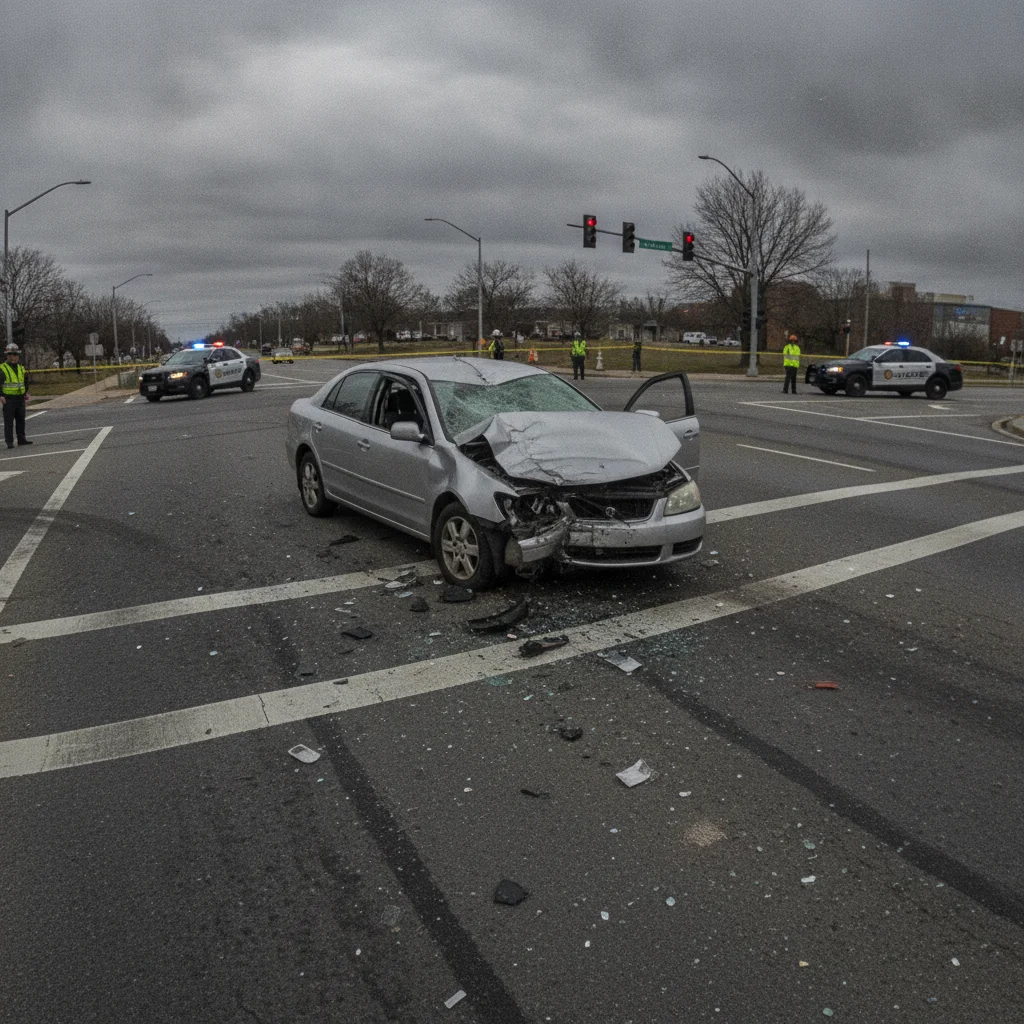
Rear-end collisions that push one car into another are among the most common crash types on U.S. highways — and they're also one of the fastest ways to exhaust a minimum liability policy. If you're found at fault for causing a three-car pile-up, your bodily injury limit must cover injuries to every person in every vehicle you hit, not just the first one.
Consider a common scenario: you rear-end a sedan at a stoplight, which then strikes an SUV in front of it. The sedan has two occupants; the SUV has three. With five injured parties making claims against your single per-accident bodily injury limit, a state minimum of $50,000 would need to stretch across all of them. That's $10,000 per person — far below what any emergency room visit costs.
[in_content_images:0]When damages exceed your liability limits, the difference doesn't disappear — it becomes a civil judgment against you personally. Courts can garnish wages or place liens on property to satisfy unpaid judgments.
Five injured parties splitting a $50,000 minimum limit leaves each person just $10,000 — far short of real costs.
Accidents Involving Luxury or High-Value Vehicles
Property damage liability covers the cost to repair or replace the other driver's vehicle when you're at fault. Most state minimums set this at $10,000 to $25,000. That range was reasonable when the average car cost under $15,000 — but today's market is very different.
The average new vehicle transaction price in the U.S. now exceeds $48,000. Luxury sedans, pickup trucks, and SUVs routinely cost $60,000 to $100,000 or more. If you cause significant damage to a high-trim truck or a European sedan, your $25,000 property damage limit may cover less than half the repair bill — leaving you responsible for the remainder out of pocket.
Even mid-range vehicles can present a problem. Modern cars are packed with sensors, cameras, and driver-assist technology that make even minor body repairs disproportionately expensive. A rear bumper replacement that once cost $800 can now top $3,000 once radar sensors and parking cameras are recalibrated.
A $25,000 property damage limit can fall $20,000 short on a single luxury vehicle repair.
Pedestrian or Cyclist Injuries
When a vehicle strikes an unprotected road user — a pedestrian, a cyclist, or a motorcyclist — the injuries tend to be severe. There's no crumple zone, no airbag, and no seatbelt protecting that person. Traumatic brain injuries, spinal damage, and multiple fractures are common outcomes even in low-speed impacts.
Medical costs in these cases regularly reach six figures, and that's before accounting for lost wages, long-term rehabilitation, or pain and suffering damages that a court may award. A per-person bodily injury limit of $25,000 would be consumed almost immediately in a scenario like this. The claimant's attorney would then pursue you personally for the uncovered balance.
[in_content_images:1]It's worth noting that pedestrian fatalities on U.S. roads have increased significantly over the past decade, and juries in pedestrian cases tend to award higher damages than in vehicle-to-vehicle crashes. If you live in or drive through urban areas with significant foot traffic, this risk deserves serious attention when you're setting your liability limits.
Pedestrian injuries routinely reach six figures — far beyond what a $25,000 per-person minimum covers.
Crashes Involving Commercial Vehicles or Rental Cars
If you're at fault in a collision with a commercial vehicle — a delivery van, a rideshare car actively carrying a passenger, or a rental — you may be facing a more complex and costly claims process than a standard vehicle-to-vehicle accident.
Commercial operators and rental companies often hire aggressive legal teams to recover the full cost of vehicle downtime (the revenue lost while the vehicle is out of service), specialty repair costs, and any passenger or driver injuries. Rental companies, in particular, are known to pursue loss-of-use claims that add hundreds or thousands of dollars on top of repair costs.
Your property damage limit will be the first to be tested, and your bodily injury coverage faces the additional complexity of multiple passengers who may all file separately. A standard minimum policy simply isn't designed to absorb claims of this scale.
Rental companies can pursue loss-of-use fees on top of repair costs — a detail minimum policies rarely absorb.
Accidents Where You're Sued for Non-Economic Damages
Liability insurance covers bodily injury and property damage — but courts don't just award economic damages like medical bills and lost income. Pain and suffering, emotional distress, and loss of consortium are non-economic damages that can multiply the total award significantly beyond the raw medical costs.
In many states, there's no cap on non-economic damages in auto accident cases. A plaintiff who suffers a permanent injury — a limp, chronic pain, or cognitive impairment — may receive a jury award three to five times higher than their actual medical expenses. If your policy limit is $25,000 per person and the jury awards $200,000, your insurer pays $25,000 and you owe the rest.
Compare state minimum vs. recommended coverage levels to understand how this gap looks in practical terms — and what it would take to genuinely cover a serious lawsuit.
Jury awards for pain and suffering can exceed actual medical costs by three to five times.
Crashes in No-Fault States With Serious Injury Thresholds
No-fault insurance states require each driver to use their own personal injury protection (PIP) coverage first, regardless of who caused the accident. This limits minor claims from flowing directly to the at-fault driver's liability policy. But most no-fault states have a "serious injury threshold" — and once a claim crosses it, the injured party can step outside the no-fault system and sue the at-fault driver directly.
Serious injury thresholds vary by state but commonly include permanent disfigurement, significant limitation of a body function, or injuries requiring surgery. Once a plaintiff qualifies, they can pursue your liability policy for the full scope of their damages — including pain and suffering. In these states, your minimum liability limits can be fully exposed at exactly the moment when injuries are most severe.
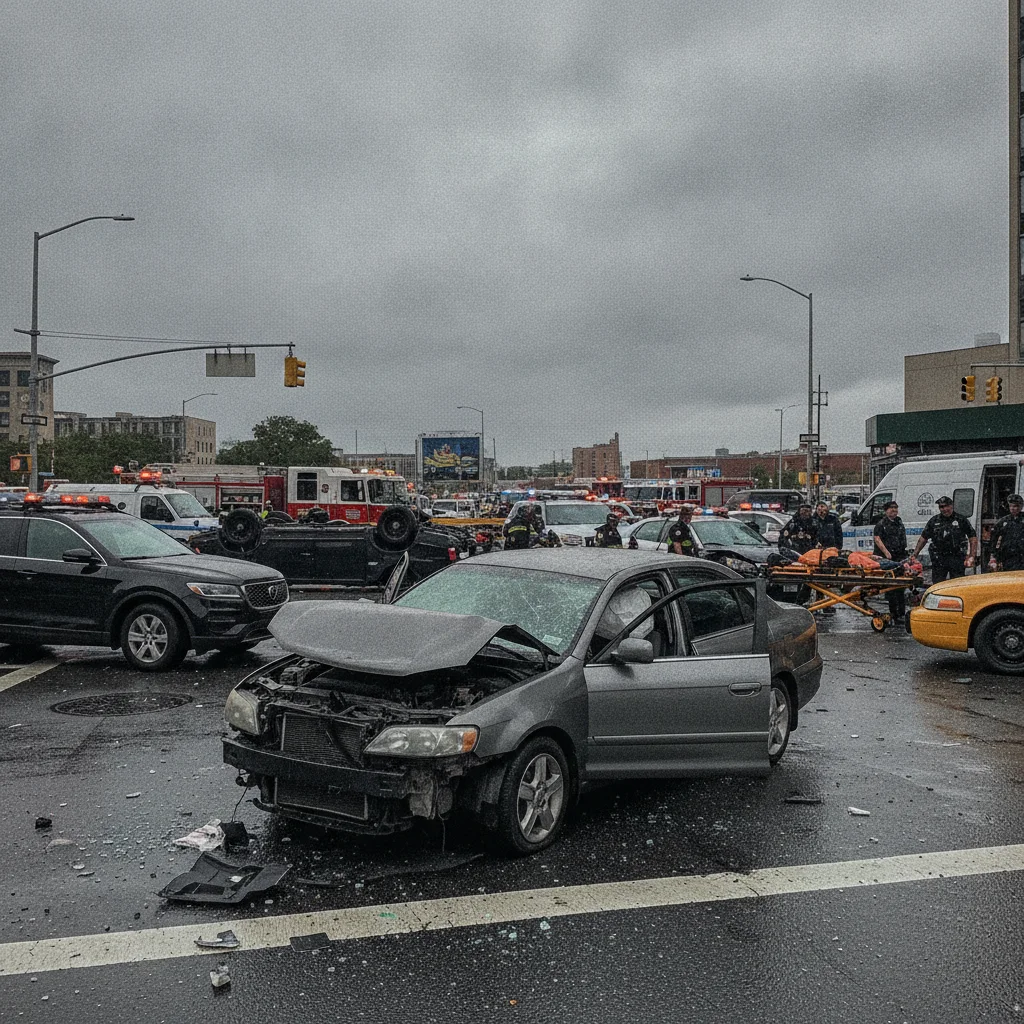
[in_content_images:2][note_callout]No-fault protection has a ceiling — cross the serious injury threshold and your liability limits face the full claim.
Accidents Where Fault Is Disputed or Shared
Not every accident has a clear at-fault driver. In comparative negligence states (which cover most of the country), fault can be divided between parties — 70/30, 50/50, or any other split. If you're found 60% at fault for a crash, your liability insurer pays 60% of the other driver's damages up to your policy limit.
The complication arises when the other party's damages are large enough that even your 60% share exceeds your coverage ceiling. Say the total damages are $120,000 and you're 60% liable — that's $72,000 your policy needs to cover. With a $50,000 per-accident limit, your insurer pays $50,000 and you owe the remaining $22,000 personally.
Disputed-fault cases also tend to take longer to resolve, which means your insurer is managing legal defense costs simultaneously. Most liability policies cover legal defense expenses separately from the coverage limit, but it's worth confirming that detail in your policy documents.
Shared fault doesn't cap your exposure — your 60% of a large claim can still exceed your entire policy limit.
Accidents Involving Uninsured Motorists You're Found Partially At Fault For
This scenario catches many drivers off guard. Suppose another driver hits you but is uninsured — and investigators determine you share some portion of the fault. In states that apply contributory or modified comparative negligence rules, your ability to recover damages through your own uninsured motorist coverage may be reduced or eliminated by your share of fault.
Meanwhile, if the uninsured driver was seriously injured and pursues a claim against you, your liability policy is the only financial backstop. If your minimum limits don't cover their injuries, you face a personal judgment. You're effectively in a situation where you can't fully recover your own losses and you're exposed on the liability side — a double financial squeeze that minimum coverage handles poorly.
Sharing fault with an uninsured driver can leave you unable to recover your own losses while still facing a liability claim.
How to Close the Gap Before an Accident Happens
The good news is that moving from minimum liability to more meaningful coverage doesn't always require a dramatic premium increase. Raising your bodily injury limits from 25/50 to 100/300 typically costs far less than most drivers assume — often $10 to $30 more per month, depending on your driving record and location.

State Minimums Vary Widely
Some states set minimum property damage liability as low as $5,000 — a number that wouldn't cover bumper repairs on most modern vehicles. Others have bodily injury minimums as low as $15,000 per person. <a href="/car-insurance/coverage-types/liability-coverage/state-minimum-liability-requirements-at-a-glance">Check your state's specific minimums</a> before assuming your policy provides adequate protection. The legal floor and a meaningful financial safety net are rarely the same number.
No-Fault Rules Differ by State
As of 2024, twelve states operate under true no-fault systems, while others use add-on no-fault rules or choice no-fault frameworks. The serious injury threshold — and what qualifies — differs significantly from state to state. If you've recently moved, it's worth reviewing how your new state's fault rules interact with your existing liability limits.
If you've built up assets over the years — a home, retirement accounts, a business — a personal umbrella policy is worth serious consideration. Umbrella coverage typically starts at $1 million in additional liability protection and costs only a few hundred dollars per year. It sits above your auto policy and kicks in when your car insurance limits are exhausted.
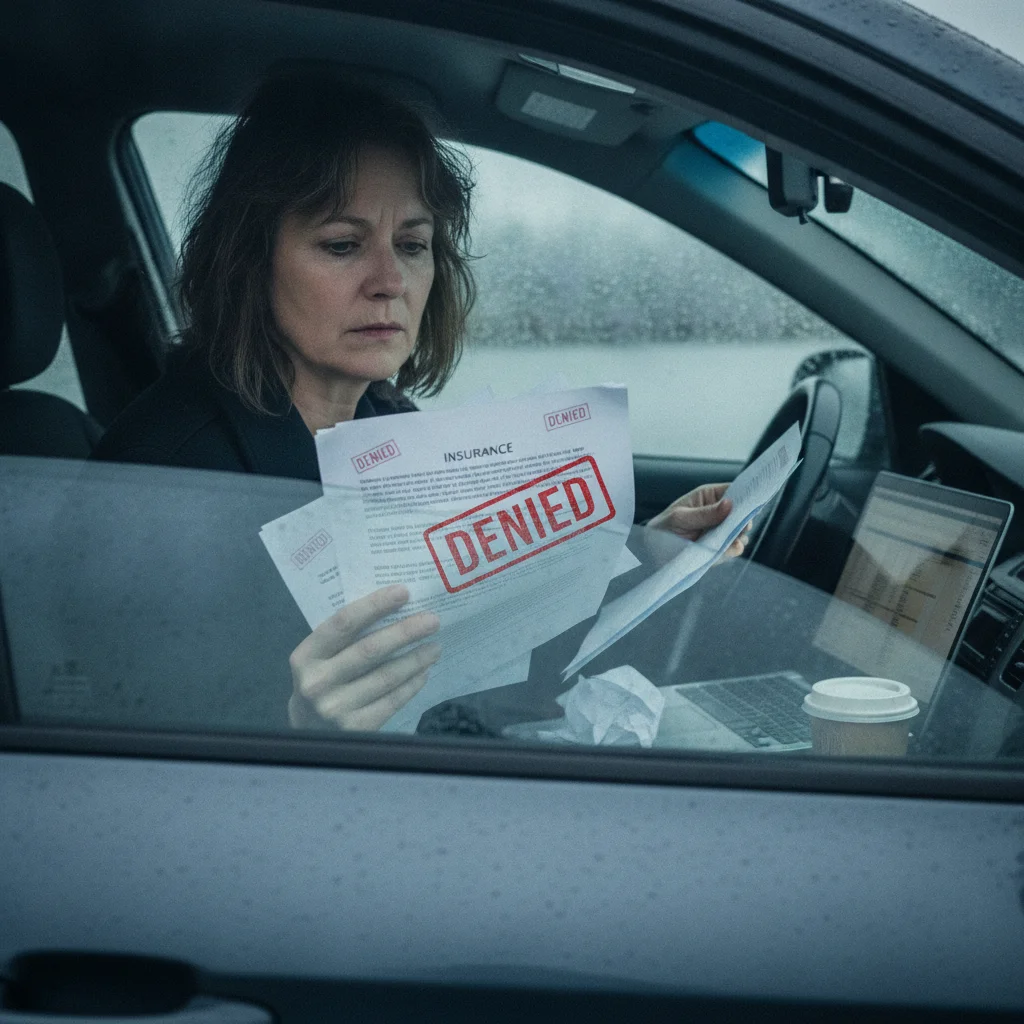
Whatever you decide, make sure the number on your declarations page reflects a realistic worst-case scenario, not just the cheapest option your state allows. See how quickly minimum limits get exhausted in a real accident to put the math in perspective. And if you're ever unsure whether your current coverage is structured correctly, learn the scenarios where liability coverage gets denied so you know exactly what to watch for.
Ask About Umbrella Coverage Costs
Before assuming extra coverage is unaffordable, get a quote on a personal umbrella policy. Most umbrella policies provide $1 million in additional liability protection and cost between $150 and $300 per year for drivers with clean records. That's a fraction of the financial exposure a single serious accident can create.
Bundle Auto and Home for Better Liability Rates
If you own a home or rent an apartment, bundling your auto and renters or homeowners policy with the same insurer often unlocks discounts that can offset the cost of raising your liability limits. Ask your insurer to requote your auto policy after bundling — the savings may surprise you.

All claims are backed by peer-reviewed research. Sources on request.