Key Takeaways
Diminishing Deductible
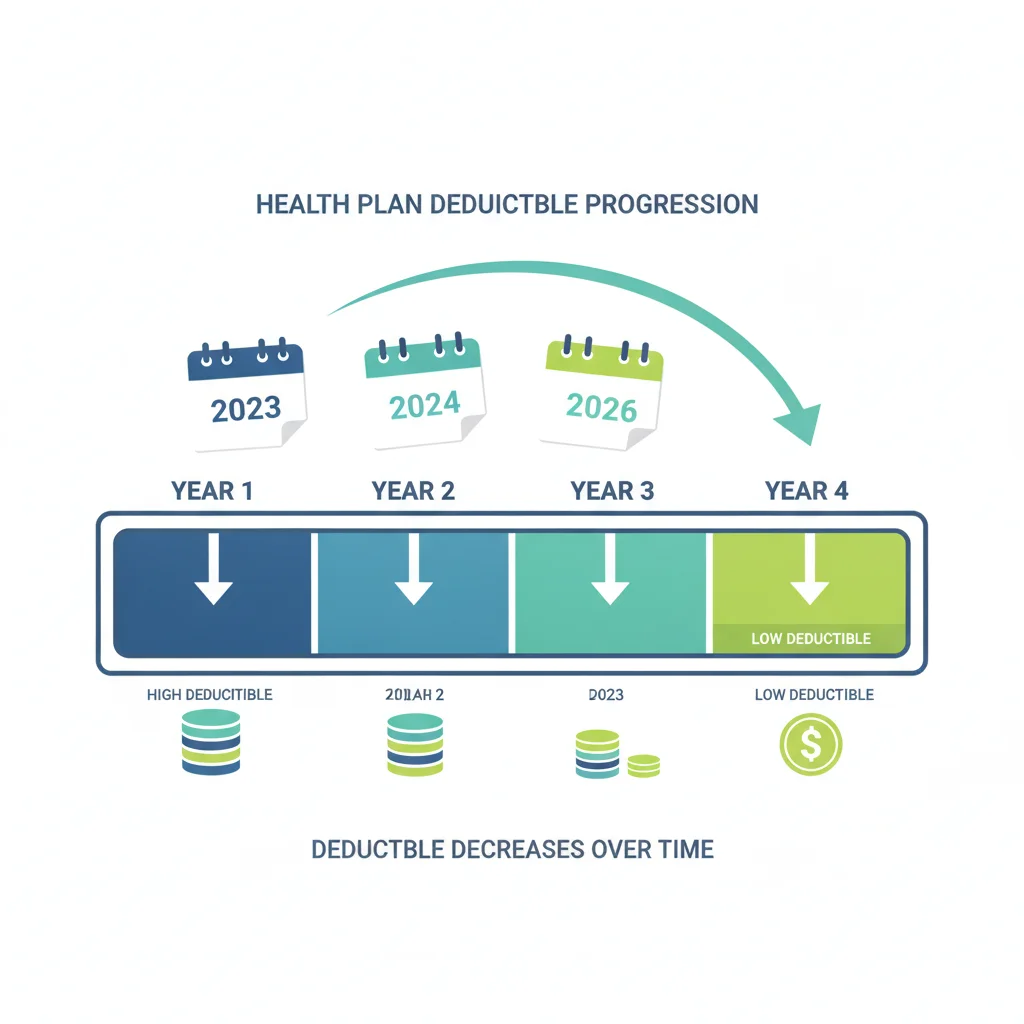
A diminishing deductible (also called a vanishing deductible or disappearing deductible) is an optional auto insurance feature that lowers your collision or comprehensive deductible each year you go without filing a claim. Insurers typically reduce the deductible by a set dollar amount — often $50 to $100 — per claim-free year, sometimes down to $0. You pay a small additional premium for the feature, and your deductible resets or adjusts if you file a claim.
The program usually applies only to collision and comprehensive coverage, not liability. Reduction amounts and caps vary significantly by insurer — Progressive's Deductible Savings Bank, for instance, works on a different accrual model than Nationwide's Vanishing Deductible.
What a Diminishing Deductible Program Actually Does
The pitch sounds good: stay claim-free and your deductible shrinks every year, eventually reaching zero. But let's unpack exactly how these programs work in practice, because the mechanics matter a lot for the math.
When you opt in, you pay an additional premium — typically $30 to $75 per year — on top of your existing policy cost. In exchange, the insurer reduces your deductible by a fixed amount for each consecutive claim-free policy year. Common structures look like this:
- $100 reduction per claim-free year, starting from a $500 deductible — reaching $0 after five years
- $50 reduction per year, capped at $500 total reduction regardless of deductible size
- Accrual bank model, where credits accumulate and are applied only when you file a claim
The distinction between these structures is not cosmetic. In a straightforward reduction model, your deductible literally decreases each year whether or not you ever file a claim. In the bank model, used by Progressive among others, credits sit unused until a claim occurs — meaning a driver who goes ten years without a claim never actually benefits from the accumulated balance.
What happens when you do file a claim also varies. Some insurers reset your deductible back to the original amount. Others reduce your accumulated savings by the claim payout applied, and some allow the deductible to remain at its reduced level. Before you enroll, read exactly what a single claim does to your benefit — it is the most consequential detail in the entire program.
Bank Model vs. Direct Reduction: Know the Difference
Some insurers use a credit bank system where your accumulated deductible credits only apply at the moment you file a claim — meaning a driver who never files a claim in ten years receives no tangible benefit from years of accumulation. Others use a direct reduction model where your policy deductible literally decreases each renewal period. These are fundamentally different products that share a marketing name. Always confirm which model your insurer uses before enrolling.
Program Terms Can Change at Renewal
Insurers can modify optional program terms at policy renewal with proper notice. A program that currently reduces your deductible by $100/year could be restructured to $50/year in a future renewal. Factor this uncertainty into long-term projections — the five-year math you run today may not reflect the program you're actually enrolled in three years from now.
The Cost-Benefit Math Most Drivers Don't Run
Here's the core question: does the extra premium you pay add up to more or less than the deductible reduction you actually use? Let's run actual numbers.
Assume you pay $50 per year extra for a program that reduces your $500 deductible by $100 per claim-free year.
| Year | Extra Premium Paid (Cumulative) | Current Deductible | Potential Savings If Claim Filed |
|---|---|---|---|
| 1 | $50 | $400 | $100 |
| 2 | $100 | $300 | $200 |
| 3 | $150 | $200 | $300 |
| 4 | $200 | $100 | $400 |
| 5 | $250 | $0 | $500 |
At year five, you've paid $250 in extra premiums and your deductible hits $0 — so filing a claim saves you the full $500 you would have otherwise owed. That's a $250 net gain. But here's the catch: if you go five years without filing a claim at all, you've paid $250 for zero realized benefit.
The program only pays off financially if you file a claim — but not so frequently that you reset your progress and pay inflated premiums for years without benefit. That's a narrow sweet spot, and most safe drivers never land in it.
1 in 8
U.S. drivers file a collision or comprehensive claim each year
According to the Insurance Research Council, approximately 12–13% of insured drivers file a claim in a given year, meaning most drivers go claim-free in any single year.
~6 years
Average years between collision claims for a U.S. driver
Industry data suggests the average driver files a collision claim roughly once every six years, making multi-year claim-free windows common for most policyholders.
$500
Most common collision deductible selected by U.S. drivers
The $500 deductible is the single most popular choice among U.S. auto insurance buyers, according to industry surveys — making it the most frequent starting point for diminishing deductible programs.
$30–$75
Typical annual rider cost for diminishing deductible programs
Based on publicly disclosed program pricing from major carriers including Nationwide and Progressive, the annual cost to add a diminishing deductible feature falls within this range for most drivers.
For context, the deductible decision already involves balancing premium cost against out-of-pocket risk. Adding a diminishing deductible rider on top of a suboptimal base deductible can compound the problem. If you're already carrying a low deductible because you're risk-averse, you're likely also over-paying on your base premium — and adding another fee for deductible reduction doubles down on that inefficiency.
Run the Break-Even Calculation First
Before enrolling, divide the annual rider cost by the per-year deductible reduction. That gives you the number of years the program must run before you break even on a single claim. If that number is longer than your average claim interval, the program is unlikely to pay off. For most safe drivers, this break-even period is uncomfortably long.
Ask About the Claims Reset Policy in Writing
Get the claim reset policy documented in the endorsement — not just from a verbal explanation by a sales agent. Ask specifically: does a single claim reset to the original deductible amount, or does it only erase the accumulated credits? The difference between these outcomes can be worth hundreds of dollars, and verbal assurances aren't binding.
Who Actually Benefits — and Who's Just Paying Extra
Not every driver profile responds the same way to this product. Let's be direct about which situations make the program worthwhile and which make it a net drain.
Drivers Who May See Real Value
- Urban commuters in high-density traffic areas who have a statistically higher chance of a minor collision claim every 3–4 years — they're more likely to land in that mathematical sweet spot
- Drivers with a relatively high base deductible ($750–$1,000) who want downside protection without switching to a low-deductible policy and absorbing a large premium jump
- Drivers insuring a newer, higher-value vehicle where the cost of a comprehensive or collision claim would be significant and they want the deductible risk dampened over time
Drivers Who Should Skip It
- Safe drivers with clean records spanning many years — statistically, you're paying for a benefit you'll rarely trigger
- Owners of older vehicles where the car's market value is close to or below the deductible amount — see how depreciation affects your car's value for context on when dropping collision makes more sense than reducing its deductible
- Drivers who could self-insure the deductible — if you have $500–$1,000 in an emergency fund, the program's protection is redundant
- Young drivers already stretched on premium costs — there are more direct discounts that move the needle for this group

“The problem with optional insurance riders is that they're priced to be profitable for the carrier. That doesn't mean they're never worth buying — it means the burden of proof is on the buyer to show the math works for their specific situation.”
— J. Robert Hunter, Former Director of Insurance, Consumer Federation of America
Comparing the Diminishing Deductible to the Alternative: Just Bank the Savings
The most honest comparison isn't between having the program and not having it — it's between paying for the program versus taking that same extra premium and using it more efficiently.
If you're paying $50/year extra for a diminishing deductible rider, the alternative is to pocket that $50. Over five years that's $250 sitting in your account. If a claim hits, you have $250 toward your deductible cost — not the full reduction the program would have provided, but real money with no strings attached and no reset risk.
The other alternative is to take that annual $50 and use it as part of a broader premium optimization strategy. Raising your deductible while stacking available discounts often produces a larger net premium reduction than any single add-on program. A driver who raises their deductible from $250 to $500, adds a telematics discount, and switches to paperless billing could reduce their annual premium by $150–$300 — far outpacing what a diminishing deductible program returns over the same period.
Small discounts like auto-pay and paperless billing aren't glamorous, but they're guaranteed savings. Diminishing deductible programs deliver conditional savings — and the conditions require a specific claims pattern most drivers won't hit.
If you're drawn to the concept because you worry about a high deductible, the more direct solution is to address the hidden cost of your deductible choice head-on rather than layering on an optional rider.
How to Evaluate the Program at Your Specific Insurer
Because program structures vary significantly between carriers, generic advice only goes so far. Here's a practical checklist for evaluating whether the program makes sense at your insurer.
- Get the exact annual premium cost of the rider — don't accept a rough estimate; ask for the specific policy endorsement fee
- Confirm the reduction amount per year and any cap — a $100/year reduction on a $1,000 deductible with no cap is more valuable than a $50/year reduction capped at $250
- Ask what happens to your deductible and accumulated benefit after a claim — a full reset to original deductible is very different from a partial setback
- Find out if the program applies to both collision and comprehensive, or just one — some carriers limit it to collision only, which changes the calculus if you live in an area with high hail, flood, or theft risk
- Check the insurer's definition of a qualifying claim-free year — some programs exclude glass claims or roadside assistance from resetting your progress; others don't
- Run your personal claim history — if you've filed two claims in the last five years, you're more likely to benefit than a driver with zero claims in ten years

Once you have those answers, do the same table exercise shown earlier with your actual numbers. If the cumulative extra premium exceeds the deductible reduction you'd realistically use, you're paying for peace of mind at a premium price — and there are cheaper ways to buy that peace of mind.
Run the Break-Even Calculation First
Before enrolling, divide the annual rider cost by the per-year deductible reduction. That gives you the number of years the program must run before you break even on a single claim. If that number is longer than your average claim interval, the program is unlikely to pay off. For most safe drivers, this break-even period is uncomfortably long.
Ask About the Claims Reset Policy in Writing
Get the claim reset policy documented in the endorsement — not just from a verbal explanation by a sales agent. Ask specifically: does a single claim reset to the original deductible amount, or does it only erase the accumulated credits? The difference between these outcomes can be worth hundreds of dollars, and verbal assurances aren't binding.
The Bottom Line on Diminishing Deductibles
Diminishing deductible programs are not a scam, but they are frequently oversold as a safe driver reward when they function more like a conditional rebate with a small but real annual cost. The program rewards a specific driver behavior — occasional but not frequent claims — that most policyholders don't actually exhibit.
If you're a genuinely safe driver with a clean record, you're likely the worst demographic for this product. You'll pay the rider fee for years and never trigger the benefit. The carriers know this, which is why the program is profitable enough to offer.
If you drive in conditions that make minor collision claims plausible every few years — congested urban environments, heavy winter driving, high-traffic commutes — the math can tilt in your favor. But even then, compare it against simply exploring the broader discounts available on your policy before adding another line item to your premium.
The smartest approach: evaluate your actual claim history honestly, run the numbers with your specific insurer's program terms, and compare the result against banking that extra premium yourself or using it to fund a different cost-reduction strategy. The right answer varies by driver — but the wrong answer is accepting the feature without doing that math first.

All claims are backed by peer-reviewed research. Sources on request.