
Key Takeaways
Dramatically cheaper than a single retail tow bill
At $5–$15 per month, insurer-based roadside assistance costs less than most single towing incidents, which average $100–$300+ at retail rates. One use per year puts you ahead financially.
No premium increase for using the service
Unlike filing an at-fault collision claim, calling for a tow or lockout typically does not trigger a rate increase. Insurers classify it as a service benefit, not a risk event.
24/7 dispatch removes the logistics burden
When you're stranded, the last thing you want to do is Google tow companies and negotiate prices under stress. Roadside assistance gives you a single number to call at any hour.
Covers multiple common emergencies in one plan
Towing, lockouts, battery jumps, flat tire changes, and fuel delivery are bundled together. Buying these services a la carte at retail prices would cost multiples of the annual premium.
Particularly valuable for older or high-mileage vehicles
Vehicles with 80,000+ miles are significantly more likely to experience a breakdown. The older the car, the better the cost-benefit ratio on roadside coverage.
Peace of mind for long-distance or rural driving
Drivers who regularly travel remote highways or rural routes face longer response waits and higher towing fees. Having a covered dispatch reduces both the financial and logistical risk.
Redundant if manufacturer coverage is still active
Most new vehicles sold in the U.S. include factory-sponsored roadside assistance for 3–5 years. Paying your insurer for the same service during that window is simply wasted money.
Towing distance limits often fall short in rural areas
Insurer-based plans commonly cap towing at 5–10 miles per incident. If the nearest repair shop is 30 miles away, you'll pay out-of-pocket for the remaining distance.
Some plans limit the number of service calls per year
Budget-tier roadside plans may only cover 2–3 calls annually. Drivers with unreliable vehicles could exhaust this quickly, leaving them exposed for the rest of the policy term.
Premium credit cards may provide equivalent coverage for free
Cards like the Chase Sapphire Reserve and Amex Platinum include roadside assistance benefits. If you already carry one of these, adding the coverage to your policy could be unnecessary duplication.
Service quality depends on local provider networks
Insurers contract with third-party providers, and in some regions those networks are thin. Response times in rural or low-density areas can stretch to 2–4 hours even with a covered plan.
EV-specific needs often not covered by standard plans
Standard roadside plans weren't designed for EVs — they typically lack charge delivery, EV-trained operators, or guidance on safe towing procedures for battery-powered vehicles.
Our Verdict
For most drivers, roadside assistance coverage is one of the cheapest and most practical add-ons available. The math heavily favors carrying it: a single tow or lockout call at retail rates can easily cost more than an entire year of premiums. The main exceptions are drivers with active manufacturer coverage or premium credit card benefits that already provide equivalent protection.
Roadside assistance coverage makes the most sense for drivers with older vehicles, long commutes, rural routes, or anyone without a separate auto club membership — essentially anyone who can't absorb a $200+ emergency bill without stress.
What Roadside Assistance Actually Covers
Before you decide whether to add it or skip it, you need to understand what you're actually buying. Roadside assistance is an optional add-on to your auto insurance policy — or it can come as a standalone membership through clubs like AAA — that covers a defined set of emergency services when your car breaks down or you're locked out.
Standard roadside assistance plans typically include:
- Towing — usually up to a specified mileage limit (often 5 to 15 miles, though premium tiers go further)
- Battery jump-starts — when your battery dies in a parking lot or driveway
- Lockout service — when you've locked your keys inside the vehicle
- Flat tire changes — swapping a flat for your spare
- Fuel delivery — a small amount of gas to get you to the nearest station
- Winching — getting you unstuck from mud, snow, or a ditch
What sounds comprehensive on a brochure can shrink fast in the fine print. Towing caps, dollar limits on lockout services, and exclusions for "driver negligence" situations (like running out of gas repeatedly) are all common. See our breakdown of what a standard policy actually sends to your location for a closer look at those restrictions.
The key distinction: insurance-based roadside assistance pays the service provider directly. You typically don't file a formal claim (which could affect your premiums), and the cost of the add-on is separate from your deductible.
The True Out-of-Pocket Cost of Going Without It
This is where the math gets uncomfortable. Most drivers assume a tow is a minor inconvenience — maybe $50 or so. The reality is very different once you're stranded 20 miles from the nearest town on a Sunday evening.
$150–$300+
Average retail tow cost for mid-distance breakdown
AAA and independent towing companies report base tow rates of $75–$125 plus $3–$7 per mile after the first five miles, making longer tows significantly more expensive.
32M+
Roadside assistance calls handled by AAA annually
AAA's annual report shows over 32 million service calls per year, with dead batteries and flat tires accounting for the largest share of incidents.
$60–$180
Typical annual cost of insurer-added roadside coverage
Most major auto insurers charge $5–$15 per vehicle per month for roadside assistance, making the annual cost far lower than one out-of-pocket tow incident.
1 in 5
Drivers who experience a roadside emergency each year
Industry estimates suggest approximately 20% of drivers encounter a roadside emergency annually — a figure that rises sharply for vehicles with over 100,000 miles.
Here's what retail roadside services typically charge without any coverage:
| Service | Typical Cost Range |
|---|---|
| Tow (first 5 miles + per mile after) | $75–$300+ |
| Lockout service | $50–$150 |
| Battery jump or replacement | $50–$120 |
| Flat tire change | $50–$100 |
| Fuel delivery | $40–$90 |
A single long-distance tow — say, after a transmission failure on the highway — can run $400 or more once mileage fees stack up. Compare that to an insurer-based roadside plan at roughly $60–$180 per year, and the value proposition becomes obvious fast.
And these incidents are more common than drivers like to admit. The American Automobile Association (AAA) responded to over 32 million calls for roadside assistance in a recent year — roughly one call for every five registered drivers in the country. Flat tires and dead batteries alone account for the majority of those calls.
If you're also evaluating other optional coverages and their real-world cost tradeoffs, our piece on the real cost of skipping comprehensive coverage applies the same kind of analysis to a much bigger risk category.
Pros of Adding Roadside Assistance to Your Policy
Let's be direct about where roadside assistance earns its keep.
Dramatically cheaper than a single retail tow bill
At $5–$15 per month, insurer-based roadside assistance costs less than most single towing incidents, which average $100–$300+ at retail rates. One use per year puts you ahead financially.
No premium increase for using the service
Unlike filing an at-fault collision claim, calling for a tow or lockout typically does not trigger a rate increase. Insurers classify it as a service benefit, not a risk event.
24/7 dispatch removes the logistics burden
When you're stranded, the last thing you want to do is Google tow companies and negotiate prices under stress. Roadside assistance gives you a single number to call at any hour.
Covers multiple common emergencies in one plan
Towing, lockouts, battery jumps, flat tire changes, and fuel delivery are bundled together. Buying these services a la carte at retail prices would cost multiples of the annual premium.
Particularly valuable for older or high-mileage vehicles
Vehicles with 80,000+ miles are significantly more likely to experience a breakdown. The older the car, the better the cost-benefit ratio on roadside coverage.
Peace of mind for long-distance or rural driving
Drivers who regularly travel remote highways or rural routes face longer response waits and higher towing fees. Having a covered dispatch reduces both the financial and logistical risk.
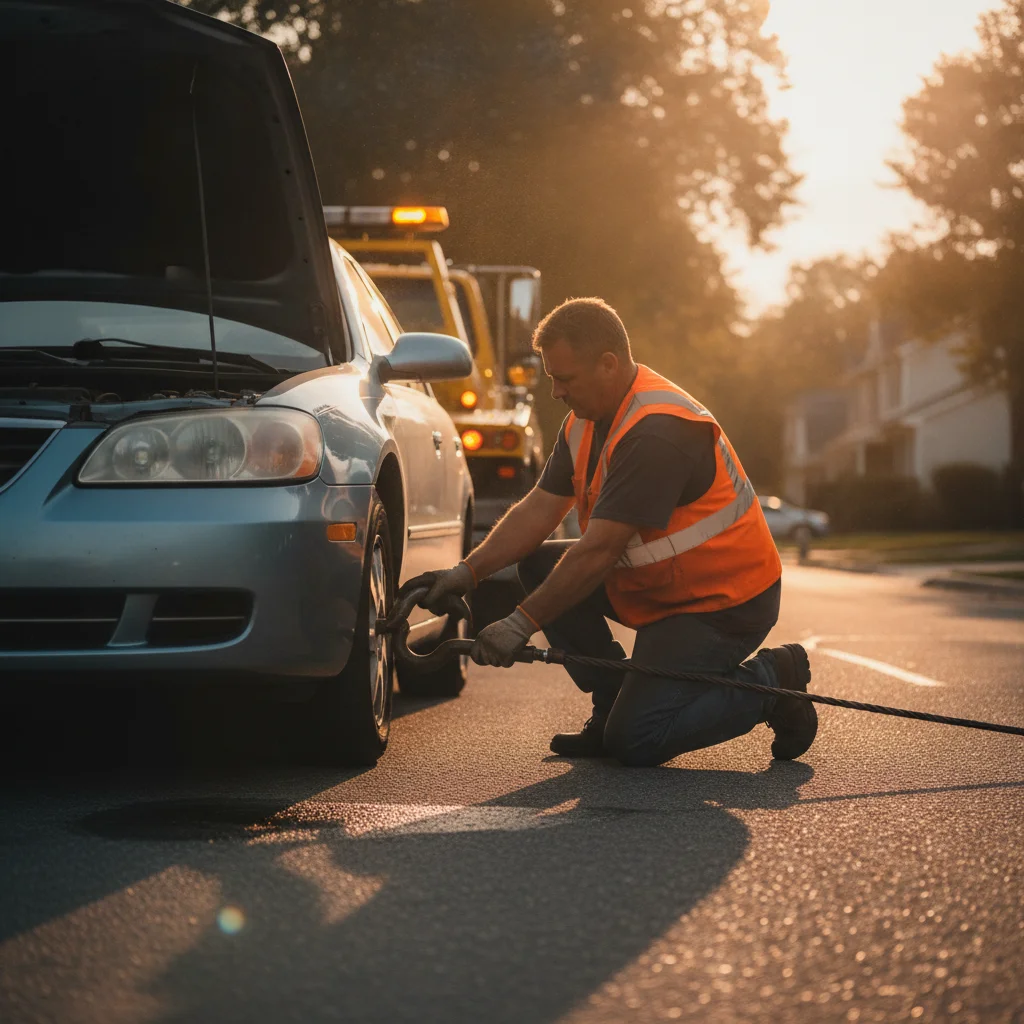
One underappreciated benefit: unlike filing a collision or comprehensive claim, using roadside assistance typically does not raise your auto insurance premium. Insurers treat it as a service benefit, not a risk indicator. That changes the calculus significantly — you can use it once and already come out ahead financially without any downstream cost.
Does Using Roadside Assistance Raise Your Rates?
In most cases, no. Roadside assistance calls are not treated as insurance claims in the traditional sense and do not trigger the at-fault incident reviews that affect your premium. However, a small number of insurers do track frequent roadside calls as a potential underwriting signal, so it's worth asking your agent directly. Reading your policy's terms around the add-on will clarify how your specific insurer handles it.
Cons and Situations Where It May Not Be Worth It
Roadside assistance isn't the right add-on for every driver. Here are the scenarios where paying for it amounts to buying duplicate coverage or coverage you're unlikely to need.
Redundant if manufacturer coverage is still active
Most new vehicles sold in the U.S. include factory-sponsored roadside assistance for 3–5 years. Paying your insurer for the same service during that window is simply wasted money.
Towing distance limits often fall short in rural areas
Insurer-based plans commonly cap towing at 5–10 miles per incident. If the nearest repair shop is 30 miles away, you'll pay out-of-pocket for the remaining distance.
Some plans limit the number of service calls per year
Budget-tier roadside plans may only cover 2–3 calls annually. Drivers with unreliable vehicles could exhaust this quickly, leaving them exposed for the rest of the policy term.
Premium credit cards may provide equivalent coverage for free
Cards like the Chase Sapphire Reserve and Amex Platinum include roadside assistance benefits. If you already carry one of these, adding the coverage to your policy could be unnecessary duplication.
Service quality depends on local provider networks
Insurers contract with third-party providers, and in some regions those networks are thin. Response times in rural or low-density areas can stretch to 2–4 hours even with a covered plan.
EV-specific needs often not covered by standard plans
Standard roadside plans weren't designed for EVs — they typically lack charge delivery, EV-trained operators, or guidance on safe towing procedures for battery-powered vehicles.
The biggest overlap situation: new vehicles sold in the last few years almost universally come with complimentary roadside assistance through the manufacturer — often for 3 to 5 years or a set number of miles. If your Toyota, Honda, or BMW is still within that window, adding it to your insurance policy is redundant money out of your pocket. Check your owner's manual or the manufacturer's website to confirm what's included and when it expires.
Similarly, if you carry a premium travel credit card — certain Chase Sapphire, Amex Platinum, or similar cards — you likely already have roadside dispatch benefits included. The coverage quality varies, so verify the limits and the billing model (some reimburse you after the fact, which still requires upfront cash).
Drivers who rarely venture far from home and have newer, reliable vehicles are statistically lower-risk. But "low probability" doesn't mean "zero probability," and that distinction matters when you're the one stuck on the shoulder at midnight.
EV Owners: Your Roadside Risks Are Different
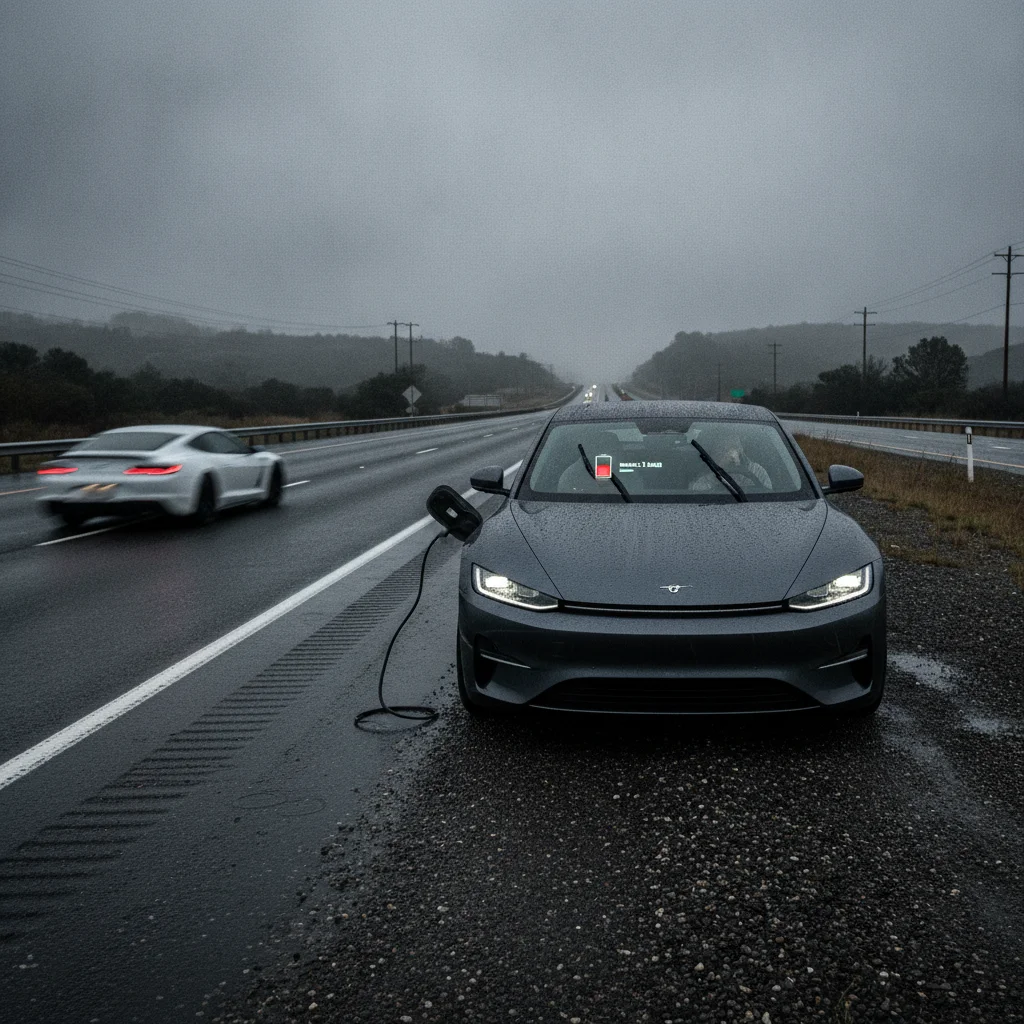
If you drive an electric vehicle, the standard roadside assistance calculus shifts — and not in your favor. Running out of charge is not the same as running out of gas. You can't walk to the nearest charger and bring back a jug of electrons. And not every tow truck operator knows how to safely tow an EV without damaging the battery or drivetrain.
The result: EV owners need to ask harder questions about what their roadside plan actually does when they're stranded with a dead battery. Key things to verify:
- Does the plan cover charging assistance or only fuel delivery?
- Is the tow truck operator trained to handle EVs (flatbed vs. traditional tow)?
- What's the towing distance limit — and is the nearest compatible charger within that range?
- Does the plan cover charge-level monitoring or proactive alerts?
Our dedicated guide on roadside assistance for EVs covers exactly what to look for and what most standard plans miss. If you're also concerned about broader insurance gaps, see the true cost of underinsuring an electric vehicle for the full picture on EV coverage risks.
How to Choose the Right Roadside Plan (and Avoid Overpaying)
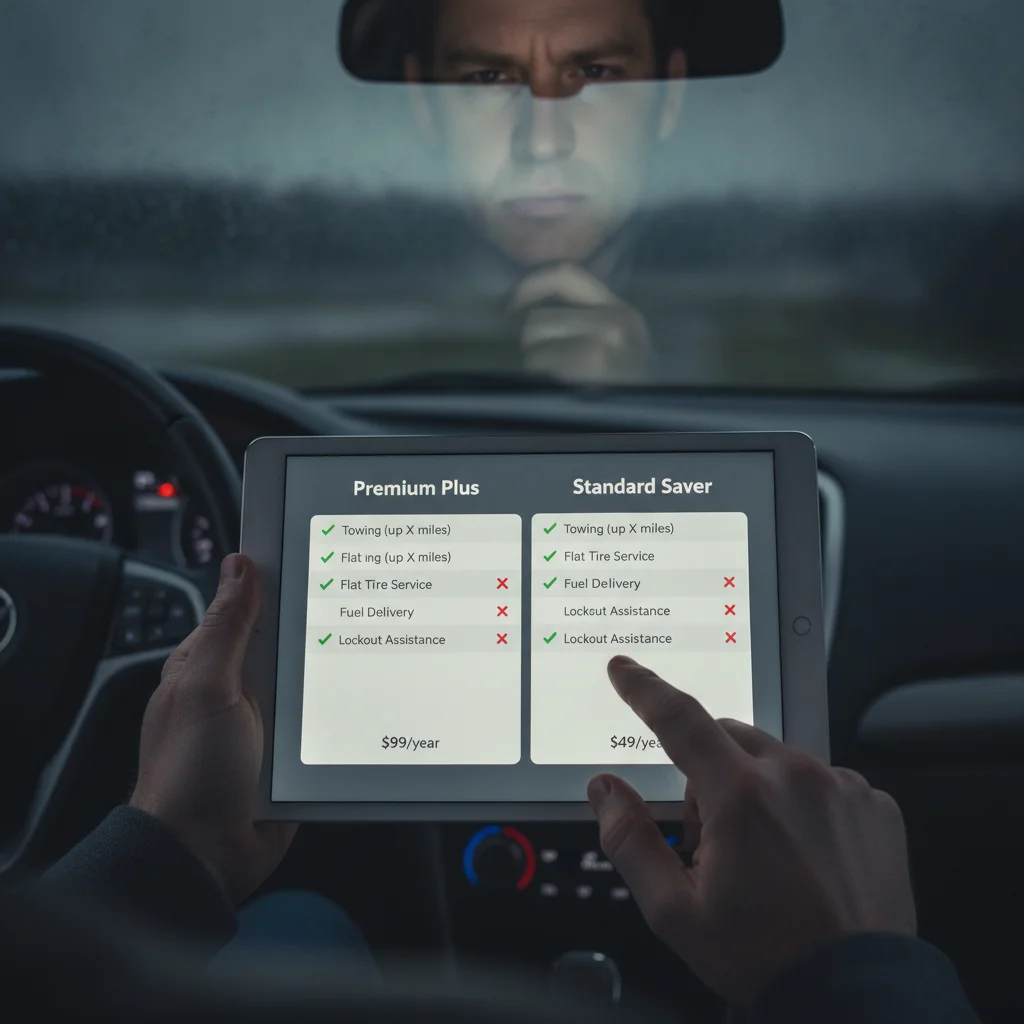
If you've decided roadside assistance makes sense for your situation, don't just accept whatever your insurer defaults you into. There's meaningful variation in quality, and a few minutes of comparison can get you significantly better coverage at the same price — or the same coverage at a lower price.
Through Your Auto Insurer
Adding roadside assistance to an existing auto policy is usually the cheapest route — often $5–$15 per month per vehicle. The convenience is built-in: one call, one bill, one provider relationship. The limitation is that insurer-based plans often have tighter towing distance caps (5–10 miles is common) compared to standalone memberships.
Through an Auto Club (AAA, Better World Club, etc.)
Standalone memberships run $60–$130 per year and cover you regardless of which vehicle you're in — even if you're a passenger in someone else's car. AAA's Classic tier covers towing up to 5 miles; Premier covers up to 200 miles per incident. That's a meaningful difference if you drive long distances or in remote areas.
Through Your Credit Card
Free but often weaker. Many cards provide roadside dispatch (they call someone for you) but charge you for the actual services. Read the benefits guide carefully before relying on this as your primary option.
Before adding anything to your policy, also review the policy features drivers most often overlook when comparing quotes — roadside assistance is one of several add-ons that can dramatically change the real-world value of an otherwise similar policy.
Questions to Ask Before You Sign Up
- What is the maximum towing distance, and what does additional mileage cost?
- How many service calls are covered per year before extra fees apply?
- Is there a wait time SLA — and what happens if no local provider is available?
- Does coverage follow the car, the driver, or both?
- Are there exclusions for vehicles over a certain age or weight?
The answers will quickly separate plans that look equivalent on price but deliver very different protection when you actually need it.

All claims are backed by peer-reviewed research. Sources on request.