Key Takeaways
What liability insurance actually covers — and what it doesn't
There's a fundamental point that many drivers misunderstand: liability coverage protects other people from you, not you from the accident. When you cause a crash, your liability policy steps in to cover the other driver's vehicle repairs, medical bills, and related costs. Your own vehicle damage and your own injuries are handled by entirely different coverages — collision insurance and your own health or medical payments coverage, respectively.
This distinction matters because it shapes how the entire post-accident process works. Once you report a claim, your insurer is essentially managing a claim on behalf of the person you injured or whose property you damaged — even though you're the policyholder. Their job is to resolve that third-party claim fairly, within the bounds of your coverage.
Your Insurance Policy Documents
Confirm your exact bodily injury and property damage liability limits before your adjuster calls.
Smartphone Camera
Document vehicle damage, road conditions, and the accident scene for your insurer's investigation.
Accident Scene Checklist App or Paper Card
Guides you through gathering the right information — license plates, witnesses, insurance details — at the scene.
Insurer's Mobile Claims App
Allows you to file your first notice of loss, upload photos, and track claim status from your phone.
Personal Injury Attorney (Consultation)
Provides guidance if the other party's injuries are serious or if a lawsuit is threatened against you.
It's also worth knowing what liability coverage doesn't touch. It won't pay for damage to your own car (that's collision and comprehensive coverage), it won't cover intentional acts, and it typically won't apply if you were using the vehicle in an excluded way. Understanding when liability insurance refuses to pay before you need to file a claim is genuinely valuable.
What you will need
With that foundation in place, here's exactly how liability coverage responds after an at-fault accident — step by step.
Step-by-step: How liability coverage responds
Secure the scene and gather information
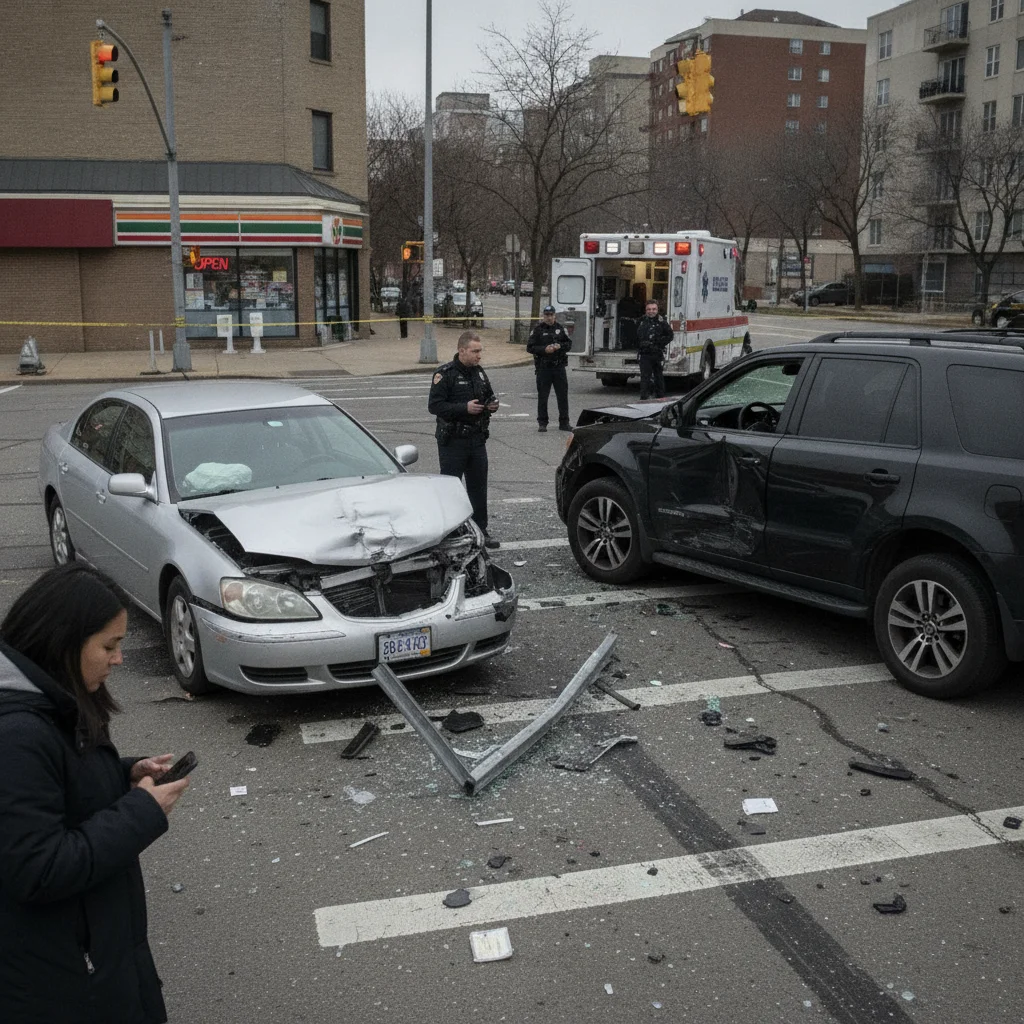
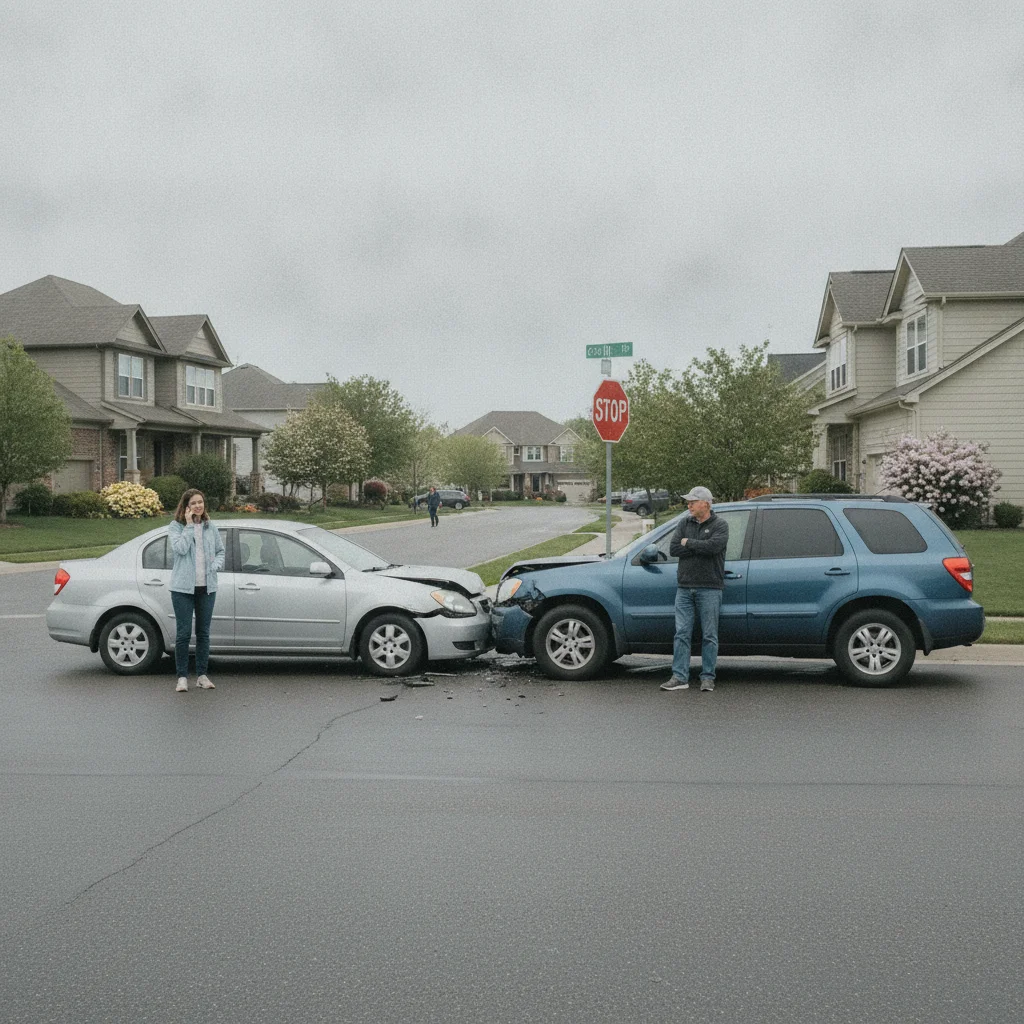
Before anything involving insurance can happen, you need to take care of the immediate situation. Move vehicles out of traffic if it's safe to do so, check whether anyone is injured, and call 911 if medical attention is needed. Even in minor accidents, requesting a police report is worth doing — it creates an official, neutral record of what happened, which your insurer will rely on later.
While waiting for police, exchange the following with the other driver:
- Full name and contact number
- Driver's license number
- License plate number
- Insurance company name and policy number
- Vehicle make, model, and year
Photograph everything: both vehicles from multiple angles, the road layout, any skid marks, traffic signals, and visible injuries. The more documentation you have, the smoother your insurer's investigation will go.
Report the accident to your insurer
Contact your insurance company as soon as reasonably possible — ideally the same day. Most policies require 'prompt' notification as a condition of coverage, and waiting too long can complicate or even jeopardize your claim. You can typically report by phone, through your insurer's website, or via their mobile app.
When you call, be prepared to provide:
- The date, time, and location of the accident
- A factual description of what happened
- The other driver's information you collected at the scene
- The police report number, if one was filed
- Photos and any other documentation you gathered
This first report is called the First Notice of Loss (FNOL). It officially opens the claim and triggers your insurer's response process. From this point, your insurer takes the lead in managing the liability claim.
Your insurer assigns a claims adjuster
Within one to two business days of your FNOL, your insurer will assign a claims adjuster to your case. This person's job is to investigate the accident, determine fault, and calculate the value of any covered losses. They work on your behalf — but their primary obligation is to manage the claim within the terms of your policy.
The adjuster will typically:
- Review the police report and your statement
- Speak with the other driver and any witnesses
- Inspect both vehicles or review photos submitted
- Research applicable state fault rules
Be honest and cooperative with your adjuster. Provide all requested documents promptly. If the adjuster asks for a recorded statement, that's normal — answer factually and stick to what you directly observed, not what you assume.
[in_content_images:0]The insurer investigates fault and coverage
This is where your insurer formally determines whether your liability coverage applies. They'll examine the facts against your policy terms to confirm:
- You were at fault, at least in part, for the accident
- The accident falls within the coverage period of your policy
- No exclusions apply that would void the claim
Fault determination isn't always black and white. Many states use comparative negligence rules, meaning both drivers can share a percentage of fault. If you're found 70% at fault and the other driver is 30% at fault, your liability coverage would apply to 70% of the other driver's losses. Understanding how your state handles this matters — see how fault and no-fault state rules affect liability claims for a deeper look at how those rules shift the picture.
If you believe fault is being misattributed, now is the time to share any evidence you have. How insurers and courts assign blame can help you understand what factors investigators weigh most heavily.
Bodily injury and property damage claims are handled separately
Your liability policy contains two distinct types of coverage, and they respond to the accident independently:
| Coverage Type | What It Pays | Your Policy Limit |
|---|---|---|
| Bodily Injury Liability (BI) | The other driver's and passengers' medical bills, lost wages, and pain and suffering | Per person / Per accident (e.g., 100/300) |
| Property Damage Liability (PD) | Repair or replacement cost of the other driver's vehicle and any other damaged property | Single per-accident limit (e.g., $50,000) |
The adjuster opens separate tracks for each. The property damage side often resolves faster — a repair estimate can be made quickly. Bodily injury claims take longer because the full extent of injuries, treatment, and recovery time may not be known for weeks or months.
Your insurer will negotiate directly with the other party (and their attorney, if they have one) to reach a fair settlement on both tracks. You don't typically need to be involved in those negotiations — that's what your insurer is there for.
Your insurer negotiates and settles the claim
Once the adjuster has a clear picture of the other party's damages — repair bills, medical records, lost income documentation — your insurer will make a settlement offer. The other party can accept, negotiate, or reject this offer.
Most claims settle without litigation. The process generally looks like this:
- Adjuster compiles damage totals and documentation
- Insurer issues an initial settlement offer to the claimant
- Claimant (often through their own insurer or attorney) responds
- Negotiations continue until an agreement is reached or a demand is rejected
- Settlement payment is issued directly to the other party
For a more detailed view of how this unfolds, filing a liability claim from scene to settlement walks through each phase with additional detail on documentation and timelines.
Your insurer also has the right — and responsibility — to defend you legally if the other party files a lawsuit against you. Attorney fees and court costs associated with your defense are covered under your policy's liability coverage, separate from the damages limits in most policies.
Understand what happens if costs exceed your limits
This is the part that causes the most anxiety — and rightfully so. If the other party's losses exceed your liability limits, your insurer pays up to your policy maximum and stops. Any remaining balance becomes your personal financial responsibility.
For example: if your property damage limit is $25,000 and the other driver's SUV costs $38,000 to replace, you could be personally liable for the $13,000 gap. With bodily injury, the stakes can be even higher if serious injuries are involved.
This is why regularly reviewing your liability limits matters. State minimums are almost always too low to provide meaningful protection in a serious accident. If you're concerned about exposure, talk to your insurer about increasing your limits or adding an umbrella policy for broader protection.
[in_content_images:1]After the claim: What to expect going forward
Once a liability claim settles, two things typically follow: your insurer updates your claims history, and your premium is likely to increase at renewal. An at-fault accident generally stays on your insurance record for three to five years, depending on your state and insurer. The rate impact varies widely — factors include the severity of the claim, your prior driving history, and your insurer's specific rating model.
Shop Your Rate After an At-Fault Claim
Not every insurer penalizes an at-fault accident the same way. If your premium increases significantly at renewal, it's worth comparing quotes from other carriers — your new rate may not be the best available to you. Some insurers also offer accident forgiveness for a first-time at-fault claim, which can protect your rate from increasing at all.
Keep a Claim File for Your Own Records
Throughout the process, save copies of every document: your FNOL confirmation, adjuster correspondence, photos, repair estimates, and the final settlement letter. If questions arise later — or if you need to reference the claim when shopping for new coverage — having a complete file saves significant time and stress.
If you feel the claim was handled unfairly — whether fault was assigned incorrectly or a settlement was insufficient — you have options. Understanding how disputed liability investigations work is a good starting point if you believe the other driver shared responsibility.
For a broader view of what happens across the entire claims lifecycle — from first notice to final payment — what actually happens after you file an auto insurance claim fills in the remaining pieces. And if you're ever in an accident where it's genuinely unclear who was at fault, the full claims process hub is a useful reference point to revisit.
Low State Minimums Leave You Exposed
Many states set minimum liability requirements well below what a real accident costs. A 25/50/25 policy — $25,000 per person, $50,000 per accident for bodily injury, $25,000 for property damage — can be exhausted quickly in a multi-person injury accident or any crash involving a newer vehicle. Review your limits annually, not just when you first buy a policy.
Never Settle Directly With the Other Driver
It can be tempting, especially in minor accidents, to offer cash and skip the insurance claim. This is almost always a mistake. Injuries that seem minor at the scene can become serious within days, and you'd have no protection if the other driver later demands more than you paid. Your liability coverage exists precisely to protect you from this scenario — use it.
Your Cooperation Is a Policy Requirement
Most liability policies include a cooperation clause: if you fail to assist your insurer's investigation — by ignoring requests for documents, giving inconsistent statements, or disappearing from the process — your insurer can potentially deny coverage entirely. Stay responsive and honest throughout. It's both your obligation and your protection.
Frequently asked questions about at-fault liability claims
Will my insurer pay even if I haven't been officially found at fault yet?
Yes, in most cases. Your insurer will begin investigating immediately and can issue payments once they have sufficient evidence to assess liability — they don't need to wait for a court ruling. In fact, most claims are settled without any court involvement at all.
What if the other driver files a claim directly with my insurer?
This is called a third-party claim, and it's completely normal. The other driver has the right to contact your insurer directly to seek compensation. Your insurer will handle that claim the same way — assign an adjuster, investigate, and negotiate a settlement within your policy limits.
Do I need to hire my own lawyer?
For most routine at-fault accidents, no. Your insurer provides legal defense as part of your coverage. However, if the injuries are severe, multiple parties are suing you, or your insurer is acting in bad faith, consulting a personal injury attorney independently is a smart move.
What if the accident happened in a no-fault state?
No-fault rules change how medical costs are paid after an accident — each driver's own policy typically handles their own injury costs regardless of who caused the crash. Your liability coverage still applies to the other driver's property damage, and bodily injury liability can still be triggered in serious injury cases that cross a threshold. See how liability coverage rules change by state for a full breakdown.
What about single-car accidents — does liability still come into play?
It can. If you hit a guardrail, fence, or utility pole, property damage liability may cover what you damaged that belongs to someone else. Single-car accidents and how liability still applies explains how coverage responds in those less obvious scenarios.

All claims are backed by peer-reviewed research. Sources on request.