Key Takeaways
What Comprehensive Coverage Actually Covers — and What It Doesn't
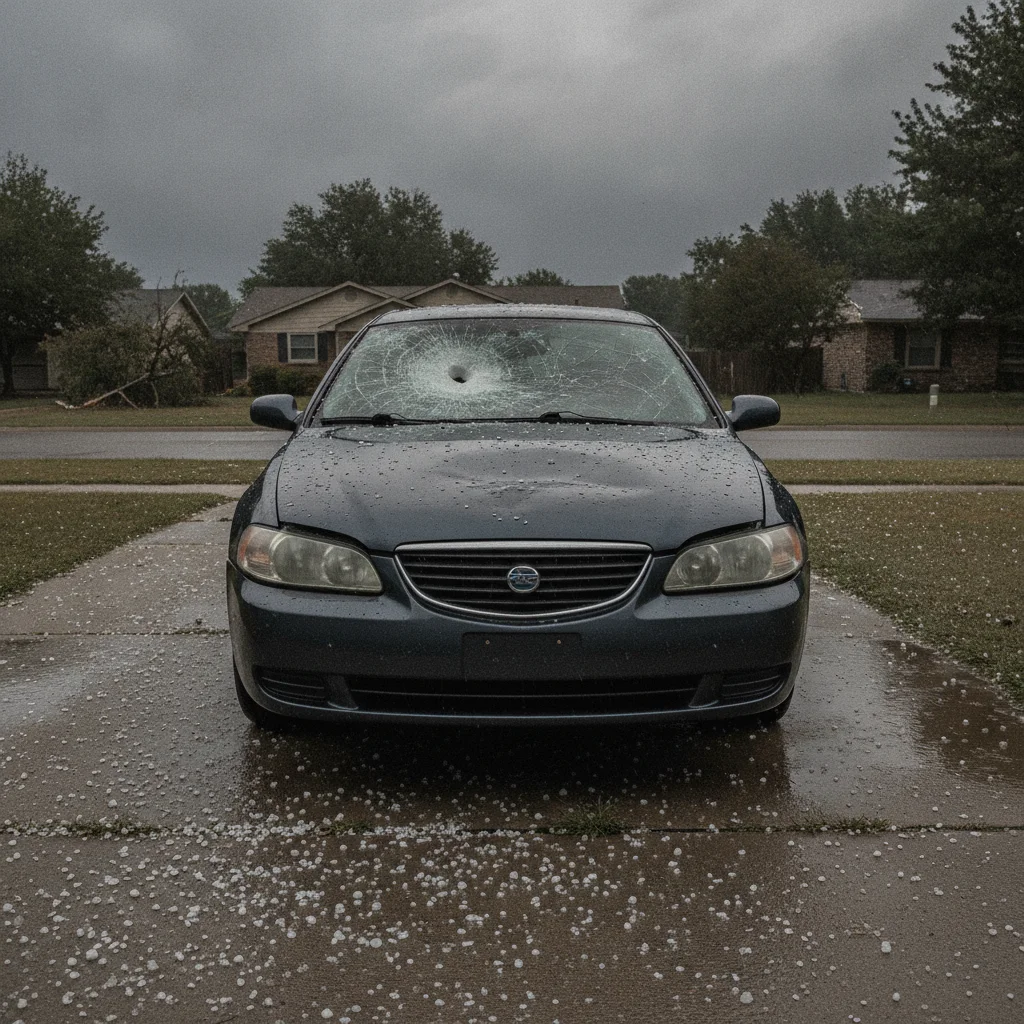
The word "comprehensive" suggests all-inclusive protection, but in auto insurance, the term refers specifically to physical damage from non-collision events. Think of it as the coverage that steps in when road physics aren't involved. A storm destroys your hood. A thief takes your catalytic converter. A deer runs into your door panel. A wildfire damages your interior. These are comprehensive events.
What comprehensive does not cover:
- Accidents with other vehicles
- Single-car collisions with objects like guardrails, trees you drove into, or parking barriers
- Mechanical breakdowns unrelated to a covered event
- Damage to another person's property
- Medical expenses for you or your passengers
The line between comprehensive and collision can get blurry. If a tire blowout causes you to swerve and hit a guardrail, that's a collision claim — the vehicle collided with a fixed object. If a boulder falls from a hillside and strikes your stationary car, that's comprehensive — the vehicle wasn't in motion and didn't strike anything. Filing a collision claim follows a parallel but distinct process, and the two are worth understanding side by side.
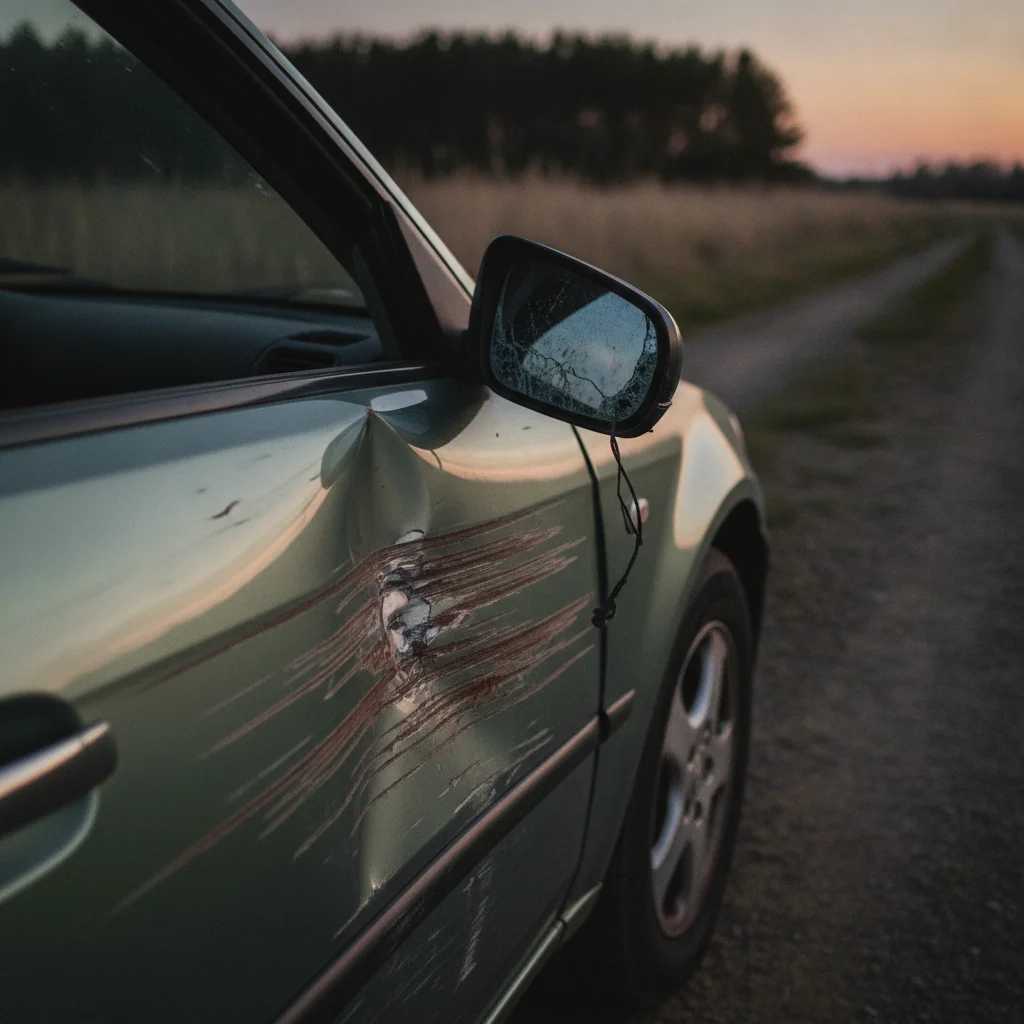
One important distinction from collision claims: comprehensive events generally aren't "your fault" in any traditional sense. A hailstorm isn't negligence. But fault is largely irrelevant to how comprehensive claims are processed — you still pay your deductible regardless, and filing may still affect your premium at renewal, though typically by a smaller margin than a collision claim would.
Fault Doesn't Eliminate Your Deductible
A common misconception is that because comprehensive events "aren't your fault," you don't pay a deductible. That's incorrect. Comprehensive claims always involve your deductible — the insurer covers repair costs above that amount. There is no at-fault or not-at-fault determination in comprehensive claims because no other driver is involved.
Should You File? Doing the Math on Comprehensive Claims
Not every comprehensive event warrants a formal claim. Before you pick up the phone, run a quick calculation.
The break-even question is simple: Is the estimated repair cost meaningfully greater than your deductible? If a falling branch scratches your hood and the damage looks like $400 to repair, but your comprehensive deductible is $500, filing accomplishes nothing financially — you'd pay the full cost either way, and the claim goes on your insurance history.
Minor Claims Can Still Raise Your Premium
Even though comprehensive events aren't your fault, filing a claim creates a record. Some insurers raise rates after any claim, regardless of cause. If the repair cost barely exceeds your deductible, paying out of pocket may cost less over time than absorbing a multi-year premium increase.
There's also the question of your claims history. Insurers track the number and type of claims you file, and while a single comprehensive claim is less likely to cause a dramatic premium increase than an at-fault collision, multiple claims within a short window can signal risk to underwriters. The policy management hub has more on how claims affect renewals and what options you have when rates shift.
The general threshold most insurance professionals suggest: if repair costs exceed your deductible by at least $500, and the damage is more than cosmetic, filing is likely worthwhile. For total-loss situations — theft, severe flood, or fire — you should almost always file, since the settlement value is typically far beyond what you'd pay out of pocket.

Consider a No-Claim Alternative for Minor Damage
If the damage is cosmetic — a small hail dent, a minor windshield chip — get an independent repair quote before filing. For chips, many windshield repair services charge $50–$100 out of pocket, which is far below most deductibles. Paying directly preserves your claims record without sacrificing a functional fix.
Keep a Digital Copy of Your Declarations Page
Store a PDF of your declarations page in a cloud folder or email it to yourself. In a post-storm or theft scenario, you'll want quick access to your deductible, coverage limits, and claims contact information without hunting through physical paperwork. Your insurer's app usually provides this on demand as well.
There's also a practical consideration for financed or leased vehicles: your lender typically requires both collision and comprehensive coverage. If you're leasing or still paying off the loan, you're likely already carrying comprehensive, and the decision to file is more about financial optimization than coverage eligibility.
For context on how uninsured motorist claims differ in process and application — another coverage that operates outside the at-fault framework — see our breakdown of filing an uninsured motorist claim. Both UM and comprehensive claims share the feature of not requiring another driver's liability policy to pay out, but the mechanisms are different.
How to File: Tools, Prerequisites, and the Step-by-Step Process
Filing a comprehensive claim is a structured process, and following it in the right order protects both your payout and your legal standing. You'll need a few key items in hand before you begin.
What you will need
Insurance company claims app or website
Used to initiate the claim, upload photos, and track claim status in real time.
Smartphone with camera
Used to photograph all damage from multiple angles before any repairs begin.
Police report
Required for theft, vandalism, or hit-and-run claims to validate the incident with authorities.
Declarations page or insurance card
Provides your policy number, coverage details, and deductible amount needed to open a claim.
Repair shop estimate
An independent repair estimate helps you compare against the adjuster's valuation.
Confirm the damage falls under comprehensive coverage
Before you call your insurer, confirm that what happened to your vehicle is actually a comprehensive event. Comprehensive coverage applies to damage caused by events outside a typical road collision: hailstorms, flooding, fire, falling trees or objects, animal strikes (like hitting a deer), theft, and vandalism.
If another driver hit your parked car, that may be a collision claim — or a claim against the other driver's liability coverage. If you struck a deer, that is comprehensive. If you drove into a ditch, that is collision. The distinction matters because it determines which coverage pays and what your deductible will be. See our full guide to collision and comprehensive insurance if you're unsure which coverage applies to your situation.
Ensure your safety and secure the vehicle
If the event just occurred — a storm, a flood, a fire — make sure you and your passengers are safe before doing anything else. Do not re-enter a vehicle that sustained fire damage or one that is partially submerged. If your vehicle was stolen, do not attempt to recover it yourself.
Once safe, secure the vehicle if possible. If windows were shattered or there's an opening due to storm or vandalism damage, cover it with a tarp or plastic sheeting to prevent further water or weather damage. Most insurers cover reasonable temporary protective measures, but keep receipts for any materials you purchase.
File a police report if required
Certain comprehensive claim types require — or are strongly supported by — a police report. These include:
- Theft: Always file a police report immediately. Your insurer will require a report number.
- Vandalism: File a report. Without it, the insurer has no corroboration of the incident.
- Hit-and-run on a parked vehicle: A police report helps establish that no identified at-fault driver exists, keeping the claim under comprehensive rather than uninsured motorist coverage.
For purely weather-related events — hail, flooding, a fallen tree — a police report is usually not necessary, though local news reports or NOAA weather data can help corroborate your claim timeline.
Document all damage thoroughly
Before anything is repaired, cleaned, or moved, photograph and video record the damage from every angle. Walk around the entire vehicle — not just the most visibly affected areas. Hail, for example, may leave dents on the roof, hood, and trunk that aren't immediately visible from ground level.
Capture:
- Wide shots showing the full vehicle in context (useful for hail or flood scenes)
- Close-ups of every dent, crack, shattered window, or water line
- Interior damage if relevant (flood damage to upholstery, theft-related interior destruction)
- Timestamps and geotags — most smartphones embed these in photo metadata automatically
If your vehicle was stolen and then recovered, document the condition at recovery separately from its pre-theft condition if you have those photos.
Contact your insurer and open the claim
Call your insurance company's claims line, log in to their mobile app, or use their website to open the claim. Most major insurers now allow 24/7 digital claim filing. When you initiate the claim, you'll need:
- Your policy number
- A description of what happened and when
- Your current location or the vehicle's location
- A police report number, if applicable
- Your preferred method of contact for follow-ups
The insurer will assign a claim number and, typically within one business day, a claims adjuster. The complete roadmap to filing an auto insurance claim walks through what happens across all claim types once you open the file.
Work with the insurance adjuster
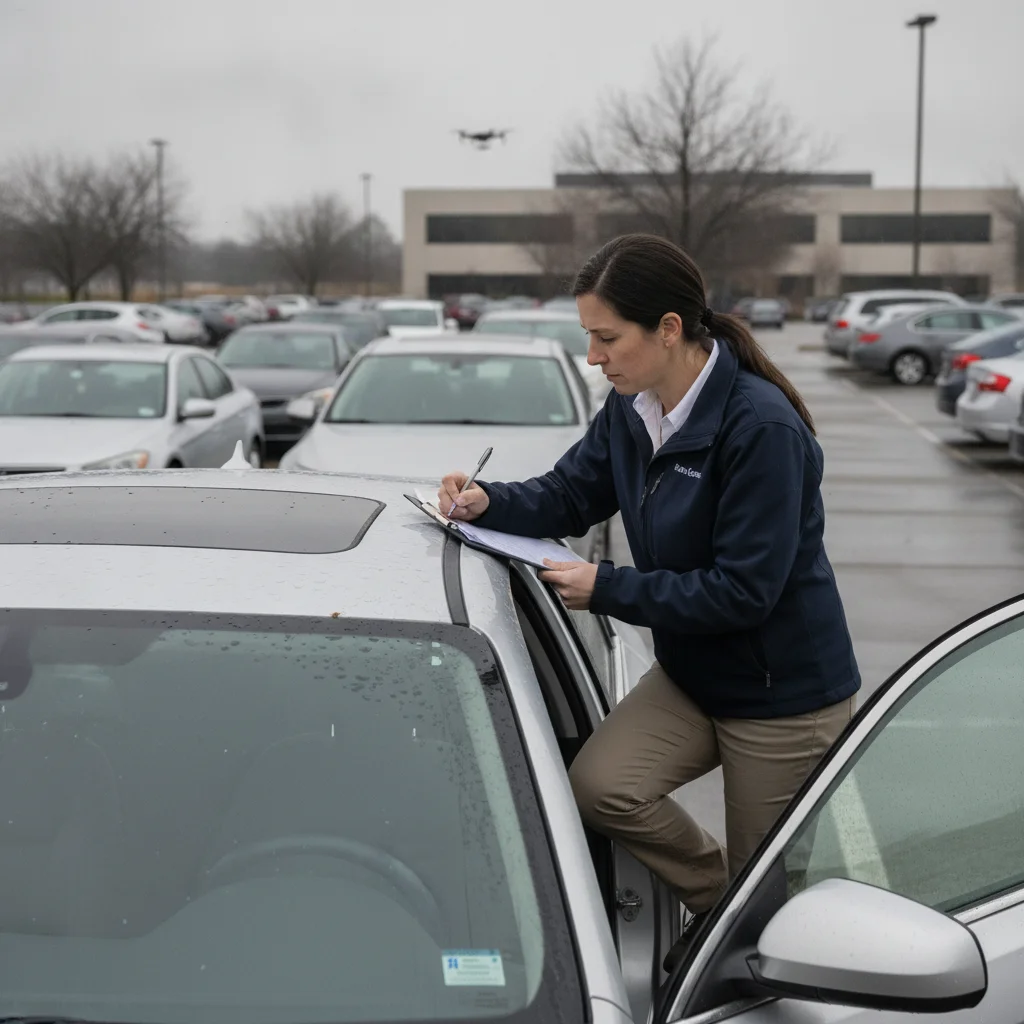
Once your claim is open, an adjuster will be assigned. For comprehensive claims, the adjuster's job is to assess the damage and determine repair cost relative to the vehicle's actual cash value (ACV). This inspection may happen:
- In person at your home, workplace, or a designated inspection facility
- Via a drive-in inspection center operated or contracted by your insurer
- Virtually using photos and video you submit through the insurer's app
The adjuster will produce an estimate. If the repair cost approaches or exceeds the ACV — typically defined as the vehicle's market value before the loss — the insurer may declare it a total loss. In that case, you'll receive the ACV minus your deductible rather than a repair payment.
You are entitled to ask the adjuster how they calculated the ACV and to dispute it with comparable vehicle listings if you believe the valuation is low. For a closer look at what comes next after the adjuster contacts you, see what to expect in the days after filing a claim.
Authorize repairs and pay your deductible
Once the adjuster's estimate is agreed upon, you'll authorize the repair. Your insurer may direct you to a preferred or network shop, or you may have the right to choose your own — policies vary, so confirm this with your adjuster.
Your deductible comes out of the settlement. If the adjuster estimates $2,400 in repairs and your comprehensive deductible is $500, the insurer pays $1,900 and you pay the shop $500 directly. In most cases, you pay the shop at pickup; the insurer issues payment directly to the shop or to you depending on the arrangement.
If the vehicle is a total loss, the deductible is subtracted from the ACV payout you receive. You do not pay the deductible to a repair shop in that scenario.
Arrange a rental vehicle if needed
Comprehensive coverage does not automatically include a rental car while your vehicle is being repaired. You need a separate rental reimbursement endorsement on your policy. Check your declarations page or call your insurer to confirm whether you have it and what the daily and total limits are.
If you have rental coverage, your insurer will either set up the rental directly or reimburse you up to your policy's daily cap (commonly $30–$50/day). Keep all receipts if you pay out of pocket.
If your vehicle was stolen and not recovered, rental coverage typically applies during the waiting period before a total loss settlement is issued — usually a window of 30 days or more, depending on the policy.
Common Complications and How to Handle Them
Most comprehensive claims resolve without significant friction, but a handful of scenarios tend to create delays or disputes.
Disputed actual cash value
If your vehicle is totaled, the ACV the insurer assigns may feel lower than what you'd pay to replace it. Insurers typically use valuation tools that aggregate market data, but these aren't infallible. You can dispute an ACV by gathering listings for comparable vehicles in your region — same make, model, year, mileage, and trim level — and presenting them as evidence. Many insurers will negotiate; some policies also allow for independent appraisal or arbitration.
Supplemental damage found during repairs
Shops often discover additional damage once they begin disassembly — rust beneath storm damage, structural issues hidden by hail dents. Legitimate additional damage found during repair is typically covered under the same claim via a supplemental estimate, which the shop submits directly to the adjuster. Alert your adjuster immediately rather than authorizing extra work on your own.
Theft recovery with additional damage
If your stolen vehicle is recovered but damaged — stripped interiors, broken ignition — those damages are covered under the comprehensive claim alongside the theft itself. Document the recovered vehicle's condition the moment it's released to you.
Delays in settlement
State insurance regulations typically require insurers to acknowledge claims within a set timeframe (often 10 days) and resolve them within a set window (often 30–45 days depending on the state). If your claim is stalling, ask your adjuster for a status timeline. If that doesn't move things forward, file a complaint with your state's Department of Insurance — it often accelerates resolution without requiring litigation.
After the Claim: What Changes in Your Policy
Once your claim is settled and repairs are complete, your policy continues — but a few things may shift at renewal.
Premiums: Comprehensive claims typically cause smaller premium increases than at-fault collision claims, because the event wasn't within your control. However, insurers in some states are permitted to raise rates after any claim, regardless of fault. The size of the increase depends on your insurer, your state's regulations, your overall claims history, and sometimes the type of comprehensive event (theft claims in high-crime zip codes may trigger larger adjustments than a single hail event).
Claim history: The claim will appear on your CLUE (Comprehensive Loss Underwriting Exchange) report for up to seven years. This report is visible to other insurers when you shop for new coverage. A single comprehensive claim rarely disqualifies you from competitive rates, but a pattern of claims across multiple events may.
Deductible options: After a claim, some drivers choose to revisit their deductible level. Raising your comprehensive deductible (say, from $250 to $500 or $1,000) can lower your premium. This is a sensible trade-off if you're in a low-risk area for comprehensive events and want to reduce monthly costs.
For a broader look at what unfolds in the days and weeks after any type of claim is filed, this walkthrough of post-claim procedures covers adjuster contacts, repair timelines, and final resolution across claim types.

Understanding the full arc of a comprehensive claim — from recognizing the event type through final settlement — puts you in a stronger position to protect your investment, avoid common mistakes, and make clear-eyed decisions about when to file and when to pay out of pocket. The process isn't complicated, but it rewards preparation.

All claims are backed by peer-reviewed research. Sources on request.