Key Takeaways
Understanding What You're Actually Dropping
Before you can make a sound decision about dropping physical damage coverage, you need a clear picture of what each policy component actually does — because collision and comprehensive are not interchangeable, and they don't carry the same risk profile for every driver.
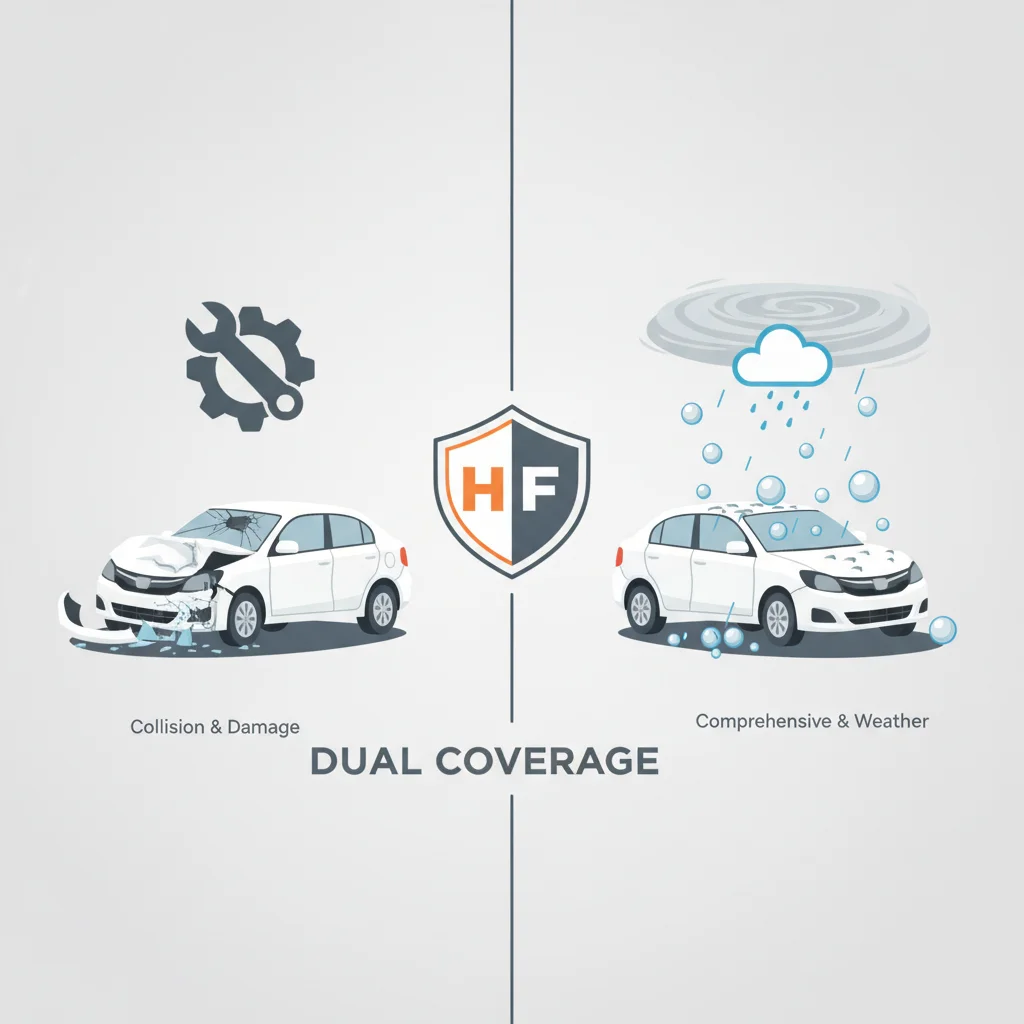
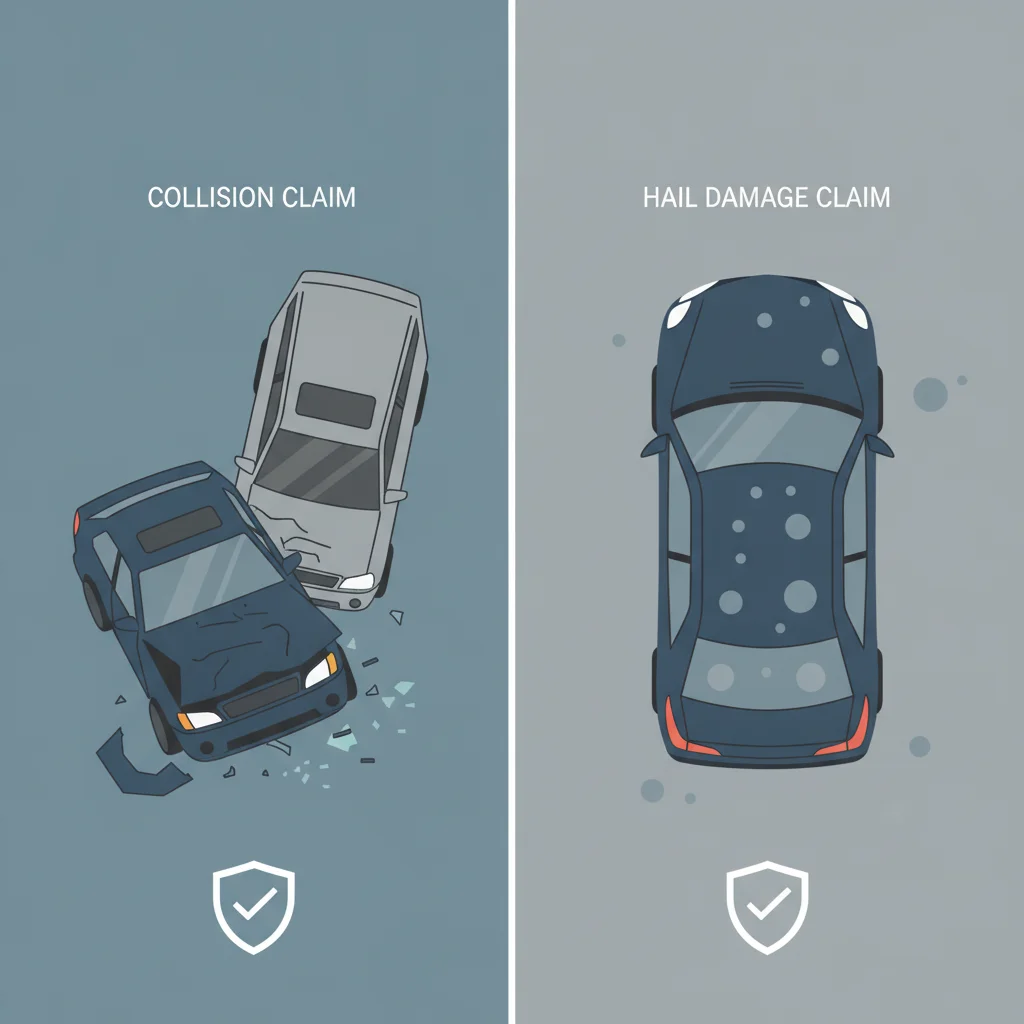
Collision coverage pays to repair or replace your vehicle when it's damaged in an accident involving another vehicle or a stationary object — a guardrail, a telephone pole, another car in a parking lot. It applies regardless of fault. If you rear-end someone or get sideswiped, collision is what steps in after your deductible.
Comprehensive coverage handles virtually everything else: theft, vandalism, fire, flooding, hail, falling objects, and animal strikes. It's often called "other than collision" coverage in policy documents. A deer on the highway, a tree branch in a storm, a catalytic converter stolen overnight — those are all comprehensive claims. See our guide to which coverage applies to your situation if you're unsure which bucket a specific incident falls into.
These two coverages share a common trait: both pay out based on your vehicle's actual cash value (ACV) at the time of the loss — not what you paid for the car, not replacement cost. ACV accounts for depreciation, mileage, and condition. That distinction becomes the central variable in every drop-or-keep calculation.
Because collision and comprehensive are priced and structured separately, you can — and often should — evaluate them independently. Carrying both collision and comprehensive is the default for most insured drivers, but defaulting to that without periodic review is one of the more common and costly habits in auto insurance.
What you will need
The Core Calculation: When the Numbers Stop Working
The financial logic behind dropping physical damage coverage is straightforward in principle, though it requires honest inputs to execute well. The question you're answering is: Am I paying more for this coverage than I can realistically expect to receive from it?
The most widely cited threshold comes from consumer finance guidance: if your combined annual premium for collision and comprehensive exceeds 10% of your vehicle's actual cash value, the math has tilted against keeping it. Some analysts use an 8% threshold for more conservative budgeters.
Here's a simple example:
| Vehicle ACV | 10% Threshold | Annual Premium | Verdict |
|---|---|---|---|
| $12,000 | $1,200 | $900 | Keep coverage |
| $6,000 | $600 | $780 | Dropping may make sense |
| $4,000 | $400 | $650 | Strong case to drop |
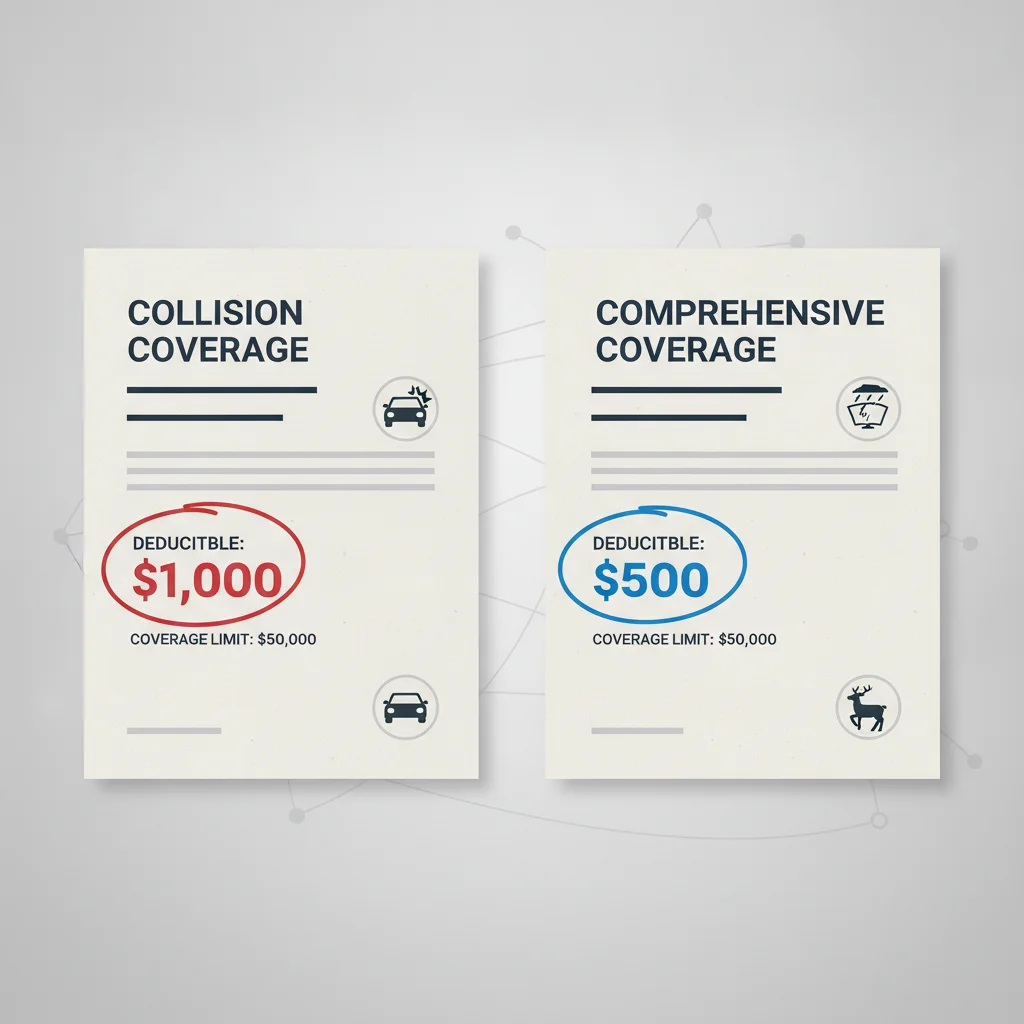
But the premium alone isn't the full picture. Your deductible materially compresses the real-world value of a claim. If you carry a $1,000 deductible on a car worth $5,000, the insurer's maximum net payout to you is $4,000 — and that only applies in a total loss. More common partial repairs may yield far less. Collision and comprehensive deductibles don't have to match, and adjusting them separately is one tool worth considering before going straight to dropping a coverage entirely.
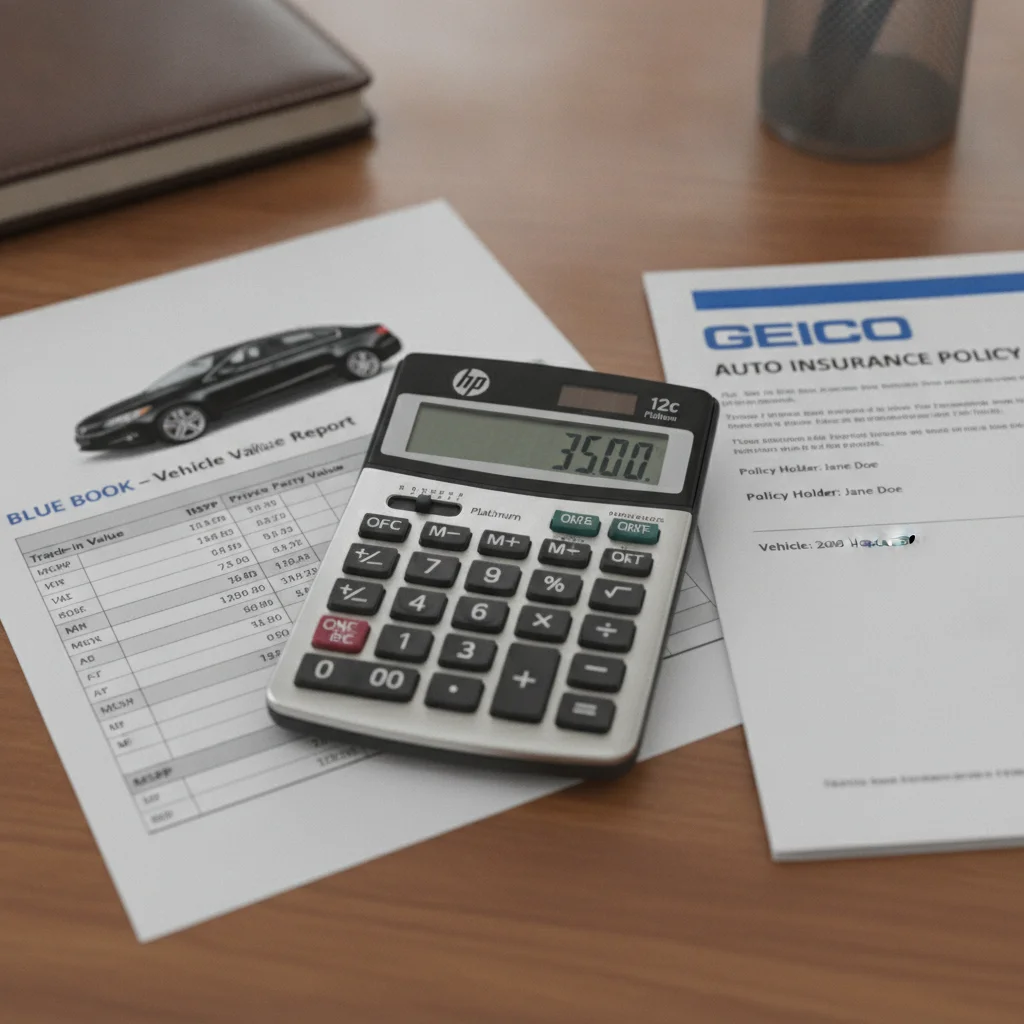
The deductible math matters because the effective coverage value — what you could realistically collect — decreases every year as the car depreciates, while your deductible stays fixed. At some point, the gap closes entirely.
Don't Use Purchase Price as Your ACV
One of the most common errors in this calculation is using what you paid for the car — or your remaining loan balance — instead of the current actual cash value. These numbers often diverge significantly, especially in the first few years of ownership. Your insurer will pay ACV at the time of a claim, not your purchase price. Using inflated inputs in your calculation will make coverage look more valuable than it actually is.
For a structured framework specifically designed around aging vehicles, see Older Cars and Physical Damage Coverage: A Decision Framework.
Kelley Blue Book (kbb.com)
Used to look up your vehicle's private party actual cash value based on mileage, condition, and trim.
NADAguides (nadaguides.com)
Provides a second ACV reference point, often used by lenders and insurers as an authoritative valuation source.
Your Insurance Declarations Page
Shows the itemized premium breakdown by coverage type, which you need to isolate collision and comprehensive costs.
Loan Payoff Statement from Your Lender
Confirms whether you still have a lien on the vehicle that legally requires maintaining physical damage coverages.
Insurer's Online Account Portal
Allows you to request coverage changes, run premium quotes for different scenarios, and download updated policy documents.
Step-by-Step: Evaluating Whether to Drop Coverage
This process works best done annually — ideally at renewal — when your insurer has already re-rated your policy and you have a current premium figure in hand. Reviewing your coverage at renewal is the most natural trigger for this exercise, but you can run the numbers anytime.
Find Your Car's Current Actual Cash Value
Look up your vehicle's ACV using at least two sources. Kelley Blue Book (kbb.com) and the National Automobile Dealers Association (nadaguides.com) are the two most commonly referenced by insurers. Enter your exact mileage, trim level, and condition honestly — overestimating condition inflates the ACV and can lead you to keep coverage longer than warranted.
Use the private party value as your benchmark, not the trade-in or dealer retail price. That figure most closely tracks what an insurer would pay in an ACV-based claim settlement.
Pull Your Current Annual Premium for Each Coverage
Log in to your insurer's portal or call your agent and ask for the premium breakdown by coverage type. You want to isolate what you're paying specifically for collision and what you're paying for comprehensive — not the blended total for physical damage. Some policies list these as separate line items on your declarations page; others bundle them.
If they're bundled, ask your insurer what the premium would be without each coverage, independently. This gives you the actual savings figure for dropping one versus both.
Apply the 10% Threshold Test
Divide your combined annual physical damage premium by your vehicle's ACV. If the result exceeds 0.10 (10%), the standard guidance suggests the coverage may no longer be cost-effective.
Example: Annual premium of $720 ÷ ACV of $5,500 = 0.131, or 13.1%. That exceeds the threshold, indicating coverage may not be worth retaining.
Then factor in your deductible. Subtract your deductible from the ACV to get your maximum net payout. If you have a $1,000 deductible and the car is worth $5,500, the most you'd ever receive in a total loss is $4,500 — and only after paying the $1,000 out of pocket first.
Check for Any Lender or Lease Requirements
Before making any changes, confirm whether you have a lien on the vehicle. If you're still making loan payments or are in a lease, both collision and comprehensive are almost certainly required under your financing agreement. Dropping either coverage while a loan is active puts you in breach of contract and exposes you to force-placed insurance — a policy the lender buys on your behalf, usually at a much higher rate, covering only the lender's interest, not yours.
Run a quick check: look up your loan payoff amount and compare it to your vehicle's ACV. If the loan is nearly paid off and the car has depreciated significantly, you may be close to the point where dropping becomes legally permissible.
Assess Your Personal Risk Tolerance and Financial Cushion
Run a simple stress test: if your car were totaled tomorrow with no physical damage coverage, could you manage the financial impact? Consider whether you have sufficient savings to cover a replacement vehicle, whether you have reliable transportation alternatives, and whether the loss would create genuine hardship or just inconvenience.
If the answer is "I could absorb this," the case for dropping is stronger. If the answer is "this would seriously destabilize my finances," that's a signal to retain coverage even if the premium math is unfavorable — because insurance is ultimately about protecting against catastrophic financial disruption, not just optimizing expected value.
Make the Change and Document It
Once you've made your decision, contact your insurer by phone or through your online account. Request the specific endorsement change — removal of collision, removal of comprehensive, or both — and ask for a revised declarations page confirming the update.
Note your premium savings explicitly on the updated declarations page and set a calendar reminder to revisit the decision at your next renewal. Market conditions, your financial situation, and your vehicle's value can all shift in 12 months, and the right answer this year may change.
Run This Calculation Every Year at Renewal
Vehicle values shift year to year, and so do insurance premiums. A car that justified full physical damage coverage last year may cross the threshold this year. Building a 15-minute annual review into your renewal process — checking ACV against current premiums — is one of the simplest ways to avoid paying for coverage that no longer delivers proportionate value.
Redirect Savings to an Emergency Fund
If you do drop coverage, consider redirecting the premium savings into a dedicated vehicle fund. Even setting aside $50–$80 per month — roughly what many drivers save by dropping collision on an older car — builds a meaningful buffer within a year or two. This effectively lets you self-insure the physical damage risk while building liquidity for your next vehicle purchase.
Consider Dropping Collision Before Comprehensive
Because collision claims are statistically more frequent than comprehensive claims for most drivers, collision typically costs more to insure. But comprehensive protects against low-probability, high-impact events like theft or severe weather — events that can be total losses. For many older car owners, dropping collision first while retaining comprehensive is the smarter intermediate step.
Factors That Complicate the Decision
The 10% rule is a starting point, not a verdict. Several real-world factors can push the decision in either direction, and ignoring them leads to choices that look good on paper but create exposure in practice.
Your Financial Cushion
The core question is whether you could absorb a total loss without insurance. If your car is worth $5,000 and you have $8,000 in an emergency fund, losing the car is painful but survivable. If your savings are thin and the car is your only transportation to work, retaining coverage longer — even on a lower-value vehicle — may be the rational choice despite the unfavorable premium math.
Your Local Risk Profile
Where you park and drive matters enormously for comprehensive, in particular. Drivers in hail-prone regions of the central U.S., high-theft metro areas, or areas with elevated deer-collision rates are carrying more comprehensive exposure than the national average. Conversely, a driver in a low-crime suburb with a garage may find that comprehensive provides very little practical protection on a car worth $5,000.
How Often You File Claims
Your own claims history shapes how useful the coverage actually is. If you've gone five years without filing a collision claim, you've paid premiums that delivered no direct return. That's not inherently a mistake — insurance is a hedge — but it's context worth factoring in. Drivers who have needed to use their collision coverage frequently have a different calculus.
Whether You Can Drop One but Not the Other
Collision typically costs more than comprehensive on most vehicles. Dropping collision first — while retaining comprehensive — is a common intermediate strategy for drivers whose car is older but still parked in a high-theft area or in a region prone to weather events. That asymmetry in risk often justifies asymmetric coverage decisions.
Financed or Leased Vehicles: You Cannot Drop Coverage
If your vehicle is financed or leased, your lender or lessor contractually requires both collision and comprehensive coverage for the life of the loan or lease. Dropping either coverage while a balance remains is a breach of your financing agreement. Your lender may respond by force-placing insurance on the vehicle — a lender-protection-only policy billed to your account at rates that typically far exceed standard market premiums. Verify your payoff status with your lender before making any changes to physical damage coverage.
See the full case for and against carrying both coverages if you're weighing whether to eliminate one or both simultaneously.
After You've Decided: What Dropping Coverage Actually Changes
Dropping collision or comprehensive doesn't affect your liability coverage, your uninsured motorist protection, or any other component of your policy. It's a targeted change with a targeted effect: your insurer will no longer pay for physical damage to your vehicle under the terms of whichever coverage you removed.
A few practical downstream effects to anticipate:
- Your premium drops immediately. The savings take effect on your next billing cycle or at renewal depending on your insurer's policy. Request a revised declarations page to confirm the change.
- You assume full financial responsibility for covered events. A hailstorm that totals a car you removed comprehensive from is now entirely your loss. A parking lot collision without collision coverage means you pay out of pocket — or pursue the at-fault driver's liability coverage if there is one.
- Your lender will be notified. If you have a lienholder on the vehicle, removing required coverage typically triggers a notification — and the lender may add force-placed coverage to your loan at your expense. Verify your payoff status before making changes.

Once you've dropped coverage, revisit the decision at the next renewal cycle. Vehicle values can shift — sometimes upward in unusual market conditions — and your financial picture changes too. What made sense this year may not be the right call in 18 months. Our annual renewal review guide walks through the full reassessment process.
Run This Calculation Every Year at Renewal
Vehicle values shift year to year, and so do insurance premiums. A car that justified full physical damage coverage last year may cross the threshold this year. Building a 15-minute annual review into your renewal process — checking ACV against current premiums — is one of the simplest ways to avoid paying for coverage that no longer delivers proportionate value.
Redirect Savings to an Emergency Fund
If you do drop coverage, consider redirecting the premium savings into a dedicated vehicle fund. Even setting aside $50–$80 per month — roughly what many drivers save by dropping collision on an older car — builds a meaningful buffer within a year or two. This effectively lets you self-insure the physical damage risk while building liquidity for your next vehicle purchase.
Consider Dropping Collision Before Comprehensive
Because collision claims are statistically more frequent than comprehensive claims for most drivers, collision typically costs more to insure. But comprehensive protects against low-probability, high-impact events like theft or severe weather — events that can be total losses. For many older car owners, dropping collision first while retaining comprehensive is the smarter intermediate step.

All claims are backed by peer-reviewed research. Sources on request.