Key Takeaways
Comprehensive Coverage (Animal Strikes)
When your vehicle hits an animal — a deer, dog, elk, or any other creature — the resulting damage is covered under your comprehensive insurance policy, not collision. Comprehensive covers losses caused by events largely outside your control, including animal strikes, weather, theft, and falling objects. This distinction matters because the two coverages typically carry different deductibles and have separate effects on your premium history.
Insurers classify animal strikes as 'acts of nature' or 'other-than-collision' events, which is why they fall under comprehensive. The Insurance Services Office (ISO) policy language specifically excludes animal contact from the collision definition.
The Coverage Mistake That Catches Drivers Off Guard
Every fall, as white-tailed deer enter their breeding season and begin moving unpredictably across roads, tens of thousands of American drivers find themselves dealing with a collision they never anticipated — and an insurance claim they often misfile.
The assumption is understandable: your car hit something, so it must be a collision claim. But that logic, intuitive as it sounds, is wrong. Under every standard auto insurance policy in the United States, striking an animal is covered by comprehensive insurance — not collision. And if you don't carry comprehensive, you could be left paying for all the damage yourself.
This isn't a technicality buried in fine print. It's a foundational rule of how physical damage coverage is structured, and it has real financial consequences. The deductible you pay, the effect on your premium, and even whether your claim is approved at all can hinge on understanding this single distinction.
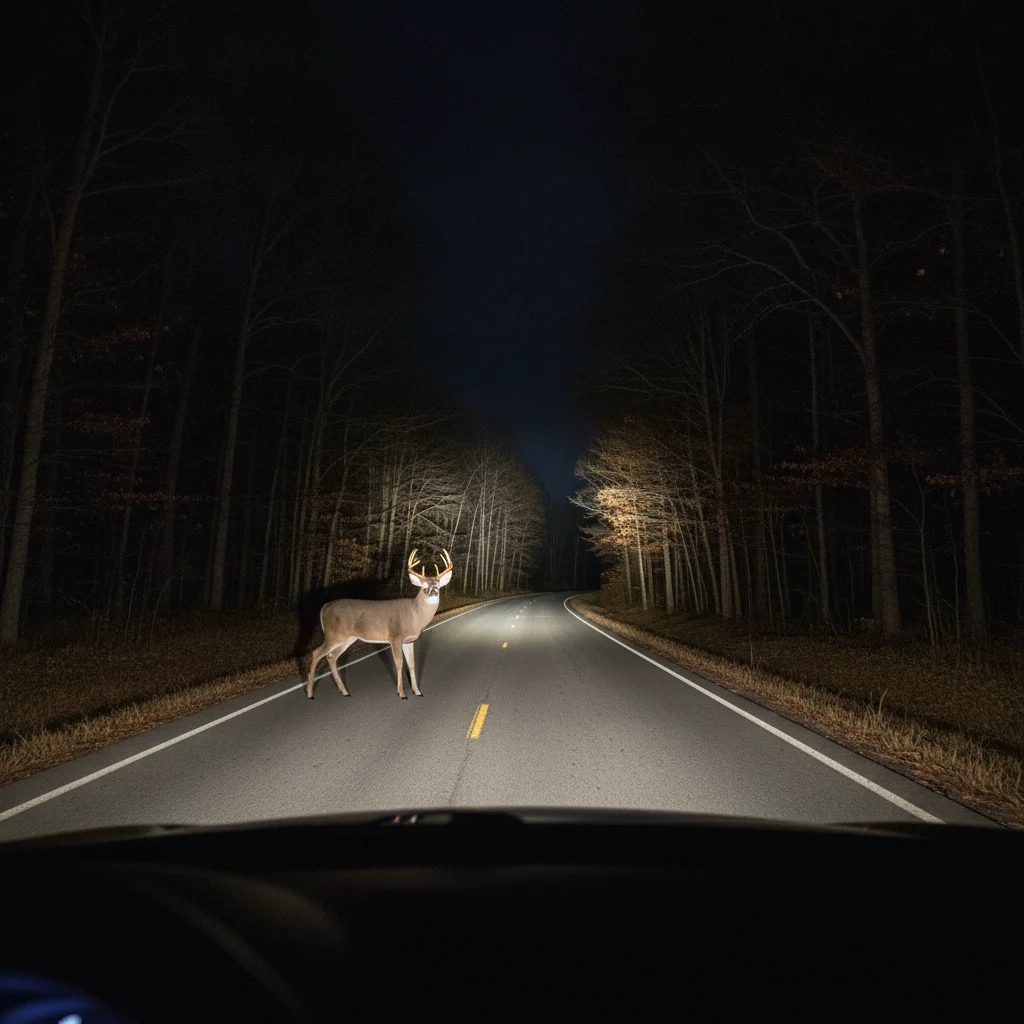
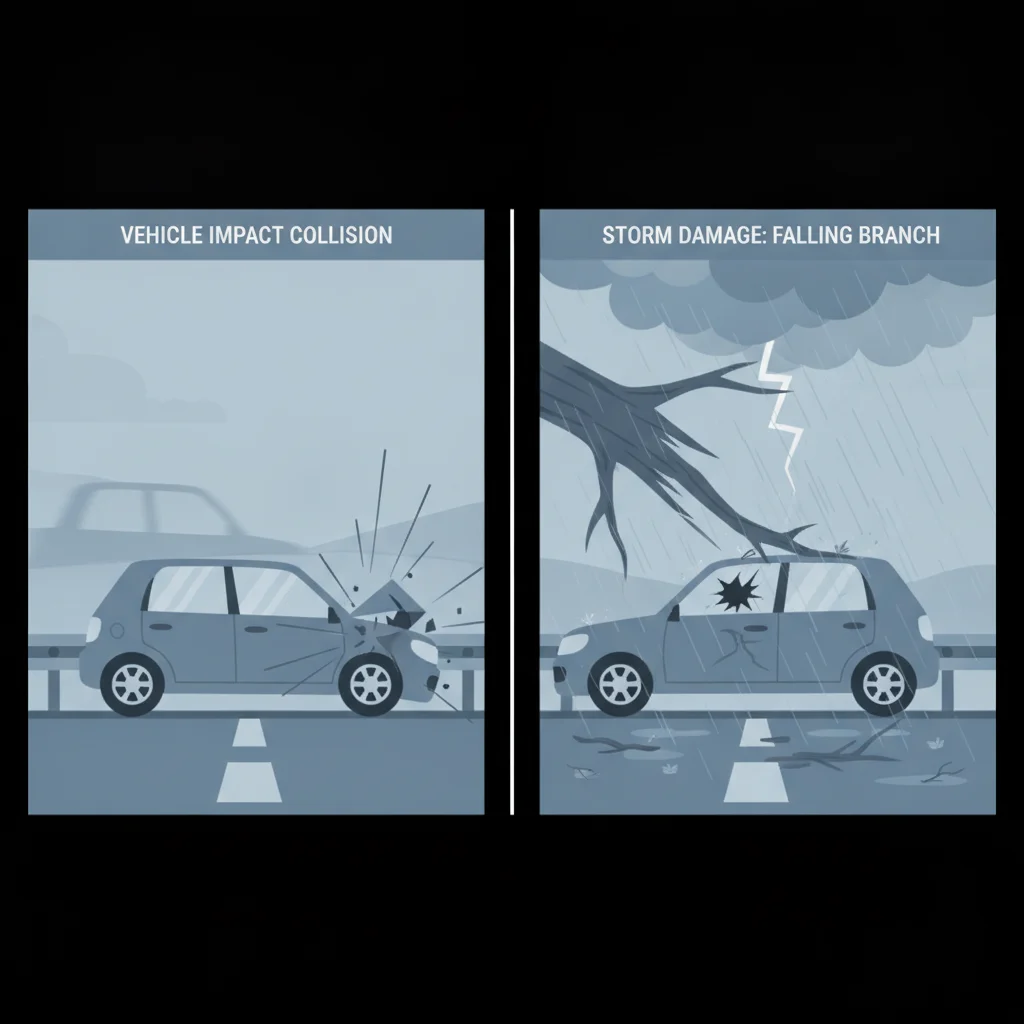
Collision and comprehensive sound similar but protect very different risks — and animal strikes are one of the clearest examples of where the line is drawn.
Why Animal Strikes Are Classified as Comprehensive
To understand why an animal strike lands in the comprehensive bucket, you need to understand how insurers define each coverage type at its core.
Collision coverage pays for damage that occurs when your vehicle impacts another vehicle or a stationary object — a car, a guardrail, a telephone pole, a parking barrier. The defining feature is driver agency: you were driving, something went wrong, and the car struck an object.
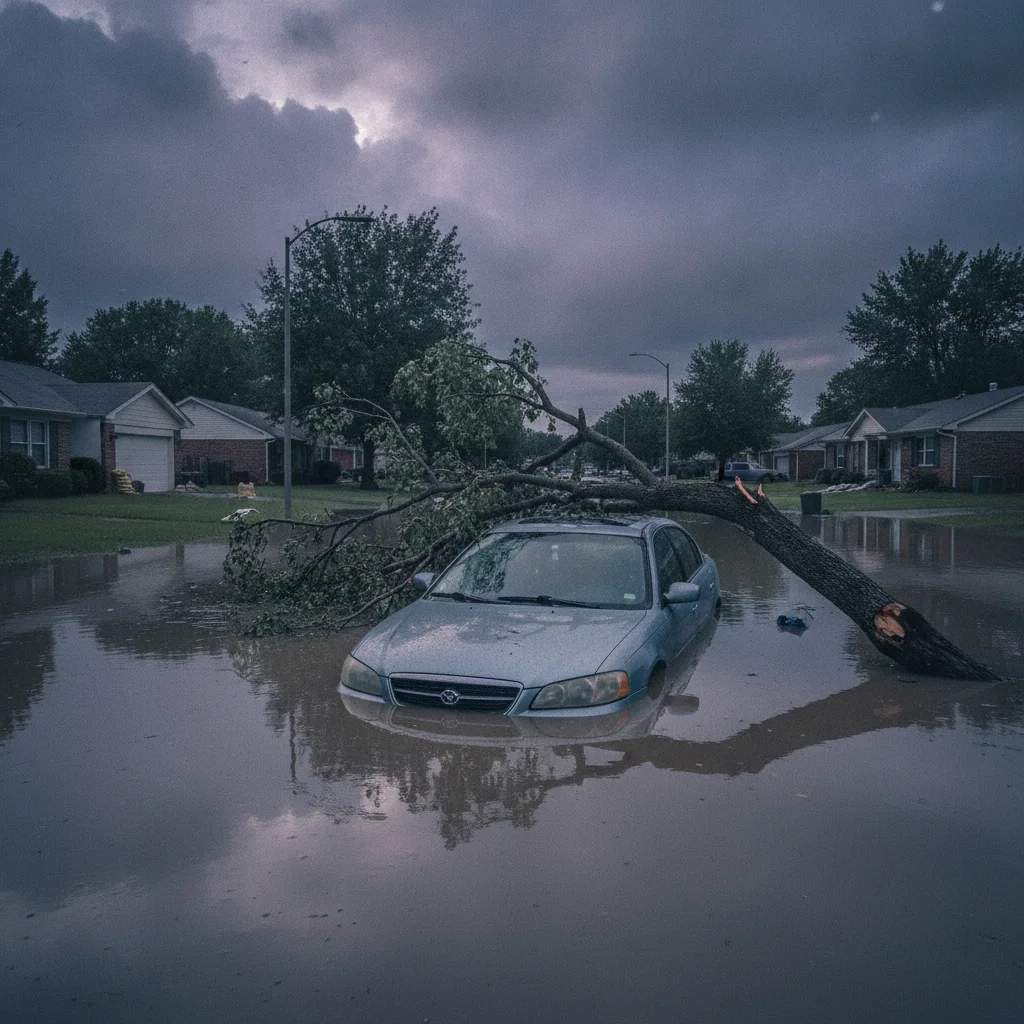
Comprehensive coverage — sometimes called "other-than-collision" coverage in policy documents — applies to losses caused by events largely outside the driver's control. The list includes theft, fire, flooding, hail, falling trees, vandalism, and contact with animals.
“Comprehensive coverage exists precisely because not every loss behind the wheel is the driver's fault. Animal strikes, hail, floods — these are events that happen to drivers, not because of them. That's a meaningful distinction when it comes to how we price and rate those claims.”
— Janet Ruiz, Director of Strategic Communications, Insurance Information Institute
The Insurance Services Office (ISO), whose standard policy language forms the backbone of most U.S. auto policies, specifically excludes animal contact from the collision definition and includes it under comprehensive perils. That language is the reason your insurer will redirect an animal-strike claim to comprehensive without exception.
The underlying logic is about controllability. A deer darting into the road at night is not something a driver can reasonably prevent. Insurers treat unpredictable, nature-driven losses differently from the risks associated with simply operating a vehicle in traffic.
Why Insurers Use 'Other-Than-Collision' Language
Many insurance policies use the term 'other-than-collision' rather than 'comprehensive' to describe this coverage. The terminology is intentional — it reinforces that this bucket covers everything not explicitly defined as a collision. If you see 'OTC' or 'other-than-collision' on your declarations page, that is your comprehensive coverage. The two terms are interchangeable in practice.
Checking Your Coverage Before Deer Season
Fall is a smart time to review your declarations page and confirm that comprehensive coverage is active on your policy. If you've recently dropped it to reduce premiums, consider reinstating it before the October–December peak risk window. The cost of adding comprehensive to an existing policy is typically prorated and can be done mid-term with most insurers.
Comprehensive handles threats that collision was never designed to address — from floods to falling branches, the coverage fills in where collision stops.
The Financial Stakes: Deductibles, Premiums, and At-Fault Status
The classification of an animal strike as a comprehensive claim isn't just semantic — it has direct financial implications across three key areas.
Deductibles
Most drivers set their comprehensive deductible lower than their collision deductible. A common configuration is a $500 collision deductible paired with a $250 or even $100 comprehensive deductible. If you correctly file an animal strike as a comprehensive claim, you may pay significantly less out of pocket than if it had been mishandled as a collision claim.
1.5M+
Annual deer-vehicle collisions in the U.S.
According to the Insurance Information Institute (III), more than 1.5 million deer-vehicle collisions occur each year in the United States.
$4,341
Average cost of a deer-strike insurance claim
State Farm's 2023 deer collision report estimated the average vehicle damage claim from a deer strike at approximately $4,341.
1 in 116
Odds of a U.S. driver hitting a deer annually
State Farm calculates the national average odds of a deer collision at roughly 1 in 116 for any given driver in a given year.
Oct–Dec
Peak months for deer-vehicle collisions
The Insurance Institute for Highway Safety (IIHS) identifies October through December as the highest-risk period, coinciding with deer rutting season.
$200+
Typical deductible savings vs. collision filing
Because comprehensive deductibles are often set lower than collision deductibles, correctly filing an animal strike as comprehensive can save drivers $200 or more in out-of-pocket costs on an average claim.
Premium Impact
Comprehensive claims are almost universally treated as not-at-fault events. Insurance companies recognize that you didn't cause the deer to run into traffic. As a result, a single comprehensive claim — including an animal strike — typically has a much smaller effect on your renewal premium than an at-fault collision claim. Some insurers won't surcharge your rate at all after a first comprehensive claim.
Claim Approval
If you file an animal-strike claim under collision and you only carry collision coverage (not comprehensive), your claim will likely be denied. The reverse also applies: if you file under comprehensive but your insurer determines that you actually struck a stationary object after swerving — more on that in a moment — the claim may be reclassified. Getting the filing right from the start prevents delays and disputes.
For a complete look at how to navigate the claim process after an animal strike or any other incident, the step-by-step filing guide walks through what to document and how to work with your insurer.
The Critical Edge Case: Swerving to Avoid an Animal
Here is where the coverage question gets genuinely tricky — and where many drivers get a rude surprise.
Imagine you're driving at night and a deer leaps into your headlights. You swerve instinctively, miss the deer entirely, but skid into a ditch or clip a guardrail. Your car has real damage. Which coverage applies?
Collision. Not comprehensive.
Because your vehicle never made contact with the animal, the loss does not qualify as an animal strike under the comprehensive definition. Your car struck a stationary object — the ditch, the guardrail, the tree — and that's squarely in collision territory. You'll pay your collision deductible, and depending on your insurer, it may be treated as an at-fault event.
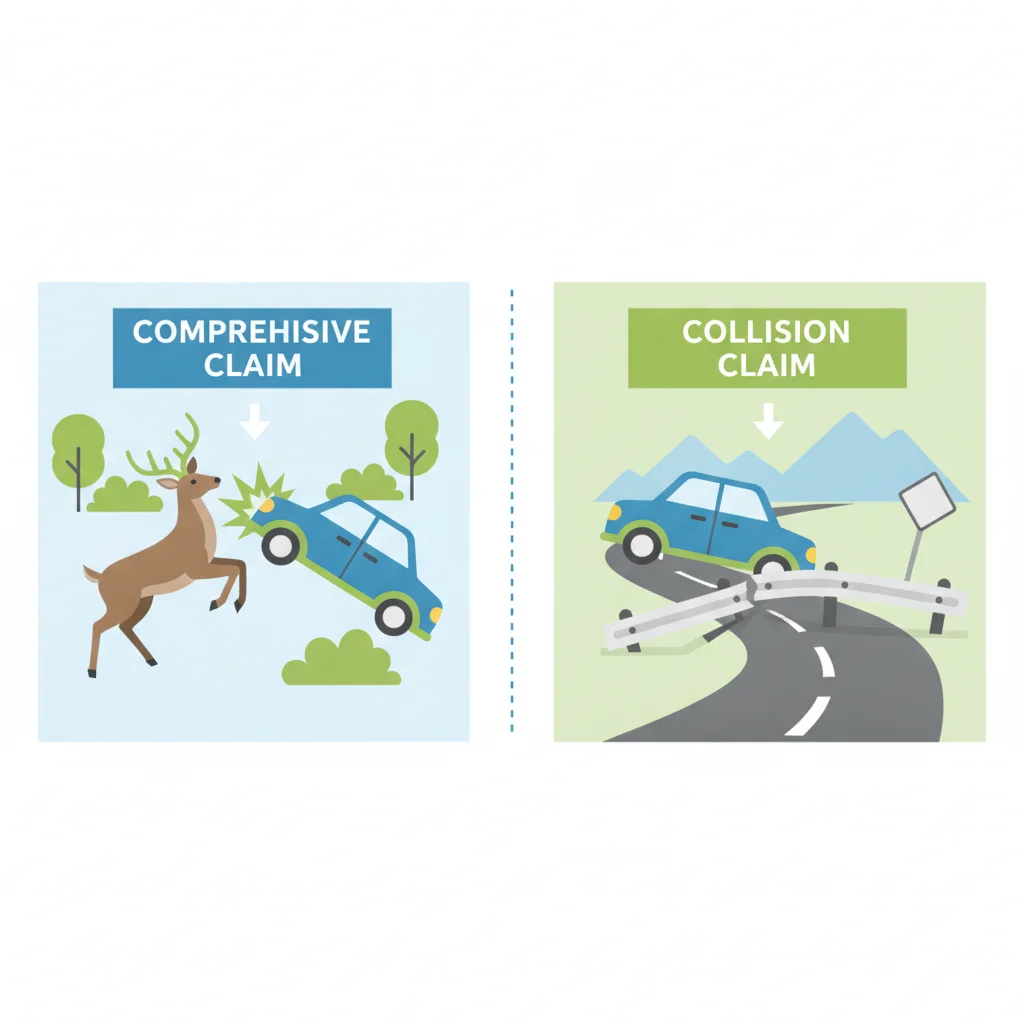
This outcome surprises many drivers who feel that the animal caused the accident. And from a common-sense perspective, they're right. But insurance policies are written around physical contact, not causation chains. The rule is straightforward: animal contact = comprehensive; no animal contact = collision.
Misunderstandings like this one cost drivers real money — and this particular misconception is one of the most common in physical damage insurance.
Document the Scene Immediately
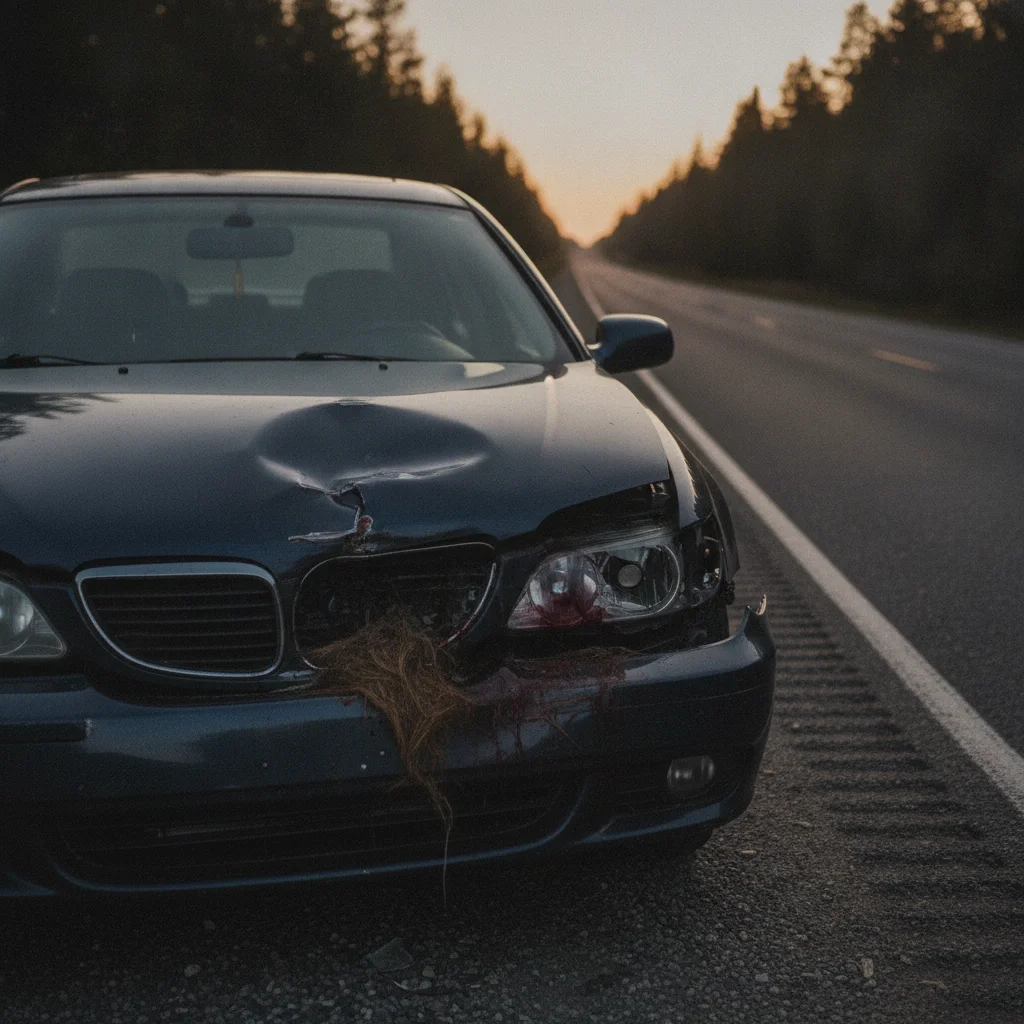
After an animal strike, photograph the damage to your vehicle and any evidence of the animal at the scene — fur, blood, tracks, or the animal itself if it's nearby. This documentation supports your comprehensive claim and helps your insurer process it without dispute. Note the time, date, and road location as well.
Brake Straight — Don't Swerve
If an animal enters your path, apply the brakes firmly and hold your lane when possible. Swerving to avoid an animal is one of the leading causes of single-vehicle crashes, and as covered above, it also shifts your claim from the potentially less expensive comprehensive coverage to collision. A controlled brake response is safer and smarter from both a safety and insurance standpoint.
Real-World Scenarios: Testing the Rule
Understanding the principle is one thing. Applying it to specific situations clarifies the rule in a way that sticks.
The pattern holds across species and circumstances. Whether it's a deer in Pennsylvania, a wild boar in Texas, a dog in a suburban neighborhood, or a bird that cracks your windshield — if the animal made contact with the vehicle, the claim belongs under comprehensive.
For a broader breakdown of how different types of incidents map to each coverage type, see which coverage applies to your specific situation — from hail damage to fender benders to animal strikes.
Do You Have the Right Coverage? What to Check on Your Policy
Comprehensive coverage is optional in every U.S. state, though lenders and lease companies require it for financed or leased vehicles. If you own your car outright and dropped comprehensive to save on premiums, you have no protection against animal strikes — regardless of how the claim is classified.
Here's what to verify on your current policy:
- Do you carry comprehensive? Check your declarations page. If you see a comprehensive line with a deductible listed, you have it. If it shows "not included," you don't.
- What is your comprehensive deductible? Common options range from $0 to $1,000. A lower deductible means less out of pocket if you hit an animal, but also a higher premium.
- How does your insurer treat animal-strike claims for rating purposes? Ask your agent whether a comprehensive claim will trigger a surcharge at renewal. Policies vary, and some companies are more forgiving than others.
Why Insurers Use 'Other-Than-Collision' Language
Many insurance policies use the term 'other-than-collision' rather than 'comprehensive' to describe this coverage. The terminology is intentional — it reinforces that this bucket covers everything not explicitly defined as a collision. If you see 'OTC' or 'other-than-collision' on your declarations page, that is your comprehensive coverage. The two terms are interchangeable in practice.
Checking Your Coverage Before Deer Season
Fall is a smart time to review your declarations page and confirm that comprehensive coverage is active on your policy. If you've recently dropped it to reduce premiums, consider reinstating it before the October–December peak risk window. The cost of adding comprehensive to an existing policy is typically prorated and can be done mid-term with most insurers.
If you're weighing whether to carry comprehensive at all, the end-to-end guide to collision and comprehensive insurance walks through the full cost-benefit framework.
One more niche consideration worth knowing: a small but growing number of insurers offer add-on pet injury coverage, which applies when your own pet is injured in a vehicle accident. This is separate from animal-strike coverage and works differently. Pet injury coverage is a niche add-on that's worth understanding if you regularly travel with animals.
Reducing Your Risk — and Your Claim Frequency
No coverage decision eliminates the risk of hitting an animal. But a few practical habits can meaningfully reduce exposure, particularly during peak deer activity seasons (October through December, and again in April and May).
- Use high beams on rural roads when no oncoming traffic is present. Deer eyes reflect headlights, giving you an earlier visual warning.
- Scan the road edges, not just the center lane. Animals typically enter from the shoulder. Peripheral attention catches movement sooner.
- Slow down near posted deer crossing signs. They're placed based on actual incident data, not arbitrarily.
- If you see one deer, expect more. Deer travel in groups; a single animal crossing often signals others are behind it.
- Brake, don't swerve. As the coverage analysis above shows, swerving into a stationary object both creates injury risk and shifts your claim to the more expensive collision coverage.
Document the Scene Immediately
After an animal strike, photograph the damage to your vehicle and any evidence of the animal at the scene — fur, blood, tracks, or the animal itself if it's nearby. This documentation supports your comprehensive claim and helps your insurer process it without dispute. Note the time, date, and road location as well.
Brake Straight — Don't Swerve
If an animal enters your path, apply the brakes firmly and hold your lane when possible. Swerving to avoid an animal is one of the leading causes of single-vehicle crashes, and as covered above, it also shifts your claim from the potentially less expensive comprehensive coverage to collision. A controlled brake response is safer and smarter from both a safety and insurance standpoint.
Reducing claim frequency matters beyond the individual incident. Multiple comprehensive claims — even not-at-fault ones — can prompt some insurers to raise rates or decline renewal. The discounts and deals available to careful drivers can offset the premium cost of comprehensive coverage if you maintain a clean claims record.

All claims are backed by peer-reviewed research. Sources on request.