Key Takeaways
Digital Auto Insurance Management
Digital auto insurance management refers to the ability to access, update, and control your car insurance policy entirely through online portals, mobile apps, and electronic communications — without needing paper documents, phone calls, or in-person visits. Insurers now allow drivers to view their declarations page, add or remove vehicles, update drivers, pay premiums, and file claims all from a single digital interface. It also includes receiving renewal notices, policy change confirmations, and billing alerts via email or push notification instead of postal mail.
Legally, electronic delivery of insurance documents is governed by state-level e-signature and e-delivery laws, most of which follow the federal E-SIGN Act (2000). Policyholders must explicitly opt in to paperless delivery, and insurers are required to provide a paper copy upon request at no charge.
From File Folders to Smartphone Screens: How Digital Insurance Works Today
Not long ago, managing your auto insurance meant keeping a paper policy booklet in a kitchen drawer, waiting for a mailed renewal notice, and calling an 800 number to change your address. That world still technically exists, but it's largely been replaced by something faster and more convenient: full digital policy management.
Today, the major U.S. auto insurers — and most regional carriers — offer online accounts and mobile apps that let policyholders handle nearly every policy task without speaking to a human. You can pull up your declarations page at 11 p.m. on a Sunday, file a claim from the scene of an accident, or swap coverage on a vehicle you just sold, all in a few taps.
This shift isn't just a convenience play. It changes the dynamic of how drivers stay on top of their coverage — for better and for worse. Understanding what digital management actually includes, what its limits are, and where you still need to pay attention is the foundation of smart policy ownership.
Managing your auto insurance policy is more than paying your bill on time — and digital tools have expanded the scope of what self-service looks like. Here's what has actually changed and what you need to know to use these tools effectively.
What You Can Actually Do in a Digital Insurance Portal
The capabilities of insurer apps and online portals vary by carrier, but the baseline for most major insurers in 2024 looks something like this:
- View and download your declarations page — the summary document that lists your coverage types, limits, deductibles, and premium
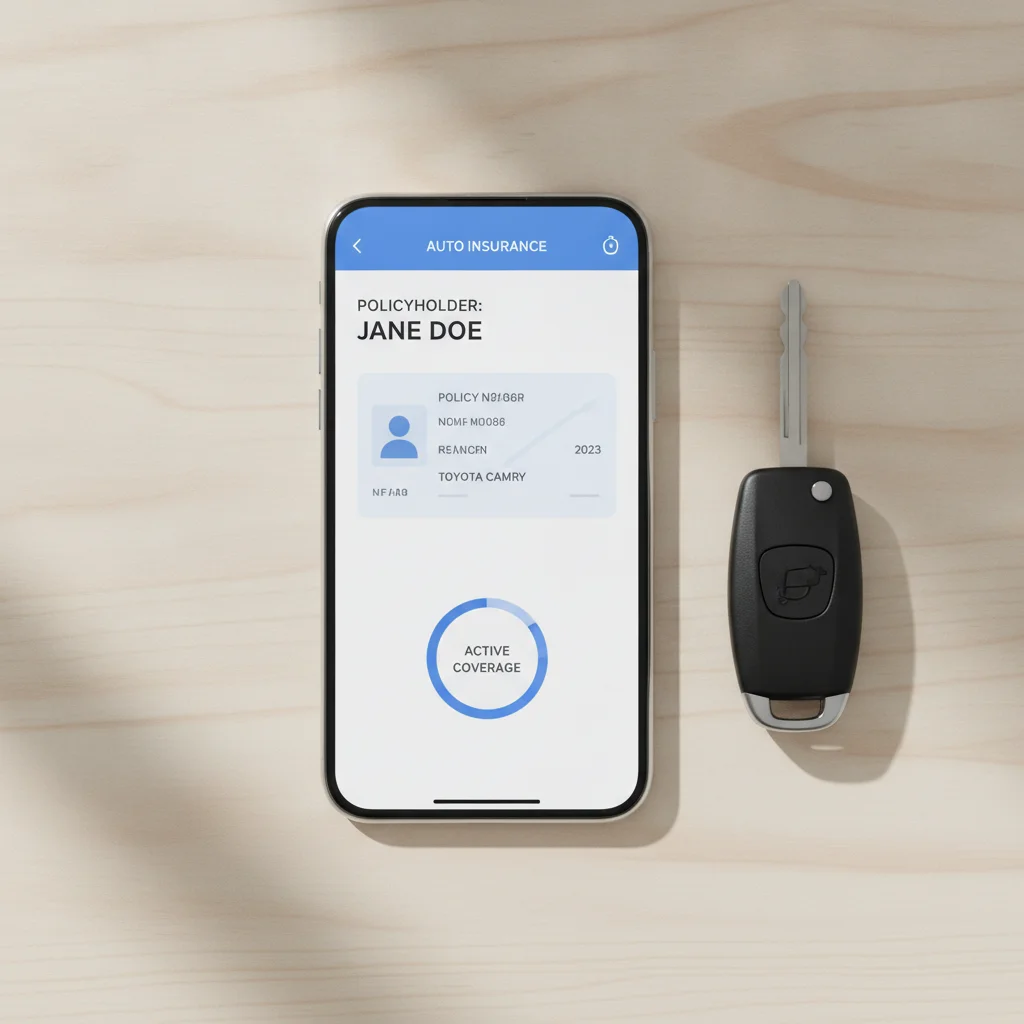
- Access your digital ID cards — updated automatically when your policy renews or changes
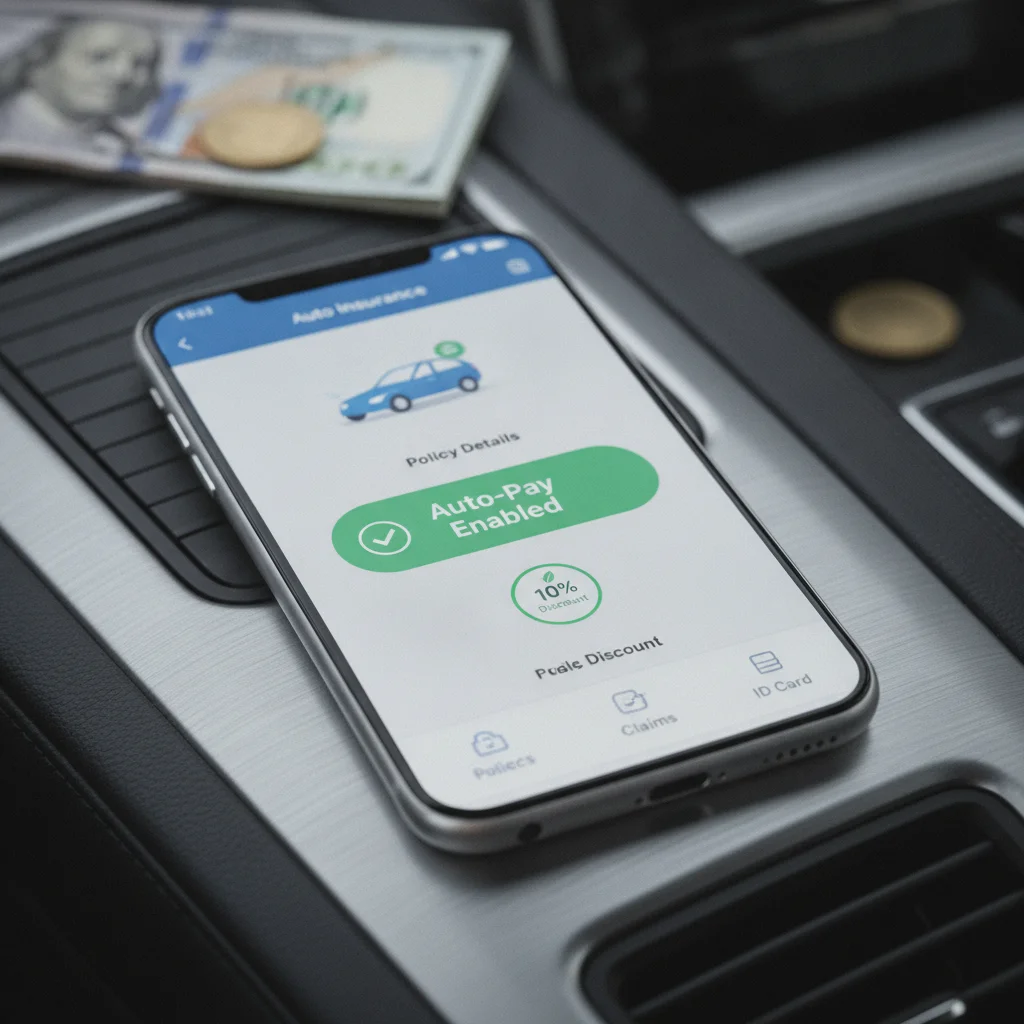
- Pay your premium — one-time or via automatic recurring payments
- Update your address — critical to ensuring both your rate and your coverage are accurate
- Add or remove a vehicle — including uploading a photo of the VIN or odometer in some apps
- Add or remove a driver — important after a teenager gets licensed or a household member moves out
- Adjust coverage levels — raise or lower deductibles, add or remove comprehensive and collision
- File and track a claim — including uploading photos of damage directly through the app
- Receive and respond to renewal offers — often with the ability to accept online without calling
- Request documents — including proof of insurance letters for lenders or landlords
That's a substantial list. A few years ago, most of those tasks required a phone call or an agent appointment. The shift has been meaningful for drivers who are organized and proactive.
80%+
U.S. drivers with access to insurer mobile app
According to J.D. Power's 2023 U.S. Auto Insurance Study, more than 80% of auto insurance customers report having access to a mobile app or online portal from their primary insurer.
$2–$10
Typical paperless delivery discount per policy period
Most major U.S. insurers offer a modest discount for switching to electronic document delivery, generally ranging from $2 to $10 per six-month policy period depending on the carrier.
3–5%
Combined savings from paperless + auto-pay
Several large insurers, including GEICO and Allstate, bundle paperless billing with automatic payment discounts for a combined premium reduction in the 3–5% range.
48 states
States accepting digital insurance ID cards
As of 2024, 48 U.S. states explicitly accept electronic proof of insurance displayed on a smartphone as valid during traffic stops and vehicle registration processes.
60%
Policyholders who never review their renewal notice
A 2022 consumer survey by the Insurance Information Institute found that roughly 60% of auto insurance customers auto-renew without reviewing their new policy terms or comparing competing quotes.
Where things get more limited: complex endorsements (like rideshare coverage or gap insurance add-ons), disputes over claim settlements, and underwriting reviews after an at-fault accident often still require direct human contact. Don't expect the app to resolve everything.
Paperless Delivery: What It Means and What You're Agreeing To
When an insurer asks you to "go paperless," they're asking you to consent to receiving all policy communications electronically — your policy documents, renewal notices, billing statements, cancellation warnings, and coverage change confirmations. Instead of arriving in your mailbox, these go to your email inbox or are posted to your online account.
Paperless Opt-In Is Required by Law
Under the federal E-SIGN Act and most state electronic delivery statutes, insurers must obtain your affirmative consent before switching you to electronic-only document delivery. If you signed up for a policy online, you may have agreed to paperless delivery during the enrollment flow. Check your account settings under 'Communication Preferences' or 'Delivery Preferences' to see what you've consented to — and to change it if you prefer physical mail.
Your Right to Paper Documents Never Goes Away
Even if you've opted into full paperless delivery, you retain the right to receive any policy document in paper form upon request. This is protected under both federal and state insurance regulations. If you need a physical copy of your policy, declarations page, or any renewal document, contact your insurer directly — they are required to provide it at no charge.
Document Requests for Coverage History
Your insurer is required to provide documentation of your coverage history upon request, including for periods that may predate your current digital account. This is useful when applying for a new policy, disputing a lapse in coverage, or providing proof of insurance to a lender. Most insurers process these requests within 3–5 business days through their online portal or by phone.
Legally, switching to paperless delivery requires your explicit opt-in. Insurers can't simply default you to electronic-only communications without your agreement. If you signed up online, you likely agreed to this during enrollment without necessarily realizing it — it's worth checking your account settings to confirm what you've opted into.
The practical tradeoff is real: electronic delivery is faster and reduces paper clutter, but it also means that a missed email or a full spam folder can leave you unaware of a renewal increase, a billing issue, or a cancellation warning. Physical mail is hard to ignore when it lands on your kitchen table. An email buried under promotional messages is not.
Paperless billing discounts are real, if modest — typically $2 to $8 per policy period depending on the insurer. Bundled with auto-pay, some carriers offer 3–5% combined savings. It's worth taking, but it's not a reason to go paperless if you know you won't stay on top of your email.
Set a Renewal Reminder Right Now
Don't wait for your renewal notice to land in your inbox. Find your policy expiration date — it's on your declarations page or in your insurer's app — and set a calendar reminder for 30 days before that date. Use that window to review your coverage, check for rate changes, and shop competing quotes if needed. Thirty days is typically enough time to switch insurers without a coverage gap.
Save Your Declarations Page Locally
Every time your policy renews or you make a coverage change, download your updated declarations page and save it to a cloud folder or your phone's files. Don't rely entirely on your insurer's portal for long-term document storage — access can be complicated if you switch carriers or encounter a billing dispute. A local copy is always faster to retrieve when you need it urgently.
Confirm Your Email Is Current With Your Insurer
If you've switched email addresses since you enrolled in your policy, log into your account and update your contact information immediately. Renewal notices, billing warnings, and cancellation alerts sent to an old email address are as good as lost. While you're there, check that push notifications are enabled on your insurer's app so you get redundant alerts on the channel you're most likely to see.
You can always request a paper copy of any document, even after you've opted into paperless. Federal and state law gives you that right. Call your insurer or check your account settings to revert to mail delivery at any time.
Renewals in the Digital Age: What's Easier and What's More Dangerous
Automatic renewal has become the default for most digitally managed policies. If you're enrolled in auto-pay and paperless, your policy may simply renew and your payment be charged without you having to do anything. That sounds convenient — and it is, until something goes wrong.
The danger isn't the automation itself. It's that automatic renewal can lull drivers into a passive relationship with their coverage. Rates go up at renewal (and for many drivers, they've gone up significantly over the past two years). Coverage that was appropriate when you first bought a policy may no longer fit your situation — you paid off your car loan, moved to a new ZIP code, or your teenager aged off your policy. If you're not actively reviewing the renewal, you're potentially paying for the wrong coverage at the wrong price.
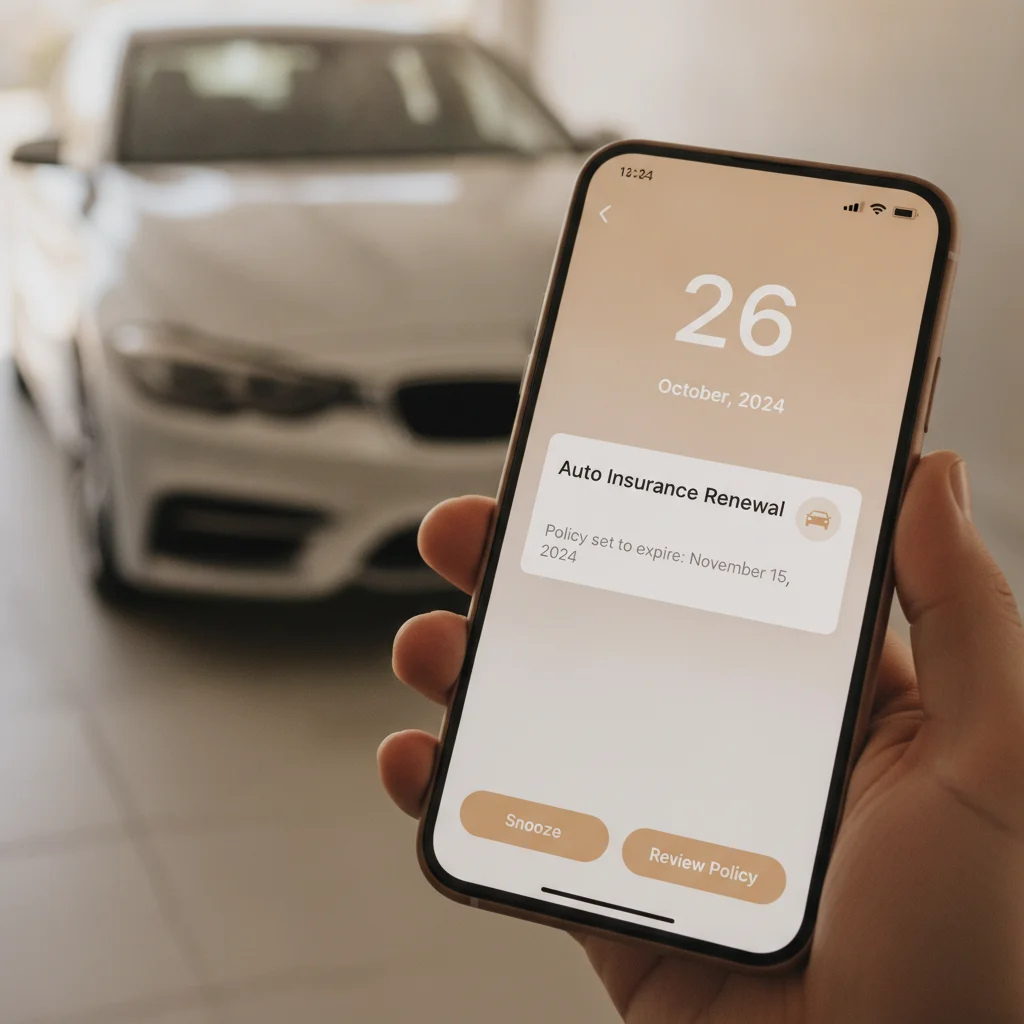
Here's what a smart renewal review looks like in a digital environment:
- Set a calendar reminder 30–45 days before your policy expiration date. Your renewal notice will arrive digitally, but don't count on noticing it. Proactively schedule the review.
- Log into your account and pull up the renewal declarations page. Compare it line-by-line to your current policy. Look for coverage changes and premium increases.
- Check whether your life circumstances have changed. New address, new vehicle, change in commute distance, added or removed driver — any of these should trigger a coverage review, not just a rubber-stamp renewal.
- Shop competing quotes before you renew. Digital management has also made comparison shopping faster. Use your declarations page as a reference document when requesting quotes elsewhere.
Common policy management mistakes often cluster around the renewal period — missing the notice, auto-renewing without reviewing, or letting a rate increase go unchallenged. The digital environment makes these mistakes easier to make, not harder.
Making Mid-Term Changes: Coverage Updates Through Life Events
Life doesn't pause between policy renewals. You buy a new car, move to a different state, add a newly licensed driver to your household, or pay off your auto loan and no longer need the lender-required comprehensive and collision. Each of these events should trigger an immediate policy update — and digital management has made that significantly easier to do in real time.
Most changes take effect immediately or within 24–48 hours when made through an app or portal. You'll typically receive an updated declarations page and new digital ID cards the same day. That immediacy matters: if you drive your newly purchased vehicle off the lot and haven't added it to your policy yet, you're exposed.
For major life changes — marriage, relocation to a new state, the death of a household member listed on the policy — digital tools may get you 80% of the way there, but a follow-up call or chat with your insurer to confirm everything transferred correctly is worth five minutes of your time. State-specific underwriting rules mean that moving across state lines, in particular, often requires more than a simple address update in your account.
“The convenience of digital insurance tools is real, but convenience can breed complacency. The drivers who benefit most from these platforms are the ones who use them actively — not the ones who set up auto-pay and forget their policy exists.”
— Robert Hunter, Former Director of Insurance, Consumer Federation of America
A complete guide to auto insurance policy management walks through how to handle each of these life-event triggers in a systematic way, including what documentation you may need to provide your insurer.
Accessing and Storing Your Policy Documents Digitally
One underappreciated benefit of digital policy management is centralized document storage. In a well-designed insurer portal, every version of your declarations page, every renewal document, every billing statement, and every claim summary is archived in your account — often going back several years.
That archive matters more than most drivers realize. Proof of continuous coverage is required by lenders when you apply for an auto loan, by some landlords, and when you're disputing a gap in coverage history with a new insurer. If you ever need to demonstrate that you were insured during a specific period — say, after an old accident resurfaces — your digital document archive is the fastest path to that evidence.
Paperless Opt-In Is Required by Law
Under the federal E-SIGN Act and most state electronic delivery statutes, insurers must obtain your affirmative consent before switching you to electronic-only document delivery. If you signed up for a policy online, you may have agreed to paperless delivery during the enrollment flow. Check your account settings under 'Communication Preferences' or 'Delivery Preferences' to see what you've consented to — and to change it if you prefer physical mail.
Your Right to Paper Documents Never Goes Away
Even if you've opted into full paperless delivery, you retain the right to receive any policy document in paper form upon request. This is protected under both federal and state insurance regulations. If you need a physical copy of your policy, declarations page, or any renewal document, contact your insurer directly — they are required to provide it at no charge.
Document Requests for Coverage History
Your insurer is required to provide documentation of your coverage history upon request, including for periods that may predate your current digital account. This is useful when applying for a new policy, disputing a lapse in coverage, or providing proof of insurance to a lender. Most insurers process these requests within 3–5 business days through their online portal or by phone.
If you need official documentation that your digital portal doesn't readily produce, requesting policy documents and coverage history from your insurer is a straightforward process that most carriers handle within a few business days. Ask specifically for a "coverage verification letter" or "loss run report" depending on what you need.
Best practice: download and save your declarations page locally — on your phone or a cloud storage folder — at each renewal. Don't rely entirely on your insurer's archive, since account access can become complicated if you switch carriers or have a billing dispute that results in account suspension.
Set a Renewal Reminder Right Now
Don't wait for your renewal notice to land in your inbox. Find your policy expiration date — it's on your declarations page or in your insurer's app — and set a calendar reminder for 30 days before that date. Use that window to review your coverage, check for rate changes, and shop competing quotes if needed. Thirty days is typically enough time to switch insurers without a coverage gap.
Save Your Declarations Page Locally
Every time your policy renews or you make a coverage change, download your updated declarations page and save it to a cloud folder or your phone's files. Don't rely entirely on your insurer's portal for long-term document storage — access can be complicated if you switch carriers or encounter a billing dispute. A local copy is always faster to retrieve when you need it urgently.
Confirm Your Email Is Current With Your Insurer
If you've switched email addresses since you enrolled in your policy, log into your account and update your contact information immediately. Renewal notices, billing warnings, and cancellation alerts sent to an old email address are as good as lost. While you're there, check that push notifications are enabled on your insurer's app so you get redundant alerts on the channel you're most likely to see.
What Hasn't Changed: The Things Digital Can't Do for You
Digital tools are genuinely useful, but they don't change the underlying work of being a responsible policyholder. A few things that are still entirely on you:
- Reading your policy. No app summarizes your coverage exclusions or explains when your insurer can deny a claim. That's in the policy language, and you need to read it at least once.
- Catching errors. Insurers can and do make administrative errors — wrong vehicle listed, wrong garaging address, coverage dropped accidentally. Digital portals display whatever's in your file, including mistakes. Reviewing your declarations page after every change is the only way to catch them.
- Knowing when to call. If you're involved in a significant accident, facing a coverage dispute, or receiving notices about policy cancellation for nonpayment, the app is a starting point — not a resolution. Get a human on the line.
- Comparing your coverage to your actual needs. An algorithm doesn't know that you paid off your car loan and no longer need collision, or that you added a teenage driver and need to reassess your liability limits. That judgment is yours.
Coverage gaps often develop silently, through a combination of inattention and over-reliance on automated systems doing the work for you. Digital management tools are only as good as the driver using them.
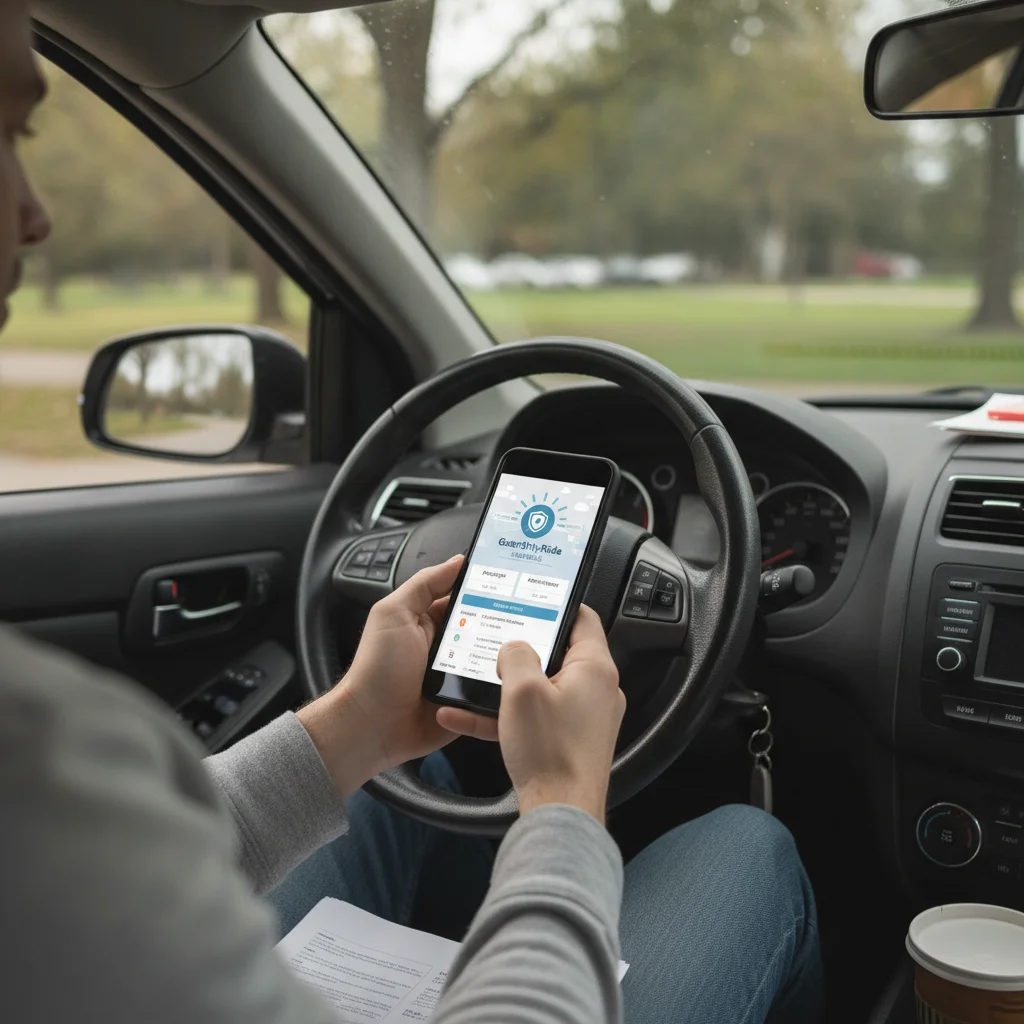
The shift to digital has lowered the friction around policy management in ways that genuinely benefit organized drivers. But the fundamentals — review your coverage, update your information when life changes, and don't just let policies auto-renew without a look — haven't changed at all.

All claims are backed by peer-reviewed research. Sources on request.