Key Takeaways
Start here
What Happens Right After an Accident
Build your foundation
Key Terms You Need to Know
Take action
How to File Your First Claim
Stay informed
What Happens While Your Claim Is Being Processed
Reach resolution
Understanding Your Settlement
Learn from others
Common Mistakes First-Time Claimants Make
What Happens Right After an Accident
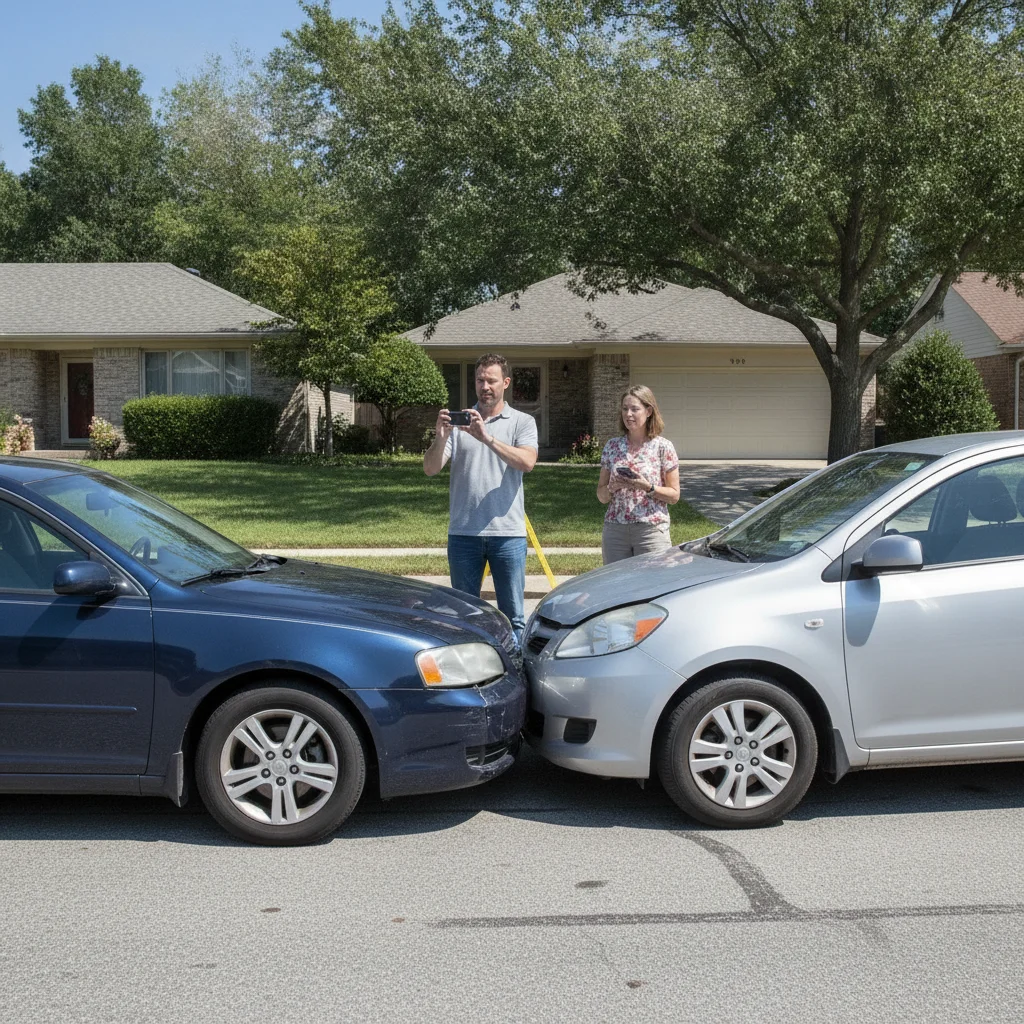
Your heart is pounding, maybe someone is honking, and you're not sure what to do first. That's completely normal. The first few minutes after a collision feel chaotic, but slowing down and working through a short mental checklist will protect both your safety and your eventual insurance claim.
Step 1: Move to safety
If the vehicles are drivable and no one is seriously injured, move them out of active traffic — to a shoulder or a nearby parking lot. Turn on your hazard lights immediately. If anyone is injured or the cars cannot be moved, stay put and call 911 right away.
Step 2: Call the police
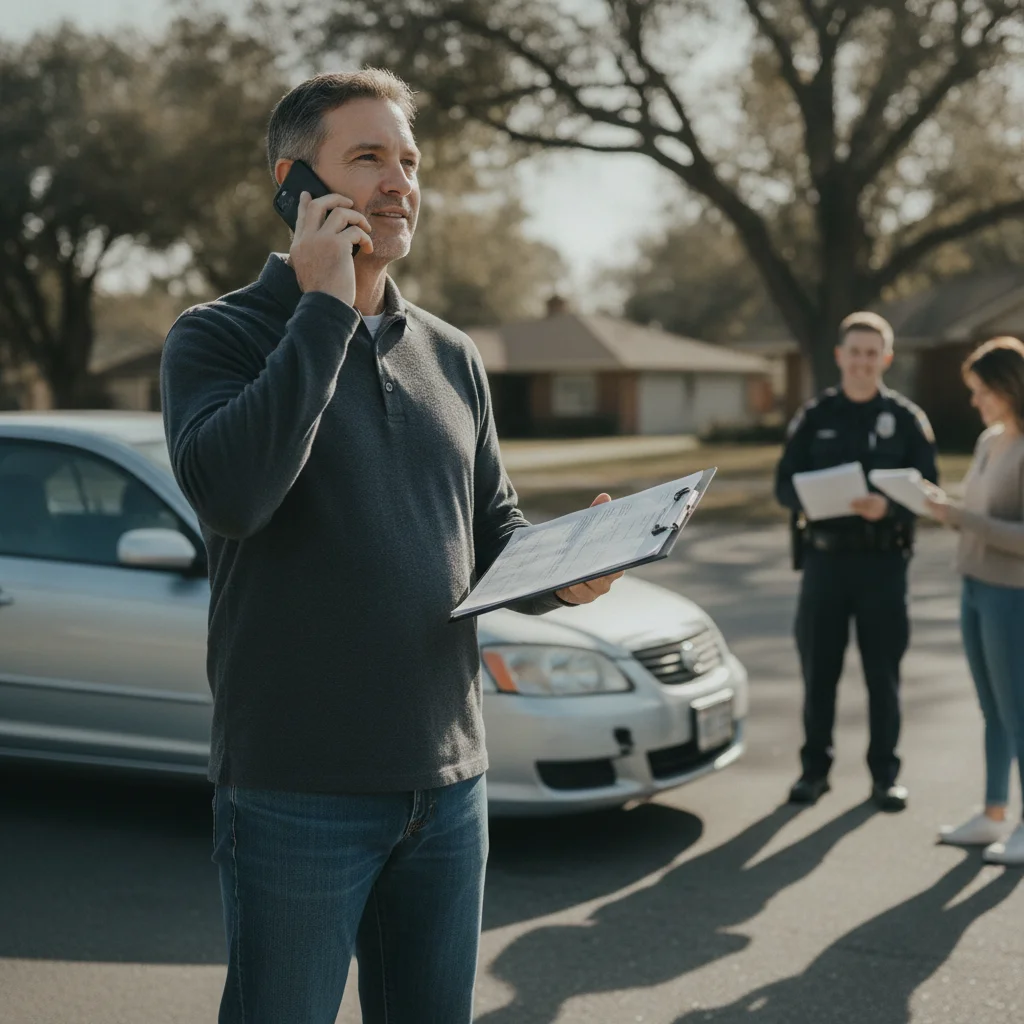
Even for minor accidents, a police report creates an official record that your insurer will find very useful. In many states, you're legally required to report accidents above a certain damage threshold. When officers arrive, give them a factual account of what happened — stick to what you observed, not whose fault you think it was.
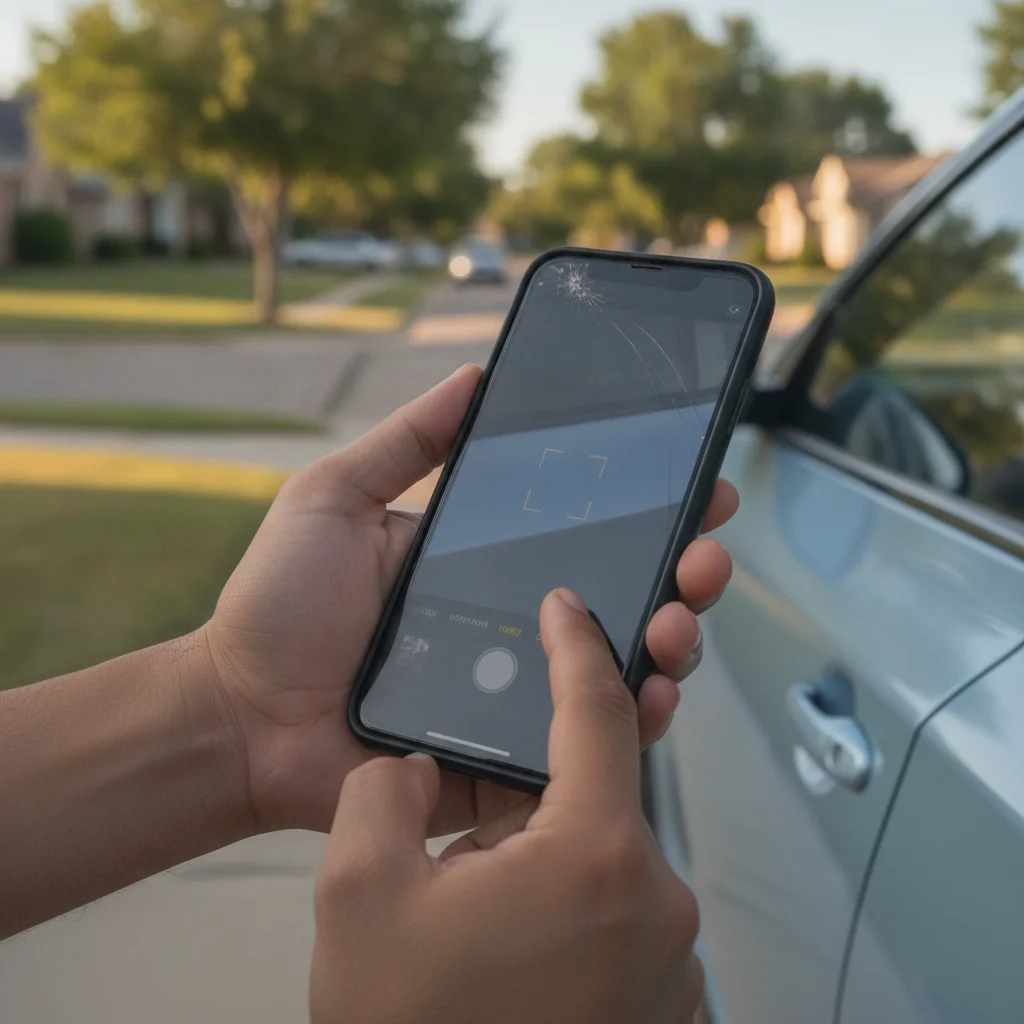
Step 3: Document everything
This step can meaningfully affect your claim outcome. Use your phone to photograph:
- All vehicle damage — yours and the other driver's
- The accident scene from multiple angles, including skid marks or road conditions
- License plates, driver's licenses, and insurance cards
- Any visible injuries (with consent)
- Traffic signs or signals nearby
Also write down — or voice-record — your own account of the accident while the details are fresh. Memories fade quickly, and a clear written narrative can be genuinely useful during the claims process.
Step 4: Exchange information
Collect the following from every other driver involved:
- Full name and contact information
- Insurance company name and policy number
- Driver's license number and state
- Vehicle make, model, year, and plate number
If there are witnesses, ask for their contact details too — a neutral witness statement can be valuable if liability is disputed.
Never Admit Fault at the Scene
In the confusion following an accident, it's tempting to apologize or speculate about what caused the crash. Avoid doing so — any statement about fault can be used against you during the claims process. Stick to factual descriptions of what happened and let the adjuster and police report establish liability.
For a fuller breakdown of your legal and financial responsibilities at the scene, the Accident Procedures hub covers everything you need to know before, during, and after a collision.
Key Terms You Need to Know
Insurance language can feel like a foreign dialect when you're dealing with it for the first time. Before you pick up the phone to report your accident, it helps to understand a few essential terms. Knowing what your adjuster is talking about will make the whole conversation less stressful.
Deductible
The amount you pay out of pocket before your insurance covers the rest. If your deductible is $500 and repairs cost $3,000, you pay $500 and your insurer pays $2,500.
Claims adjuster
An insurance company employee (or independent contractor) who investigates your claim, assesses damage, determines fault, and decides how much your insurer will pay.
Liability coverage
Insurance that pays for damage or injuries you cause to someone else in an accident. It does not cover repairs to your own vehicle.
Collision coverage
Optional insurance that pays to repair or replace your vehicle after a collision, regardless of who was at fault — minus your deductible.
Actual cash value (ACV)
The market value of your vehicle at the time of the accident, accounting for age, mileage, and depreciation. This is typically what insurers pay for a total loss.
Third-party claim
A claim you file with the other driver's insurance company (rather than your own) when they are at fault for the accident.
Total loss
When the cost to repair a vehicle exceeds a set percentage of its market value, the insurer declares it a total loss and pays you the vehicle's ACV instead of repairing it.
Uninsured motorist coverage
Coverage that pays your expenses if you're hit by a driver who has no insurance — or whose insurance isn't enough to cover your losses.
One concept worth emphasizing: fault is not always black-and-white. Many states use a comparative negligence system, which means both drivers can share partial responsibility. If you're found 20% at fault, your payout may be reduced by 20%. Your insurer's investigation will sort this out — your job is simply to provide accurate information.
How to File Your First Claim
Filing a claim is simpler than most people expect, especially now that most major insurers offer apps and 24/7 call centers. Here's the practical sequence to follow.
Contact your insurer promptly
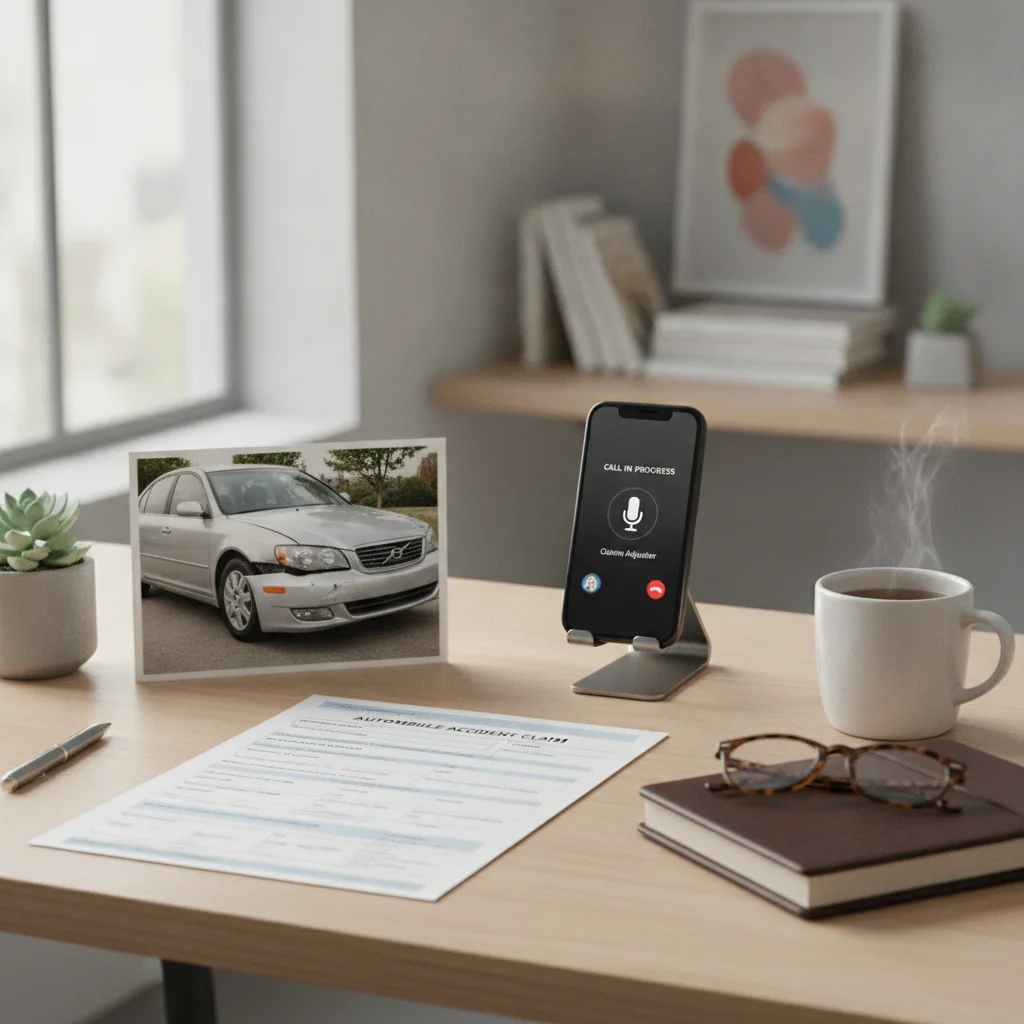
Call your insurance company or open their mobile app as soon as you're safely away from the accident scene — ideally the same day. You'll typically be asked to provide:
- Your policy number
- The date, time, and location of the accident
- A description of what happened
- The other party's insurance information
- The police report number, if applicable
You don't need to have every detail perfectly organized. Just share what you know and let the claims representative guide you through any gaps.
Save Your Insurer's App Before You Need It
Download your insurance company's mobile app now, while everything is calm. Most apps let you file a claim, upload photos, track claim status, and reach a representative without waiting on hold. Having it ready before an accident makes those first stressful minutes much easier to manage.
Don't Accept the Settlement in a Rush
Insurers are generally required to respond to claims promptly, but you are not required to accept their first offer immediately. Take a day or two to review the settlement paperwork carefully. If the number doesn't match what you were expecting, ask the adjuster to walk you through how they calculated it.
Decide which coverage applies
The type of claim you file depends on what happened and what coverage you carry:
| Situation | Coverage to use |
|---|---|
| You caused the accident | Your liability coverage pays the other party; your collision coverage pays for your car (minus deductible) |
| The other driver caused it | Their liability coverage — or your collision coverage if theirs is slow or disputed |
| Uninsured driver hit you | Uninsured motorist coverage |
| Damage from weather, theft, or animals | Comprehensive coverage |
If the other driver was clearly at fault, you can file a third-party claim with their insurer instead of your own. The advantage is that you may avoid paying your deductible. The downside is that you're relying on someone else's insurance company to move quickly, and they have no obligation to prioritize your claim. For a detailed look at how that process plays out, see our liability claim walkthrough.
Get a claim number
Once you've reported the accident, your insurer will assign you a claim number. Write this down and keep it somewhere accessible — you'll reference it in every follow-up conversation.
For a broader view of how the entire claims process unfolds from start to finish, the complete roadmap to filing an auto insurance claim is a helpful companion resource.
What Happens While Your Claim Is Being Processed
Once your claim is filed, it can feel like things go quiet. But a structured process is happening behind the scenes. Understanding it will help you know what's normal — and when it's reasonable to follow up.
The adjuster is assigned
Within one to three business days, an insurance adjuster will be assigned to your claim and will reach out to you. This is the person responsible for investigating what happened and determining what the insurance company will pay. They may call you, email you, or do both.
When they contact you, be factual and cooperative. You don't need to speculate or offer opinions about fault — just describe what you saw and experienced.

The damage inspection
The adjuster will arrange for your vehicle to be inspected — either at a repair shop, an insurer-run appraisal center, or through a remote photo-based estimate for minor damage. They'll document the damage and calculate a repair estimate.
If your car is undrivable, ask about a rental car reimbursement — most comprehensive and collision policies include this coverage, though daily limits apply.
Liability determination
If fault is disputed, the adjuster will review the police report, photographs, witness statements, and possibly traffic camera footage. This phase can take longer — sometimes a few weeks if there's a genuine disagreement between the parties' insurers.
You won't need to do much during this phase beyond responding to any requests for additional documentation. For a plain-language breakdown of what to expect day by day after filing, see what to expect in the days after filing an accident claim.
Filing a Claim Doesn't Always Raise Your Rates
Many drivers avoid filing claims out of fear their premium will spike. While at-fault accidents often do affect rates at renewal, not-at-fault claims have less impact — and some policies include accident forgiveness for first-time incidents. Review your policy or call your agent to understand exactly how a claim would affect your specific situation.
Keep a Claims Log Throughout the Process
From the day you file to the day you receive your settlement, keep a running log of every call, email, and document exchange. Note the date, time, and the name of whoever you spoke with. If there's ever a discrepancy about what was agreed, this record can resolve it quickly.
Repairs begin
Once the estimate is approved, your insurer will either pay the shop directly or issue you a check. If additional damage is discovered during repairs — a common occurrence — the shop can request a supplement from the adjuster. This is a normal part of the process and shouldn't delay your overall timeline significantly.
Understanding Your Settlement
When the dust settles, your insurer will make you a settlement offer — the amount they're willing to pay to resolve your claim. For vehicle repairs, this is usually the approved repair estimate. For total losses, it's the actual cash value of your car. Here's what you need to understand before you accept.
Your deductible comes first
If you're filing under your own collision or comprehensive coverage, your deductible is subtracted from the payout. If your repair estimate is $4,200 and your deductible is $500, you'll receive $3,700. If the other driver is found fully at fault and you file a third-party claim, you typically pay no deductible.
Actual cash value vs. replacement cost
Most auto policies pay out based on actual cash value (ACV) — what your car was worth on the market just before the accident, accounting for depreciation. This can come as a surprise if you were expecting enough to buy an equivalent replacement. Gap insurance exists specifically to cover the difference between ACV and what you still owe on a loan.
You can negotiate
If you believe the settlement offer is too low — especially for a total loss — you have the right to push back. Gather evidence: recent comparable vehicle listings, a second appraisal, or documentation of upgrades you made to the car. Insurers aren't always right on the first offer, and a polite, evidence-backed counter is a legitimate part of the process.
Save Your Insurer's App Before You Need It
Download your insurance company's mobile app now, while everything is calm. Most apps let you file a claim, upload photos, track claim status, and reach a representative without waiting on hold. Having it ready before an accident makes those first stressful minutes much easier to manage.
Don't Accept the Settlement in a Rush
Insurers are generally required to respond to claims promptly, but you are not required to accept their first offer immediately. Take a day or two to review the settlement paperwork carefully. If the number doesn't match what you were expecting, ask the adjuster to walk you through how they calculated it.
For more detail on how collision-specific claims are settled, our collision claim walkthrough explains the process from inspection through payout.
What Actually Happens After You File an Auto Insurance Claim
A detailed, phase-by-phase explanation of the claims process — from first notice through final settlement. Useful if you want to understand exactly what your insurer is doing while you wait.
Car Accident Basics for First-Time Drivers
A foundational guide covering the full post-accident process before it happens, so you're prepared rather than panicking. Ideal for new drivers or anyone who hasn't been in an accident before.
Filing a Collision Claim: A Step-by-Step Walkthrough
Focused specifically on collision claims, this walkthrough explains how to document the scene, work with adjusters, and maximize your claim outcome.
Common Mistakes First-Time Claimants Make
Most errors in the claims process aren't caused by bad intentions — they come from not knowing what to expect. Here are the ones that come up most often, and how to sidestep them.
Admitting fault at the scene
In the immediate aftermath of an accident, it's natural to want to apologize or say something reassuring. Resist that impulse when it comes to fault. A simple "I'm sorry" can be used as an admission of liability, even if the situation was more complicated than it appears. Let the investigation determine responsibility.
Waiting too long to report
Some drivers delay filing because they want to assess whether the damage is "worth it" or because they're hoping things will resolve on their own. Waiting can complicate your claim — adjusters may question why you didn't report promptly, and evidence at the scene disappears quickly. When in doubt, report it.
Accepting the first settlement too quickly
Once you accept a settlement and sign a release, you typically cannot reopen the claim — even if you discover additional damage or injuries later. Take a breath, review the offer carefully, and if anything feels off, ask questions before signing.
Not keeping records
Every conversation with your insurer matters. Log the date, time, and name of who you spoke with, and summarize what was discussed. If there's ever a dispute, this paper trail is invaluable.
Filing a Claim Doesn't Always Raise Your Rates
Many drivers avoid filing claims out of fear their premium will spike. While at-fault accidents often do affect rates at renewal, not-at-fault claims have less impact — and some policies include accident forgiveness for first-time incidents. Review your policy or call your agent to understand exactly how a claim would affect your specific situation.
Keep a Claims Log Throughout the Process
From the day you file to the day you receive your settlement, keep a running log of every call, email, and document exchange. Note the date, time, and the name of whoever you spoke with. If there's ever a discrepancy about what was agreed, this record can resolve it quickly.
Skipping medical evaluation after a crash
Even minor collisions can cause injuries — like whiplash — that aren't immediately apparent. If you experience any pain or stiffness in the days following an accident, see a doctor and document it. Injury claims are far harder to pursue if there's no medical record connecting your symptoms to the accident.
If you want a comprehensive look at the full accident-to-settlement journey, including the legal steps involved, the complete walkthrough from crash to claim covers every phase in depth. And if this is your first time navigating any of this, the car accident basics for first-time drivers is worth bookmarking before you ever need it.

All claims are backed by peer-reviewed research. Sources on request.