Key Takeaways
Summary
28 items · 20–45 minutes to complete at and after the scene
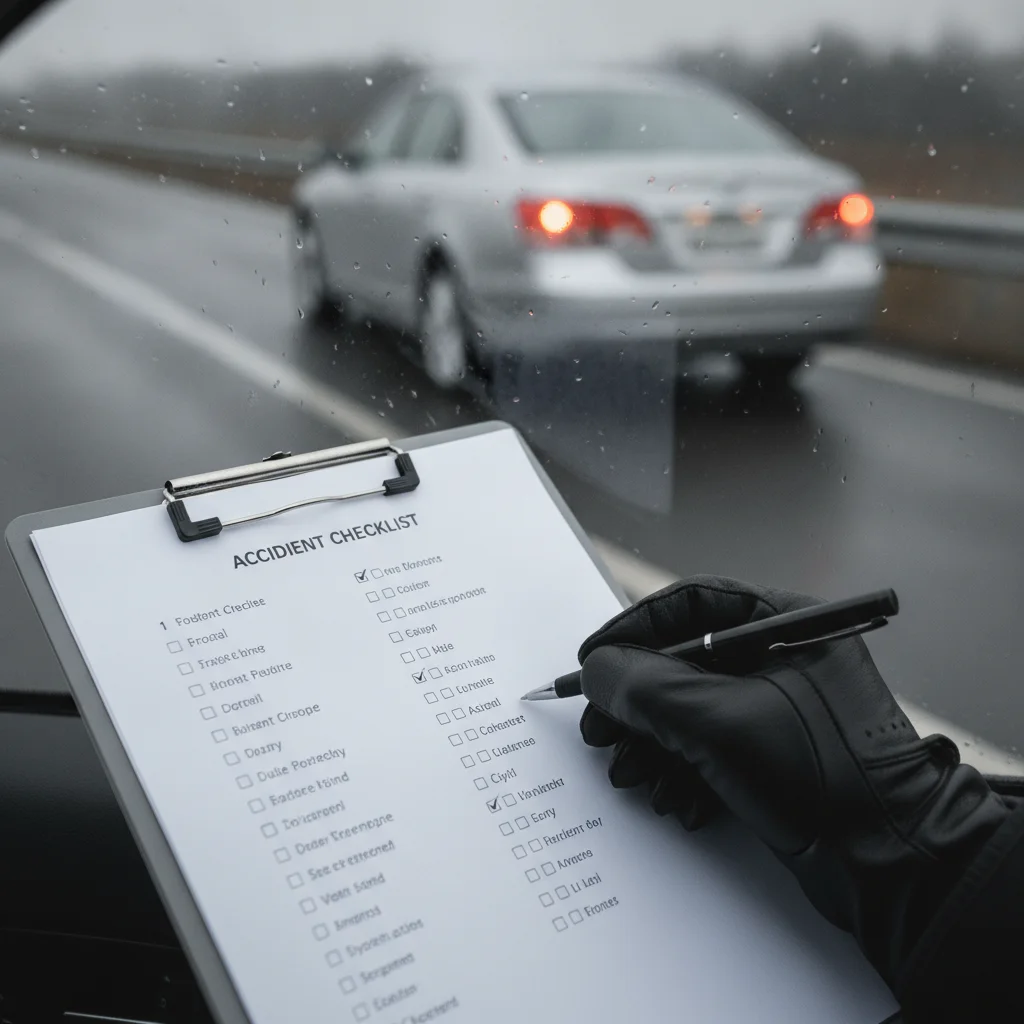
Why a physical checklist beats trying to remember
When an accident happens, your brain shifts into survival mode. Even if the collision is minor and everyone is physically fine, the combination of adrenaline, confusion, and the pressure of cars backed up behind you makes it very easy to forget things you'd normally know cold — like asking for the other driver's insurance information.
That's exactly why a printed checklist kept in the glove box is worth more in those moments than any amount of reading you've done. You don't have to think. You just follow the steps.
This checklist is designed to cover three distinct windows: what to do at the scene, what to gather and document, and what to track once your claim is open with your insurer. Print it out, fold it up, and tuck it behind your registration and insurance card right now — before you ever need it.
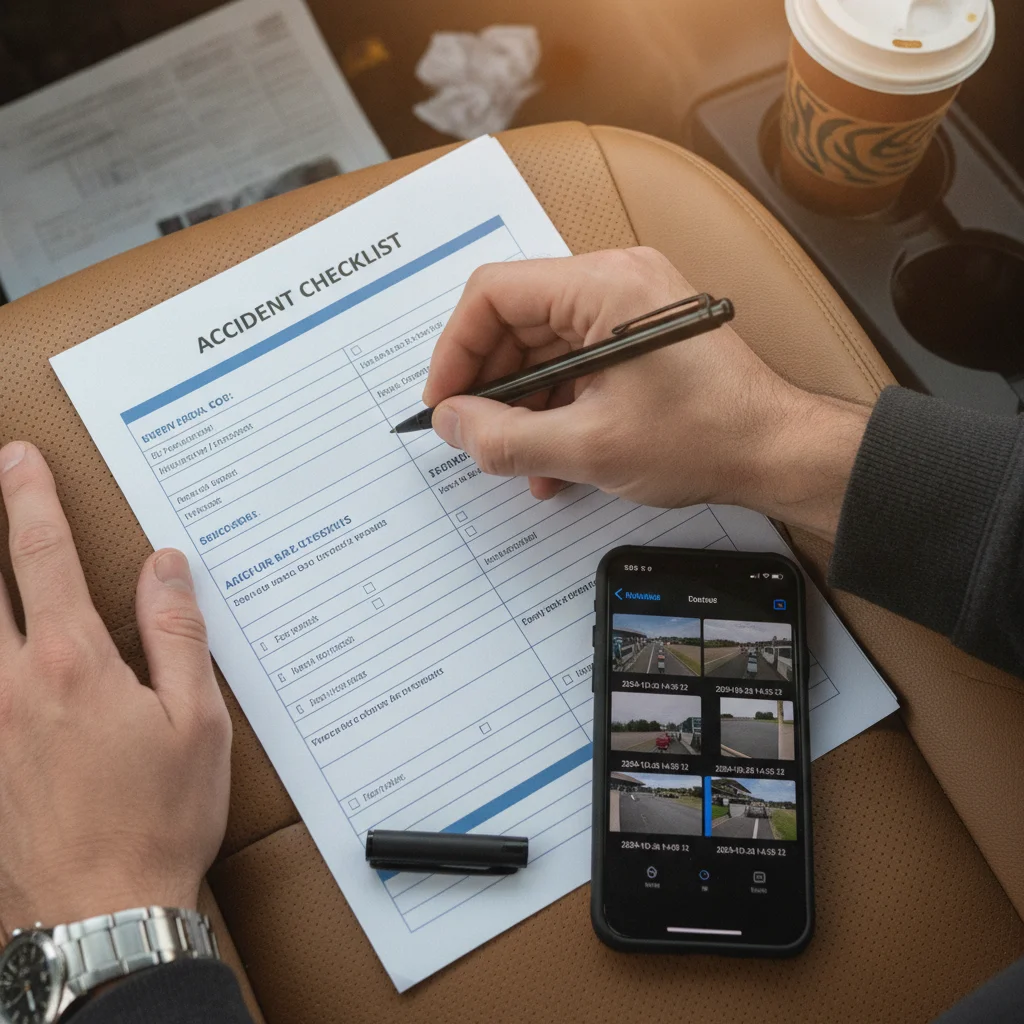
If you want to pair this with a broader scene-by-scene guide, the post-accident scene checklist walks through safety, bystander communication, and documentation tasks in full detail. And if you're wondering exactly what information to have ready before you pick up the phone, the pre-call information guide covers that precisely.
Tools to have ready before you ever need them
A few simple items can make the difference between a clean, well-documented claim and a frustrating back-and-forth with your adjuster. None of these are expensive — they just need to be in the car.
Smartphone camera
Capture timestamped photos and video of the accident scene and vehicle damage.
Printed or digital insurance card
Provides your policy number, insurer's claims phone number, and coverage summary at the scene.
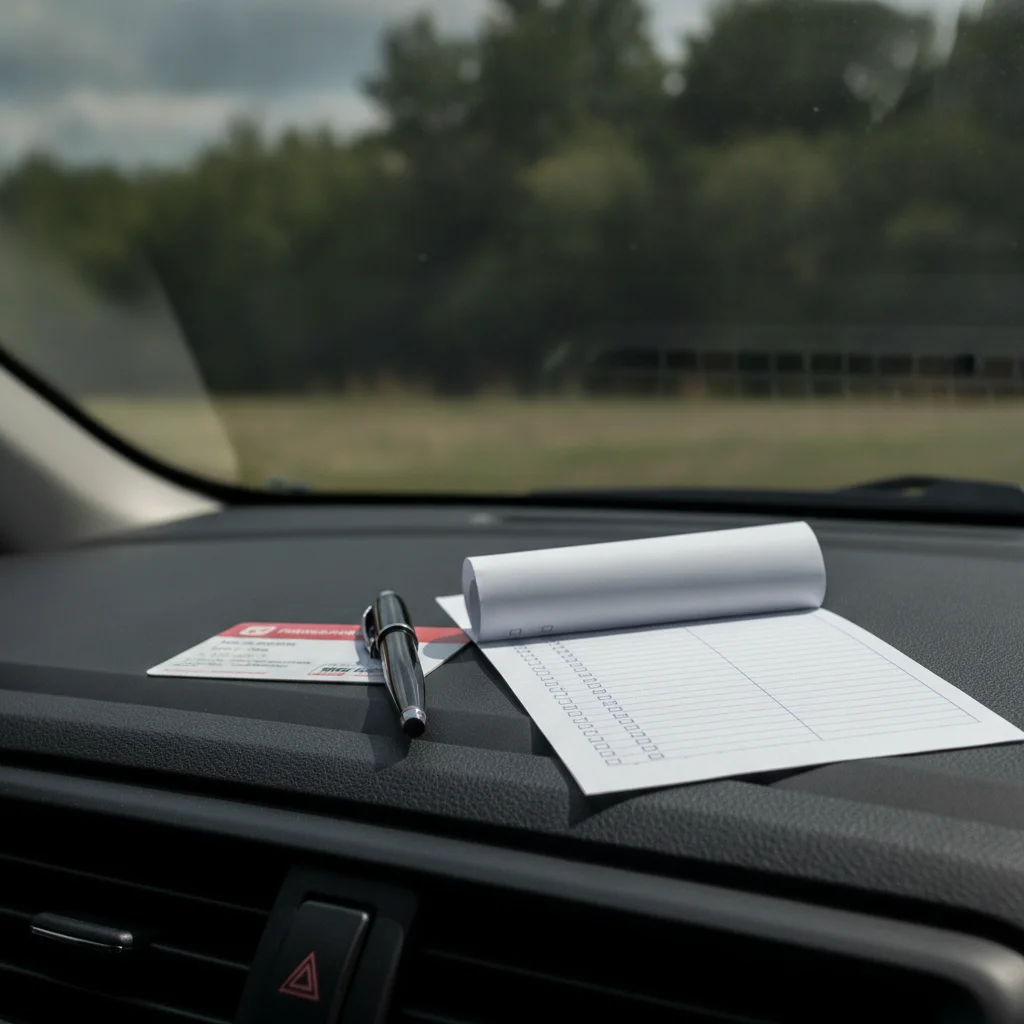
Blank notepad and pen
Record driver information, witness contacts, and officer badge numbers when your phone battery is low.
Roadside flares or warning triangles
Alert oncoming traffic to a stopped or disabled vehicle, reducing secondary accident risk.
Claims log template (printed)
Structured sheet for logging every insurer and adjuster contact by date, time, and outcome.
Insurer's mobile app
Many insurers let you open a claim, upload photos, and track status directly from a smartphone app.
One often-overlooked item: know your insurer's claims phone number before an accident. It's on your insurance card, but if that card is in a glove box you can't easily open after a collision, you want it saved in your phone contacts as well. Some insurers also allow claims to be filed directly through their app, which is faster in some scenarios.
The full claims checklist
Work through these groups in order. The first group — immediate scene actions — takes priority over everything else, including documentation. Safety first, paperwork second.
Immediately at the scene
Information to collect
Documentation and photos
Reporting to your insurer
After the claim is open
Deadlines to track
For a deeper explanation of what happens on the insurer's side once you've filed, see what actually happens after you file a claim. It demystifies the adjuster process, inspection, and settlement timeline so you know what to expect at each stage.
Critical warnings every driver should read before an accident
A few mistakes show up again and again in claim disputes — and most of them happen in the first few hours after an accident, before people realize they're making an error. Read these now so they're already in the back of your mind.
Don't post accident details on social media
Photos, captions, or comments posted to social media after an accident can be used as evidence against you during a claim dispute. Insurance adjusters and opposing attorneys routinely monitor public accounts. Keep all documentation private until your claim is fully settled.
Verbal settlements from the other driver aren't binding
If the other driver offers to pay for damages privately and asks you not to involve insurance, be cautious. Their repair estimate could be far lower than the actual cost, and you'd have no legal recourse once you've agreed. Always open a claim with your insurer so your rights are protected regardless of what the other party says at the scene.
Missing your insurer's reporting window can void coverage
Most policies have a notification clause requiring prompt reporting — some as short as 24 hours. If you wait too long, your insurer may deny the claim based on late notice, even if the accident was clearly not your fault. Report first, sort out details second.
Seek medical evaluation even if you feel fine
Adrenaline can mask pain from whiplash, soft tissue injuries, and even mild concussions for hours or days after an accident. If you don't seek a medical evaluation and symptoms appear later, it becomes much harder to link those injuries to the accident for insurance or legal purposes. Visit an urgent care clinic or your doctor within 24–48 hours as a precaution, and keep all medical records.
Your recorded statement can be used against you
An adjuster from the other party's insurance company may call and ask for a recorded statement shortly after the accident. You are generally not required to give one to the other driver's insurer. Anything you say — even casual or speculative comments about what happened — can be used to reduce or deny your claim. Speak with your own insurer first, and consider consulting an attorney before agreeing to any recorded statement.
If your accident involves significant injuries, a commercial vehicle, an uninsured driver, or a disputed fault determination, the situation can escalate quickly. Knowing when to involve a lawyer in an auto insurance claim is an important safeguard — not every claim needs an attorney, but some situations genuinely do.
Deadlines matter more than most drivers realize
One of the most consistent sources of claim problems is timing. Drivers assume they have plenty of time to report an accident, get an estimate, or respond to an insurer's request — and then discover too late that a deadline has passed.

There are actually two separate deadline frameworks to keep in mind:
- Your policy's reporting requirement: This is the timeframe specified in your own contract. Many policies require prompt notification — sometimes defined as 24 to 72 hours. Failing to meet this can give your insurer grounds to deny coverage, even for a valid claim.
- State law deadlines: States set their own minimum standards for how quickly insurers must acknowledge a claim, begin investigation, and make a settlement offer. These protect you, but you need to know what they are in your state. The auto insurance claim timeline by state breaks down what the rules look like where you live.
For personal injury claims, there's a third deadline: the statute of limitations. This is the window during which you can file a lawsuit if the claim isn't resolved fairly. It varies by state — typically two to three years from the accident date — but it can be shorter in some cases. Don't assume you have unlimited time to decide whether to pursue compensation.
As a general rule: report first, gather details as you go. It's always better to open a claim and close it without a payout than to delay reporting and find yourself without coverage when you need it.
After the claim: keeping your file organized
Once a claim is open, your job shifts from documentation to follow-through. This is where many drivers lose track of important details — especially if the claim runs for several weeks during repairs or negotiations.
Create a simple folder — physical or digital — that holds everything related to the accident:
- Your claim number and adjuster contact details
- Copies of all photos and the police report
- A running log of every phone call (date, time, representative name, summary of conversation)
- All written estimates from repair shops
- Receipts for towing, rental car, and any other out-of-pocket expenses
- Any correspondence from your insurer or the other party's insurer
If the repair process becomes complicated — say, a supplemental estimate is needed after the shop discovers hidden damage — having a complete file makes it much easier to advocate for yourself. For a full breakdown of how the repair and settlement process unfolds, the complete roadmap to filing an auto insurance claim is the most thorough resource we have on the entire process end to end.
And if your accident involved a collision specifically — meaning contact with another vehicle or object — the collision claim step-by-step walkthrough gives you a parallel guide focused on maximizing that particular type of claim outcome.
One last thought: this is also a smart moment to review whether your current policy is still the right fit. If the claims experience has been frustrating, or if you've discovered gaps in your coverage, the auto insurance comparison checklist gives you a structured way to evaluate whether switching makes sense — and what to verify before you do.

All claims are backed by peer-reviewed research. Sources on request.