
Key Takeaways
Policy Transfer to a New Car
When you buy a new vehicle, your existing auto insurance policy doesn't automatically update to cover it correctly. You need to notify your insurer, add the new vehicle, adjust your coverage limits, and — if you're financing or leasing — meet your lender's requirements. The window you have to do this varies by insurer, but it's usually between 14 and 30 days.
Most insurers extend a 'grace period' during which your existing policy's broadest coverage applies to a newly acquired vehicle, but the specific terms differ significantly by carrier and state. Never assume you're fully covered until you get written confirmation.
What Your Existing Policy Actually Does When You Buy a New Car
Here's the short version: your current auto insurance policy doesn't magically update itself. It extends a temporary lifeline — called a grace period — during which some level of coverage applies to your newly acquired vehicle. But the specifics of that grace period depend entirely on your insurer, your state, and the type of vehicle you bought.
Most major carriers follow a similar structure:
- If you already carry comprehensive and collision on another vehicle, those coverages typically extend to the new car during the grace period — usually 14 to 30 days.
- If you carry only liability, that's likely all that extends to the new vehicle. You'd be driving a new car with no physical damage coverage during the gap.
- The grace period clock starts the day you take possession, not the day you contact your insurer.
The critical word here is temporary. The grace period exists so you don't drive off a lot completely uninsured. It is not a substitute for actually updating your policy. If you have an accident on day 22 and your carrier's grace period was 14 days, you may find yourself without coverage on a vehicle you just purchased.
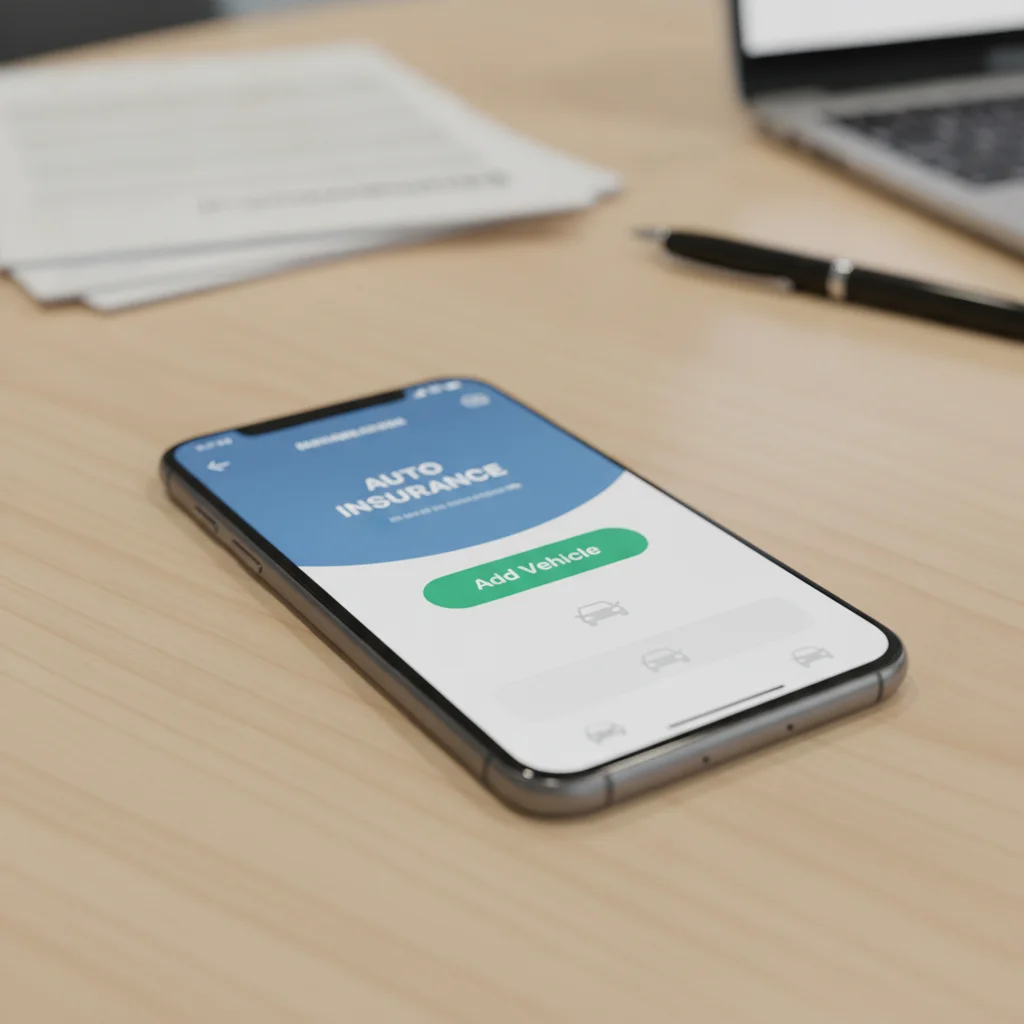
The smarter move: contact your insurer before you go to the dealership, or at the very latest on the same day you take delivery. Most insurers allow you to add a vehicle online or by phone in minutes, and you can get a binder or digital proof of insurance immediately.
See what active policy management actually involves — buying a new car is exactly the kind of trigger event that separates proactive policyholders from reactive ones.
Lender and Leasing Requirements Change the Math
If you're financing or leasing your new vehicle — which describes the majority of new car buyers — your insurance obligations aren't just between you and your insurer. Your lender or leasing company has contractual requirements that override whatever minimum your state mandates.
85%
New car buyers who finance or lease
According to Experian's State of the Automotive Finance Market, roughly 85% of new vehicle purchases in the U.S. are financed or leased, making lender insurance requirements relevant to the vast majority of buyers.
~20%
Average first-year depreciation on new vehicles
Industry data consistently shows new vehicles lose approximately 20% of their value in the first 12 months, creating immediate gap insurance exposure for buyers with low down payments.
14–30 days
Typical insurer grace period for new vehicles
Most major U.S. auto insurers extend a 14- to 30-day grace period during which a newly acquired vehicle receives temporary coverage, though the exact window varies by carrier and policy terms.
$1,900+
Average annual EV insurance premium
According to Bankrate's 2024 analysis, electric vehicles cost significantly more to insure than comparable gas models, averaging over $1,900 annually, driven largely by higher repair and parts costs.
Here's what lenders and lessors almost universally require:
- Comprehensive coverage — protects against theft, weather, fire, and non-collision damage
- Collision coverage — pays for damage to your car in an accident, regardless of fault
- Specified minimum liability limits — often higher than state minimums (100/300/100 is common)
- The lender listed as a lienholder or loss payee on your declarations page
If you currently carry only the state minimum liability on your existing vehicle, you will need to add comprehensive and collision before a lender will finalize your loan. This is not negotiable. Some dealerships will verify your insurance before releasing the vehicle; others trust you to handle it but include a clause in the loan agreement that allows the lender to force-place insurance — at a significantly higher cost — if they discover you're not properly covered.
Get Your Insurance ID Card Before You Take the Keys
Ask your insurer for a digital proof of insurance card for the new vehicle before you leave the dealership. Most carriers can issue one in minutes via their app or email. Some dealerships, especially on financed purchases, will ask to see proof of adequate coverage before releasing the vehicle to you.
Run Competing Quotes the Day You Buy
Your rate is changing no matter what when you add a new vehicle. That makes the purchase date the ideal moment to comparison shop — you have the VIN, the vehicle details, and a natural trigger to re-evaluate. Even 20 minutes spent getting two additional quotes can surface meaningful savings before you lock in with your current carrier.
For buyers trading in a gas vehicle for an electric vehicle, the coverage conversation gets more nuanced. EV replacement parts and battery repair costs are substantially higher than their ICE equivalents. See how to update your insurance when switching to an EV for a full breakdown of the endorsements worth considering.
What to Do With Your Old Vehicle's Coverage
Buying a new car usually means one of three things happened to your old car: you traded it in, you sold it privately, or you kept it. Each scenario requires a different action with your insurer.
You Traded It In or Sold It
Remove the old vehicle from your policy as soon as the transaction is complete. Until you formally remove it, you're paying premiums to insure a vehicle you no longer own. Call or log into your insurer's portal the same day the trade-in or sale closes. You may receive a prorated refund for the remaining premium on that vehicle.
You Kept the Old Car
No action needed on the old vehicle itself — it stays covered as-is. Your job is simply to add the new car as an additional vehicle. Your premium will increase to reflect two insured vehicles, but if you're adding a driver who will use one car primarily, this is also the moment to assign drivers correctly to each vehicle (which affects your rate).
A Family Member Is Taking the Old Car
If the old vehicle is being transferred to another household member, check whether that person is already on your policy. If they're not, you'll need to add them. If they're in a separate household, they may need their own policy entirely — your insurer will tell you whether their residence qualifies them for coverage under yours.
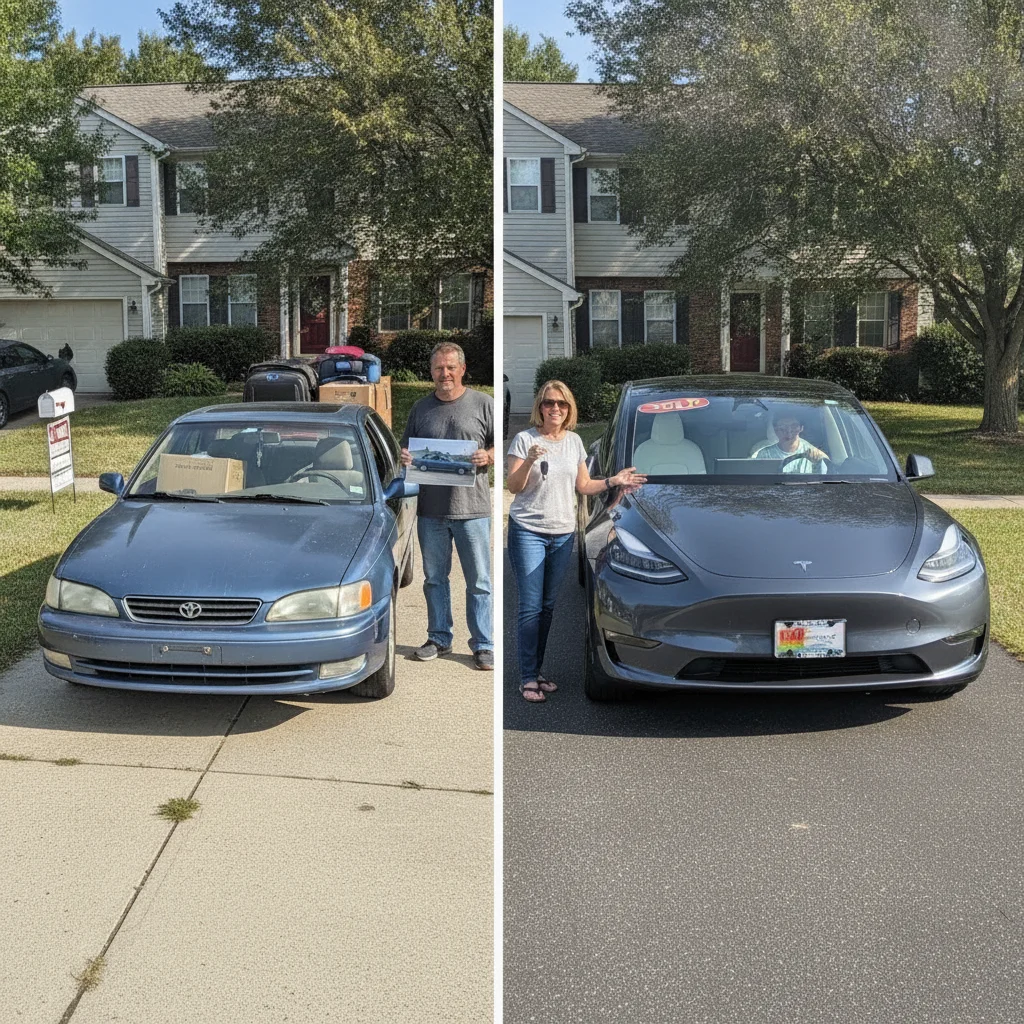
Buying a new car is also classified as a life event that warrants a full policy review — not just a line-item vehicle swap. Use the moment to confirm your liability limits, check your deductibles, and review any coverage types you may have added or skipped years ago.
Coverage Adjustments Worth Making on a New Vehicle
A new car is rarely an apples-to-apples replacement for what you had. If you're upgrading from a 10-year-old sedan to a new SUV, the vehicle's value, repair costs, and technology profile are all different — and your coverage should reflect that.
Increase Your Liability Limits
State minimums are consistently inadequate for new vehicles involved in serious accidents. If you're financing a $45,000 vehicle, you should be carrying at least $100,000 per person / $300,000 per accident in bodily injury liability. The cost difference between minimum and adequate limits is often surprisingly small — sometimes $10–$20 per month.
Consider Gap Insurance
New vehicles depreciate roughly 20% in the first year. If you financed with a small down payment, you may owe more on the loan than the car is worth within weeks of purchase. Gap insurance covers the difference between your car's actual cash value and what you owe the lender if the car is totaled or stolen. Your insurer may offer it, and so will the dealer — but the dealer's version is typically much more expensive.
Evaluate New Safety Feature Discounts
Modern vehicles come loaded with advanced driver assistance systems: automatic emergency braking, lane departure warning, adaptive cruise control. Many insurers offer discounts for these features, but they don't always apply them automatically. Ask your insurer explicitly about equipment discounts on the new vehicle.
Reconsider Your Deductible
A higher deductible lowers your premium, but the right deductible depends on the value of the vehicle you're now protecting. If you just bought a $40,000 vehicle, a $2,500 deductible means you're absorbing a significant chunk of any claim. Run the numbers with your agent before assuming your old deductible still makes sense.
Grace Periods Vary Significantly by Carrier
Some insurers offer 30-day grace periods; others may offer only 14 days or fewer for physical damage coverage specifically. There's no federally standardized grace period. The only reliable way to know your window is to check your policy declarations page or call your insurer directly. Don't make assumptions based on what a friend's carrier does.
Dealer-Offered Gap Insurance Is Usually Overpriced
Dealerships routinely offer gap insurance through the finance office, often rolling the cost into the loan at rates that far exceed what your own insurer would charge. Most major insurers offer gap or loan/lease payoff coverage as a relatively inexpensive add-on. Get a quote from your insurer before accepting the dealer's version — the savings can be several hundred dollars over the life of the loan.
Is Now the Right Time to Switch Insurers?
Yes — and here's why the timing is unusually good. When you buy a new vehicle, your rate is changing regardless. Your current insurer will requote based on the new vehicle's profile. That requote is effectively a fresh starting point, which means comparison shopping costs you nothing and could save you real money.
You are not mid-policy at this moment in any meaningful sense. You're resetting your coverage around a new asset. That makes switching cleaner than, say, canceling six months into a standard term.
“People treat their car insurance like a utility — they set it up once and forget about it. But every time the vehicle changes, the risk profile changes. The policy has to keep up with the asset it's protecting.”
— J. Robert Hunter, Former Insurance Commissioner and Director of Insurance, Consumer Federation of America
Before you let your dealership's F&I manager talk you into their preferred insurer, or before you default to renewing with your current carrier without checking, spend 20 minutes getting two or three quotes. The vehicle identification number (VIN) you'll need for accurate quotes is on your purchase paperwork.
If you do decide to switch, understand the mechanics. Switching at renewal versus mid-policy involves different refund structures and timing considerations. And some mid-policy switches create coverage gaps if not handled carefully — know what you're doing before you cancel anything.
One more thing: if you're also planning to maximize your trade-in value before the new purchase closes, get the insurance transition lined up in parallel. The two transactions often happen same-day, and you don't want to be scrambling for proof of insurance at the dealership while also negotiating a trade-in allowance.
A Practical Checklist for the Day You Buy
Here's what to do — in roughly this order — to make sure your coverage is solid when you drive off the lot:
- Before you go to the dealership: Call or log into your insurer's portal. Let them know you're purchasing a vehicle today. Confirm your grace period terms and what coverage will automatically apply.
- At the dealership, before signing: Have the new vehicle's VIN, make, model, trim, and MSRP ready. If you're financing, confirm the lender's minimum coverage requirements from the finance office.
- Add the vehicle to your policy: Do this by phone or app before you take the keys. Get a digital proof of insurance card for the new vehicle immediately. The dealership may ask to see it.
- Remove the old vehicle (if applicable): If you traded in or sold your previous car, remove it from the policy the same day. Request confirmation in writing.
- Confirm lienholder information: Make sure your insurer has the correct lender name and address to list as the loss payee on your declarations page. Your lender will want this.
- Review your full declarations page: Within a few days, review the updated policy document to confirm the vehicle information, coverage types, limits, and deductibles are all correct.
Grace Periods Vary Significantly by Carrier
Some insurers offer 30-day grace periods; others may offer only 14 days or fewer for physical damage coverage specifically. There's no federally standardized grace period. The only reliable way to know your window is to check your policy declarations page or call your insurer directly. Don't make assumptions based on what a friend's carrier does.
Dealer-Offered Gap Insurance Is Usually Overpriced
Dealerships routinely offer gap insurance through the finance office, often rolling the cost into the loan at rates that far exceed what your own insurer would charge. Most major insurers offer gap or loan/lease payoff coverage as a relatively inexpensive add-on. Get a quote from your insurer before accepting the dealer's version — the savings can be several hundred dollars over the life of the loan.
If you're moving states at the same time as buying a new car — which sometimes happens when people relocate and purchase locally — the insurance update is even more time-sensitive. Updating your policy after moving to a new state has its own set of compliance deadlines that stack on top of the vehicle-change process.

All claims are backed by peer-reviewed research. Sources on request.