
Key Takeaways
Why a State Move Is an Insurance Reset — Not Just an Address Change
Auto insurance is regulated at the state level, which means the policy sitting in your glove box right now was written to satisfy the laws of the state where you last registered your vehicle. The moment you establish legal residency somewhere new, you enter a different regulatory environment — one with its own minimum liability requirements, its own rules about uninsured motorist coverage, personal injury protection (PIP) mandates, and its own approved rate structures.
This matters practically because your current insurer may quote your new ZIP code at a completely different premium, or may not even be licensed to write policies there at all. Some regional carriers operate in only a handful of states. Even national carriers can have coverage forms and endorsements that differ by state.
Beyond insurance, the clock starts ticking on related compliance tasks the day you move. Most states give you between 30 and 90 days to re-register your vehicle and obtain a local driver's license — and both of those processes require proof of insurance that meets the new state's standards. Getting your insurance squared away first makes everything else downstream easier.

Moving is already one of the most disruptive life events you'll face. Don't let auto insurance be the thing that trips you up. It's also worth reviewing our broader guide on life events that should trigger a policy review to understand the full picture of how major changes affect your coverage.
What Changes When You Cross State Lines
Understanding what's actually different about your coverage situation helps you ask the right questions when you call your insurer or shop for a new policy.
Minimum Liability Requirements
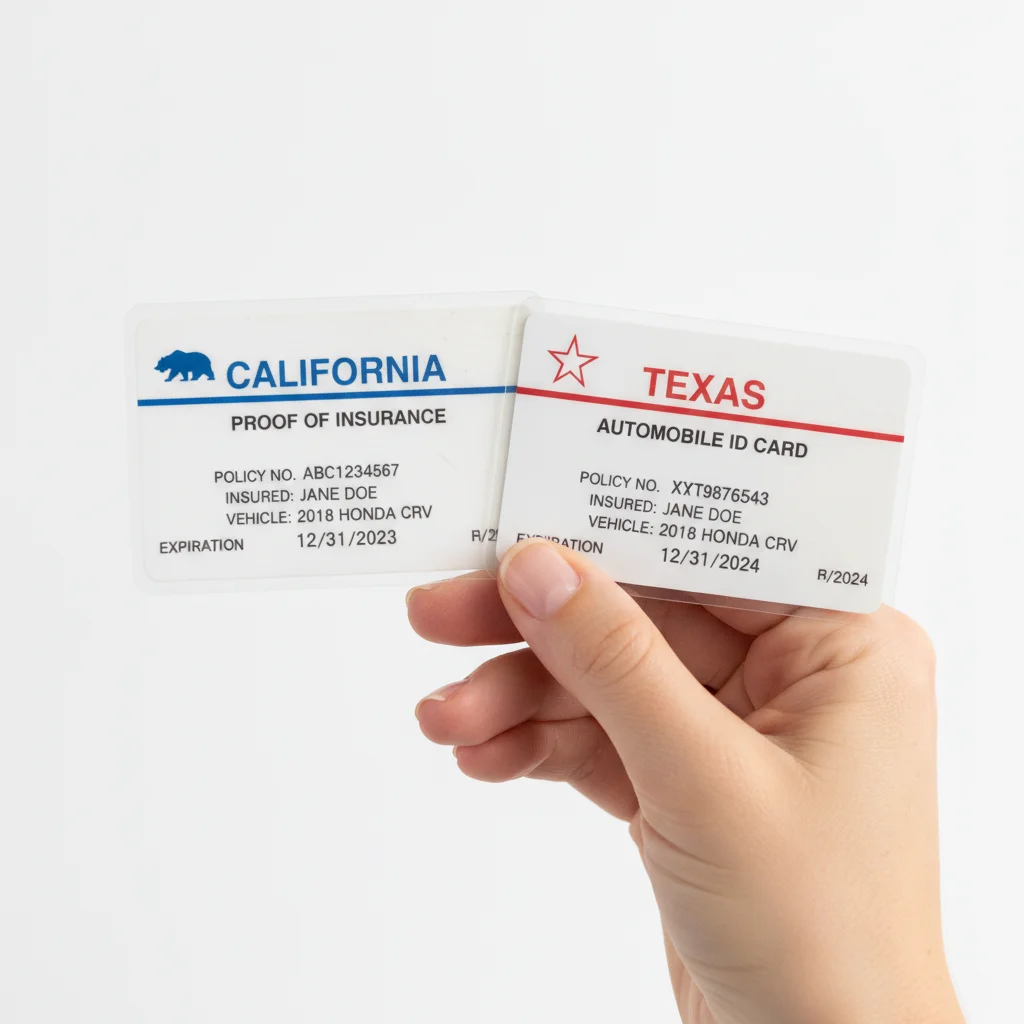
Every state sets its own floor for bodily injury and property damage liability. These are usually expressed as three numbers — for example, 25/50/25 — meaning $25,000 per person, $50,000 per accident, and $25,000 in property damage. Some states have requirements nearly double what others require. If you move from a low-minimum state to a higher one, your current policy may not comply from day one.
No-Fault vs. Tort States
About a dozen states operate under a no-fault insurance system, requiring Personal Injury Protection (PIP) coverage so that each driver's own insurer pays their medical bills regardless of who caused the accident. If you're moving into a no-fault state like Florida, Michigan, or New York, you'll need PIP added to your policy. Moving out of one eliminates that requirement but opens up liability-based claims you weren't exposed to before.
Uninsured and Underinsured Motorist Coverage
Some states require uninsured motorist (UM) and underinsured motorist (UIM) coverage; others make it optional. The uninsured driver rate in your new state may also influence whether carrying this coverage is a smart financial move even if it's not mandated.
Rate Factors That Shift With Your ZIP Code
Your premium is partly a function of local data — accident frequency, theft rates, weather risk, population density, and local repair costs. Moving from rural Montana to urban Atlanta, for instance, could meaningfully increase your rate even if your driving record is spotless. The reverse is also true.
Once you understand what's changing, you'll also want to check our comparing policies hub to benchmark your new quotes against the market before you commit to a rate.
Regional Carriers May Not Follow You
If your current insurer is a regional carrier, they may not hold a license to write policies in your new state. You'll discover this when you call them, but don't wait — find out as early as possible. Operating without valid, state-compliant insurance, even briefly, can result in fines, license suspension, and coverage gaps that follow your record for years.
Don't Rely on Temporary Coverage Extensions
Some insurers offer a short grace period — often 30 days — during which your old policy technically remains in effect after a move. Do not treat this as a reason to delay updating your coverage. Grace periods vary by carrier and state, are not a substitute for proper compliance, and may not cover claims that arise in your new state under the old policy's terms.
Step-by-Step: How to Update Your Auto Insurance After Moving
Follow these steps in order. The sequence matters — confirming coverage before canceling anything is the single most important discipline here.
What you will need
Notify Your Current Insurer of Your Move
Contact your insurer as soon as you have a confirmed move date and new address — ideally two to four weeks before you relocate. Ask them directly:
- Are you licensed to write policies in my new state?
- Can my current policy be converted or rewritten for that state?
- Will my premium change, and by how much?
- Will my current coverage limits meet the new state's minimums?
Get answers in writing (email is fine). This conversation determines your next step: whether you're updating your existing policy or shopping for a new one entirely.
Research Your New State's Minimum Coverage Requirements
Don't rely solely on your insurer to brief you on the rules. Look up your new state's Department of Insurance website — every state publishes its mandatory minimums publicly. Compare those minimums against your current coverage and note any gaps.
Pay particular attention to whether the new state is a no-fault state requiring PIP, whether UM/UIM coverage is mandatory, and whether there are any state-specific endorsements or coverage types you've never needed before.
Get Quotes from Multiple Insurers in the New State
Even if your current carrier can write a policy in your new state, it's worth getting two to three competing quotes before committing. Rate competitiveness varies significantly by region and company. Use your current coverage limits and deductibles as the baseline for comparison so you're evaluating apples to apples.
Collect quotes from:
- Your current insurer (for continuity and loyalty pricing)
- At least two national carriers with strong presence in your new state
- One or two strong regional carriers if they operate there
Select and Bind Your New Policy
Once you've chosen an insurer and coverage configuration, bind the policy — confirm it's active and you have a policy number. Request your insurance ID cards and declarations page immediately. The effective date of your new policy must be on or before the date your old policy is canceled.
If you're switching carriers, coordinate the timing carefully: your new policy starts on Day 1, and your old policy can be canceled on Day 1 or later — never before.
Cancel Your Old Policy (or Convert It)
Once your new coverage is confirmed and active, formally cancel your old policy in writing. Specify the cancellation date as the day your new policy took effect. Ask for written confirmation of the cancellation and any prorated premium refund owed to you.
If your existing insurer is rewriting your policy for the new state rather than canceling it, confirm that the old state's policy has been closed out and the new one is fully active — they are not the same document.
Update Your Vehicle Registration and Driver's License
With active, compliant insurance in hand, head to your new state's DMV — or use its online portal if available. Most states require:
- Proof of insurance meeting state minimums
- Your current out-of-state title and registration
- Proof of residency (utility bill, lease, or mortgage statement)
- Payment for registration and title transfer fees
Your new driver's license application will follow a similar process. Check your state's DMV website for the exact documentation list, since requirements vary.
Once the steps above are complete, you'll want to pair this with the vehicle registration process. Our companion guide on moving to a new state with your car walks through that checklist in detail.
Shop at the Start, Not the End
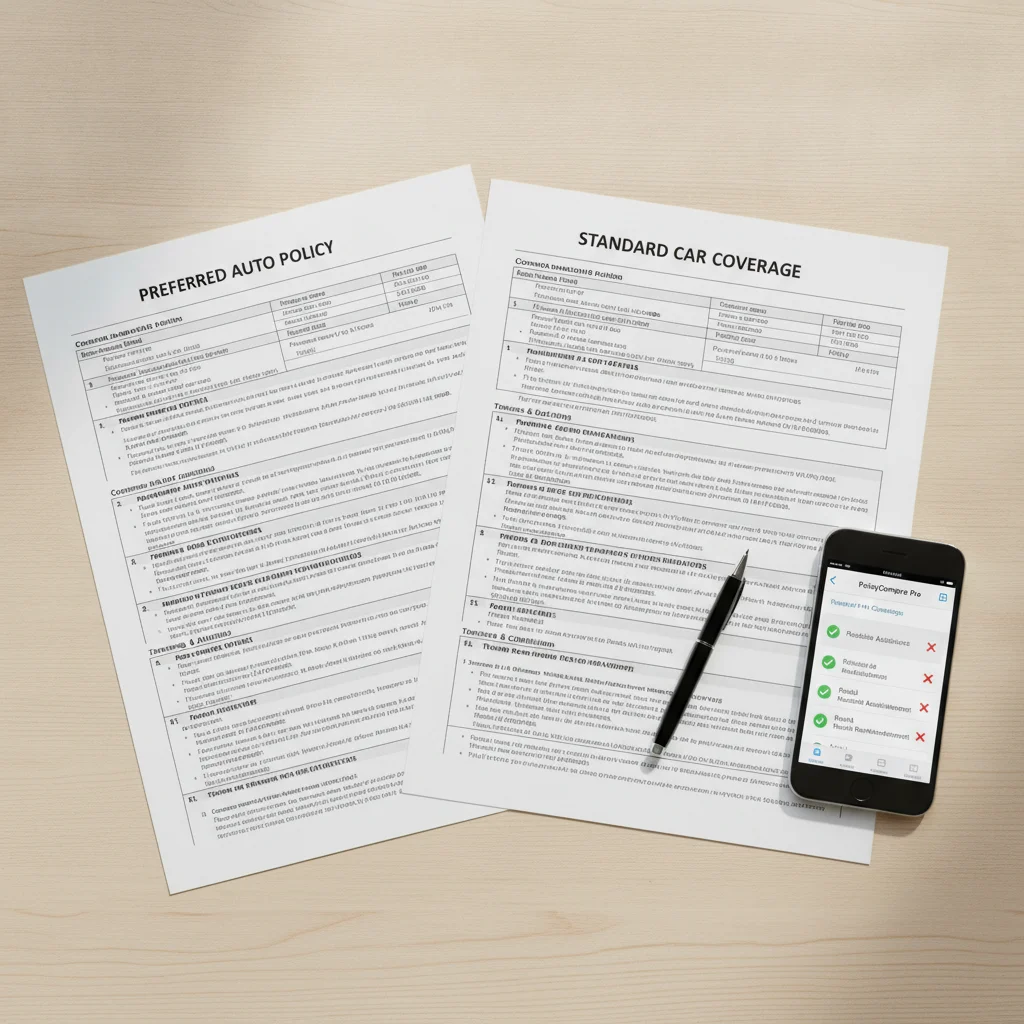
Most people treat insurance as the last box to check when moving. Flip that script — getting quotes early gives you time to find competitive rates without pressure, and having confirmed coverage in hand speeds up your DMV registration process. Starting your shopping two to three weeks before your move date is ideal.
Bundle for Bigger Savings in a New State
If you're also renting or buying a home in your new state, bundling auto and home or renters insurance with the same carrier is one of the fastest ways to reduce your total insurance bill. Many carriers offer 10–20% discounts for bundling. Ask about it during the quote process.
Review Your Coverage Limits — Not Just Compliance
Meeting state minimums keeps you legal, but it won't necessarily protect your savings account in a serious accident. As a general rule, carry at least $100,000 per person and $300,000 per accident in liability coverage if your net worth exceeds your state's required minimums. A move is the perfect moment to reassess.
Shopping for a New Policy in Your New State
If your insurer doesn't operate in the new state — or if their rates there aren't competitive — you'll need to shop for new coverage. Don't treat this as a hassle. It's actually an opportunity to revisit your coverage limits, deductibles, and discounts with fresh eyes.
What to Compare Beyond the Premium
Sticker price matters, but it's not everything. A policy that costs $30 less per month but comes with poor claims service in your new region is a bad trade. Before you switch, run through the key variables:
- Coverage limits: Are they appropriate for your assets and income level in the new state?
- Deductibles: Is your emergency fund large enough to absorb the deductible you're selecting for comprehensive and collision?
- Discounts: Does the new insurer offer multi-policy, good driver, or low-mileage discounts that your current carrier provides?
- Claims reputation: Check J.D. Power and state insurance department complaint ratios for the carriers you're evaluating.
Our auto insurance comparison checklist gives you a structured framework to work through before making a final decision.
How Many Quotes Should You Get?
Get at least three to four quotes from different insurers. Use a mix of national carriers and any strong regional companies licensed in your new state. Regional insurers sometimes offer better rates and more localized claims service than their national counterparts, especially in states with large rural populations or distinct weather patterns.
Don't Forget to Ask About Loyalty Credits
If your current carrier is licensed in your new state, they may be willing to retain your loyalty discount and keep your claims history on record — both of which can work in your favor. Always ask explicitly before assuming those benefits transfer automatically.
Never Drive Uninsured During the Transition
A lapse in auto insurance coverage — even for a single day — can result in fines, license suspension, and a surcharge on your insurance record that affects your premium for up to three years. The sequence is non-negotiable: confirm your new policy is active before canceling the old one. If you're unsure whether your current policy is still valid in the new state, call your insurer and ask for written confirmation before driving.
Force-Placed Insurance Is Expensive and Minimal
If you have an auto loan and fail to maintain the lender-required comprehensive and collision coverage through your policy transition, your lender may purchase force-placed insurance on your behalf. Force-placed policies are significantly more expensive than market-rate insurance — often two to four times the premium — and they protect the lender's interest in the vehicle, not yours. Notify your lienholder of your new policy as soon as it's active.
Common Mistakes to Avoid During the Transition
Moves are chaotic. These are the errors that tend to surface when people are juggling too many logistics at once.
Letting Your Policy Lapse
Even a one-day gap in coverage creates a lapse on your insurance record. Insurers in your new state will see that gap and may surcharge you for it — sometimes for years. Confirm the new policy's effective date before canceling the old one.
Assuming Your Agent's Office Transfer Handles Everything
If you use a national agency or insurance company with local offices, transferring your account to a new office is an administrative step — it does not automatically rewrite your policy to comply with your new state's laws. Verify coverage compliance explicitly.
Waiting Until You Re-Register to Think About Insurance
Registration deadlines sneak up fast, and the DMV will require proof of insurance that meets local standards. If you wait until the DMV appointment to think about your policy, you're already behind.
Keeping a Household Driver on Your Policy Who No Longer Lives With You
If a family member stayed behind or moved somewhere else entirely, this is a good time to remove them from your auto insurance policy — keeping an out-of-state driver listed can create coverage complications and unnecessary premium costs.
Not Updating Your Address With Your Insurer Promptly
Garaging location is a primary rating factor. Driving a car registered in your old state but garaged full-time in a new state without telling your insurer is a form of material misrepresentation. If you file a claim, your insurer could deny it or limit payout on those grounds.
After the Policy Is Updated: Keeping Your Coverage Right
Updating your insurance policy is the first step in settling into your new state's requirements — but it's not the last. A few follow-through tasks will keep you fully protected and compliant going forward.
Set a Calendar Reminder for Your Next Renewal
Your first renewal in the new state is a natural checkpoint. Use it to reassess whether your rates have settled, whether you qualify for new discounts (some insurers apply a loyalty discount after the first policy year), and whether your coverage limits still make sense for your life.
Verify Your Lienholder Is Notified
If you're financing or leasing your vehicle, your lender is listed on your policy as an additional interest party and may have requirements for minimum comprehensive and collision coverage. When your policy changes, notify the lienholder and confirm they've received updated proof of insurance. Failure to maintain lender-required coverage can trigger force-placed insurance — an expensive policy the lender buys on your behalf and charges back to you.
Keep Digital and Physical Copies of Your New Insurance Card
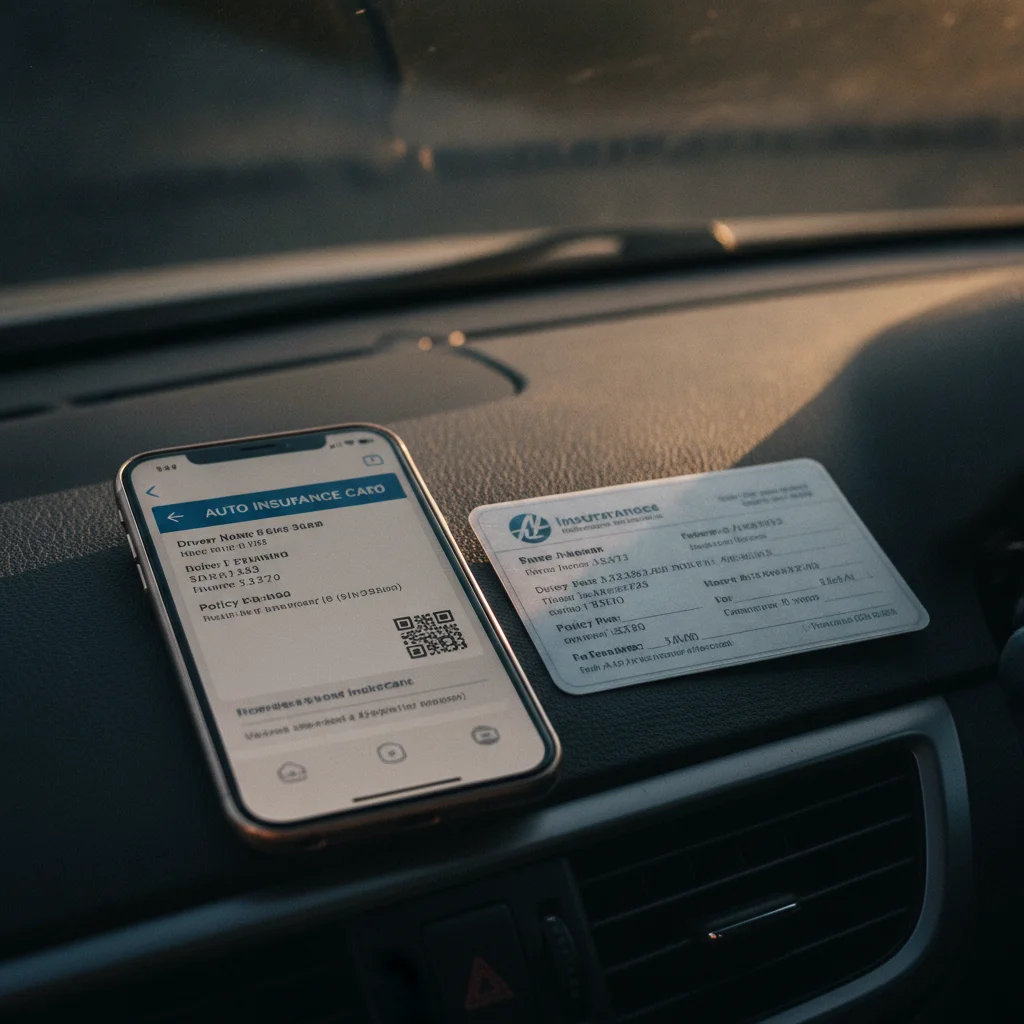
Most states accept digital proof of insurance on a mobile device during a traffic stop, but some still require a physical card. Check your new state's rules and carry documentation accordingly.
If you ever need to file a claim after the move — whether it's a fender bender on an unfamiliar road or a weather event in your new region — our filing a claim guide walks through the process step by step so you know exactly what to do.
Shop at the Start, Not the End
Most people treat insurance as the last box to check when moving. Flip that script — getting quotes early gives you time to find competitive rates without pressure, and having confirmed coverage in hand speeds up your DMV registration process. Starting your shopping two to three weeks before your move date is ideal.
Bundle for Bigger Savings in a New State
If you're also renting or buying a home in your new state, bundling auto and home or renters insurance with the same carrier is one of the fastest ways to reduce your total insurance bill. Many carriers offer 10–20% discounts for bundling. Ask about it during the quote process.
Review Your Coverage Limits — Not Just Compliance
Meeting state minimums keeps you legal, but it won't necessarily protect your savings account in a serious accident. As a general rule, carry at least $100,000 per person and $300,000 per accident in liability coverage if your net worth exceeds your state's required minimums. A move is the perfect moment to reassess.

All claims are backed by peer-reviewed research. Sources on request.