

Key Takeaways
Subrogation
Subrogation is the legal process that lets your insurance company step into your shoes and recover money from the party who was actually at fault for your loss. When your insurer pays your claim quickly so you're not left waiting, they earn the right to pursue reimbursement from the responsible party or their insurer. Think of it as your insurance company fighting on its own behalf — and sometimes on yours — to recoup what it paid out.
Subrogation rights are typically codified in your policy's conditions section and governed by state law; some states follow a "made-whole" doctrine, which requires insurers to ensure the policyholder is fully compensated before they can collect subrogation proceeds.
Why Subrogation Exists — and Why It Works in Your Favor
Here's the core problem subrogation solves: you shouldn't have to wait for a legal dispute between insurers to get your car fixed or your costs covered. So your own insurance company pays you first, then goes after the at-fault party to recover what it spent. It's a system designed to keep money moving to the right people without making you bear the burden of someone else's mistake.
For you as a policyholder, the practical benefit is speed. Instead of chasing the other driver's insurer yourself — which can take months and involve lawyers — your insurer handles that fight. You get back on the road faster, and the financial accountability still lands on the responsible party.
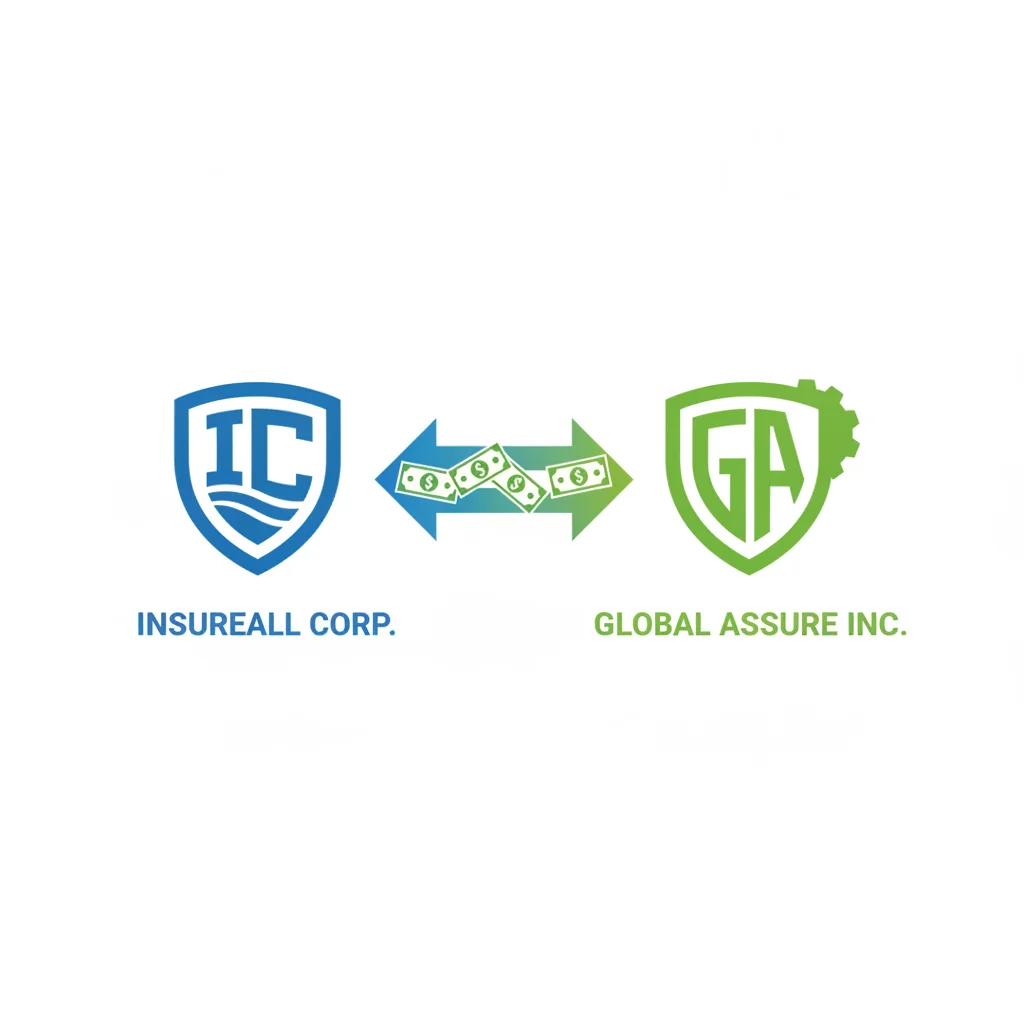
It also reinforces a basic principle of insurance fairness: the person who caused the accident should ultimately pay for it. Without subrogation, insurance companies would simply absorb the cost, which would eventually push premiums higher for everyone. Subrogation keeps the system honest.
Subrogation Applies to More Than Car Accidents
While this article focuses on auto insurance, subrogation exists across many insurance lines — homeowners, health, and workers' compensation included. The mechanics are the same: your insurer pays you, then recovers from whoever caused the loss. Understanding it in one context helps you recognize it everywhere.
Uninsured Drivers Complicate Recovery
When the at-fault party has no insurance and no meaningful assets, subrogation may be legally valid but practically unenforceable. Your insurer may still attempt pursuit, but results are uncertain. This is a key reason financial experts recommend carrying uninsured motorist coverage even in states where it isn't required.
Step by Step: What Subrogation Actually Looks Like
Understanding the sequence of events makes subrogation far less mysterious. Here's how it typically unfolds after a collision that wasn't your fault:
- You file a claim with your own insurer. Your insurer pays for your vehicle damage, minus your deductible, so repairs can move forward without delay. See what actually happens after you file an auto insurance claim for a complete breakdown of this stage.
- Your insurer investigates fault. Claims adjusters review the police report, photos, witness statements, and any other evidence. How insurance adjusters evaluate your claim explains what they're looking for and how damage is calculated.
- Your insurer asserts subrogation rights against the at-fault party's insurer, presenting its evidence and demanding reimbursement for what it paid.
- Negotiation or arbitration occurs between the two insurers. Most subrogation cases are resolved through a process called inter-company arbitration — a structured dispute process insurers use to avoid costly courtroom battles.
- Recovery is distributed. If your insurer collects, it keeps the portion covering its payout and returns your deductible — fully if there's complete recovery, partially if the recovery was reduced.
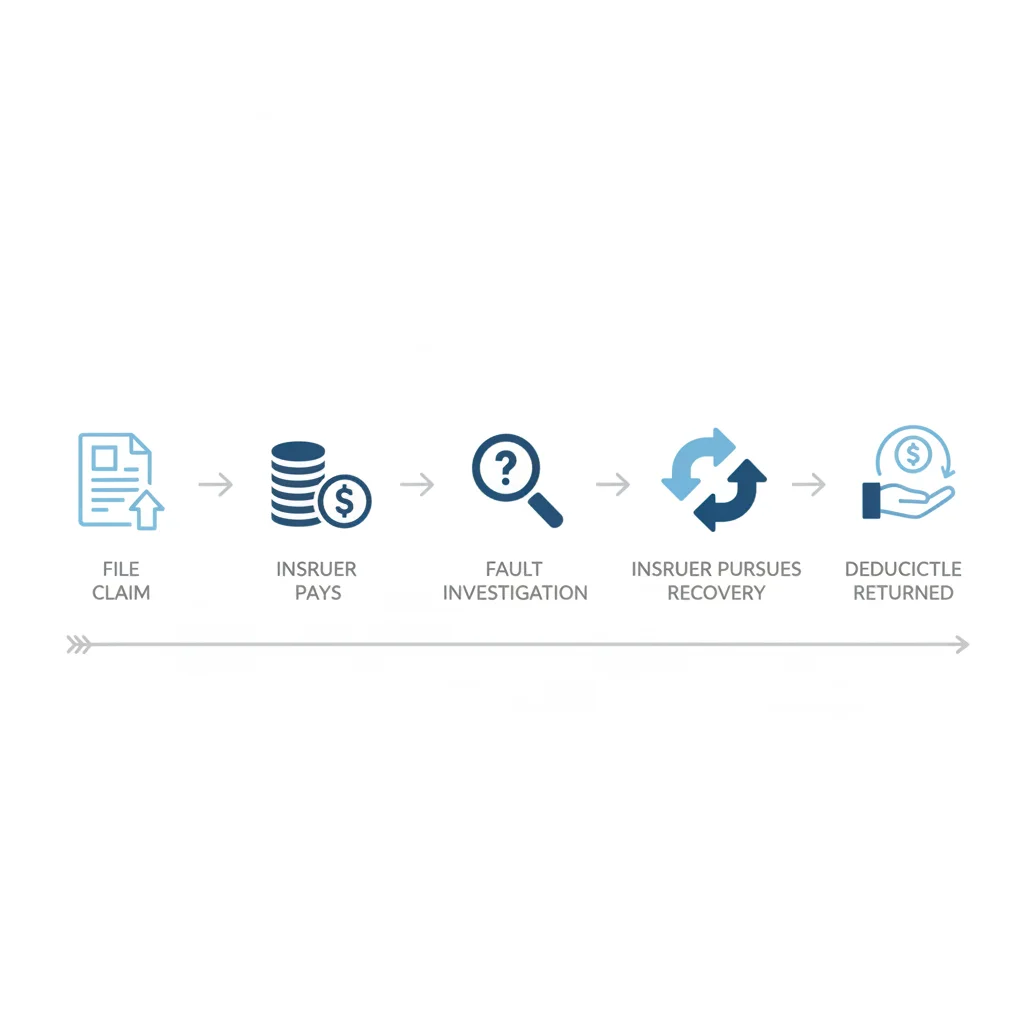
Throughout all of this, your role is mostly passive. Your main job is to cooperate: provide accurate information, don't sign anything from the other driver or their insurer without checking with your own insurer first, and preserve any evidence you have from the incident.
Document the Scene Immediately After Any Accident
Photos, the police report number, and the other driver's insurance information are the foundation of a strong subrogation case. The more thorough your documentation at the scene, the better your insurer's chances of a full recovery — and the better your chances of getting your deductible back. Even a few clear photos on your phone can make a meaningful difference.
Ask Your Insurer About Deductible Recovery Status
If several months have passed since your claim was paid, it's completely reasonable to contact your insurer and ask whether subrogation is in progress and whether you can expect a deductible refund. Many insurers have dedicated subrogation departments that can give you a status update. You don't have to wait in the dark.
The Deductible Question: Will You Get It Back?
This is the part most drivers care about most, and rightfully so. If you paid a $500 or $1,000 deductible out of pocket for an accident that wasn't your fault, getting that money back matters.
~$9B
Annual U.S. subrogation recoveries by insurers
According to industry estimates from the Property Casualty Insurers Association of America, U.S. insurers recover approximately $9 billion annually through subrogation efforts.
Up to 30%
Of collision claims involve subrogation potential
Insurance industry analysis suggests roughly 25–30% of collision claims involve another at-fault party, triggering subrogation rights for the paying insurer.
Months to 1+ year
Typical subrogation resolution timeline
The subrogation process typically resolves in a few months when both insurers agree on fault, but contested cases or litigation can extend the timeline well beyond a year.
The short answer: you often can — but it depends on how much your insurer recovers and what state you're in.
In a full recovery scenario, your insurer collects everything it paid, including your deductible amount. You get the full deductible back.
In a partial recovery scenario — common when the at-fault driver's policy limits are too low to cover the full claim — the recovered funds are typically split proportionally. So if your insurer recovered 80% of its total payout, you'd receive 80% of your deductible back.
Some states operate under what's called the made-whole doctrine. This rule requires that you — the policyholder — must be fully compensated for your total loss before your insurer can keep any subrogation recovery. If you had uncompensated losses (say, medical bills not covered by insurance), those must be addressed first. It's a consumer-protective rule, and it applies in states like California and Texas, among others.
If you're unsure how your state handles this, your insurer's subrogation department can walk you through it. Don't hesitate to ask — you have every right to understand how your deductible recovery works.
“Subrogation is essentially the insurance system's way of ensuring that the cost of an accident ultimately falls on the party responsible for causing it — not on responsible drivers who happened to be in the wrong place at the wrong time.”
— J. Robert Hunter, Former Federal Insurance Administrator and Director of Insurance at the Consumer Federation of America
What Can Derail Subrogation — and How to Avoid It
Subrogation is a right your insurer holds, but it's one that can be lost. A few common situations can either weaken or completely eliminate your insurer's ability to recover — and some of them can put your own coverage at risk.
Signing a Release Without Authorization
If the at-fault driver or their insurer contacts you directly and offers a settlement, be careful. Accepting that money and signing a release of liability extinguishes your insurer's subrogation rights. Depending on your policy, doing this without your insurer's consent could even be a policy violation. Always loop in your insurer before signing anything.
Inadequate Evidence Preservation
Subrogation cases are built on fault evidence. Photos of the scene, the police report number, the other driver's information, and witness contact details all matter. The stronger the evidence of fault, the stronger the subrogation claim. If evidence is missing or unclear, recovery becomes harder. The complete auto insurance claims glossary can help you understand the terminology your insurer will use during this process.
Policy Limitations on Coverage
Subrogation only applies when your insurer actually paid a claim. If the damage wasn't covered under your policy — for instance, an incident that falls outside your collision coverage triggers — there's nothing to subrogate. When collision coverage pays and when it doesn't is a useful reference here.
Uninsured At-Fault Drivers
If the other driver has no insurance and no assets to pursue, subrogation may not yield any recovery — even if fault is crystal clear. This is one reason uninsured motorist coverage exists: it steps in when subrogation isn't a practical option.
Subrogation Applies to More Than Car Accidents
While this article focuses on auto insurance, subrogation exists across many insurance lines — homeowners, health, and workers' compensation included. The mechanics are the same: your insurer pays you, then recovers from whoever caused the loss. Understanding it in one context helps you recognize it everywhere.
Uninsured Drivers Complicate Recovery
When the at-fault party has no insurance and no meaningful assets, subrogation may be legally valid but practically unenforceable. Your insurer may still attempt pursuit, but results are uncertain. This is a key reason financial experts recommend carrying uninsured motorist coverage even in states where it isn't required.
What You Should (and Shouldn't) Do During Subrogation
Once your claim is paid and subrogation begins, your insurer takes the lead. But your actions still matter. Here's how to be a good partner in the process without overcomplicating things:
- Do cooperate fully. Your insurer may need additional statements, documentation, or clarification. Respond promptly and honestly. Cooperation is typically a policy requirement, not just a courtesy.
- Don't accept money from the other party without telling your insurer. Even a good-faith payment from the at-fault driver can complicate subrogation if it comes with a release. Check first.
- Do keep records. Hold onto your repair invoices, rental car receipts, medical bills, and any correspondence with the other driver or their insurer. These documents support both your original claim and any subrogation effort.
- Don't assume you'll hear nothing. Some insurers proactively notify policyholders when subrogation is successful and a deductible refund is coming. Others are quieter. It's perfectly fine to ask your insurer for a status update after a few months.
- Do ask questions. If your claim was denied rather than subrogated, understand why. A denied claim isn't always the final word — there may be options you haven't explored yet.
Document the Scene Immediately After Any Accident
Photos, the police report number, and the other driver's insurance information are the foundation of a strong subrogation case. The more thorough your documentation at the scene, the better your insurer's chances of a full recovery — and the better your chances of getting your deductible back. Even a few clear photos on your phone can make a meaningful difference.
Ask Your Insurer About Deductible Recovery Status
If several months have passed since your claim was paid, it's completely reasonable to contact your insurer and ask whether subrogation is in progress and whether you can expect a deductible refund. Many insurers have dedicated subrogation departments that can give you a status update. You don't have to wait in the dark.
Subrogation in the Bigger Picture of Your Policy
Subrogation isn't a clause buried in fine print for no reason — it's a structural piece of how insurance pricing and fairness work at scale. When insurers can recover costs from at-fault parties, they're better positioned to keep premiums stable for drivers who aren't causing accidents. The system creates accountability that pure premium pooling alone can't.
For you personally, understanding subrogation changes how you approach the aftermath of an accident. Instead of feeling passive or powerless while insurers sort things out, you can see the process clearly: your insurer is working to recover your deductible, to assign financial responsibility correctly, and to close the loop on a loss that wasn't your fault.
That knowledge alone tends to reduce a lot of the anxiety that comes with being in an accident. The claims process can feel like a black box — but subrogation is one of the clearest examples of your insurer actually working for you, not just collecting your premium. For a full view of how each stage of a claim unfolds from start to finish, see the complete claims process guide.

All claims are backed by peer-reviewed research. Sources on request.