Key Takeaways
Why a CPO Badge Doesn't Replace Your Own Due Diligence
A certified pre-owned label is a manufacturer's or dealer's promise — not a guarantee backed by your independent review of the facts. CPO programs vary significantly across brands. Some manufacturers require a 150-point inspection conducted by factory-trained technicians; others use a looser checklist performed by general dealership staff. None of them are obligated to show you that checklist unless you ask, and few buyers do ask.
The vehicle history report is the one document that exists entirely outside the dealer's control. It's compiled by third parties — insurance companies, state DMVs, repair shops, auction houses, and fleet operators — who report to Carfax and AutoCheck without any input from the seller. That independence is exactly why it's your most valuable tool.
Understanding how to read that report correctly is a different skill from simply obtaining it. Most buyers glance at the color-coded summary on the first page, see no red boxes, and assume the vehicle is fine. That's a mistake. The summary compresses nuance that only appears when you read the full chronological detail. This guide walks you through every meaningful section, in the order that matters most.
For a broader look at how history reports work and where they fall short, reading a vehicle history report without getting misled is a useful companion reference. And if you're still deciding whether CPO is the right path at all, the used car buying hub covers how CPO compares to straight private-party and dealer used purchases.
What you will need
What You Need Before You Start
Reading a history report effectively requires a few things in place before you pull up the first document. Skipping any of these steps reduces the value of the information you'll find.
Carfax Report
Primary vehicle history source; pulls accident data, title records, and service history from thousands of reporting sources.
AutoCheck Report
Secondary history source run by Experian; cross-validates Carfax data and sometimes captures incidents Carfax misses.
NHTSA VIN Lookup Tool (vinrcl.safercar.gov)
Free federal database confirming whether the vehicle has open safety recalls that the CPO inspection may not have addressed.
NICB VINCheck
Free National Insurance Crime Bureau tool that flags stolen vehicles and vehicles written off as total losses by insurers.
Independent Pre-Purchase Inspection (PPI)
A licensed mechanic inspects the vehicle in person to catch structural or mechanical issues that no data report can reveal.
The tools above divide into two categories: the paid data reports (Carfax, AutoCheck) and the free government and industry checks (NHTSA, NICB). Treat the paid reports as your main investigation and the free checks as a mandatory backstop — not an either/or choice.
One tool listed as optional deserves special mention: the independent pre-purchase inspection. History reports are data. A PPI is a physical reality check. Vehicle history reports have real limitations — they cannot detect a cash-repaired unibody or smell the musty residue of a flood-damaged interior. For any CPO vehicle priced above $20,000, a $150 PPI is money extremely well spent.
How to Read the Report: Step-by-Step
Follow these steps in order. Each builds on the previous one, and skipping steps in the middle — particularly the title and odometer sections — can leave you blind to the most serious issues.
Never Skip the Report — Even on CPO
Dealers are not legally required to disclose every accident or title issue as long as they haven't been convicted of fraud. The CPO certification process varies widely by manufacturer and can miss damage that wasn't reported to insurance. Your only independent check is the vehicle history report — treat it as non-negotiable before any purchase.
Odometer Rollback Is a Federal Crime — and It Still Happens
The National Highway Traffic Safety Administration estimates odometer fraud costs buyers more than $1 billion annually. A history report that shows a mileage reading lower than a previous entry is a hard stop — do not negotiate, do not accept dealer explanations, walk away immediately and report to the NHTSA.
Obtain the VIN and verify it physically
Before spending money on a report, confirm you have the correct and unaltered Vehicle Identification Number. The VIN appears in three places you should check in person:
- Dashboard plate — visible through the lower left corner of the windshield from outside the car
- Driver-side door jamb sticker — printed on the white label inside the door frame
- Title and registration documents — if the dealer has them available
All three must match exactly, character for character. If the dashboard plate looks newer than the rest of the car's interior, or if any characters appear stamped differently, stop and do not proceed with this vehicle.
Run both Carfax and AutoCheck on the same day
Go directly to Carfax.com and AutoCheck.com and enter the VIN. Do not use a report the dealer printed — generate a fresh one yourself so the data is current as of today.
Each report costs roughly $40–$45 for a single lookup, or you can purchase a bundle if you're shopping multiple vehicles. The overlap between the two databases is substantial but imperfect. In practice:
- Carfax has stronger coverage of repair shop and dealer service records in the U.S.
- AutoCheck sometimes surfaces auction and fleet-use data that Carfax misses
Running both is a $80–$90 investment that can save you from a five-figure mistake.
[tool_cards]Check the title history section first
Scroll directly to the title records — typically near the top of a Carfax report. This section tells you the most consequential facts about the vehicle's legal and financial past. Look for:
- Number of previous owners — A CPO vehicle with four or more owners in six years is uncommon and worth questioning.
- Title brands — These are the most serious flags. Common brands include:
- Salvage
- The car was declared a total loss by an insurer. Most CPO programs explicitly exclude salvage-titled vehicles, so a salvage brand disqualifies this vehicle from legitimate CPO status.
- Rebuilt / Reconstructed
- A salvage vehicle that was repaired and re-inspected. Still excluded by most manufacturer CPO programs.
- Lemon Law Buyback
- The manufacturer repurchased the vehicle under state lemon law. Disclosure requirements vary by state, but this brand must appear on the title.
- Flood / Water Damage
- Indicates documented water intrusion — one of the most expensive problems to fix reliably and one that persists long after cosmetic repair.
- State-to-state transfers — A vehicle titled in a different state shortly before CPO certification may have been through an auction or wholesaler, which can obscure its actual history.
Analyze the accident and damage section
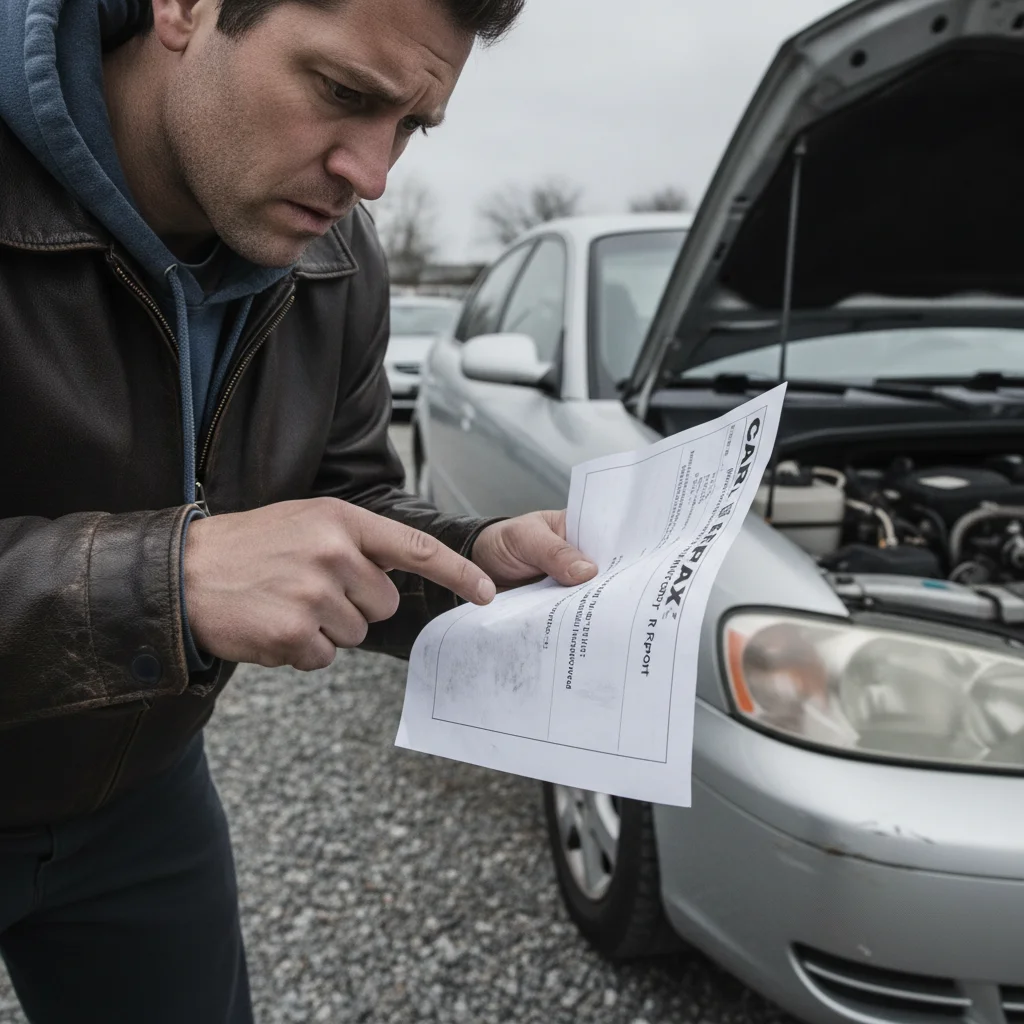
This is where most buyers spend the least time and should spend the most. History reports categorize damage events differently, and the label matters enormously.
[in_content_images:0]When reading accident entries, evaluate each incident on these four dimensions:
- Severity — Was it a minor fender scrape with no airbag deployment, or did it involve structural damage? Look for phrases like "damage to all airbags deployed," "damage to frame," or "major damage" anywhere in the entry.
- Which end was hit — Rear impacts at low speed are generally lower risk than front-end or side impacts, which are more likely to involve suspension, engine cradle, or frame rails.
- Insurance involvement — A reported claim means a body shop was involved and the insurer assessed the damage. Cash repairs done without an insurance claim often go unreported entirely, which is a separate concern (addressed in Step 8).
- How many incidents — One minor accident is not unusual over a three-year ownership period. Three or more incidents in the same ownership period suggests something about how the vehicle was driven.
For any accident flagged as structural or frame damage, stop here. A vehicle with documented frame damage should not command a CPO premium — and in many cases, the CPO certification itself is questionable if the manufacturer's inspection process allowed it through.
Audit the odometer readings for consistency
Scan every mileage entry in chronological order and confirm the numbers only ever increase. A single instance where a later reading is lower than an earlier reading is odometer fraud — a federal crime under the Motor Vehicle Information and Cost Savings Act.
Also watch for these subtler odometer red flags:
- Large unexplained mileage jumps — If the vehicle shows 14,000 miles in January and 42,000 miles in December of the same year with no fleet or rideshare notation, something is off.
- Long gaps with no mileage recorded — A period of 12–18 months with no odometer entry could mean the car was in storage, in a legal dispute, or being kept off the books intentionally.
- Mileage inconsistency at point of sale — Compare the mileage on the report's most recent entry to the mileage on the odometer right now. They should be reasonably close.
Evaluate the service and maintenance record
A CPO vehicle's service history is one of the strongest indicators of its long-term reliability — and one of the clearest signals of whether the previous owner cared for it. Look for:
- Regular oil change intervals — Most modern engines call for changes every 5,000–7,500 miles. If a vehicle shows nothing for 18,000 miles, that's three or four missed oil changes.
- Dealer vs. independent shop records — Both are valid. What matters is consistency. A vehicle serviced exclusively at one shop or dealer tells a better story than one with scattered, irregular records.
- Major services at correct intervals — Transmission service, coolant flush, and brake fluid changes have manufacturer-specified intervals. A vehicle at 75,000 miles with no transmission service record is not necessarily a disaster — but it's a question to ask.
- Recall completion — Some service records include recall repair entries. Cross-reference with the NHTSA lookup in Step 7 to confirm open recalls were actually addressed.
Gaps in service history are common and don't automatically disqualify a vehicle. But gaps combined with any of the other red flags in this guide compound the risk meaningfully.
Run the free NHTSA and NICB checks
Two free government and industry tools fill gaps that paid reports don't always cover:
- NHTSA VIN Lookup (vinrcl.safercar.gov) — Confirms open safety recalls. A CPO inspection is supposed to address open recalls, but the NHTSA database will show you whether any recalls were actually closed. An open recall on a CPO vehicle is a deficiency the dealer must correct before delivery — get that in writing.
- NICB VINCheck (nicb.org/vincheck) — The National Insurance Crime Bureau database flags vehicles reported stolen or written off as total losses. This catches scenarios where a car was totaled in one state, given a "title washing" treatment, and resold in another state with a clean-looking title.
Both checks take less than two minutes and cost nothing. There is no legitimate reason to skip them.
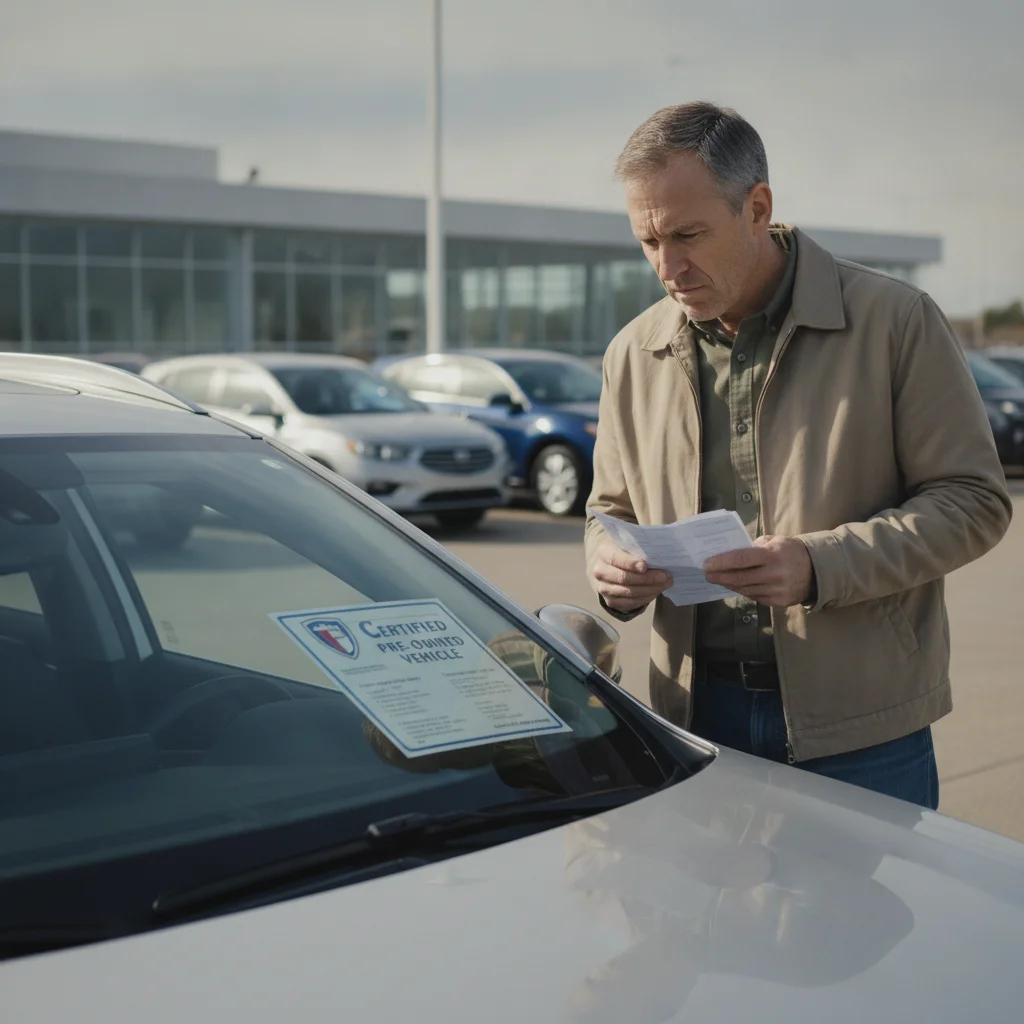
[in_content_images:1]Identify what the report cannot tell you — and fill those gaps
Vehicle history reports only capture what gets reported to databases. A clean report does not guarantee a trouble-free car — it simply means no reported incidents exist. Common scenarios that go unreported include:
- Cash repairs paid out of pocket without involving insurance
- Flood damage in states with less rigorous title-branding laws
- Mechanical failures that were fixed but never logged by a reporting shop
- Damage from hail, paint, or minor impacts that never reached a body shop
The only way to catch unreported issues is a physical inspection. For any CPO vehicle you are seriously considering, schedule an independent pre-purchase inspection (PPI) with a licensed mechanic who has no financial relationship with the selling dealer. A PPI typically costs $100–$200 and can surface frame damage, signs of flood exposure, or mechanical problems that history reports are blind to.
Make your go / no-go decision using the full picture
At this point you have: two history reports, free NHTSA and NICB lookups, and ideally a PPI result. Stack those findings against the CPO premium you're being asked to pay.
A CPO vehicle is worth its price premium when the history confirms:
- Clean or lightly branded title with no salvage, flood, or lemon law history
- One or two owners with logical mileage patterns
- No structural or frame damage in any accident entry
- Consistent service records with no major unexplained gaps
- All open recalls closed
- A PPI that finds no structural or major mechanical issues
If the history shows any disqualifying findings, use the red flags that should make you walk away from a CPO deal as your guide for whether to negotiate a price adjustment or exit entirely. And before you commit to anything, work through the CPO buyer's pre-purchase checklist to confirm warranty terms and inspection records match what the dealer is claiming.
How History Report Findings Affect CPO Value
Not every negative finding on a history report eliminates the value of a CPO vehicle — but each one should shift your price expectations. Here's a rough framework for thinking about that adjustment:
| Finding | Impact on CPO Premium | Recommended Action |
|---|---|---|
| Single minor accident, no structural damage | Negotiate 3–7% off asking price | Proceed with PPI; confirm cosmetic repair quality |
| Two minor accidents, no structural damage | Negotiate 8–12% off asking price | PPI mandatory; scrutinize paint and panel alignment |
| Any structural or frame damage | CPO premium is not justified | Walk away or price as non-CPO used car at significant discount |
| Four or more previous owners | Negotiate 5–8% off asking price | Investigate ownership timeline; check for fleet use |
| Salvage, rebuilt, or flood title brand | Vehicle should not carry CPO status | Report to manufacturer; walk away |
| Odometer discrepancy | Immediate disqualifier | Walk away; file NHTSA complaint |
| Open safety recall | No price adjustment — require recall completion in writing | Do not take delivery until recall is closed |
These ranges are approximations — actual negotiating leverage depends on market conditions, how long the vehicle has been on the lot, and the specific make and model. But they give you a starting anchor for the conversation.
One Report Provider Is Not Enough
Carfax and AutoCheck draw from overlapping but non-identical data sources. An accident that appears on one may not appear on the other. For any CPO vehicle you are seriously considering, run both reports — the cost difference is trivial compared to the purchase price.
Dealer-Provided Reports May Be Outdated
Some dealers print vehicle history reports days or even weeks before you visit. Any incident that occurred after the print date will not appear. Always generate a fresh report yourself on the day you inspect the vehicle, using the VIN printed on the driver-side door jamb.
For a comprehensive list of findings that go beyond price negotiation into deal-ending territory, these red flags warrant walking away from a CPO deal entirely.
Cross-Reference the VIN in Two Places
The VIN on the report must match the VIN stamped on the dashboard (visible through the windshield) and the VIN on the door jamb sticker. A mismatch — even one character — suggests tampering. Confirm both before you pay for any report.
Use Mileage to Validate Ownership Timeline
Divide the total mileage by the vehicle's age in years. A result between 10,000 and 15,000 miles per year is normal. Significantly higher annual mileage on a two- or three-owner vehicle often means it was used as a fleet or rideshare car — relevant because CPO programs have stricter eligibility rules around fleet use.
Ask the Dealer to Match Report Dates to Invoices
If the report shows a dealership service record, ask to see the original repair order invoice. Legitimate dealers keep these on file and will produce them without hesitation. Reluctance to share paperwork is itself a red flag worth noting.
Common Mistakes Buyers Make When Reading CPO History Reports
Even buyers who know to pull a history report often make interpretation errors that leave them exposed. Here are the most consequential ones:
Relying only on the summary page
Both Carfax and AutoCheck open with a color-coded summary — green checkmarks, yellow flags, red alerts. That summary is a starting point, not a conclusion. A vehicle can show all green checkmarks on the summary while containing detailed entries about unreported accidents or long service gaps that only appear in the full chronological record. Always read the full report.
Treating "no accidents reported" as "no accidents occurred"
The report reflects what was reported to data aggregators. A cash repair at an independent shop that doesn't submit to insurance databases, a private seller who buffed out a door ding, a hail event in a state with lenient reporting — none of these appear. This is why the PPI exists. A clean vehicle history report doesn't guarantee a trouble-free car.
Ignoring the geographic history
Pay attention to the states where the vehicle was titled and serviced. A vehicle that spent its first three years in a Rust Belt state — Michigan, Ohio, Pennsylvania, New York — and was then sold to a dealer in a dry-climate state for CPO certification may carry hidden undercarriage rust that no report will flag but a PPI will find immediately.
Accepting one report provider's result as complete
This cannot be said enough: run both Carfax and AutoCheck. The databases overlap, but each has exclusive reporting relationships that the other doesn't. Spending $80 on two reports for a $25,000 purchase is rational risk management.
Before you sign anything, walk through the CPO buyer's pre-purchase checklist one more time with the history report findings in hand. That checklist specifically addresses how to verify that what the dealer claims about warranty coverage and inspection records actually matches the documented history you've now reviewed independently.

All claims are backed by peer-reviewed research. Sources on request.