Key Takeaways
What Vehicle History Reports Actually Cover
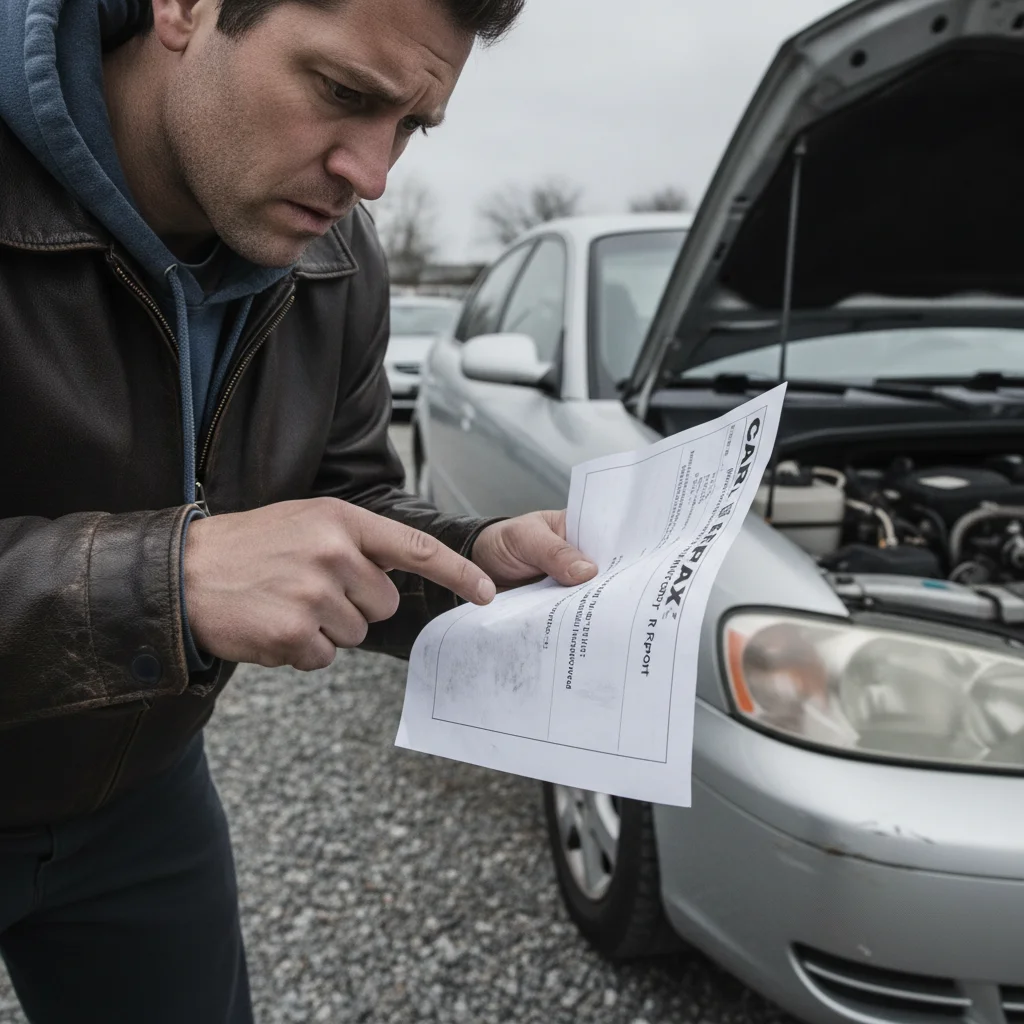
Before you read a single line of a Carfax or AutoCheck report, you need to understand what these services actually aggregate — and where their blind spots start. Both platforms pull data from a network of sources: state DMVs, insurance companies, auto auctions, police departments, inspection stations, and service centers that voluntarily submit records. That last word — voluntarily — is the key qualifier.
If a fender bender never involved an insurance claim, if a rear-end collision was settled in cash between two private parties, or if a flood-damaged car was dried out and sold before any insurer touched it, there will be no trace of any of it in the report. Carfax estimates that roughly one in five vehicles on the road has an undisclosed problem. That's not an indictment of the services — they report what gets reported to them. It's a structural limitation buyers must internalize before they put too much weight on a clean report.
For a deeper understanding of what these reports miss by design, see why a clean vehicle history report doesn't guarantee a trouble-free car. And if you're buying through an online listing, what a vehicle history report actually tells you covers the specific gaps that matter in remote transactions.

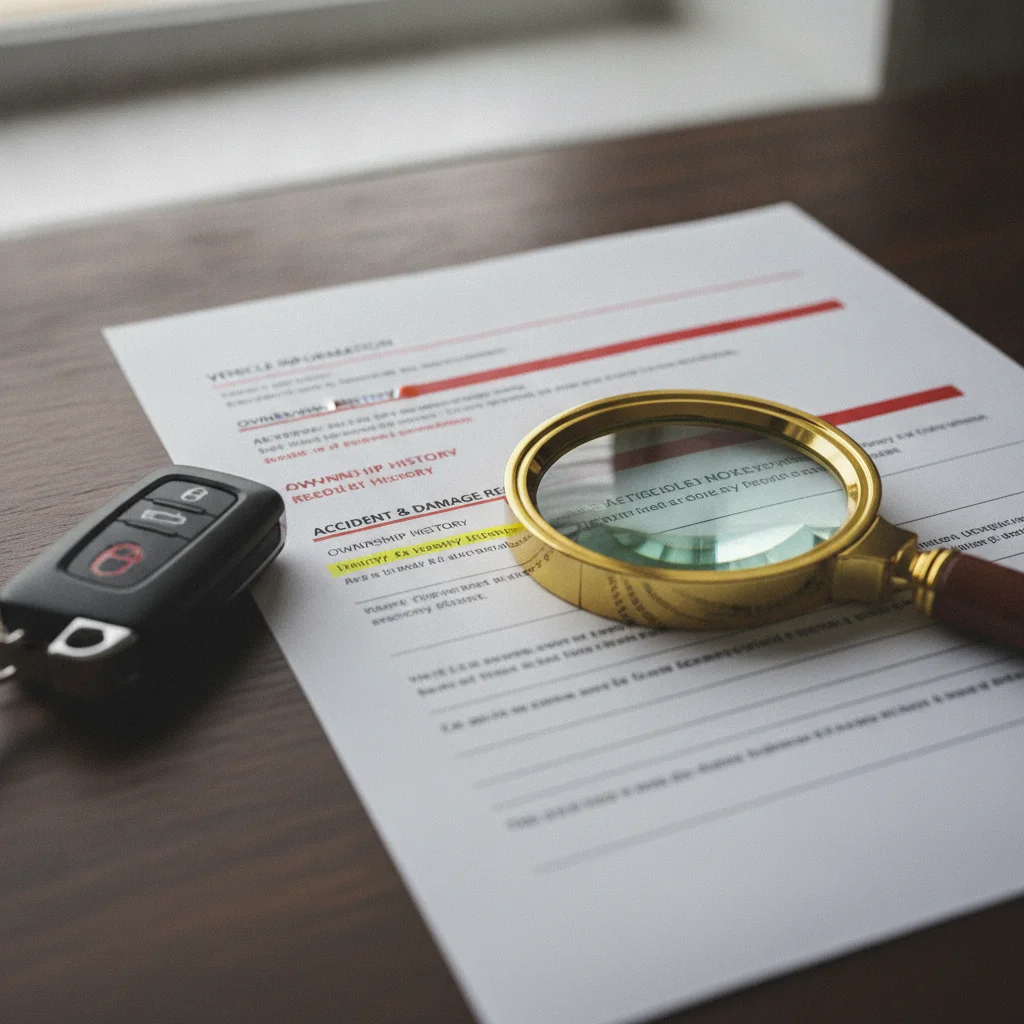
With those caveats established, here's what a good report does reliably capture when records were submitted: title history and brands, ownership count and type, odometer readings at each registration, reported accidents with estimated damage severity, service and maintenance records from participating shops, recall status, and whether the vehicle was ever used as a rental, fleet, or taxi. That's a meaningful dataset — if you know how to read it critically.
What you will need
Tools You'll Need Before You Start
Running and interpreting a vehicle history report correctly requires more than just pulling the report. Gather the following before you sit down to review:
Carfax or AutoCheck Report
Provides the primary vehicle history data including title brands, ownership history, accidents, and odometer records.
NHTSA VIN Lookup Tool (nhtsa.gov)
Cross-checks open safety recalls by VIN — free and takes under two minutes.
NICB VINCheck
Free National Insurance Crime Bureau tool that flags vehicles reported stolen or declared a total loss by participating insurers.
Paint Thickness Gauge
Detects repainted panels that may indicate unreported accident repair — used during the in-person inspection.
Independent Pre-Purchase Inspection
A licensed mechanic's inspection validates current mechanical condition against what the history report suggests.
Valuation Tool (KBB or Edmunds)
Quantifies how reported accidents and title brands affect the vehicle's fair market value for negotiation.
Once you have everything in front of you, you're ready to go section by section. Work through the report systematically — don't skim to the accident section and stop there. The most consequential information is often buried in title history or odometer data, not the accident summary.
Step-by-Step: Reading Every Section Accurately
The steps below follow the logical flow of a Carfax report. AutoCheck is organized similarly, though it uses a proprietary AutoCheck Score rather than a section-by-section narrative. Use the same analytical framework for both.
Verify the VIN Matches the Vehicle
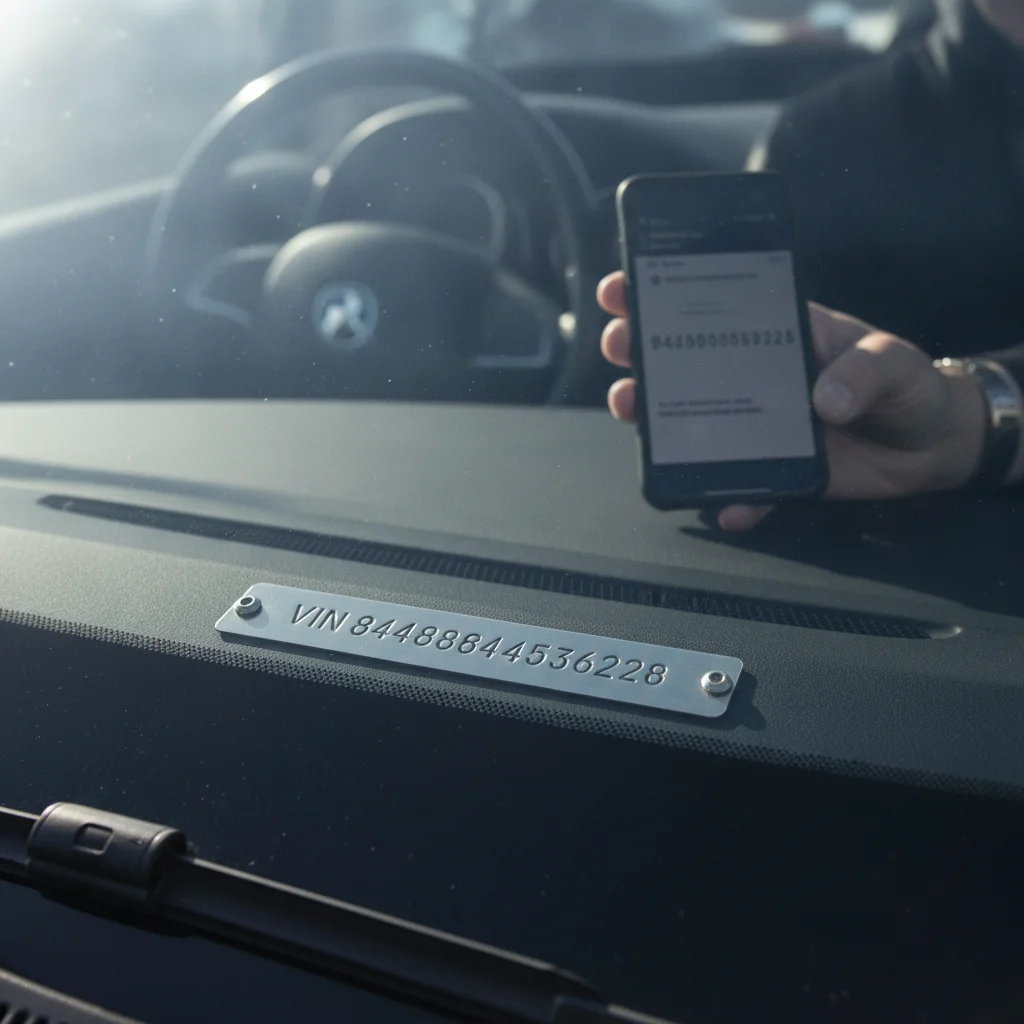
Before you read a single data point, confirm the Vehicle Identification Number (VIN) on the report matches the physical VIN on the car. Check three locations: the dashboard plate visible through the windshield on the driver's side, the door jamb sticker, and the engine block stamp. All three should be identical and match the report VIN exactly — 17 characters, no letters I, O, or Q.
If any VIN doesn't match, stop immediately. Mismatched VINs are a serious red flag for stolen vehicles, VIN cloning, or title washing. Do not proceed with the purchase until the discrepancy is fully explained and documented.
Review the Title History Section First
Jump directly to the title history section before reading anything else. This section tells you the car's legal status at every point in its life. You're looking for any title brands (salvage, rebuilt, flood, lemon law buyback, junk), the state where it was titled, and any gaps between titling events.
Pay close attention to state-hopping. A car titled in multiple states in quick succession — especially moving from states with strict total-loss thresholds to states with looser ones — can indicate title washing, where a salvage brand is deliberately shed by retitling across state lines.
Check Ownership Count, Type, and Duration
The ownership history section shows how many owners the vehicle has had, what type of owner (private individual, corporate fleet, rental, lease), and roughly how long each owner kept the car. This context shapes your interpretation of everything else in the report.
- Short ownership durations (under 6 months) can signal a problem the prior owner discovered and wanted to offload quickly.
- Rental or fleet history means the car was driven hard by many people with no personal stake in its care. High-cycle rental cars often have significant undisclosed wear.
- Long single-owner history (5+ years) is generally a positive indicator — someone lived with the car and presumably addressed issues to keep it running.
More than three private owners on a car under 8 years old warrants additional scrutiny. That turnover rate is above average and worth investigating.
Analyze Odometer Readings Across All Events
Every recorded event in the report — service visits, registration renewals, auction records, insurance events — includes an odometer reading. Create a mental (or literal) timeline of those readings. The mileage should increase consistently over time at a rate that makes sense for the owner type and geography.
Benchmark: U.S. drivers average roughly 12,000–15,000 miles per year. A privately owned car showing 8,000 miles per year is plausible for a retiree or secondary vehicle. A car showing 30,000 miles per year was probably a work vehicle or high-commute car.
Flag any of the following for investigation:
- Mileage that decreases between events (potential rollback)
- A gap of several years with no mileage records, followed by a sudden jump (possible unreported use period)
- "Exempt" or "Not Actual" odometer notations (legally required disclosure of known inaccuracy)
Read Accident Entries Carefully — Including What They Don't Say
The accident section lists reported incidents with date, location, and typically a severity label and damage description. Read each entry and note the following:
- Damage location: Front-end and rear-end impacts are common and often repairable without structural issues. Side impacts and rollover indicators are significantly more concerning for frame and structural integrity.
- Airbag deployment: If airbags deployed, the car sustained significant deceleration forces. Even if repaired correctly, airbag-deployed vehicles carry resale stigma and sometimes incomplete repairs.
- "Structure" or "frame" damage noted: This language in the damage description is a serious flag. Frame repair is expensive, difficult to do correctly, and affects handling and safety.
- Gaps between accident date and next service or registration: A gap after a reported accident can suggest the car sat unrepaired for months — or was repaired off-the-books.
Remember: the accident section only shows reported accidents. An absence of accident entries does not mean the car was never in an accident.
Review Service History for Gaps and Red Flags
The service history section aggregates oil changes, inspections, and repairs submitted by participating service centers. A well-documented service history with consistent intervals is a positive indicator — but absence of records doesn't mean absence of service.
Look for:
- Major repair entries: Transmission replacements, engine work, or cooling system repairs suggest the car has had significant mechanical events, even if it's running fine now.
- Recall completion records: Cross-check any open recall status. The NHTSA website (nhtsa.gov) lets you search by VIN for free. An outstanding safety recall that hasn't been addressed is a liability you'd inherit.
- Service gaps that align with ownership changes: If the previous owner has no service records for the last 18 months of their ownership, they may have deferred maintenance before selling.
Use the Report to Frame Your Negotiation and Next Steps
A vehicle history report is most useful as a negotiating tool and a checklist for your pre-purchase inspection. Once you've read through all sections, summarize your findings into three categories:
- Deal-breakers: Salvage title, flood brand, lemon law buyback, odometer rollback, VIN mismatch. Walk away.
- Items requiring independent verification: Reported accidents without severity detail, service gaps, multiple owners, structural damage language. Proceed only after a mechanic's inspection confirms current condition.
- Negotiating leverage: Any reported accident — even minor — justifies a price reduction. Use market data from tools like Kelley Blue Book or Edmunds to quantify the impact. reading a valuation report walks you through how to interpret those tools accurately.
Never skip the pre-purchase inspection regardless of how clean a report looks. A licensed mechanic performing a full inspection for $100–$150 is the cheapest insurance you can buy before a $10,000+ transaction. paperwork and contracts covers what to have in writing before money changes hands.
Dealer-Provided Reports May Be Outdated
When a dealer hands you a vehicle history report, check the pull date printed at the top. If it was generated more than 30 days ago, pull a fresh report yourself. Dealership lot incidents, recent auction history, or late-arriving insurance data could have updated the record since the dealer's version was generated.
After you've worked through all the structured sections, check the report's data source count. Carfax lists how many sources contributed records. A report with very few contributing sources — especially on an older vehicle — doesn't necessarily mean the car is clean. It may mean fewer entities submitted records on it. Cross-reference by asking the seller for maintenance receipts, which you can compare against the service history section. Gaps in service records between ownership periods are worth pressing on.
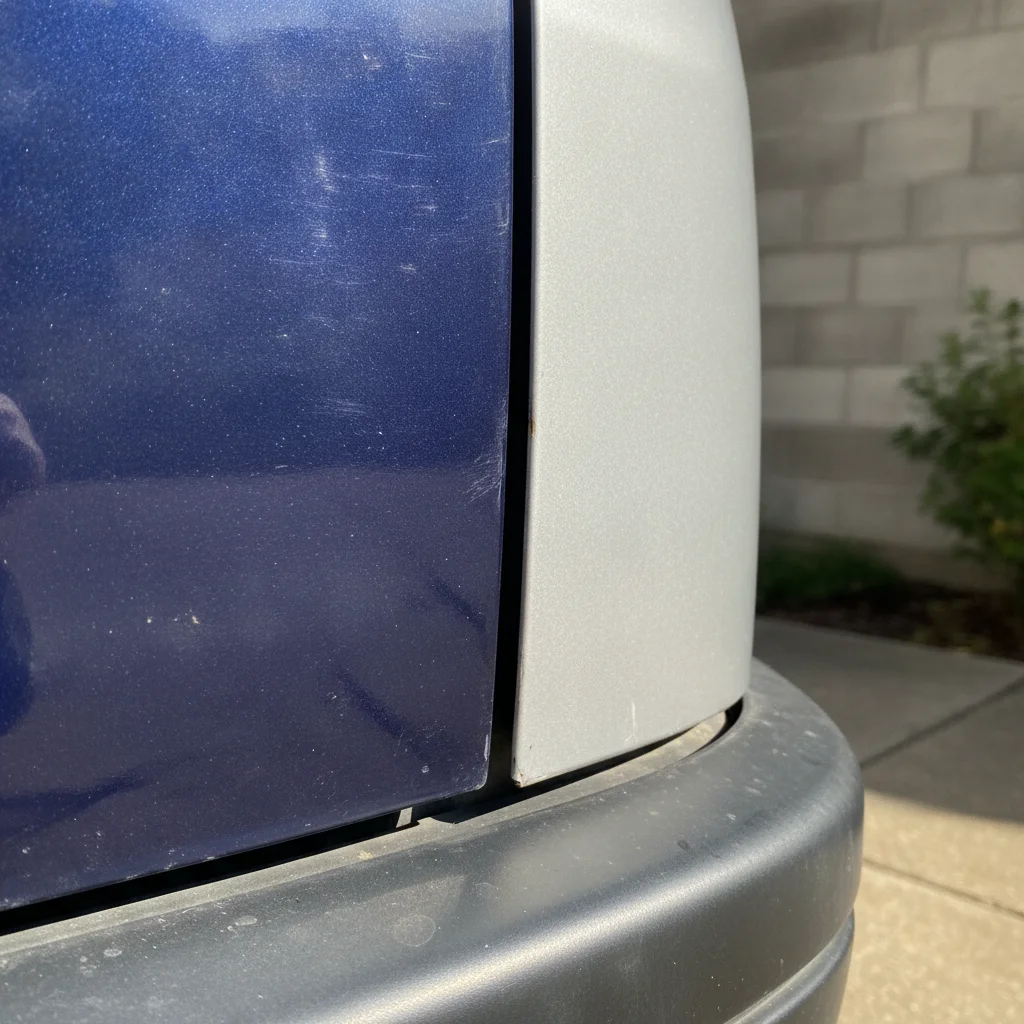
For a complementary perspective on how body damage that goes unreported shows up physically on a car, see reading a car's body panels for repaint and collision repair. That guide and this one are meant to be used together.
Run Both Reports When the Stakes Are High
Carfax and AutoCheck don't pull from identical data sources. A serious accident or title brand that appears in one may not appear in the other due to which insurers and state agencies each platform has agreements with. On any vehicle priced above $10,000, spending $80–$90 on both reports is a reasonable hedge. The differences between the two can be revealing.
Ask for the Report Date, Not Just the Report
A dealer-provided Carfax can be months old if the car has been sitting on the lot. Events that occurred after the report was generated — like a lot fender bender that was insurance-claimed — won't appear. Always request a fresh report, or pull one yourself using the VIN so you control the pull date.
Title Brands: The Section That Can End a Deal Immediately
Title brands deserve their own section here because buyers consistently underestimate how much a single brand entry matters. A title brand is a permanent designation attached to a vehicle's legal title by a state DMV. Once a brand is on a title, it follows the car forever — regardless of repairs, cosmetic work, or how many times it changes hands.
Here are the brands you'll encounter and what each one means for your decision:
| Title Brand | What It Means | Buyer Action |
|---|---|---|
| Salvage | Insurer declared the car a total loss — damage exceeded a state-defined percentage of value (typically 70–80%) | Walk away unless you're a mechanic buying for parts |
| Rebuilt / Reconstructed | A salvage vehicle that was repaired and passed state inspection to return to road | Proceed only with full independent inspection; expect 20–40% valuation discount |
| Flood / Water Damage | Vehicle sustained water intrusion sufficient to trigger a title brand | Walk away; electrical and corrosion issues surface years later |
| Lemon Law Buyback | Manufacturer repurchased the vehicle under state lemon law due to unresolvable defects | Avoid; the manufacturer documented the car as persistently defective |
| Odometer Rollback | Documented evidence of odometer tampering | Walk away immediately — this is fraud |
| Junk / Scrapped | Vehicle was designated for scrap; should never be back on the road | Walk away immediately |
A rebuilt title vehicle can be insured and legally driven, but most lenders won't finance them, and resale value drops dramatically. See how accident history affects sale price in detail at accident history and depreciation. That article puts real dollar figures on what reported events cost you when it's time to sell.
A Rebuilt Title Is Never a Routine Trade-Off
Some sellers — and even some dealers — will present a rebuilt title vehicle as a bargain and frame the title brand as a minor footnote. It is not minor. Most traditional lenders will not finance a rebuilt-title vehicle, meaning you'd need cash or a specialty lender at higher rates. Insurance on rebuilt-title cars is often limited to liability only — comprehensive and collision coverage may be unavailable or prohibitively expensive. Factor those constraints into your decision before entertaining any rebuilt-title deal.
If the title section shows clean but you still notice physical signs of major repair — uneven panel gaps, mismatched paint, fresh undercoating — trust your eyes over the report. Many accidents are never reported to insurers, especially between private parties. The physical inspection is the backstop. test drives and inspections covers the full process of what to examine in person.
Common Misreadings That Cost Buyers Money
Even experienced buyers misinterpret vehicle history reports in predictable ways. Here are the five most common mistakes — and how to avoid them.
1. Treating "Minor Damage" as Insignificant
Carfax labels accidents by severity: minor, moderate, or severe. But these labels reflect the insurer's payout category, not the actual structural impact. A "minor" front-end collision can still involve airbag deployment, radiator replacement, and frame-rail deformation — all of which affect long-term reliability. Never rely on severity labels alone. Ask for repair documentation and get an independent inspection.
2. Confusing the Number of Owners with the Number of Registrations
Some reports show a higher registration count than owner count. This happens when a vehicle is registered in multiple states sequentially, or when a dealer registers it between private sales. Five registrations with two owners is very different from five actual owners. Read the owner-type notes carefully — they specify individual, corporate, rental fleet, or dealer.
3. Assuming Service Records Mean the Car Was Well Maintained
Service records only appear for shops that report to Carfax or AutoCheck. An owner who did all their own maintenance, or used a small independent shop that doesn't report, will show a blank service history. Blank doesn't mean neglected — it means unverified. Ask the seller for physical receipts.
4. Ignoring Odometer Inconsistencies
The odometer section shows mileage readings at each documented event. Look for any instance where mileage goes down or fails to increase at a plausible rate. A car sitting at 60,000 miles on one reading and 58,000 miles on the next is a red flag for rollback. Even if no formal fraud brand exists, the data tells you something is wrong.
5. Taking a CarFax Buyback Guarantee at Face Value
Carfax offers a buyback guarantee on vehicles sold as "no reported accidents." The conditions on that guarantee are narrow. If a problem wasn't in the report, Carfax's guarantee doesn't cover mechanical failure — only a specific set of title issues. Read the guarantee terms before assuming it offers broad protection.
For a seller's perspective on what buyers see when they pull your VIN, why your buyer might run a VIN report explains how to get ahead of surprises before they kill a deal. And if you're comparing CPO vehicles specifically, how to read a CPO vehicle history report walks through the additional data points that appear on certified listings.

The bottom line: a vehicle history report is a research tool, not a clearance certificate. Use it to narrow your list and frame the right questions. Then verify with eyes, hands, and an independent mechanic. The full picture of why Carfax and AutoCheck don't tell the whole story covers the reporting gaps in detail if you want to go deeper on the structural limitations of both platforms.

All claims are backed by peer-reviewed research. Sources on request.