Key Takeaways
Our Verdict
Franchise dealers offer a more structured, lower-risk buying experience — especially through CPO programs — but you pay for that peace of mind in the sticker price. Independent lots can deliver real savings if you know how to vet a car and are comfortable negotiating without a safety net. Neither is universally better; the right choice depends on your budget, risk tolerance, and how much homework you're willing to do.
| Best for | Recommended |
|---|---|
| Buyers who want warranty coverage and a standardized buying process | Franchise Dealer |
| Budget-conscious buyers comfortable doing their own due diligence | Independent Lot |
| First-time used car buyers with limited mechanical knowledge | Franchise Dealer |
| Experienced buyers hunting for specific models or lower-cost older vehicles | Independent Lot |
Understanding the Two Channels
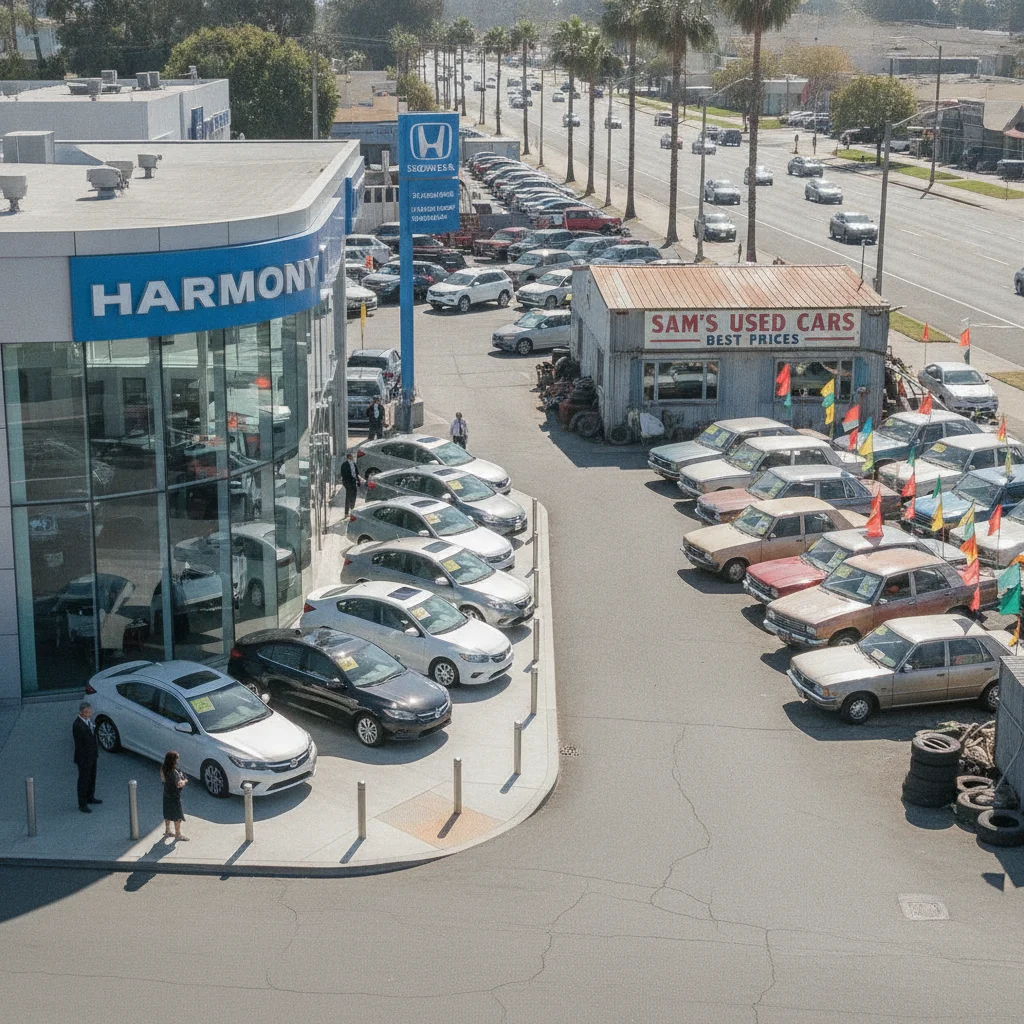
When you start shopping for a used car, you'll quickly notice two distinct types of dealerships: franchise dealers — think your local Ford, Toyota, or Honda store — and independent lots, the standalone used car businesses that aren't affiliated with any manufacturer.
Franchise dealers carry both new vehicles and a used inventory that's often made up of trade-ins and vehicles that didn't qualify for their own certified programs. They operate under a franchise agreement with a manufacturer, which means they're subject to brand standards, auditing, and a more structured compliance environment.
Independent lots are exactly what they sound like: privately owned businesses that buy and resell used vehicles. Some specialize in a particular segment — luxury cars, trucks, or sub-$10,000 commuters. Others cast a wide net. They have no manufacturer oversight, which cuts both ways.
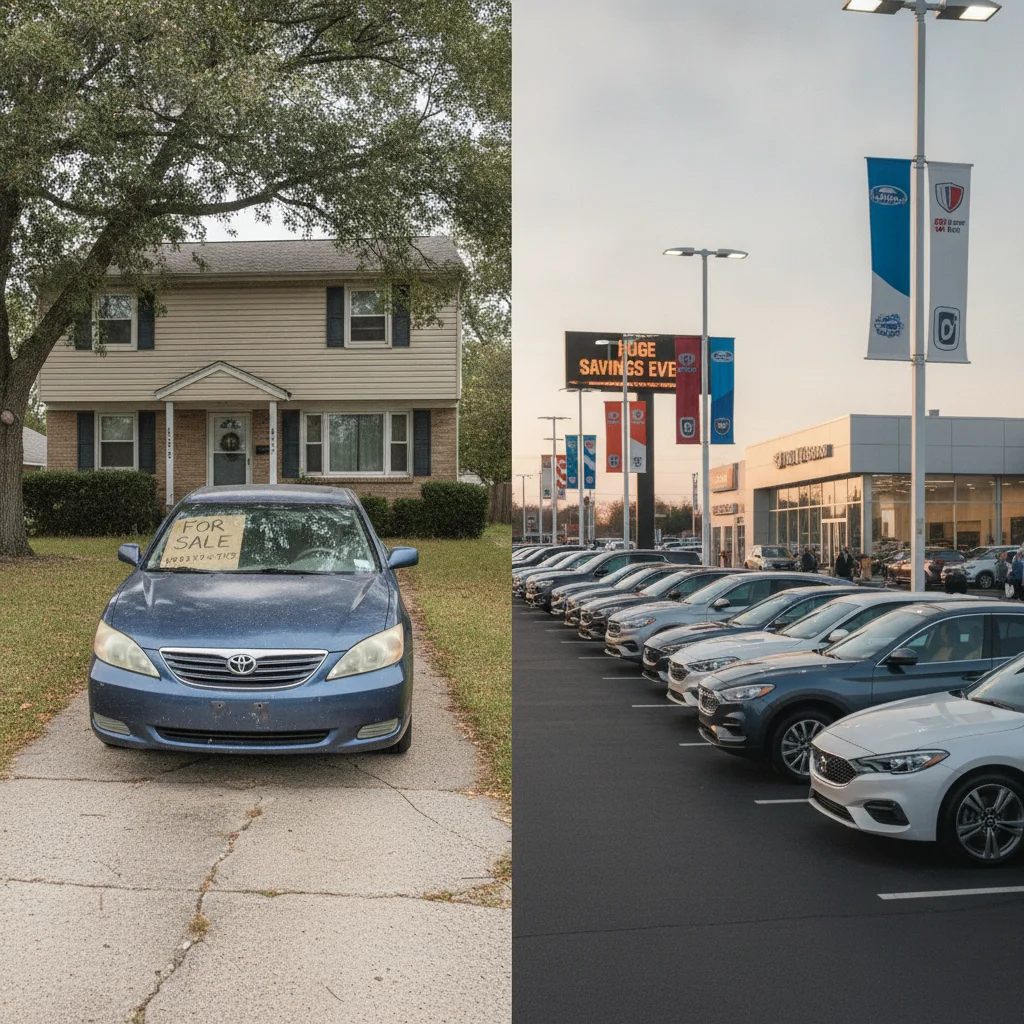
For a broader look at how dealerships of all types compare to buying directly from an owner, see our comparison of private sellers vs. dealerships. This article focuses specifically on what separates the two dealership types from each other.
Inventory: Depth, Selection, and Where the Cars Come From
Franchise dealers source their used inventory primarily from three places: customer trade-ins, off-lease returns from the manufacturer's financial arm, and auction purchases. Off-lease returns are particularly valuable — these are often late-model, lower-mileage vehicles with documented maintenance histories.
That sourcing advantage is significant. A Toyota dealership, for example, has first access to off-lease Camrys and RAV4s before they hit the open auction market. They also have brand-trained technicians who can accurately assess a vehicle before reconditioning it or listing it as Certified Pre-Owned.
Independent lots typically buy from wholesale auctions, dealer auctions (vehicles franchise dealers chose not to keep), and occasionally private sellers. This means their inventory often skews toward older vehicles, higher-mileage units, or cars that didn't clear a franchise dealer's CPO bar. That's not inherently bad — it just means the due diligence burden shifts more heavily onto you.
| Criterion | Franchise Dealer | Independent Lot | |
|---|---|---|---|
| CPO / Manufacturer Warranty | Available (manufacturer-backed) | Not available (dealer-only warranty) | |
| Typical Price Level | Higher (market-pegged) | Lower to moderate (more variable) | |
| Negotiation Flexibility | 3–5% from asking price typical | 8–12% from asking price possible | |
| Financing Options | Multiple lenders, captive finance rates | Fewer lenders, often subprime-focused | |
| Inventory Quality | Off-lease, trade-ins, reconditioned | Auction purchases, older vehicles | |
| Consumer Recourse | State licensing + brand oversight | State licensing only; varies widely | |
| Title / Lien Risk | Lower (structured compliance) | Higher (verify independently) | |
| Pre-Purchase Inspection | Recommended but less critical | Non-negotiable — always get one |
If you're shopping for something specific — a particular trim level, color, or options package — franchise dealers are usually easier to search through. Most are plugged into large digital inventory networks and many have transfer arrangements with other stores in their dealer group. Independent lots tend to have smaller, more static inventories that turn over less predictably.
Certified Pre-Owned Programs: The Franchise Dealer's Biggest Edge
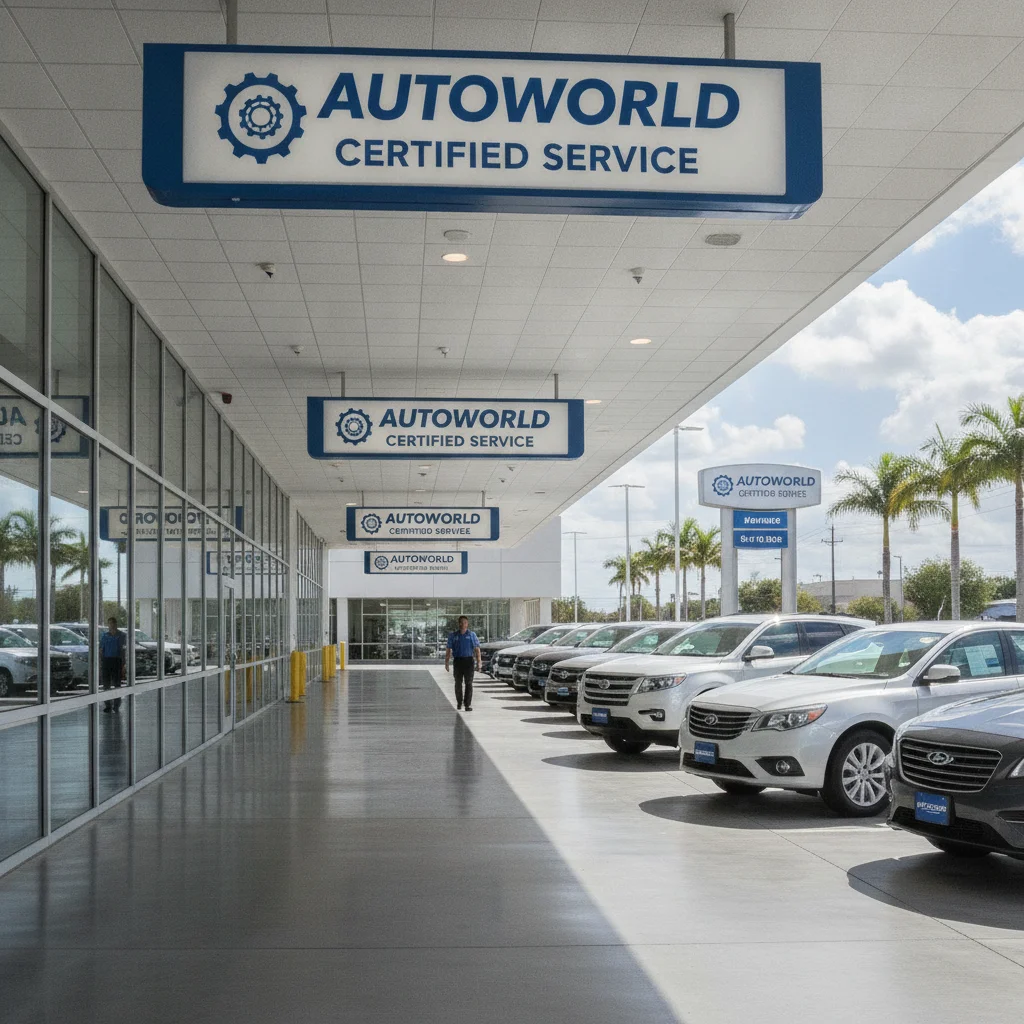
The single biggest differentiator between franchise dealers and independent lots is access to manufacturer-backed Certified Pre-Owned (CPO) programs. Only franchise dealers can sell manufacturer-certified vehicles, period. Independent lots can use the word "certified" in their marketing, but that designation has no manufacturer backing — it means whatever the individual dealer says it means, which is often nothing enforceable.
$1,000–$3,000
Typical CPO premium over non-certified
Industry estimates from J.D. Power and iSeeCars analysis consistently place the CPO price premium in this range for comparable vehicles.
~40%
Used cars sold by independent dealers
According to NADA data, independent dealers account for roughly 40% of used vehicle retail transactions annually in the U.S.
2.5M+
CPO vehicles sold in the U.S. annually
Autodata Corporation reports that CPO sales have exceeded 2.5 million units per year in recent periods, concentrated entirely at franchise dealers.
A genuine CPO vehicle goes through a multi-point inspection (typically 100–200+ points depending on the brand), any failing items are repaired before certification, and the car receives an extended warranty backed by the manufacturer — not just the dealer. Toyota's CPO program, for example, adds a 12-month/12,000-mile comprehensive warranty plus a 7-year/100,000-mile powertrain warranty from the original sale date. Honda, Ford, GM, and BMW all offer comparable structures.
That coverage matters because it comes with a real claims process. If something fails, you go to any authorized dealer in the network — not back to the one store that sold you the car. That's a fundamentally different level of protection than a dealer warranty from an independent lot, which is backed only by that one business's financial ability and willingness to pay.
Is CPO worth the premium? If you're looking at a vehicle that's 2–4 years old and under 50,000 miles, often yes. Expect to pay $1,000–$3,000 more than a comparable non-certified unit. For many buyers, that's reasonable insurance against a five-figure repair bill in year one.
Stack CPO Against an Extended Warranty
Before paying for a third-party extended warranty on a non-CPO used car at an independent lot, price out a CPO vehicle of the same model at a franchise dealer. In many cases, the CPO premium is equal to or less than what a reputable extended warranty would cost — and the CPO coverage is actually backed by the manufacturer. Run the numbers both ways before committing.
Document Everything the Dealer Says
If a salesperson at any dealership — franchise or independent — makes verbal promises about the vehicle's condition, repair history, or what will be fixed before delivery, get it in writing before you sign. Verbal representations are nearly impossible to enforce. Add a "We Owe" form to the contract for any promised repairs or add-ons. If it's not in the paperwork, assume it isn't happening.
Price and Negotiation: Where Independents Have the Edge
Let's be direct: independent lots are usually cheaper, and they're often more flexible on price. Here's why.
Franchise dealers carry higher fixed overhead — facilities that must meet brand standards, larger staff, and reconditioning costs associated with their CPO pipeline. They also use standardized pricing tools (like vAuto or FirstLook) that anchor prices to market data, which reduces the gap between their asking price and what the market will bear, but also limits how low they'll go.
Independent dealers, by contrast, have more variable cost structures. If a car has been sitting for 60 days and they bought it cheap at auction, they have more room to move. It's not uncommon to negotiate an independent lot down 8–12% from the sticker price on the right vehicle, where a franchise dealer may only have 3–5% of room.
The flip side: that wider margin can also mean they marked it up aggressively to begin with. Always run your own comps using Cargurus, Autotrader, or the Manheim Market Report (the latter is available to dealers but pricing is published through various tools) before walking in. Our used car buying strategies guide covers the specific tactics that apply here.
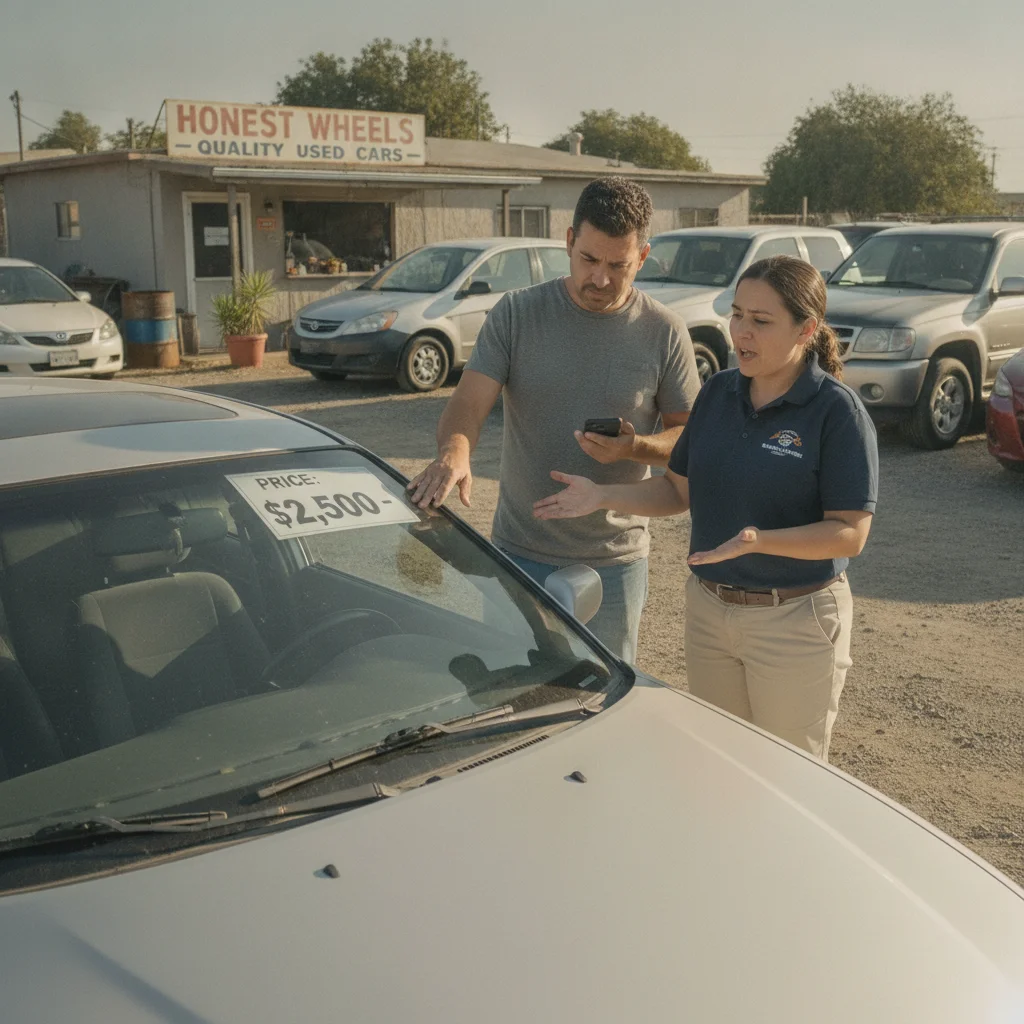
One more thing on price: add-on products. Both franchise and independent dealers will try to sell you aftermarket warranties, paint protection, gap insurance, and other F&I products in the finance office. Franchise dealers often push these harder because their margins are tighter on the vehicle itself. At either type of lot, treat every add-on as optional and price it separately against outside sources before agreeing.
For negotiation tactics specifically aimed at franchise dealers, the dealer negotiation hub is worth bookmarking before your first visit.
Financing: Access, Rates, and What to Watch
Franchise dealers have a structural financing advantage: they maintain relationships with multiple lenders (banks, credit unions, captive finance arms like Toyota Financial Services) and can often shop your application to 5–10 lenders simultaneously. If your credit is in the middle of the road — say, a 620–680 FICO — that lender competition can work in your favor and produce a competitive rate.
Captive lenders for franchise brands also run manufacturer-sponsored rate promotions on used vehicles from time to time, particularly on CPO inventory. A 1.9% APR promotion on a certified used vehicle isn't unheard of during a slow selling month.
Independent lots have fewer lender relationships, especially if they're smaller operations. They often rely on a narrower pool — sometimes just one or two subprime-focused lenders if they cater to buyers with challenged credit. That can mean higher rates and less favorable terms. If you have strong credit (720+), you're almost always better off arranging financing independently through your bank or credit union before shopping at an independent lot, and using that pre-approval as your ceiling.
Independent Lot 'Certifications' Are Unregulated
Many independent lots market vehicles as 'certified,' 'inspected,' or 'guaranteed' — language that sounds like a CPO program but carries no manufacturer backing. There is no legal standard that defines what 'certified' means at an independent lot. Treat any such claim as a marketing term and verify the actual warranty terms in writing before you proceed.
Dealer Rate Markups Apply at Both Lot Types
Whether you're at a franchise store or an independent lot, the finance office can and will mark up your interest rate above what the lender approved. On a $20,000 loan, even a 2-percentage-point markup adds over $2,000 in interest over a 60-month term. Arrive with a pre-approved rate from your bank or credit union and use it as your benchmark.
One thing to watch at both types of dealers: dealer-arranged financing carries a markup. The lender approves you at a buy rate (say 5.9%), and the dealer adds points on top (pushing it to 7.4%) and keeps the difference. This is legal and common. Ask the finance manager to show you the buy rate, or better yet, walk in with your own financing and only use the dealer's rate if it genuinely beats yours.
Inspection, History, and What You Don't Know
Franchise dealers are more likely to provide a Carfax or AutoCheck report without being asked, and their reconditioning process at least implies a baseline inspection has been done. That's not a substitute for your own inspection, but it's a starting point.
At an independent lot, never skip the pre-purchase inspection (PPI). Take the car to an independent mechanic — not a shop the dealer recommends — and pay the $100–$150 for a full inspection. If the dealer won't allow it, walk away. That resistance is a red flag in itself.
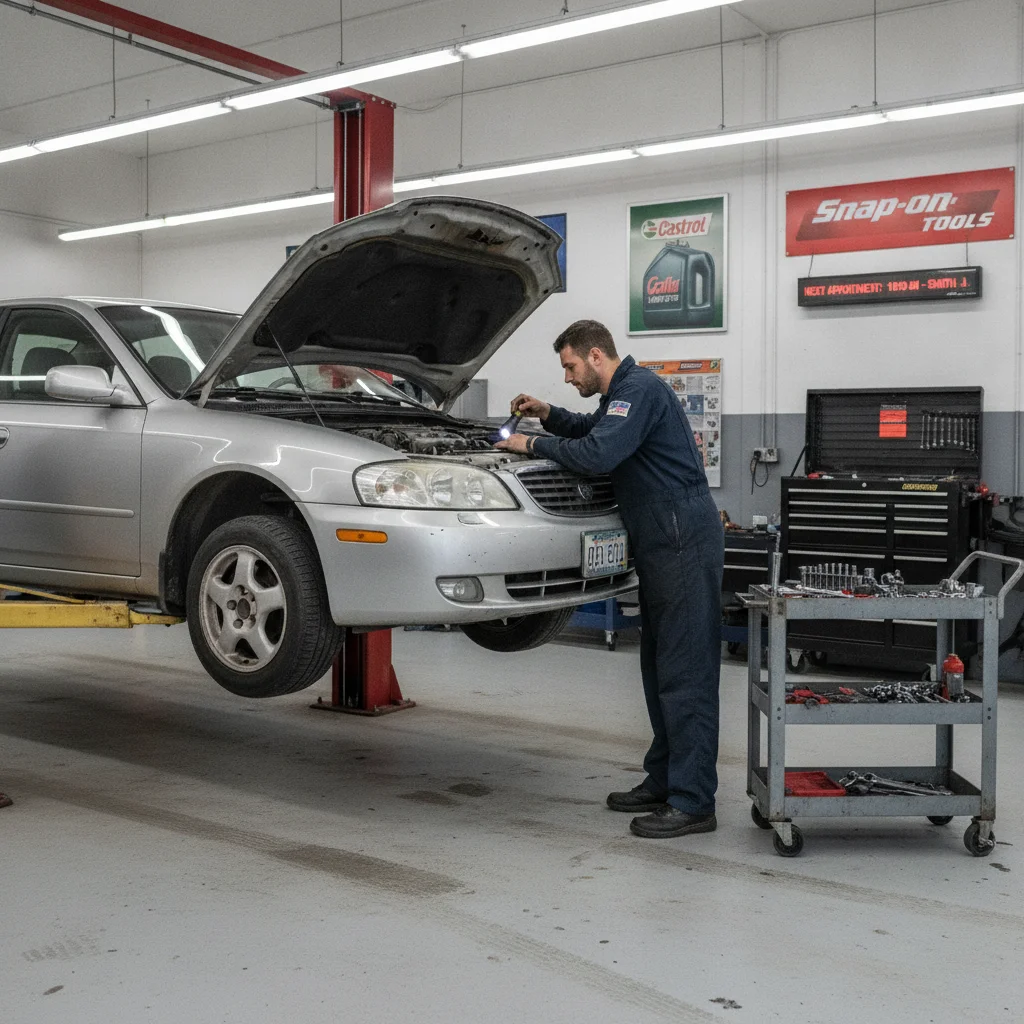
Vehicle history reports tell you about accidents, title status, and maintenance records, but they have real blind spots: unreported accidents, odometer fraud, and flood damage that wasn't caught by insurance all appear clean on a Carfax. A mechanical inspection catches what the paperwork doesn't.
On title issues specifically: independent lots have a higher statistical rate of title problems — salvage titles, rebuilt titles, and vehicles with outstanding liens — than franchise dealers. This isn't universal, but it's a risk worth understanding. Run a lien search through your state's DMV or a third-party service before finalizing any purchase at an independent lot. If the dealer can't produce a clean title at closing, stop the transaction.
The guide to used car purchase contracts explains what to look for in the paperwork at both types of dealers — particularly around as-is disclosures and warranty provisions.
Consumer Protections and Recourse
If something goes wrong after the sale, where you bought it matters a great deal.
Franchise dealers are subject to state dealer licensing requirements, manufacturer franchise agreements, and in many cases, additional brand-level compliance oversight. They have a business reputation tied to a known brand to protect. Dispute resolution through the manufacturer (or a state attorney general's consumer protection division) is a real pathway that produces results more often than not.
Independent lots vary enormously. Some are professional, long-standing local businesses with strong community reputations. Others are thinly capitalized operations that could close before you ever get a callback on a complaint. Researching an independent dealer's BBB rating, Google reviews, and state licensing status before you buy is not optional — it's how you separate the legitimate operations from the ones that will ghost you the moment the deal is done.
The FTC's Used Car Rule requires all dealers to display a Buyers Guide on every used vehicle, clearly stating whether the car is sold as-is or with a warranty. Read it carefully. "As-is" means exactly that — the dealer owes you nothing after you drive off the lot, regardless of what breaks. This applies equally to franchise dealers and independent lots, though franchise dealers are more likely to offer at least a short dealer warranty on non-CPO inventory.
Stack CPO Against an Extended Warranty
Before paying for a third-party extended warranty on a non-CPO used car at an independent lot, price out a CPO vehicle of the same model at a franchise dealer. In many cases, the CPO premium is equal to or less than what a reputable extended warranty would cost — and the CPO coverage is actually backed by the manufacturer. Run the numbers both ways before committing.
Document Everything the Dealer Says
If a salesperson at any dealership — franchise or independent — makes verbal promises about the vehicle's condition, repair history, or what will be fixed before delivery, get it in writing before you sign. Verbal representations are nearly impossible to enforce. Add a "We Owe" form to the contract for any promised repairs or add-ons. If it's not in the paperwork, assume it isn't happening.
Making the Call: Which Type of Lot Is Right for You
Run through these four questions before you decide where to focus your search:
- How much mechanical risk can you absorb? If an unexpected $2,000–$4,000 repair in the first year would seriously strain your finances, pay the premium for a CPO vehicle at a franchise dealer. If you have a repair fund and access to a trusted mechanic, an independent lot may be the better value play.
- What's your credit profile? Strong credit (720+) means you can arrange your own financing anywhere. If you're in subprime territory, franchise dealers have more lender options and may produce a better rate than the two lenders an independent lot can access.
- How specific is your target vehicle? Looking for a 3-year-old truck in a specific trim? A franchise Ford or Ram dealer will likely have deeper, fresher inventory. Hunting for an older commuter or an off-brand model? An independent lot's auction-sourced inventory may surface exactly what you're after at a lower price.
- How experienced are you? If this is your first or second used car purchase, the structured process and consumer protections at a franchise dealer reduce the ways the transaction can go sideways. If you've bought a dozen used vehicles and know how to vet a car, an independent lot's flexibility is more valuable to you.
Also worth considering: if you currently have a vehicle to sell or trade, read up on trade-in vs. third-party sale options before you walk into either type of dealer. Bundling your trade into the same negotiation as your purchase gives the dealer too many levers to pull against you.

Bottom line: the used car market isn't monolithic, and neither is the answer to where you should buy. Match the channel to your actual situation — not the one that sounds most convenient or most frugal in the abstract.

All claims are backed by peer-reviewed research. Sources on request.