Key Takeaways
The False Confidence Problem
Pull up a vehicle history report on any used car listing and you'll see one of two things: a green checkmark that says "No accidents reported" or a flagged entry with damage disclosures. Most buyers treat that green checkmark as a thumbs-up and move on. That's a costly mistake.
Carfax and AutoCheck are data aggregators. They pull information from insurance companies, state DMV databases, police reports, auto auction records, rental fleets, and service departments. When an incident gets reported through any of those channels, it shows up. When it doesn't — and a surprising number of incidents don't — you get a clean report that tells you almost nothing about what actually happened to the car.
This isn't a knock on the companies themselves. They publish the data they receive. The problem is the gap between what they receive and what actually happened. For the full picture on how to read these reports critically without being misled, see our guide on reading a vehicle history report without getting misled.
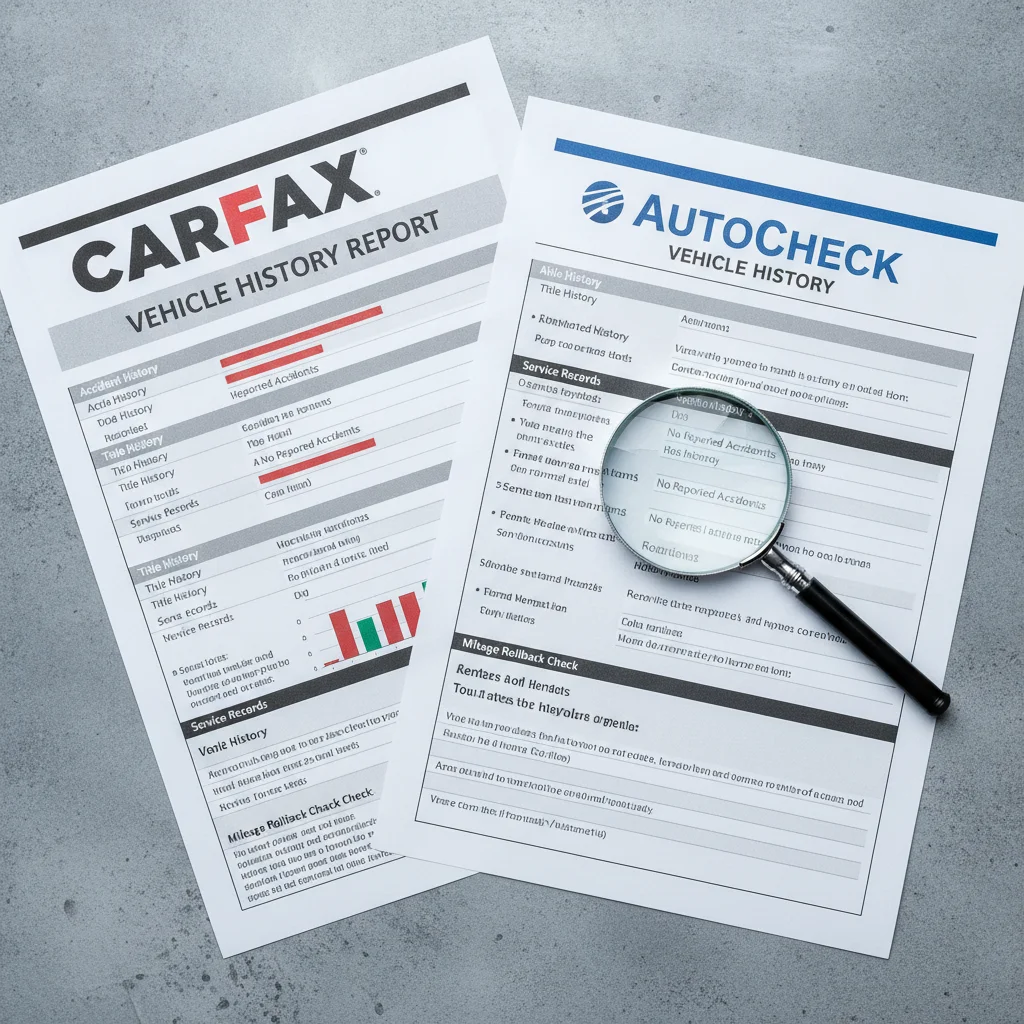
Below, I'll walk through the most common myths buyers carry into the used car market — and the practical reality behind each one.
Common Myths vs. What the Data Actually Shows
These misconceptions cost buyers real money. Some lead to overpaying for damaged vehicles; others create a false sense of security that skips the one step — a pre-purchase inspection — that would have caught the problem. Work through each myth carefully before you make an offer.
Myth
If the Carfax shows 'No Accidents Reported,' the car has never been in an accident.
Fact
A 'no accidents reported' entry only means no accident was reported through the data sources Carfax subscribes to — it says nothing about accidents that were handled privately or without an insurance claim.
This is the most dangerous myth in used car buying. When two drivers bump fenders in a parking lot and one hands the other $800 in cash to skip the insurance claim, nothing gets reported. No insurer files a claim, no police report is generated, and Carfax receives no data. That car's report remains clean indefinitely.
Studies by the National Insurance Crime Bureau have estimated that a significant share of collision repairs are paid out-of-pocket to avoid premium increases — especially for minor-to-moderate damage. The seller has no legal obligation to disclose private repairs in most states unless the damage was structural or the car was deemed a total loss.
The antidote: look at the car, not just the report. Uneven panel gaps, mismatched paint sheen, and overspray on trim pieces are physical evidence that no database can erase. For a thorough breakdown of what goes unreported and why, see why a clean vehicle history report doesn't guarantee a trouble-free car.
Myth
Carfax and AutoCheck show the same information, so running both is redundant.
Fact
Carfax and AutoCheck source data independently and have different reporting partnerships, meaning incidents can appear in one report but not the other.
AutoCheck is owned by Experian and draws heavily from auction data — it's particularly strong for vehicles that have cycled through wholesale auto auctions multiple times. Carfax has broader relationships with insurance companies and service networks. Neither report is comprehensive on its own.
In practical terms: a salvage title recorded in one state might be picked up by AutoCheck through its DMV partnerships before Carfax receives and processes the same record. Conversely, a service history from a national chain might appear in Carfax's database weeks before AutoCheck indexes it.
On any vehicle purchase above $10,000, spend the extra $25–$30 to run both. Cross-reference the accident, title, and mileage entries between the two reports. Discrepancies — especially in mileage entries — warrant direct follow-up with the seller before you proceed.
Myth
A salvage-titled car is always a bad buy.
Fact
Salvage titles indicate an insurer once declared the car a total loss, but the actual damage severity and repair quality vary enormously — some salvage-title cars are genuinely roadworthy, others are unsafe.
"Salvage" means an insurance company determined at a specific point in time that repair costs exceeded a threshold percentage of the car's market value — typically 75–80%, depending on the state. That threshold calculation includes labor rates, parts availability, and the insurer's own margin assumptions. It does not directly measure the structural integrity of the vehicle after repair.
A car totaled due to hail damage covering the entire roof and hood can receive a salvage title even though the drivetrain, frame, and safety systems are completely intact. That same vehicle, properly repaired, may be a legitimate bargain. Contrast that with a car that took a severe frontal impact — frame kinked, airbags deployed, steering column compromised — rebuilt just well enough to pass a state inspection. Both carry salvage titles. They are not equivalent risks.
The rule: never buy a salvage or rebuilt-title car without a thorough PPI from a mechanic who specifically evaluates post-collision structural repairs. Expect a steep discount — typically 20–40% below comparable clean-title market value — and price your eventual resale difficulty accordingly. Reports flag the title status, but they cannot assess repair quality.
Myth
The mileage shown on a vehicle history report is verified and accurate.
Fact
Mileage entries in history reports are self-reported readings submitted at specific events — they reflect what was recorded at those moments, not a continuous verified odometer track.
Every mileage entry in a Carfax or AutoCheck report represents an odometer reading submitted at a specific event: a state inspection, an oil change logged at a dealership, a registration renewal, or an insurance claim. The gaps between those events are invisible. A car that had 47,000 miles at its last service visit and 62,000 miles at its next one traveled 15,000 miles that the report shows nothing about.
Digital odometer rollback has become more sophisticated — the "you can't roll back digital odometers" claim is outdated. Diagnostic tools available to professional thieves can alter mileage records on many late-model vehicles. When reported mileage jumps backward between two database entries, that's a major red flag. But a car with consistently upward mileage entries still could have been rolled back between reporting events.
Physical signs of high mileage include: worn driver's seat bolster, steering wheel leather worn through to base material, heavily worn brake and clutch pedal surfaces, and service components (belts, hoses, bushings) that appear old relative to the stated mileage. If anything looks inconsistent, walk away or demand a significant price reduction to offset the risk.
Myth
Flood-damaged cars always show up with a flood title or water damage notation.
Fact
Many flood-damaged vehicles are cleaned, cosmetically repaired, and resold across state lines before a title brand is ever applied — leaving no trace in any vehicle history database.
After major flooding events, thousands of vehicles are recovered, dried out, detailed, and moved quickly — often transported to states with less aggressive title-branding laws. If an insurer never paid a flood claim on the vehicle (because the owner was uninsured or chose not to file), no brand ever gets applied. The car can be titled clean in a new state with no disclosure requirement.
Even when insurers do total a flood vehicle and apply a salvage brand, cars are sometimes retitled through multiple states in a process called "title washing" — each re-registration creating a fresh document that may not carry forward the prior state's brand.
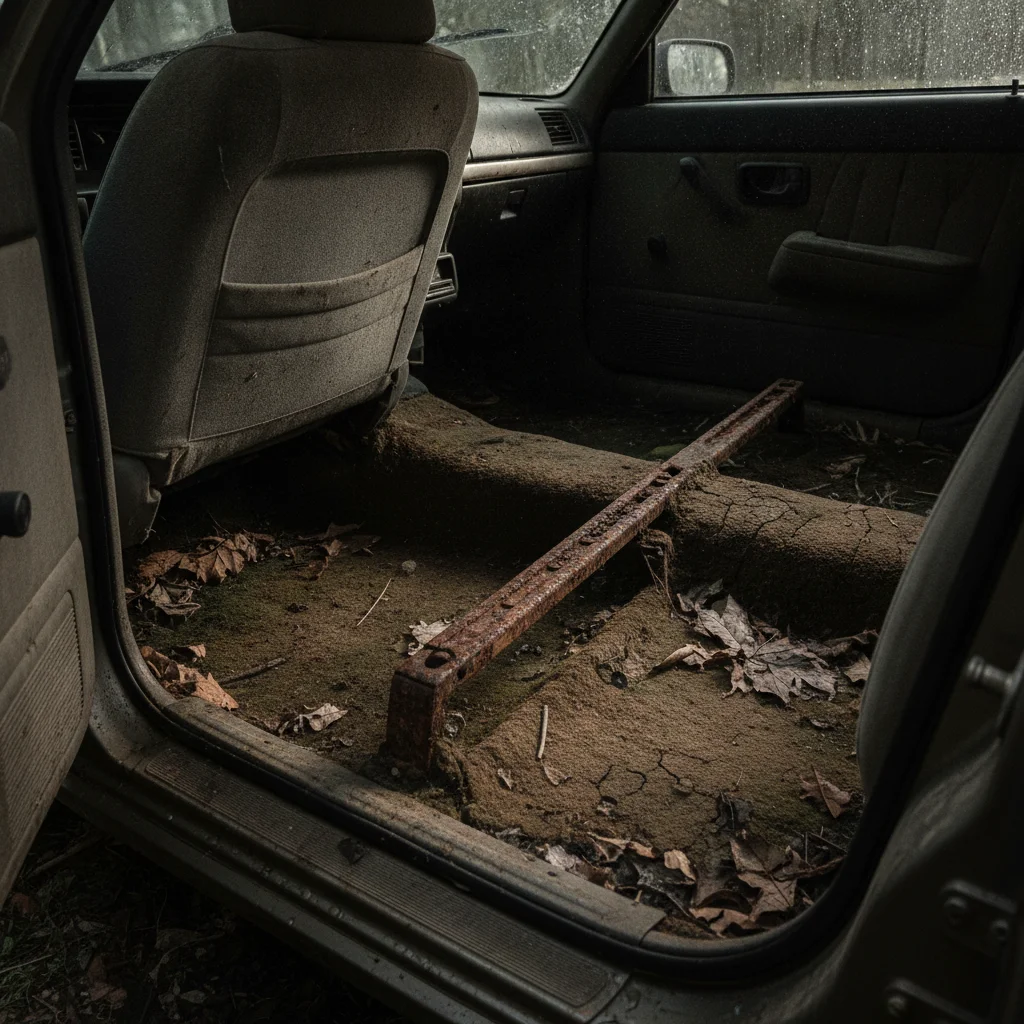
This is exactly why physical inspection is non-negotiable. Water damage leaves physical signatures: rust on floor pan bolts and seat track hardware, corrosion in electrical connectors behind door panels, musty odor trapped in foam padding, and water staining on the carpet backing beneath the floor mats. None of these show up in a database. Our dedicated guide on flood damage the hidden history buyers keep missing covers every physical check in detail.
Myth
A full-service history in the report means the car has been well-maintained.
Fact
Service records in vehicle history reports are incomplete by design — they only include visits to participating dealerships and service chains, omitting independent shops and all owner-performed maintenance.
Carfax and AutoCheck collect service data from participating dealerships, national chains like Jiffy Lube and Valvoline, and certain fleet operators. A car owner who serviced their vehicle exclusively at an independent local mechanic — which is a perfectly reasonable and common choice — generates zero service entries in either database, even if every oil change, timing belt, and brake job was performed on schedule.
The absence of service records does not indicate neglect. The presence of service records does not confirm a well-maintained car. A car can show 14 oil changes in the database and still have been driven hard between those services, overloaded regularly, or had critical fluid flushes skipped.
Ask the seller for physical receipts. Well-organized sellers keep them. Look for consistent intervals between oil changes, evidence of major services (transmission fluid, coolant flush, spark plugs) at manufacturer-recommended mileages, and any documentation of repairs. Physical records in hand beat database entries every time.
~$800
Average cost of unreported minor collision repairs
Industry body shop data suggests many minor collision repairs in the $500–$1,500 range are paid out-of-pocket to avoid insurance claims, leaving no trace in vehicle history databases.
20–40%
Typical value discount for salvage/rebuilt title vehicles
Automotive valuation guides including Kelley Blue Book and Black Book consistently price rebuilt-title vehicles at 20–40% below comparable clean-title examples.
$100–$200
Cost of an independent pre-purchase inspection
A PPI from an independent mechanic typically costs $100–$200 and can identify thousands of dollars in needed repairs before you commit to a purchase.
~1 in 5
Used cars with undisclosed damage, per industry estimates
CarFax's own research has estimated that approximately one in five used vehicles on the market has undisclosed damage — underscoring the limits of report-only due diligence.
What to Do Instead: Your In-Person Evaluation Checklist
Knowing what history reports miss is only half the battle. Here's a practical checklist you can work through every time you evaluate a used car in person. None of these steps require a mechanic's certification — just attention and about 30 minutes.
Never Skip the Cold Start
Always insist on starting the car yourself from a fully cold engine. A seller who says the car is 'already warmed up' may be hiding hard-start issues, excessive smoke on startup, or rough cold-idle behavior that disappears once the engine reaches operating temperature. If the car is already running when you arrive, reschedule or walk.
Online-Only Purchases Carry Extra Risk
Buying a used car sight-unseen based on photos and a history report is the highest-risk transaction scenario. If you cannot inspect in person, hire a local mobile inspection service in the seller's city — services like Lemon Squad or a local mechanic will do a PPI for $150–$250. Never wire money or pay a deposit before an independent inspection is complete.
High-Risk Vehicle Categories Require Extra Scrutiny
Vehicles from flood-prone regions (Gulf Coast, Southeast), former rental or taxi fleets, and cars with more than three previous owners in a short period all carry elevated risk profiles that history reports understate. Apply extra scrutiny and budget more inspection time for these categories.
Exterior Checks
- Panel gap consistency: Walk around the entire car and look at the gaps between body panels. Uneven gaps — especially around doors, fenders, and the trunk lid — suggest prior collision repair or panel replacement.
- Paint texture and color matching: View the car at eye level from the front or rear. Repainted panels often have a slightly different texture or color tone. Check door jambs — factory paint should extend into these areas uniformly.
- Overspray on trim and rubber seals: Look at window rubber, door seals, and trim pieces for paint overspray. It's a telltale sign of bodywork.
- Rust bubbling under paint: Check door bottoms, rocker panels, wheel wells, and the underside of the trunk lid. Surface rust can be hidden temporarily; structural rust cannot be fixed cheaply.
Under the Hood
- Weld quality along the firewall and strut towers: Factory welds are uniform and consistent. Rough or irregular welds indicate structural repair after a front-end collision.
- Fluid levels and condition: Check engine oil (look for milky discoloration, which suggests coolant mixing), coolant, brake fluid, and power steering fluid. Neglected maintenance often signals deferred mechanical issues too.
- Hose and belt condition: Cracked, glazed, or fraying belts and hoses mean near-term replacement costs. Budget accordingly.
Interior and Underbody
- Musty smell or staining under floor mats: Pull back the floor mats and check for water staining, rust on the floor pan, or damp padding underneath. These are classic flood damage signatures. For a deeper look at what water damage leaves behind, read our article on flood damage the hidden history buyers keep missing.
- Seat and seatbelt condition: Heavily worn driver's seat on a supposedly low-mileage car is a red flag. Check seatbelt pretensioner function — post-airbag-deployment replacements don't always get done properly.
- Undercarriage rust and frame straightness: If you can safely get the car on a lift, look for bent or kinked frame rails, replaced crossmembers, or fresh undercoating applied to hide damage.
The Test Drive
- Straight-line tracking: On a flat, empty road, briefly release the wheel. A car that pulls hard to one side may have alignment issues from prior collision or suspension damage.
- Brake feel: Any pulsing, pulling, or excessive pedal travel warrants inspection.
- Transmission shifts: Hard, delayed, or erratic shifts on an automatic are expensive problems. Rev the engine in a safe area and watch for smoke on a turbocharged vehicle.
- Cold start behavior: Always start the car cold. A warm engine hides many issues — oil pressure problems, rough cold-start misfires, and heater core leaks among them.
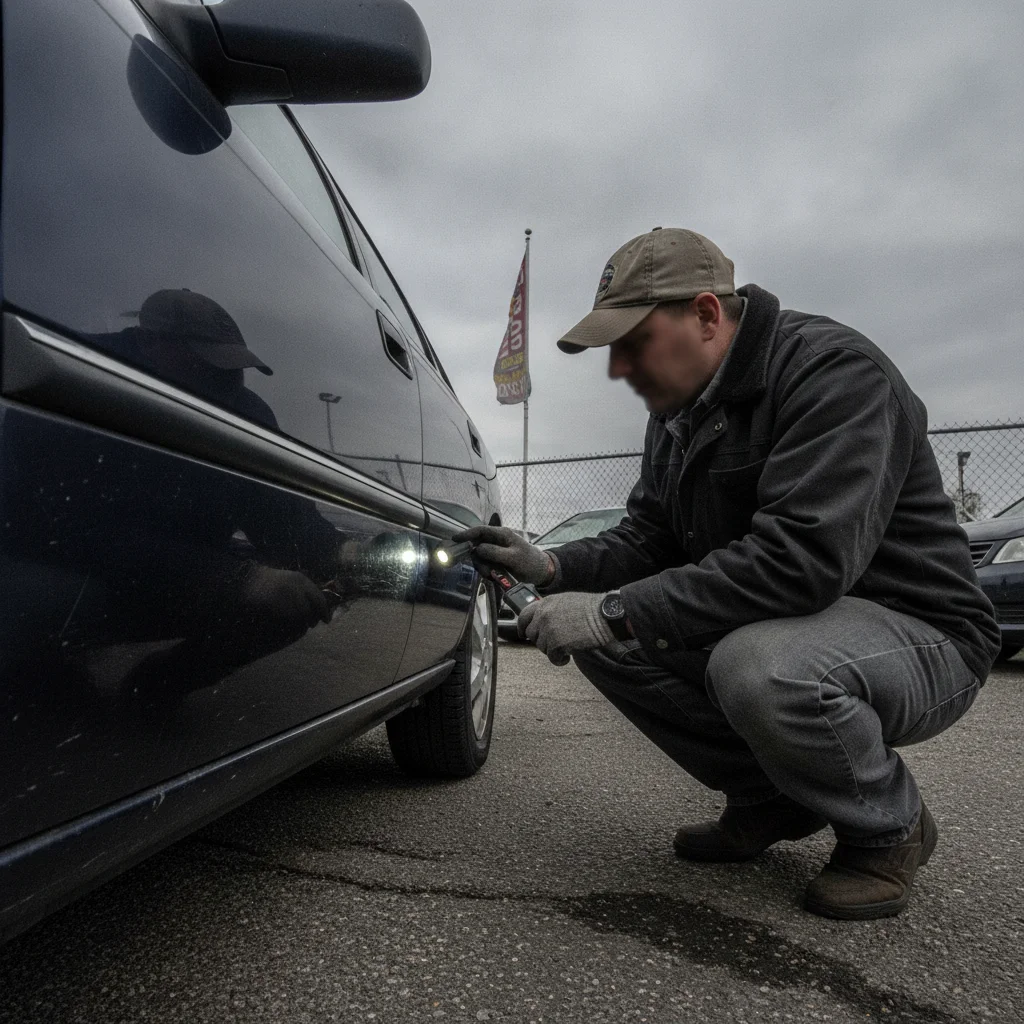
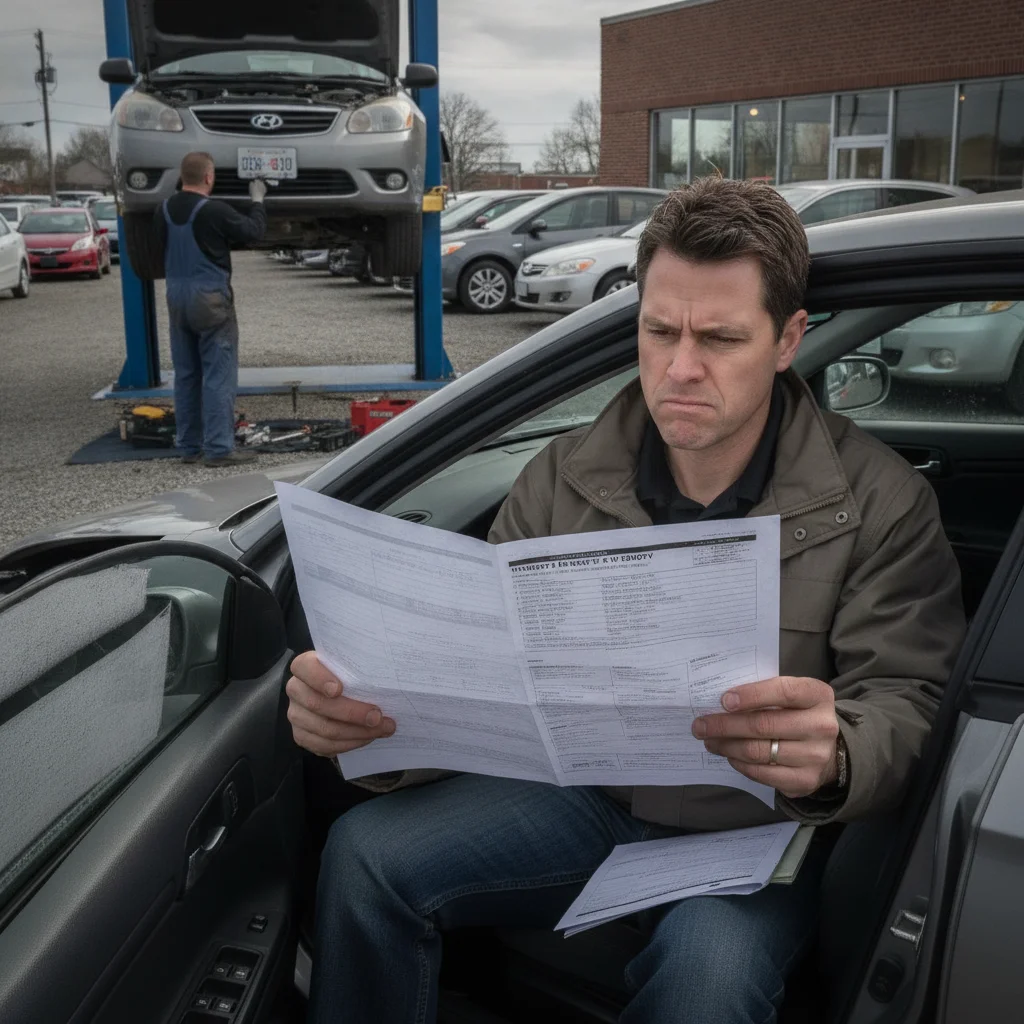
After your own walkthrough, hire an independent mechanic for a pre-purchase inspection (PPI). Expect to pay $100–$200. It's the single best-value step in any used car transaction.
When a Reported Accident Actually Matters
Not every flagged entry on a history report is a dealbreaker. A minor fender-bender that resulted in a bumper cover replacement is very different from a front-end collision that required frame straightening. The problem is that reports don't always tell you the severity — just that an event was reported.
Structural Damage Is the Line That Matters
Not all reported accidents are equal, but any accident that involved frame damage, unibody deformation, or airbag deployment changes the vehicle's safety profile permanently. Even an excellent structural repair cannot fully restore factory crash-test performance characteristics. If a history report or a PPI reveals prior structural damage, price that risk into your offer — or walk away entirely.
Title Washing Is Real and Legally Sold
A vehicle with a salvage or flood brand in one state can be retitled in another state without carrying that brand forward. This is not always illegal — many states have no mandatory reciprocal title-branding agreements. You can legally buy a flood-damaged car with a clean title. Your only protection is a thorough physical inspection and a mechanic who knows what to look for.
When a report does show accident history, you have two jobs. First, determine the physical severity through inspection. Second, price the vehicle accordingly. Reported accidents carry a real stigma penalty at resale regardless of repair quality. Understand exactly what that means for your eventual exit price by reviewing how accident history affects depreciation at sale before you finalize your offer.
If you're on the selling side of this equation, it's worth knowing what buyers will find before they run the report. Our article on why your buyer might run a VIN report walks through exactly what shows up and how to get ahead of it.
One more practical point: Carfax and AutoCheck don't pull from the same data sources and don't have agreements to share data with each other. Running both reports on the same vehicle sometimes surfaces incidents that appear in one database but not the other. The additional cost — usually under $30 — is worth it on any transaction above $10,000.

Building Your Full Due-Diligence Stack
A vehicle history report is one layer of due diligence, not the entire structure. Think of your evaluation stack like this:
- Run both Carfax and AutoCheck — Catch discrepancies and maximize data coverage.
- Cross-reference the reported mileage history — Look for odometer rollbacks (mileage entries that decrease) or implausibly large gaps between service visits.
- Do your own physical inspection using the checklist above — Takes 30 minutes and is free.
- Hire an independent mechanic for a PPI — Non-negotiable on any car over $8,000.
- Pull the title history — Check for salvage, rebuilt, or flood titles directly through your state's DMV if the report leaves any ambiguity.
- Verify ownership count and use type — Fleet, rental, and lease returns receive heavier wear cycles than privately owned vehicles. Reports flag these when the data is available, but ask the seller directly as well.
The used car buying hub covers each of these steps in depth if you want to go deeper on any phase of the process. And if you want a direct comparison of what reports do and don't capture in an online buying context, the article on what a vehicle history report actually tells you and what it misses is worth your time.
The bottom line: a clean history report lowers your risk. It does not eliminate it. The buyers who get burned are almost always the ones who stopped their due diligence at the report and never put the car on a lift. Don't be that buyer.

All claims are backed by peer-reviewed research. Sources on request.