Key Takeaways
Why Lease Returns Create a Predictable Buyer's Window
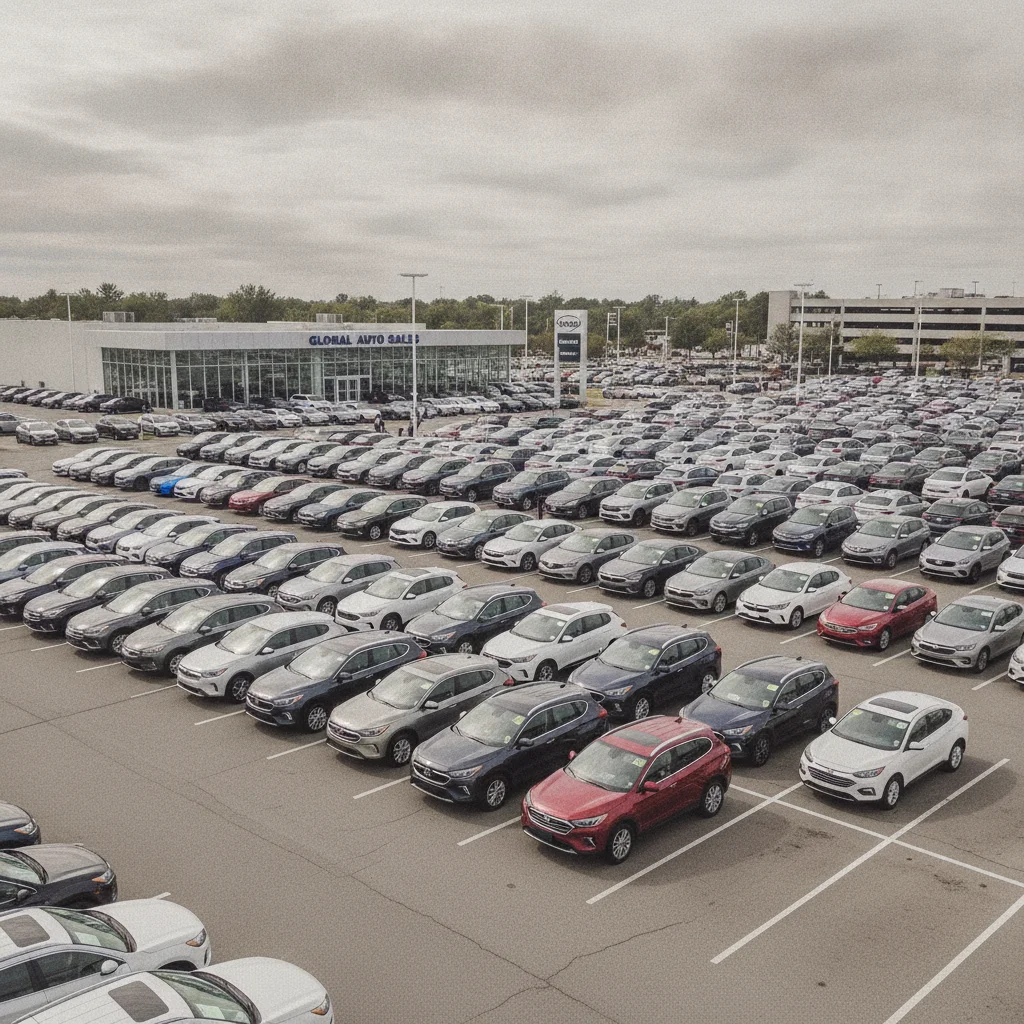
Most car leases run for 24 or 36 months, and automakers structure their lease origination heavily around specific selling seasons. The practical result: enormous numbers of vehicles come off lease at the same predictable times each year, flooding dealer used lots with low-mileage, well-maintained inventory — often all at once.
Understanding this cycle isn't obscure insider knowledge. It's basic arithmetic applied to the sales patterns automakers publish. When you cross-reference those patterns with your shopping timeline, you can position yourself to buy from peak inventory at softened prices rather than competing with other buyers for scraps.
This guide walks you through identifying the return windows for the segment you want, tracking inventory as it builds, and negotiating at the moment when dealer motivation to move units is highest.
It's worth noting that lease-return timing interacts with other market forces — manufacturer incentive cycles, new-model launches, and tax refund season demand among them. See our article on reading manufacturer incentive cycles for how those overlap with what's described here.
The Mechanics of Lease Return Waves
Three-year (36-month) leases account for the majority of lease originations in the U.S. market. That means a vehicle leased in the spring of 2022 will return to dealer inventory in the spring of 2025. Two-year leases add a secondary layer of returns roughly 24 months behind each origination spike.
When the Biggest Waves Hit
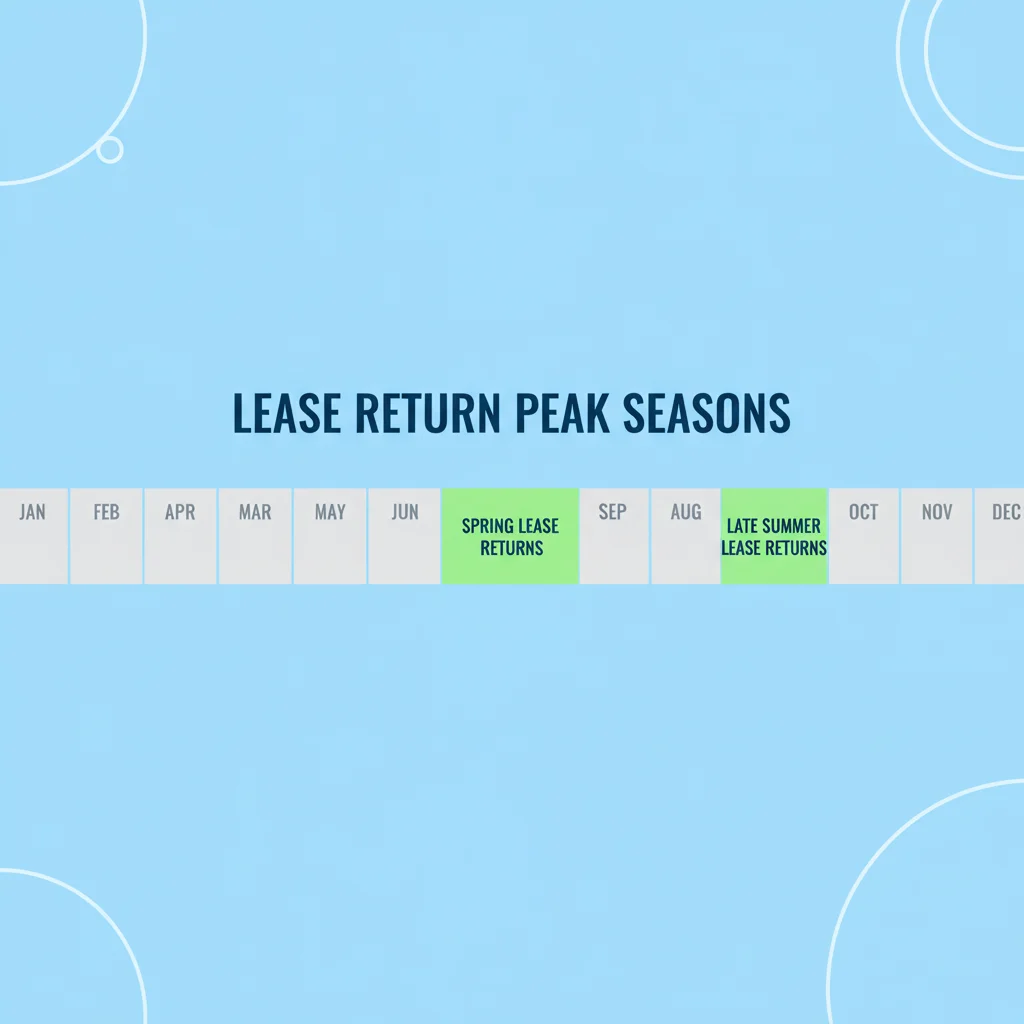
Automakers push their hardest lease deals during two predictable promotional periods:
- Spring selling season (March–May): Manufacturers lean on lease promotions to drive Q1 and Q2 volume. Three years later, those vehicles return March through June.
- Late summer / back-to-school (July–September): A second major origination push means a second return wave hits three years later, typically August through October.
Year-end lease deals (November–December) create a smaller but meaningful return wave in the same months three years out. If you're shopping in November or December, that inventory is real — our year-end car buying playbook covers how to stack that advantage with other year-end factors.
Segment Differences Matter
Not every vehicle category leases at the same rate. Luxury sedans and near-luxury crossovers carry the highest lease penetration — often 60–75% of new sales in some luxury segments. Mass-market trucks and large SUVs lease at much lower rates. This means:
- If you want a 3-year-old luxury crossover or European sedan, the lease-return window is your primary shopping strategy.
- If you want a full-size pickup, lease returns are a minor factor; private-seller and fleet timing matter more (see our guide on fleet and rental return seasons).
What You Need Before You Start Shopping
Timing the market only pays off if you can act decisively when inventory peaks. That requires preparation done well before you walk onto a lot.
What you will need
Edmunds or CarGurus Inventory Tracker
Monitor regional used inventory levels by model year and trim to spot when lease-return volumes are building.
NADA Guides / Kelley Blue Book
Establish retail and trade-in value benchmarks for the off-lease vehicles you're targeting.
Carfax or AutoCheck Vehicle History Report
Verify lease history, mileage accuracy, and absence of accidents or title issues on any specific unit.
Pre-Approved Loan from Credit Union or Bank
Lock in your financing rate before shopping so you can negotiate vehicle price independently of financing.
Manheim Market Report (or similar wholesale data)
Access wholesale auction price trends to anchor your offer below retail and understand dealer cost basis.
Independent Pre-Purchase Inspection Service
Have a trusted mechanic inspect the vehicle before purchase to identify reconditioning costs the price hasn't accounted for.
Step-by-Step: Positioning Yourself to Buy at the Right Moment
The following steps move you from general awareness of lease-return cycles to a specific, actionable purchase position. Work through them in order — skipping ahead to lot-shopping before completing the earlier steps is the most common mistake buyers make.
Identify the lease penetration rate for your target segment
Before you can benefit from lease-return timing, confirm that your target vehicle actually leases at high rates. Look up the segment on Edmunds' industry data or J.D. Power lease penetration reports. As a rule of thumb:
- Above 50% lease penetration: Luxury sedans, near-luxury crossovers, German brands — strong return waves, high timing benefit.
- 25–50% lease penetration: Mid-range crossovers, some Japanese brands — moderate timing benefit.
- Below 25% lease penetration: Full-size trucks, large domestic SUVs, most economy cars — minimal timing benefit from this strategy.
If your target falls in the bottom tier, redirect your energy toward fleet-return timing or manufacturer incentive cycles instead.
Map the origination calendar to predict return timing
Work backward from today using the 36-month (and 24-month) lease cycle. If a manufacturer ran aggressive lease promotions in a specific month three years ago, large volumes of that model are returning now or very soon. Check:
- Automotive press archives (Edmunds, Car and Driver) for lease deals advertised 36 months ago on your target model.
- Automaker press releases announcing lease promotions from that period.
- Industry trade sites for incentive spend data by model and month.
Map out the origination spike months, then add 36 months to get your predicted return window. Build a simple calendar note for yourself: "Peak return window: April–June [year] for [model]."
Set up inventory alerts for your target model and model year
Once you know the predicted return window, set up saved searches on Autotrader, Cars.com, and CarGurus for your target model, a 3-year model-year range, and a 100–150 mile radius. Configure email alerts for new listings.
Watch two metrics over four to six weeks:
- Days on market: As return volume rises, average days on market for off-lease units tends to increase — which signals dealer carrying cost pressure building.
- Price drops: Track how frequently prices are being reduced and by how much. A pattern of $300–$500 reductions every two weeks signals a softening market.
You're not ready to buy during this monitoring phase. You're calibrating the market so you know what a genuinely good price looks like when you do act.
Confirm financing and establish your walk-away number
Before contacting any dealer, secure a pre-approved auto loan from at least two sources — a credit union and an online lender (LightStream, PenFed, or similar). Know your approved rate and maximum loan amount. Then calculate your walk-away price: the highest out-the-door price at which the purchase still makes financial sense given your budget and the vehicle's value.
Your walk-away number should be based on:
- NADA Clean Retail value minus 5% (accounting for lease-return supply softening)
- Estimated reconditioning costs from your inspection (if already done)
- Any fees or taxes in your state that affect the out-the-door total
Write that number down. Do not revise it upward during negotiation without a specific, documented reason.
Target units that have been on the lot 30 or more days
Contact dealers in your region and ask directly: "Of the [model] units you currently have, which ones have been on the lot the longest?" Most salespeople will answer honestly — the aging inventory is a known pain point for their manager. You can also cross-reference listing dates on third-party sites.
Units sitting 30–45 days are your primary targets. At that age:
- The dealer has incurred meaningful floorplan financing costs (typically $15–$30 per day per vehicle).
- The initial buyer excitement of a fresh unit has passed.
- Management is more likely to authorize below-sticker pricing to clear the unit.
Units under 2 weeks old are rarely worth your time to negotiate hard — the dealer has full confidence they'll sell at list price to an eager early buyer.
Get an independent inspection before committing
Schedule a pre-purchase inspection with an independent mechanic — not the dealership's service department — before signing anything. Most dealers will allow you to take the vehicle off-lot for 1–2 hours for this purpose. If a dealer refuses, treat that as a significant red flag.
The inspection should cover:
- Drivetrain and transmission condition
- Brake and tire wear (often not fully addressed by lease-return reconditioning)
- Any deferred maintenance the lease company didn't catch or charge for
- Signs of unreported minor collision repair
Any issues found become either negotiating points for a price reduction or — if serious — a reason to walk away and move to the next unit on your list.
Make your offer and negotiate out-the-door price
Open with an offer 8–12% below the asking price on an aging unit during a high-return window. This may feel aggressive, but it reflects the real wholesale pressure the dealer faces. Frame your offer with market data: "Based on current NADA trade values and regional wholesale for this model, I'm comfortable at [dollar amount] out the door."
Negotiating sequence that works in your favor:
- Agree on out-the-door price first — vehicle price plus all fees, taxes, and dealer charges, period.
- Only then discuss financing (offer your pre-approved rate as the benchmark).
- Evaluate any add-ons (extended warranty, paint protection) separately and on their own merits — never rolled into a monthly payment discussion.
If the dealer won't move to within 3–4% of your walk-away number, thank them and contact the next dealer on your list. In a high-return market, you have options. Scarcity is the dealer's leverage; remove it by having identified multiple acceptable units before you start negotiating any single one.
Don't Conflate Inventory Volume With Low Prices
High lease-return volume creates the conditions for lower prices, but it doesn't guarantee them automatically. Dealers in low-competition markets, or dealers carrying particularly desirable off-lease models, may hold firm on price even with a lot full of returns. The negotiating tactics in this guide are what convert supply conditions into actual savings — passive shopping in a high-return window without active negotiation rarely produces significant discounts.
Watch for Mileage Irregularities on Short-Term Leases
Two-year lease returns sometimes show unusually low mileage — under 20,000 miles — which can look attractive but occasionally signals the vehicle was barely driven or spent extended periods in storage. Very low mileage on a 2-year-old vehicle can mean dried-out seals, stale fluids, and flat-spotted tires. Have your inspector specifically flag concerns related to underuse, not just high wear.
Stack Lease-Return Timing With Model Cycle Timing
The strongest buying windows occur when a high lease-return wave coincides with a model that is mid-cycle — two or more years from a redesign. You get maximum supply pressure from returns without the depreciation risk of buying the old generation just before a new one launches. Check the product cycle calendar for your target model before committing to purchase timing.
CPO Programs Absorb the Best Returns First
Dealers cherry-pick the cleanest, lowest-mileage lease returns for their certified pre-owned programs. If CPO inventory is building rapidly for your target model, it's a leading indicator that a large return wave has hit. Use CPO listing volume as a proxy for overall return wave intensity, even if you plan to buy a non-CPO unit at a lower price.
Use Seasonal Demand Curves to Your Advantage
Even within a return wave, demand for specific body styles fluctuates seasonally. Convertibles and sports models attract more buyer interest in spring, which partially offsets your supply advantage for those vehicles in March–May. If your target is a convertible or sporty coupe, consider shopping during the fall return wave instead — supply is still solid and competing buyer demand is lower. See our article on <a href="/buying-a-car/negotiating-and-deals/trade-in-strategies/timing-your-trade-in-to-the-season">seasonal trade-in and demand patterns</a> for the full seasonal breakdown.
Negotiating Off-Lease Vehicles: What's Different
Off-lease vehicles sitting on dealer lots behave differently in negotiation than trade-in acquisitions or auction-sourced inventory. Understanding what the dealer paid — and what holding cost pressure looks like — is the fastest way to find negotiating room.
How Dealers Acquire Lease Returns
When a lease ends, the vehicle goes through a grounding process: the leasing company (often the automaker's own captive finance arm) inspects it, charges for excess wear and mileage, then offers it first to the originating dealer at a set residual price. Dealers who don't want it pass; the vehicle goes to wholesale auction. Dealers who bought a large volume at residual have real carrying costs and motivation to sell quickly — especially if the return wave has already brought more units than their lot can efficiently absorb.
Where the Price Softening Comes From
During peak return periods, regional wholesale prices tend to drop 3–8% on commonly returned models because auction supply outstrips immediate dealer demand. Retail prices follow with a lag of three to six weeks. That lag is your window. A dealer who paid residual on a vehicle two months ago and hasn't moved it is far more negotiable than one who just grounded it yesterday.
Key Negotiating Levers
- Comparable wholesale data: Pull Manheim Market Report averages or NADA Clean Trade values and show the dealer where the wholesale floor is. This anchors your offer in market reality.
- Multiple units: If a dealer received 15 returns of the same model, they want to move the aging inventory first. Ask which units have been on the lot longest.
- CPO vs. non-CPO: Some dealers will offer to CPO-certify a unit as part of the deal rather than discount the price. Run the numbers — CPO warranties often add $1,200–$2,500 in real value depending on the brand program.
- Financing leverage: Coming in pre-approved lets you focus the conversation on out-the-door price. Dealers who know you're not captive to their financing desk lose a secondary profit center — which sometimes motivates a lower vehicle price to close the deal.
Never Negotiate Around a Monthly Payment
Dealers who shift the conversation from purchase price to monthly payment can obscure a higher vehicle price, longer loan term, or inflated financing rate. Always anchor every negotiation to the out-the-door price — the total you will pay including all fees and taxes. Calculate what that number implies for your monthly payment afterward using your pre-approved rate, not the dealer's quoted rate.
CPO Certification Doesn't Replace Inspection
Certified pre-owned programs draw heavily from lease returns — which is why CPO inventory surges during the same return windows. CPO certification adds real value in the form of extended powertrain warranties and roadside assistance, but the certification inspection is not as thorough as an independent mechanic's assessment. Always get your own inspection even on a CPO unit. The inspection protects you; the CPO warranty protects you after the fact.
For context on how trade-in timing intersects with your purchase, our trade-in strategies hub covers how to sequence the two transactions for maximum combined value. And if you're also considering a new car alongside the off-lease option, see how timing a new car purchase compares as a strategy.

Common Mistakes That Erase the Timing Advantage
Knowing when to shop is only half the equation. Buyers who understand lease-return cycles but make avoidable tactical errors still end up overpaying or missing the best units. Here are the most consequential mistakes to avoid.
Shopping at the Peak Instead of Just After It
Counter-intuitively, the very first week a large return wave hits a lot is not the best buying moment. Dealer confidence is high — they have fresh inventory and expect strong buyer interest. Wait two to four weeks. Enthusiasm cools, carrying costs accumulate, and the units that didn't sell in the first rush become negotiating opportunities.
Fixating on One Specific Trim or Color
The leverage in a lease-return wave comes from fungibility — the dealer has multiple similar units and needs to move them. If you're set on one exact configuration that only one unit matches, you lose that leverage. Identify two or three acceptable trim/color combinations before you shop.
Ignoring Reconditioning Costs
Off-lease vehicles come in varying condition. The lease company charges the previous driver for excess wear, but minor issues below the threshold get passed to the dealer and sometimes passed to you in the price. Always get an independent pre-purchase inspection on any off-lease vehicle priced more than a few hundred dollars below market. A $150 inspection can reveal $2,000 in deferred maintenance.
Conflating Lease Returns with Tax Refund Season Demand
The February–April spring return wave coincides with tax refund season — a period when used car demand spikes from buyers flush with refund cash. That demand partly offsets the supply advantage. The tax refund season pricing dynamics article explains the seller side of this equation, which helps you understand why prices may not soften as much in March as they do in May when refund-season demand has passed.

Skipping the Model Cycle Check
Buying a 3-year-old off-lease vehicle that's about to receive a full redesign means you're buying the old generation at near-peak price, just as the new generation makes it obsolete. Always check where the vehicle sits in its product cycle before committing. Our article on timing a purchase around a new model release walks through how to read the product cycle calendar for any model you're considering.

All claims are backed by peer-reviewed research. Sources on request.