
Key Takeaways
High inventory creates genuine negotiating leverage
When dealers receive large volumes of rental or fleet returns simultaneously, lot space becomes a resource. Dealers holding multiple similar units have more motivation to move each one quickly, giving buyers room to negotiate below sticker.
Late-model vehicles at below-new-car pricing
Fleet returns are typically 12–24 months old with 20,000–35,000 miles — newer than most private-owner used cars at comparable price points. Buyers can often access current-generation features and remaining factory warranty coverage.
Rental company maintenance is generally documented
Large rental operators are contractually required to maintain scheduled service intervals. Oil change records are typically available, providing more maintenance transparency than many private-owner sales.
Predictable timing lets buyers prepare in advance
Unlike private-owner listings that appear randomly, fleet return waves arrive on a known seasonal schedule. Buyers can line up financing, research target models, and position themselves before inventory peaks.
Possible CPO eligibility on corporate fleet units
Corporate fleet returns — unlike rental units — sometimes qualify for manufacturer certified pre-owned programs, adding an extended warranty and multi-point inspection to an already lower-priced vehicle.
Rental vehicles face unpredictable driver treatment
A car driven by dozens of anonymous renters accumulates wear in ways a single-owner vehicle does not — aggressive acceleration, hard stops, and minor impacts that go unreported. Interior wear and minor mechanical issues are common.
Higher mileage accelerates consumable wear
Fleet and rental units often accumulate 20,000–40,000 miles per year, meaning tires, brake pads, and suspension components may be near replacement even on a "young" vehicle. Budget $500–$1,500 for immediate consumables.
Many rental returns are excluded from CPO programs
Major manufacturers including Toyota and Honda restrict CPO certification to vehicles with no rental use history, meaning buyers cannot offset inspection risk with an extended warranty on these units.
Spring return season is neutralized by tax refund demand
The February–April wave of fleet returns coincides with peak used-car buying demand from tax refund recipients. Supply increases, but demand often increases faster, keeping prices firm in popular segments.
Service records are often incomplete beyond oil changes
Rental operators typically document oil changes but rarely capture incidental repairs, fluid replacements, or tire rotations. The full maintenance picture is usually incomplete, leaving buyers to assume or inspect.
Low price can mask deferred maintenance costs
A rental return listed $2,000–$3,000 below market may require $1,000–$2,500 in immediate repairs or replacements, substantially narrowing the real-world savings. A pre-purchase inspection is essential to quantify this risk.
Our Verdict
Fleet and rental return season is a genuine opportunity for buyers who do their homework — but it is not a blanket discount event. The pricing advantage is real when supply outpaces demand and when you know what to inspect. The trap is assuming that a low sticker price compensates for deferred maintenance, high mileage, or a murky service record. Approach these vehicles with the same scrutiny you would apply to any used car, then use the seasonal supply surge as a negotiating lever.
Best for budget-conscious buyers who are comfortable doing due diligence — pulling vehicle history reports, arranging pre-purchase inspections, and negotiating assertively during the August–October and February–April inventory peaks.
What Fleet and Rental Return Season Actually Means
Every year, rental companies like Enterprise, Hertz, and Avis sell off large portions of their fleets to make room for newer model-year vehicles. Fleet operators — corporations that lease vehicles for sales teams, delivery crews, or government agencies — do the same thing on contract cycles. The result is a predictable wave of late-model used cars hitting the wholesale auction block and, eventually, dealer lots.
There are two primary waves to know about:
- Late summer (August–October): Rental companies typically refresh their fleets before the holiday travel season, pushing the prior year's models out at auction. Dealers pick these up and list them in September and October.
- Early spring (February–April): A secondary wave occurs as corporate fleet leases expire at the end of Q1 fiscal cycles, coinciding with the tax refund buying surge that pushes dealers to stock up.
Understanding this calendar is the first step. The second step is understanding that "more supply" does not automatically mean "lower prices" — it depends entirely on how much demand is soaking up that supply at the same time.

For a broader look at how seasonal cycles affect both buying and selling, the complete market timing guide walks through economic indicators alongside seasonal vehicle-type demand.
The Case for Buying During Fleet Return Season
High inventory creates genuine negotiating leverage
When dealers receive large volumes of rental or fleet returns simultaneously, lot space becomes a resource. Dealers holding multiple similar units have more motivation to move each one quickly, giving buyers room to negotiate below sticker.
Late-model vehicles at below-new-car pricing
Fleet returns are typically 12–24 months old with 20,000–35,000 miles — newer than most private-owner used cars at comparable price points. Buyers can often access current-generation features and remaining factory warranty coverage.
Rental company maintenance is generally documented
Large rental operators are contractually required to maintain scheduled service intervals. Oil change records are typically available, providing more maintenance transparency than many private-owner sales.
Predictable timing lets buyers prepare in advance
Unlike private-owner listings that appear randomly, fleet return waves arrive on a known seasonal schedule. Buyers can line up financing, research target models, and position themselves before inventory peaks.
Possible CPO eligibility on corporate fleet units
Corporate fleet returns — unlike rental units — sometimes qualify for manufacturer certified pre-owned programs, adding an extended warranty and multi-point inspection to an already lower-priced vehicle.
Let's work through the advantages in concrete terms. Imagine a mid-size sedan that retailed new for $32,000. After 12–18 months and 25,000 miles in a rental fleet, that same car might wholesale for $18,000–$20,000. A dealer buying at auction marks it up — typically $1,500–$3,000 — and lists it at $20,000–$23,000. That is a meaningful discount off the original MSRP for a car that is, in most cases, mechanically sound and still under the original manufacturer's bumper-to-bumper warranty.
During peak return season, dealers receive more units than usual. When the lot fills up, they have less room to hold out for top dollar on each individual vehicle. A buyer who shows up in late September with financing pre-approved and a specific model in mind has genuine negotiating leverage — especially if that model has several comparable units sitting on the lot.
~2M
Rental fleet vehicles sold annually in the U.S.
According to AutoRental News, major U.S. rental companies collectively sell approximately 2 million vehicles per year, the majority flowing through dealer auctions.
12–18 months
Typical rental fleet holding period before resale
Enterprise and Hertz typically cycle vehicles within 12–18 months of purchase, resulting in relatively low-age but high-mileage units hitting the used market.
15–20%
Price discount vs. comparable private-owner used cars
Industry analysts at iSeeCars have noted that former rental units frequently list 15–20% below private-owner comparables of the same year and mileage during peak return periods.
25,000–40,000
Annual miles typical of corporate fleet vehicles
Corporate fleet operators reported average annual mileage of 25,000–40,000 miles per vehicle in fleet management surveys, significantly above the private-owner average of roughly 13,500 miles per year.
The opportunity is strongest in high-volume segments: compact SUVs, midsize sedans, and full-size pickups used in corporate fleets. These tend to arrive in clusters, giving buyers real comparison-shop power across multiple units of the same make and model. See our guide on timing your purchase around lease returns for model-specific inventory cycles.
The Risks You Cannot Ignore
Rental vehicles face unpredictable driver treatment
A car driven by dozens of anonymous renters accumulates wear in ways a single-owner vehicle does not — aggressive acceleration, hard stops, and minor impacts that go unreported. Interior wear and minor mechanical issues are common.
Higher mileage accelerates consumable wear
Fleet and rental units often accumulate 20,000–40,000 miles per year, meaning tires, brake pads, and suspension components may be near replacement even on a "young" vehicle. Budget $500–$1,500 for immediate consumables.
Many rental returns are excluded from CPO programs
Major manufacturers including Toyota and Honda restrict CPO certification to vehicles with no rental use history, meaning buyers cannot offset inspection risk with an extended warranty on these units.
Spring return season is neutralized by tax refund demand
The February–April wave of fleet returns coincides with peak used-car buying demand from tax refund recipients. Supply increases, but demand often increases faster, keeping prices firm in popular segments.
Service records are often incomplete beyond oil changes
Rental operators typically document oil changes but rarely capture incidental repairs, fluid replacements, or tire rotations. The full maintenance picture is usually incomplete, leaving buyers to assume or inspect.
Low price can mask deferred maintenance costs
A rental return listed $2,000–$3,000 below market may require $1,000–$2,500 in immediate repairs or replacements, substantially narrowing the real-world savings. A pre-purchase inspection is essential to quantify this risk.
Rental cars in particular carry a specific stigma — and some of it is deserved. The average rental unit is driven by dozens of different people over its service life, none of whom have any financial stake in how the car is treated. Hard acceleration, late braking, and curb strikes are common. Most rental companies perform scheduled oil changes on time (it is contractually required by their fleet service agreements), but incidental damage — minor suspension knocks, interior wear, small dents — often goes unreported and unrepaired.
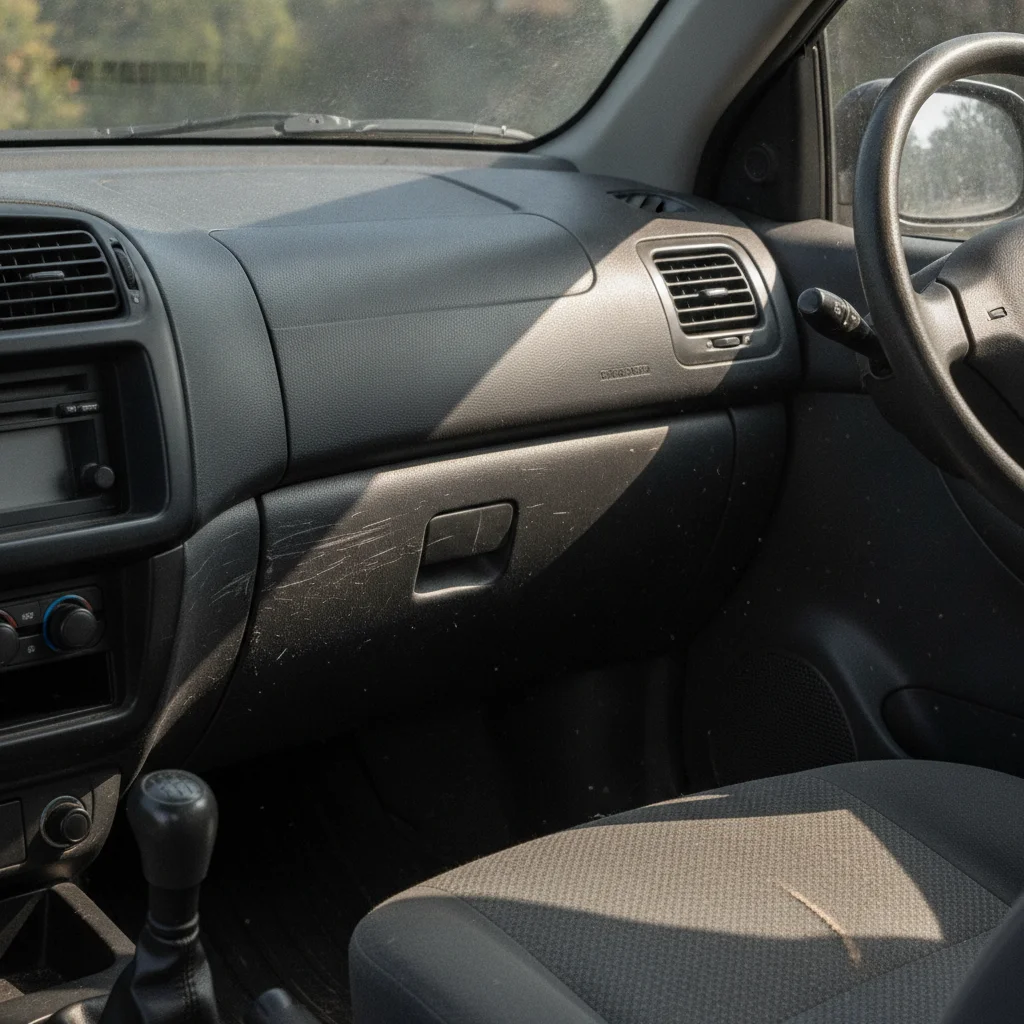
Fleet vehicles operated by corporations tend to fare better. A sales rep assigned a specific vehicle has more accountability than a rotating cast of anonymous renters. But even corporate fleet units can accumulate significant highway mileage quickly — 25,000–40,000 miles per year is not unusual — which accelerates wear on tires, brake pads, and suspension components.
Checking CPO Eligibility by VIN
Most manufacturers provide a VIN lookup tool on their certified pre-owned website that confirms whether a specific vehicle qualifies for CPO status. Toyota, Honda, and Ford all offer this. Use the tool directly — do not rely on the dealer's verbal assurance. A car with rental history that a dealer claims is CPO-eligible should be verified before any money changes hands.
When Supply Conditions Shift Quickly
Used car market conditions can change faster than seasonal calendars suggest. If new car production is disrupted — as it was during the 2021–2023 semiconductor shortage — rental companies may hold their fleets longer and sell fewer units, reducing the expected return-season surplus. Check regional inventory levels on platforms like CarGurus before assuming a supply advantage exists in your market.
The Importance of Independent Verification
Dealers have a financial incentive to describe fleet returns in the most favorable terms — "well-maintained," "fleet-serviced," "one corporate owner." These descriptions may be accurate, but they are not a substitute for documentation. Always request the complete service history in writing and verify rental or fleet use through Carfax or AutoCheck before proceeding past the test drive stage.
The trap many buyers fall into is conflating a low price with a good deal. A rental return listed at $3,000 below market is not a bargain if it needs $2,500 in deferred maintenance. Always price in the cost of a pre-purchase inspection ($100–$200 at an independent shop) and budget for immediate consumables like tires and brakes.
How to Evaluate a Fleet or Rental Return
The due-diligence process for a former rental or fleet vehicle is more intensive than for a private-owner trade-in, but it follows a clear checklist:
- Pull the vehicle history report immediately. Services like Carfax and AutoCheck will flag rental or fleet use, show odometer readings at each inspection, and reveal any reported accidents. If a dealer is reluctant to provide a VIN for a history check before you visit, walk away.
- Count the service records. Rental companies are generally good about oil changes but rarely document every fluid top-off or filter replacement. Ask the dealer what documentation transfers with the vehicle.
- Inspect the tires and brakes. These are the first consumables to go on high-mileage units. Measure tread depth (a quarter inserted upside-down — if you can see the top of Lincoln's head, you need new tires) and ask the service department to show you brake pad thickness.
- Schedule a pre-purchase inspection. Pay an independent mechanic $100–$200 to put the car on a lift. They will check CV axles, struts, bushings, and fluid conditions that a test drive will not reveal.
- Check warranty coverage. If the car is still within the original bumper-to-bumper window (typically 3 years/36,000 miles), confirm that the coverage is transferable. Many manufacturers transfer powertrain warranties but not basic coverage to second owners.
If you are considering a certified pre-owned (CPO) rental or fleet return, note that not all manufacturers allow former rental units into their CPO programs. Toyota and Honda, for example, restrict CPO eligibility based on ownership history. Always confirm CPO status through the manufacturer's VIN lookup tool, not just the dealer's word.

Negotiating Price During High-Supply Windows
Supply creates leverage, but only if you use it deliberately. Here is how to approach negotiating a fleet or rental return during a peak inventory window:
Know the Wholesale Baseline
Tools like Manheim Market Report (accessible via some credit unions and lending platforms) give you a read on what dealers actually paid at auction. Failing that, use the NADA Clean Trade-In value and subtract 5–10% — that approximates dealer cost on a rental return. Your offer should start close to that number and work up, not start at the sticker and negotiate down.
Use Competing Units as Leverage
During late summer and early fall, a dealer who has six similar SUVs on the lot is more motivated to move one today than a dealer who has two. Identify at least two or three comparable units — same year, similar mileage, same trim — and let the salesperson know you are cross-shopping. The phrase "I'm deciding between this one and two others I'm looking at this week" is honest and effective.
Time Your Visit Strategically
End-of-month visits (the last three business days) pressure dealers who are chasing volume bonuses from manufacturers. Combine that with the inventory surplus of return season and you have a structurally advantaged negotiating position. For comparison, how seasonal demand affects trade-in offers explains why the same timing logic works differently if you are also trading in a vehicle.
Separate the Trade-In Conversation
If you have a trade-in, negotiate the purchase price of the fleet return first, then bring up the trade. Mixing the two conversations gives dealers room to adjust one number while appearing to concede on the other.
When the Timing Works Against You
Fleet and rental return season is not uniformly favorable. There are three conditions under which the supposed buyer's advantage evaporates:
When Demand Spikes at the Same Time
The February–April rental return wave coincides directly with tax refund season. Cash-ready buyers flood used-car lots at the same moment that fleet returns are arriving. The result: supply goes up, but demand goes up faster. Prices in February–April often hold firm or even increase in popular segments like compact SUVs and economy sedans. The tax refund season dynamics are well understood by dealers, who plan inventory accordingly.
When Fuel Prices Are Volatile
If gas prices spike sharply before or during a return season, demand for fuel-efficient vehicles in the rental return pool can surge dramatically. A compact sedan that would have sold at a modest discount can quickly reach — or exceed — private-owner comparable prices when buyers are chasing MPGs.
When the Segment Is Already Supply-Constrained
During periods of new-car production disruption (as seen during 2021–2023), even a typical fleet return wave cannot create meaningful buyer leverage because overall used-car supply is so tight. Before assuming return season creates opportunity, check broader used-car inventory levels in your region using tools like Cars.com or CarGurus's Deal Rating feature.
Checking CPO Eligibility by VIN
Most manufacturers provide a VIN lookup tool on their certified pre-owned website that confirms whether a specific vehicle qualifies for CPO status. Toyota, Honda, and Ford all offer this. Use the tool directly — do not rely on the dealer's verbal assurance. A car with rental history that a dealer claims is CPO-eligible should be verified before any money changes hands.
When Supply Conditions Shift Quickly
Used car market conditions can change faster than seasonal calendars suggest. If new car production is disrupted — as it was during the 2021–2023 semiconductor shortage — rental companies may hold their fleets longer and sell fewer units, reducing the expected return-season surplus. Check regional inventory levels on platforms like CarGurus before assuming a supply advantage exists in your market.
The Importance of Independent Verification
Dealers have a financial incentive to describe fleet returns in the most favorable terms — "well-maintained," "fleet-serviced," "one corporate owner." These descriptions may be accurate, but they are not a substitute for documentation. Always request the complete service history in writing and verify rental or fleet use through Carfax or AutoCheck before proceeding past the test drive stage.
Fleet vs. Rental Returns: Understanding the Difference
The terms "fleet return" and "rental return" are often used interchangeably, but they represent different risk profiles:
| Factor | Rental Return | Corporate Fleet Return |
|---|---|---|
| Driver accountability | Low — multiple anonymous drivers | Medium to high — assigned driver |
| Typical annual mileage | 20,000–30,000 miles | 25,000–40,000 miles |
| Maintenance documentation | Basic — oil changes recorded | Varies — some fleet operators keep full records |
| CPO eligibility | Often excluded | Sometimes eligible |
| Condition variance | High | Medium |
A corporate fleet return — say, a Ford Explorer used by a pharmaceutical sales rep in the Midwest — is often a meaningfully better purchase than a comparable rental return. It has had one consistent driver, may have full service records, and is more likely to qualify for a manufacturer CPO program. Ask the dealer directly: "Was this a rental unit or a corporate fleet vehicle?" The VIN history report will confirm the answer.
For buyers weighing different segments and vehicle types by season, how vehicle type affects seasonal demand provides useful context on when specific categories are most and least competitive.

Putting It All Together: A Buyer's Action Plan
If you want to take advantage of fleet and rental return season without falling into the common traps, follow this sequence:
- Identify your target window. For the largest selection with the least demand competition, August through October is the strongest buyer's window. Avoid February–April if you are price-sensitive, as demand often erases the supply advantage.
- Get pre-approved for financing before you shop. Pre-approval tells you exactly what you can spend and removes a dealer's ability to steer the conversation toward monthly payments rather than total purchase price.
- Run a VIN check before visiting. Use the dealer's online inventory to identify candidates, pull Carfax or AutoCheck reports online, and eliminate any unit with undisclosed accidents or odometer discrepancies before you spend time on a test drive.
- Budget $150–$300 for inspections and fees. A pre-purchase inspection is non-negotiable on a rental return. Add $25–$50 for the history report if the dealer doesn't provide one.
- Negotiate off dealer cost, not MSRP. Use NADA Clean Trade-In or Manheim benchmarks to anchor your first offer near wholesale cost, then negotiate up — not down from sticker.
- Consider CPO if available. If a fleet return qualifies for a manufacturer CPO program, the added warranty and inspection coverage is often worth a modest price premium over a non-certified comparable unit.
Buyers who approach the used car market with a structured process — rather than reacting to dealer promotions — consistently come out ahead. Return season provides the inventory; preparation provides the edge.
Checking CPO Eligibility by VIN
Most manufacturers provide a VIN lookup tool on their certified pre-owned website that confirms whether a specific vehicle qualifies for CPO status. Toyota, Honda, and Ford all offer this. Use the tool directly — do not rely on the dealer's verbal assurance. A car with rental history that a dealer claims is CPO-eligible should be verified before any money changes hands.
When Supply Conditions Shift Quickly
Used car market conditions can change faster than seasonal calendars suggest. If new car production is disrupted — as it was during the 2021–2023 semiconductor shortage — rental companies may hold their fleets longer and sell fewer units, reducing the expected return-season surplus. Check regional inventory levels on platforms like CarGurus before assuming a supply advantage exists in your market.
The Importance of Independent Verification
Dealers have a financial incentive to describe fleet returns in the most favorable terms — "well-maintained," "fleet-serviced," "one corporate owner." These descriptions may be accurate, but they are not a substitute for documentation. Always request the complete service history in writing and verify rental or fleet use through Carfax or AutoCheck before proceeding past the test drive stage.

All claims are backed by peer-reviewed research. Sources on request.