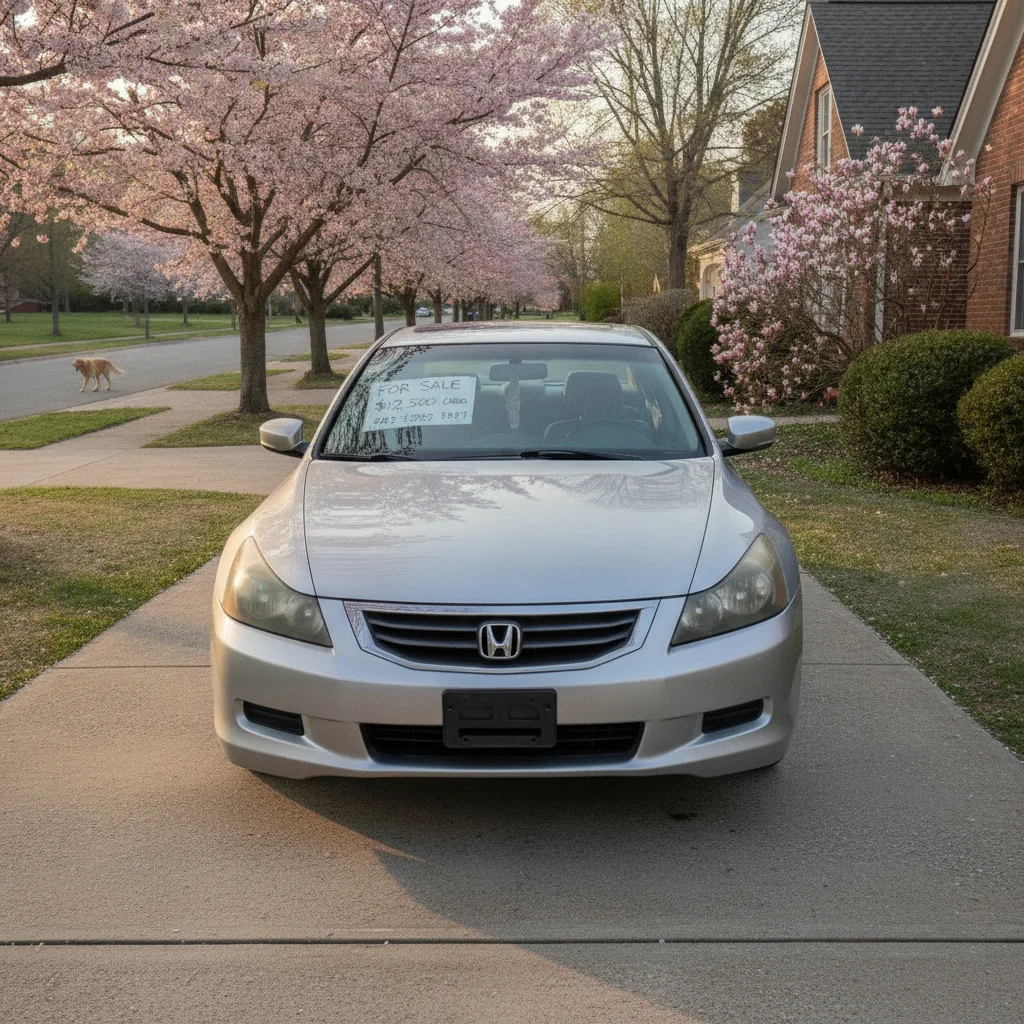
Key Takeaways
Tax Refund Season
Tax refund season refers to the period roughly between early February and late April each year, when a large share of American households receive their federal and state income tax refunds. For the used car market, this window creates a predictable surge in buyer demand — particularly among shoppers who plan to use their refund as a down payment or to cover a full cash purchase. Sellers who understand this cycle can time their listings to attract more serious, cash-ready buyers and command stronger prices.
The IRS typically issues more than 70% of refunds within 21 days of filing. The peak disbursement weeks tend to fall in late February through mid-March, which aligns closely with the sharpest uptick in used car search traffic and dealership floor traffic data.
Why Tax Refund Season Is a Real Market Event
If you've never thought about the IRS calendar as a factor in when to sell your car, you're leaving money on the table. Tax refund season is one of the most consistent, predictable demand events in the used car market — and unlike broader economic cycles, you can set your watch by it.
Here's the basic mechanic: the IRS begins accepting returns in late January. By early February, the first wave of refunds lands in bank accounts. From there, disbursements scale through March as more people file. The result is a surge of households that suddenly have $2,000 to $6,000 in cash they didn't have a month earlier — and a sizable chunk of those people are in the market for a car.

This isn't anecdotal. Used car search traffic on major platforms spikes measurably in February and holds elevated through April. Auction data from Manheim, one of the country's largest wholesale vehicle auction houses, consistently shows February and March among the highest-volume months of the year. That wholesale pressure reflects what's happening at the retail level: buyers are active, they have down payment money in hand, and they're ready to move quickly.
For sellers, that means the window from late January to early April represents the best combination of buyer motivation and buyer purchasing power you'll see all year. The question is how to position yourself to take full advantage of it.
~$3,100
Average federal tax refund (2024)
According to IRS filing season statistics, the average federal refund for 2024 was approximately $3,100 — enough to cover a substantial down payment or full purchase on an entry-level used car.
70%+
Refunds issued within 21 days of filing
The IRS issues more than 70% of refunds within 21 days of an electronic filing, concentrating the bulk of disbursements in the February–March window.
February–March
Peak months for used car auction volume
Manheim wholesale auction data consistently ranks February and March among the highest-volume sales months of the year, reflecting strong downstream retail demand.
$1,500–$4,000+
Typical private sale premium over trade-in
In the $10,000–$18,000 segment, private sale prices commonly exceed dealer trade-in offers by this range — a gap that widens when private buyer demand is at its seasonal peak.
~150M
Tax returns filed annually in the U.S.
The IRS processes approximately 150 million individual returns each year, with a large share filed between January and April, creating a predictable annual wave of refund recipients.
Which Vehicles Get the Biggest Boost
Not every car benefits equally from refund season. Understanding where the demand actually concentrates helps you calibrate your expectations and your pricing strategy.
The Sweet Spot: $5,000–$15,000
This is the tier that moves hardest during refund season. A $3,500 refund either covers the whole purchase or takes a big bite out of it. Buyers in this range are often working-class families who need a reliable second car, first-time buyers who've been saving and are using the refund as the final push, or people replacing a car that just died. They're motivated, they're ready, and they typically don't want to wait around.
Reliable commuters dominate this segment: older Civics, Corollas, Camrys, Altimas, older-generation CRVs and RAV4s. If you're selling one of these and it's priced fairly, refund season is genuinely your best shot at a clean, fast transaction.
Condition Still Sets the Price Floor
Even in a hot market, a car with deferred maintenance or a salvage title won't magically command clean-market prices. Refund season increases the pool of buyers, but it doesn't change the fundamental valuation logic. Mechanical issues, accident history, and high wear will still suppress your price — address what you reasonably can before listing, and price honestly for what remains.
Buyer-Side Timing Affects You Too
Buyers who are aware of the used car seasonal cycle will sometimes wait for lease returns and fleet units to hit the market in late spring, expecting more supply and lower prices. Understanding that some informed buyers deliberately time their purchases helps you appreciate why the February–early March window, before that competing supply arrives, is your strongest position as a seller. See <a href="/buying-a-car/negotiating-and-deals/timing-your-purchase/timing-your-car-purchase-around-a-lease-return">how buyers time around lease returns</a> for context.
Work Trucks and Vans
Early spring also coincides with contractors and small business owners gearing up for the busy season. A solid half-ton truck or a cargo van priced in the $15,000–$25,000 range tends to see strong interest from tradespeople who are either expanding or replacing a work vehicle. If you're selling something in this category, lean into that market — Craigslist, Facebook Marketplace, and local trade forums often outperform general listing platforms for these buyers.
Higher-Priced and Luxury Vehicles
Vehicles priced above $25,000 still benefit from the general market activity of spring, but the direct refund effect is much weaker. The buyers in this segment typically aren't making purchase decisions based on a $4,000 refund check. You're not leaving the season out — spring is still better than January for selling a loaded pickup or a luxury sedan — but manage your expectations accordingly. The demand uptick is moderate, not dramatic.
For a broader look at how different vehicle types respond to seasonal timing throughout the year, see our full guide: Market Timing for Car Sellers.

How to Time Your Listing for Maximum Impact
Timing isn't just about the calendar month — it's about where you land relative to the peak. Get this right and you can position your listing when demand is highest and competing inventory is still thin.
List in Late January or Early February
Most sellers don't think about this. They wait until they see refund activity picking up, then list — which means they're entering a market that's already filling with competing inventory. Get ahead of it. List your car in the last week of January or the first week of February, before the money hits. Serious buyers are already researching before they have the cash. They're bookmarking listings, sending inquiries, and planning. If your listing is already live and well-positioned when their deposit clears, you're first in line.
List Before the Money Hits
The buyers with the strongest intent start researching before their refund clears. If your listing is live in the last week of January, you're visible to shoppers who are already bookmarking cars to call about the day their deposit arrives. Listing early costs you nothing and puts you ahead of sellers who wait for 'the season' to arrive.
Private Sale Is Worth the Effort in February
The time investment of a private sale — taking calls, scheduling test drives, handling paperwork — has a higher payoff during refund season than at almost any other point in the year. Motivated, cash-ready buyers are more likely to pay asking price and less likely to drag out negotiations. If you've been on the fence about selling privately versus trading in, refund season is the time to commit to the private route.
Don't Wait Until March
March feels like the safe choice because that's when you hear about the most activity, but by mid-March, dealer inventory has expanded and private sellers who listed in February have already closed their deals. You're now competing with more supply at roughly the same level of demand. You can still sell in March — it's still a good month — but the edge is smaller.
April Is a Transition Month
Late filers push some refund activity into April, but demand starts tapering off. By April you're moving toward the general spring market, which is decent but no longer driven by refund urgency. If you haven't sold by early April, you need to reassess pricing rather than wait for another wave.
It's also worth noting how this compares to buying-side timing. If you're trying to understand what buyers are thinking during this window, our article on who really benefits from tax refund season lays it out from the other side of the table.
Pricing Strategy During Refund Season
Higher demand gives you real leverage — but it's leverage to hold firm on a fair price, not to inflate beyond what the market will support. Buyers during refund season are often using tools like CarGurus, Autotrader, and KBB Instant Cash Offer to reality-check what they're being quoted. An overpriced listing will get scrolled past just as fast in February as it does in December.
Price at the Strong End of Market Range
Pull comparables on your specific vehicle — same year, trim, mileage, and your metro area. If the range runs $9,500 to $11,500, price yours at $11,200 with room to come down a few hundred dollars. In a slow market you might have to start at $10,500 and drop. In refund season, starting high and holding is more realistic because buyers know competition is real.
Build In Negotiating Room, But Not Too Much
Padding your price by 5–8% is reasonable and expected. Padding it by 20% signals desperation or delusion, and savvy buyers will skip your listing entirely. Buyers who have cash in hand and are ready to close tend to be annoyed by games, not entertained by them.
“The single biggest mistake private sellers make is thinking a hot market forgives bad pricing. It doesn't — it just means a fair price sells faster. The season gives you speed, not a blank check.”
— Marcus Tello, ASE-Certified Mechanic and Auto Market Analyst
Know When to Drop
If you've been live for more than two weeks during peak season with no serious offers, the price is the problem. Reduce by a meaningful amount — $500 to $1,000 depending on price tier — not by $100 increments that signal you're not serious. One decisive price drop tends to reignite interest faster than a slow bleed.
Presentation: Why It Matters More in a Competitive Market
Here's something counterintuitive: your car's presentation matters more when the market is hot, not less. When buyers have options and motivation, they move fast — but they also move toward the listing that looks the most trustworthy and move away from anything that raises a red flag.
Photos Are Your First Handshake
Shoot in daylight with a clean car. Cover all four corners, both sides, front and rear, interior front and back, dash, odometer, and engine bay. If there's a scratch or dent, photograph it anyway — buyers who show up and find something you didn't disclose feel deceived, and that kills deals. Buyers who see the ding in the photos before they arrive have already accepted it.

Clean the Car. Seriously.
A $150 detail — interior shampoo, exterior wash and clay bar — is one of the highest-return investments you can make before listing a used car. It signals care, and care signals reliability to a buyer who can't inspect every component. I've seen cars sell $800 to $1,200 above where they'd have landed if they'd been listed dirty. That detail pays for itself five times over.
Have Your Paperwork Ready
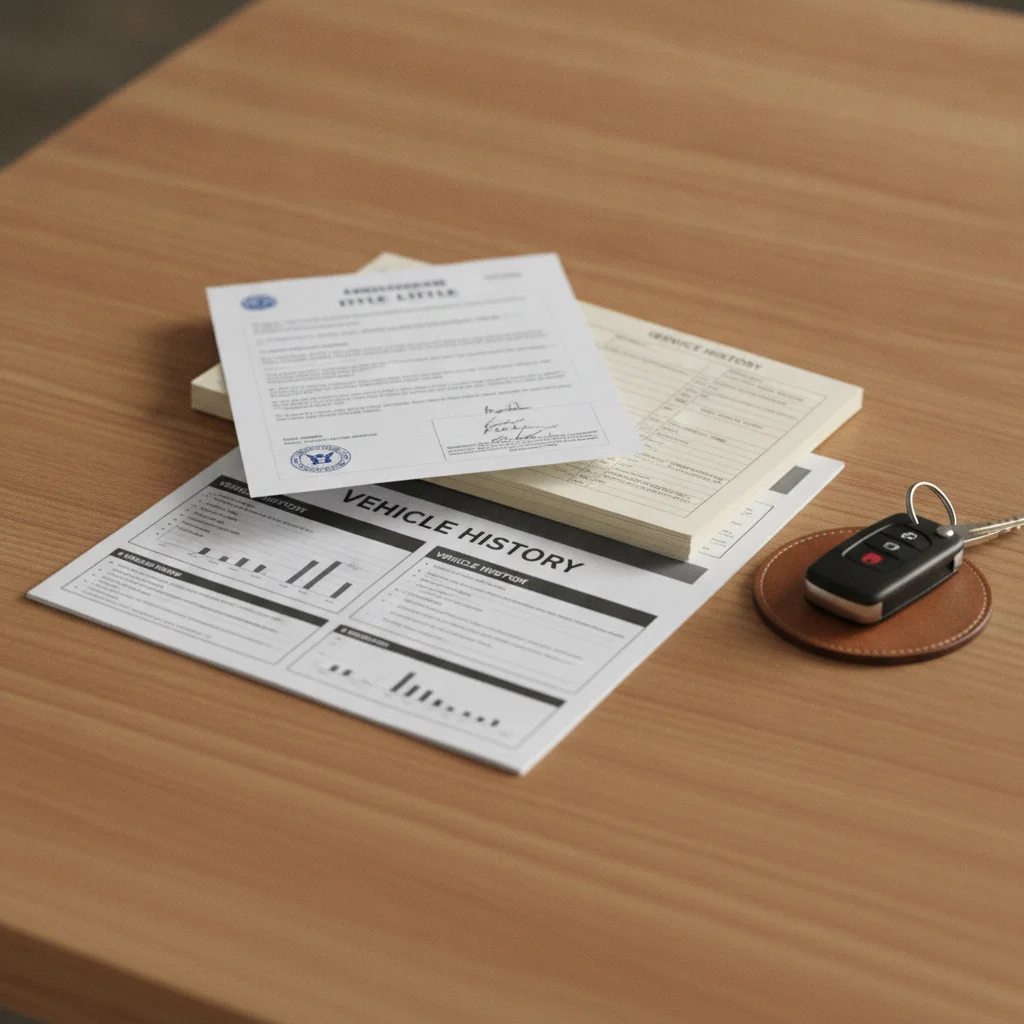
This is where private sellers lose deals during refund season. A buyer is motivated, has cash, wants to move — and you can't find the title, or you don't have any maintenance records, or you never pulled a vehicle history report. Slow transactions bleed motivation. Have the title in hand, pull a Carfax or AutoCheck report yourself (it costs about $40 and you can show it to every buyer), and gather whatever service records you have. Even oil change receipts from a quick lube shop tell a story about how the car was maintained.
For more on structuring the full private sale process, see our private party sales hub.
Trade-In vs. Private Sale: The Math During Refund Season
Every year during tax season, dealerships run promotions designed to capture refund buyers — and some of those promotions are also aimed at capturing trade-ins. You'll see ads promising top dollar for your trade. In most cases, these are worth viewing skeptically.
Dealers operate on wholesale economics. Their trade-in offers are calibrated to what they can sell your car for at auction or on their lot, minus reconditioning costs and their desired margin. That math doesn't change because it's February. What changes in February is that the retail buyers your car could attract — private buyers with refund money in hand — are at their most motivated and liquid.
The gap between a dealer trade-in offer and a private sale price varies by vehicle, but it commonly runs $1,500 to $4,000 or more on a vehicle priced in the $10,000–$18,000 range. In refund season, private buyers are often willing to pay close to your asking price because they have the money and don't want to lose the car to another buyer. That gap widens in your favor.
List Before the Money Hits
The buyers with the strongest intent start researching before their refund clears. If your listing is live in the last week of January, you're visible to shoppers who are already bookmarking cars to call about the day their deposit arrives. Listing early costs you nothing and puts you ahead of sellers who wait for 'the season' to arrive.
Private Sale Is Worth the Effort in February
The time investment of a private sale — taking calls, scheduling test drives, handling paperwork — has a higher payoff during refund season than at almost any other point in the year. Motivated, cash-ready buyers are more likely to pay asking price and less likely to drag out negotiations. If you've been on the fence about selling privately versus trading in, refund season is the time to commit to the private route.
The trade-off is time and effort. Private sales require you to handle inquiries, screen buyers, arrange test drives, and manage paperwork. If you want to understand how seasonal timing affects what dealers will offer — and when the trade-in route actually makes sense — see Timing Your Trade-In to the Season.
Common Mistakes Sellers Make During Refund Season
Getting the timing right only helps if you avoid the missteps that cancel out the advantage. Here are the ones I see most often.
Listing Too Late
Waiting until March because 'that's when buyers have money' is the most common mistake. You're entering a market that's already peaked and starting to fill with supply. List in late January. The buyers are already looking before they have the cash.
Overpricing Based on 'Season Hype'
The season gives you pricing confidence, not pricing immunity. Price at the high end of fair market — not 15% above it. Buyers have access to the same market data you do.
Being Unavailable or Slow to Respond
Motivated buyers move fast. If you take 24 hours to respond to an inquiry during peak season, that buyer has already texted three other sellers. Check your notifications. Respond within an hour if you can. A buyer with cash who gets a fast, friendly response is much more likely to commit.
Not Having the Title Ready
If your car has a lien, contact your lender before you list and understand the payoff process. Some lenders can do a same-day payoff and title release; others take weeks. A deal that falls apart because the title isn't ready wastes both your time and the buyer's, and that buyer will not wait.
Also worth considering: refund season timing overlaps with some interesting dynamics on the buyer side, including when lease returns and rental fleet units flood the used market with competing inventory. Our piece on fleet and rental return season covers what that means for the broader market.
Putting It All Together
Selling a used car at the right moment isn't complicated once you understand the mechanics. Tax refund season is the most reliable, repeatable demand surge in the consumer auto market. It happens on a predictable schedule, it affects a predictable segment of vehicles, and it rewards sellers who prepare for it rather than react to it.
Here's the short version of the playbook:
- List in late January or early February, before competing inventory builds.
- Price at the strong end of the fair market range for your vehicle — not above it.
- Detail the car and photograph it properly. Presentation converts browsers into buyers.
- Get your title and paperwork in order before you list. Don't let a documentation delay kill a motivated deal.
- Respond fast to inquiries. Speed signals reliability to a buyer ready to commit.
- Consider private sale over trade-in. Refund season is the best time of year for the private market, and the gap between dealer trade-in and private sale value is real money.
Done right, timing your listing to refund season can add hundreds to thousands of dollars to your final sale price compared to listing in November or even summer. It's one of the highest-leverage, lowest-effort improvements a seller can make.

All claims are backed by peer-reviewed research. Sources on request.