Key Takeaways
Trade-In Pipeline
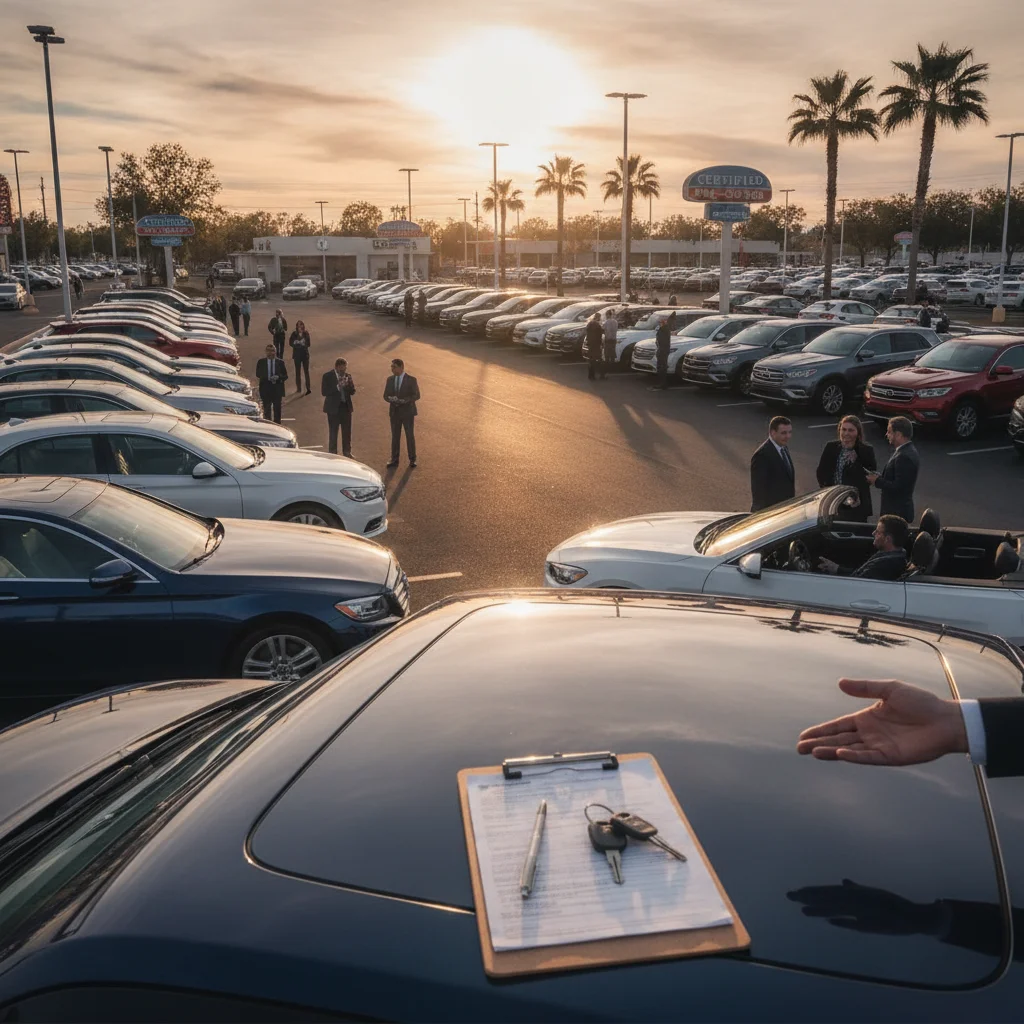
The trade-in pipeline is the series of steps a dealer takes with your old car after you hand over the keys. Depending on its age, condition, and market demand, your vehicle gets sorted into one of several destinations: the dealer's own used lot, a certified pre-owned program, a wholesale buyer, or an auction house. Each destination returns a different margin to the dealer, which is exactly why your offer is calculated the way it is.
Dealers use internal tools like vAuto or similar inventory management software to assess a vehicle's 'days to turn' and market days supply before deciding where it lands in the pipeline.
The Moment You Sign the Title Over
The second you hand over the keys and sign the title, your car becomes a dealer asset — and it gets evaluated with the same cold arithmetic applied to any other inventory purchase. What happens next is determined almost entirely by one question: how quickly can this vehicle be turned into profit?
Most sellers assume their trade-in is heading directly to the used car lot out front. That's actually one of the less common outcomes. Dealers operate on tight floor plan financing — they pay interest on every car sitting on that lot — so they're highly motivated to move vehicles that don't fit their retail profile immediately. The sorting process happens fast, often within 24 to 48 hours of you leaving the lot.
Understanding this pipeline isn't just trivia. It directly explains the offer you received. The lower the dealer's confidence that your car can be retailed profitably, the lower the number on that appraisal sheet. See our full breakdown of the trade-in pipeline for a deeper look at how these decisions are made.

The Three Destinations for Your Trade-In
Every trade-in ends up in one of three places. Which path it takes shapes your offer more than any other single factor.
1. The Dealer's Own Used Lot
This is the best outcome for the dealer and usually correlates with the best offer for you. If your car is a clean, late-model, in-demand vehicle — think a 3-year-old truck or a popular SUV with low miles and a clean history — the dealer wants it on their lot. Retail margins on used cars are significantly higher than on new vehicles. A dealer buying your car for $18,000 and listing it at $23,500 after a $1,200 recon job is making a solid return.
But this slot is selective. Most dealers target vehicles that are less than 5 years old, carry fewer than 70,000–80,000 miles, have a clean title, and require minimal reconditioning. Anything outside those parameters starts heading toward less desirable destinations.
2. Wholesale to Another Dealer
If your vehicle doesn't fit the receiving dealer's used lot profile — wrong segment, too many miles, or the lot is already stocked with similar units — it gets sold wholesale. This happens through direct dealer-to-dealer transactions or through networks like OVE.com. The receiving dealer might specialize in a category your selling dealer doesn't, such as high-mileage commuter cars or commercial vans.
Wholesale prices are notably lower than retail. The dealer selling your car to a wholesaler is building that discount into the offer you see.
3. The Auction Block
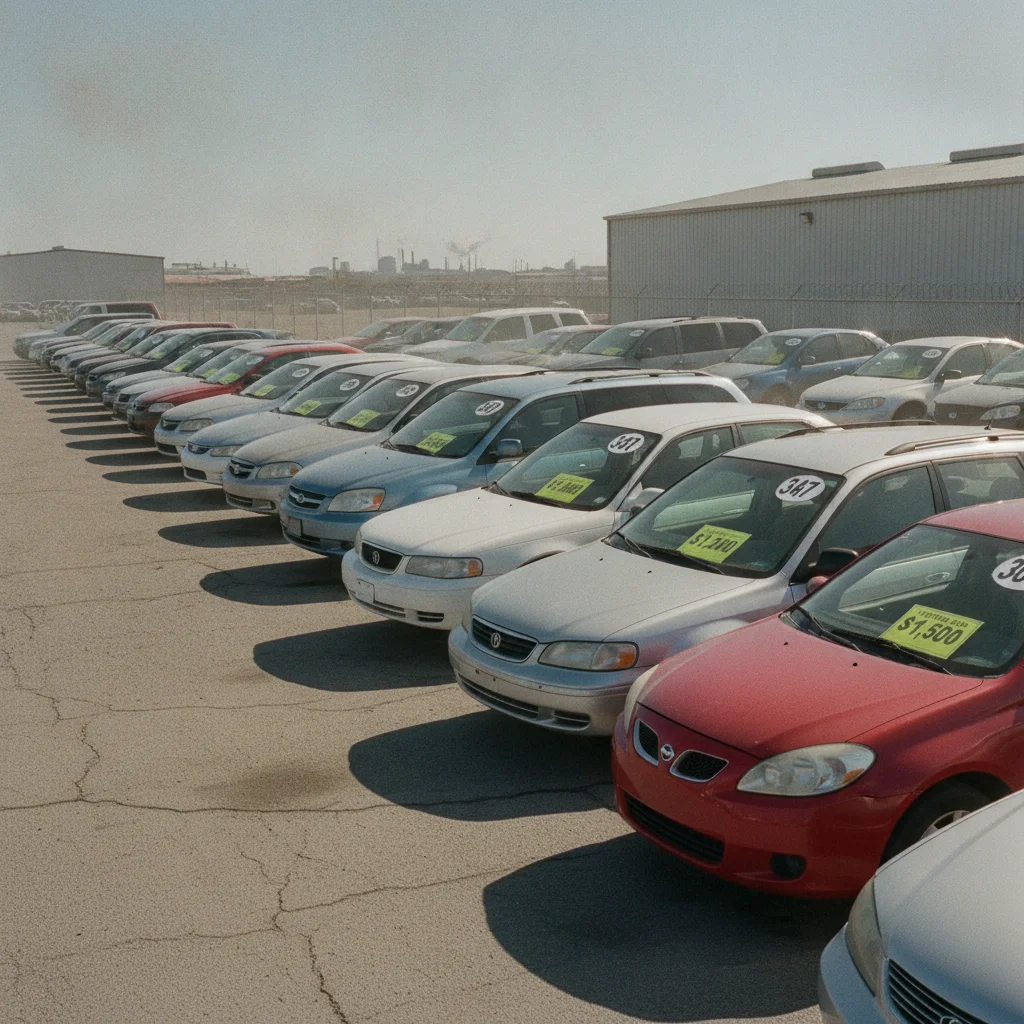
Vehicles with significant mileage, older model years, accident history, or cosmetic issues that would cost more to fix than the repair adds in value — these go to auction. Large wholesale auction houses like Manheim and ADESA run hundreds of lanes per week across the country, processing thousands of vehicles daily.
At auction, the seller (your dealer) accepts whatever the market bids. There's no guarantee of hitting a target number. Because of this uncertainty, dealers discount the appraisal they give you aggressively when your car is auction-bound. They're pricing in their risk.
~40%
Trade-ins sent to auction by dealers
Industry estimates suggest roughly 40% of trade-in vehicles are wholesaled or auctioned rather than retailed on the dealer's own lot.
$2,337
Average dealer reconditioning cost per used vehicle
According to NADA's annual dealership financial profile, average reconditioning cost per retailed used unit consistently runs above $2,000.
30–45 days
Target days to sell a used trade-in on lot
Most dealers aim to sell a retailed trade-in within 30–45 days before reclassifying it as a slow-moving unit and wholesaling it.
$500–$2,000
Typical gap closed by competing trade-in offer
Consumer advocates and auto industry observers report that buyers presenting a competing written offer frequently close a $500–$2,000 gap versus initial appraisals.
7 days
Validity window for most instant trade offers
Services like CarMax, Carvana, and Vroom typically guarantee their written offers for 7 days, giving buyers a firm negotiating anchor at the dealership.
Auction Offers Are Not Public
Wholesale auto auctions like Manheim and ADESA are closed to the public — only licensed dealers can participate. Once your vehicle enters that channel, you have no way to track where it ends up or what it ultimately sells for. The dealer absorbs the auction price risk, which is exactly why auction-bound vehicles receive lower trade offers.
Branded Titles Require a Different Strategy
If your vehicle has a salvage, rebuilt, or lemon law buyback title, most franchise dealers will not retail it on their lot. Your realistic options are a specialty used car dealer, a private sale to a buyer who understands the title status, or accepting the deep-discounted auction offer. Getting multiple written offers is especially important in this situation, since the discount applied to branded-title vehicles varies significantly by buyer.
Your Loan Payoff Is Separate From Trade Value
If you owe money on your trade-in, the payoff amount and the trade-in value are two different figures. A dealer may advertise that they'll 'pay off your trade no matter what you owe,' but negative equity (owing more than the car is worth) doesn't disappear — it typically gets rolled into your new loan, increasing what you finance. Always ask to see both numbers separately on the contract.
The Reconditioning Math That Shrinks Your Offer
Before a dealer assigns a value to your trade, they walk it and mentally — sometimes literally — build a reconditioning estimate. This is where a lot of sellers feel like they're getting lowballed, but from the dealer's perspective, the math is straightforward.
Reconditioning costs typically include:
- Mechanical inspection and any necessary repairs — dealers usually run trade-ins through their service department before retailing them
- Detailing and cosmetic work — dents, scratches, worn interiors
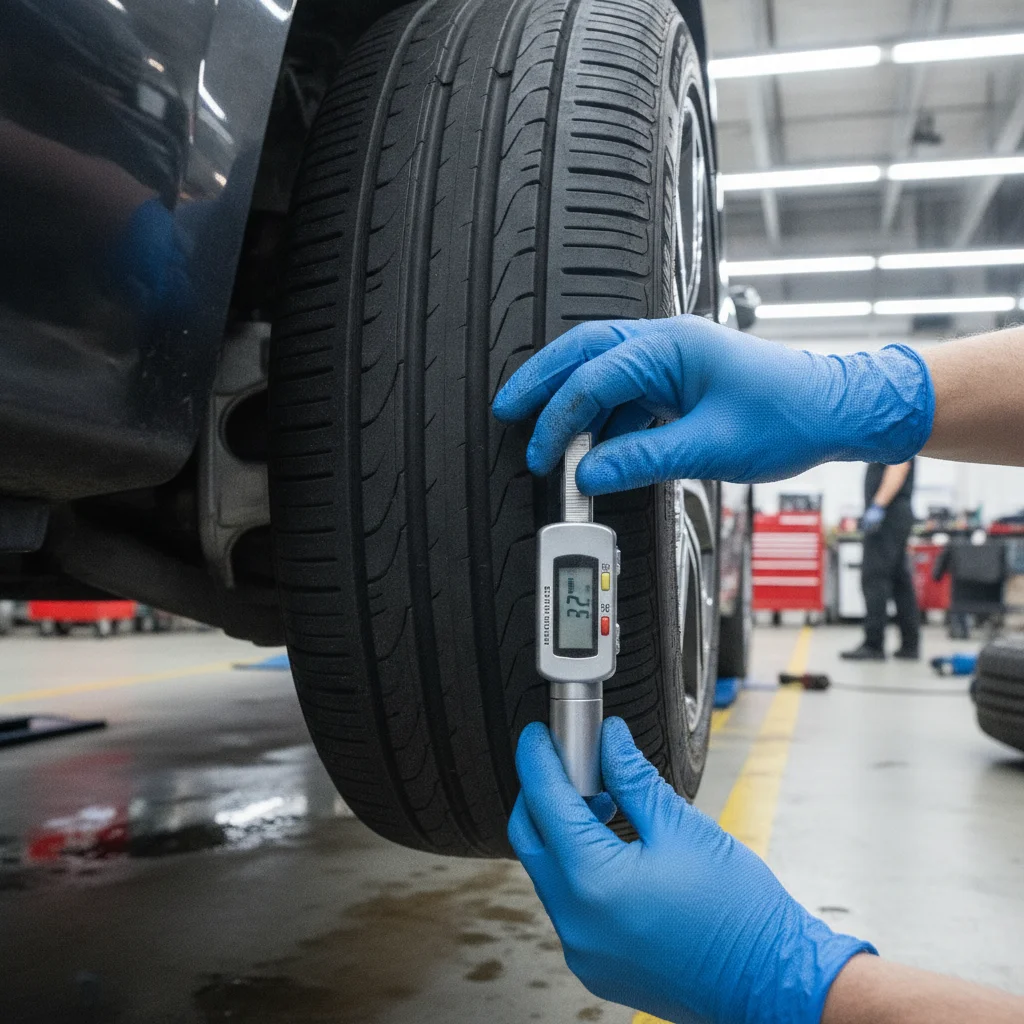
- New tires or brakes if they're below a safe threshold
- Safety recalls — open recalls must be resolved before retail sale in most states
A vehicle with $2,500 in estimated recon costs will receive an offer that's at minimum $2,500 lower than a comparable clean unit — and usually more, since the dealer wants margin on top of cost recovery.
This is why the steps you take before the appraisal matter. Prepping your car before you drive to the dealership can meaningfully reduce the dealer's estimated recon bill and shift your offer upward — without requiring expensive repairs on your end.
Clean the Car Before the Appraisal
A professionally detailed car signals to the appraiser that it's been well cared for and reduces their estimated reconditioning allowance. A $150 full detail can return several hundred dollars in appraisal improvement simply by eliminating the appraiser's mental 'cleaning and odor' deduction. It's one of the highest-ROI steps you can take before a trade-in.
Get the Trade Value in Writing Before Signing Anything
Ask the used car manager to put the trade appraisal on a signed dealer worksheet before you begin discussing the new vehicle's price. Once you're deep into the new car negotiation, it becomes much easier for the dealer to subtly compress the trade value inside a favorable-looking monthly payment. Separating the two negotiations protects both numbers.
How Dealers Decide What Your Car Is Worth to Them
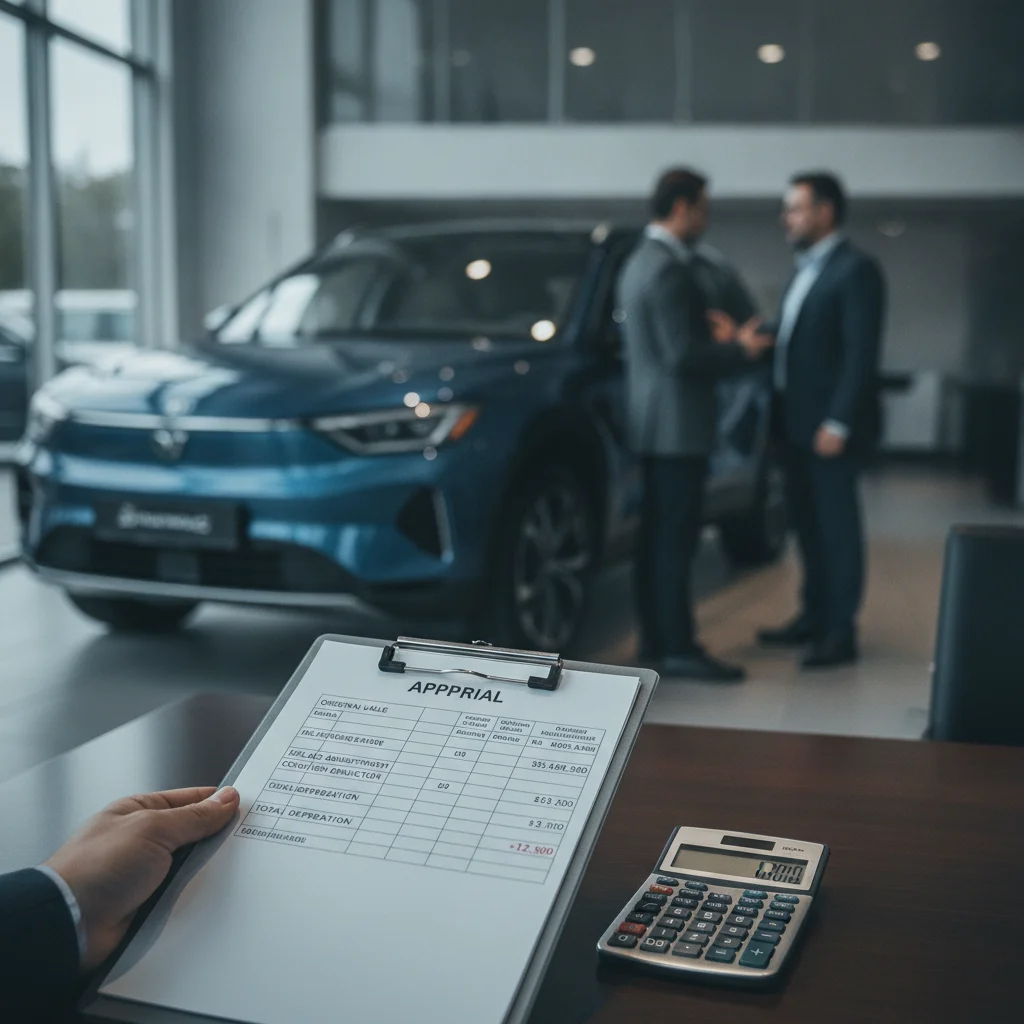
The appraiser — usually the used car manager — isn't guessing. They're pulling real-time market data from tools like Kelley Blue Book Instant Cash Offer, Black Book, or dealer-specific software like vAuto. These platforms show what similar vehicles are actually selling for at wholesale auctions and on used lots in your geographic market, updated in near real-time.
Here's the key insight: the appraiser works backward from a retail price target. They look at what similar cars are listed for on their lot or competing lots, subtract expected reconditioning, subtract their target profit margin, and subtract a buffer for market risk. What's left is your offer.
If the market for your vehicle is soft — too many similar units competing for buyers — that buffer gets bigger and your offer shrinks. This is why the same car can get a meaningfully different offer from two dealers in the same city: one might already have five similar units sitting on their lot, while the other has sold their last one and needs inventory.
“The used car manager isn't looking at your car — they're looking at their inventory screen. If they already have three similar vehicles sitting on the lot, your offer is going to reflect that overcrowding, not just the condition of your car.”
— Desmond Kimathi, Former dealership finance manager and consumer auto advocate
That market dynamic is also why trade-in offers reflect depreciation discounted for dealer margin — the number isn't just about your car's condition, it's about the entire competitive landscape your car enters the moment you trade it in.
Why Getting Multiple Offers Changes the Equation
The single most effective thing you can do to protect your trade-in value is to show up with a competing written offer. Here's why it works: it forces the dealer to compete on a number rather than set an unopposed one.
Services like CarMax, Carvana, and Vroom provide firm written offers valid for a set window — typically 7 days. These offers are based on similar market data, and they're immediately verifiable. A dealer who knows you'll walk 10 minutes down the road to sell your car for $500 more has a real decision to make.
In most cases, the dealer will either match the offer or get close enough that the convenience of a one-stop transaction is worth the small difference. And if they don't budge, you know exactly what your floor is — you take the outside offer.
Equally important: negotiate the trade and the new car purchase separately. Dealers often compress trade value when they know you're fixated on a monthly payment. Get a firm trade offer in writing before you discuss the new vehicle's price, financing terms, or monthly payment. This is one of the core tactics covered in resources on protecting your appraisal mid-deal.
Special Cases: Leases, High-Mileage Cars, and Branded Titles
Not every trade-in follows the standard playbook. A few situations require different handling.
Leased Vehicles
Trading in a leased car is a separate process entirely. You don't own the car — the leasing company does — so the dealer has to negotiate with the lender, not just you. If your car has equity (market value exceeds the residual), a dealer can capture that equity and apply it. If you're underwater, that gap has to be resolved. Trading in a leased car involves residual values, equity checks, and early termination rules that a standard trade doesn't.
High-Mileage or Older Vehicles
Cars with over 100,000 miles or more than 8–10 model years old are almost always headed to auction. Dealers rarely retail these units themselves due to warranty liability concerns and reconditioning costs that can exceed the margin. If you're trading in a high-mileage car, your best move is to get the dealer's offer and compare it against private sale value — the gap is often wide enough to justify the extra work of selling it yourself.
Branded Titles
A salvage, rebuilt, or flood title dramatically limits where your car can go. Most franchise dealers won't retail branded-title vehicles at all — they go straight to specialty auction lanes. Expect an offer that reflects auction-floor pricing minus a significant risk discount. In some cases, dealers will simply decline to take the trade.
Auction Offers Are Not Public
Wholesale auto auctions like Manheim and ADESA are closed to the public — only licensed dealers can participate. Once your vehicle enters that channel, you have no way to track where it ends up or what it ultimately sells for. The dealer absorbs the auction price risk, which is exactly why auction-bound vehicles receive lower trade offers.
Branded Titles Require a Different Strategy
If your vehicle has a salvage, rebuilt, or lemon law buyback title, most franchise dealers will not retail it on their lot. Your realistic options are a specialty used car dealer, a private sale to a buyer who understands the title status, or accepting the deep-discounted auction offer. Getting multiple written offers is especially important in this situation, since the discount applied to branded-title vehicles varies significantly by buyer.
Your Loan Payoff Is Separate From Trade Value
If you owe money on your trade-in, the payoff amount and the trade-in value are two different figures. A dealer may advertise that they'll 'pay off your trade no matter what you owe,' but negative equity (owing more than the car is worth) doesn't disappear — it typically gets rolled into your new loan, increasing what you finance. Always ask to see both numbers separately on the contract.
Reading the Paperwork After the Deal
Once the deal closes, the trade-in value should appear as a line-item credit on your purchase contract. This sounds straightforward, but the way it's presented can obscure what you actually received.
Dealers sometimes roll a low trade value into a favorable-looking monthly payment, making the transaction look better than it is. The trade value and the new vehicle price are two separate negotiated numbers — and both should be visible on your contract as discrete line items before you sign.
Ask to see the trade-in value listed explicitly. Then confirm how any loan payoff on your trade was handled — whether it was subtracted from the trade value or added to your new vehicle's financed amount. These are different things and they affect your loan-to-value ratio on the new vehicle. The trade-in documentation guide walks through exactly where to find these figures and what warning signs to watch for.
Clean the Car Before the Appraisal
A professionally detailed car signals to the appraiser that it's been well cared for and reduces their estimated reconditioning allowance. A $150 full detail can return several hundred dollars in appraisal improvement simply by eliminating the appraiser's mental 'cleaning and odor' deduction. It's one of the highest-ROI steps you can take before a trade-in.
Get the Trade Value in Writing Before Signing Anything
Ask the used car manager to put the trade appraisal on a signed dealer worksheet before you begin discussing the new vehicle's price. Once you're deep into the new car negotiation, it becomes much easier for the dealer to subtly compress the trade value inside a favorable-looking monthly payment. Separating the two negotiations protects both numbers.
Once you've signed and driven off, the dealer's relationship with your old car is purely financial. They'll move it as efficiently as possible. Your job is to make sure the number on that contract reflects what your car was actually worth — not what was convenient for the deal structure.

All claims are backed by peer-reviewed research. Sources on request.