

Key Takeaways
Why Dealer Negotiation Myths Are So Expensive
I spent seven years on the dealer side of the finance desk. In that time, I watched buyers walk in armed with half-truths they'd picked up from friends, Reddit threads, or decade-old advice columns — and I watched those half-truths cost them money. Not pocket-change money. Real money: $1,200 here, $3,500 there, sometimes more.
The myths aren't random. Many of them persist because they once contained a grain of truth, or because they sound logical until you understand how a dealership actually makes money. A few are actively promoted by dealers because they keep buyers confused and passive.
This article dismantles the most damaging ones — with specifics, not platitudes. Whether you're buying new or used, understanding what the dealership knows about buying new cars that you don't is the first step toward an even negotiation.
Myth
The internet price listed on the dealer's website is the best price you can get.
Fact
Internet prices are marketing starting points. Most dealers expect negotiation below the listed price, especially on vehicles that have been sitting on the lot.
Dealers set internet prices to attract clicks and showroom visits — not to represent their bottom line. The listed price is almost always above what the dealer will accept, and in many cases it's above MSRP on high-demand vehicles or padded with dealer-added accessories you never asked for.
The real floor price depends on how long the vehicle has been in inventory. A car that's been sitting for 60-plus days costs the dealer money in floorplan interest every day. A unit that arrived last week has no such pressure. Tools like Carfax's days-on-lot indicator, dealer inventory search filters, and market pricing sites like TrueCar or CarGurus give you the data to know which situation you're in before you make an offer.
Request the "out-the-door" price in writing, not the sticker price or the internet price. That's the only number that tells you what you'll actually pay.
Myth
Negotiating the monthly payment is the smartest way to get a good deal.
Fact
Monthly payment negotiation obscures the total cost and gives dealers room to inflate the loan term, interest rate, or vehicle price while appearing to accommodate you.
This is the single most profitable myth for dealers, and it's one many salespeople are explicitly trained to exploit. When you anchor on a payment number — say, "I need to stay under $450 a month" — the dealer can hit that target by stretching your loan from 60 months to 72 or 84 months, raising the rate, or both. The payment looks right; the total cost is thousands higher.
Here's a concrete example: A $32,000 car financed at 6.9% for 60 months costs you about $6,280 in interest. Stretch that to 84 months at the same rate and you pay $8,750 in interest — over $2,400 more — with a lower monthly payment. The dealer looks like they helped you. You paid significantly more.
Always negotiate on out-the-door price first. Calculate your own payment using that price and a rate you've already secured from your bank. Never reveal your target payment to a salesperson.
Myth
Dealers won't negotiate on new cars, especially popular models.
Fact
Almost every new car has negotiable elements — even in tight inventory conditions — including financing rate, dealer-added accessories, and trade-in value.
This myth gained traction during the 2021–2022 inventory shortage when dealers were genuinely selling at or above MSRP. That market has largely normalized. As of 2024, the average new vehicle transaction price is back below MSRP on many segments, and dealer incentive programs from manufacturers give salespeople room to negotiate that isn't immediately obvious.
Even on high-demand models where price discount is unlikely, you can negotiate:
- Dealer-installed accessories (paint protection, tint, rubber mats) that inflate the sticker but cost the dealer little
- Financing rate — dealers mark up manufacturer financing, and that markup is negotiable
- Trade-in value — a strong trade offer can offset a firm vehicle price
- Free maintenance packages or extended warranties at no added cost
For a broader look at what's negotiable on new purchases, see new car buying myths that cost people real money.
Myth
You should always reveal your trade-in upfront to simplify the deal.
Fact
Disclosing a trade-in early gives dealers a variable they can use to make the overall deal look better than it is — often at the buyer's expense.
A dealer who knows you have a trade-in can play three numbers at once: the new car price, the trade-in value, and the financing. They can give you $500 more on your trade while adding $700 to the vehicle price, and the deal looks better to you while being worse overall.
The standard advice from consumer advocates and former dealer insiders is consistent: negotiate the new car price to a firm written agreement before mentioning the trade. Then negotiate the trade as a completely separate transaction. This forces the dealer to compete on each variable independently.
Equally important: know your trade-in's actual market value before you walk in. Get offers from CarMax, Carvana, and a local dealer appraisal to establish a realistic baseline. Trade-in value myths cost drivers money — especially the belief that the dealer's first offer is anywhere near market value.
Myth
The dealer's financing is always worse than your bank's — just use your own lender.
Fact
Dealer financing is sometimes genuinely competitive, particularly when manufacturers offer subvented (below-market) rates. The key is comparing both options, not defaulting to one.
Manufacturer-subvented rates — where the automaker subsidizes financing to move inventory — can be legitimately below what your credit union offers. A 0.9% or 1.9% promotional rate beats almost any outside financing. The catch: these rates often require you to forgo a cash rebate. You need to run both scenarios to know which saves more money.
Here's the math: On a $35,000 vehicle, a $3,000 rebate financed at 5.5% (your bank's rate) might cost less total than the subvented 1.9% with no rebate. Or it might not. It depends on the loan term and the size of the rebate. Always calculate total cost, not monthly payment.
The right move: get pre-approved by your own bank or credit union so you have a benchmark. Then let the dealer try to beat it. You use whichever is actually lower — and you're protected if the dealer's offer is padded.
Myth
End of month is always the best time to buy — dealers are desperate to hit quotas.
Fact
End-of-month pressure is real but inconsistent. It only creates genuine leverage when combined with proper preparation and a credible offer.
Monthly sales quotas do exist, and a salesperson or dealer principal who is close to a volume bonus will be more motivated to move a unit on the 30th than on the 5th. That's true. But "more motivated" doesn't automatically translate to "will accept any offer."
A dealer who is already comfortably above quota has no incentive to discount aggressively just because of the calendar. A dealer who is well below quota knows a last-minute discount won't save their numbers, so urgency cuts both ways.
Timing works best as a secondary tactic, not a primary one. Do your homework first: know the invoice price, have a pre-approval in hand, know what competing dealers are charging. Then, if you happen to be shopping at the end of the month, use that as additional leverage — not as a substitute for preparation.
Myth
Buying add-ons in the finance office is optional and easy to decline.
Fact
Finance managers are professionally trained to sell add-ons, and declining requires preparation and assertiveness that most buyers don't expect to need.
By the time you reach the finance office, you've already spent hours on the lot, negotiated a price, and are mentally ready to be done. Finance managers know this. They're typically the highest-paid person in the dealership, and their job is to sell you products — extended warranties, GAP insurance, paint protection, tire-and-wheel coverage — that carry extremely high margins.
GAP insurance from a dealer, for example, often costs $400–$900 when your own auto insurer might offer it for $20–$40 per year. An extended warranty the dealer sells for $2,500 might be available directly from the same administrator for $1,200.
The myth is that this is a casual conversation. It isn't. Prepare your list of declines in advance. Know which products might have genuine value (GAP insurance on a long loan with low down payment; maybe a powertrain warranty on a used vehicle). Decline everything else firmly and immediately — do not let the F&I manager "explain" products you've already decided against.
Myth
A lower price at one dealer means another dealer will automatically match it.
Fact
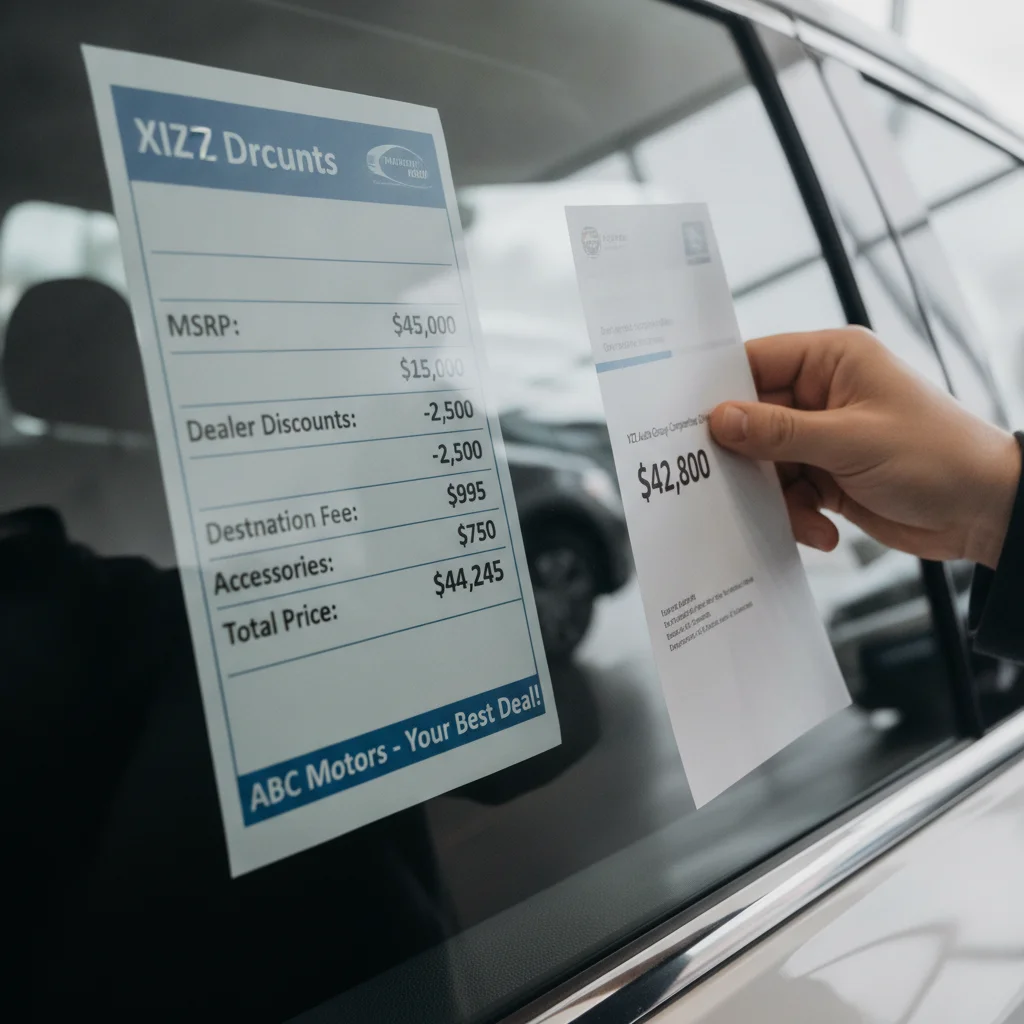
Price matching is a dealer's discretionary decision, not a right. It works best when the competing offer is documented, realistic, and presented as a genuine alternative.
Walking into a dealership and saying "Dealer X offered me $500 less" without documentation is a negotiating move dealers see constantly — and discount accordingly. A printed or emailed quote from a competing dealer for the same vehicle (same trim, same color, same accessories) is a different matter entirely.
To use competing offers effectively:
- Get quotes from multiple dealers via email, where prices are documented
- Confirm the quotes are for the same vehicle or a verifiable equivalent
- Present the competing offer early in the negotiation, not as a last-minute bluff
- Be genuinely prepared to buy from the competing dealer if yours won't match
Dealers are more likely to match when inventory is comparable and you've demonstrated you're a serious buyer who will close today. If the competing dealer is across town and has the same car in stock, the math on letting you walk is straightforward.
The Financing Myths That Quietly Drain Your Wallet
The finance office is where dealers make a significant portion of their profit — sometimes more than on the car itself. Yet most buyers walk in there completely unprepared because they think the hard part (haggling on price) is already done. It isn't.
$1,896
Average dealer financing markup per loan
According to the Consumer Financial Protection Bureau, dealers marked up auto loan rates by an average of nearly $1,900 per transaction in analyzed portfolios.
72–84 months
Most common new car loan terms in 2024
Experian's State of the Automotive Finance Market report found that loans of 72 months or longer account for over 40% of all new vehicle financing.
83%
Buyers who feel dealer outprepares them
A Cox Automotive survey found that 83% of car buyers feel the dealership experience is tilted in the dealer's favor during the negotiation process.
$3,700+
Average F&I product revenue per vehicle
National Automobile Dealers Association data shows finance and insurance offices generate over $3,700 per vehicle sold in product and reserve income.
Understanding how dealer financing actually works — including dealer reserve, payment packing, and add-on products — changes how you approach the entire purchase. For a deeper look at how your credit score affects what you're offered, see credit score myths that trip up car buyers.
Never Tell the Finance Desk Your Target Payment
Disclosing a monthly payment target gives the finance manager a ceiling to work toward rather than a floor to beat. A skilled F&I manager can hit your payment number while increasing total loan cost by thousands through rate adjustments and term extensions. Negotiate total price and rate separately, then calculate the payment yourself.
Add-Ons Can Cost More Than the Discount You Negotiated
Many buyers fight hard for a $500 price reduction and then absorb $1,500 to $2,000 in finance office add-ons without realizing it. GAP insurance, paint sealant, and extended warranties sold through the dealer carry some of the highest profit margins in the business. Know your position on each product before you sit down.
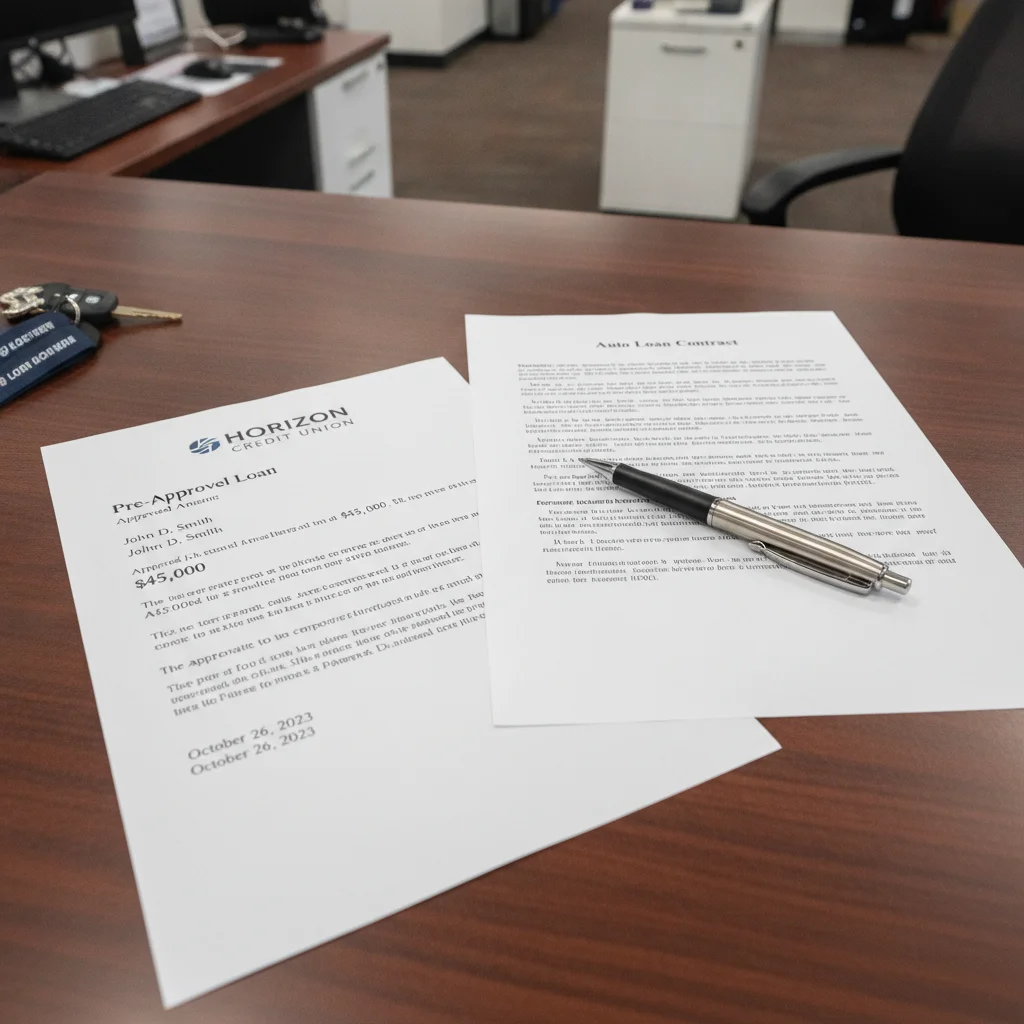
The simplest protection: get a pre-approval letter from your bank or credit union before you walk onto any lot. It takes 20 minutes and gives you a benchmark rate the dealer has to beat — or you walk to your own lender.
Also worth reading: the truth about car down payment myths — because how much you put down affects both your rate and your negotiating position.
Trade-In and Timing Myths That Shift Leverage Away From You
Two of the most persistent negotiation myths involve trade-ins and the timing of your purchase. Both contain just enough truth to be dangerous.

On trade-ins: the moment you reveal you have a trade-in, a dealer can start adjusting numbers across multiple line items to make the overall deal look better than it is. The solution is simple — negotiate the new car price to completion before mentioning the trade. Treat them as two separate transactions, because they are.
For a full breakdown of the specific misconceptions that hurt trade-in sellers, see the trade-in value myths that cost drivers money. You can also review how dealer trade-in appraisals work before your next visit.
On timing: end-of-month pressure is real, but it's not a guaranteed discount button. Sales staff work toward monthly quotas, and a dealer who is already having a strong month has little incentive to discount heavily just because it's the 29th. The tactic works best when you've already done everything else right — researched the vehicle, secured financing, and made a credible offer.
Separating the Deal Into Parts Is Non-Negotiable
Every experienced car buyer and consumer advocate agrees on this: negotiate the vehicle price first, the trade-in second, and financing third — never all at once. Combining variables gives the dealer too many levers to pull. A dealer who loses on price can recover on your trade or your rate. Isolating each negotiation eliminates that flexibility.
End-of-Month Works — But Only If You're Already Prepared
Buyers who show up at the end of the month without a competing offer, without pre-approval, and without knowing the invoice price will not get a better deal just because of the calendar. Timing amplifies leverage you've already built — it doesn't create leverage from nothing. Do the preparation first, then layer in the timing advantage.
Before assuming negotiation is only an in-person game, check out the online car buying myths that keep people stuck at dealerships — because email and phone negotiation frequently produces better prices than face-to-face pressure.
What Smart Buyers Do Differently
The buyers who consistently get the best deals share a few habits that have nothing to do with being aggressive or confrontational. They separate every variable — price, trade, financing, add-ons — into its own negotiation. They come in with documented competing offers. They know the invoice price, the dealer holdback, and any active manufacturer incentives before they sit down.
They also know when to walk. A buyer who is genuinely willing to leave has more power than any tactic a salesperson can deploy. Dealers know this too, which is why the first thing many finance managers do is create urgency — "this rate is only good today," "we have another buyer interested" — to eliminate your most powerful move.

For buyers considering certified pre-owned vehicles, the same principles apply — and there are additional myths specific to that segment worth understanding. See CPO myths that cost buyers money.
And once you've negotiated the price, don't let your guard down in the finance office. Car contract myths cost buyers money at the final signature stage just as often as price myths cost them at the sales desk. Read everything. Understand what you're signing. The deal isn't done until you drive off the lot — and sometimes not even then.
Finally, if you're still deciding between buying new or used, the comparison matters more than most buyers realize. Used car myths cost buyers real money in ways that are distinct from new car purchases — and knowing both sets of myths makes you a sharper buyer regardless of which direction you go.
All claims are backed by peer-reviewed research. Sources on request.