Key Takeaways
Why CPO Myths Are So Expensive
Certified pre-owned vehicles occupy an appealing middle ground: newer than the typical used car, cheaper than brand-new, and supposedly worry-free. That combination is powerful marketing — and it has spawned a set of persistent myths that cost buyers real money every year.
The average CPO premium over a comparable non-certified used vehicle runs between $1,000 and $3,500, depending on the brand and model. Whether that premium is worth paying depends entirely on what the certification actually delivers. Most buyers, unfortunately, never read the fine print closely enough to find out.
This article walks through the most common CPO misconceptions, explains what's actually true, and gives you the framework to decide whether a specific CPO program is worth the extra cost on a specific car. Before you shop, it also helps to understand what certified inspections routinely miss — see our companion piece on what CPO inspections won't catch for those details.
Myth
All CPO programs are basically the same — if a car is 'certified,' it has the same coverage regardless of who sold it to you.
Fact
CPO programs vary dramatically. Manufacturer programs and dealer-certified programs are entirely different products with different inspection standards, warranty lengths, and protections.
This is probably the single most expensive myth in the CPO space. When Toyota, Honda, or BMW certifies a vehicle, that program is administered by the manufacturer, backed by the manufacturer's warranty infrastructure, and governed by a defined inspection checklist. When a used-car dealer certifies a vehicle, "certified" can mean almost anything — in many states, there is no legal definition that constrains what a dealer can call certified.
Manufacturer CPO programs typically require:
- The vehicle to be a specific brand (e.g., a Toyota CPO vehicle must be a Toyota)
- The vehicle to be within a defined age and mileage window — commonly five to six years old and under 75,000–80,000 miles
- A comprehensive inspection of 150+ points conducted by a factory-trained technician
- A powertrain and/or bumper-to-bumper warranty extension beyond the original coverage
- Roadside assistance, often including trip interruption benefits
Dealer-certified programs may involve a much shorter checklist, a warranty backed by the dealer rather than a manufacturer, and no roadside assistance. If the dealer closes or is sold, that warranty coverage may become difficult or impossible to honor.
Always ask: Is this a manufacturer CPO program or a dealer program? If it's dealer-certified, ask to see the specific warranty contract before you agree to anything. Compare its terms line-by-line against a manufacturer program on a similar vehicle.
Myth
A CPO vehicle has been thoroughly inspected, so I don't need to pay for an independent inspection.
Fact
CPO inspections check condition against a checklist at a single point in time. They don't catch every pre-existing issue, and they say nothing about problems that develop shortly after certification.
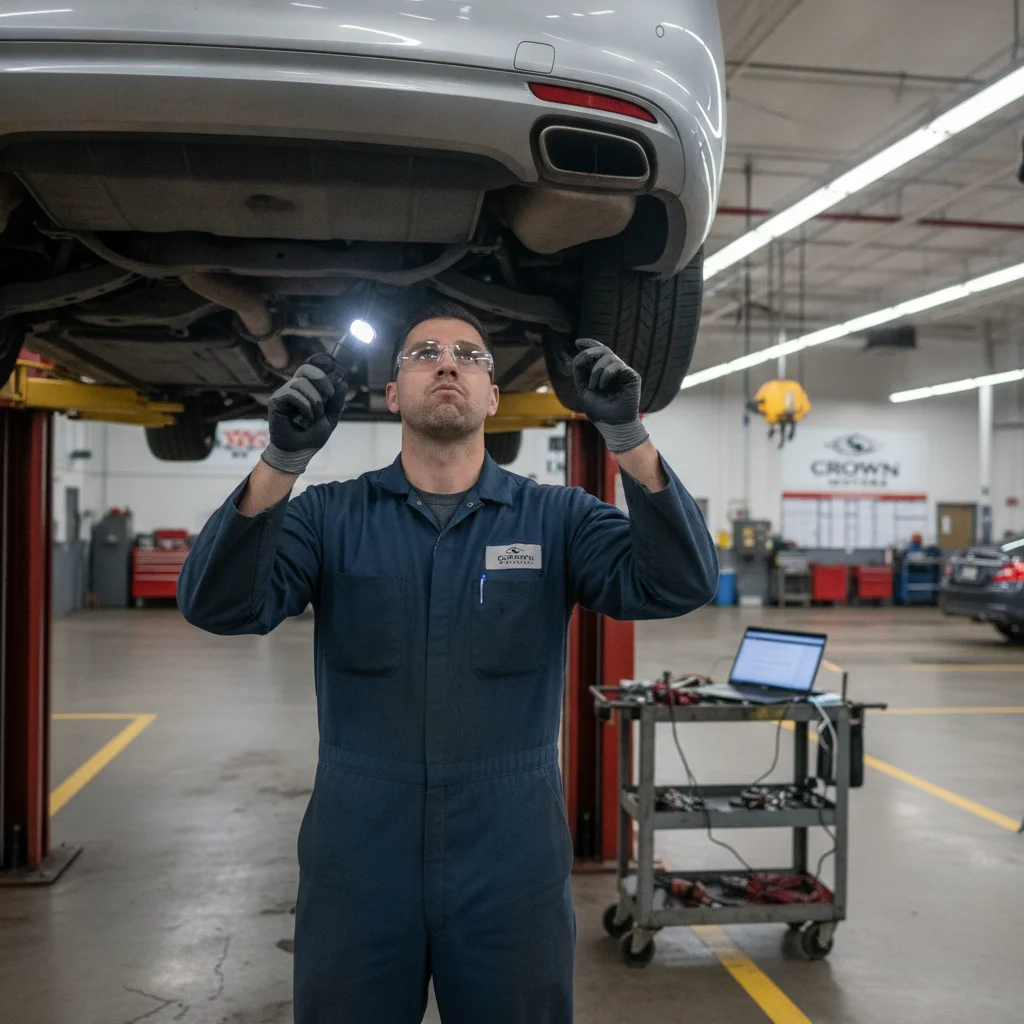
The CPO inspection report is a useful document, but it is not a substitute for an independent pre-purchase inspection (PPI) performed by a mechanic you hire. Here's why:
First, the technician who performs the CPO inspection works for the dealership selling the car. That's not necessarily a conflict of interest — most technicians are professionals — but it is a structural misalignment. An independent mechanic has no financial stake in whether you buy the vehicle.
Second, CPO inspections are checklist-based. A technician looks at the items on the list and marks them pass or fail. Issues that don't appear on the list — certain electrical gremlins, early-stage rust hidden under carpeting, or deferred maintenance items — may not be caught.
Third, certification happens at a moment in time. A vehicle that passed inspection three weeks ago could have developed a new leak, a brake squeal, or an oil consumption issue since then. A PPI by your own mechanic is the only way to know what the car looks like today.
An independent inspection typically costs $100–$200 and takes about an hour. On a $25,000 purchase, that's roughly 0.5–0.8% of the transaction price. It is one of the highest-return expenditures in the entire car-buying process. For a detailed breakdown of what inspections routinely miss, see what CPO inspections don't catch.
[important_callout]Myth
CPO cars can't be negotiated — the certification price is what it is.
Fact
CPO vehicles are almost always negotiable, just like any other used car. The certified label does not remove the dealer's flexibility on price.
This myth is so widespread that it effectively functions as free profit for dealerships. Many buyers accept the sticker price on a CPO vehicle without a single counteroffer, believing the certification somehow locks in the number.
It doesn't. Here's the reality: the dealer paid an acquisition price for the vehicle (at auction or as a trade-in), spent money on reconditioning and the certification process, and then marked it up to a retail price. That retail price includes a margin — and that margin is negotiable.
Market data strongly supports this. A 2023 analysis of CPO transactions by iSeeCars found that buyers who made an offer below the asking price on CPO vehicles received a discount in roughly 68% of cases, with average savings of $1,147. That's not pocket change.
Effective negotiation on a CPO vehicle uses the same tools as any used-car negotiation: comparable sold listings, a pre-approved financing offer from your credit union or bank, and patience. See our breakdown of dealer negotiation myths for a full tactical approach.
Myth
The CPO warranty covers everything, so I won't have out-of-pocket repair costs.
Fact
CPO warranties have exclusions, deductibles, and coverage gaps. Wear items, pre-existing conditions, and certain components are commonly excluded.
No warranty — manufacturer new-car warranty, CPO warranty, or aftermarket extended warranty — covers everything. Understanding the exclusions before you buy is the only way to accurately assess the value of the coverage.
Common CPO warranty exclusions include:
- Wear items: Brake pads, rotors, tires, wiper blades, and clutches are almost never covered because they wear out through normal use.
- Maintenance: Oil changes, filters, and fluid flushes are your responsibility regardless of what the warranty covers.
- Cosmetic damage: Scratches, paint chips, interior stains, and upholstery wear are generally excluded.
- Pre-existing conditions: If a problem existed before certification and was missed during the inspection, proving the warranty applies can be difficult.
- Modifications: Non-factory accessories or modifications can void coverage on related components.
Pay close attention to whether the CPO warranty is a bumper-to-bumper (exclusionary) policy or a powertrain-only (inclusive) policy. A powertrain warranty only covers the engine, transmission, and drivetrain. An exclusionary policy covers everything except what's explicitly listed — which is far broader protection. Many buyers assume they have bumper-to-bumper coverage when they actually have powertrain-only.
Read the actual warranty contract. Ask the salesperson to show you the exclusions page. If they can't or won't, that's a red flag worth taking seriously.
Myth
Buying CPO is always smarter than buying a regular used car with an extended warranty.
Fact
Whether a CPO vehicle is a better value than a non-certified used car with a third-party warranty depends on the specific vehicles, prices, and warranty terms involved.
The CPO-vs-extended-warranty question doesn't have a universal answer. It requires math on the specific deal in front of you. Here's how to think through it:
Suppose you're comparing two identical 2021 Honda Accord EX-Ls with 38,000 miles. Car A is Honda CPO at $27,500. Car B is non-certified from a different dealer at $25,000. A third-party extended warranty from a reputable provider (think Endurance, CARCHEX, or your credit union's program) for Car B covering 3 years/36,000 miles with a $100 deductible runs about $1,400.
In this scenario:
| Option | Purchase Price | Warranty Cost | Total |
|---|---|---|---|
| Honda CPO | $27,500 | Included | $27,500 |
| Non-certified + 3rd party warranty | $25,000 | $1,400 | $26,400 |
In this example, the non-certified route saves $1,100 and provides similar coverage — though Honda's CPO program does come with roadside assistance and additional perks that may tip the calculation back.
The point isn't that CPO is bad. It's that you should run the actual numbers rather than assume one option is automatically better. Also compare the Honda CPO warranty terms against the third-party terms carefully — deductibles, transfer ability, and claims process matter as much as the headline price.
For a broader look at expenses that can catch CPO buyers off guard, hidden CPO costs nobody mentions is essential reading.
[in_content_images:2]Myth
A CPO vehicle's history has been verified — there's no need to pull a vehicle history report.
Fact
Dealers pull vehicle history reports during the CPO process, but you should always pull your own from an independent source.
Dealers generally do check vehicle history as part of the CPO process — a car with a branded title (salvage, flood, lemon law buyback) typically cannot qualify for a manufacturer CPO program. But relying solely on the dealer's report has two problems.
First, you're taking the dealer's word for what the report says rather than reading it yourself. Second, vehicle history databases are not perfect. Accidents that were never reported to insurance, odometer discrepancies that occurred in states with inconsistent reporting, and service records from independent shops that don't report to Carfax or AutoCheck may all be missing from the report on file.
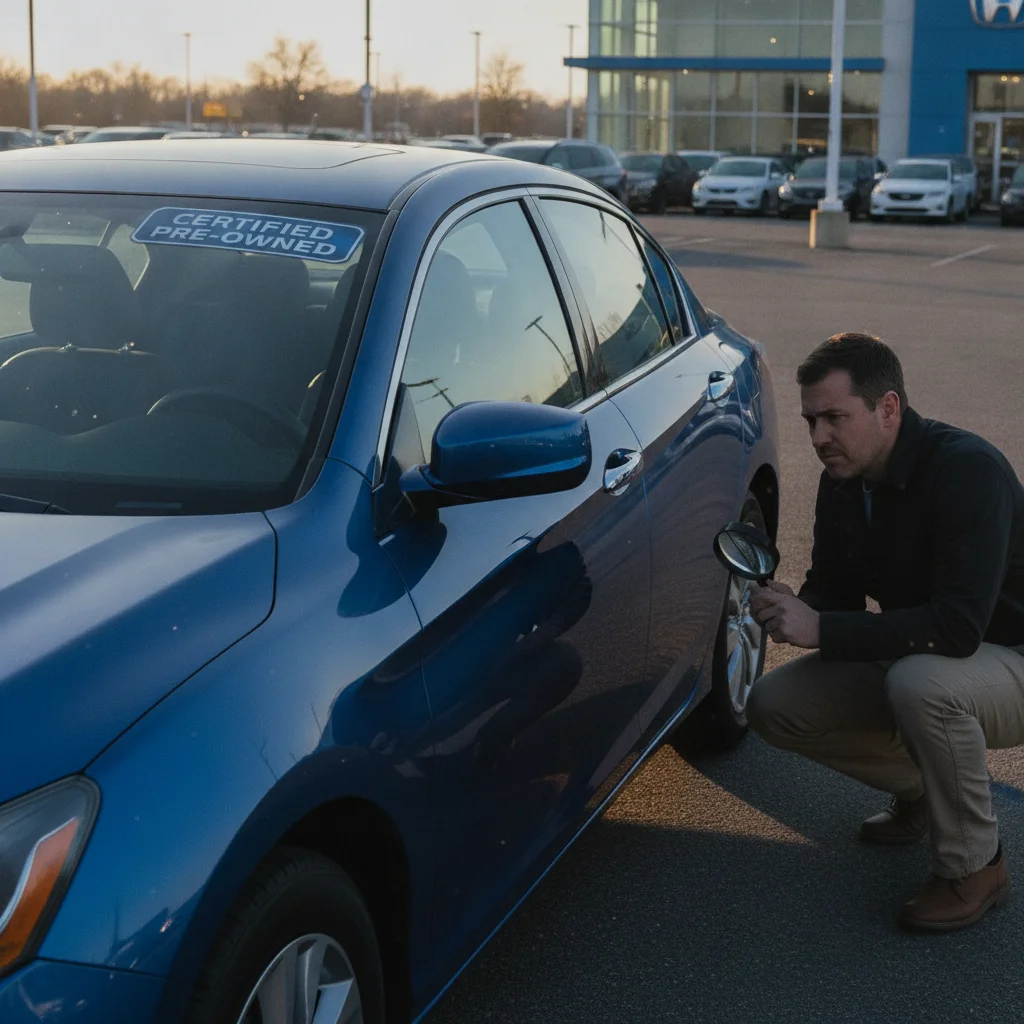
A Carfax or AutoCheck report costs $40–$45 for a single vehicle. Some used-car listing sites include them free with listings. Run your own report using the VIN the dealer provides, compare it against the report the dealer shows you, and verify that the reported accident history matches any evidence you find during a physical inspection — misaligned body panels, uneven gaps, overspray on trim pieces, and inconsistent paint texture are all signs of repair work that may not have been reported.
If there's a discrepancy between what the vehicle history shows and what the dealer claims, ask for a written explanation before you proceed.
The Financial Reality Behind CPO Pricing
Even after you understand what a CPO program covers, you still need to run the numbers. The certified label is a product — and like any product, it has a price that may or may not reflect its value to you specifically.
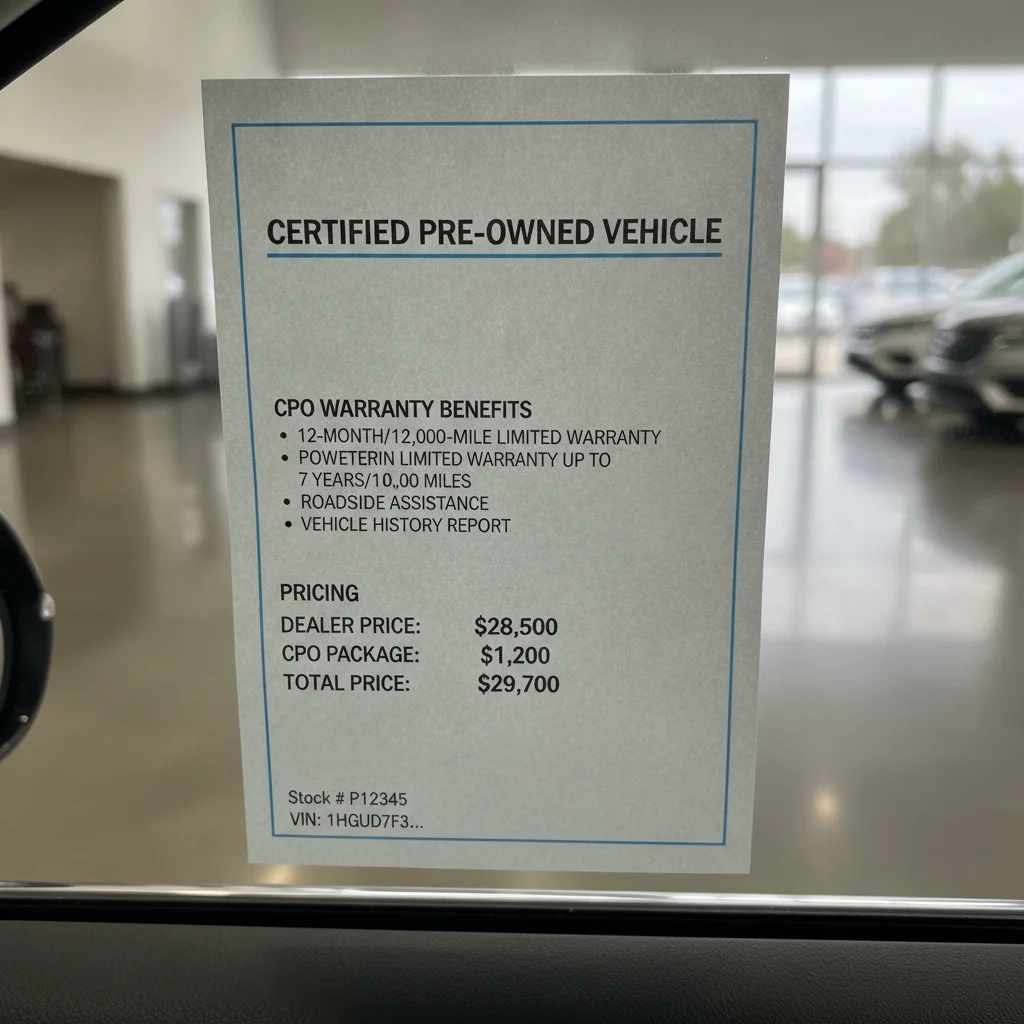
Start with the warranty deductible. Many manufacturer CPO programs carry a $0 or $50 deductible per visit, which sounds great. But some dealer-certified programs charge $200 or more per claim. If the transmission fails and the repair bill is $3,800, a $200 deductible is fine. If you end up making three separate claims in a year, that deductible adds up fast — potentially erasing the benefit of certification entirely.
Then factor in financing. Manufacturer CPO programs often come with special low-rate financing, which is a genuine advantage. But if you're financing through a third-party lender or a dealer who marks up the rate, you could easily pay an extra $600–$1,200 in interest over a 48-month loan just because you chose the CPO car over a similar non-certified vehicle at a lower price. Always get a competing loan quote before you walk into the dealership. Our guide on hidden CPO costs buyers overlook covers doc fees, add-on products, and other charges that erode CPO savings.
$1,000–$3,500
Typical CPO premium over non-certified used vehicles
Based on market analysis of CPO vs. non-CPO listings for comparable vehicles across major manufacturers, 2023–2024.
68%
CPO buyers who received a discount after negotiating
According to a 2023 iSeeCars transaction analysis of CPO vehicle purchases where buyers submitted a below-asking offer.
$1,147
Average savings when CPO buyers negotiated price
iSeeCars 2023 data reflecting average discount received by buyers who negotiated rather than accepting the listed CPO sticker price.
150+
Inspection points on a typical manufacturer CPO checklist
Most major manufacturer CPO programs publish their inspection checklists; dealer-certified programs often inspect far fewer items with no standardized requirement.
$100–$200
Cost of an independent pre-purchase inspection
Pricing varies by region and shop type; most independent mechanics and AAA-approved facilities offer PPIs in this range for passenger vehicles.
Finally, compare the CPO vehicle's asking price against recent private-party and dealer sales of identical non-certified vehicles. Resources like Edmunds True Market Value, Kelley Blue Book, and NADA Guides all provide this data. If the CPO car is priced $3,200 above market and the extended warranty would cost you $1,800 to purchase separately on a non-certified vehicle, the real premium you're paying for certification is only $1,400 — which may be perfectly reasonable. But if the spread is $3,200 and you can buy a comparable aftermarket warranty for $900, you're overpaying by more than $2,000 for the CPO sticker.

How to Negotiate a CPO Vehicle the Right Way
One of the most damaging myths in this article — that CPO prices are fixed — causes buyers to skip negotiation entirely and leave hundreds or thousands of dollars on the table. Here is a simple framework for approaching a CPO negotiation without undermining your credibility.
- Anchor to market data, not sticker price. Pull recent sold listings for the same year, trim, mileage, and color from Autotrader, Cars.com, and CarGurus. If the market average for a non-certified version of this exact vehicle is $24,500 and the dealer is asking $27,200 for the CPO version, you know the implied premium is $2,700. That's your starting point for discussion.
- Request the inspection report before making any offer. Dealers are generally required to provide this on manufacturer CPO vehicles. Review it carefully. Any items flagged as repaired give you legitimate grounds to ask questions; any items noted as within acceptable limits but approaching wear thresholds are potential future expenses for you.
- Negotiate the price separately from financing and trade-in. Dealers sometimes absorb a price concession by tightening the financing rate or lowballing your trade. Keep each element of the deal in its own column.
- Ask about warranty add-ons at the F&I stage. The finance-and-insurance office will almost certainly offer extended warranties, GAP insurance, and paint protection packages. Each of these is negotiable in price, and most are optional. Knowing what you're signing in the finance office before you sit down prevents expensive surprises.
For buyers new to the process, this can feel overwhelming. Our guide to CPO shopping for first-time buyers lays out the full process step by step. And if you want to understand negotiation dynamics more broadly, dealer negotiation myths is worth reading before you set foot on a lot.
Dealer-Certified Is Not Manufacturer-Certified
If a salesperson uses the word 'certified' without specifying that it's a manufacturer program, ask directly. Dealer-certified vehicles can be labeled as such with minimal inspection standards and warranties backed only by the dealership itself. If the dealer closes or is acquired, that coverage may be worthless. Always get the warranty contract in writing before you leave the lot.
F&I Add-Ons Can Erase Your CPO Savings
The finance-and-insurance office at a dealership generates significant profit from add-on products sold after the vehicle price is agreed upon. Extended warranties, GAP insurance, paint sealants, and key replacement packages are all common upsells. On a CPO vehicle you're already paying a premium for, stacking $2,000–$4,000 in F&I add-ons can wipe out any cost advantage entirely. Know which products you actually need before you sit down.
CPO Does Not Mean the Car Was Well Maintained
Certification confirms the vehicle meets the program's condition standards at the time of inspection — it does not tell you how the previous owner treated it over 40,000 miles. A car can pass a CPO inspection while having had infrequent oil changes, neglected tire rotations, or a history of short-trip driving that accelerates engine wear. Ask for maintenance records and verify them independently wherever possible.
The bottom line: CPO is a useful product when the program is strong, the price is fair, and you've independently verified the vehicle's condition. When all three conditions are met, the premium can be money well spent. When any one of them is missing, you're buying a label more than protection.

All claims are backed by peer-reviewed research. Sources on request.