Key Takeaways
Why Trade-In Myths Are So Costly
Trade-in transactions are one of the most misunderstood parts of the car-buying process — and dealerships know it. The average driver approaches a trade-in with a handful of beliefs picked up from casual conversation, online forums, or past experiences that may no longer apply. The problem is that most of those beliefs work against the seller.
I spent years working inside dealership finance offices, watching buyers voluntarily surrender thousands of dollars because they thought washing their car would matter more than getting a competing appraisal, or because they assumed the online estimate they received was locked in. The myths below aren't harmless. Each one has a measurable dollar cost attached to it.
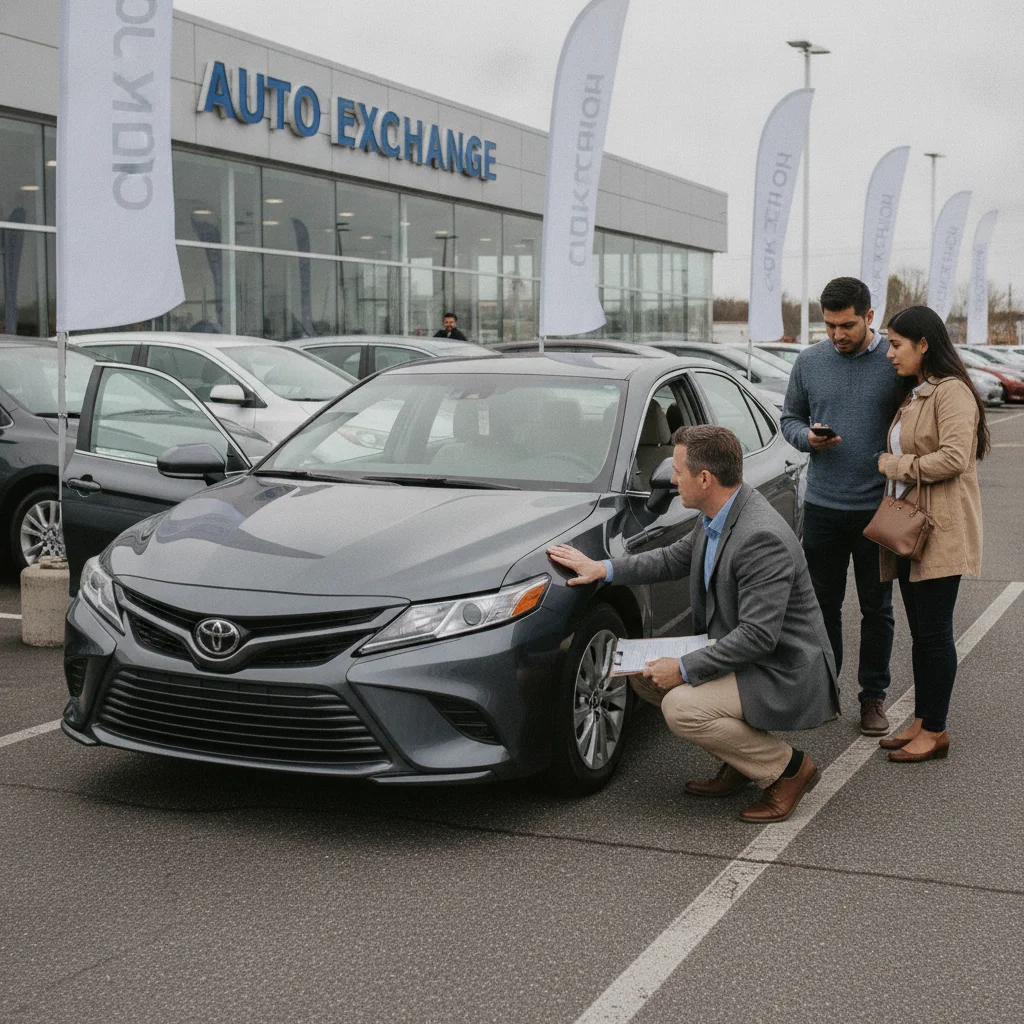
If you've ever wondered why your trade-in offer felt lower than expected, the answer is often rooted in one of these misconceptions. Understanding how appraisals actually work — and what dealers are really doing when they walk around your car — is the first step to walking out with a fair deal. See our guide to dealer trade-in appraisals for a deeper look at the process before you step on the lot.
Myth
Cleaning your car before the appraisal will significantly increase the trade-in offer.
Fact
A clean car makes a better first impression, but professional appraisers are trained to look past surface presentation — the offer difference is rarely more than a few hundred dollars.
This is the most persistent trade-in myth, and dealerships are quietly grateful for it. Sellers spend hours detailing, shampooing carpets, and buying air fresheners believing these efforts will translate into hundreds or thousands of extra dollars at appraisal. They almost never do.
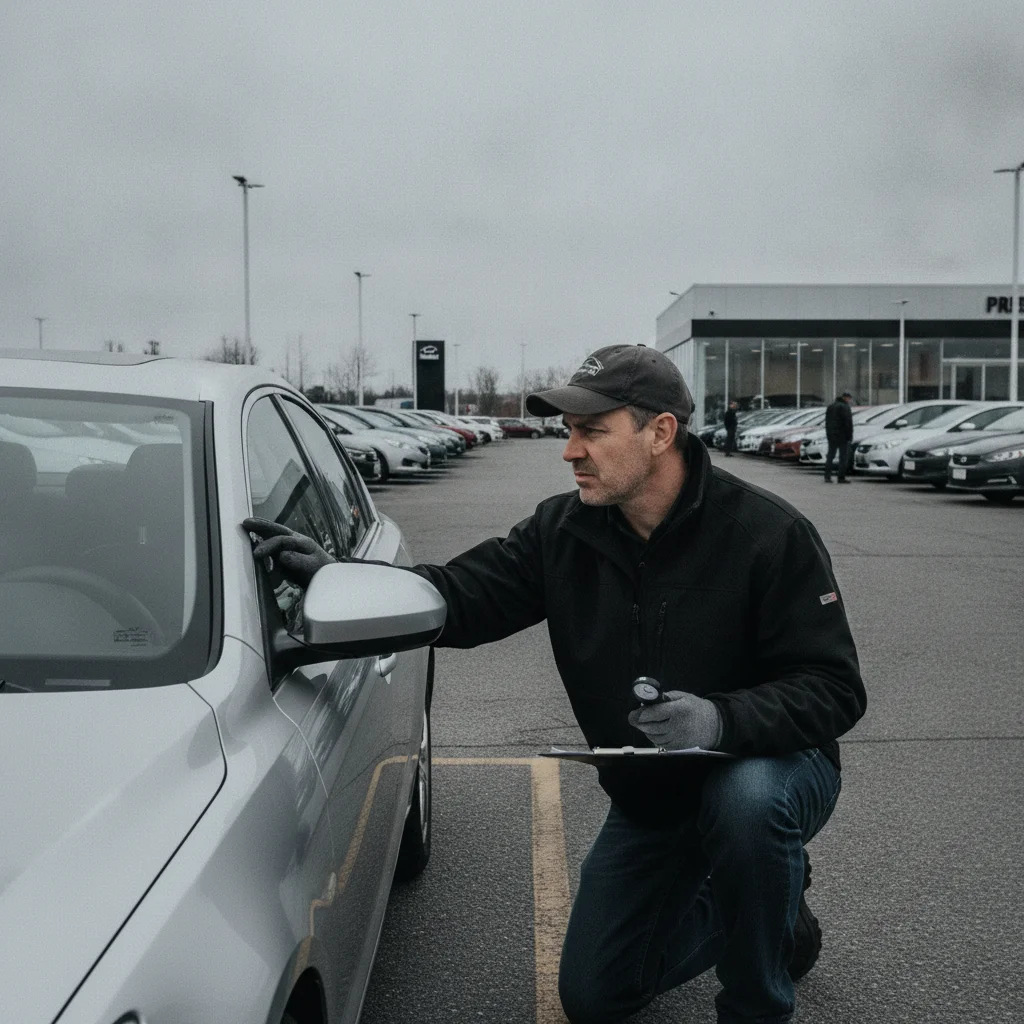
A trained appraiser's job is to assess the vehicle's actual condition relative to its market value — not to be dazzled by a shiny hood. They check VIN history, inspect for paint inconsistencies that signal prior body work, look at tire wear, probe for rust, and pull the vehicle history report. A fresh detail does not change any of those data points. At most, a visibly dirty car might give an appraiser reason to lower their offer slightly by implying poor maintenance habits. A clean car removes that risk — but it doesn't create a premium above baseline.
The practical implication: make sure your car is presentably clean, but don't spend money on a full detail expecting to recover that cost in your offer. That budget is better spent getting a competing appraisal from another dealer, which has a far higher return on time. For more on what actually moves appraisals, see the factors that quietly tank your trade-in value.
Myth
The online trade-in quote I received is what the dealer will actually pay me.
Fact
Online quotes are conditional estimates based on self-reported data — dealers can and routinely do adjust offers downward after a physical inspection.
Instant trade-in quote tools from platforms like Carvana, CarMax, Autotrader, or even dealer websites ask you a series of questions about your vehicle's condition and generate an estimate based on your answers. What they can't do is inspect your car. That gap between self-reported condition and actual condition is where offers frequently drop.
When a driver rates their vehicle as "good" or "excellent" but the inspector finds a cracked bumper, mismatched paint on one door, or a small interior tear, the quote gets adjusted — sometimes significantly. This isn't always bad faith; it's the mechanical outcome of a process that relied on your assessment before the dealer could form their own.
The correct way to use online quotes is as a market benchmark, not a guaranteed number. Get several of them, because the range will tell you something real about your vehicle's demand across buyers. But mentally budget for the possibility that the physical appraisal comes in 5–10% below the online estimate, especially if your vehicle has any deferred maintenance or cosmetic issues. Why your trade-in offer dropped after the test drive explains the mechanics of this adjustment in detail.
Myth
Dealers won't negotiate on trade-in value — the offer is the offer.
Fact
Trade-in values are negotiable, and competing written offers are the most effective tool for pushing them higher.
Many sellers accept a trade-in offer at face value because they believe the appraiser's number is fixed, computed by some objective system that can't be argued with. This belief costs real money. In practice, appraisers have ranges within which they can work, and managers have authority to improve offers when sellers demonstrate they have alternatives.
The single most effective move is walking in with a written competing offer. If CarMax offered you $18,500 and the dealer's appraiser opened at $16,800, handing that CarMax offer across the desk is a concrete, undeniable data point. Most dealers will respond — not always by matching the competitor, but by moving meaningfully in that direction rather than losing the deal entirely.
What doesn't work is simply saying "I think it's worth more" without evidence. Dealers hear that constantly and discount it. Written offers from legitimate buyers are the currency of trade-in negotiation. For a fuller playbook, see why dealers lowball trade-ins and what you can do about it and common myths about dealer negotiation.
Myth
Fixing mechanical issues before trading in will increase the offer by more than the repair cost.
Fact
Dealers apply wholesale reconditioning rates to vehicles and rarely give sellers full retail credit for repairs — most pre-trade repairs generate a net loss.
It feels logical: if a car needs $600 in brake work, fixing it before trading in should raise the offer by at least $600, right? In practice, it almost never works out that way. Here's why.
When an appraiser identifies a mechanical issue, they estimate the dealer's cost to fix it — not what you'd pay at a retail shop. Dealers have in-house service departments, technician labor rates at or below retail, and wholesale parts pricing. Your $600 brake job might cost their shop $280. They'll deduct their cost from the offer, not yours. So if you spend $600 fixing the brakes to "protect" your offer, and the dealer would have only discounted $280 for it, you've lost $320.
The exception is deferred maintenance that directly affects the vehicle's ability to pass a dealer's safety check or that would show up on a pre-purchase inspection in a way that signals neglect — things like a check engine light that indicates a real problem, severely worn tires, or a cracked windshield. Address glaring items that would genuinely raise red flags. Skip the ambitious repairs that only make sense at retail pricing. The math rarely works in your favor otherwise.
Myth
Trading in at the same dealer where you're buying is more convenient and just as profitable as selling privately.
Fact
Private-party sales consistently yield more money than dealer trade-ins — the gap typically runs 10–20% or more depending on the vehicle.
Convenience has a price, and in the trade-in context it can be a steep one. Dealers need margin on every vehicle they acquire for resale, which means they will never offer you what the open market will pay. The difference between a dealer's trade-in offer and what you could net on a private sale or via a direct-to-consumer platform is not trivial — on a $20,000 vehicle, that 10–20% gap represents $2,000 to $4,000 in after-tax income.
That said, private-party selling isn't for everyone. It requires time, patience, dealing with strangers, and accepting the risk that a sale falls through at the last minute. The tax benefit of trading in — in most states, you pay sales tax only on the difference between the new vehicle price and the trade-in allowance — can also narrow the gap, though rarely eliminates it entirely.
The smart approach is to know the gap before you decide, not after. Get a realistic private-party value estimate, compare it to your best dealer offer (including the tax benefit), and make the decision with actual numbers. For context on how depreciation affects that private-party number, see myths about car depreciation that lead sellers to misprice their vehicles.
Myth
If you owe more on your car than it's worth, you can't trade it in.
Fact
You can trade in a car with negative equity, but the remaining balance rolls into your new loan — often with significant long-term cost.
Negative equity — being "upside down" on a loan — doesn't prevent a trade-in. Dealers complete these transactions every day. What it does mean is that the difference between what you owe and what the dealer pays for your trade gets added to your new vehicle's financing. If you owe $18,000 and the dealer offers $14,500, that $3,500 deficit typically rolls into the new loan.
This is one of the mechanisms that creates a cycle of perpetual negative equity. If you roll $3,500 into a new loan, your new vehicle immediately starts depreciating, and you're starting already underwater. Do it repeatedly, and the negative equity compounds over multiple purchase cycles, each time making the numbers look worse at trade-in time.
The alternative isn't always to wait — sometimes a trade is the right financial move even with negative equity. But the decision should be made with eyes open to the full math. Know your exact payoff, know your trade value, and model what the rolled-in negative equity does to your total cost of ownership on the new vehicle before signing anything. The dealer trade-in process explained covers equity calculations in detail.
Myth
All dealers will appraise my car at roughly the same value, so there's no point in shopping around.
Fact
Trade-in offers for the same vehicle can vary by thousands of dollars across different dealers depending on their current inventory needs and local market conditions.
This myth causes enormous passive losses. Sellers who believe appraisals are standardized make one stop and accept whatever number they receive, assuming it reflects some universal market truth. It doesn't.
A franchise dealer who is overstocked with your make and model has less incentive to pay a strong price for it — they already have inventory to move. A dealer two miles away who has sold all three of their used versions of your vehicle in the past 30 days is highly motivated to acquire more. The same car, same mileage, same condition — two very different offers driven entirely by that dealer's current inventory position and local demand.
Beyond franchise dealers, independent used-car lots, regional chains, and direct-to-consumer platforms like CarMax or Carvana each operate with different margin structures and acquisition strategies. A vehicle that fits a dealer's current lot needs will appraise higher there than at a dealer who doesn't specialize in that type. Getting at least three competing appraisals is not paranoid — it's the minimum due diligence for a transaction that can swing by thousands of dollars. See signs a dealer is undervaluing your trade-in to recognize when a low offer isn't a fair one.
The Negotiation Myths That Hurt You Most
Beyond the valuation myths, a second category of damaging beliefs surrounds how trade-in negotiations actually work. Most drivers enter negotiations with a fundamentally flawed mental model of what's happening on the other side of the desk. The result is that they give away leverage they didn't know they had.

The most consequential error is allowing the purchase negotiation and the trade-in appraisal to happen simultaneously. When a salesperson asks "what are you looking to get out of your trade?" while also discussing the price of the new vehicle, they're gathering information to structure a deal that looks favorable on paper but benefits the house. A higher trade-in allowance can be quietly offset by a higher sale price — and most buyers never notice because they're focused on the monthly payment.
Effective dealer negotiation requires separating these two transactions as completely as possible. Get your trade-in appraised and get that number in writing before you ever discuss what you're buying or what you're paying for it. If a salesperson resists separating the two, that resistance itself tells you something important about how the deal is being structured.
10–20%
Trade-in vs. private-sale value gap
Industry data consistently shows dealer trade-in offers running 10–20% below comparable private-party sale prices for the same vehicle.
$3,000+
Typical range of competing trade-in offers
According to Edmunds research, offers from different buyers for the same vehicle can vary by $3,000 or more depending on dealer inventory and local demand.
1 in 3
Car buyers who negotiate their trade-in
Research from Cox Automotive suggests fewer than one-third of car sellers attempt to negotiate the initial trade-in offer they receive.
Never Reveal Your Payoff Balance First
Telling a salesperson how much you owe on your current vehicle before an appraisal is complete hands them a negotiating advantage they will use. If you owe $15,000 and they know it, an offer of $15,200 may feel acceptable even if your vehicle is worth $17,500. Get the appraisal number first, then discuss payoff and equity separately.
Monthly Payment Framing Hides Trade-In Losses
When a dealer wraps the trade-in discussion into a monthly payment calculation, it becomes extremely difficult to evaluate whether the trade-in offer itself is fair. A $1,500 shortfall on your trade-in spread across 60 months is only $25/month — easy to miss, expensive over time. Always evaluate the trade-in offer as a standalone dollar amount before you let it get folded into a payment structure.
What Actually Moves Your Trade-In Number
Once you've cleared out the myths, you can focus on the factors that genuinely affect appraisal value. Market demand is the single biggest driver. A used pickup truck in a region where pickups sell fast will appraise significantly higher than the same truck in a market saturated with them. This is why getting multiple appraisals from different dealer types — franchise dealers, independent lots, and direct-to-consumer platforms — often produces a wide range of offers for the same vehicle.
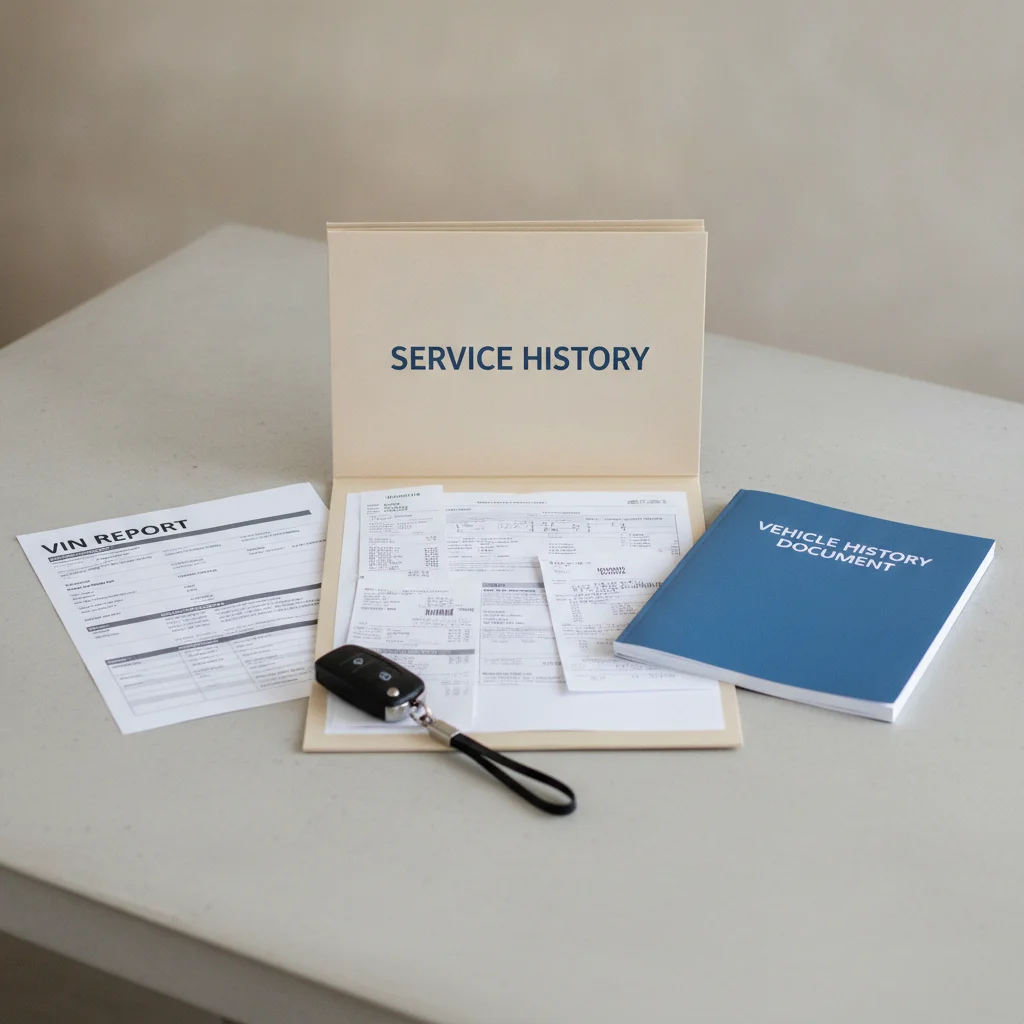
Trim level, color, and documented service history matter more than most sellers realize. A base trim sedan appraises lower than the same model at a higher trim even with identical mileage, because the dealer knows what each will sell for on their lot. Similarly, a vehicle with a complete service record at a franchised dealership signals lower reconditioning costs, which dealers factor into their offer. These are the details worth investing time in — not a car wash.
Your payoff amount on an existing loan is another often-misunderstood variable. Equity or negative equity directly affects your net position in a trade, and conflating trade-in value with net trade equity is a mistake dealers occasionally exploit. Know your exact payoff before any appraisal conversation begins. For a full picture of what quietly depresses appraisals, read about the factors that quietly tank your trade-in value.
Separate These Two Negotiations Completely
The single most important structural move in any trade-in transaction is to complete the trade-in appraisal and receive a written offer before any conversation about the vehicle you're purchasing begins. When these are negotiated together, dealers have the ability to give with one hand and take with the other — raising the trade-in allowance while quietly raising the sale price or adjusting terms elsewhere. Get the trade-in number in writing first. Period.
How to Use These Insights Before Your Next Trade-In
Correcting your mental model is valuable only if it changes what you actually do. Here's a practical sequence that incorporates everything above:
- Pull your own data first. Use Kelley Blue Book, Edmunds, and NADA to establish a realistic value range before any dealer sees your car. These are starting points, not guarantees, but they anchor your expectations correctly.
- Get at least three appraisals. Visit a franchise dealer, an independent dealer, and at least one direct-to-consumer platform. Written offers from competitors are negotiating tools — use them.
- Know your payoff. Call your lender and get the exact 10-day payoff figure before you step onto any lot. This prevents the equity confusion dealers sometimes exploit.
- Separate the transactions. Tell the salesperson upfront: "I'd like to get a trade-in appraisal before we discuss the new vehicle." A dealer who refuses to provide a standalone appraisal is a dealer to be cautious about.
- Don't over-invest in prep. A clean, presentable car is appropriate. Spending $800 on repairs or $200 on detailing in hopes of recovering it at appraisal is almost always a losing calculation.
Trade-in regrets are preventable. The drivers who walk away feeling they left money on the table almost always did — but it was rarely because their car wasn't worth more. It was because they negotiated without information. For more on avoidable errors, see trade-in regrets experienced sellers wish they could undo and trade-in pitfalls even experienced sellers fall into.


All claims are backed by peer-reviewed research. Sources on request.