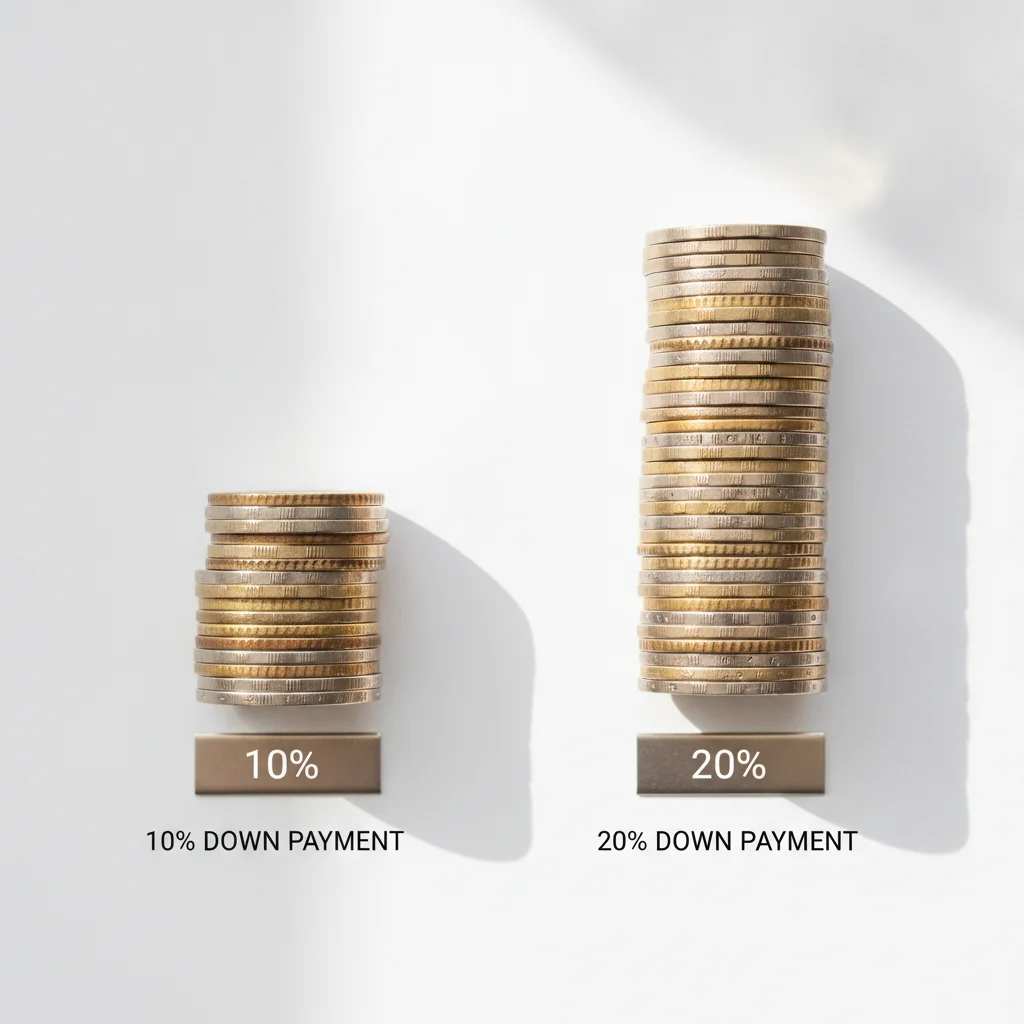
Key Takeaways
Why Down Payment Myths Are So Costly
Few decisions in a car purchase carry as much long-term weight as your down payment—and few are surrounded by as much misinformation. Some buyers overpay upfront because they've heard a magic number from a family member. Others skip the down payment entirely after seeing a "no money down" ad and assume they're getting a deal. In both cases, bad information is doing real financial damage.
A down payment is simply the portion of the purchase price you pay out of pocket at the time of sale. The remainder gets financed. That ratio—cash now versus borrowed later—shapes your loan-to-value ratio, your monthly payment, your total interest bill, and even your exposure to negative equity (owing more than the car is worth).
The myths around down payments are stubborn because they contain a kernel of truth. The 20% rule is a solid benchmark in many situations. Zero down can work for buyers with excellent credit in specific circumstances. But applying any rule blindly, without running the actual numbers for your scenario, is where buyers get hurt.
This article works through the most common misconceptions one by one—with real numbers—so you can make an informed decision rather than one based on habit or hearsay. And if you want to see how down payment myths intersect with broader car buying misconceptions, check out new car buying myths that cost people real money.

The Myths, Fact-Checked
Below are the most persistent down payment myths buyers bring to the dealership—corrected with evidence and explained with the financial mechanics behind each one. Whether you're financing a new vehicle or a used car, these corrections apply.
Myth
You always need to put 20% down on a car to get a good deal.
Fact
20% is a useful benchmark, not a universal requirement. The right down payment depends on your loan rate, credit profile, and cash position.
The 20% rule comes from mortgage lending, where it helps borrowers avoid private mortgage insurance and maintain solid equity. Applied to auto loans, it's been repeated so often it feels like law—but it isn't.
Auto loan lenders don't charge PMI. The benefit of 20% down in car buying is real but situational: it typically keeps you ahead of first-year depreciation and reduces your loan balance enough to improve your rate tier with many lenders. However, a buyer with excellent credit (750+) financing a new vehicle at a low APR may be perfectly served by 10% down. Meanwhile, a buyer with a subprime credit score financing a high-depreciation vehicle might genuinely benefit from more than 20%.
The key variable is your loan-to-value ratio and the interest rate it earns you—not hitting an arbitrary percentage. Model out what 10%, 15%, and 20% actually cost in total interest for your specific loan before committing to a number.
Myth
Putting no money down is fine—you'll just roll it into the monthly payment.
Fact
Zero-down financing costs significantly more in total interest and puts you at immediate risk of negative equity.
"No money down" ads are marketing, not financial advice. When you finance 100% of a vehicle's purchase price—often including taxes, fees, and dealer add-ons—you're borrowing a number that already exceeds the car's market value on the day you drive off the lot.
Consider a $30,000 vehicle financed at 8% APR over 60 months with $0 down. You'll pay approximately $6,498 in interest over the loan term. Put $4,500 (15%) down instead, and interest drops to roughly $5,523—a savings of nearly $975, plus you avoid the negative equity window entirely.
The monthly payment difference between 0% and 15% down on that same loan is about $75/month. Many buyers focus only on whether that monthly number is affordable, missing the much larger total cost picture. Rolling everything into the payment is a choice, but it should be a deliberate one with full awareness of the cost.
Myth
A large down payment will get you a lower price on the car.
Fact
Down payment size and purchase price are separate negotiations—dealers don't discount sticker price because you're paying more upfront.
This myth conflates two separate transactions: the purchase price negotiation and the financing structure. Dealers typically work in terms of monthly payment, not total price. When you announce a large down payment before negotiating price, you've actually given the dealer information they can use against you—they know you're committed and have the cash.
Best practice: negotiate the out-the-door price first, as if you were paying cash. Only after the price is locked should you discuss financing and down payment. At that point, your down payment affects the loan amount, not the price you already agreed to.
A large down payment can help secure loan approval or a better rate in some cases, but it does not give you leverage to reduce the vehicle's selling price. Those are two different conversations with two different people—the salesperson and the finance manager.
Myth
Down payments only matter for your monthly payment amount.
Fact
Down payments affect your total interest paid, your loan-to-value ratio, your equity position, and your exposure to being underwater.
Monthly payment is one of the least important metrics to optimize in a car loan—it's easily manipulated by stretching the loan term. What actually matters is total cost of ownership, equity position, and financial risk.
A down payment affects all of these. A higher down payment immediately builds equity, reducing or eliminating the negative equity window that typically lasts 12–24 months on new cars with no money down. It lowers the principal, which reduces the interest that compounds against you every month. And in a total-loss accident or forced sale, more equity means less financial exposure.
Buyers who fixate on monthly payment often end up with 72- or 84-month loans where equity builds very slowly. Combined with minimal down payments, this is the primary driver of the epidemic of negative equity in auto lending. As of recent reporting, more than one in three trade-in vehicles carried negative equity at the time of trade.
Myth
You should always put down as much money as possible.
Fact
Maximizing your down payment is not always optimal—opportunity cost, emergency reserves, and high-interest debt can make smaller down payments smarter.
This myth is the mirror image of the zero-down myth, and it's equally problematic. Tying up all your liquid cash in a down payment can leave you financially vulnerable and may cost you more money than it saves.
Three specific scenarios where less down is better:
- High-interest debt on your books: If you're paying 22% APR on a credit card balance, every dollar toward that balance saves you more than a dollar toward a 7% auto loan would.
- Depleted emergency fund: Financial advisors generally recommend 3–6 months of expenses in liquid reserves. Draining that fund for a car down payment trades one financial risk for another.
- 0% or near-zero APR promotional offers: When manufacturer financing is free or near-free, the opportunity cost of a large down payment—cash that could be earning 4–5% in a high-yield account—means minimizing the down payment actually makes you money.
The goal is to optimize total financial outcomes, not to maximize a single variable. Run the numbers against your specific rate, not a hypothetical.
Myth
Trade-in value counts the same as a cash down payment.
Fact
Trade-in value functions similarly to a cash down payment in reducing your loan balance, but it carries unique tax implications and negotiation risks.
In most states, trading in a vehicle reduces the taxable purchase price of the new car—meaning a $10,000 trade-in saves you sales tax on $10,000 of the new vehicle's price. In a state with 8% sales tax, that's $800 in savings you wouldn't get from a separate private sale.
However, trade-in value is a separate negotiation that dealers routinely muddy by blending it with the purchase price and financing discussion. A dealer may appear to "give" you more for your trade while quietly adjusting the new car price or interest rate upward.
The correct approach: negotiate your trade-in value and your new car price as separate, independent transactions. Get a written trade-in offer from CarMax, Carvana, or another third party before walking in—this gives you a floor to negotiate from. Once you know your trade-in value independently, it absolutely functions as a down payment equivalent in reducing your financed amount and improving your LTV.
33%+
Trade-ins with negative equity at time of sale
Edmunds data consistently shows more than one in three vehicles traded in carry outstanding loan balances exceeding the vehicle's value.
~20%
Average new car depreciation in year one
According to Kelley Blue Book and industry data, most new vehicles lose approximately 20% of their value within the first 12 months of ownership.
$1,100+
Interest saved with $5,000 larger down payment
On a 72-month loan at 8% APR, a $5,000 increase in down payment reduces total interest paid by over $1,100 based on standard amortization calculations.
72 months
Most common new car loan term in the US
Experian's State of the Automotive Finance Market reports that 72-month loan terms now represent the most common new vehicle financing length in the United States.
How Down Payment Interacts With Your Loan Terms
Understanding down payment myths is only half the picture. The other half is seeing how your upfront cash actually interacts with the mechanics of an auto loan.
The Loan-to-Value Ratio
Lenders care deeply about your loan-to-value (LTV) ratio—the loan amount divided by the car's value. If you buy a $32,000 vehicle and put $6,400 down (20%), your LTV is 80%. If you put nothing down, your LTV is 100%—or higher if taxes and fees are rolled in, which can push it to 110% or more.
A lower LTV means less risk for the lender, which often translates to a better interest rate for you. Many lenders tier their rates based on LTV thresholds. Crossing from 100% LTV to 90% LTV by putting 10% down can shave meaningful percentage points off your rate, depending on the lender and your credit profile.
The Negative Equity Trap
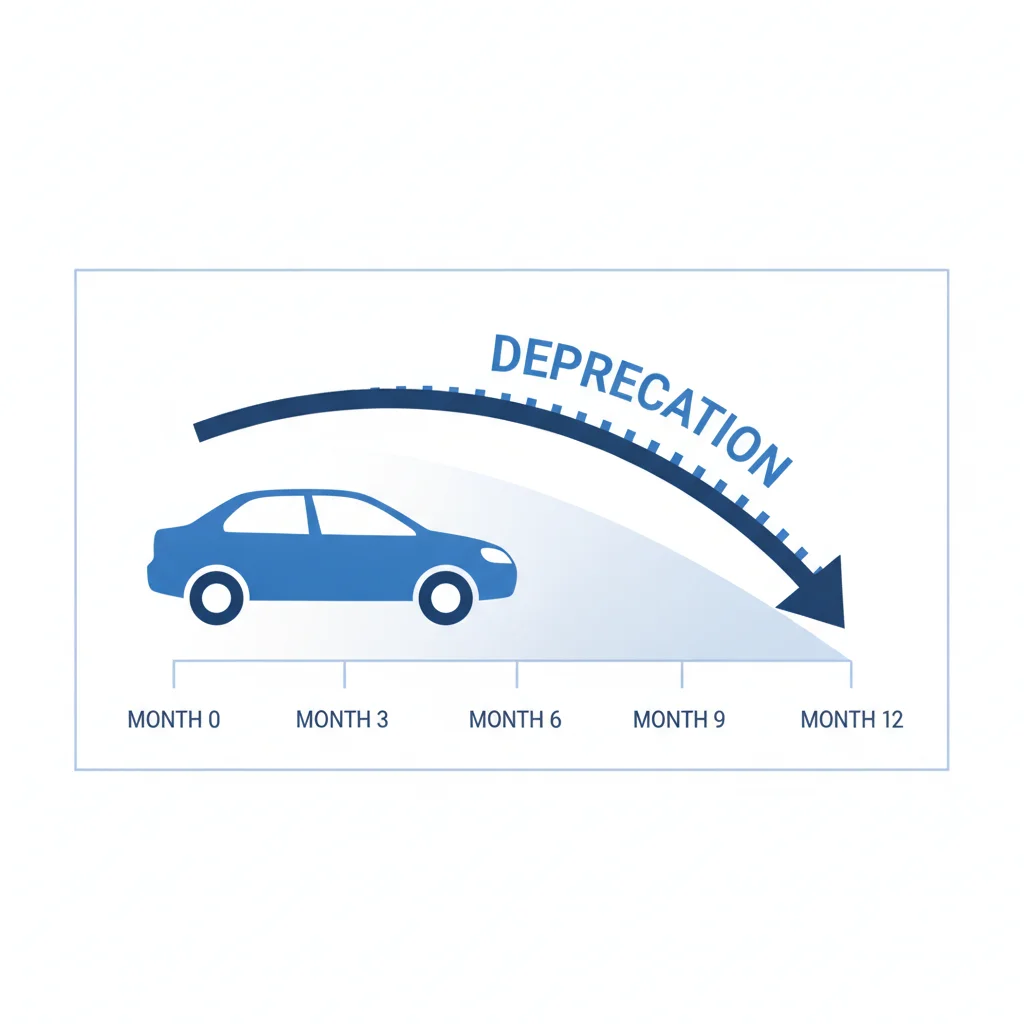
New cars depreciate roughly 20% in the first year alone. If you finance 100% of a $35,000 vehicle with no down payment, you may owe $33,000 after a year while the car is worth only $28,000. That $5,000 gap is negative equity—and it becomes a serious problem if you need to sell, trade in, or if the car is totaled.
A 10–15% down payment on most vehicles is enough to stay ahead of first-year depreciation, keeping you in positive equity from day one. For a deeper numerical breakdown, see no down payment vs. 20% down: a real-world cost comparison.
Gap Insurance Is Not a Substitute for a Down Payment
Some buyers skip a meaningful down payment and purchase gap insurance instead, assuming the coverage eliminates all risk. Gap insurance covers the difference between what you owe and what your insurer pays in a total loss—but it doesn't help you if you need to sell the car voluntarily, trade it in, or simply want to exit the loan. A real down payment builds actual equity; gap insurance only patches one specific risk scenario.
Watch for Dealer 'Down Payment' Padding
Dealers sometimes present your down payment as lower than it is by rolling fees, accessories, or warranty costs into the financed amount. Always verify that the down payment shown on your contract matches exactly what you handed over in cash or trade-in credit. Any fees added to the loan reduce the effective benefit of your down payment and increase your LTV—review the itemized purchase breakdown before signing.
Interest Savings Are Compounding
Every dollar you borrow costs you interest every month for the life of the loan. On a 60-month loan at 7% APR, every $1,000 you borrow costs roughly $130 in interest over the term. Put $3,000 more down and you save approximately $390 in interest—before even accounting for the rate improvement a lower LTV might earn you.
These savings stack. A $5,000 larger down payment on a 72-month loan at 8% APR saves over $1,100 in interest alone. That's money that stays in your pocket or can be redirected toward other financial goals.
When a Smaller Down Payment Actually Makes Sense
Correcting myths doesn't mean the answer is always "put down as much as possible." There are legitimate scenarios where a smaller down payment is the smarter financial move.
When Your Cash Has a Higher Return Elsewhere
If you're carrying high-interest debt—say, a credit card at 22% APR—paying that down may generate a better financial return than putting extra cash toward a 6% auto loan. The math here is straightforward: eliminate the higher-rate debt first, then optimize the lower-rate debt.
When the Car Is Nearing the End of Its Useful Life
Putting $5,000 down on a $12,000 used vehicle with 90,000 miles may not be wise if the car needs significant repairs in 18 months. In this case, keeping cash in reserve protects you more than reducing your loan balance does. This is particularly relevant when buying older used vehicles without certified pre-owned coverage.
When You Have a 0% or Near-Zero APR Offer
If a manufacturer is offering 0% APR financing on a new vehicle, the cost of borrowing is effectively zero. In this scenario, putting the minimum required down and investing the rest in a high-yield savings account (currently yielding 4–5%) actually earns you money. The down payment decision is always a function of the borrowing cost versus the opportunity cost of your cash.
For a side-by-side comparison of exactly how 10% and 20% down payments perform across these variables, see how 10% vs. 20% down plays out in practice.
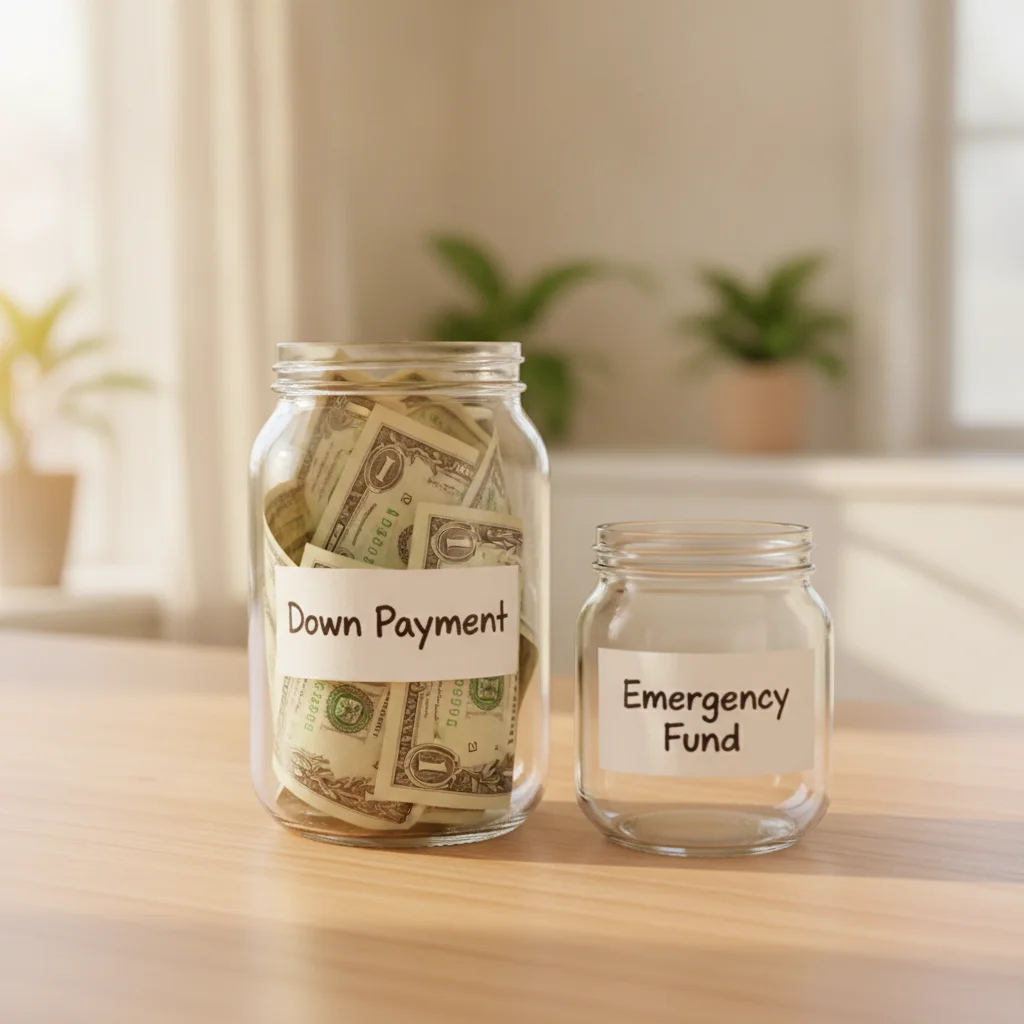
Don't Drain Your Emergency Fund for a Down Payment
Putting every available dollar into a down payment while leaving yourself with no liquid reserves is one of the most common financial mistakes in car buying. If an unexpected expense hits—job loss, medical bill, car repair—you'll have no cushion. A sound rule: maintain at least 3 months of living expenses in accessible savings before making a large down payment. A lower down payment with a healthy emergency fund is almost always the safer financial position.
Connecting Down Payments to Your Full Financial Picture
A down payment decision doesn't exist in isolation. It connects to your credit score, your insurance coverage, and the total paperwork you'll sign at the dealership. Here's how each of those intersections works.
Credit Score and Down Payment Work Together
Your credit score determines what interest rates you qualify for; your down payment affects the lender's risk exposure and LTV. Together, they define your loan's total cost. A buyer with a 680 credit score and 20% down may get a better rate than a buyer with a 720 score and 0% down, because the higher equity reduces lender risk. For more on how your score affects the deal, see credit score myths that trip up car buyers.
Insurance Exposure
If you're in an at-fault accident and your car is totaled, your insurance pays the car's actual cash value—not what you owe. If you're underwater on your loan, you're left paying the difference out of pocket unless you carry gap insurance. Buyers who put little or nothing down are far more exposed to this scenario in the first 12–18 months of ownership. A meaningful down payment is one of the simplest ways to reduce this risk without paying for an extra insurance product.
What You'll Sign at the Dealership
Your down payment amount shows up in the purchase contract, the financing agreement, and sometimes in dealer-arranged incentive paperwork. Understanding those documents—and how your down payment is reflected in each—is part of a smart purchase. Review the key paperwork and contracts involved in a car purchase before you sit down at the finance desk.
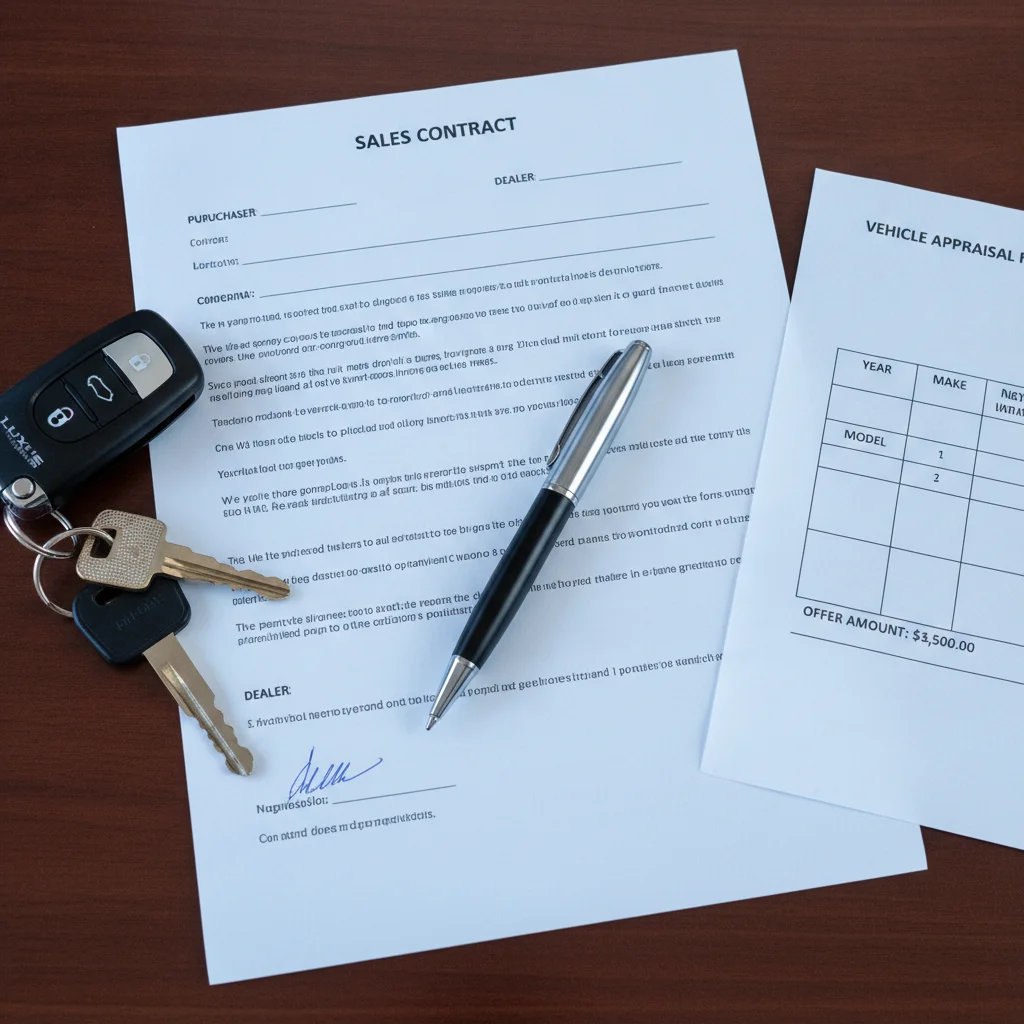
Negotiation Leverage
A larger down payment can also work as a negotiating signal—it demonstrates financial seriousness and reduces dealer risk on a deal. But don't confuse this with the myth that a big down payment automatically gets you a lower price. The price negotiation and the financing structure are separate conversations. For more on separating those two conversations effectively, see common myths about car dealer negotiation that cost buyers money.
Putting It All Together
Down payment decisions benefit from one thing above all: actual numbers. Take your specific vehicle price, the interest rate you qualify for, the loan term, and your available cash—then model out two or three scenarios. The difference between 5%, 10%, and 20% down is not abstract; it shows up in monthly payments, total interest paid, and your equity position every month until the loan is paid off.
The myths in this article are worth unlearning because they either push buyers to over-invest upfront when their cash could work harder elsewhere, or they convince buyers that skipping a down payment is costless when it clearly isn't. Reality is more nuanced than any single rule.
Use the 20% benchmark as a starting point, not a finish line. Run the numbers for your situation. And if you're evaluating a used car purchase where the down payment calculus looks different, used car myths that cost buyers real money walks through the most common misconceptions that trap used-car buyers specifically.
The goal isn't to put down as much as possible or as little as possible—it's to put down the right amount for your financial situation, the vehicle you're buying, and the loan terms available to you.

All claims are backed by peer-reviewed research. Sources on request.