Key Takeaways
Why Odometer Mileage Can Mislead You
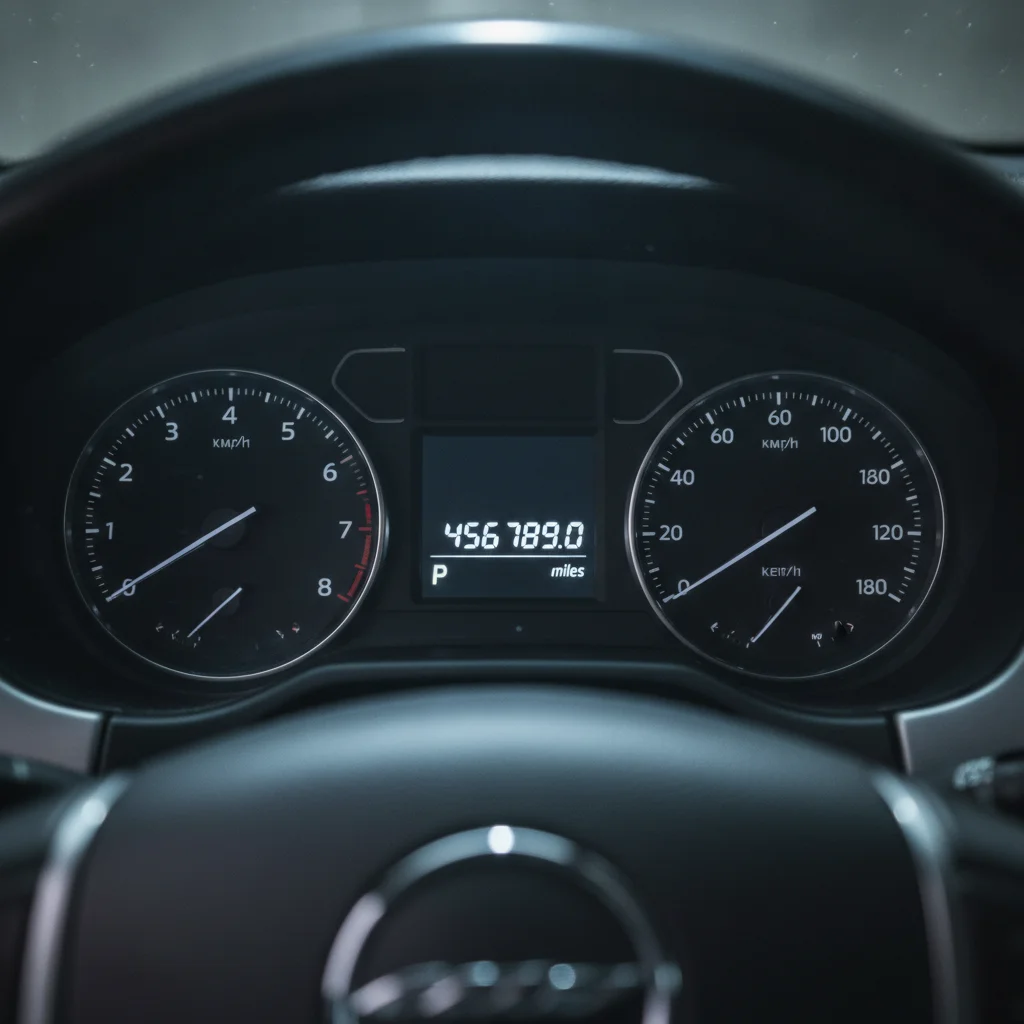
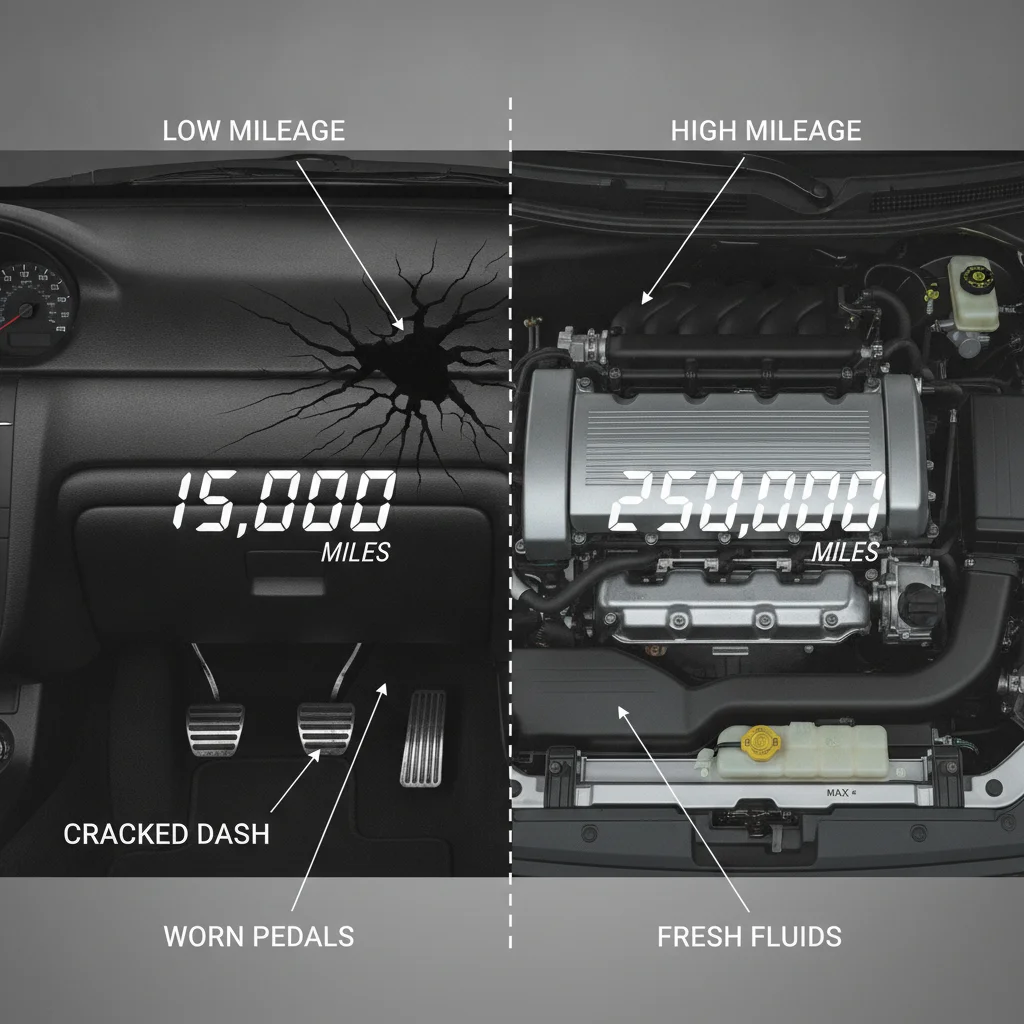
The first number most buyers look at is the odometer reading. It's a quick, digestible proxy for how hard a car has been used — and it's also one of the most easily misread signals in any used-car transaction. A car showing 42,000 miles sounds pristine. But if those 42,000 miles were all stop-and-go city commuting, the engine, transmission, and brakes may have absorbed punishment equivalent to 80,000 highway miles. Conversely, a car with 110,000 miles that was babied on the highway with consistent oil changes might be mechanically sounder than that city commuter.
Then there's outright fraud. The NHTSA estimates that more than 450,000 vehicles are sold each year in the U.S. with falsified odometer readings, costing buyers an estimated $1 billion annually. Odometer rollback is a federal felony under the Federal Odometer Act, but enforcement is inconsistent and detection often falls to the buyer.
The practical takeaway: treat the odometer number as a starting hypothesis, not a conclusion. Your job as a buyer is to verify that hypothesis against every physical surface you can inspect. This article gives you a systematic way to do that.
For a broader look at what odometer numbers actually signal about value and reliability, see what odometer readings actually tell you about a car's condition.
Common Myths About Mileage and Condition
Before walking through the physical inspection checklist, it helps to clear up the most persistent misconceptions buyers bring into the process. These myths cost people money — either by making them overpay for a low-mileage car in poor shape, or by causing them to pass on a high-mileage car that's actually a solid buy.
Myth
A low odometer reading guarantees the car is in good condition.
Fact
Low mileage tells you how far a car has traveled, not how hard it was driven or how well it was maintained.
City driving — repeated short trips, heavy braking, frequent idling — creates far more wear per mile than highway cruising. A vehicle with 35,000 urban miles on a fleet or rideshare duty cycle may have more brake, transmission, and engine wear than an 80,000-mile highway commuter. Short trips also prevent the engine from fully warming up, which accelerates oil contamination and cylinder wear over time.
The physical evidence almost always tells the real story. A car with genuine low-mileage, low-stress use will have fresh-looking pedal rubber, minimal seat bolster cracking, and consistent tread depth across all four tires. When those indicators are inconsistent with the claimed mileage, trust the wear pattern over the number.
Myth
High mileage always means the car is worn out and not worth buying.
Fact
A well-maintained high-mileage car can be more reliable than a neglected low-mileage one — maintenance history matters more than the number itself.
Modern engines and transmissions are engineered to run well past 150,000 miles when properly serviced. The critical variables are oil change consistency, coolant flushes, timing belt or chain replacement at the manufacturer's interval, and transmission fluid changes. A car with 140,000 documented highway miles, fresh fluids, and a full service history is often a better buy than a 60,000-mile car with no records and sludged oil.
Buyers who reflexively pass on anything over 100,000 miles are limiting their options unnecessarily — and often paying a premium for low mileage that doesn't correspond to better condition. High-mileage vehicles can still command fair prices when maintenance documentation is solid.
Myth
If a car's Carfax report looks clean, the mileage must be accurate.
Fact
Vehicle history reports only capture events reported to the system — private maintenance, odometer fraud between reported intervals, and some accidents go undetected.
Carfax and AutoCheck compile data from insurance companies, dealerships, DMV transfers, and some repair shops. Private party oil changes, cash-paid body shop repairs, and odometer tampering done between state inspections or title transfers often leave no trace in these databases. A gap of 20,000 miles between two service records with no explanation is a classic sign of potential rollback.
Always cross-reference the history report's mileage entries against the physical wear evidence you observe in person. The report is a useful starting point, not a guarantee. If reported mileage jumps backward at any point — even by a small amount — treat that as a serious red flag requiring direct explanation from the seller.
Myth
A seller who recently replaced worn parts (tires, brakes, seat covers) is being upfront about the car's condition.
Fact
Selective part replacement before a sale can be used to conceal high use — inspect what can't easily be swapped out.
New tires, fresh brake pads, and a reupholstered seat are legitimate pre-sale improvements — but they can also mask evidence of heavy use. A seller who replaced the tires without mentioning why, or who reupholstered only the driver's seat, may be covering wear indicators that would reveal the car's true usage history.
Focus your inspection on items that are expensive or impractical to replace: the brake rotors (look for grooves and lip depth through the wheel spokes), door hinge tightness, engine mounts, and the condition of underhood rubber components. These can't be cosmetically refreshed cheaply, so they retain their honesty. Also check tire wear patterns even on new tires — if the car has alignment or suspension problems, new tires will start wearing unevenly within a few thousand miles.
Myth
A car that's been sitting in a garage with low mileage is automatically a great deal.
Fact
Long-term storage causes its own category of deterioration — dry rot, corrosion, and fluid degradation — that has nothing to do with miles driven.
Extended storage without regular exercise is genuinely hard on a vehicle. Rubber seals, brake hoses, and tires dry-rot. Brake calipers and rotors corrode and can seize. Fuel degrades and varnishes injectors. Coolant loses its corrosion inhibitors. A 10-year-old car with 15,000 miles may need $3,000–$5,000 in deferred maintenance before it's reliably drivable — brake system overhaul, fuel system cleaning, cooling system service, and new rubber throughout.
When evaluating a stored low-mileage car, the inspection focus shifts from wear to deterioration. Press on all visible hoses and check for cracking. Inspect the brake lines and calipers for rust. Pull the fuel cap and smell for varnish. Ask specifically when the car was last driven regularly, and factor reconditioning costs into your offer.
Myth
You can spot odometer fraud just by looking at the car.
Fact
Odometer rollback on modern digital odometers can be nearly invisible — you need documentary and physical evidence to detect it reliably.
Analog odometers used to show obvious tampering — misaligned digits, scratched housings. Digital odometers can be reset with commercially available devices in minutes, leaving no visible trace on the cluster itself. The cluster may even look factory-perfect. Detection requires cross-referencing multiple data points: vehicle history report mileage entries, manufacturer's service records pulled by VIN, state inspection stickers in the door jamb, and physical wear evidence that should correlate with the claimed mileage.
Federal law requires sellers to disclose odometer readings on title transfers, and providing false information is a felony. But prosecution requires proving intent, which is difficult. Your best protection is treating the physical inspection as your primary evidence and the odometer as one data point among many. For a broader look at how mileage affects buyer psychology and pricing, see the mileage thresholds that trigger buyer hesitation.
The Physical Inspection Checklist: Six Places Wear Hides
No seller can replace every wear indicator before a sale. It's expensive, time-consuming, and some items — like stretched door hinges or a glazed brake pedal rubber — are easy to overlook during prep. Run through each of these six zones methodically, ideally in daylight.
1. Brake and Accelerator Pedal Surfaces
Factory rubber pedal covers typically last 60,000–80,000 miles before showing significant wear. If the brake pedal rubber is heavily grooved or the accelerator pedal has a polished, worn-through center, the car has seen heavy use regardless of what the odometer says. Replacement pedal covers sell for under $30, so a savvy seller might swap them — check whether they're perfectly new-looking on an otherwise aged interior, which itself is a red flag.
2. Steering Wheel Leather or Urethane
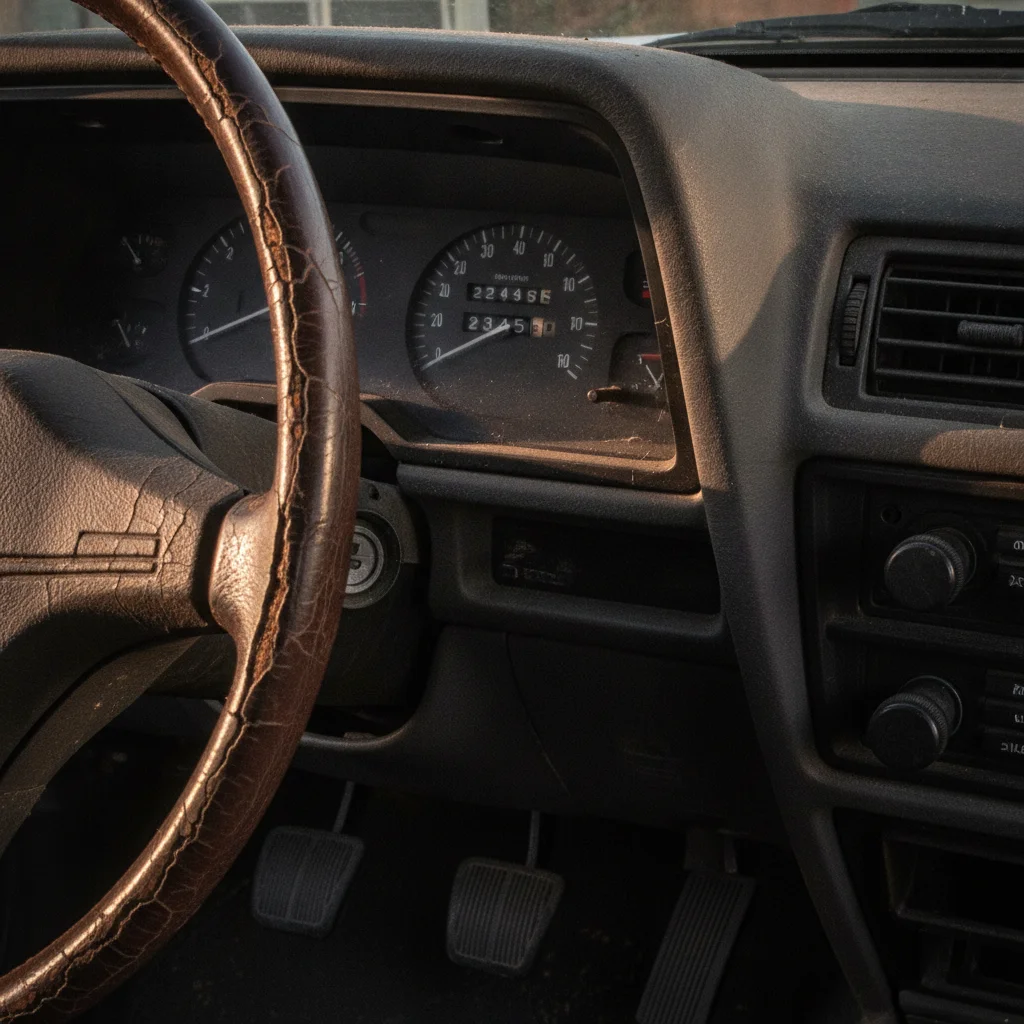
The 9 and 3 o'clock positions on a steering wheel show wear first. Heavy cracking, flattening of texture, or a shiny glaze on a leather wheel is consistent with 70,000+ miles of driving. A low-mileage claim paired with a severely worn steering wheel is a contradiction that demands an explanation.
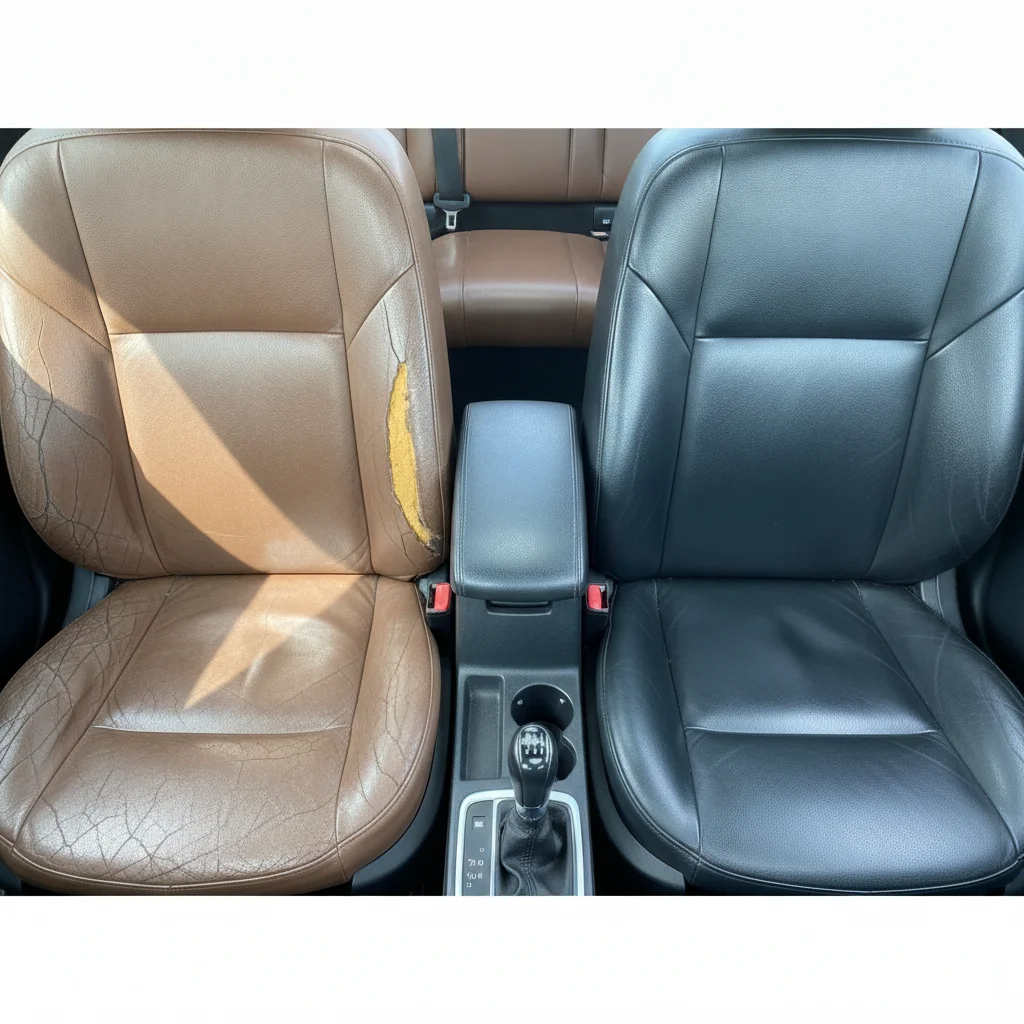
3. Seat Bolsters and Driver's Seat Cushion
The driver's seat takes more abuse than any other surface. Look for compressed cushion foam, cracked or deeply creased bolsters, and fading on the seat-back. Passenger seats tend to be much fresher — if there's a dramatic mismatch between driver and passenger seats, that contrast tells a story. Also check the driver's side door sill and carpet for scuff marks from repeated entry and exit.
4. Paint Depth and Panel Consistency
A paint depth gauge (available for under $40) can detect repainted panels, which often indicate hidden accident damage rather than normal wear. But even without a gauge, look for overspray at door jambs, misalched texture between panels, or slightly different color shades when viewed at an angle. High-mileage cars driven carefully can have pristine paint; a "low-mileage" car with repainted quarters may have been in a collision the seller isn't disclosing.
5. Engine Bay Fluids and Hose Condition
Pull the oil dipstick. Black, sludgy oil suggests infrequent oil changes regardless of mileage. Inspect coolant hoses for cracking or sponginess at the clamps. Check the brake fluid reservoir — dark brown fluid indicates it hasn't been changed in years. These fluid conditions reflect maintenance habits, not just miles driven, and they're among the most honest indicators of how a car was actually cared for.
6. Tires and Brake Rotors
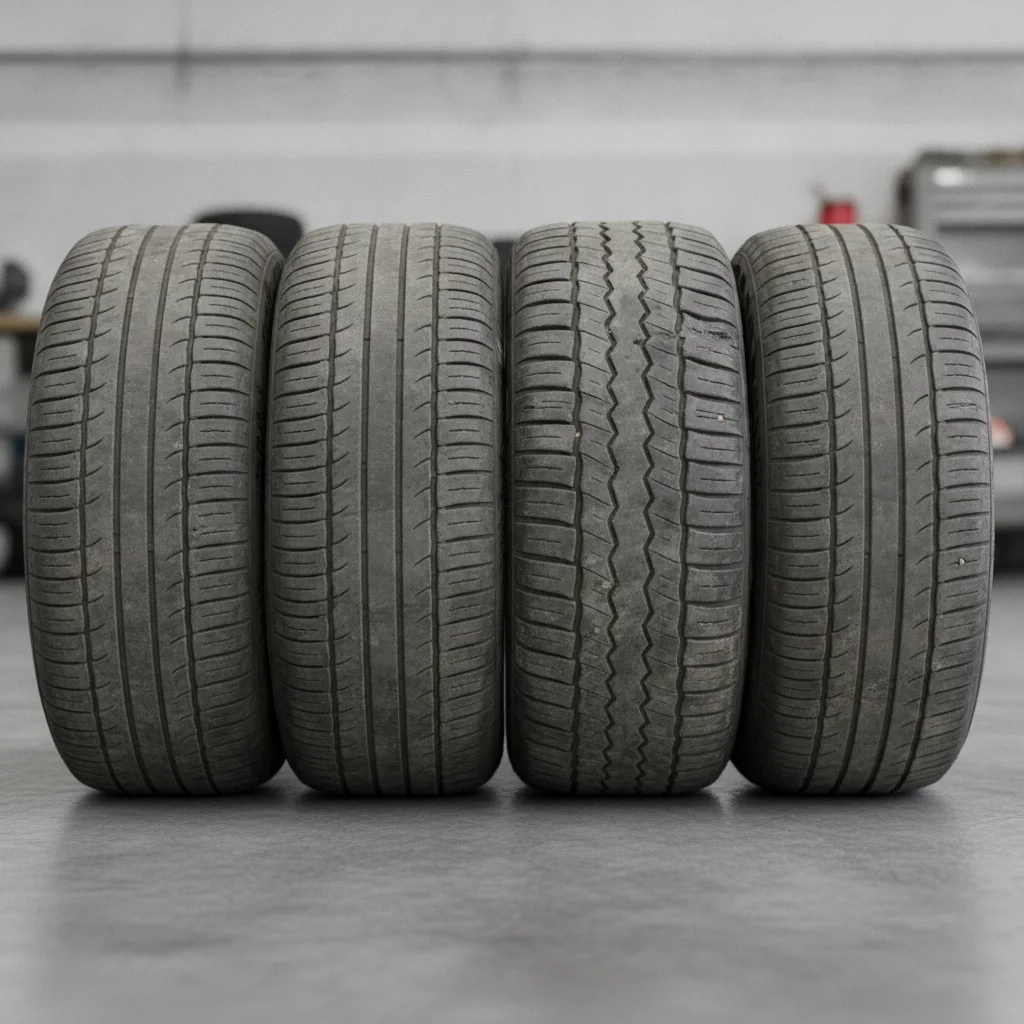
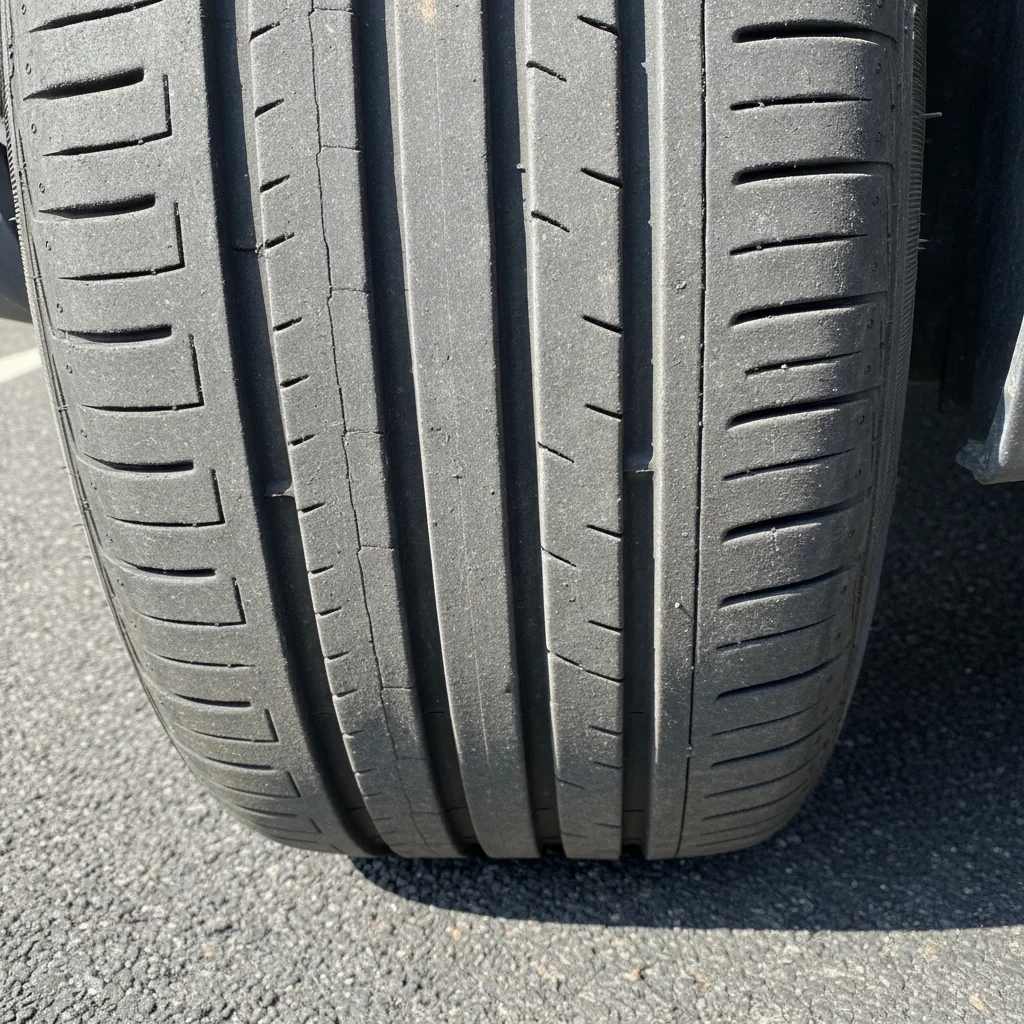
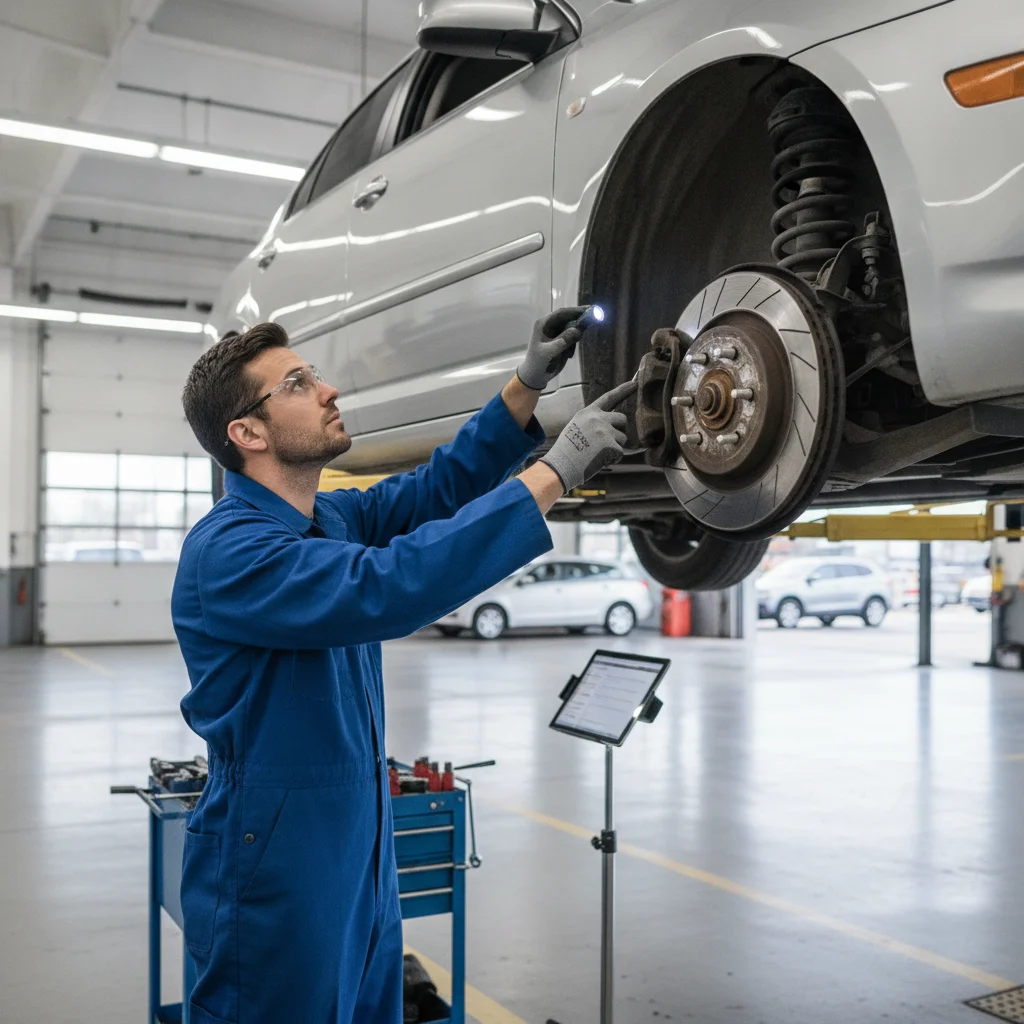
Tires typically last 40,000–60,000 miles depending on driving style and maintenance. A car claiming 30,000 miles on its original tires should have most of its tread depth remaining (5/32" or more). If those tires are nearly bald or showing uneven wear, the mileage claim doesn't add up. Tire wear patterns reveal far more than just mileage — they can point to alignment, suspension, and driving behavior problems. Similarly, look at brake rotors through the wheel spokes: deep grooves or a pronounced lip at the rotor edge indicate heavy braking use. For a seller's perspective on tires, tire condition is a common buyer negotiating lever that works both ways.
Never Skip the Vehicle History Report
A $40–$50 Carfax or AutoCheck report is not optional on any used-car purchase. Cross-check every mileage entry against service dates and look for any backward movement in reported miles. Even a small rollback — 500 miles between events — is a serious red flag that warrants direct confrontation with the seller or walking away entirely.
Beware of Cosmetic Refreshes That Hide Wear
New floor mats, fresh seat covers, and recently detailed interiors can make a heavily used car look nearly new. Don't let cosmetic improvements substitute for a thorough inspection. Prioritize wear indicators that cost more to replace — rotors, suspension bushings, engine mounts — because those are the items sellers are least likely to address before listing.
When to Walk Away vs. Negotiate
Not every mileage-wear mismatch means fraud. Sometimes it's a matter of driving conditions, deferred cosmetic maintenance, or an owner who cared about mechanical upkeep but ignored interior aesthetics. Your decision should hinge on which category the mismatch falls into.
Walk Away If You See:
- Odometer inconsistency with a Carfax or AutoCheck vehicle history report — any gap in reported mileage between service records should be investigated
- Welded or tampered instrument cluster
- Obvious brake pedal wear on a claimed low-mileage car with no explanation from the seller
- Mismatched VINs on the dash, door jamb, and title
- Seller refuses an independent pre-purchase inspection
Negotiate If You See:
- Worn cosmetics (seats, steering wheel) but clean mechanicals and a solid service history
- Tires needing replacement on an otherwise sound car — use the replacement cost ($600–$1,200 for a typical set) as a direct price offset
- Slightly worn pedals on a car with verifiable service records and consistent history report mileage
A pre-purchase inspection from an independent mechanic typically runs $100–$200 and is your single best defense against overpaying. Any seller who refuses one is telling you something important.
Seller Refusing an Inspection Is a Deal-Breaker
Any private seller or dealer who refuses to allow an independent pre-purchase inspection is giving you the most important information of the transaction: something is wrong with the car they don't want you to find. Walk away. No price discount, sob story, or time pressure justifies bypassing this step on a vehicle purchase. The $150 inspection cost is trivial compared to a $3,000 transmission repair you inherit two weeks after closing the deal.
If you're on the selling side with a high-mileage vehicle, the same logic applies in reverse — transparent documentation of maintenance history is your best tool. See how to get a fair offer on a high-mileage trade-in for positioning strategies that work even when the numbers are high.
450,000+
Vehicles sold annually with falsified odometer readings
According to the National Highway Traffic Safety Administration (NHTSA), odometer fraud affects hundreds of thousands of U.S. vehicle transactions each year.
$1B
Annual buyer losses from odometer fraud
NHTSA estimates that U.S. consumers lose approximately one billion dollars per year due to fraudulent odometer readings in used-car sales.
$100–$200
Typical cost of a pre-purchase inspection
Independent mechanic pre-purchase inspections generally run between $100 and $200 at most independent shops and franchised service centers.
40K–60K
Typical tire lifespan in miles
Most passenger car tires are rated for 40,000–60,000 miles; significant wear below this threshold is a reliable indicator of actual usage patterns.
Putting It All Together: A Buyer's Decision Framework
Here's a simple framework to apply after any physical inspection:
- Start with the vehicle history report. Run a Carfax or AutoCheck report ($40–$50) before you even see the car in person. Look for mileage consistency across all reported events. Any rollback or unreported gap is an immediate flag.
- Score the wear indicators. Go through the six-point checklist above and note which items are consistent with the claimed mileage and which are not. If three or more are inconsistent, the mileage claim is suspect.
- Ask for maintenance records. A well-maintained car will have receipts, dealer service printouts, or at minimum a logbook. Cross-reference service dates and mileage against the odometer reading. Certain service reminder systems log mileage at each visit, making this cross-check even easier.
- Get an independent inspection. No checklist replaces a lift inspection from a mechanic. Brake rotor thickness, suspension bushing wear, and oil leak sources are hard to assess without a lift. Budget $150 and schedule it before you finalize any deal.
- Price accordingly. Use the wear pattern as a negotiating anchor, not just a pass/fail gate. A car with 55,000 miles but the cosmetic wear of 85,000 miles should be priced closer to the latter. Check the mileage thresholds that trigger buyer hesitation to understand how market psychology affects pricing bands.
The odometer number is where your evaluation starts. The physical car in front of you is where it ends. Trust what you can touch, measure, and verify — not just what the listing says.
For context on recognizing broader vehicle problems beyond mileage, the warning signs hub covers dashboard alerts, noises, and other trouble indicators worth knowing before any purchase.

All claims are backed by peer-reviewed research. Sources on request.