| Legal minimum tread depth (most U.S. states) | 2/32 inch |
| Practical replacement threshold | 4/32 inch (Consumer safety recommendation) |
| New tire tread depth (typical) | 10/32–11/32 inch |
| Recommended rotation interval | Every 5,000–7,500 miles |
| Tire age limit (safety guideline) | Replace by 6–10 years regardless of tread (NHTSA and major tire manufacturers) |
| Average cost: 4 new tires installed | $600–$1,200 (Varies by size and brand, 2024 estimates) |
| Average cost: wheel alignment | $80–$150 (Four-wheel alignment, 2024 estimates) |
| Average cost: shock/strut replacement (per pair) | $600–$1,500 (2024 estimates, varies by vehicle) |
Why Tire Wear Is One of the Best Clues on a Used Car
Tires are honest. They don't lie the way a fresh detail job or a seller's description can. Every mile driven leaves a record in the rubber — and if you know what to look for, you can decode a vehicle's maintenance history, alignment condition, and suspension health in about five minutes in a parking lot.
This isn't just about whether the tires need replacement (though that matters too — four new tires can run $600–$1,200 installed). It's about what the wear pattern tells you before you spend money on a pre-purchase inspection. Unusual wear is a flag that warrants deeper investigation. Even wear on quality tires is a green flag worth noting.
When evaluating any used car in person, start at the tires. Crouch down, run your hand across the tread, and check all four corners. The five minutes you spend here could save you thousands in repairs — or give you the negotiating leverage you need. See the full used car buying guide for how tire inspection fits into a complete pre-purchase checklist.
| Legal minimum tread depth (most U.S. states) | 2/32 inch |
| Practical replacement threshold | 4/32 inch (Consumer safety recommendation) |
| New tire tread depth (typical) | 10/32–11/32 inch |
| Recommended rotation interval | Every 5,000–7,500 miles |
| Tire age limit (safety guideline) | Replace by 6–10 years regardless of tread (NHTSA and major tire manufacturers) |
| Average cost: 4 new tires installed | $600–$1,200 (Varies by size and brand, 2024 estimates) |
| Average cost: wheel alignment | $80–$150 (Four-wheel alignment, 2024 estimates) |
| Average cost: shock/strut replacement (per pair) | $600–$1,500 (2024 estimates, varies by vehicle) |
The Six Main Tire Wear Patterns and What Each Signals
Not all uneven wear means the same thing. Here's how to identify each pattern and what it likely points to under the hood — or under the car.
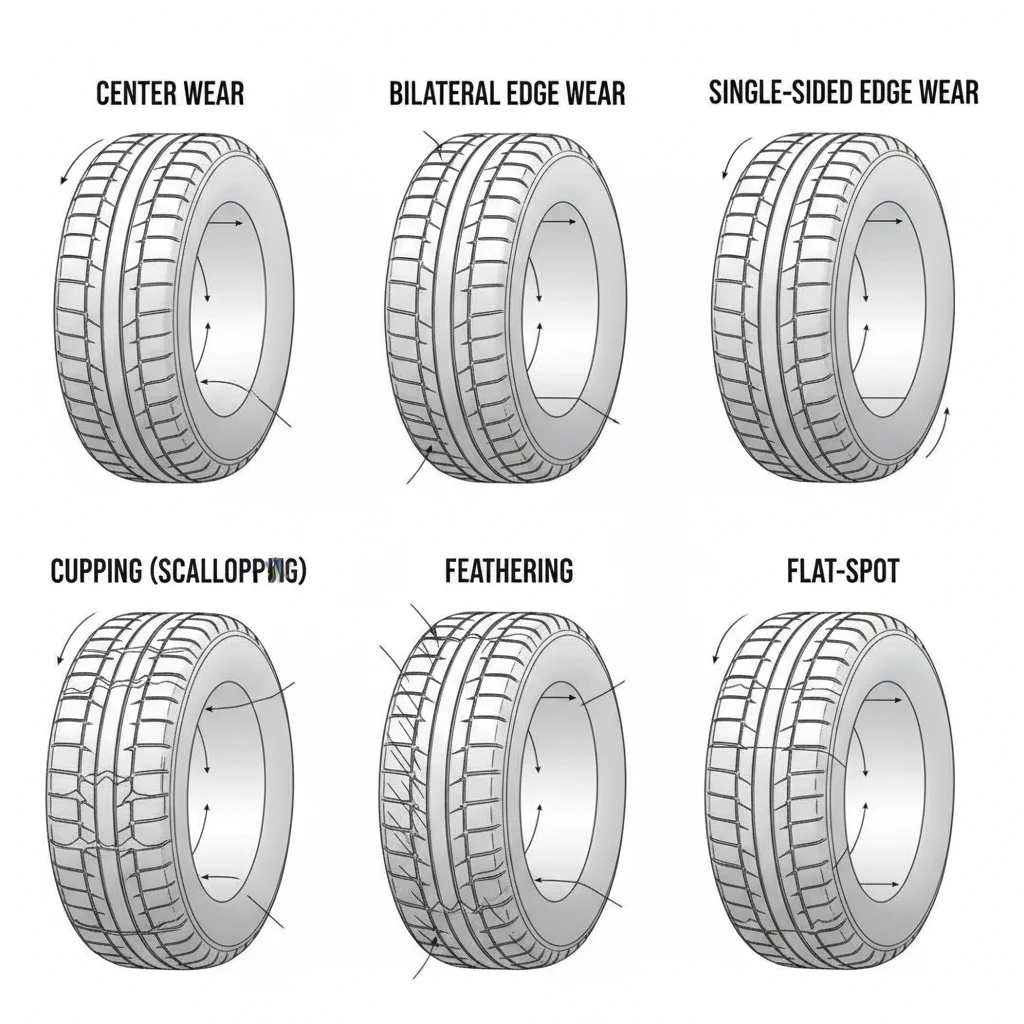
1. Center Wear (Middle of the Tread Is Bald)
The center of the tread is significantly more worn than the edges. Cause: chronic overinflation. When a tire is overinflated, the center of the tread bears more of the load while the edges lift slightly off the road. This is usually a maintenance neglect issue rather than a mechanical fault. It's fixable and relatively low-stakes on its own, but combined with other issues, it tells you the previous owner wasn't attentive.
2. Edge Wear (Both Shoulders Worn Down)
Both outer edges show more wear than the center. Cause: chronic underinflation. An underinflated tire flexes more and distributes load to the outer edges. Like overinflation wear, this is typically a maintenance issue. However, sustained underinflation causes structural stress to the sidewall that can't be reversed — those tires may be compromised beyond their visible condition.
3. One-Sided Edge Wear (Only One Edge Is Worn)
One shoulder — either inner or outer — is significantly more worn than the other side of the same tire. Cause: misalignment, specifically camber or toe error. This is where it gets more serious. Camber misalignment means the wheel is tilted inward or outward from vertical. Toe misalignment means the wheels are pointing slightly inward or outward. Either puts consistent asymmetric load on one edge. An alignment itself is inexpensive ($80–$150), but if the alignment keeps going out of spec, it points to worn control arm bushings, a bent strut, or damaged tie rod ends — repairs that add up quickly. See how alignment affects tire life and safety for more context.
4. Cupping or Scalloping (Wavy, Dipped Pattern Around the Tire)
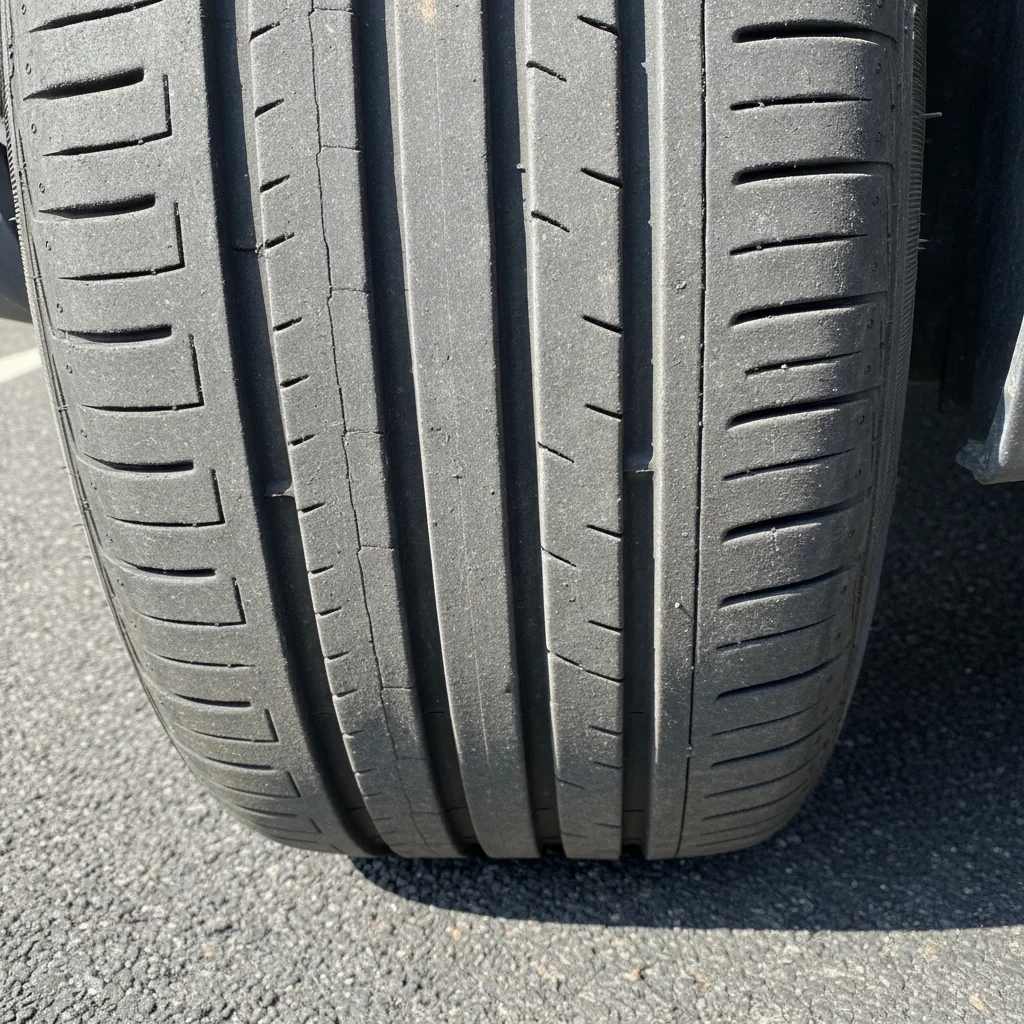
The tread has high and low spots in a repeating wave pattern — almost like someone took scoops out of it. Run your hand around the circumference and you'll feel it clearly. Cause: worn or failing shock absorbers or struts, or an out-of-balance tire. Cupping means the tire is bouncing rather than rolling smoothly. This is one of the more significant red flags because shock and strut replacement is expensive — typically $600–$1,200 for a pair, and many vehicles need all four done together. Ask when shocks were last replaced and factor the cost if they haven't been.
5. Feathering (Tread Blocks Are Smooth on One Side, Sharp on the Other)
Run your hand across the tread blocks laterally. If one side of each block feels sharp or peaked while the other feels rounded and smooth, that's feathering. Cause: toe misalignment. Feathering is subtler than edge wear and easier to miss visually — it's primarily a tactile check. It confirms the car has been driven with persistent toe issues. The mechanical question is whether the alignment went out from normal wear or from a collision or curb strike.
6. Patchy or Flat-Spot Wear (Irregular Patches Missing Tread)
Random patches of missing or significantly lower tread depth. Cause: hard braking episodes (flat spots) or severe wheel imbalance. Flat spots from emergency stops are common and don't necessarily indicate mechanical issues. However, persistent patchy wear that isn't localized to one flat spot suggests wheel balance was never addressed. More concerning: if you see this pattern on only one or two tires, it may point to a brake system issue — a caliper sticking on one corner, causing that wheel to drag and wear abnormally.
AWD Vehicles Require Extra Scrutiny
On all-wheel-drive vehicles, the four tires must remain closely matched in circumference or the drivetrain will continuously try to compensate for the difference — causing wear on the transfer case and center differential. Most AWD manufacturers require tires within 4/32" of each other across the set. If you find an AWD vehicle with mismatched wear, budget for either matching the set or replacing all four, and consider having the drivetrain checked for existing wear damage.
How to Inspect Tires in Person: A Step-by-Step Method
A systematic approach takes about five minutes and gives you much more actionable data than a casual glance.
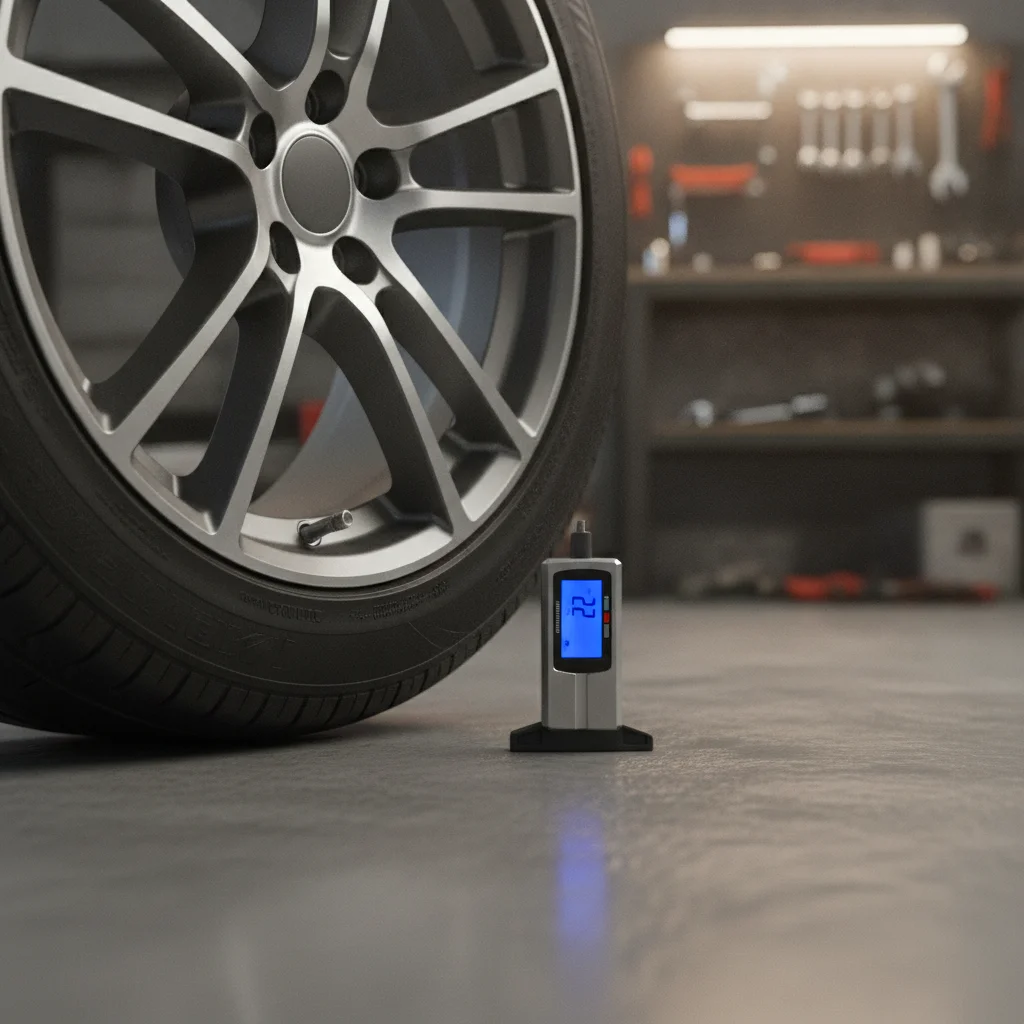
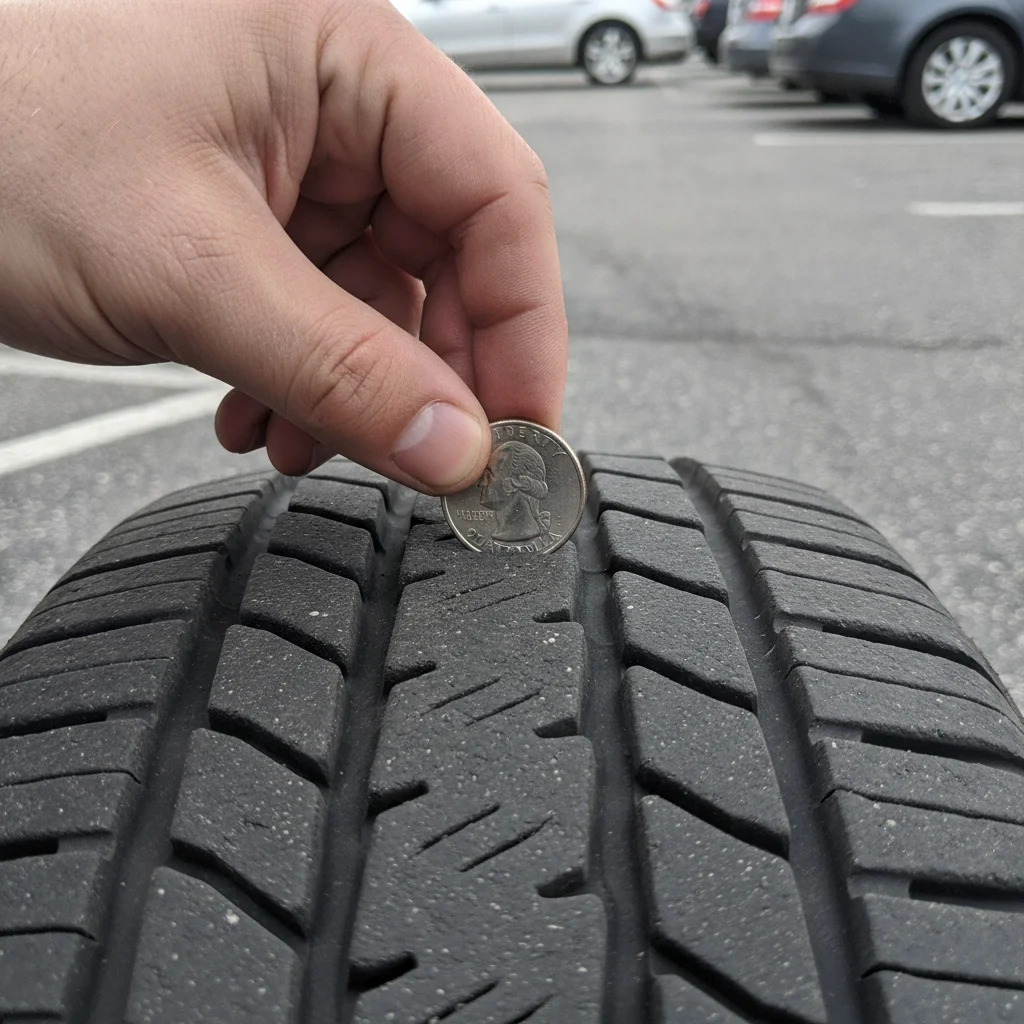
- Check tread depth on all four tires. Use a quarter — insert it with Washington's head pointing into the tread. If you can see the top of his head, you're at or below 4/32", which means the tires are near the end of useful life. Legal minimum in most states is 2/32", but 4/32" is a practical replacement threshold, especially if you're in a wet climate. For a full breakdown of tread standards, see what acceptable tread depth looks like from a seller's perspective.
- Compare tread depth across each tire. Check the inner edge, center, and outer edge of each tire. Depth should be consistent across the width. Any variation indicates uneven wear.
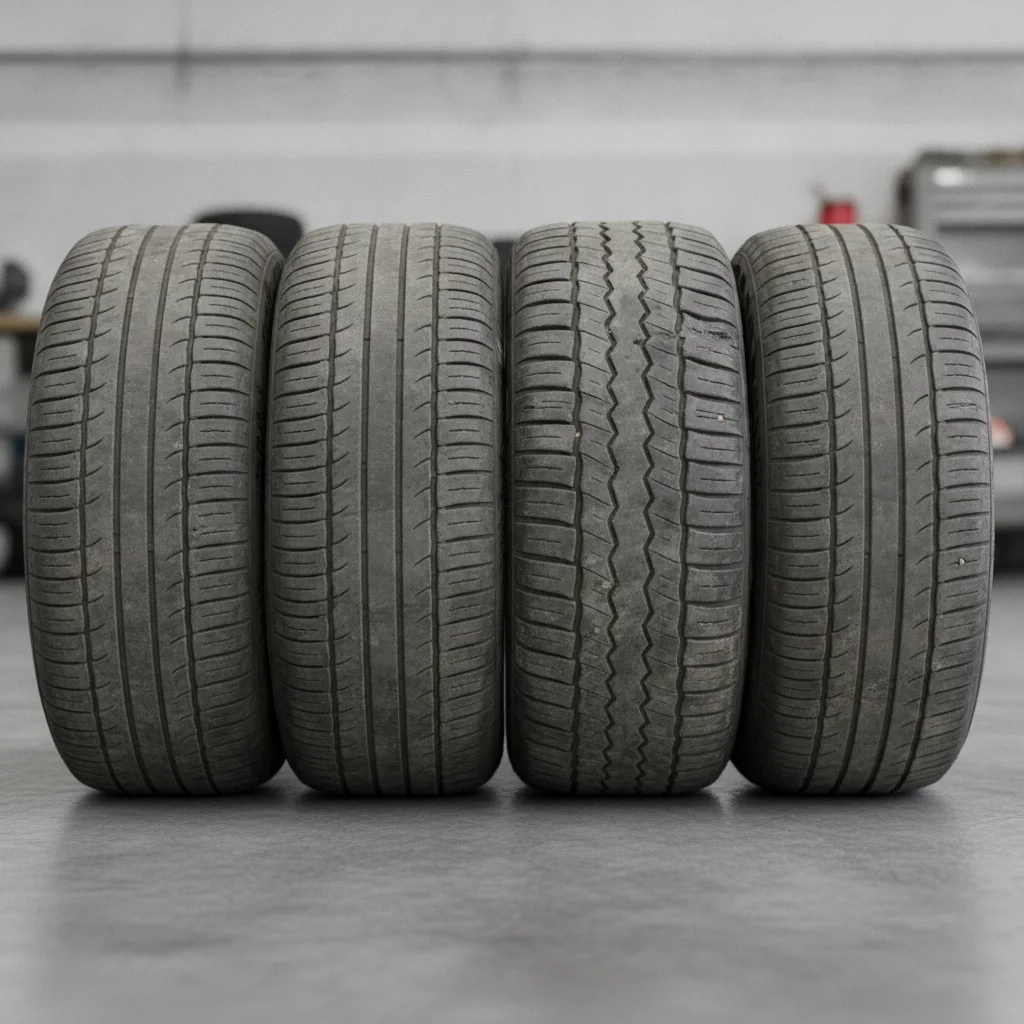
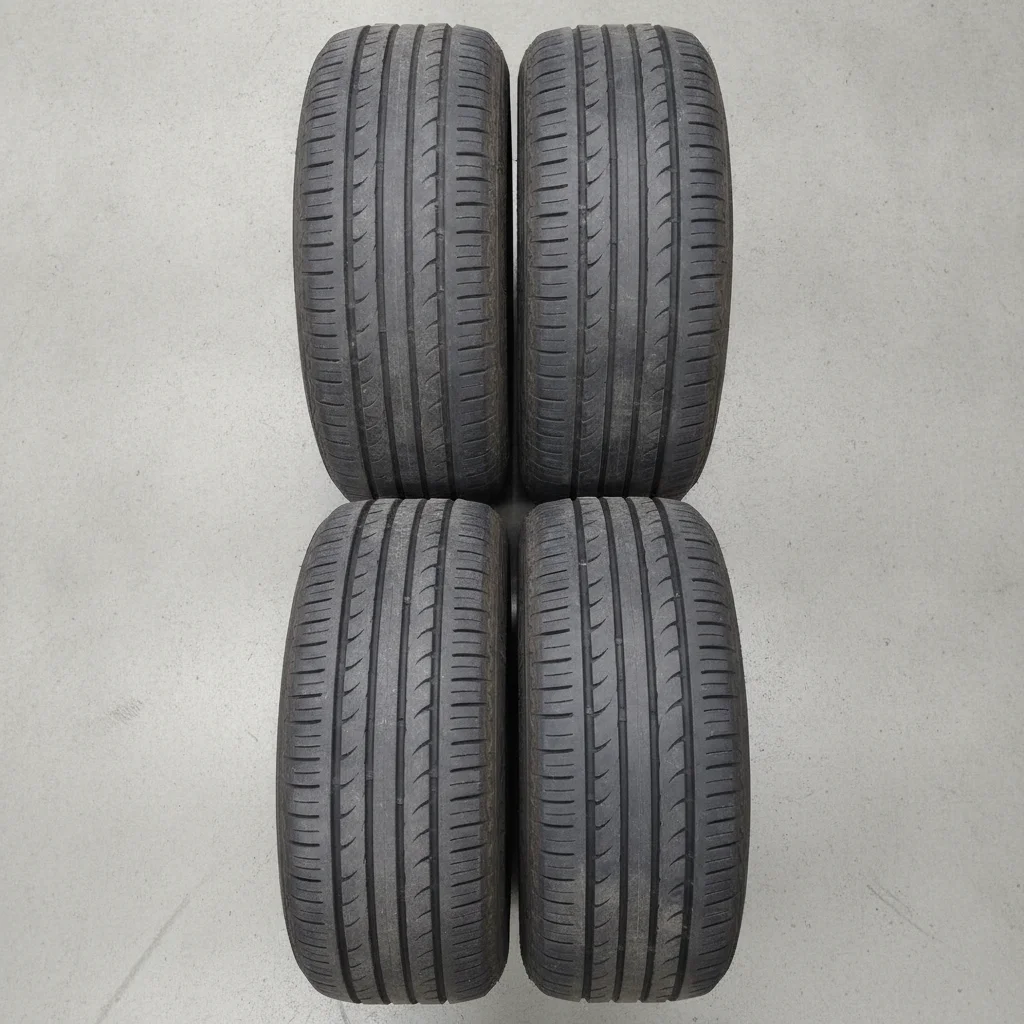
- Compare depth across all four tires. All four should be close to the same depth. A big discrepancy — say, the fronts are at 6/32" and one rear is at 2/32" — suggests irregular rotation history, possible brake issues on that corner, or a mismatched replacement.
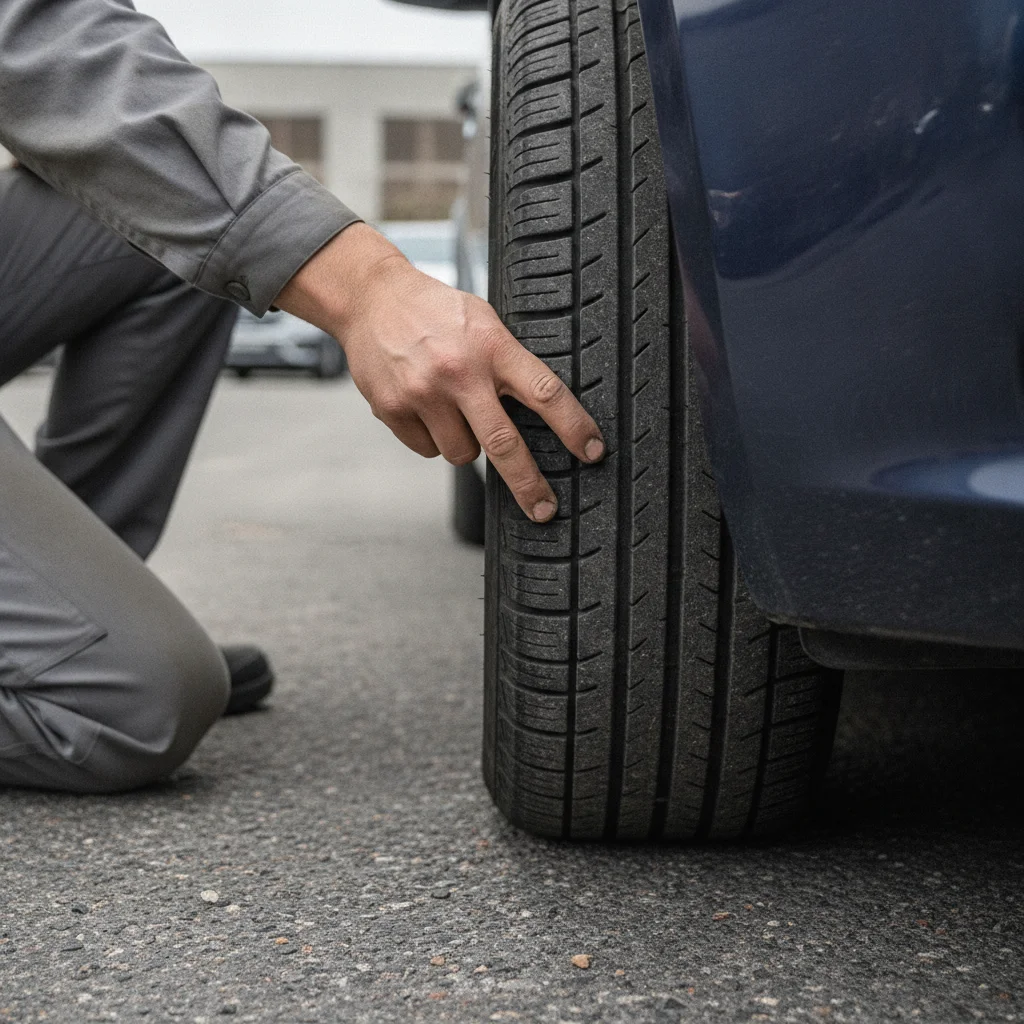
- Run your palm across the tread laterally. Feel for feathering — the sharp/smooth alternating pattern described above. This takes literally three seconds per tire.
- Run your fingers along the circumference. Feel for cupping or flat spots. Rotate the tire slightly if you can (sometimes possible with a steering lock on one corner). A wavy feel is diagnostic for shock/strut issues.
- Inspect the sidewalls. Look for cracks, bulges, or any deformation. A sidewall bulge means the internal structure is compromised — that tire is a blowout risk and needs immediate replacement, full stop.
- Check the date codes. The DOT code on the sidewall ends with a four-digit number: the first two digits are the week, the last two are the year. Tires older than six years are suspect regardless of tread depth — rubber degrades even without use. Tires over ten years old should be replaced even if they look fine.
This process, done correctly, will surface almost any pattern described in the section above. When something looks off, don't accept "they just need an alignment" without pressing for details — ask when the last alignment was done and request documentation. Also check whether the wear pattern appears on the list of pre-purchase warning signs you should be tracking during any in-person inspection.
Using Tire Wear as a Negotiating Tool
Once you've identified a wear issue, you have two options: walk away or negotiate. Here's how to quantify what you've found.
$1,200
Maximum cost for full set of replacement tires installed
Four-tire replacement at a national chain, 2024 pricing for common passenger vehicle sizes.
2–3x
Faster front tire wear vs. rear on FWD vehicles
Front tires on front-wheel-drive cars handle both steering and propulsion, accelerating tread wear significantly.
4/32"
Tread depth threshold where wet-weather stopping distance increases sharply
Testing by consumer safety organizations shows significant braking degradation below this depth on wet pavement.
6 years
Age at which rubber degradation becomes a safety concern
NHTSA and most tire manufacturers recommend inspection and consideration of replacement at six years, regardless of appearance.
$150
Approximate maximum cost of a professional pre-purchase inspection
A PPI by an independent mechanic is strongly recommended when tire wear anomalies suggest suspension or alignment issues.
Pricing the Problem
| Issue Found | Likely Repair Cost | Negotiation Approach |
|---|---|---|
| Tires at or below 4/32" on all four | $600–$1,200 installed | Request direct price reduction or seller replacement before purchase |
| One-sided edge wear (alignment issue) | $80–$150 alignment + inspection | Deduct cost and flag for PPI to assess if root cause is deeper |
| Cupping / scalloping (shocks/struts) | $600–$1,500+ for pair(s) | Use as major negotiating point; insist on PPI |
| Mismatched tires (different brands/models) | $150–$400 to match a set | Minor deduction; primarily a quality-of-ownership flag |
| Cracked or bulging sidewall | Immediate replacement required | Non-negotiable safety item; price in full replacement |
The Mismatch Warning
Mismatched tires — different brands, sizes, or wear levels on the same axle — tell you the owner replaced tires reactively rather than proactively. It's not automatically a dealbreaker, but it's a data point about ownership quality. On an AWD vehicle, mismatched tires aren't just a cosmetic issue — they can damage the transfer case. Check the owner's manual specification and verify all four match within the acceptable size range. This aligns with a broader pattern described in spotting mismatches between reported mileage and actual vehicle condition.
When to Walk Away
Some tire wear findings should stop the transaction entirely until a professional pre-purchase inspection (PPI) is completed. These include: cupping or scalloping on more than one tire (potential suspension-wide issue), one-sided wear that's severe and consistent across the front axle (possible structural alignment problem from a collision), and any sidewall bulge or cracking. A PPI costs $100–$200 and is always worth it when you find significant tire wear anomalies.
Camber
The inward or outward tilt of a wheel when viewed from the front of the vehicle. Excessive camber causes one-sided tire wear and is usually a sign of alignment problems or worn suspension components.
Toe alignment
The direction the wheels point relative to straight ahead, viewed from above. Toe-in means the fronts of the tires point slightly toward each other; toe-out means they point away. Incorrect toe causes feathering and accelerated edge wear.
Cupping (Scalloping)
A repeating wave or dip pattern worn around the circumference of a tire. It indicates the tire is bouncing rather than rolling smoothly, typically caused by worn shock absorbers or struts, or an imbalanced wheel.
Feathering
A wear pattern where the tread blocks are rounded and smooth on one side and sharp on the other, felt more easily than seen. It is caused by toe misalignment and indicates the tires have been scrubbing sideways while rolling.
Tread depth
The distance from the top of the tire tread to the bottom of the grooves, measured in 32nds of an inch. New tires typically start at 10/32" to 11/32"; the legal minimum is 2/32", though 4/32" is the practical replacement threshold.
DOT date code
A four-digit number molded into the tire sidewall as part of the DOT identification code. The first two digits indicate the week of manufacture and the last two indicate the year (e.g., 2323 means the 23rd week of 2023).
Sidewall
The vertical portion of a tire between the tread and the wheel bead. Bulges, cracks, or cuts in the sidewall indicate structural failure and require immediate tire replacement regardless of remaining tread depth.
Shock absorber / Strut
Suspension components that dampen the up-and-down movement of the wheel over road surfaces. Worn shocks or struts allow the tire to bounce, causing cupping wear and reducing vehicle handling and braking performance.
Tire Rotation History: What It Tells You About Maintenance
Even wear across all four tires doesn't just happen by accident — it requires regular rotation, typically every 5,000–7,500 miles. When you find all four tires worn to approximately the same depth and the same pattern, that's evidence of disciplined maintenance. The inverse is also true.
Significant depth differences between front and rear tires — particularly if the rears are noticeably deeper — often indicate the car never had a rotation schedule. On front-wheel-drive vehicles, the front tires handle both steering and power delivery, so they wear 2–3 times faster than rears. If the fronts are at 3/32" and the rears are at 8/32", the car probably never had its tires rotated. That raises questions: if the owner neglected this $25 maintenance item, what else was skipped?
For context on proper rotation intervals and patterns for different drivetrains, see tire rotation patterns and why they matter. Comparing the actual wear distribution you observe to the correct rotation pattern for that drivetrain is a useful diagnostic.
NHTSA Tire Safety Guide
The National Highway Traffic Safety Administration's official resource on tire safety, including tread depth standards, aging guidelines, and recall lookup by DOT number.
Tire Rack Tire Finder & Reviews
Search replacement tire options by vehicle, compare prices, and read independent test results. Useful for quickly pricing what replacement would cost on a car you're considering buying.
CarFax Vehicle History Report
Pull a history report to check for accident records that might explain one-sided wear or alignment issues you've identified during your physical inspection.
RepairPal Estimator
Get local labor and parts cost estimates for alignment, shock replacement, and other repairs you've flagged during your tire inspection — so you can negotiate with real numbers.

All claims are backed by peer-reviewed research. Sources on request.