Key Takeaways
Option A
New Car Test Drive
Fit, feel, and feature confirmation — not investigation.
Best for: Buyers who want to verify that a specific trim level, powertrain, or feature set actually suits their lifestyle before signing.
Option B
Used Car Inspection
A structured investigation into condition, history, and hidden risk.
Best for: Buyers who need to uncover what a vehicle has been through before committing to a purchase with no factory warranty safety net.
If you're buying from a franchised dealer with full factory warranty
New Car Test Drive
Condition is guaranteed by the manufacturer, so your evaluation time is best spent confirming the car actually fits your body, driving style, and daily routine — not investigating mechanical integrity.
If you're buying a used vehicle privately or from an independent lot
Used Car Inspection
No warranty means no backstop. A thorough inspection — including a third-party mechanic — is the only way to price risk accurately and avoid expensive surprises within the first year of ownership.
If you're evaluating a certified pre-owned vehicle at a franchise dealer
Used Car Inspection
CPO status reduces but doesn't eliminate risk. Treat it like any other used car inspection: pull the Carfax, scrutinize the inspection checklist the dealer provides, and still drive it hard across varied conditions.
If you're a first-time buyer unsure what to prioritize in person
New Car Test Drive
For a first-time purchase, a new car removes the variable of unknown history — letting you focus entirely on learning what comfort, visibility, and performance feel like to you before you develop an eye for used car red flags.
If you want maximum value and are willing to do your homework
Used Car Inspection
Used cars typically cost 20–40% less than their new equivalents. That savings is real — but only if you inspect thoroughly enough to buy a car in genuinely good condition rather than inherit someone else's problem.
Why These Two Processes Are Fundamentally Different
Most buyers treat a test drive the same way regardless of whether the car is new or used — they take it around the block, confirm it accelerates smoothly, and call it done. That's a mistake that costs used car buyers especially. The two processes have different goals, different risks, and require different mindsets.
When you test drive a new car, you're essentially asking: Does this car suit me? The vehicle's condition is guaranteed. You're not looking for rust, hidden accident damage, or a slipping transmission. You're confirming ergonomics, evaluating visibility, deciding whether the powertrain matches your needs, and making sure the infotainment system isn't going to drive you crazy every commute. It's a preference evaluation.
When you inspect a used car, the fundamental question flips: What has this car been through, and what is it hiding? The seller knows more about the vehicle than you do. Your job is to close that information gap as much as possible before money changes hands. That means systematic inspection before the engine even starts, pulling documented history, and ultimately getting a professional set of eyes on it. It's an investigative process.
Understanding that distinction upfront changes how you allocate your time and attention during each evaluation. For a deeper look at the full used car buying process, see the Complete Roadmap to Buying a Used Car.

How to Approach a New Car Test Drive
A new car test drive is lower stakes in terms of hidden risk, but that doesn't mean you should walk in unprepared. Dealerships are designed to move you through a pleasant experience and toward a signature. Your job is to stay focused on the specifics that actually matter for years of ownership.
Before You Arrive
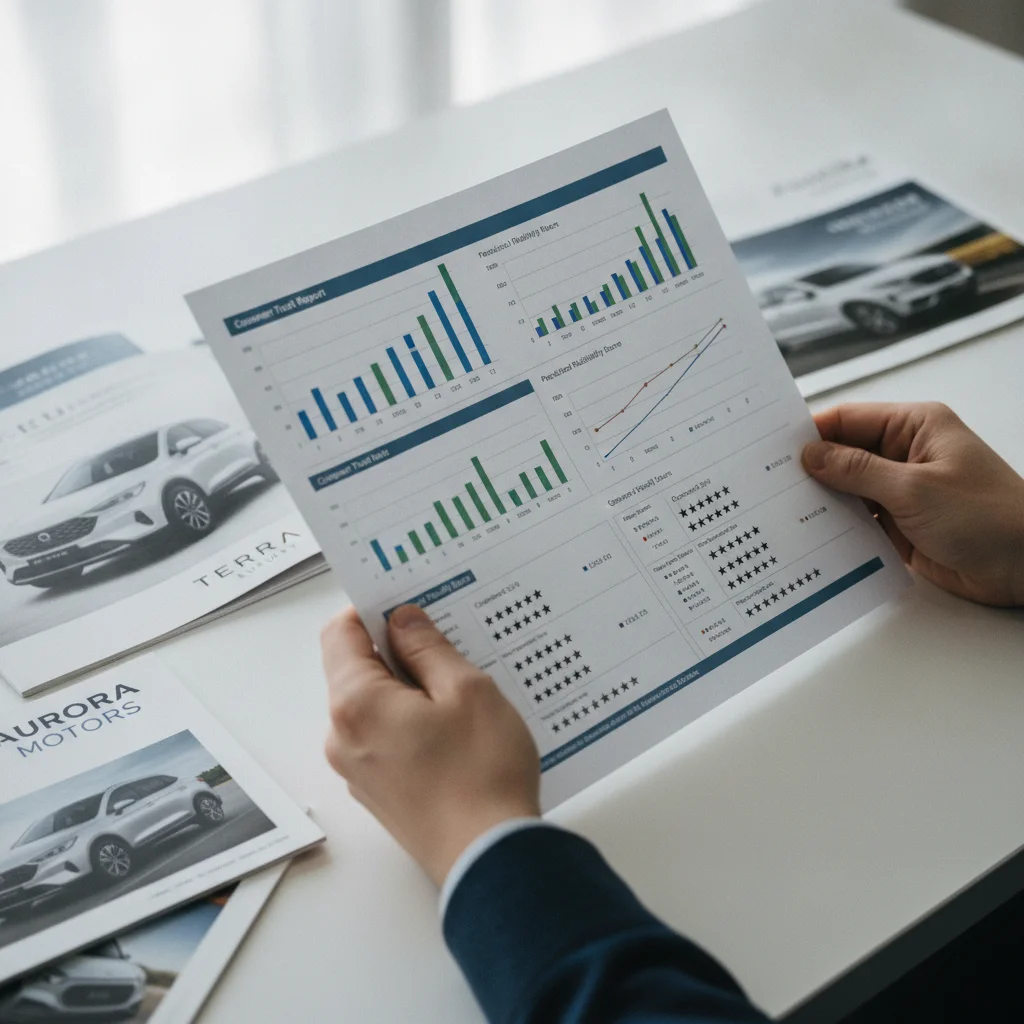
Do your reliability homework first. Sitting in a showroom falling in love with a car, only to discover later it has a poor long-term reliability record, is an expensive lesson. Check what JD Power initial quality scores and Consumer Reports owner satisfaction data say about the model — not just the trim you're looking at, but the powertrain variant. The guide to reading new car reliability ratings breaks down how to interpret those different scoring systems side by side.
What to Confirm in the Lot
- Seating position: Adjust everything — seat height, steering column, lumbar — and then check whether you can see all four corners of the car. Poor visibility is a daily aggravation that no feature package fixes.
- Entry and exit: If you have a bad knee or a tall frame, do this three times. It matters.
- Rear seat space: If you regularly carry passengers, sit back there yourself.
- Cargo space practicality: Open the trunk. If you own a stroller, a bike, or large grocery orders, visualize it.
- Infotainment usability: Try to do three things simultaneously on the screen while seated. Can you find the climate control without looking down?
On the Road
Request a route that includes a highway on-ramp, a parking maneuver, and some city stop-and-go. The value of testing in different conditions applies to new cars too — one smooth boulevard loop tells you very little. Specifically evaluate:
- Highway merge acceleration — does the engine feel confident, or are you flooring it with anxiety?
- Brake pedal feel — progressive and linear, or grabby?
- Steering weight — does it give you road feedback or feel disconnected?
- Wind and road noise at 65 mph — this is where cheap cabins reveal themselves
- Blind spots — check mirrors and camera systems in actual traffic
The first test drive guide covers several things first-time buyers commonly overlook — worth a read before you go.
| Criterion | New Car Test Drive | Used Car Inspection |
|---|---|---|
| Primary goal | Confirm fit, feel, and preference | Uncover hidden damage and wear |
| Condition assumption | Guaranteed by manufacturer | Unknown — must be verified |
| First step | Research reliability before visiting | Pull vehicle history report (VIN) |
| Static inspection needed? | Ergonomics and features only | Full body, paint, undercarriage check |
| Drive intensity | Moderate — comfort and feature focus | Aggressive — stress-test every system |
| Third-party inspection | Not needed | Essential — budget $100–$200 |
| Negotiation leverage | Market pricing and incentives | Condition findings from inspection |
| Red flags to watch | Poor visibility, noisy cabin, vague steering | Panel gaps, title issues, cold-start smoke |
| Time required | 30–60 minutes | 2–4 hours including PPI scheduling |
| Biggest buyer mistake | Skipping ergonomic checks under pressure | Skipping the pre-purchase inspection |
How to Conduct a Used Car Inspection
With a used car, the inspection starts well before the test drive. Walk in with this sequence: history first, visual inspection second, mechanical check third, drive fourth.
Step 1: Pull the Vehicle History
Before you touch the car, get the VIN and run a Carfax or AutoCheck report. Look for: accident records (how many, how severe), number of previous owners, title status (clean, salvage, rebuilt), odometer consistency, and service history gaps. A two-owner car with documented oil changes every 5,000 miles is a fundamentally different purchase than a four-owner car with a 14-month gap in records at 60,000 miles.
Step 2: Static Visual Inspection
Do this with the engine off, in daylight if at all possible. The pre-drive checklist walks through this in detail, but the high-value items are:
- Panel gaps: Uneven gaps between body panels are the clearest sign of accident repair. Run your hand along each seam.
- Paint matching: Step back and look down the length of the car in bright light. Mismatched paint — even subtle shade differences — signals bodywork.
- Tire wear patterns: Worn inside edges indicate alignment or suspension problems. Cupping (scalloped wear) points to worn shocks.
- Under the hood: Look for oil residue around the valve cover and intake, coolant staining around hoses, and any wires that look spliced or non-factory.
- Under the car: Fresh oil spots on the ground where the car was parked are a red flag. Bring a flashlight.
Also check what buyers actually notice first — this article is written from the seller's perspective, which makes it useful for buyers who want to think like an experienced evaluator.
Step 3: Start the Engine Cold
If possible, arrive before the seller starts the car. A cold start reveals things a warm engine hides — blue or white smoke from the exhaust on startup, rough idling before the engine settles, or a battery that struggles to turn the engine over. These aren't dealbreakers automatically, but they're data points you need.
Step 4: Drive It Hard
A used car test drive is not a pleasant spin. You need to stress the car across varied conditions. The test drive tactics guide covers the full diagnostic checklist, but prioritize:
- Hard acceleration from a stop — does the transmission shift smoothly through every gear?
- Highway speed — listen for vibrations, pulls, or wind noise that suggests poor seal condition
- Hard braking from 40 mph — any shimmy in the wheel means warped rotors
- Tight parking maneuvers — listen for clunking in the CV joints when turning lock-to-lock
- Engine temperature gauge — does it stabilize at the normal midpoint, or does it creep high?
Step 5: Pre-Purchase Inspection
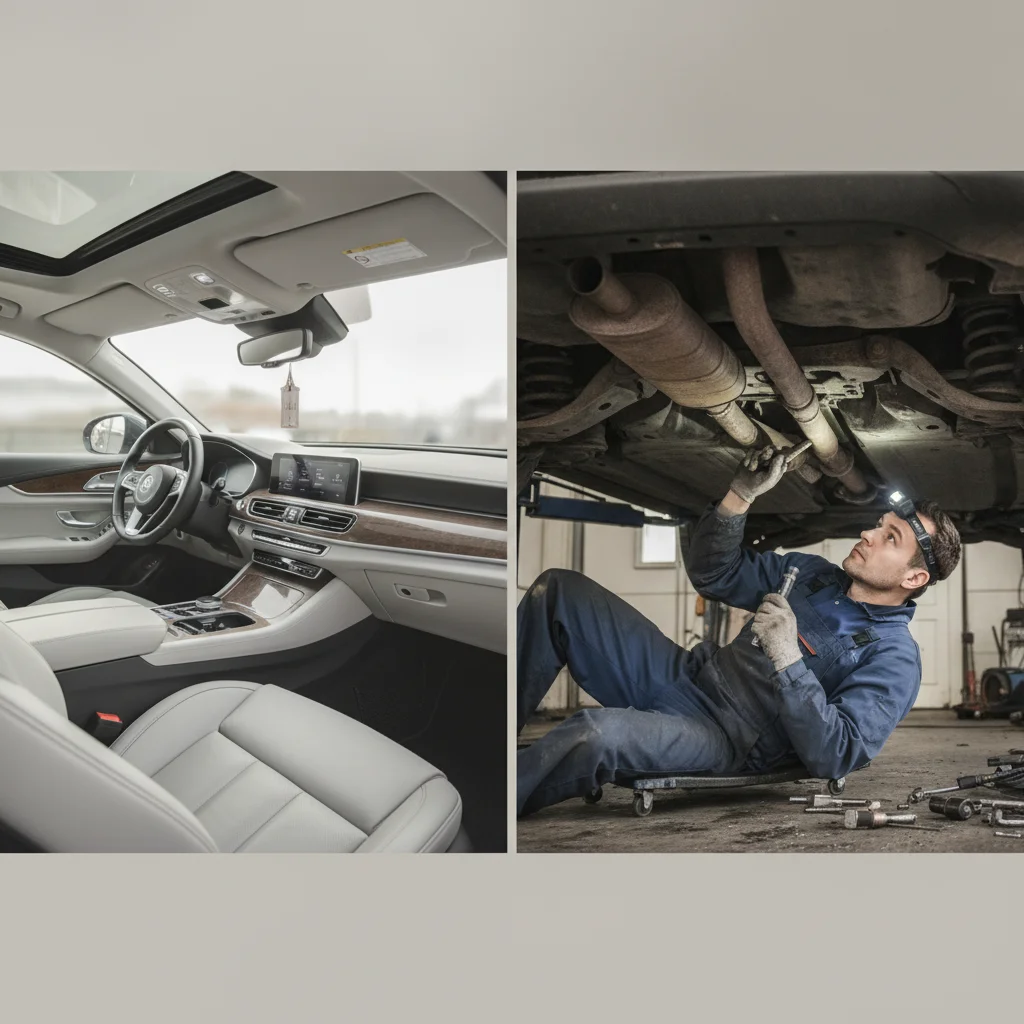
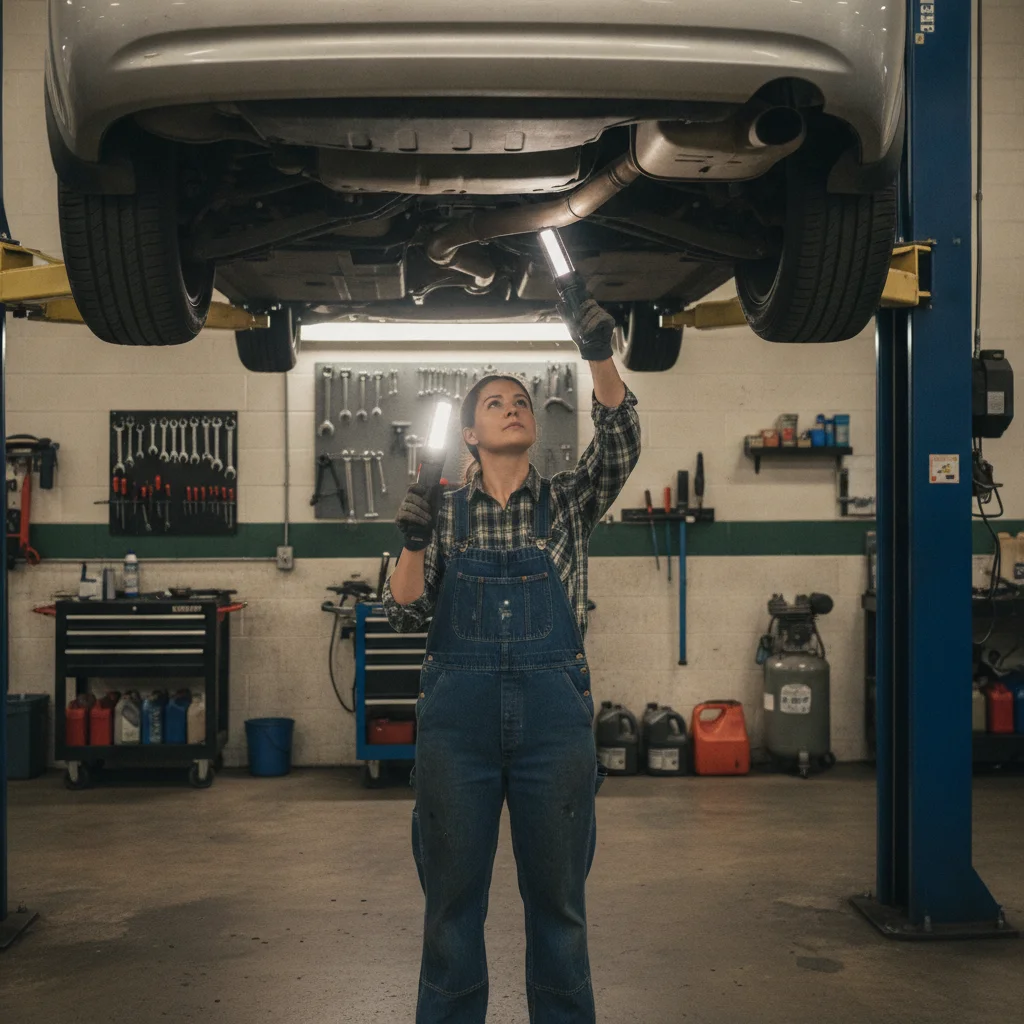
This is non-negotiable on any used vehicle priced above $5,000. A trusted independent mechanic — not the seller's preferred shop — can put it on a lift and see what you physically cannot: frame damage, leaking seals, worn bushings, exhaust condition. A PPI typically costs $100–$200. On a $15,000 car, that's 1.3% of the purchase price to eliminate a potentially catastrophic unknown.
$150
Typical cost of a pre-purchase inspection
Industry surveys consistently place independent mechanic PPI costs between $100 and $200 depending on market and vehicle complexity.
1 in 5
Used cars with undisclosed accident history
Carfax data indicates approximately 20% of used vehicles on the market have an accident recorded that the seller did not proactively disclose.
20–40%
Average used car discount vs. new equivalent
Edmunds and Kelley Blue Book data consistently show used vehicles priced 20–40% below the new MSRP for comparable models one to three years old.
73%
Buyers who skip the pre-purchase inspection
A Consumer Reports survey found nearly three-quarters of used car buyers do not obtain an independent mechanical inspection before purchasing.
Certified Pre-Owned Is Still a Used Car
CPO programs from manufacturers offer extended warranty coverage and claim to conduct multi-point inspections before certification. That's worth something — but it's not a substitute for independent verification. CPO inspection checklists vary significantly by brand, and dealers have an incentive to certify cars that sell at higher prices. Always request a copy of the CPO inspection checklist, cross-reference it against your own findings, and still consider an independent PPI if anything feels off.
Cold Start vs. Warm Start: Why It Matters
Used car sellers often warm up an engine before a buyer arrives — sometimes intentionally, sometimes out of habit. A warm engine runs more smoothly and masks early-start symptoms like valve seal leaks, rough cold idle, and battery weakness. When scheduling a used car viewing, ask the seller not to start the car before you arrive. If the car is already warm when you get there, note it, and factor that into how much weight you put on a smooth idle.
Head-to-Head: New vs. Used Evaluation Priorities
The table below summarizes where your attention should go during each type of evaluation. Use it as a quick reference when preparing for either process.
| Criterion | New Car Test Drive | Used Car Inspection |
|---|---|---|
| Primary goal | Confirm fit, feel, and preference | Uncover hidden damage and wear |
| Condition assumption | Guaranteed by manufacturer | Unknown — must be verified |
| First step | Research reliability before visiting | Pull vehicle history report (VIN) |
| Static inspection needed? | Ergonomics and features only | Full body, paint, undercarriage check |
| Drive intensity | Moderate — comfort and feature focus | Aggressive — stress-test every system |
| Third-party inspection | Not needed | Essential — budget $100–$200 |
| Negotiation leverage | Market pricing and incentives | Condition findings from inspection |
| Red flags to watch | Poor visibility, noisy cabin, vague steering | Panel gaps, title issues, cold-start smoke |
| Time required | 30–60 minutes | 2–4 hours including PPI scheduling |
| Biggest buyer mistake | Skipping ergonomic checks under pressure | Skipping the pre-purchase inspection |
The key takeaway: the evaluation criteria don't just differ in degree — they differ in kind. On a new car, you're building a preference profile. On a used car, you're building a risk profile. Both matter. But mixing up which one you're doing leads to either buying a new car that doesn't fit your life, or buying a used car with expensive hidden problems.
For buyers exploring the new car side of this decision, the Buying New Cars hub covers the full dealership process. For used car buyers, the Buying Used Cars hub is the right starting point for research, pricing, and evaluation resources.
Common Mistakes Buyers Make in Each Process
New Car Test Drive Mistakes
- Driving only the demo model: The demo may have a higher trim level with features you won't actually get. Always confirm what's included in the specific trim and package you're buying.
- Skipping the uncomfortable questions: Sit in the rear seat. Try the trunk. Park it in a tight space. If these feel awkward in a 15-minute test drive, they won't get better in three years.
- Ignoring reliability data: A test drive can't tell you how the car holds up at 60,000 miles. Owner reliability surveys can.
- Letting the sales process compress your time: If a dealer discourages a thorough test, that's information. Take the time you need.
Used Car Inspection Mistakes
- Skipping history because the seller seems trustworthy: Most sellers aren't lying — they just don't know everything their car has been through. The Carfax isn't about distrust; it's about filling gaps.
- Skipping the pre-purchase inspection to save $150: This is the most expensive shortcut in used car buying. A $150 PPI that reveals a $1,800 timing chain issue is the best return on investment you'll ever get.
- Only driving on smooth roads: Rough pavement, potholes, and highway speeds expose worn suspension and noise issues that a smooth neighborhood loop won't reveal.
- Negotiating before inspecting: Don't anchor a price until you know what you're actually buying. Inspection findings are legitimate leverage for renegotiation.
Building Your Evaluation Plan Before You Go
Regardless of which type of car you're evaluating, showing up with a written checklist puts you at an immediate advantage. It slows you down in the right places, keeps you focused when excitement or social pressure push you toward a quick decision, and gives you documentation if you need to negotiate on condition later.
For New Car Buyers
- Research reliability scores for the specific model and powertrain variant before the appointment
- Write down your three non-negotiable ergonomic requirements (e.g., headroom, visibility, seat height)
- Plan a test route that includes highway, stop-and-go, and a parking maneuver
- Test every control and screen function you'll use daily while seated in your natural driving position
- Drive at least two trim levels if you're deciding between them — the upgrade may or may not be worth it to you
For Used Car Buyers
- Pull the VIN history report before you schedule the visit
- Arrive in daylight and request the car be parked where you can walk around it freely
- Complete the full static inspection before starting the engine
- Start the car cold if possible; warm starts mask early-life symptoms
- Drive the car hard across varied road conditions — not just around the block
- Schedule a pre-purchase inspection at an independent shop before finalizing any price
- Use inspection findings to renegotiate if problems are found — or walk away if they're serious
Buying a car — new or used — is one of the largest discretionary purchases most people make in a given year. The evaluation process is your only opportunity to verify what you're buying before the money moves. Treat it accordingly.

All claims are backed by peer-reviewed research. Sources on request.