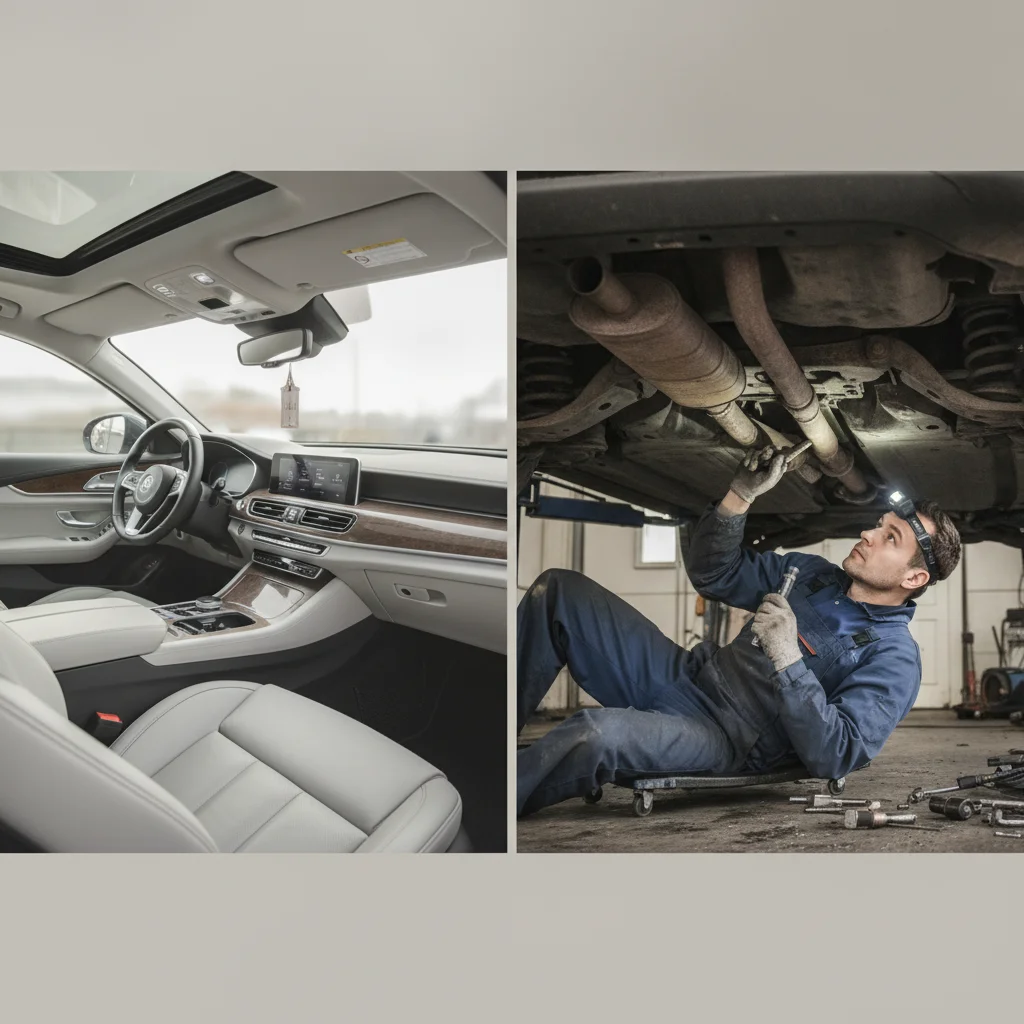
Key Takeaways
Why a Test Drive Is Your Best Diagnostic Tool
A vehicle history report tells you what happened on paper. A pre-purchase inspection tells you what a mechanic can see on a lift. But a test drive tells you how the car actually behaves under load, at speed, and under real-world inputs — none of which show up in a Carfax or a walk-around inspection.
Most buyers treat the test drive as a formality: climb in, take a quick lap, decide whether the seat feels comfortable. That approach costs people thousands of dollars. The real purpose of a test drive is systematic fault-finding. You're not deciding if you like the car. You're interrogating it.
Testing a new car is mostly about fit and features. With a used car, you're investigating wear patterns, deferred maintenance, and hidden damage. The stakes are higher and the method needs to match. This guide gives you a step-by-step framework for extracting maximum information from every minute behind the wheel.
One practical note before you start: a 10-minute loop around the block rarely reveals transmission hesitation, brake fade, or highway noise. Request at least 30–45 minutes and plan a route that includes stop-and-go traffic, a highway on-ramp, rough pavement, and a hard stop from 45 mph in a safe location. If the seller refuses, that refusal tells you something too.
What You Need Before You Arrive
Showing up unprepared means you'll spend mental energy managing logistics instead of evaluating the car. Handle these items before you get to the lot or the seller's driveway.
What you will need
Schedule the test drive for a time when you can arrive before the engine has been running. A cold start is one of the most diagnostic moments of the entire evaluation — dealers and private sellers often pre-warm cars specifically to smooth out rough cold-start behavior. If you arrive and the car is already running or recently moved, note it. Fresh detailing, full tanks, and pre-warmed engines can mask issues — understanding these prep tactics helps you look past the presentation.
Bring a notepad or open a notes app on your phone. You will not remember every detail after the drive. Write down observations immediately — even shorthand like "vibration at 65," "pulls left on brake," or "clunk over speed bump rear left." These notes become leverage in negotiation and protect you from seller pushback later.
OBD-II Bluetooth Scanner
Reads stored and pending engine fault codes from the vehicle's computer — surfaces hidden check engine issues the seller hasn't disclosed.
Notepad or Notes App
Document observations in real time during and immediately after the drive before details fade.
Flashlight or Phone Torch
Inspect under the car for fluid leaks, check tire sidewalls, and examine the engine bay in low-light conditions.
Tire Tread Depth Gauge
Measures remaining tread precisely — replacement tires cost $400–$1,000 for a set and are often a negotiating point.
VIN Decoder App
Cross-references the VIN against basic recall and title databases on the spot before you invest time in a full drive.
The Step-by-Step Test Drive Evaluation
Work through these steps in sequence. Each one targets a specific system or failure mode. Don't skip steps because the car seems fine — some problems only surface under specific conditions.
Observe the Cold Start
Ask the seller not to start the car before your arrival. If the engine is cold, observe the start directly:
- Cranking time: Should fire within 1–2 seconds. Extended cranking suggests fuel delivery issues, a weak battery, or low compression.
- Initial idle quality: Some roughness for the first 5–10 seconds is normal as oil circulates. Rough idle persisting beyond 20–30 seconds points to misfires, vacuum leaks, or sensor faults.
- Exhaust smoke color: A brief puff of white vapor on a cold morning is condensation — normal. Blue smoke means oil burning. Black smoke means rich fuel mixture. Either is a problem.
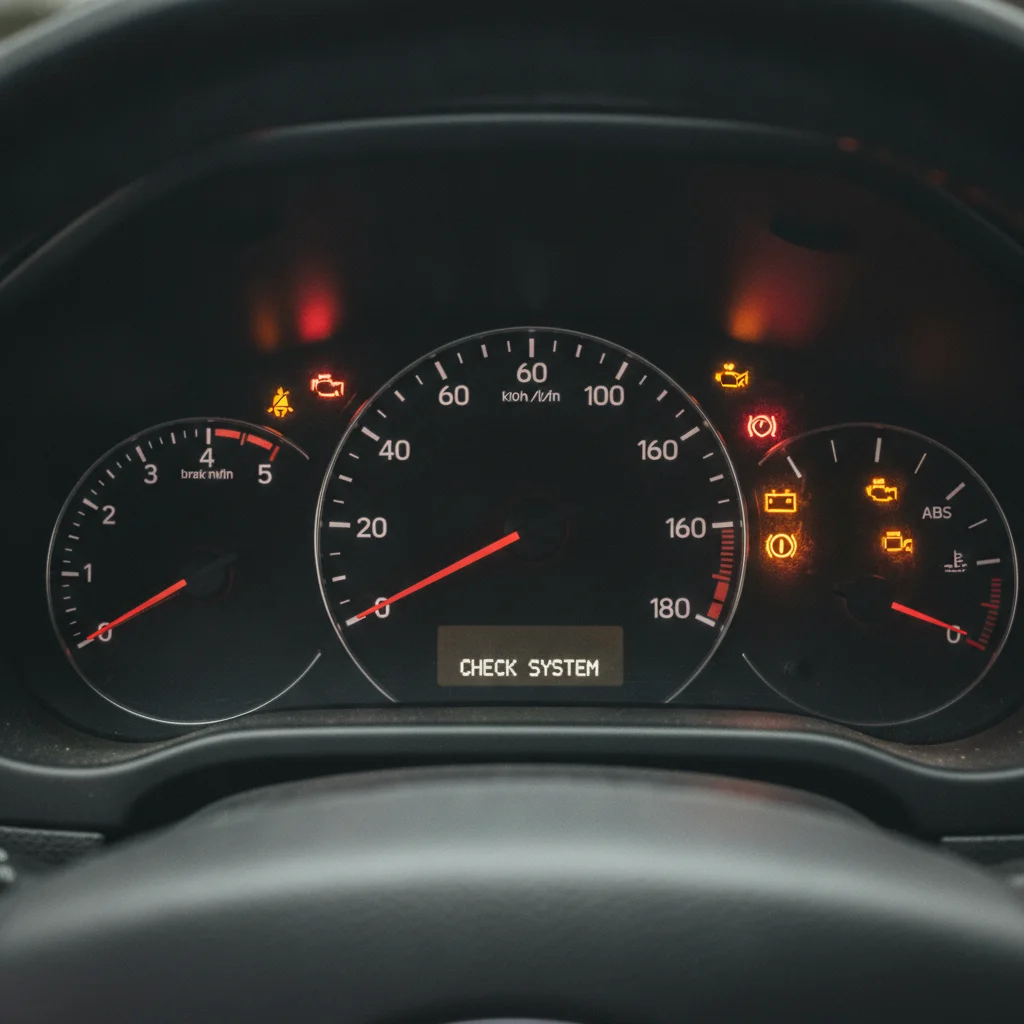
- Warning lights: Watch what illuminates and what clears. The check engine light should come on briefly during startup and then go off. If it stays on, that's a disclosed defect — get the code read before going further.
Do a Standing Systems Check Before Moving
Before pulling out of the driveway or lot, run through every system while stationary:
- Headlights (low and high beam), taillights, brake lights, reverse lights, turn signals
- Horn
- All power windows — full cycle up and down, listen for motor strain or grinding
- Power mirrors and locks
- Infotainment system — does it pair, does it respond without lag?
- Climate control — set to max cold, feel for airflow strength and temperature drop within 60 seconds
- Heated seats and steering wheel if equipped
- Seat adjustments — full range of motion, no binding
Check the odometer reading against the listing. Discrepancies should be explained in writing.
Low-Speed Neighborhood Driving
Start in a low-traffic area at 15–30 mph. This phase isolates suspension, steering, and brake feel at manageable speeds.
- Steering feel: Should be centered and consistent. Any looseness, wandering, or vibration at low speed suggests worn tie rods, a failing power steering rack, or alignment issues.
- Turning radius: Full lock in both directions. Listen for clicking or popping in tight turns — classic CV joint wear on front-wheel-drive vehicles.
- Brake application: Press firmly from 25 mph. The car should stop straight, with no pulsation (warped rotors) and no pull to either side (uneven brake force). Squealing at normal pressure means worn pads. Grinding means metal-on-metal contact — walk away.
- Bump behavior: Drive over a speed bump or rough patch slowly. Listen for clunks from the suspension — specifically from each corner independently. A thud from the rear left over a bump is localized; a general rattle is different from a single impact noise. Learn to distinguish them.
Turn off the radio completely during this phase and keep conversation minimal.
Highway Acceleration and Cruise
Get to highway speeds — ideally 65–75 mph — using a proper on-ramp that requires hard acceleration. This tests the drivetrain under load conditions that parking-lot speeds never reveal.
- Acceleration quality: Should be smooth and linear through all gear changes. Any hesitation, shudder, or RPM flare without corresponding acceleration is a transmission warning sign.
- Shift behavior (automatic): Upshifts should be nearly imperceptible. A hard clunk into each gear, a delay before engagement, or a slip where the engine revs but the car doesn't accelerate are serious red flags.
- Engine sound at load: A healthy engine is smooth and consistent. Any knocking, ticking that intensifies under acceleration, or rattling from the top end suggests oil starvation or worn internal components.
- Stability at speed: Hands light on the wheel — does the car track straight? A pull to one side indicates alignment or a tire issue. A shimmy or vibration that worsens at a specific speed (often 65–70 mph) points to wheel balance or a bent wheel.
- Wind and road noise: Some is normal. Excessive roar from specific corners suggests a worn wheel bearing. Whistling from door seals means weather stripping is failing — minor cost, but worth noting.
Hard Braking Test from Highway Speed
Find a safe, empty stretch of road or a quiet highway on-ramp and perform a firm brake application from approximately 55–60 mph down to 20 mph. Do not slam to a panic stop unless you're genuinely concerned about brake integrity — a firm but controlled application is sufficient.
- The car should decelerate in a straight line with no pull.
- No pulsation through the pedal (warped rotors) or through the steering wheel.
- ABS should not activate during a normal firm stop — if it does, brake force is uneven, suggesting a faulty ABS sensor or caliper issue.
- After the stop, sniff for any burning smell from the brakes. Some heat is normal; a strong chemical burn smell from a single stop suggests a dragging caliper.
Return to Low Speed and Final Checks
On the way back, return to surface streets and run a final set of checks with the engine fully warmed up — conditions that were hidden during the cold start phase are now exposed.
- Idle quality when fully warm: Should be smooth and stable, typically 600–800 RPM. A hunting or surging idle when stopped at a light suggests a vacuum leak or idle air control valve issue.
- Smell check inside the cabin: With the HVAC running, notice any mildew, coolant (sweet smell), or burning odor. Coolant smell with the heater running is a strong indicator of a head gasket leak — a potentially expensive repair.
- Transmission behavior in stop-and-go: Watch how it handles repeated starts from a stop. Any roughness engaging from a standstill or hesitation off the line in light traffic is concerning.
- Power accessories under load: Try the sunroof, if equipped. Listen for motor strain. Sunroof seal condition matters — water intrusion through a failed sunroof drain is a common cause of electrical issues.
Park the car and let it idle for two minutes before shutting off. Watch the exhaust and note any smoke. Check under the car for any fresh fluid drips — oil, coolant, or transmission fluid on a dry surface are red flags.
After completing the drive, give yourself five quiet minutes in a parked car or outside it before engaging with the seller or salesperson. Review your notes. Identify your top two or three concerns. The right questions reveal service history, accident disclosures, and ownership patterns — bring your observations into that conversation directly.
Silence During the Drive Is Your Job
The single most common mistake buyers make on test drives is filling the cabin with conversation and music. Turn off the radio before you leave the lot. Keep seller or salesperson small talk to a minimum during active evaluation phases. Your ears are gathering data the entire time — brake squeal at light pedal pressure, a faint tick at idle, a wind rush at 60 mph — and background noise buries all of it. You can be polite and still be disciplined about quiet evaluation windows.
A Pre-Warmed Engine Hides Real Problems
Dealers and motivated private sellers routinely start and warm up a vehicle before your arrival. A warm engine idles more smoothly, shifts more cleanly, and shows less exhaust smoke than a cold one. If you arrive and the car is already running, ask when it was started and why. <a href="/buying-a-car/car-buying-process/test-drives-and-inspections/how-dealers-prepare-cars-for-test-drives-and-what-that-conceals">Understanding prep tactics helps you look past the presentation</a>. If a cold start isn't possible, factor that information into how much trust you extend to everything else.
Also stay aware of your own behavior during the drive. Salespeople read enthusiasm, urgency, and indecision. Keep your reactions neutral. A visible wince at a noise or an excited comment about the sunroof shifts leverage to their side before you've even discussed price.
Interpreting What You Found
Not every issue you detect is a deal-breaker. Some are negotiating chips. Some are warnings to walk. Here's a practical framework for sorting your findings.
Negotiating Chips (Price Reduction Justified)
- Minor brake vibration at high speed: Warped rotors. Repair cost $150–$400 depending on vehicle. Deduct from offer.
- Slight pull to one side: Alignment or minor tire wear. $80–$150 fix. Use it to anchor a lower number.
- A/C takes longer than 60 seconds to cool: Refrigerant low or compressor marginal. $100–$500 range. Factored into your bid.
- Minor interior rattles: Cosmetic annoyance, rarely structural. Low-cost fix or live with it.
Yellow Flags (Get Professional Inspection First)
- Transmission hesitation or hard shift at any speed
- Steering wheel vibration that changes with acceleration
- Any smell of burning oil or coolant after a full warm-up drive
- Dashboard warning lights that appear or disappear during the drive
Don't Negotiate Before Inspecting
Yellow-flag findings from a test drive should send you to an independent mechanic, not straight to a price negotiation. Negotiating based on suspected problems is weaker than negotiating based on a written inspection report with repair estimates. A $100–$150 pre-purchase inspection gives you documented leverage — and it either confirms your suspicions or clears the car entirely.
Walk-Away Signals
- Grinding or metal-on-metal noise from brakes — pads are gone, rotors likely scored
- Clunk or knock from the engine under any load
- Car pulls dramatically under braking — indicates a seized caliper or serious brake imbalance
- Strong mildew smell from HVAC — water intrusion that leads to mold and electrical problems
- Smoke from the exhaust beyond the first 30 seconds of a cold start
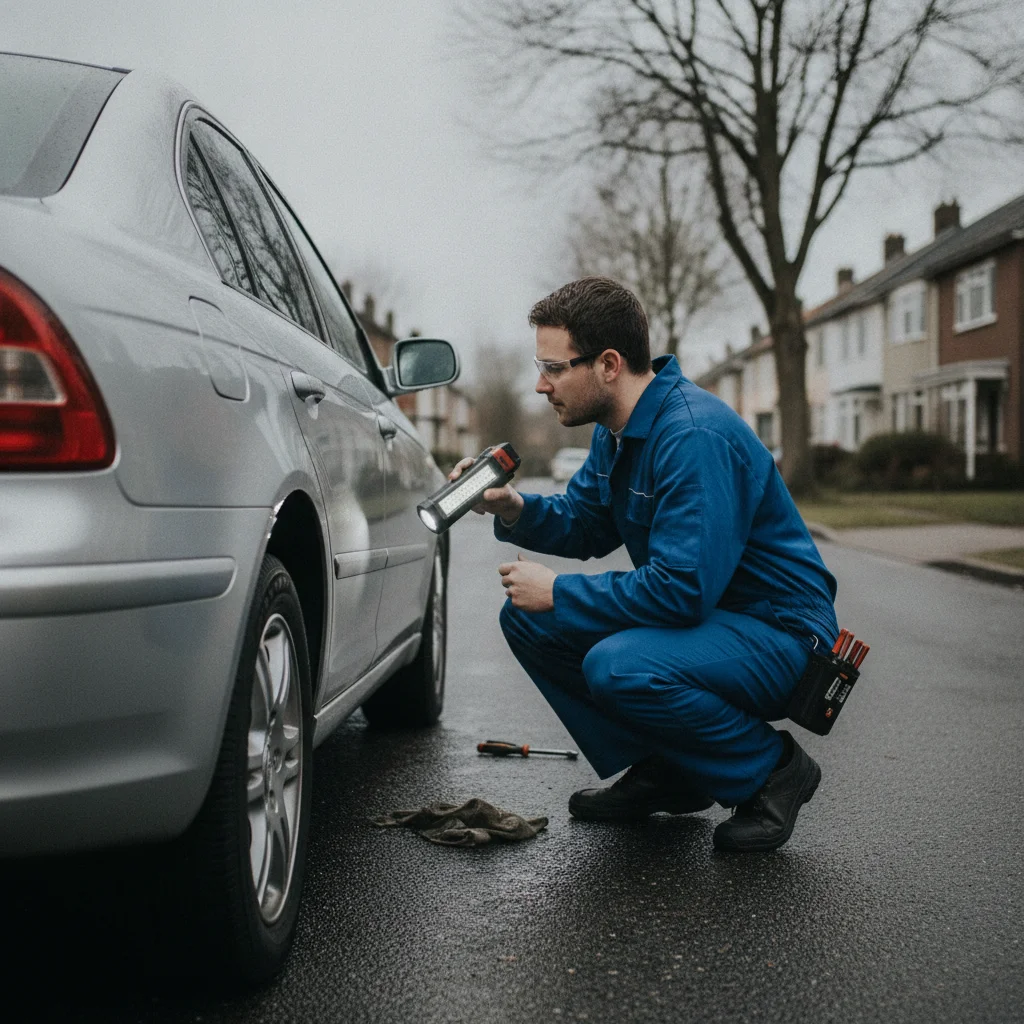
If your findings are in the yellow-flag range, a pre-purchase inspection at an independent shop is the right next step — not a negotiation. Get the facts before you negotiate on price. A $120 inspection that surfaces a $2,400 transmission issue is the best money you'll spend in the entire transaction.
If you're evaluating multiple vehicles, highway merging, tight parking, rough pavement, and sharp turns each reveal different things. Standardize your test route so you're comparing apples to apples across candidates.
Standardize Your Route Across Vehicles
If you're test driving multiple candidates, use the exact same route for each one. Consistency lets you make direct comparisons — you'll immediately notice if one car's suspension feels significantly rougher over the same speed bump, or if one transmission shifts noticeably harder at the same highway on-ramp. <a href="/buying-a-car/car-buying-process/test-drives-and-inspections/test-driving-in-different-conditions-why-one-route-isnt-enough">Build a route that includes highway merging, tight parking, rough pavement, and sharp turns</a> to surface the full range of potential issues.
Turn Off the Radio — All of It
This sounds obvious but most buyers never do it. Sound is data. A quiet cabin during acceleration lets you hear drivetrain noise, exhaust drone, wind leak, and bearing hum that music completely masks. Ask your passenger to stop talking during specific evaluation phases. Thirty seconds of silence at 65 mph tells you more than five minutes of conversation in a parking lot.

All claims are backed by peer-reviewed research. Sources on request.