Key Takeaways
Frame Damage vs. Minor Collision Repair
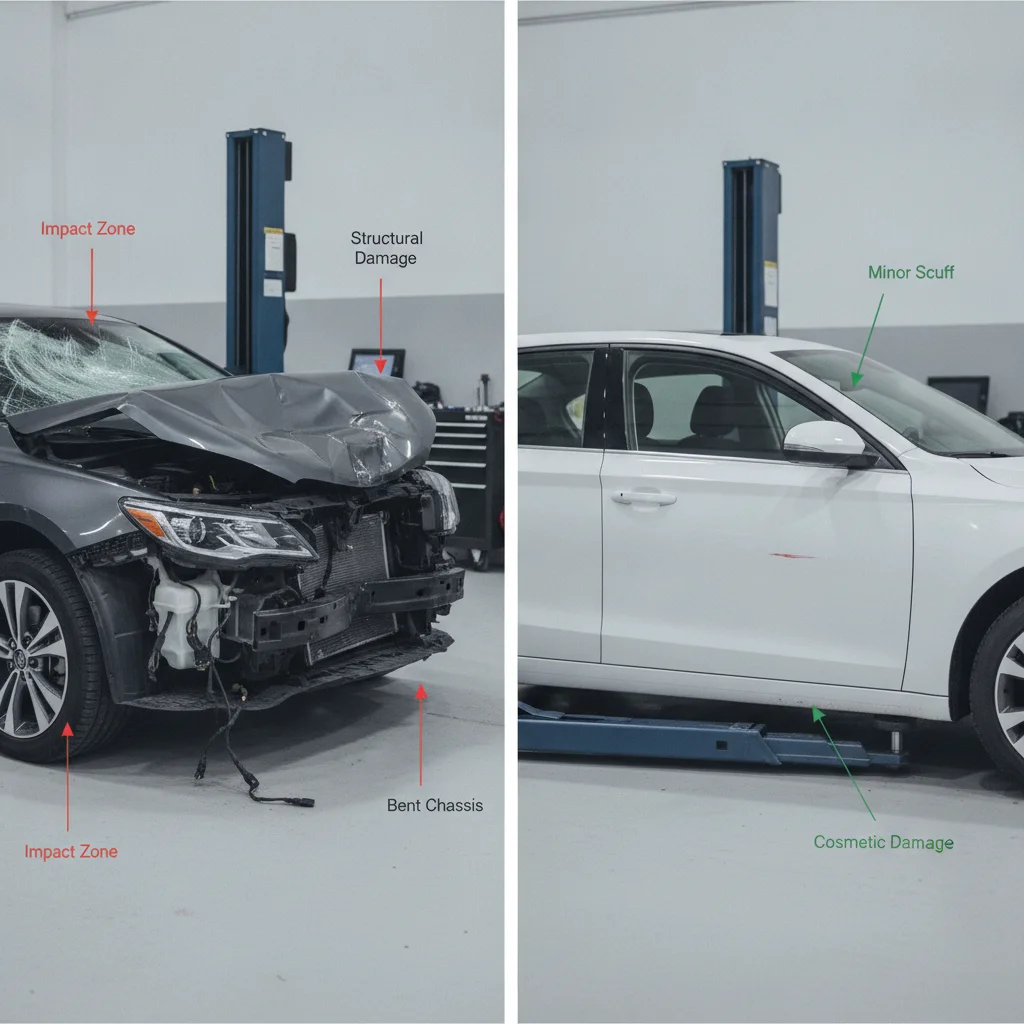
Frame damage refers to any deformation or compromise of a vehicle's structural skeleton — the parts engineered to protect occupants in a crash. Minor collision repair covers surface-level damage like scratched paint, small dents, or broken trim that doesn't affect how the car handles forces in an impact. The distinction matters enormously: one affects safety and long-term reliability, the other is mostly cosmetic.
Modern unibody vehicles don't have a traditional frame; their structural integrity is distributed through reinforced rails, pillars, and crumple zones. Any damage to these engineered zones is considered structural, even if it isn't labeled 'frame damage' on a report.
Why the Distinction Matters Before You Buy
When a seller tells you a car has had "some body work" or shows an accident on its Carfax, that phrase covers an enormous range of outcomes. A parking lot scuff repainted correctly is almost irrelevant. A rear-end collision that pushed in a unibody's rear rail is a fundamentally different vehicle than it was before — regardless of how clean it looks today.
The practical stakes:
- Safety: Vehicles are engineered with specific crumple zones, energy-absorption paths, and pillar strengths. Structural damage that wasn't perfectly repaired can cause a car to behave unpredictably in a second collision.
- Alignment and handling: Even a few millimeters of frame deviation can cause persistent pulling, uneven tire wear, and accelerated suspension component wear.
- Resale and financing: Lenders sometimes refuse to finance vehicles with salvage or rebuilt titles. Private buyers discount them heavily, and dealers may refuse trade-ins outright.
- Insurance complications: Prior structural damage affects the actual cash value calculation, which matters if you file a claim later. The collision and comprehensive hub has more on how coverage interacts with vehicle condition.
Knowing which category a car's history falls into — structural or cosmetic — lets you make a rational decision instead of guessing.
What Counts as Frame or Structural Damage
The word "frame" is commonly misused. Here's a precise breakdown of what actually qualifies as structural damage:
Body-on-Frame Vehicles (Trucks, Full-Size SUVs)
These have a separate ladder frame underneath the body. Structural damage means the frame rails, crossmembers, or mounting points are bent, cracked, or twisted. A competent shop can sometimes section-replace a frame rail, but tolerances need to match factory specs within 3mm or less to restore proper geometry.
Unibody Vehicles (Most Cars, Crossovers)
The body and structure are integrated. Structural zones include:
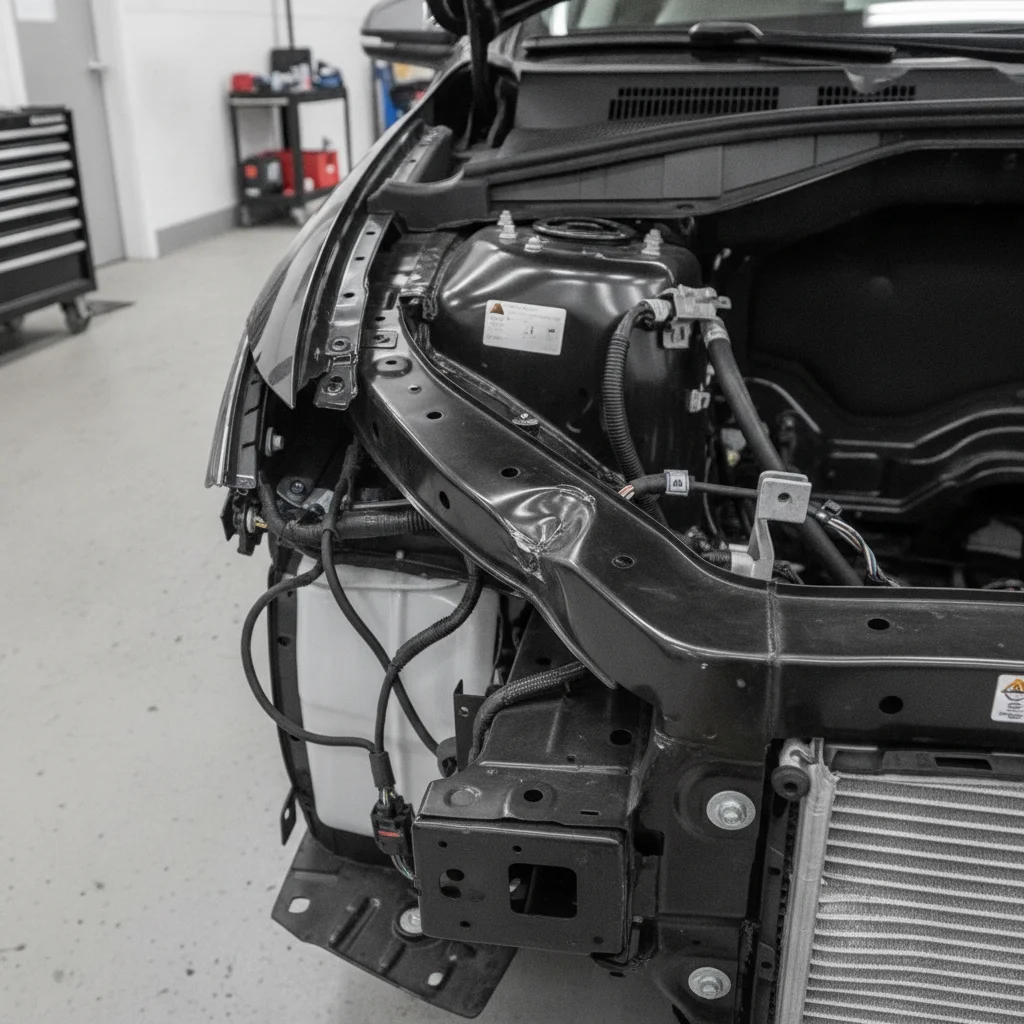
- Front and rear rails — the longitudinal beams that absorb frontal and rear impact energy
- A, B, and C pillars — the vertical supports connecting the roof to the body
- Rocker panels — the sills running under the doors (when heavily damaged, not just surface-dented)
- Firewall — the bulkhead separating engine bay from passenger compartment
- Floor pan and transmission tunnel — intrusions here indicate severe impact
Damage to any of these areas is structural, even if a body shop has pulled and welded them back into approximate shape.
“A properly repaired unibody can be structurally sound, but 'properly repaired' is doing a lot of work in that sentence. The difference between a shop that measures to factory spec and one that pulls it 'close enough' is the difference between a safe car and a liability.”
— Mike Anderson, Collision repair industry trainer and founder of Collision Advice
What Insurers and Dealers Call "Structural"
Insurers and certified appraisers typically flag damage structural when repair required frame straightening equipment (a "frame rack"), when airbags deployed (indicating a significant force event), or when a vehicle received a salvage or rebuilt title. Note that not every airbag deployment means frame damage — but it's a strong prompt to look harder.
Airbag Deployment Doesn't Always Mean Frame Damage
Side curtain airbags can deploy in rollovers or side impacts that leave the main structural rails untouched. Front airbags typically deploy in significant frontal impacts — but 'significant' depends on the vehicle's calibration, not a uniform speed threshold. An airbag deployment is a prompt to inspect carefully, not an automatic disqualifier. Use it as a flag, not a verdict.
PPI Location Matters: Use a Body Shop, Not Just a Mechanic
A general mechanic can identify many mechanical problems but typically lacks the frame measurement equipment needed to assess structural damage properly. For any vehicle with accident history, take it to an independent body shop — ideally one with a computerized frame-measuring system like Car-O-Liner or Chief. The extra specificity is worth the trip.
History Reports Miss Private Repairs
Carfax and AutoCheck only capture incidents reported to insurers or law enforcement. A significant number of collision repairs are paid out-of-pocket by sellers who want to avoid insurance records and premium increases. A clean history report reduces — but does not eliminate — the risk of undisclosed structural work. Physical inspection is always necessary.
What Counts as Minor Collision Repair
Minor collision repair is work that restores a vehicle's appearance without touching its structural skeleton. Done well, it has minimal long-term consequence. These repairs fall into a few clear buckets:
Cosmetic Panel Repair
- Small dents repaired via paintless dent repair (PDR) — no filler, no paint
- Single-panel paint respray for scratches or scuffs
- Replacement of bolt-on, non-structural panels (doors, fenders, hoods)
For PDR specifically, understand what PDR can and can't fix before assuming every ding qualifies.
Bumper and Fascia Work
Modern bumper covers are plastic fascias. They crack, scuff, and break in minor impacts but are bolt-on replacements that cost $200–$700 installed and have zero structural implication. What matters is whether the bumper beam and crash box behind the fascia are also damaged — those are structural.
Glass and Trim Replacement
Windshields, side glass, mirrors, and exterior trim are straightforward replacements. The only flag: if a vehicle has a newer windshield, ask why — it might signal a rollover or serious roof impact.
The key diagnostic question for any repair: Did the shop need a frame rack or structural welding? If not, you're looking at cosmetic work. If yes, the car has structural history regardless of how it looks today.
Buy a $30 Paint Depth Gauge Before Any Used Car Inspection
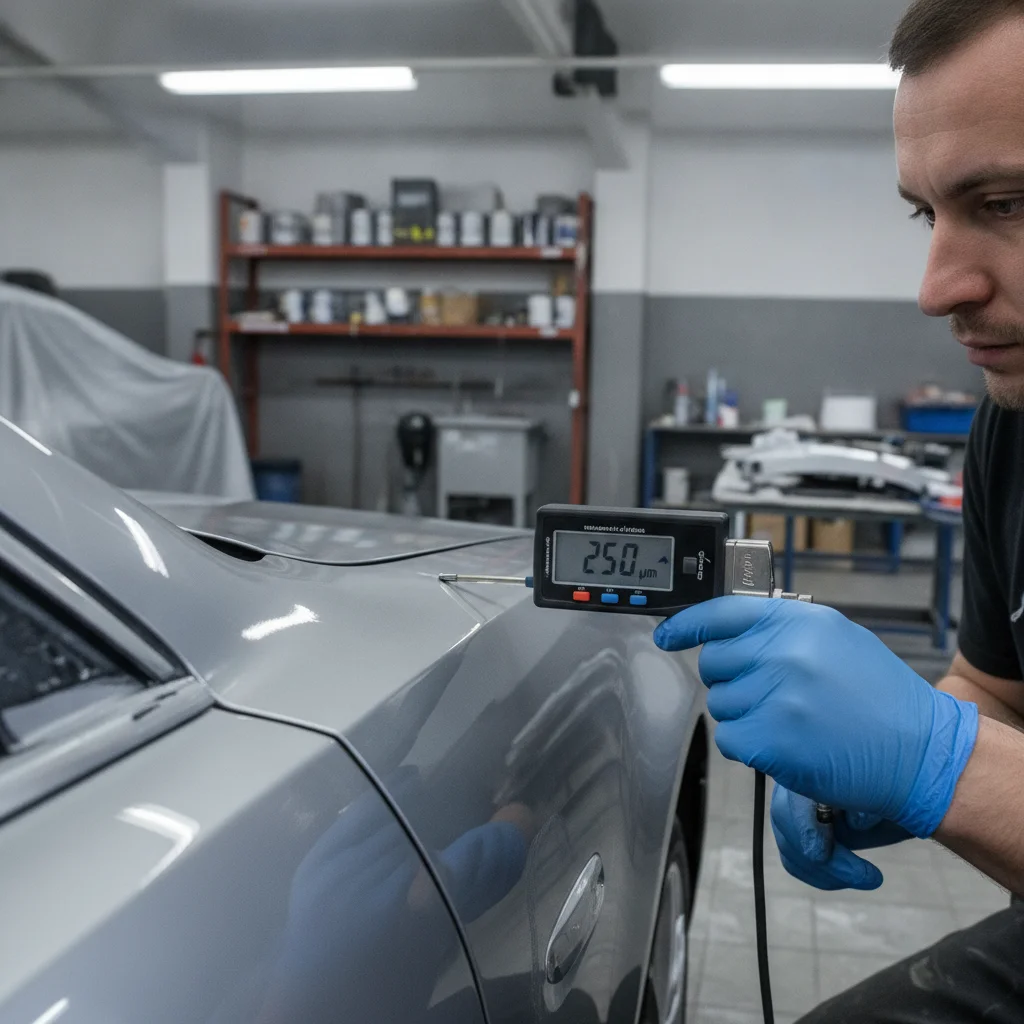
An inexpensive digital paint depth gauge is one of the highest-value tools a used car buyer can own. It takes seconds to use, detects body filler invisible to the eye, and gives you negotiating leverage or a clear walk-away signal. Keep one in your glove box for any serious car shopping trip.
Always Request the Repair Order, Not Just the Carfax
If a seller or dealer claims repairs were done, ask for the actual repair order from the body shop — it will list every operation performed, including whether frame straightening equipment was used. Carfax entries say 'accident reported'; repair orders say exactly what was fixed and how. The repair order is the document that actually tells the story.
Factor Repair History Into Your Insurance Decision
If you buy a car with prior structural damage at a significant discount, revisit your coverage levels. A lower actual cash value means lower potential payouts from collision and comprehensive — which may change whether full coverage makes financial sense. See our <a href="/car-insurance/coverage-types/collision-and-comprehensive/older-cars-and-physical-damage-coverage-a-decision-framework">physical damage coverage decision framework</a> for the math.
How to Spot the Difference in Person
Vehicle history reports (Carfax, AutoCheck) are your starting point, not your finish line. They report incidents that were insured and logged — private repairs go unrecorded. Here's a systematic in-person checklist:
Walk-Around Panel Inspection
- Check all panel gaps — hood-to-fender, door-to-door, trunk-to-quarter panel. Factory gaps are consistent (typically 3–5mm). Uneven, tapered, or wavy gaps indicate panel movement or misalignment after an impact.
- Look for overspray — Open all doors and the trunk. Paint overspray on rubber door seals, weatherstripping, or plastic clips indicates a repaint that wasn't fully masked — usually a sign of hasty bodywork.
- Check paint depth variation — A paint depth gauge (available for $20–$80) can detect body filler underneath paint. Original factory paint reads 90–180 microns. Readings above 200 microns suggest filler; readings above 400 microns indicate heavy bodywork.
- Inspect for ripples or waviness — Crouch at eye level along each side panel in bright light. Factory metal is perfectly flat; repaired panels often show slight waves or ripples, especially near repair edges.
Under-Hood and Undercarriage Check
- Inspect front rail ends — In the engine bay, the forward ends of both frame rails should be factory-smooth with no weld marks, kinking, or evidence of cutting and re-welding.
- Check the firewall — Any buckling, creasing, or fresh seam sealer on the firewall is a serious red flag.
- Look at the undercarriage — Fresh undercoating sprayed over a large area (especially asymmetrically) often hides repaired or damaged metal underneath.
- Check floor pan from inside — Pull back floor mats and look for rippling in the metal or evidence of welding.
Functional Tests
- Open and close all doors — they should latch smoothly with consistent effort. Doors that drop, sag, or need a hard slam often indicate body shell distortion.
- Drive in a straight line on flat pavement with hands loosely on the wheel — the car should track straight. Persistent drift can indicate frame deviation.
- Listen for new wind noise or water leaks — these can indicate panel seals that don't align properly post-repair.
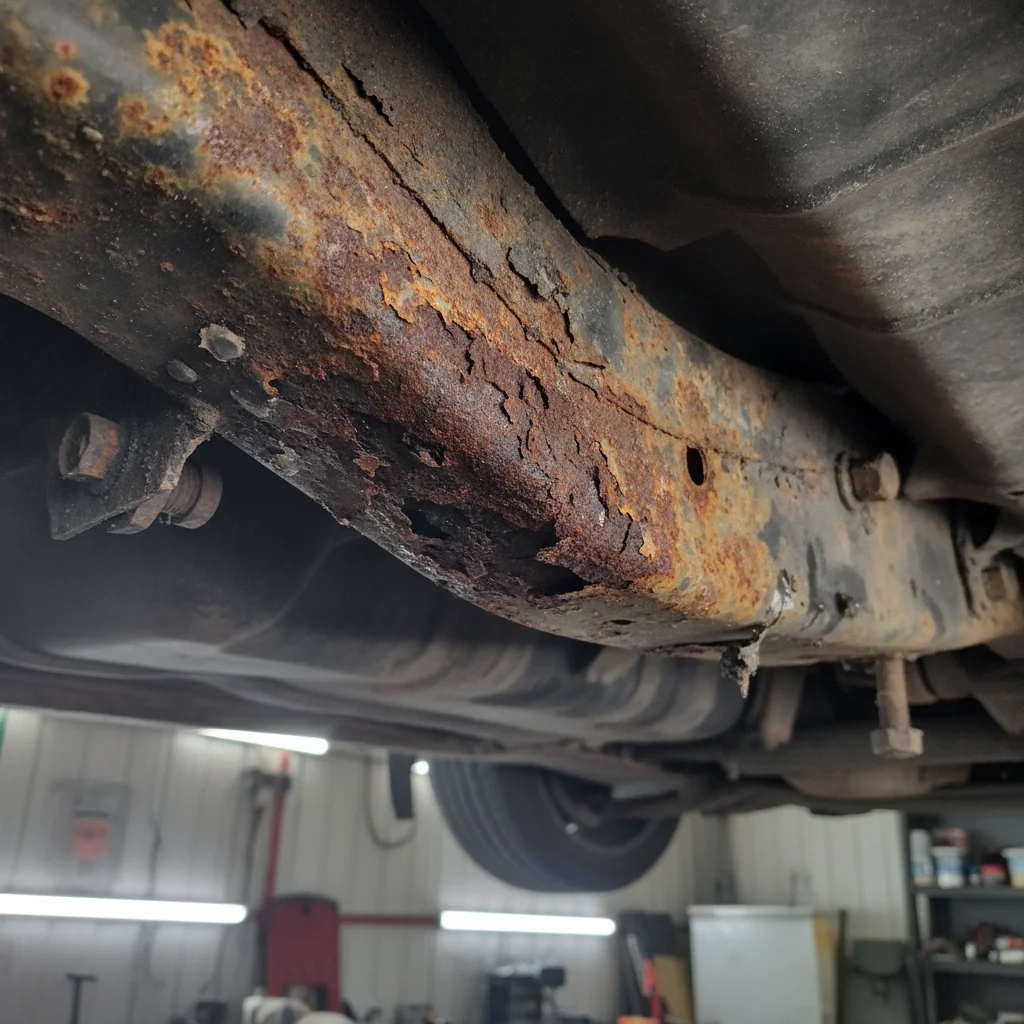
For distinguishing rust from structural rot, use a similar methodology — surface vs. deep penetration tells the whole story.
30–50%
Value reduction from structural damage
Industry appraisers and used car market data consistently show structurally damaged vehicles trade at 30–50% below clean-title equivalents, even after quality repair.
1 in 4
Used cars with undisclosed prior damage
Carfax research has estimated roughly one in four used vehicles on the market has undisclosed damage not captured in history reports, underscoring the need for physical inspection.
$100–$200
Typical pre-purchase inspection cost
Independent body shop PPIs with frame measurement capability typically run $100–$200, a fraction of the financial exposure on a structural purchase mistake.
3mm
Maximum allowable frame deviation
Most manufacturers specify that frame rail geometry must be within 3mm of factory specs for a structural repair to be considered complete and safe.
70–80%
ACV threshold for insurer total loss
Most U.S. insurers declare a vehicle a total loss when estimated repair costs reach 70–80% of the vehicle's actual cash value, a threshold structural repairs frequently exceed.
The Pre-Purchase Inspection: Your Best Tool
Everything in the checklist above is useful preliminary screening. But the definitive answer on structural integrity comes from a professional pre-purchase inspection (PPI) at an independent body shop — not a general mechanic, and not the seller's preferred shop.
What a good PPI includes for collision history:
- Frame rail measurement using a tram gauge or computerized measuring system against factory specs
- Panel gap assessment and paint thickness readings across all panels
- Lift inspection of the undercarriage including welds, floor pan, and suspension mounting points
- Airbag module scan — some shops can read whether airbag control modules have deployment codes stored
Cost: typically $100–$200. On a $15,000 used car purchase, that's money that pays for itself immediately if it surfaces a structural problem — or gives you solid confidence if it comes back clean.
Airbag Deployment Doesn't Always Mean Frame Damage
Side curtain airbags can deploy in rollovers or side impacts that leave the main structural rails untouched. Front airbags typically deploy in significant frontal impacts — but 'significant' depends on the vehicle's calibration, not a uniform speed threshold. An airbag deployment is a prompt to inspect carefully, not an automatic disqualifier. Use it as a flag, not a verdict.
PPI Location Matters: Use a Body Shop, Not Just a Mechanic
A general mechanic can identify many mechanical problems but typically lacks the frame measurement equipment needed to assess structural damage properly. For any vehicle with accident history, take it to an independent body shop — ideally one with a computerized frame-measuring system like Car-O-Liner or Chief. The extra specificity is worth the trip.
History Reports Miss Private Repairs
Carfax and AutoCheck only capture incidents reported to insurers or law enforcement. A significant number of collision repairs are paid out-of-pocket by sellers who want to avoid insurance records and premium increases. A clean history report reduces — but does not eliminate — the risk of undisclosed structural work. Physical inspection is always necessary.
When a seller refuses a PPI, that's your answer. Legitimate sellers with nothing to hide have no rational reason to block an inspection. Walk away.
What Frame Damage Does to Value and Insurability
Structural damage creates a permanent mark on a vehicle's history and value. Here's what that looks like in practice:
Resale Value Impact
A professionally repaired car with documented structural damage typically sells for 30–50% below a clean-title equivalent, depending on the vehicle, severity, and quality of repair. Even vehicles with excellent post-repair condition rarely recover to clean-title market value because buyers (rationally) apply a discount for the unknown risk of imperfect repair.
Compare this to documented minor cosmetic repairs, which typically carry a 0–10% discount, and often zero if the work was professional and matches well.
Titles and Financing
Most states require a salvage title when an insurer declares a vehicle a total loss. Rebuilt titles are issued after a salvage vehicle passes a state inspection and is deemed roadworthy. Both signal structural history to every future buyer and lender. Many banks and credit unions won't finance rebuilt-title vehicles at all, which significantly narrows your buyer pool when it's time to sell.
Insurance Implications
Prior structural damage affects your car's actual cash value (ACV), which is what a comprehensive or collision claim pays out if the vehicle is totaled again. A lower ACV means a lower payout ceiling — relevant if you're deciding how much coverage to carry. Our framework for physical damage coverage on older vehicles applies here: if a car's market value is already suppressed by structural history, the math on full coverage shifts quickly.
If you're selling a vehicle with prior structural repairs, understand what prep investments actually pay off — because money spent on cosmetics won't overcome a structural history disclosure.
Making the Call: A Decision Framework
Here's how to think through any specific vehicle with accident history:
If the History Report Shows a Minor Incident
Run the in-person checklist above. If panel gaps are consistent, paint depth is normal, and an independent shop finds nothing structural, proceed with reasonable confidence. Factor in a modest discount (5–10%) if the incident shows on the report, since future buyers will see the same thing.
If the History Report Shows a Major Accident or Structural Damage
Get a PPI from a body shop with frame measurement capability before you get emotionally invested. If the inspection surfaces ongoing misalignment, improper welds, or filler over structural components — walk. If the repair genuinely meets factory specs and the price reflects the history, it might still be a reasonable deal for someone who plans to keep the car long-term and understands the resale limitation.
If There's No History Report or the Seller Won't Provide One
Pay for your own report ($40–$50 for Carfax or AutoCheck). If the seller won't allow a PPI, treat the vehicle as suspect and price-discount accordingly — or walk. Transparency from sellers around even minor damage is a basic standard; lack of it on structural issues is a serious red flag.
The bottom line: minor cosmetic repairs on an otherwise sound car are a non-issue. Structural damage, even repaired, deserves deep scrutiny and a significant price discount — or a pass.
Buy a $30 Paint Depth Gauge Before Any Used Car Inspection
An inexpensive digital paint depth gauge is one of the highest-value tools a used car buyer can own. It takes seconds to use, detects body filler invisible to the eye, and gives you negotiating leverage or a clear walk-away signal. Keep one in your glove box for any serious car shopping trip.
Always Request the Repair Order, Not Just the Carfax
If a seller or dealer claims repairs were done, ask for the actual repair order from the body shop — it will list every operation performed, including whether frame straightening equipment was used. Carfax entries say 'accident reported'; repair orders say exactly what was fixed and how. The repair order is the document that actually tells the story.
Factor Repair History Into Your Insurance Decision
If you buy a car with prior structural damage at a significant discount, revisit your coverage levels. A lower actual cash value means lower potential payouts from collision and comprehensive — which may change whether full coverage makes financial sense. See our <a href="/car-insurance/coverage-types/collision-and-comprehensive/older-cars-and-physical-damage-coverage-a-decision-framework">physical damage coverage decision framework</a> for the math.

All claims are backed by peer-reviewed research. Sources on request.