Key Takeaways
PDR is affordable and often recovers its cost
A single dent repaired via paintless dent repair typically costs $75–$150, while buyers routinely discount $200–$400 for visible damage — making the repair a net positive in most cases.
Improves listing photos and first impressions
Dents catch light awkwardly in photos and can eliminate your car from a buyer's shortlist before any contact is made. A clean exterior keeps more potential buyers engaged.
Reduces buyer leverage in negotiation
Every visible flaw becomes a bargaining chip. Eliminating easy objections keeps the conversation closer to your asking price and shortens the negotiation process.
Preserves factory paint finish
Unlike conventional bodywork, PDR doesn't involve filler or repainting, so the factory finish remains intact — which buyers and appraisers both value.
Fast turnaround, often same-day
Mobile PDR technicians can often complete a repair in under an hour, making it one of the least disruptive pre-sale investments available.
Not all dents qualify for PDR
Dents with cracked paint, sharp creases, or awkward locations near body lines or edges require conventional bodywork, which costs significantly more and may not be financially justified.
Repair cost can exceed the price recovery
On lower-value vehicles, spending $300–$500 on panel repair may not be recoverable in the final sale price, making disclosure and a price adjustment the smarter financial choice.
Risk of over-investing in cosmetic prep
Sellers sometimes spend more on appearance than the market will reward, particularly on high-mileage or older vehicles where buyers expect and accept some cosmetic wear.
DIY dent repair kits rarely deliver professional results
Consumer-grade suction cup or bridge-puller kits can create additional damage if misused, and poor results may look worse than the original dent to a discerning buyer.
Repaired panels may still be detectable
Savvy buyers inspect panel gaps and paint texture closely. Even a good PDR repair is occasionally detectable under direct sunlight, which can raise questions if not disclosed.
Our Verdict
For most sellers, small dents that fall within paintless dent repair's sweet spot are worth fixing — the cost is modest and the return in perceived value is real. Where PDR isn't an option, or where the car's value doesn't justify the spend, honest disclosure paired with a fair price adjustment is the smarter move. There's no single right answer, but there is a clear decision framework: weigh the repair cost against the price reduction a buyer will almost certainly demand, and factor in how prominent the damage is in listing photos.
Best for private-party sellers who want a clean, straightforward listing and are willing to invest a small amount of prep money to avoid drawn-out price negotiations.
Why Small Dents Matter More Than You Might Think
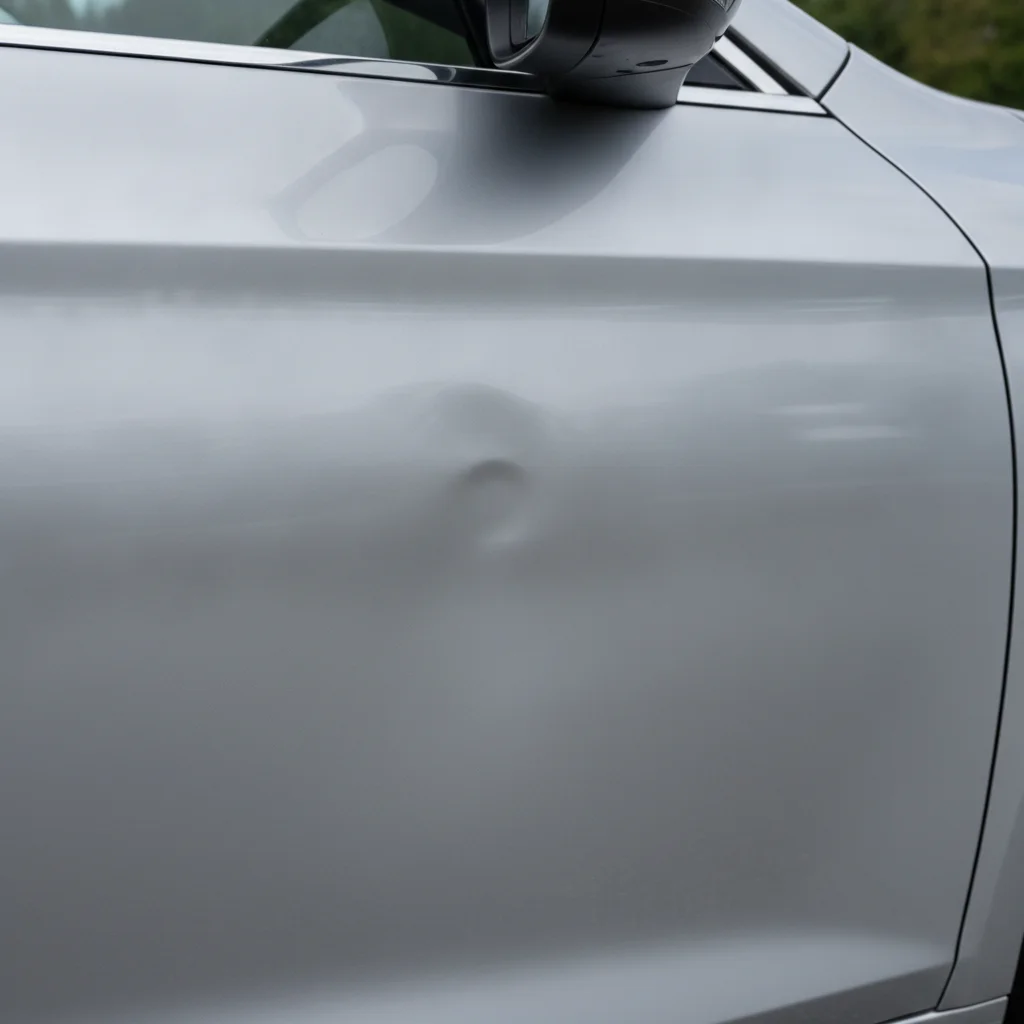
It's easy to stop noticing the little door ding you got in a parking lot six months ago. You've driven past it every day and your brain has simply filed it under "normal." But a buyer seeing your car for the first time will notice it immediately — and their mind will jump to a very specific question: What else has been neglected?
That's the real problem with small dents and dings. They're rarely structurally significant, but they carry an outsized psychological weight in the selling process. A buyer who spots a dent in your listing photos may not even schedule a viewing. One who sees it in person will almost always use it as leverage to push the price down — often by more than the actual repair would cost.
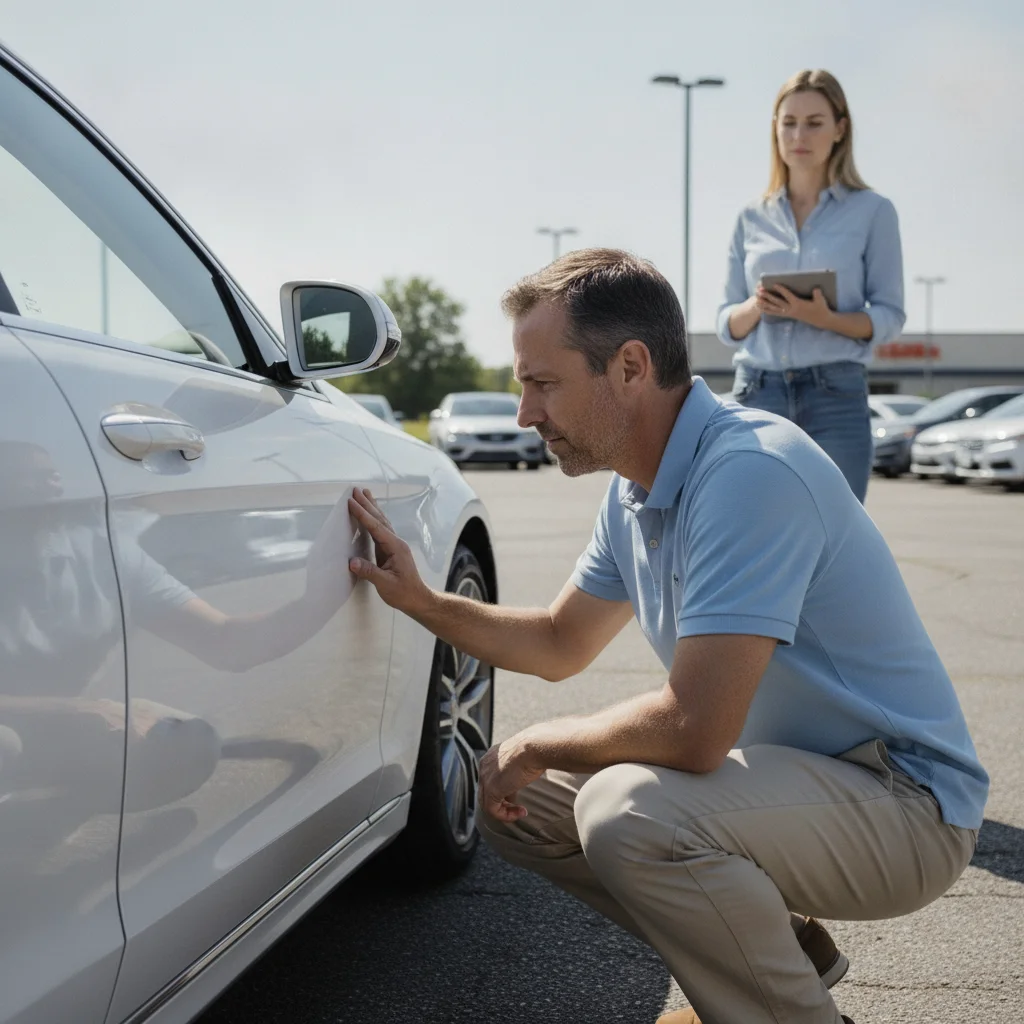
This isn't about being deceptive or obsessing over perfection. It's about understanding how buyers think. When your car looks well-maintained, buyers assume it was well-maintained. Cosmetic condition is a proxy for mechanical care in the buyer's mind, even when that's not entirely logical. So a clean exterior does real work for you before a single question about service history gets asked.
That said, not every dent deserves a trip to the body shop. The key is knowing when fixing pays off, when disclosing is the wiser play, and how to frame either decision to keep the sale moving forward.
What Paintless Dent Repair Can (and Can't) Do
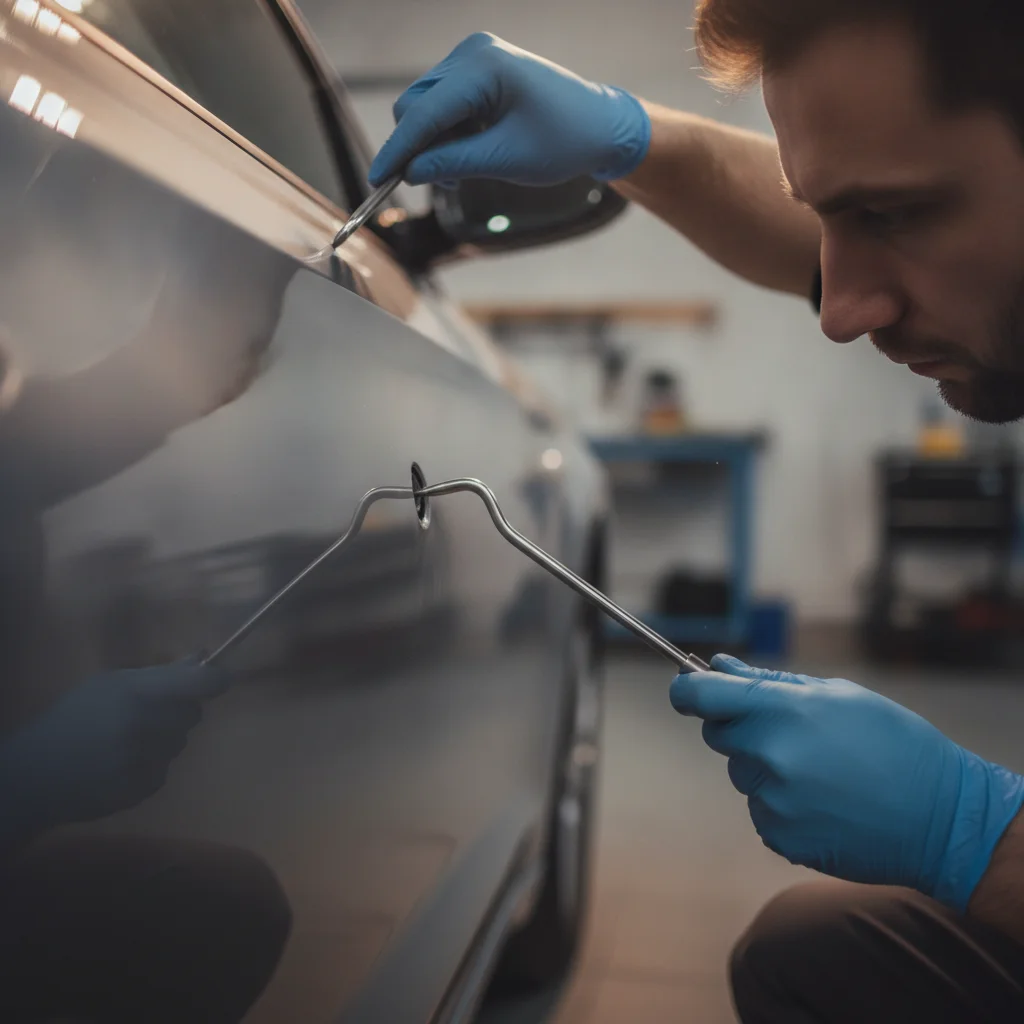
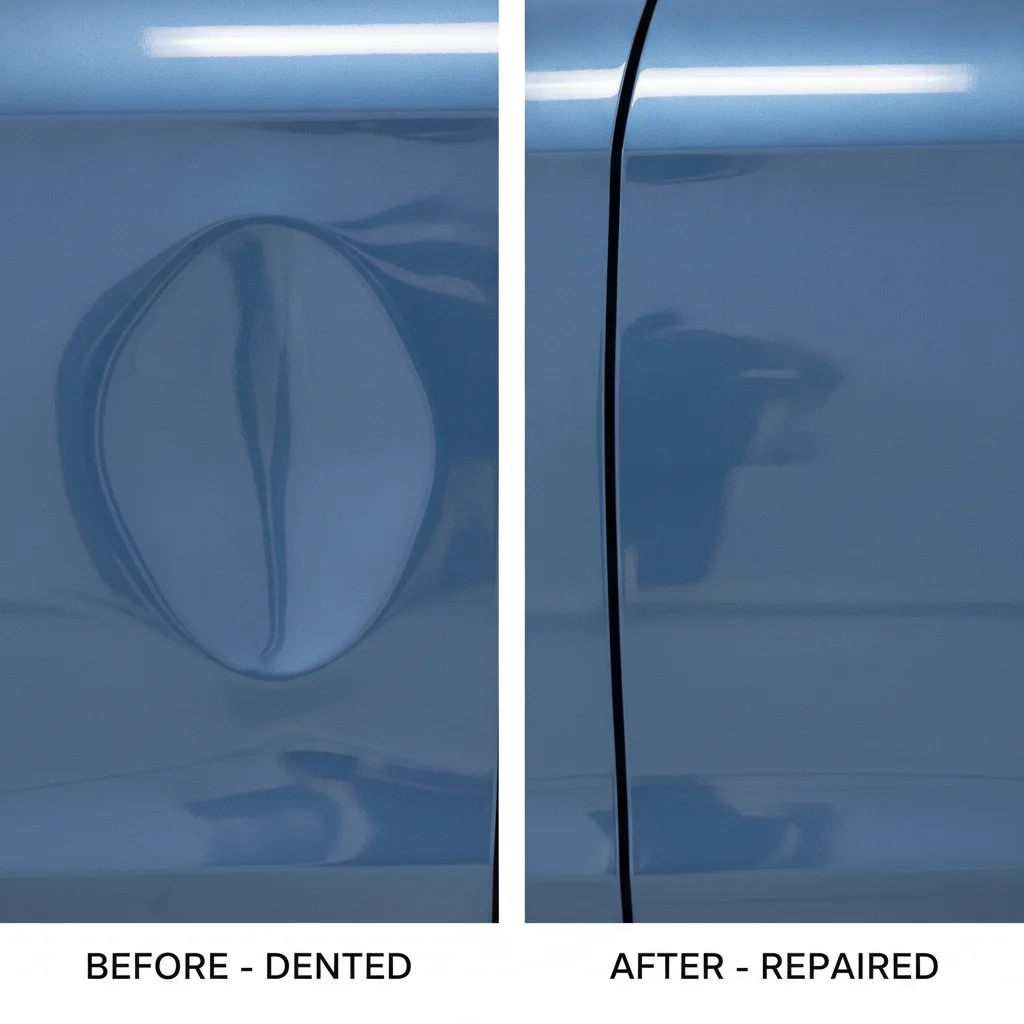
Paintless dent repair — PDR — is the go-to solution for minor body panel damage, and for good reason. A skilled PDR technician uses specialized tools to massage a dent back into shape from behind the panel, leaving no filler, no repainting, and no disruption to your factory finish. When it works, the result is genuinely invisible.
The critical word there is when. PDR has real limits, and pushing it beyond them produces disappointing results. Before you book an appointment, it helps to understand what qualifies. The full breakdown of what PDR can and can't fix is worth reading before you commit, but here's the quick version:
- Good candidates: Round or oval dents with smooth edges, no paint cracking or chipping, located on accessible panels (doors, fenders, hood, roof)
- Poor candidates: Dents with creased edges or sharp folds, any dent where the paint has cracked or flaked, damage near panel edges or body lines, and dents on reinforced structural areas
PDR Works Best on Specific Panel Types
Aluminum panels — increasingly common on newer trucks and SUVs — require a PDR technician with specific experience in aluminum repair. The metal behaves differently than steel and is more prone to tearing if incorrect tools or techniques are used. Always confirm the technician has worked on your panel material before booking.
Insurance May Cover Dent Repair
If your dents were caused by a hail event or a hit-and-run, your comprehensive auto insurance policy may cover PDR with minimal or no out-of-pocket cost, depending on your deductible. Filing a claim for a small dent on a car you're about to sell requires care — a recent claim can affect your record — but it's worth reviewing your policy terms before paying out of pocket.
Disclosure Rules Vary by State
In a private-party sale, most states require sellers to disclose known material defects. Cosmetic damage like dents generally doesn't fall under legal disclosure requirements, but significant damage that affects function or value may. When in doubt, disclosing is always the safer and more ethical choice.
Cost-wise, expect to pay roughly $75 to $150 for a single small dent from a reputable mobile PDR service. Multiple dents may be discounted when bundled. Compare that to conventional body shop repair, which can run $300 to $500 or more per panel once paint-matching and blending are factored in.
$75–$150
Typical PDR cost per small dent
Based on industry pricing data from mobile and shop-based PDR providers across the U.S. in 2024.
$300–$500+
Conventional body shop repair cost per panel
Includes paint-matching, blending, and labor — significantly higher than PDR for comparable panel damage.
70%
Buyers who negotiate based on cosmetic flaws
A 2023 survey by CarGurus found that the majority of used car buyers factor visible cosmetic damage into their initial offer.
3–5×
Price reduction vs. actual repair cost
Buyers routinely discount vehicles by three to five times the actual PDR cost when dents are visible and unaddressed, according to automotive resale experts.
The math is usually favorable for PDR-eligible dents on vehicles worth more than a few thousand dollars. The question becomes harder when a dent isn't a good PDR candidate — at that point you're looking at full bodywork costs that may not be recoverable in the sale price.
The Case for Fixing Dents Before You List
Let's look at this honestly. If your car has a quarter-panel ding that a PDR tech can remove for $100, and a buyer who spots it will knock $300 off their offer, fixing it is a straightforward financial win. But the benefits go beyond simple arithmetic.
PDR is affordable and often recovers its cost
A single dent repaired via paintless dent repair typically costs $75–$150, while buyers routinely discount $200–$400 for visible damage — making the repair a net positive in most cases.
Improves listing photos and first impressions
Dents catch light awkwardly in photos and can eliminate your car from a buyer's shortlist before any contact is made. A clean exterior keeps more potential buyers engaged.
Reduces buyer leverage in negotiation
Every visible flaw becomes a bargaining chip. Eliminating easy objections keeps the conversation closer to your asking price and shortens the negotiation process.
Preserves factory paint finish
Unlike conventional bodywork, PDR doesn't involve filler or repainting, so the factory finish remains intact — which buyers and appraisers both value.
Fast turnaround, often same-day
Mobile PDR technicians can often complete a repair in under an hour, making it one of the least disruptive pre-sale investments available.
One thing sellers often underestimate is the listing photo effect. Most buyers make their shortlist entirely from photos before a viewing ever happens. A dent that photographs badly — catching light at the wrong angle, creating a shadow line — can eliminate your car from consideration before you exchange a single word with a potential buyer. Fixing it before you photograph the car is essentially free marketing.
There's also the negotiation dynamic to consider. Every visible flaw a buyer finds becomes a chip they can use to justify a lower offer. When your car presents well and there's little to criticize, buyers have less ammunition. The conversation stays closer to your asking price. See what prep work actually pays off in a private sale for a broader look at which investments tend to recoup their cost.
The Case for Disclosing Instead of Fixing
Fixing isn't always the right call — and it's worth being clear-eyed about that. There are situations where disclosure is genuinely the better path, both financially and ethically.
Not all dents qualify for PDR
Dents with cracked paint, sharp creases, or awkward locations near body lines or edges require conventional bodywork, which costs significantly more and may not be financially justified.
Repair cost can exceed the price recovery
On lower-value vehicles, spending $300–$500 on panel repair may not be recoverable in the final sale price, making disclosure and a price adjustment the smarter financial choice.
Risk of over-investing in cosmetic prep
Sellers sometimes spend more on appearance than the market will reward, particularly on high-mileage or older vehicles where buyers expect and accept some cosmetic wear.
DIY dent repair kits rarely deliver professional results
Consumer-grade suction cup or bridge-puller kits can create additional damage if misused, and poor results may look worse than the original dent to a discerning buyer.
Repaired panels may still be detectable
Savvy buyers inspect panel gaps and paint texture closely. Even a good PDR repair is occasionally detectable under direct sunlight, which can raise questions if not disclosed.
Consider a 2013 sedan with 130,000 miles on it, priced at $6,500. If it has two small dents that would cost $200 total to PDR, the math might still favor repair. But if those dents aren't great PDR candidates and a body shop wants $400 per panel, you're looking at $800 in repairs on a car where the buyer is likely already expecting some wear. In that case, pricing the car accurately and disclosing the damage plainly is the more sensible approach.
The financial logic for walking away from a pre-sale repair applies directly here: if the repair cost exceeds what you can reasonably expect to recover in sale price, disclosure and a fair price adjustment will serve you better.
Transparency also has a less obvious benefit — it signals honesty to buyers who are already anxious about getting burned on a used car purchase. A seller who proactively mentions a dent in the listing description, shows clear photos of it, and prices accordingly often builds more trust than one whose car appears perfect but where the buyer spends the whole viewing waiting to find the catch.

One approach that works well: note the damage in your listing, include a clear photo of it, and set your price to reflect it. Buyers who contact you already know what they're getting. You'll attract fewer tire-kickers and more serious buyers who appreciate the upfront honesty.
How to Decide: A Practical Framework
Rather than guessing, run through these four questions before making a call:
- Is the dent a good PDR candidate? If the paint is intact, the dent is round with smooth edges, and it's on an accessible panel, PDR is likely on the table. If paint is cracked, the dent is creased, or it's near a body line or edge, you're probably looking at conventional bodywork — or disclosure.
- What's the all-in repair cost? Get a real quote, not an estimate. Mobile PDR services often provide free estimates on-site. For anything requiring bodywork, get two quotes from reputable shops.
- What's the likely impact on your sale price? Think honestly about how the damage photographs, how prominent it is in person, and how a typical buyer will react. A small, hard-to-see ding on a rear quarter panel is different from a door dent that runs three feet long.
- What's the car worth? On a $25,000 car, spending $200 on PDR is almost always justified. On a $4,500 car, the math gets tighter and you need to be more disciplined about what you spend.
If the repair cost is lower than the price reduction you'd likely face — and the dent qualifies for PDR — fix it. If the math doesn't work, disclose it clearly and price accordingly. It really is that straightforward once you strip away the emotional attachment to the car.
For comparison, repairs that consistently lift sale prices vs. those that rarely do gives you a broader reference point for where prep dollars are best spent.
Related Cosmetic Issues Worth Considering
Dents rarely exist in isolation. While you're assessing your car's body condition, it's worth taking a clear-eyed look at a few related issues that buyers notice just as quickly:
Paint condition
If your car's paint has swirl marks, oxidation, or dull patches, those issues will show up in photos alongside any dents and compound the buyer's perception of neglect. When paint correction is worth the cost depends on the car's value and severity of the damage — the same logic that applies to dent repair.
Touch-up paint
If there's paint chipping around a dent — or elsewhere on the car — you might be tempted to apply factory touch-up paint yourself. Be cautious: touch-up paint can sometimes make things look worse, particularly on older vehicles where the factory color has faded and the new paint won't match precisely.
Wheel condition
Scuffed alloy wheels are a separate but similarly priced cosmetic issue. Curb rash catches buyers' eyes in listing photos and at viewings, and the decision framework is almost identical to dents: assess repair cost, estimate price impact, and decide accordingly.
Body panel integrity
Before you invest in cosmetic repairs, it's worth making sure the panels themselves are original. A buyer who knows what they're looking at can spot prior bodywork. Reading body panels for signs of prior repair is something informed buyers will do — knowing what they might find helps you anticipate their questions.
What Buyers Actually Think When They See a Dent
It helps to step out of the seller's mindset for a moment and think like a buyer. When someone is spending several thousand dollars on a used car, they're managing real anxiety. They don't know the full history of the car. They can't see the engine internals. They're reading every visible clue they can find.
A dent signals a few different things depending on context:
- On a low-mileage, newer car: It raises questions. How did this happen? Has anything else been repaired? Was this reported to insurance?
- On a high-mileage, older car: It's more expected. A buyer is usually less concerned, but will still use it as a negotiation chip.
- On a car being sold "as-is" with clear disclosure: It's actually reassuring. The seller isn't hiding anything, and the price reflects reality.
The worst scenario for a buyer — and therefore the worst scenario for your sale — is discovering a dent during the viewing that wasn't disclosed or clearly visible in the listing photos. That triggers suspicion about what else might be hidden, and it often kills deals that would otherwise have closed.
Sellers sometimes worry that disclosing damage will scare buyers off. In practice, the opposite is often true. Buyers who make it to a viewing already know about the dent, have processed it, and are there because they're still interested. That's a much better starting position than a viewing that derails the moment someone spots something unexpected.
Putting It All Together
The decision to fix or disclose a small dent isn't a moral one — it's a practical one. The goal is a fair sale at a fair price, reached without unnecessary drama or wasted money on repairs that don't pay back.
Here's the simplified version of everything above:
- If PDR is an option and the cost is less than the price reduction you'd face, fix it.
- If the dent doesn't qualify for PDR and conventional bodywork costs more than it will recover, disclose it.
- If you're unsure, get a PDR quote first — they're usually free and quick, and the answer often makes the decision obvious.
- Whatever you decide, photograph the car honestly and describe its condition accurately in your listing.
Sellers who approach this process with clarity and honesty tend to have faster, smoother sales. Buyers who feel they're getting a straight deal are less likely to walk away over minor issues — and more likely to close at or near your asking price.
For a broader look at how to prioritize your prep budget across all cosmetic and mechanical issues, this guide to detailing vs. minor repairs before a private sale is a useful next step. And if you want to go further on the DIY route for minor fixes, simple at-home repairs covers what's realistically achievable without professional help.

All claims are backed by peer-reviewed research. Sources on request.