Key Takeaways
Option A
Surface Corrosion
The cosmetic nuisance that's usually manageable.
Best for: Buyers who understand it's a maintenance issue, not a safety risk, and can price it into their offer accordingly.
Option B
Structural Rot
The hidden deal-breaker that threatens safety and resale.
Best for: Understanding why certain used cars — regardless of price — are simply not worth buying.
If you're buying a daily driver on a tight budget
Surface Corrosion (acceptable with caveats)
Light surface rust on body panels is manageable and can be priced into your offer. Structural rot, however, makes even a cheap car too expensive when you factor in repair bills or safety risk.
If you're buying a car in a salt-belt or high-humidity region
Structural Rot (avoid entirely)
Cars from Michigan, Ohio, or coastal areas need a thorough undercarriage inspection before purchase. Any evidence of structural rot in those climates tends to be progressive — it doesn't stop on its own.
If you plan to resell the vehicle within two years
Surface Corrosion (acceptable with treatment)
Treated surface rust has minimal impact on resale. Structural rot — even partially repaired — will surface in any pre-purchase inspection and tank your asking price.
If you're buying for a teenage or new driver
Surface Corrosion (acceptable)
Any structural compromise in a vehicle driven by an inexperienced driver multiplies risk. Insist on a clean undercarriage and intact frame rails before purchasing.
If you're a seller preparing a used car for private sale
Surface Corrosion (disclose and treat)
Treat and disclose surface rust — it builds trust and rarely kills a deal. Structural rot requires honest disclosure and typically forces a significant price reduction or unsellable status.
Why the Rust Distinction Matters More Than You Think
Most buyers see rust on a used car and assume the worst. Most sellers see it and hope buyers don't notice. Neither reaction is particularly useful. The real question is simple: is this rust cosmetic or is it eating through something that holds the car together?
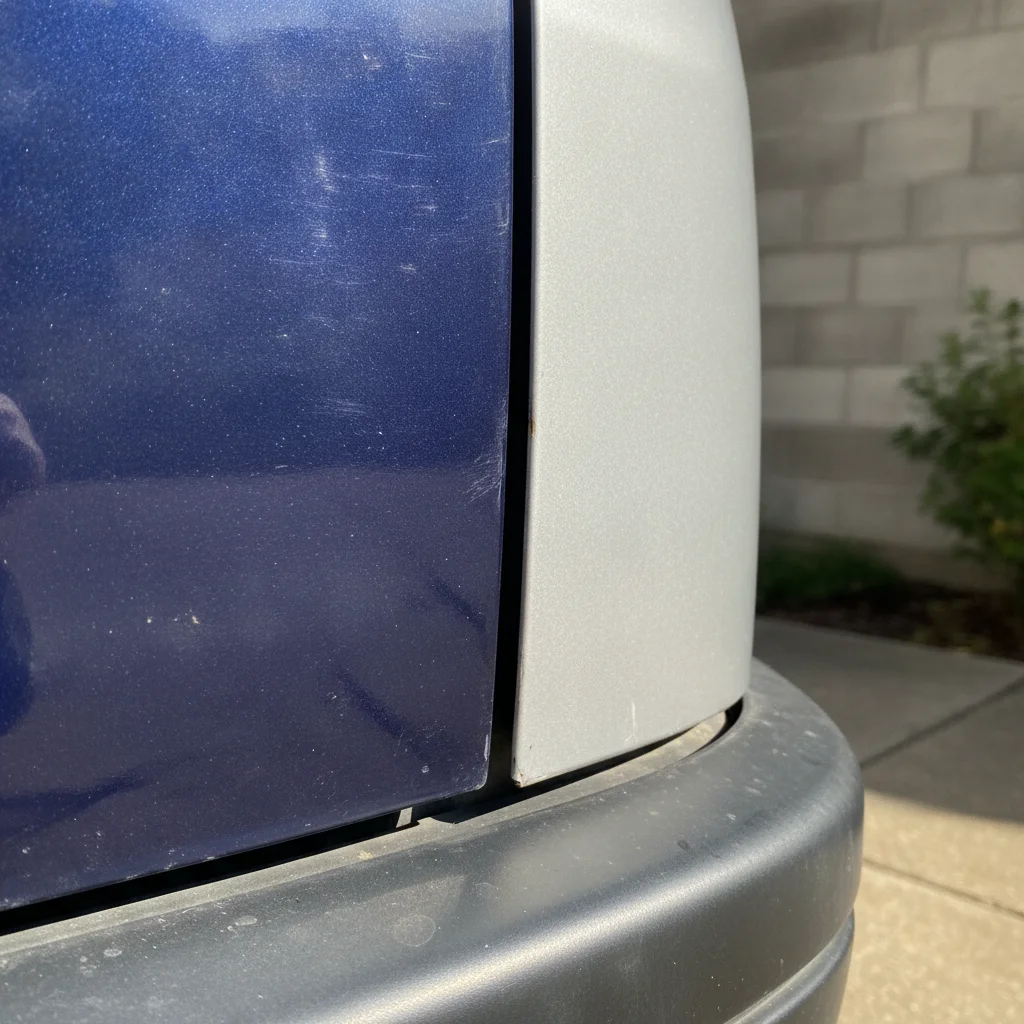
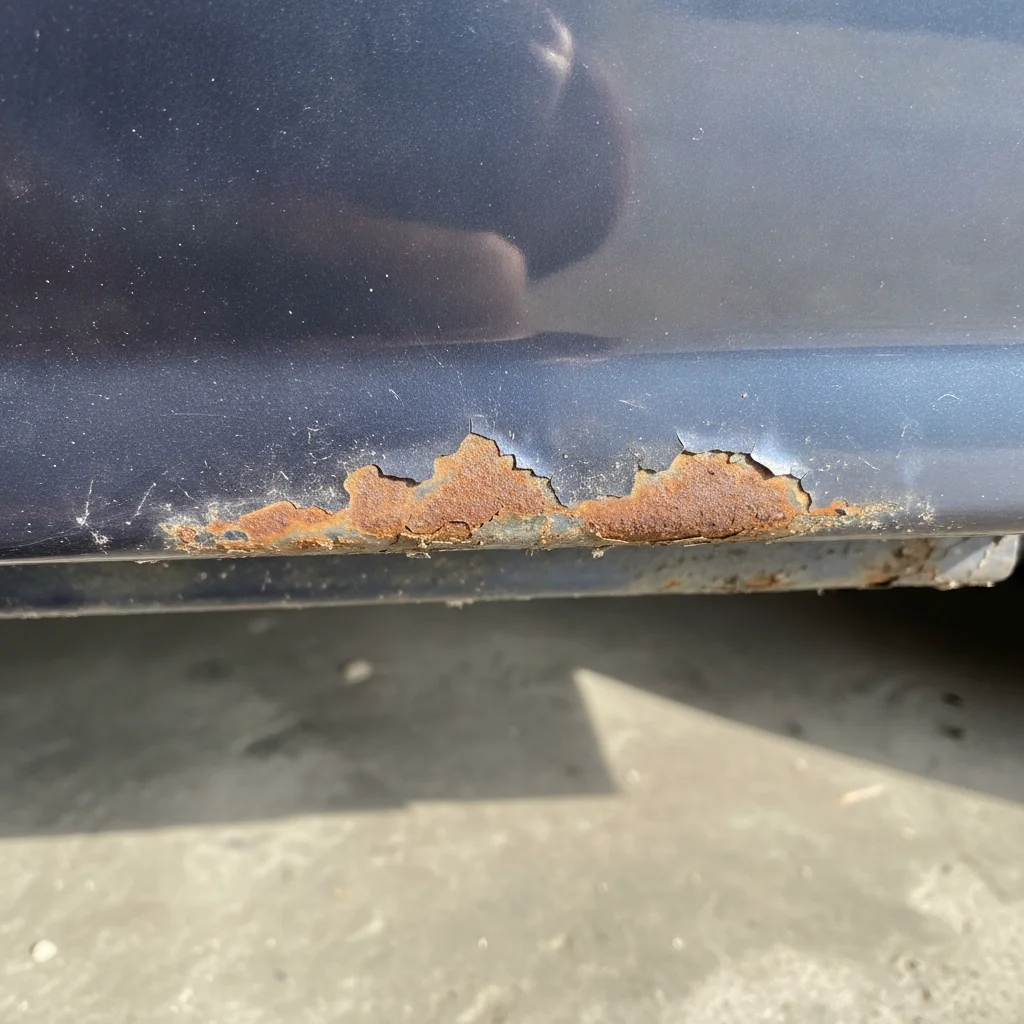
Surface corrosion — the reddish-brown oxidation you see on door edges, wheel arches, or along rocker panels — is common on any vehicle older than five or six years, especially in humid or snowy regions. It's a maintenance issue. You can treat it, seal it, or price it into your offer and move on.
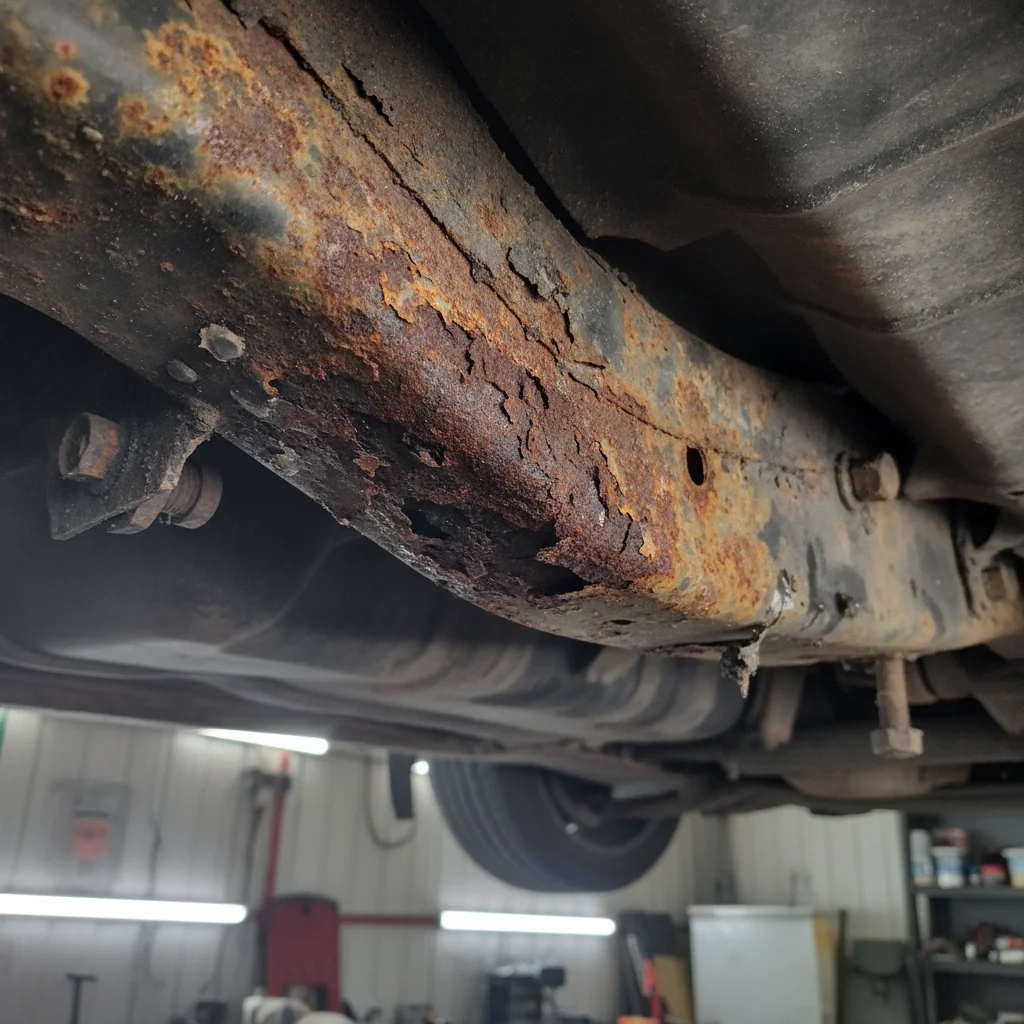
Structural rot is a different animal entirely. When corrosion reaches the frame rails, subframe mounting points, floorboards, or suspension attachment points, you're no longer talking about cosmetics. You're talking about metal that can no longer safely do its job. In a collision, a rusted frame rail won't absorb impact the way it was engineered to. A floorboard that crumbles under pressure puts occupants at risk. A subframe with compromised mounting points can cause catastrophic handling failures.
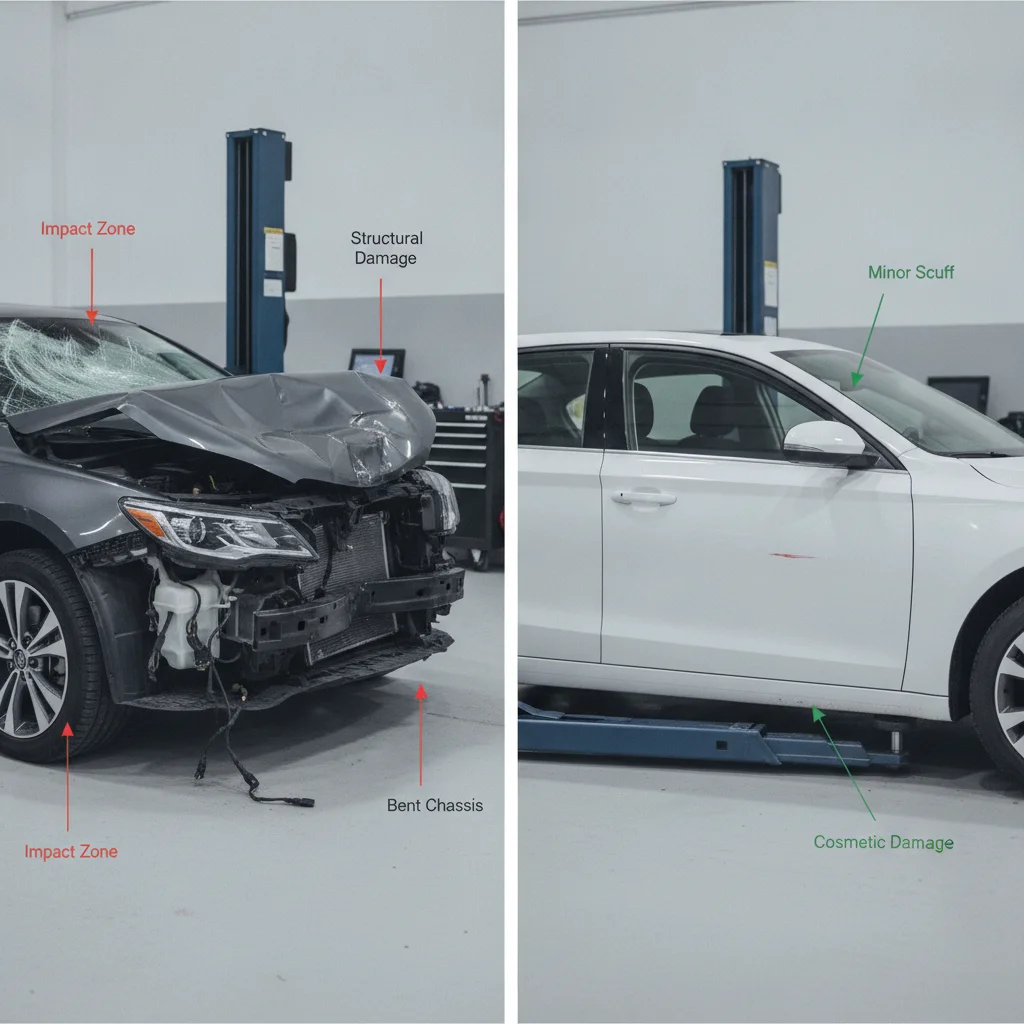
The used car market is full of vehicles with some degree of rust. Your job as a buyer is to quickly and accurately sort the manageable from the dangerous — and to know when the price on the windshield doesn't come close to reflecting the true cost of ownership. For broader context on what physical damage signals in a used car listing, see our guide to buying used cars.
How to Identify Surface Corrosion
Surface corrosion typically appears as light oxidation on exposed metal — a reddish tint, minor flaking, or small rust bubbles under the paint. Here's where to look and what to make of it:
Common Surface Rust Locations
- Door bottoms and edges: Chips in paint allow moisture in. This is extremely common and usually minor.
- Wheel arch lips: Gravel chips expose bare metal. Treat early and it stays cosmetic.
- Trunk lid edges and hood seams: Areas where water pools and paint thins over time.
- Around window trim: Rubber seals deteriorate and trap moisture against the pinch weld.
- Brake rotors and calipers: Surface rust on rotors from sitting is normal and clears after a few brake applications.
What Surface Rust Looks Like
True surface rust sits on top of the metal. When you press on a rusted area and the metal beneath is still solid — it doesn't flex, crumble, or give — you're dealing with surface corrosion. The paint may be bubbling or flaking, but the substrate is intact.
A useful field test: press firmly with your thumb. Solid resistance means the metal is healthy. Springiness, softness, or a hollow sound when you rap it with a knuckle are early warning signs that you're moving into rot territory.
| Criterion | Surface Corrosion | Structural Rot |
|---|---|---|
| Location | Body panels, wheel arches, door edges | Frame rails, subframe, floorboards, strut towers |
| Safety impact | None — cosmetic only | Serious — compromises crash protection and handling |
| Metal integrity | Solid and firm under pressure | Soft, crumbling, or perforated |
| Typical repair cost | $20–$600 per area | $1,000–$10,000+ depending on severity |
| Negotiating value | Moderate price reduction lever | Often a deal-killer; walk away advised |
| DIY fixable? | Yes, with rust converter and touch-up paint | Rarely — requires welding, structural expertise |
| Detectable without lifting car? | Usually visible on walk-around | Requires undercarriage inspection |
| Progression risk | Slow if treated promptly | Accelerates rapidly once through-rust develops |
| Resale impact | Minimal if treated and disclosed | Severe — kills offers from informed buyers |
Understanding the difference in these locations matters just as much as understanding the depth of corrosion. For related guidance on reading paint and panel condition, our article on reading a car's body panels covers paint texture and gap analysis that complements what you'll find here.
Magnet Test for Hidden Rust and Filler
A telescoping magnet serves double duty at a used car inspection. Press it against body panels in suspect areas — a strong magnetic pull indicates bare metal or factory steel. Weak or no pull suggests body filler (Bondo), which is often used to cover rust damage rather than repair it properly. Filler over rust means the problem is still progressing underneath. This test is most useful along lower door panels, rocker panels, and wheel arches.
How to Identify Structural Rot
Structural rot requires a closer look — specifically, you need to get underneath the car. Bring a flashlight, a telescoping magnet, and optionally a rubber mallet. Wear clothes you don't mind getting dirty. A 10-minute crawl under a vehicle can save you thousands of dollars and potentially your life.
Structural Components to Inspect
- Frame Rails
- Run along the length of the vehicle on both sides of the undercarriage. On unibody vehicles, these are integrated into the body structure. Look for scaling rust, holes, or sections where the metal has separated. Tap with a mallet — a solid thud is good, a hollow or crumbling response is not.
- Subframe and Crossmembers
- Located beneath the engine and rear suspension. These carry enormous loads. Pitting and surface rust is tolerable; flaking metal or holes near mounting bolts is not.
- Floorboards and Rocker Panels
- Rocker panels run between the wheel wells along the door sills. Floorboards are visible from inside — pull back the carpet or floor mats. Poke at suspect areas with a screwdriver. If the metal gives way or you can push through it, the rot is advanced.
- Suspension and Steering Attachment Points
- Control arm mounts, strut towers, and steering rack mounting points must be solid. Corrosion at these joints directly affects handling and safety.
- Brake and Fuel Line Routing
- Lines run along the undercarriage and are often obscured by coating. Look for rust-through near clips and brackets where moisture collects.
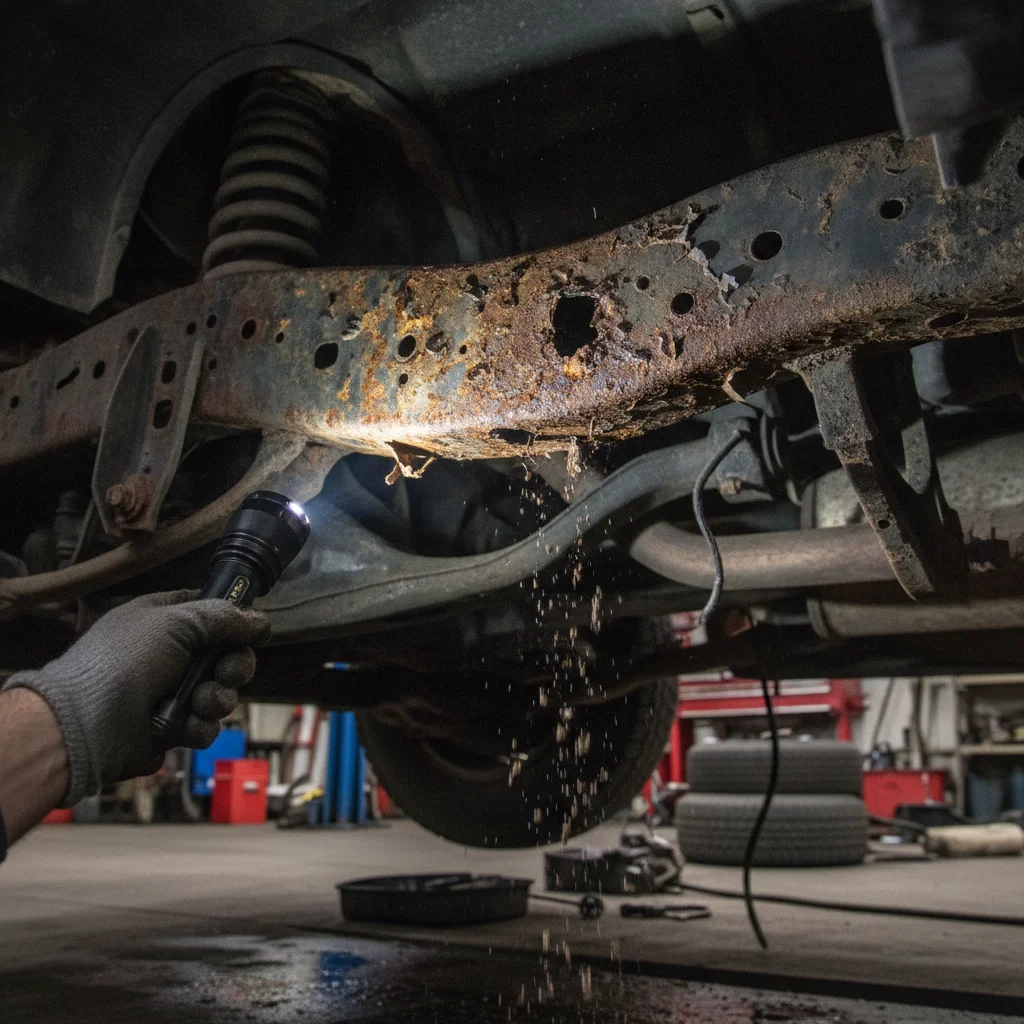
A key red flag: if a seller has recently undercoated or painted the undercarriage of a car that's over 8–10 years old, treat that as a reason for more scrutiny, not less. Fresh coating can mask rot. Ask when it was applied and why. Compare this to the more visible signs of frame-level damage covered in our frame damage vs. minor collision repair explainer.
70%
U.S. roads treated with road salt annually
According to the Salt Institute, approximately 70% of U.S. road miles are in areas where road salt is applied during winter months, directly accelerating undercarriage corrosion.
$3B+
Annual corrosion-related vehicle repair costs in the U.S.
The Federal Highway Administration estimates vehicle corrosion costs American motorists over $3 billion annually in accelerated depreciation and repair expenses.
2–5x
Faster rust progression with road salt exposure
Industry studies on corrosion chemistry show that chloride salts can accelerate steel oxidation two to five times faster than untreated exposure to moisture alone.
$1,500–$4,000
Typical subframe repair cost range
Independent repair shops across the rust belt report subframe repair or replacement costs of $1,500–$4,000 depending on access, extent of damage, and whether patch welding or full replacement is required.
The Real Cost Gap Between Cosmetic and Structural Rust
Pricing rust correctly is how smart buyers negotiate. Here's what treatment actually costs in the real world:
Surface Corrosion Repair Costs
- DIY rust converter and touch-up paint: $20–$60, suitable for small spots caught early
- Body shop spot treatment and repaint (per panel): $200–$600
- Full undercoating application: $150–$500 depending on vehicle size and product
- Rust inhibitor treatment (Fluid Film, POR-15): $80–$250 for a professional application
These are costs you can negotiate off the asking price or absorb without regret. A $400 deduction on a $12,000 car to address two rusted door bottoms is a fair deal for both parties.
Structural Rot Repair Costs
- Frame rail section replacement (welded): $1,000–$3,500 per section, depending on access and severity
- Full frame replacement (body-on-frame vehicles only): $5,000–$10,000+, rarely economically viable
- Floorboard patch panels (welded): $500–$2,000 per panel
- Subframe repair or replacement: $1,500–$4,000
On a $6,000 car, a $2,500 subframe repair wipes out nearly half the vehicle's value — and that's assuming the repair restores full structural integrity, which a welder working on badly corroded metal can't always guarantee. Many shops won't touch structural rust repairs due to liability concerns.
If you're preparing a vehicle for sale and need to decide which fixes are worth making, our hub on detailing and repairs covers return on investment for common pre-sale fixes.
Your In-Person Rust Inspection Checklist
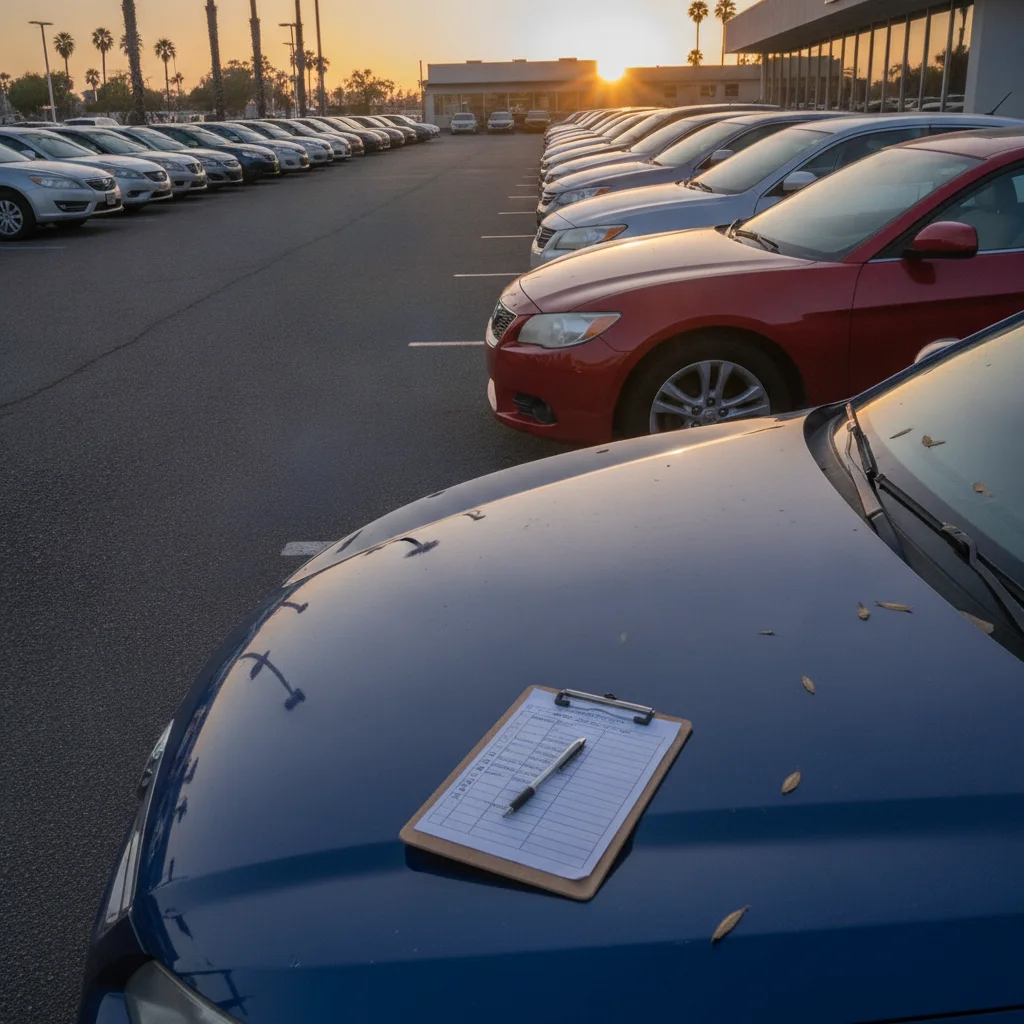
Use this sequence when evaluating any used car in person. It takes about 15 minutes and covers the most critical areas.
Tools to Bring
- Flashlight or phone torch
- Telescoping magnet (detects body filler in addition to rust)
- Rubber mallet or knuckle for tapping
- Flathead screwdriver (for prodding suspected rot)
- Old clothes or knee pads for getting underneath
Walk-Around Sequence
- Start at the wheel arches — crouch and look at the inner lip. Bubbling paint here often telegraphs what's happening on the rocker panel beneath.
- Check rocker panels along both sides. Run your hand along the bottom edge. Soft spots or deformation indicate rot behind the panel.
- Open all four doors and examine the door sill and pinch weld. These are classic rust traps.
- Look at trunk floor and spare tire well — these collect water and rot from the inside out.
- Get under the car — inspect frame rails front to rear, subframe mounting points, and the area around the exhaust hangers.
- Check the engine bay floor — strut towers and firewall seams are common rot initiation points in northern cars.
- Tap suspect areas with the mallet. Solid = healthy. Hollow or crumbling = rot.
- Probe any soft areas with the screwdriver. If it penetrates with moderate pressure, the metal is compromised.
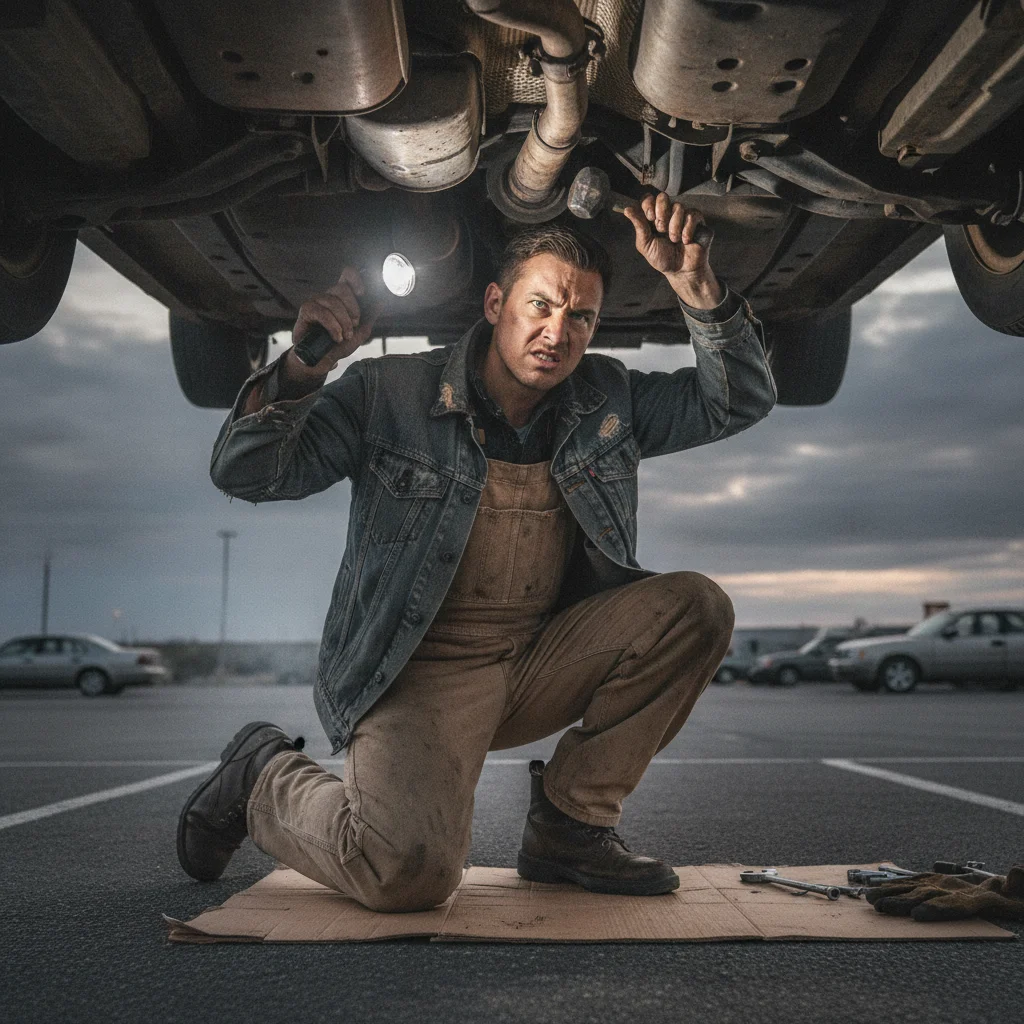
If you have any doubt after your own inspection, spend $100–$150 on a pre-purchase inspection from an independent mechanic. They'll put it on a lift and give you a written report. It's the single best money you can spend before committing to a used vehicle purchase.
Rust isn't the only hidden issue to watch for in a used car transaction. Before you finalize anything, check our physical damage coverage checklist to make sure your insurance is in place before you drive off.
Regional Risk, Salt Belts, and What Seller History Tells You
Where a car has lived matters as much as how it's been driven. The rust belt — a broad swath of the northeastern and midwestern United States including Michigan, Ohio, Pennsylvania, New York, and Illinois — sees heavy road salt usage from October through March. Salt accelerates corrosion dramatically. A 7-year-old car from Detroit will typically show more structural rust than a 12-year-old car from Phoenix.
High-Risk Regions
- Rust Belt states: Michigan, Ohio, Pennsylvania, New York, New Jersey, Illinois, Wisconsin, Minnesota
- Coastal areas: salt air accelerates oxidation even without road salt
- High-humidity regions: Gulf Coast, Pacific Northwest during wet seasons
Lower-Risk Regions
- Desert Southwest: Arizona, Nevada, New Mexico — dry conditions dramatically slow corrosion
- Southern California: low humidity, minimal precipitation
- Mountain West: cold winters but often drier and less salt-dependent than the Midwest
A vehicle history report (Carfax or AutoCheck) will show where the car was registered. Multiple consecutive registrations in rust-belt states should immediately trigger a thorough undercarriage inspection. Conversely, a car with consistent southwestern history carrying minor surface rust is far less alarming.
One more thing worth knowing: some platforms that buy used cars remotely — without a physical inspection — may not account for regional rust risk in their offers. If you're curious about how those services work compared to inspection-based appraisals, our comparison of platforms that buy cars sight unseen vs. those that require inspection is worth a read before you accept any instant offer on a vehicle with rust questions.
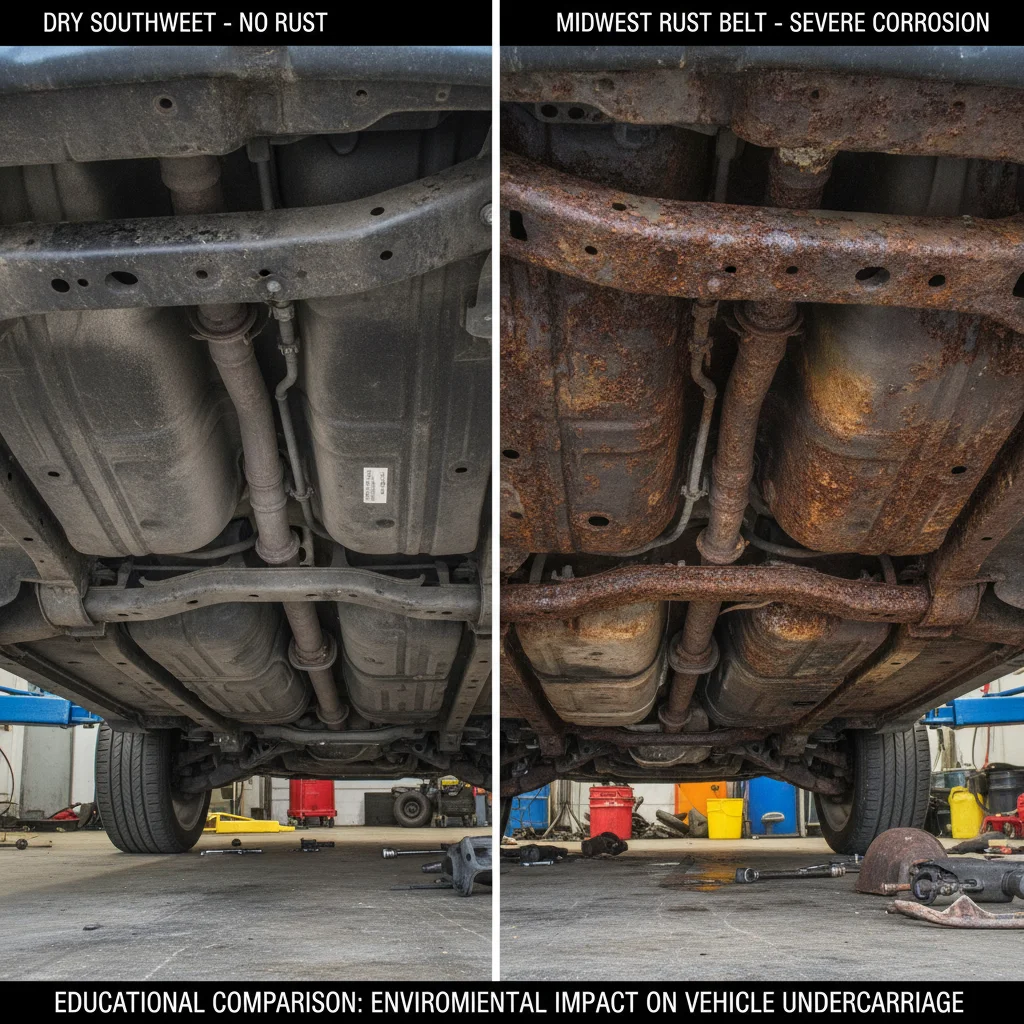
The bottom line: surface rust on a car with honest southern or southwestern history is a very different proposition from surface rust on a car that spent six winters in Cleveland. Use registration history as your first filter, then verify with your own eyes underneath the car.

All claims are backed by peer-reviewed research. Sources on request.