Key Takeaways
Prior Accident History & Claims
When you file an insurance claim after a collision, your insurer doesn't evaluate your car in a vacuum—they look at every documented prior accident. A vehicle's accident history can affect how adjusters assess repair costs, assign fault, and calculate your car's pre-loss value. In short, what happened to the car before you got into it can directly influence how much you're paid after a new incident.
Insurers use prior loss data from databases like CLUE (Comprehensive Loss Underwriting Exchange) alongside third-party vehicle history reports to establish a vehicle's condition baseline at the time of the new claim.
How Insurers Use a Car's History When You File a Claim
Most drivers assume an insurance claim is straightforward: accident happens, adjuster comes out, damage gets assessed, check arrives. What they don't realize is that before the adjuster ever looks at your bumper, they've already looked at your car's history.
Insurers pull two key data sources almost immediately after a claim is filed. First, a CLUE report (Comprehensive Loss Underwriting Exchange)—a database that records every insurance claim filed on a vehicle for up to seven years. Second, a commercial vehicle history report from services like Carfax or AutoCheck that aggregates data from DMVs, collision repair shops, and auction records.
Together, these tools give your adjuster a detailed picture of what your car looked like—and what it was worth—before your new accident ever happened. That baseline matters enormously, because insurance settlements are built around the concept of pre-loss value: what the car was worth right before it was damaged.

Here's where prior accidents create real friction: every documented collision reduces that baseline. A car with two prior accident reports on record is simply worth less than an identical car with none—even if all repairs were done correctly. That difference compounds when you're filing a new claim, because insurers apply that lower baseline to every calculation, from repair cost reasonableness to total loss thresholds.
CLUE Reports Are Available to You Too
You can request a free copy of your vehicle's CLUE report directly from LexisNexis once per year under the Fair Credit Reporting Act. This lets you see exactly what prior claims are on record for your car—the same information your insurer is seeing. Reviewing this before buying a used vehicle or before filing a new claim gives you a significant informational advantage.
Not All Prior Accidents Show Up in Databases
CLUE and commercial history reports only capture accidents that resulted in an insurance claim or were reported through official channels. A significant number of minor collisions are settled privately—cash between drivers, no police report, no insurance contact. Those incidents won't appear on any report, but a trained adjuster can often spot the physical evidence. Don't assume a clean report means a damage-free car.
The Pre-Loss Value Problem: What It Means for Your Payout
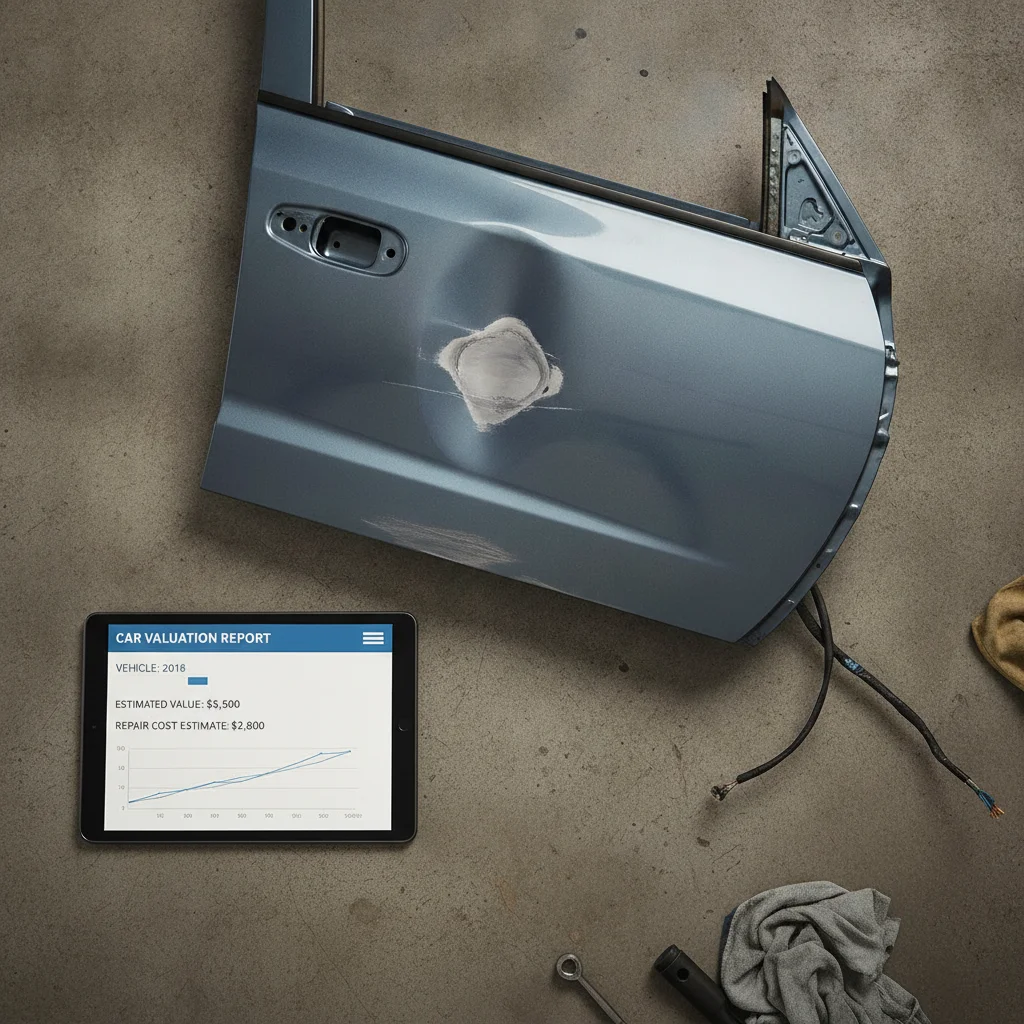
Pre-loss value is the single biggest lever in any auto insurance claim, and it's also where prior accident history hits you hardest. If your car is declared a total loss—meaning repairs would exceed a threshold of the car's value, typically 70–80% depending on your state—your insurer pays you the actual cash value (ACV) of the vehicle. That ACV is calculated from market data, adjusted for your car's specific condition, mileage, and yes, its accident history.
20–25%
Typical ACV reduction for cars with prior accidents
Industry appraisers and NADA data consistently show vehicles with documented accident histories selling for 20–25% below comparable clean-title vehicles.
1 in 4
Used cars with prior accident history
Carfax's annual Used Car Market Report found that approximately one in four used vehicles for sale has a reported accident or damage record.
$500–$2,500
Average diminished value per accident
According to data compiled from diminished value appraisers, a single accident event reduces a vehicle's market value by $500 to $2,500 on average, depending on severity and vehicle class.
7 years
How long claims stay on a CLUE report
CLUE reports maintained by LexisNexis retain insurance claim data for seven years, meaning prior incidents follow a vehicle through multiple ownership changes.
An adjuster working a total-loss claim on a 2019 sedan with two prior accidents on record will reference comparable vehicles in the market. If similar vehicles with clean histories are selling for $18,000, but vehicles with matching prior damage histories are selling for $14,500, your ACV gets anchored to that lower figure. You're not being penalized—insurers are accurately reflecting market reality. But it still means a smaller check in your pocket.
Even when your car isn't totaled, prior accidents can complicate repair cost negotiations. Adjusters are trained to identify whether damage from a new accident overlaps with areas previously repaired. If your rear quarter panel was repaired in a prior accident and now shows new damage in the same area, the insurer may argue that some of what looks like new damage is actually pre-existing deterioration or incomplete prior repair. That's a dispute you'll have to fight through documentation.
See our guide on how accident history shows up in valuation estimates to understand exactly how appraisal tools factor in prior damage when setting a number on your car.
Pre-Existing Damage Disputes: The Adjuster's Favorite Battlefield
One of the most common and most frustrating claim complications involves pre-existing damage attribution. When you file a claim, the insurer's obligation is to restore your car to the condition it was in immediately before the new accident—not to fix everything wrong with it. Any damage that existed prior to your new incident is considered pre-existing, and the insurer has the right to exclude it from the new claim.
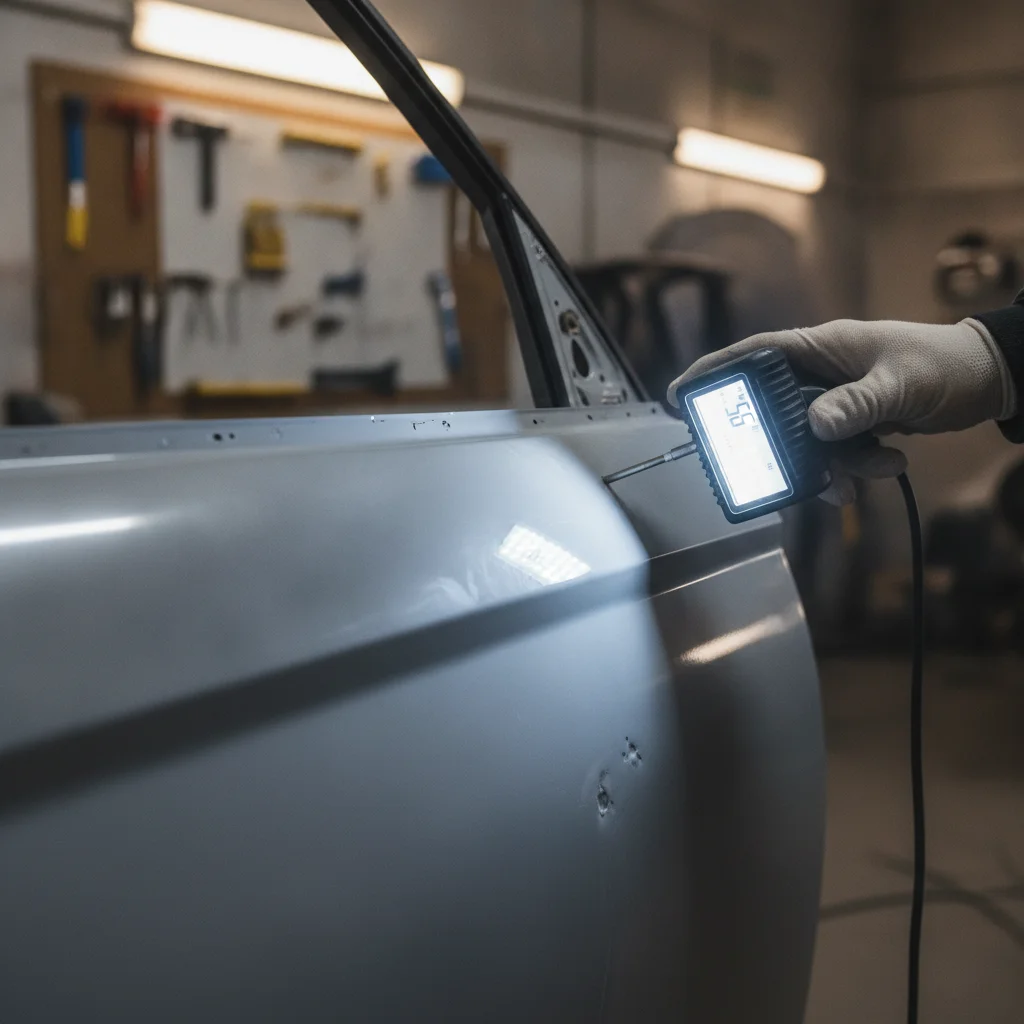
In practice, this creates real disputes. A trained adjuster can identify prior repairs through:
- Mismatched paint texture or color gradients
- Overspray on adjacent trim or rubber seals
- Panel gaps that are inconsistent with factory tolerances
- Structural repairs visible in the wheel wells or door jambs
- Scan tool data showing prior airbag deployments or sensor resets
If the adjuster flags pre-existing damage, they'll write it out of the repair estimate. That means you may receive a quote for partial repair—covering only what they attribute to the new accident—while leaving you to cover costs associated with prior damage yourself. If you disagree with their assessment, you'll need documentation: prior repair invoices, photos timestamped before the new accident, or an independent appraisal.
Document Your Car Before Any Accident Happens
Set a recurring calendar reminder every six months to photograph your car's exterior, interior, and undercarriage. Store these photos somewhere timestamped and cloud-backed. If you ever face a pre-existing damage dispute during a claim, dated photos showing your car's exact condition beforehand are far more compelling than your word alone.
Challenge the Valuation with Comparable Market Data
If your insurer's ACV figure seems low, don't accept it without pushback. Pull comparable listings from AutoTrader, Cars.com, and local dealer inventory for vehicles matching your year, make, model, mileage, and accident history. If the market data supports a higher value, present it in writing to the adjuster. Insurers are required to support their valuations with evidence, and so can you.
This is also why avoiding common post-accident mistakes matters so much. Failing to document your car's condition before filing, or letting too much time pass, gives insurers more room to dispute what damage is actually new.
Diminished Value Claims When There's Already a History
After your car is repaired, you may have grounds to pursue a diminished value (DV) claim—compensation for the fact that your car is now worth less on the open market, even after a perfect repair, because it carries a new accident on its history. But if the car already had prior accidents, your DV claim gets complicated fast.
Diminished value is calculated by measuring the gap between what your car would have been worth without the new accident and what it's actually worth now, post-repair. If prior accidents already created a stigma discount on your car's value, the new accident's marginal impact on that value is smaller—and that's exactly the argument insurers will make to lower your DV settlement.
“A car that has been in an accident carries a stigma in the marketplace that no repair can fully erase. That stigma doesn't disappear with a new owner—it shows up every time the vehicle is appraised, sold, or involved in a future claim.”
— Rex Halverson, Certified vehicle appraiser and diminished value specialist
That doesn't mean a DV claim is pointless if your car has a history. It means you'll need a stronger, more evidence-backed argument. An independent appraisal from a certified diminished value specialist—not just a body shop estimate—carries significantly more weight. You'll need to demonstrate specifically how the new accident created additional market stigma above and beyond what already existed.
For a full breakdown of how these claims work and whether you're likely to qualify, see our guide on filing a diminished value claim after an accident and what a diminished value claim is and whether you qualify.
What You Should Do Before and After a Claim to Protect Yourself
Protecting yourself from the complications that prior accident history creates isn't complicated, but it requires being proactive—not reactive. Here's a practical approach at each stage.
Before You Buy a Used Car
Pull a vehicle history report before any purchase, but understand its limitations. History reports only capture accidents that were reported to insurance or law enforcement. Private repairs, minor fender-benders paid out of pocket, or incidents in states with limited reporting requirements may not appear. A clean vehicle history report doesn't guarantee a trouble-free car—always combine report review with a pre-purchase inspection from an independent mechanic.
After You Buy a Used Car
Document your car's condition thoroughly and keep that documentation somewhere safe. Walk around the vehicle and photograph every panel, the interior, and the undercarriage. Note any existing damage in writing. This baseline record is invaluable if you later file a claim and face a dispute over what's pre-existing versus new damage.
When You File a New Claim
- Be transparent about prior accidents. Disclose what you know. Insurers will find the history anyway, and attempting to conceal it creates grounds for claim denial.
- Request the insurer's CLUE report for your vehicle. Under the Fair Credit Reporting Act, you're entitled to review data used in an adverse action. If the adjuster is using history data to reduce your payout, ask to see specifically what incidents they're relying on.
- Get an independent appraisal if you dispute the valuation. Most policies have an appraisal clause you can invoke if you and the insurer disagree on ACV. An independent appraiser can counter the insurer's number with market-based evidence.
- Separate prior repair quality from prior accident existence. A prior accident that was properly repaired by a certified shop should have less impact on current value than one that was poorly repaired. If you have repair documentation showing quality work, present it.

Document Your Car Before Any Accident Happens
Set a recurring calendar reminder every six months to photograph your car's exterior, interior, and undercarriage. Store these photos somewhere timestamped and cloud-backed. If you ever face a pre-existing damage dispute during a claim, dated photos showing your car's exact condition beforehand are far more compelling than your word alone.
Challenge the Valuation with Comparable Market Data
If your insurer's ACV figure seems low, don't accept it without pushback. Pull comparable listings from AutoTrader, Cars.com, and local dealer inventory for vehicles matching your year, make, model, mileage, and accident history. If the market data supports a higher value, present it in writing to the adjuster. Insurers are required to support their valuations with evidence, and so can you.
The Bigger Picture: Prior Accidents and Insurance Premiums
Beyond the individual claim, a vehicle's accident history can also affect what you pay for coverage going forward—though perhaps not in the way you'd expect. When you file a new claim, your insurer updates their risk model for you and your vehicle. A car with recurring accident history may be flagged as a higher-risk asset, which can influence future renewal premiums or comprehensive/collision coverage availability.
This is separate from your personal driving record, which already affects your rates. The vehicle's history, combined with your personal claims history (tracked through CLUE on your own file, not just the vehicle's), gives insurers a two-dimensional view of risk when setting premiums.
If you're thinking about the financial ripple effects of accident history on resale value, our piece on accident history and depreciation breaks down the real dollar impact on what you'll get when it's time to sell—even after a quality repair.
The core takeaway is this: a vehicle's prior accident history is not just a used-car buyer's problem. It follows the car through every transaction, every claim, and every valuation. The more you understand how insurers use that history, the better positioned you are to protect your financial interests when something goes wrong.

All claims are backed by peer-reviewed research. Sources on request.