Key Takeaways
Certificate of Title
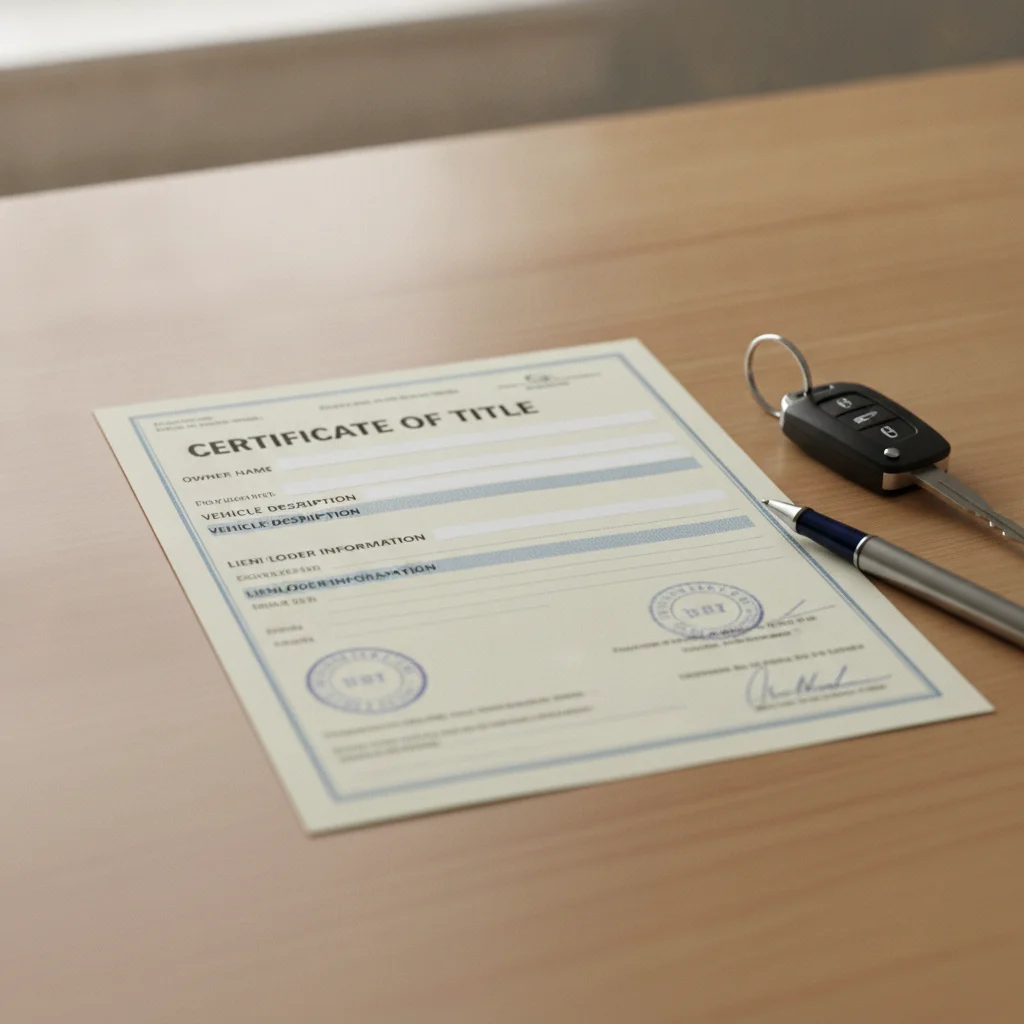
A certificate of title is the official legal document that identifies who owns a vehicle. Issued by your state's DMV or motor vehicle agency, it lists the owner's name, the vehicle identification number (VIN), and any lienholder — such as a lender — who has a financial claim on the car. When you buy a car, the title must be transferred into your name to make your ownership official and legally recognized.
A title is distinct from registration: the title establishes legal ownership, while registration authorizes the vehicle to be driven on public roads and must typically be renewed annually.
Why the Title Is the Document That Actually Matters
When you sit down at a dealership's finance desk or hand money to a private seller, you'll sign a stack of paperwork. Purchase agreements, financing contracts, odometer disclosures, arbitration clauses — it's a lot. But only one document makes you the legal owner of the vehicle: the certificate of title.
The title is the equivalent of a deed for real estate. It doesn't just record a transaction; it records ownership. Your name on the title is what gives you the right to resell the car, insure it in your name, and prove to anyone — including law enforcement — that the vehicle belongs to you.
Everything else in that paperwork stack is contractual. The title is governmental. It's recorded with your state's motor vehicle agency and carries the force of law behind it.
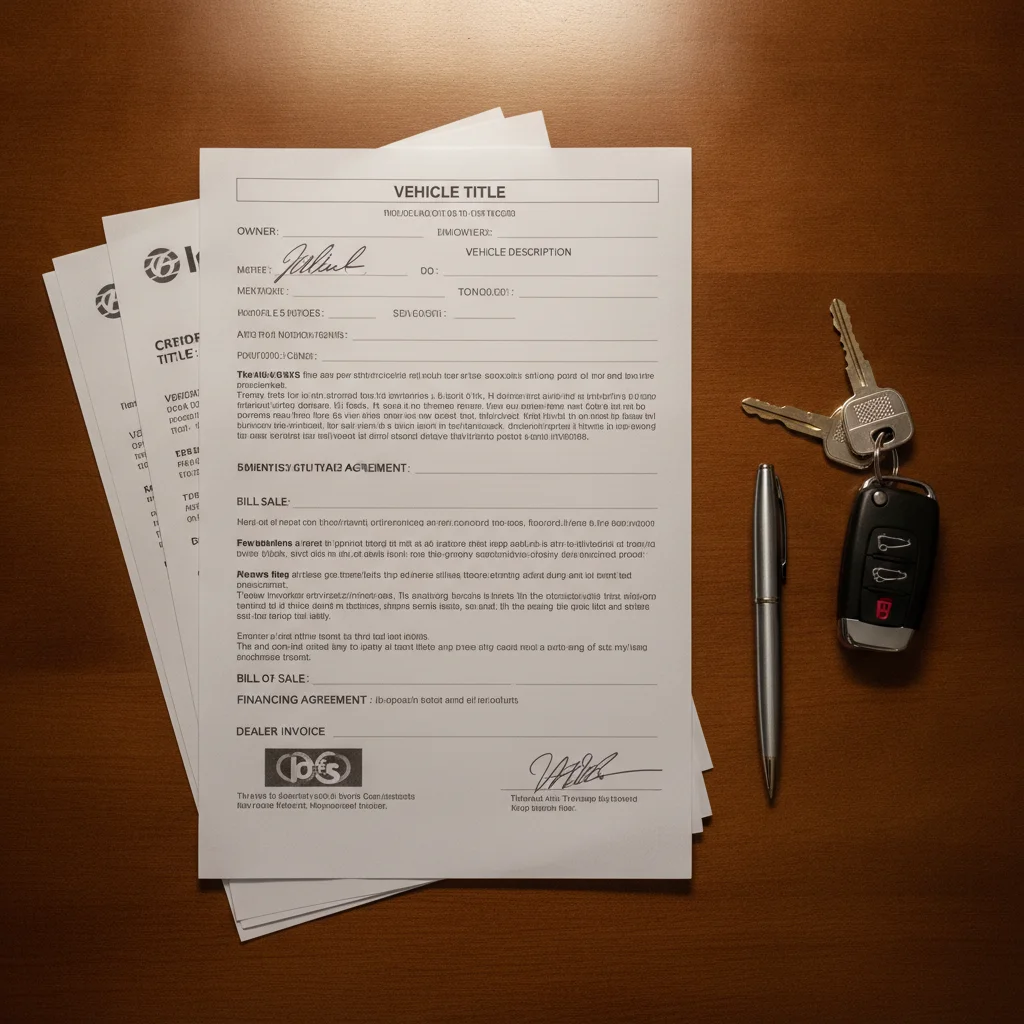
This distinction matters because buyers frequently confuse the bill of sale or purchase agreement with proof of ownership. Those documents confirm the terms of a transaction. The title confirms who owns the vehicle. If there's ever a dispute about ownership, the title wins.
Understanding this hierarchy — title above all other documents — is the first step to navigating any car purchase with confidence. The sections below walk you through what's actually on the title, how it transfers, and what the different title designations actually mean for a used car's value and insurability.
What Information Appears on a Vehicle Title
Every state designs its own title certificate, but all of them carry the same core data. Knowing what each field means helps you spot errors before they cause problems at the DMV.
Vehicle Identification Number (VIN)
The VIN is the vehicle's unique 17-character fingerprint. It appears on the title and should match the VIN stamped on the dashboard (visible through the windshield) and on the door jamb sticker. If these numbers don't match, stop — you may be dealing with a title that doesn't belong to this vehicle.
Owner Information
The title lists the legal name and address of the registered owner. When a car is financed, the buyer is listed as the owner but the lender is recorded separately as a lienholder. After the loan is paid off, the lien is released and a clean title is issued solely in the owner's name.
Vehicle Description
Year, make, model, body style, and color are all recorded. The odometer reading at the time of the most recent transfer is also typically listed — this is what the odometer disclosure requirement is designed to capture.
Title Number and Issue Date
Each title has its own unique number assigned by the issuing state. This is used for record-keeping and for ordering a duplicate if the original is lost.
Title Brand or Designation
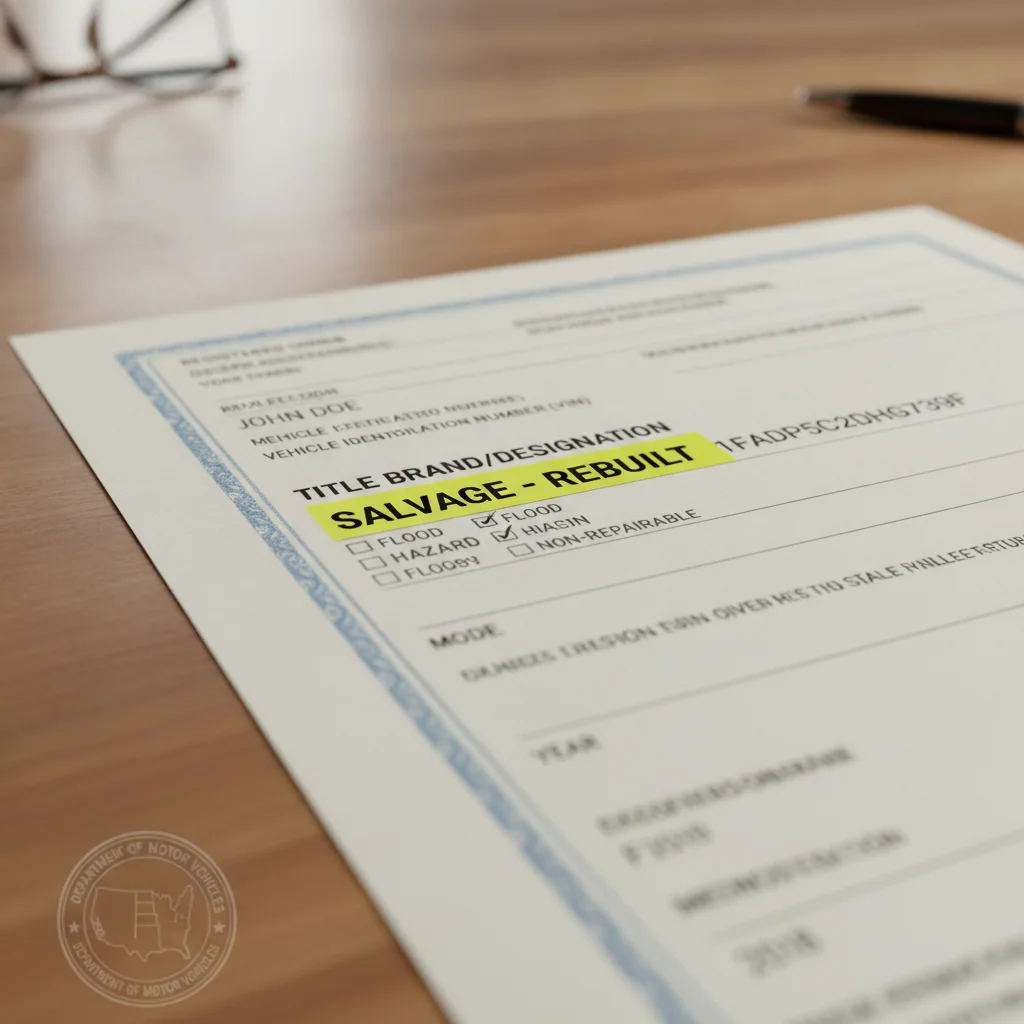
This is one of the most important sections for used car buyers. The title may carry a brand such as Salvage, Rebuilt/Reconstructed, Flood, or Lemon Law Buyback. A title with no such designation is referred to as a clean title. We'll cover what each designation means in detail below.
“The title is the one document in a car transaction that the government, not the parties, controls. Everything else is contractual — the title is legal status.”
— Dara Flemming, Consumer Finance Journalist, Auto Loan and Title Specialist
Title vs. Registration: Two Documents, Two Jobs
A question that trips up almost every first-time buyer: are the title and registration the same thing? They are not, and confusing them can cause real problems.
4–8 weeks
Typical dealer title transfer processing time
Most state DMVs process dealer-submitted title applications within 4 to 8 weeks, though timelines vary by state volume and submission method.
~75–90%
Value threshold triggering a salvage title
Most states issue a salvage title when repair costs reach 75% to 90% of the vehicle's pre-loss value, though the exact threshold differs by state law.
10–30 days
Lender lien release window after payoff
Most states legally require lenders to release a lien and deliver the title within 10 to 30 days of a loan being paid in full.
Think of it this way:
- The title is permanent legal proof that you own the vehicle. You receive it once per ownership period and keep it in a safe place — not in your car.
- The registration is an annual government permission slip to operate the vehicle on public roads. It proves the car is legally allowed to be driven in your state right now.
Registration is what the officer checks when you're pulled over. The title is what you need when you sell the car or apply for a loan against it. Both matter, but for completely different reasons and at completely different times.
Registration fees are paid to your state (and sometimes county or city) every year. Title transfers are one-time transactions tied to changes in ownership. For a full breakdown of what you'll pay and why, see a detailed breakdown of every title transfer fee.
Registration Is Not Proof of Ownership
A common misconception is that having a current registration in your name proves you own the vehicle. It doesn't — registration simply shows the car is authorized to operate on public roads in your state. Ownership is established only by the title. In a dispute over who owns a vehicle, the title is the controlling document.
A Signed Title Is Not a Completed Transfer
In private-party sales, the seller signs the back of the title and hands it to the buyer — but this alone does not complete the ownership transfer. The transfer is only complete when the DMV issues a new title in the buyer's name. Until that happens, both parties carry some legal exposure. As the buyer, file for your new title promptly after the sale.
Store Your Title Somewhere You'll Actually Find It
It sounds obvious, but many title disputes and delays happen simply because someone can't locate their title document when needed. Store it with other important personal documents — a home safe, filing cabinet, or bank safe deposit box. Taking a photo of the title for your records is also a smart precaution in case the original is ever lost or damaged.
One more practical distinction: you keep your registration card in your glove compartment because law enforcement needs to see it. You store your title somewhere secure at home — or your lender holds it — because it only surfaces during ownership changes.
What 'Clean Title' Actually Means — and What It Doesn't
The phrase "clean title" gets used constantly in used car listings, but it's often misunderstood. Here's a precise definition and a look at what the alternatives signal.
Clean Title
A clean title means the state's records show no declared total losses, no significant flood damage, no salvage designation, and no other adverse history that would impair the vehicle's legal standing. It does not guarantee the car has never been in an accident. Minor accidents that didn't result in an insurance total-loss declaration won't appear on the title — which is why running a vehicle history report from a service like Carfax or AutoCheck remains essential even when a seller shows you a clean title.
Salvage Title
An insurance company declares a vehicle a total loss when repair costs exceed a threshold — often 75% to 90% of the vehicle's value, depending on the state. That car then receives a salvage title. A salvage-titled vehicle typically cannot be legally driven or insured for normal use in most states.
Rebuilt or Reconstructed Title
If a salvage vehicle is repaired and passes a state inspection, it can be re-titled as rebuilt or reconstructed. These cars can be driven legally, but many insurers will only offer liability coverage — not comprehensive or collision — and resale value is significantly reduced.
Flood or Water Damage Title
Some states brand titles specifically for flood damage. Others categorize it under salvage. Either way, flood-damaged vehicles can develop chronic electrical, mold, and mechanical problems long after repairs appear complete.
Lemon Law Buyback
When a manufacturer repurchases a vehicle under state lemon law protections, the title must be branded accordingly. This alerts future buyers that the car had serious defects that the manufacturer couldn't repair within a reasonable number of attempts.
Title washing — a practice where a salvage or branded title is re-registered through a state with looser disclosure rules to obscure its history — does occur. This is another reason a VIN history report is non-negotiable on any used vehicle purchase.
Always Run a VIN History Report
A clean title is a good sign, but it's not a guarantee of clean history. Accidents that didn't trigger an insurance total-loss declaration won't appear on the title. Always pull a VIN history report from a reputable provider before finalizing any used car purchase — it takes minutes and can reveal flood damage, odometer rollbacks, or prior salvage designations the title doesn't show.
Track Your Lien Release After Payoff
Don't assume your lender will automatically send your clean title promptly after your final loan payment. Mark a reminder on your calendar for 30 days after payoff. If you haven't received the title or a lien release letter by then, call your lender and follow up in writing. State laws require timely release, but enforcement often falls on the borrower.
How the Title Transfer Works: Dealer vs. Private Party
The mechanics of transferring a title differ significantly depending on who you're buying from. Understanding both paths prevents surprises.
Buying from a Dealership
When you purchase from a licensed dealer, the dealer acts as the middleman in the title transfer process. Here's what typically happens:
- The dealer collects the signed title from the previous owner (or the lender, if the trade-in had a loan).
- You sign the purchase agreement and any financing documents at the dealer.
- The dealer submits the title application, registration paperwork, and applicable fees to the state DMV on your behalf — usually within a few days of the sale.
- The DMV processes the transfer and either mails the new title directly to you (if no loan) or to your lender (if financed).
- Your registration and license plates are typically issued within a few weeks.
During this window, the dealer provides a temporary tag or operating permit so you can drive legally. If you're buying a car online, the process follows a similar structure but involves shipping and remote document signing — see what to expect after buying a car online for the full timeline.
Buying from a Private Seller
Private-party sales require you and the seller to handle the title transfer yourselves. The general process:
- The seller signs the back of the title in the designated seller section, filling in the sale price, odometer reading, date, and buyer information.
- You sign where the buyer's signature is required.
- Some states require notarization of one or both signatures.
- You take the signed title to the DMV (or submit by mail in some states), pay the transfer and registration fees, and apply for a new title in your name.
Signing the back of the title is not the same as completing the transfer — a point that trips up many private-party buyers. Until the DMV records the new title in your name, the seller technically remains the legal owner. For a complete walkthrough, see the step-by-step guide to private party title transfers.
Registration Is Not Proof of Ownership
A common misconception is that having a current registration in your name proves you own the vehicle. It doesn't — registration simply shows the car is authorized to operate on public roads in your state. Ownership is established only by the title. In a dispute over who owns a vehicle, the title is the controlling document.
A Signed Title Is Not a Completed Transfer
In private-party sales, the seller signs the back of the title and hands it to the buyer — but this alone does not complete the ownership transfer. The transfer is only complete when the DMV issues a new title in the buyer's name. Until that happens, both parties carry some legal exposure. As the buyer, file for your new title promptly after the sale.
Store Your Title Somewhere You'll Actually Find It
It sounds obvious, but many title disputes and delays happen simply because someone can't locate their title document when needed. Store it with other important personal documents — a home safe, filing cabinet, or bank safe deposit box. Taking a photo of the title for your records is also a smart precaution in case the original is ever lost or damaged.
When There's a Lien: Financing and the Title
If you're financing your vehicle purchase, your relationship with the title is a bit different — and it's important to understand exactly what you do and don't own during the loan term.
When a lender finances your vehicle, they become a lienholder on the title. The title will list your name as the registered owner and the lender's name as the lienholder. This means:
- You have full use of the vehicle and are legally responsible for it.
- The lender has a security interest — they can repossess the vehicle if you default on the loan.
- You cannot legally sell or transfer the title without satisfying or involving the lienholder.
Once you make your final loan payment, the lender is required to release the lien. They'll either send you a lien release letter to take to the DMV yourself, or in many states, they file the release electronically and a clean title is mailed directly to you within a few weeks.
If you're trading in a car that still has a loan on it, the dealer pays off your existing loan as part of the transaction. They work directly with your current lender to obtain the title and process the payoff — you typically don't have to manage that step yourself.
Always Run a VIN History Report
A clean title is a good sign, but it's not a guarantee of clean history. Accidents that didn't trigger an insurance total-loss declaration won't appear on the title. Always pull a VIN history report from a reputable provider before finalizing any used car purchase — it takes minutes and can reveal flood damage, odometer rollbacks, or prior salvage designations the title doesn't show.
Track Your Lien Release After Payoff
Don't assume your lender will automatically send your clean title promptly after your final loan payment. Mark a reminder on your calendar for 30 days after payoff. If you haven't received the title or a lien release letter by then, call your lender and follow up in writing. State laws require timely release, but enforcement often falls on the borrower.
Keep an eye on your lender after your final loan payment. Most states require lenders to release liens within a specific window — often 10 to 30 days. If you haven't received your clean title or a lien release within that window, contact your lender directly and follow up in writing.
State Rules and Common Delays to Know About
Title transfer isn't federally standardized — each state sets its own rules, fees, timeframes, and documentation requirements. This is one of the most common sources of frustration for car buyers who expect a uniform process.
A few patterns that cause the most delays:
Out-of-State Titles
If you're buying a used car that was previously registered in another state, the title must be converted to your state's title. This typically requires a VIN inspection and can add days or weeks to the process.
Missing or Incorrect Signatures
A single wrong entry on the back of a title — a misspelled name, a missing date, or a correction made with white-out — can render it invalid. Many states require a new title to be issued before the transfer can proceed, which takes time.
Lien Releases
If the seller had a loan on the vehicle, the lender must release the lien before the title can be transferred. Some lenders are slow to process payoffs, especially if the seller paid off the loan recently. Always confirm with the seller that the lien release is in hand before completing a private-party purchase.
Inherited and Gifted Vehicles
These transactions involve additional documentation — such as probate records or gift affidavits — and often come with different fee structures. Registering an inherited or gifted car follows a distinct set of rules from a standard purchase.
For a state-by-state look at what to bring and what to watch out for, the full guide on title transfer rules by state covers the most common requirements and pitfalls in detail.
Understanding the registration and fee timeline from purchase to permanent plates also helps set realistic expectations — the month-by-month registration and tax timeline shows exactly what happens at each stage and when to expect it.
What to Do With Your Title Once You Have It
Once your title arrives in the mail — typically a paper document printed on security stock — the most important thing you can do is store it properly and never leave it in the car.
Here's what to do:
- Verify the information immediately. Check that your name is spelled correctly, the VIN matches, and the lienholder section is blank (if you own the car outright). Errors need to be corrected through your DMV promptly — don't wait until you're trying to sell the car years later.
- Store it securely at home. A fireproof safe, a locked filing cabinet, or a bank safe deposit box are all appropriate options. Do not keep the title in your glove compartment — if the car is stolen, you've handed the thief a head start on transferring ownership.
- Keep it together with your lien release. If you recently paid off a loan, store the lien release letter with the title so you have a complete ownership record.
If you ever lose the title, you can apply for a duplicate through your state DMV — usually for a modest fee. But it's a hassle, and it becomes a bigger hassle when you're trying to close a sale quickly. Treat your title the way you'd treat a property deed.
For everything related to organizing your vehicle ownership paperwork, the paperwork and title resource hub is a useful starting point — particularly if you're preparing to sell your vehicle and need to know exactly what documents to gather.
Registration Is Not Proof of Ownership
A common misconception is that having a current registration in your name proves you own the vehicle. It doesn't — registration simply shows the car is authorized to operate on public roads in your state. Ownership is established only by the title. In a dispute over who owns a vehicle, the title is the controlling document.
A Signed Title Is Not a Completed Transfer
In private-party sales, the seller signs the back of the title and hands it to the buyer — but this alone does not complete the ownership transfer. The transfer is only complete when the DMV issues a new title in the buyer's name. Until that happens, both parties carry some legal exposure. As the buyer, file for your new title promptly after the sale.
Store Your Title Somewhere You'll Actually Find It
It sounds obvious, but many title disputes and delays happen simply because someone can't locate their title document when needed. Store it with other important personal documents — a home safe, filing cabinet, or bank safe deposit box. Taking a photo of the title for your records is also a smart precaution in case the original is ever lost or damaged.

All claims are backed by peer-reviewed research. Sources on request.