| Average doc fee (no-cap states) | $400–$900 (Edmunds dealer fee survey, 2023) |
| States with doc fee caps | Approximately 12–15 states (State motor vehicle agency regulations, 2024) |
| Typical destination charge range | $900–$2,000 (Manufacturer Monroney label data, 2023–2024) |
| Market adjustment range (high-demand vehicles) | $500–$10,000+ (iSeeCars market adjustment report, 2023) |
| Lowest statutory doc fee cap | $85 (California) (California DMV dealer regulations) |
| Dealer add-ons average cost per transaction | $1,300 (Consumer Reports auto purchasing data, 2023) |
Why Dealer Fees Are So Confusing
When you sit down in the finance office to sign a car purchase contract, the total price on the page is almost never the number you negotiated on the showroom floor. Between the agreed sale price and the final amount due, there's often a cluster of line items with names like "doc fee," "dealer prep," "market adjustment," and "administrative processing charge." Some of these are real, regulated costs. Others are pure margin dressed up in official-sounding language.
The confusion is by design. As our breakdown of how dealerships structure contracts explains, a focus on monthly payments and the strategic placement of fees in a contract can hide hundreds — or thousands — of dollars from buyers who aren't looking carefully. This reference guide cuts through that confusion. Below, you'll find a plain-English breakdown of the most common dealer fees, whether each one is fixed or negotiable, and how state laws affect what dealers can legally charge.
| Average doc fee (no-cap states) | $400–$900 (Edmunds dealer fee survey, 2023) |
| States with doc fee caps | Approximately 12–15 states (State motor vehicle agency regulations, 2024) |
| Typical destination charge range | $900–$2,000 (Manufacturer Monroney label data, 2023–2024) |
| Market adjustment range (high-demand vehicles) | $500–$10,000+ (iSeeCars market adjustment report, 2023) |
| Lowest statutory doc fee cap | $85 (California) (California DMV dealer regulations) |
| Dealer add-ons average cost per transaction | $1,300 (Consumer Reports auto purchasing data, 2023) |
Before diving into individual fees, it helps to understand the two broad categories every charge falls into:
- Government fees: Mandated by law — you pay them regardless of which dealer you use. Non-negotiable.
- Dealer fees: Set by the dealership, not the government. Some are industry-standard; many are negotiable or removable entirely.
Knowing which category a fee falls into is the single most important skill a car buyer can develop before signing anything.
Fee-by-Fee Breakdown: Fixed, Negotiable, or Bogus
Here is a structured look at the fees you're most likely to encounter on a dealer contract, what each one actually covers, and how much leverage you realistically have to push back.
Documentation Fee (Doc Fee)
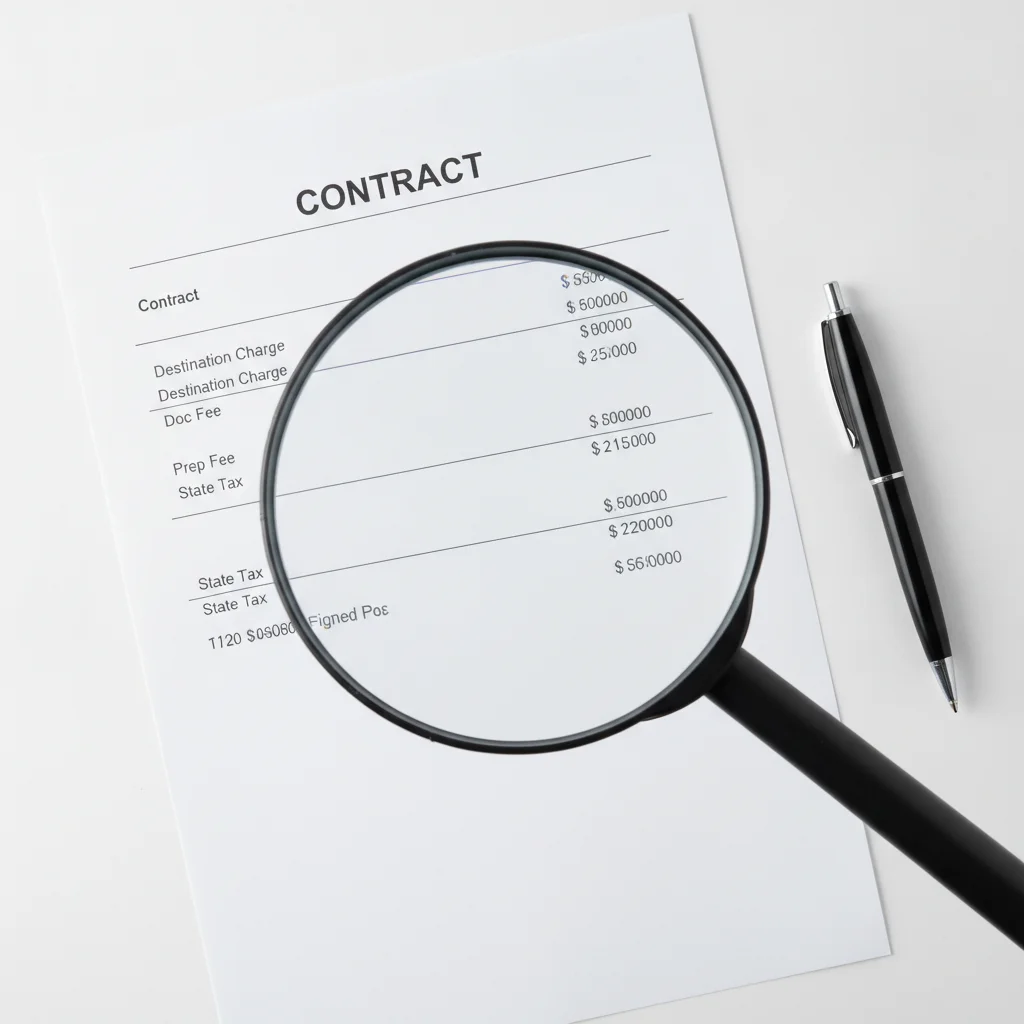
The doc fee covers the dealership's cost to prepare, file, and process your purchase paperwork — title applications, loan documents, and DMV filings. It is one of the most universally charged fees in the country.
- Typical range: $50–$999 depending on the state
- Fixed or negotiable? Depends heavily on state law
About a dozen states cap what dealers can charge for a doc fee. California caps it at $85. Colorado caps it at $150. Texas limits it to $150 for dealers who are members of certain associations but not all. In states like Florida and New York, there is no statutory cap, and doc fees routinely exceed $800. If your state has no cap, the fee is negotiable — but dealers will resist because it is essentially pure profit. Your best tactic: ask the dealer to apply the doc fee as a reduction in vehicle price rather than removing it outright.
Dealer Preparation Fee (Dealer Prep)
Dealers claim this fee covers washing the car, removing protective shipping plastic, checking fluid levels, and performing a pre-delivery inspection. In practice, this work is already included in the manufacturer's destination charge — the factory pays dealers a pre-delivery inspection (PDI) allowance to do exactly this.
- Typical range: $200–$600
- Fixed or negotiable? Negotiable — this is often a duplicate charge
Because manufacturers already compensate dealers for PDI work, charging a buyer separately for it is double-dipping. Push back directly: ask the salesperson to show you the invoice line where the manufacturer's PDI allowance is listed. Most will fold or reduce the fee significantly when challenged this way.
Destination and Delivery Charge
This fee covers the cost of shipping the vehicle from the factory to the dealership. It is set by the manufacturer — not the dealer — and is printed on the Monroney label (the official window sticker).
- Typical range: $900–$2,000 depending on vehicle and brand
- Fixed or negotiable? Fixed — this is a legitimate, non-negotiable cost
Every buyer in the country pays the same destination charge for a given model, regardless of how far they live from the factory. If a dealer is charging a destination fee above the Monroney sticker amount, that's a red flag. Anything above the printed figure is the dealer adding their own markup under a misleading name.
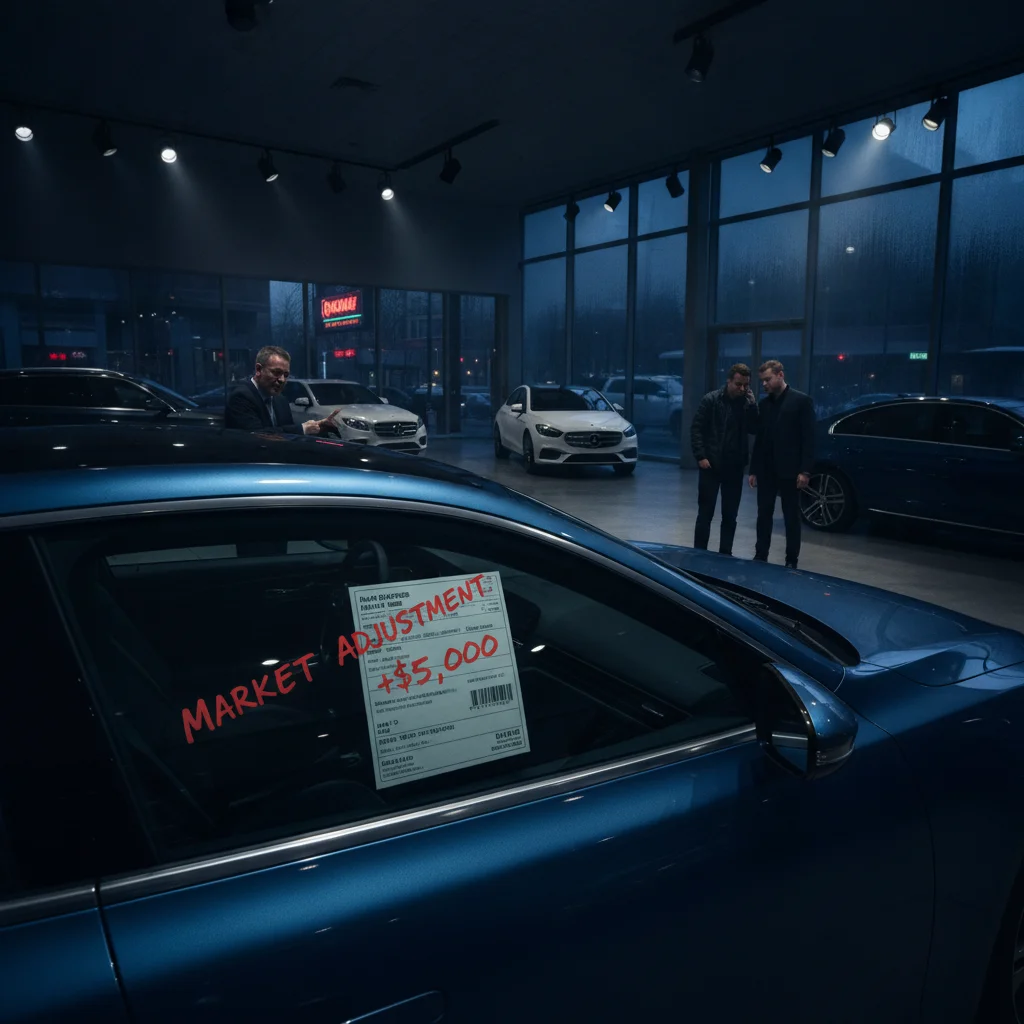
Market Adjustment (ADM — Additional Dealer Markup)
This is the fee that generates the most buyer outrage — and for good reason. A market adjustment is an amount the dealer adds on top of MSRP, supposedly reflecting high demand or low inventory for a particular vehicle.
- Typical range: $500–$10,000+ on high-demand models
- Fixed or negotiable? Completely discretionary — and often removable if you're willing to walk
Market adjustments are legal in every state, but they are not mandated by anyone. They exist solely because a dealer believes the market will bear a higher price. Our detailed guide on market adjustment pricing outlines when to accept one and when walking away is your best move. In a normalized inventory environment, most market adjustments are negotiable or eliminable entirely.
Advertising Fee
Some dealers pass along a portion of regional advertising costs charged by the manufacturer's dealer association. This is usually a fixed amount set by the regional dealer group.
- Typical range: $100–$400
- Fixed or negotiable? Sometimes fixed (if manufacturer-mandated), sometimes negotiable
Ask the dealer whether this fee is a manufacturer regional advertising assessment or a self-imposed charge. If it's manufacturer-mandated and appears on the factory invoice, it's legitimate. If it's the dealer's own line item, it's fair game to negotiate.
Nitrogen Tire Fill / Fabric Protection / Paint Sealant
These are add-on products — not fees — that dealers frequently pre-install and then charge for as if they were unavoidable costs. You'll see them listed as line items on a contract, making them look mandatory.
- Typical range: $100–$500 each
- Fixed or negotiable? Entirely optional and removable — or at minimum, deeply discountable
Nitrogen in tires offers no meaningful real-world benefit over air. Fabric protection sprays are available at any auto parts store for under $15. Paint sealants are applied whether you want them or not, then billed as a "dealer-installed option." You can and should request a contract without these items, or ask for a written explanation of what specific protection each product provides.
$1,300
Average dealer add-on cost per transaction
According to Consumer Reports' 2023 auto purchasing analysis, buyers who don't push back on add-ons pay an average of $1,300 in optional products they didn't specifically request.
83%
Buyers who don't negotiate dealer fees
A 2022 survey by Cox Automotive found that the vast majority of car buyers accept dealer-imposed fees without attempting to negotiate or remove them.
$400–$900
Typical doc fee in states with no cap
In states without statutory documentation fee limits, Edmunds' 2023 dealer fee data shows averages ranging from $400 to over $900 at some volume dealers.
12–15
States with statutory doc fee limits
Roughly a dozen states have enacted legislation capping what dealers may charge for documentation, leaving buyers in other states fully exposed to uncapped fees.
Up to $10,000+
Market adjustment on high-demand models
During peak supply shortages in 2021–2023, iSeeCars reported market adjustments exceeding $10,000 on popular trucks and SUVs — a discretionary charge with no regulatory floor or ceiling.
Title and Registration Fees
These are government fees — paid to your state's DMV or equivalent agency to register the vehicle and transfer the title into your name. The dealer collects them on the state's behalf.
- Typical range: $50–$350 depending on state and vehicle weight
- Fixed or negotiable? Fixed — set by state law
You cannot negotiate these. However, verify that the amount in the contract matches your state's actual fee schedule, which is publicly available on most DMV websites. Some dealers round up government fees by small amounts — $10 to $30 — and pocket the difference.
Electronic Filing / E-Titling Fee
This is a charge for submitting title and registration paperwork electronically rather than by mail. Many states have adopted electronic titling systems, and the fee dealers charge for using them varies widely.
- Typical range: $25–$100
- Fixed or negotiable? Partially — the state charges a small electronic filing fee, but dealers often inflate it
Ask the dealer to separate the actual state e-filing cost from any dealer administrative markup baked into the same line item. The state portion is fixed; anything above it is negotiable.
State-by-State Rules: Why Your Location Changes Everything
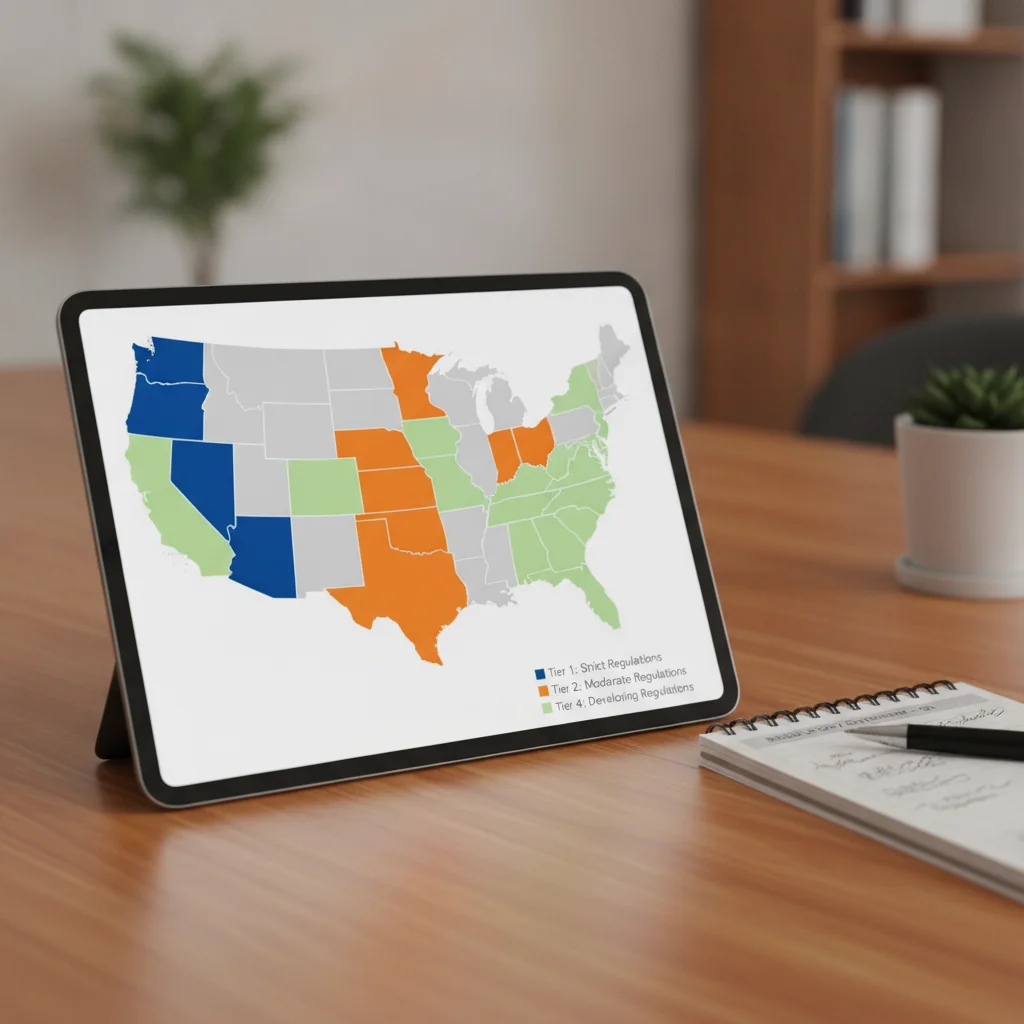
Dealer fee regulation is almost entirely a state-level issue, and the variation across states is significant. What a California buyer can expect versus what a Florida buyer faces at the same table can differ by several hundred dollars — purely because of how each state's legislature has chosen to regulate dealership practices.
Documentation Fee (Doc Fee)
A charge the dealership imposes to cover the administrative cost of preparing and filing your purchase paperwork, including title applications and loan documents. It is regulated by state law in some states and entirely unregulated in others.
Pre-Delivery Inspection (PDI)
A factory-mandated inspection the dealer performs before delivering a new vehicle to the buyer, covering fluid levels, tire pressure, protective film removal, and basic function checks. Manufacturers compensate dealers for this work through an invoice allowance.
Additional Dealer Markup (ADM)
An amount added to a vehicle's MSRP at the dealer's discretion, typically justified by high demand or low inventory. Also called a 'market adjustment.' It is entirely legal but entirely negotiable.
Monroney Label
The federally mandated window sticker attached to every new car, listing the manufacturer's suggested retail price, installed options, fuel economy, and destination charge. The destination figure on this label is the legitimate shipping cost — not the dealer's markup.
Out-the-Door (OTD) Price
The total amount a buyer pays to drive a vehicle home, including the sale price, all dealer fees, government fees, taxes, and any add-ons. Always negotiate to this number, not just the vehicle price.
Dealer-Installed Option
An accessory or service the dealership adds to a vehicle before sale — such as paint sealant, window tinting, or a GPS unit — and then charges to the buyer as a contract line item. These are optional and often removable.
Destination Charge
The manufacturer-set fee for shipping a new vehicle from the factory to the dealership. It appears on the Monroney label and is the same for all buyers of that model regardless of their location.
Electronic Filing Fee
A charge for submitting title and registration documents to the state electronically rather than by mail. States charge a small mandated fee for this service; dealers sometimes add an administrative markup on top of the state amount.
States with Doc Fee Caps
The following states have statutory limits on documentation fees as of the most recent legislative updates. Always verify with your state's DMV or attorney general consumer protection office, as caps can change:
| State | Doc Fee Cap | Notes |
|---|---|---|
| California | $85 | Inflation-adjusted periodically |
| Colorado | $150 | Fixed statutory cap |
| Texas | $150 | Applies to TIADA member dealers |
| Michigan | $230 | Cap adjusts annually |
| Minnesota | $125 | Fixed statutory cap |
| New Hampshire | $299 | Fixed statutory cap |
States with No Doc Fee Cap
Florida, New York, New Jersey, Illinois, and most other states impose no cap on documentation fees. In these markets, fees above $600–$900 are not unusual, and some luxury dealers charge over $1,000. In uncapped states, negotiating the doc fee — or asking for a corresponding price reduction — is entirely appropriate and often successful.
Doc Fee Caps Can Change — Always Verify
State legislatures update documentation fee caps periodically, and some caps are tied to inflation indexes that adjust annually. The figures in this guide reflect the most recent publicly available data, but they may have changed. Before finalizing any deal, check your state's official DMV or motor vehicle licensing website for the current statutory limit. A quick search for your state name plus 'dealer documentary fee maximum' will usually surface the relevant regulation.
Verbal Agreements Don't Override the Contract
If a salesperson or finance manager verbally agrees to remove a fee or include something at no charge, that agreement has no legal force unless it appears in writing in the signed contract. This is governed by a legal principle called the parol evidence rule, which means pre-contract verbal promises cannot be used to alter a written agreement. Never leave the finance office assuming something was 'taken care of' unless you can see it — in writing — in the contract you're signing.
After Signing: What You Can Still Do
Discovering a fee discrepancy after signing doesn't necessarily mean you're stuck. Start by contacting the dealership's general manager in writing and documenting every response. If the issue isn't resolved, file complaints with your state attorney general's consumer protection office and your state's motor vehicle dealer licensing board. The FTC and CFPB also accept consumer complaints related to auto dealer misconduct. In cases involving forged documents or fraudulent fee additions, consult a consumer protection attorney — many offer free initial consultations.
How to Look Up Your State's Rules Before You Go
Before visiting any dealership, spend 10 minutes on your state's DMV or motor vehicle agency website. Look for:
- The title transfer fee schedule
- Registration fee by vehicle weight or value
- Any statutory documentation fee cap (search your state name + "dealer documentary fee limit")
- Sales tax rate and any county or city surtax
Printing or saving this information gives you an authoritative reference to compare against whatever a dealer presents in the finance office. It also signals to the finance manager that you've done your homework — a posture that reduces the likelihood of inflated fee items appearing in your contract.
How to Negotiate Fees Before You Sign
Most buyers don't realize that negotiating fees is separate from negotiating the vehicle price — and that you can and should do both. The finance office is not the end of negotiations; it's a second negotiation with a different person who has their own profit targets.

Step 1: Request an Itemized Out-the-Door Price Quote in Writing
Before you enter the finance office, ask the salesperson for a complete out-the-door (OTD) price in writing that itemizes every fee. This is your baseline. If a dealer refuses to provide one, that itself is useful information.
Step 2: Categorize Each Fee on the List
Using this guide, sort every line item into one of three buckets:
- Government fees: Pay without question (but verify amounts)
- Legitimate dealer fees: Accept if reasonable, negotiate if inflated
- Discretionary add-ons: Challenge every one
For a comprehensive look at what every common line item means, our dealer fees glossary walks through each charge in plain language.
Step 3: Make Specific, Targeted Asks
Rather than saying "I want to lower the price," say specific things like:
- "I'd like the dealer prep fee removed — the manufacturer's invoice already includes a PDI allowance."
- "Can you apply the doc fee as a discount against the sale price instead of a separate charge?"
- "I don't want the nitrogen package or the paint sealant — please remove those line items."
- "The destination charge on the window sticker is $1,095 but I see $1,295 in the contract — can you explain that difference?"
Specific language backed by specific facts is far more effective than general pushback. Finance managers expect general resistance; they don't expect a buyer who has read the factory invoice.
Step 4: Watch for Fees That Reappear After You've Negotiated Them Out
A common tactic is to agree to remove a fee verbally, then quietly reinstate it in the final contract. Always compare the final printed contract against any written quote you received. Verbal agreements that don't make it into the contract are not enforceable — the contract controls.
Step 5: Know Your Walk-Away Point
Willingness to leave is your most powerful negotiating tool. If a dealer refuses to remove an add-on you didn't agree to and won't budge on a clearly discretionary fee, walking away is a legitimate and often effective response. Dealers know that a customer who leaves is a lost sale. Understanding how dealership negotiations work gives you the broader framework for using leverage effectively throughout the buying process.
Doc Fee Caps Can Change — Always Verify
State legislatures update documentation fee caps periodically, and some caps are tied to inflation indexes that adjust annually. The figures in this guide reflect the most recent publicly available data, but they may have changed. Before finalizing any deal, check your state's official DMV or motor vehicle licensing website for the current statutory limit. A quick search for your state name plus 'dealer documentary fee maximum' will usually surface the relevant regulation.
Verbal Agreements Don't Override the Contract
If a salesperson or finance manager verbally agrees to remove a fee or include something at no charge, that agreement has no legal force unless it appears in writing in the signed contract. This is governed by a legal principle called the parol evidence rule, which means pre-contract verbal promises cannot be used to alter a written agreement. Never leave the finance office assuming something was 'taken care of' unless you can see it — in writing — in the contract you're signing.
After Signing: What You Can Still Do
Discovering a fee discrepancy after signing doesn't necessarily mean you're stuck. Start by contacting the dealership's general manager in writing and documenting every response. If the issue isn't resolved, file complaints with your state attorney general's consumer protection office and your state's motor vehicle dealer licensing board. The FTC and CFPB also accept consumer complaints related to auto dealer misconduct. In cases involving forged documents or fraudulent fee additions, consult a consumer protection attorney — many offer free initial consultations.
If you're purchasing a used vehicle, the fee landscape can be slightly different — particularly around certification charges and "as-inspected" fees. See the hidden costs in used car dealer paperwork for a used-car-specific version of this breakdown.
Red Flags to Spot Before You Sign
Beyond specific fees, certain patterns in a contract should trigger caution regardless of what the individual line items are called.
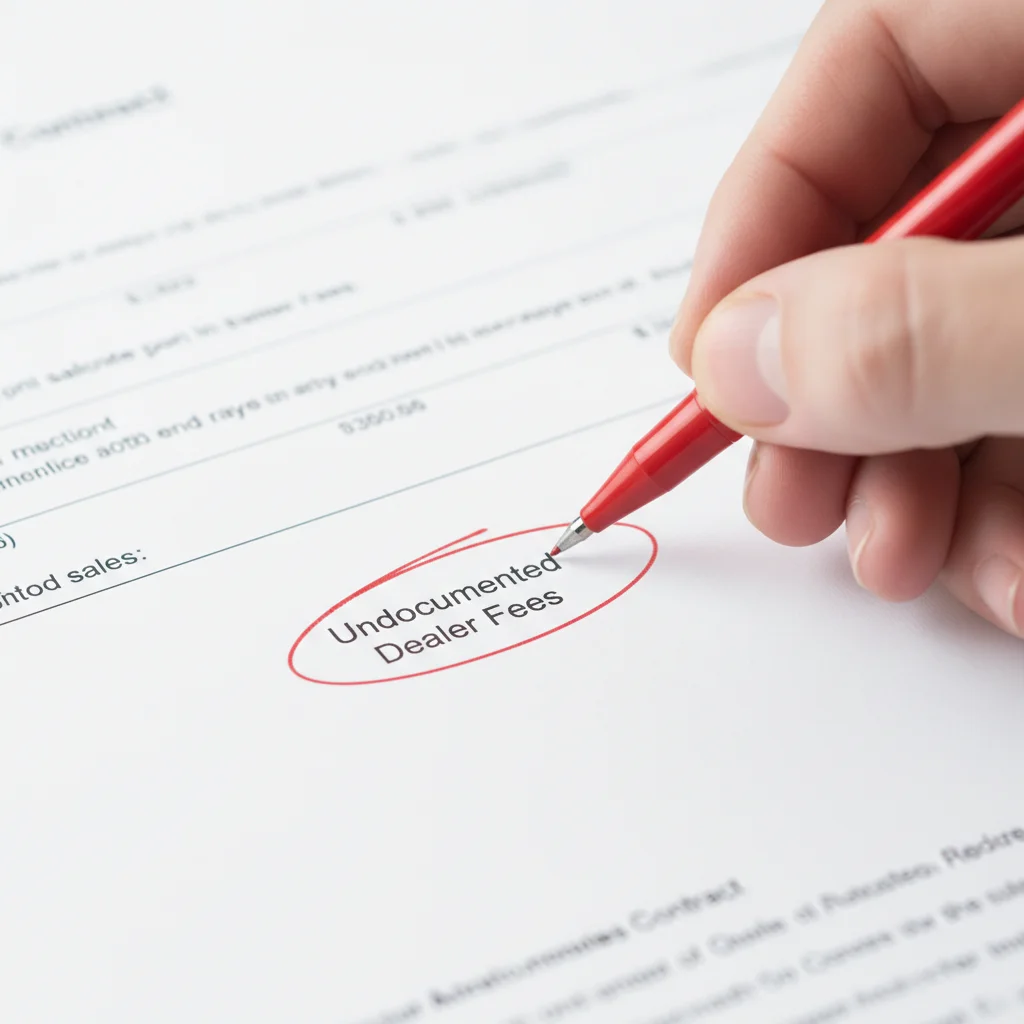
Fees With Vague or Generic Names
Charges labeled "administrative fee," "processing fee," "handling charge," or "dealer services" with no further explanation are often invented margin. Ask for a written explanation of what service each covers. If the finance manager can't explain it clearly, it almost certainly shouldn't be there.
Destination Charges Above the Window Sticker Amount
The Monroney label on a new car legally discloses the manufacturer's destination charge. Any "freight" or "delivery" fee in the contract that exceeds the window sticker figure is a dealer markup, not a government or manufacturer fee. Understanding what's legitimately buried in a sticker price can help you decode these figures before you enter the finance office.
Pre-Installed Options You Never Requested
If the contract includes charges for window tinting, door edge guards, GPS tracking units, or theft deterrent systems you never agreed to, you have the right to ask for them to be removed from the contract. Dealers sometimes install these items specifically to make removal feel too inconvenient to demand — a car that's already been tinted feels like a done deal. It isn't.
A Contract That Doesn't Match Your Written Quote
Always bring your written out-the-door quote into the finance office. Compare it line by line. New fees that weren't on the original quote require an explanation before you sign anything.
Doc Fee Caps Can Change — Always Verify
State legislatures update documentation fee caps periodically, and some caps are tied to inflation indexes that adjust annually. The figures in this guide reflect the most recent publicly available data, but they may have changed. Before finalizing any deal, check your state's official DMV or motor vehicle licensing website for the current statutory limit. A quick search for your state name plus 'dealer documentary fee maximum' will usually surface the relevant regulation.
Verbal Agreements Don't Override the Contract
If a salesperson or finance manager verbally agrees to remove a fee or include something at no charge, that agreement has no legal force unless it appears in writing in the signed contract. This is governed by a legal principle called the parol evidence rule, which means pre-contract verbal promises cannot be used to alter a written agreement. Never leave the finance office assuming something was 'taken care of' unless you can see it — in writing — in the contract you're signing.
After Signing: What You Can Still Do
Discovering a fee discrepancy after signing doesn't necessarily mean you're stuck. Start by contacting the dealership's general manager in writing and documenting every response. If the issue isn't resolved, file complaints with your state attorney general's consumer protection office and your state's motor vehicle dealer licensing board. The FTC and CFPB also accept consumer complaints related to auto dealer misconduct. In cases involving forged documents or fraudulent fee additions, consult a consumer protection attorney — many offer free initial consultations.
Your Rights if You Discover Discrepancies After Signing
If you discover a fee was misrepresented or added without your knowledge after you've signed, you have options. First, contact the dealership's general manager in writing. If they don't resolve it, file a complaint with your state's attorney general consumer protection division and your state's motor vehicle dealer licensing board. In egregious cases — particularly involving misrepresented fees or forged documents — the Federal Trade Commission and the Consumer Financial Protection Bureau both accept complaints. Document everything in writing from the start.
For a broader look at how contract structure is used to obscure the true cost of a vehicle before you ever reach those discrepancy conversations, our article on how dealerships structure contracts is required reading.
Dealer Fees Glossary: Every Line Item Explained
A comprehensive reference guide that defines every common fee on a car purchase contract and flags which ones are negotiable. Useful to review before entering any dealership finance office.
State DMV Fee Schedules
Every state's department of motor vehicles publishes its official registration and title fee schedules online. Checking your state's schedule before signing helps you verify that government fee line items in the contract are accurate.
FTC Auto Buyer Resources
The Federal Trade Commission publishes consumer guidance on car buying, dealer add-ons, and your rights when a dealer misrepresents fees or contract terms. A reliable reference backed by regulatory authority.
Consumer Financial Protection Bureau (CFPB) Complaint Portal
If you believe a dealer engaged in deceptive fee practices or misrepresented your financing, the CFPB accepts formal consumer complaints that may trigger regulatory review of the dealership's practices.
Out-the-Door Price Calculator
Estimate your true total cost before negotiating by inputting the vehicle price, your state's tax rate, estimated government fees, and typical dealer fees. Comparing this estimate to a dealer's quote reveals hidden markups quickly.

All claims are backed by peer-reviewed research. Sources on request.