
Key Takeaways
Contract Obscurement in Car Deals
Contract obscurement refers to the way dealerships organize financing paperwork — particularly the retail installment sale contract — to draw your attention toward monthly payment amounts while burying the true total cost of the vehicle. This includes rolling in fees, add-on products, and dealer markup into a single finance figure, making it difficult to see what you're actually paying and for what.
The primary document is the Retail Installment Sale Contract (RISC), which legally binds the buyer to all line items — whether or not the buyer fully read or understood them at signing.
Why the Finance Office Is Where Deals Actually Get Made
Most buyers think the hard part of a car purchase ends when they shake hands with the salesperson on a vehicle price. In reality, the most consequential part of the deal happens in a second room — the finance and insurance (F&I) office — where a different professional, the finance manager, takes over.
The finance office exists for one primary purpose: to maximize profit on the back end of the deal. This isn't a conspiracy — it's openly taught in dealership training programs. The finance manager earns commission on the interest rate markup, on every product they sell you, and sometimes on the overall profitability of the transaction.
This is where the retail installment sale contract (RISC) is assembled and presented for signature. The RISC is a dense, multi-page legal document that consolidates the vehicle price, loan terms, fees, taxes, and any optional add-on products into a single package. Most buyers spend less than 20 minutes reviewing it — and that's exactly the environment the finance office is designed to create.
The Finance Office Is a Separate Negotiation
Many buyers treat the finance office as a formality after the real negotiation is done. It isn't. The finance manager is a separate profit center with their own goals and tools. Approach this conversation with the same preparation and firmness you brought to the sales floor — the deal isn't truly done until you drive off the lot.
Dealer Reserve Is Legal — But You Can Negotiate It
Interest rate markup by dealers is a legal and common practice, regulated in some states but permitted broadly across the U.S. You are allowed to negotiate the interest rate just as you negotiate the vehicle price. Asking 'Is this your best rate?' and presenting a competing pre-approval puts pressure on the dealer to reduce or eliminate the markup.
Understanding how the finance office works doesn't mean every dealer is acting in bad faith. Many finance managers run clean, transparent deals. But the structure of the process creates pressure and opacity that you should be prepared for regardless of the dealership.
The Monthly Payment Trap: How Attention Gets Redirected
The single most effective tool for obscuring the total cost of a car is monthly payment framing. Instead of anchoring on a price — say, $38,000 — the conversation shifts to whether you can afford $599 a month. These two numbers are not equivalent, and that gap is where dealerships make money.
When you agree to a monthly payment target, you hand the finance manager a variable they can manipulate in multiple directions:
- Extending the loan term — A 72-month loan has a lower monthly payment than a 60-month loan on the same amount, but costs significantly more in total interest.
- Adjusting the down payment — Reducing your down payment lowers monthly payments while increasing the financed amount and total interest paid.
- Rolling in add-on products — Once a buyer is payment-focused, adding $800 for a tire-and-wheel plan barely moves the monthly figure — but it increases your total cost by $800 plus the interest charged on that amount over the life of the loan.
This is why negotiating from the out-the-door price instead of a monthly payment is so important. The moment you agree to work backward from a payment, you've surrendered control of the deal's total cost.
$1,000–$3,000
Average back-end profit per financed vehicle
Industry estimates from the National Automobile Dealers Association (NADA) suggest dealerships earn this range through F&I products and financing markup alone.
72+ months
Most common loan term for new vehicles
According to Experian's State of the Automotive Finance Market report, the majority of new car loans now extend 72 months or longer — maximizing interest paid.
$1,200
Average cost of dealer-added F&I products per deal
Consumer Financial Protection Bureau (CFPB) research has found the average bundled cost of finance office add-ons exceeds $1,200 when included in financing.
2%
Typical dealer interest rate markup above buy rate
Industry data suggests dealers commonly mark up lender buy rates by 1–3 percentage points, adding hundreds to thousands in interest over the loan term.
83%
New car buyers who finance through the dealership
J.D. Power data indicates the large majority of new car buyers use dealer-arranged financing, giving dealerships significant control over loan terms and rate presentation.
For a deeper look at how dealers steer conversations toward payment-focused framing, see why dealers prefer to negotiate monthly payments.
How Fees Get Buried in Contract Structure
A dealership contract rarely presents costs in a way that makes them easy to add up and challenge. Instead, charges are distributed across sections, described in abbreviated or vague language, and sometimes grouped under umbrella line items. Here's what to watch for:
Documentation Fee
This fee — typically ranging from $100 to over $800 depending on the state — covers the dealer's cost of preparing and filing paperwork. It is not a government fee, it is a dealer fee, but it's often listed without explanation. Some states cap it; many don't. Understanding which fees are legitimate helps you know when to push back.
Dealer Prep and Delivery Fees
These appear under names like "dealer preparation," "vehicle prep," or "destination and handling" — but their meaning varies. True destination charges from the manufacturer are legitimate and listed on the Monroney sticker. Dealer-added prep fees are not mandatory and are often pure margin.
Accessories and Add-Ons Installed Before Sale
Some dealers install accessories — window tinting, cargo liners, protective film — before the buyer arrives and then list them as line items on the contract. If you didn't request them, you don't have to pay for them. But they're commonly presented as if they were already part of the purchase.
Taxes and Government Fees
State sales tax, registration, and title fees are legitimate and non-negotiable — but their presentation can be confusing. Dealer-itemized taxes and government-mandated fees are often buried in the fine print alongside dealer-imposed fees, making it hard to distinguish what's required by law and what isn't.

Ask for the Total Cost, Not the Monthly Payment
Whenever a finance manager quotes a monthly figure, respond by asking for the total of payments and the full out-the-door cost. This reframes the conversation from what's comfortable per month to what you're actually spending. It also makes rolled-in add-ons immediately visible as cost increases.
Request a Blank Contract to Review in Advance
Before your appointment in the finance office, ask the dealership to email you a blank sample of the RISC they use. Familiarizing yourself with the format and section headings before you're sitting under pressure makes it much easier to spot anomalies when the actual contract is presented.
F&I Products: Profitable Add-Ons That Sound Like Necessities
Finance and insurance products are the dealership's most profitable back-end revenue source. They're sold in the finance office, often with urgency and confidence that implies they're essential. In most cases, they are optional. Here are the most common ones and what to know about each:
The key issue isn't that these products are inherently bad — some buyers genuinely benefit from GAP coverage or a service contract. The problem is the way they're presented: often without a clear total cost, bundled into the financed amount so they're invisible in the monthly payment, and sometimes described in vague language that obscures what is and isn't covered.
Always ask for the total cost of each product as a standalone number, and ask to see the contract terms for any product before agreeing to it. For a related tactic used in the sales process, see how the four-square method obscures the full picture of what you're paying.

Interest Rate Markup: The Hidden Lender Profit
When a dealership arranges financing through a third-party lender, the lender quotes a base rate — called the buy rate — at which they'll fund the loan. The dealership is typically allowed to mark that rate up (often by 1–3 percentage points) and keep the difference as profit. This is called the dealer reserve or dealer participation.
From the buyer's perspective, this markup is invisible. The contract shows your final interest rate, but not what the lender originally quoted. You have no way of knowing — without doing your own research — whether your rate is at or above the buy rate.
The defense here is simple but requires preparation: secure your own financing pre-approval from a bank or credit union before visiting the dealership. When you arrive with a pre-approved rate in hand, the dealer must beat that rate to earn your financing business — and you have a built-in benchmark to spot if they're marking it up.
“The single most powerful thing a car buyer can do is walk in with their own financing. When the dealer knows you have an alternative, the entire dynamic of the finance office conversation shifts.”
— Rosemary Shahan, President, Consumers for Auto Reliability and Safety (CARS)
To understand how loan length and rate interact with total cost, the loan terms explained hub walks through exactly what these numbers mean in practice.
The Finance Office Is a Separate Negotiation
Many buyers treat the finance office as a formality after the real negotiation is done. It isn't. The finance manager is a separate profit center with their own goals and tools. Approach this conversation with the same preparation and firmness you brought to the sales floor — the deal isn't truly done until you drive off the lot.
Dealer Reserve Is Legal — But You Can Negotiate It
Interest rate markup by dealers is a legal and common practice, regulated in some states but permitted broadly across the U.S. You are allowed to negotiate the interest rate just as you negotiate the vehicle price. Asking 'Is this your best rate?' and presenting a competing pre-approval puts pressure on the dealer to reduce or eliminate the markup.
Reading the Retail Installment Sale Contract Line by Line
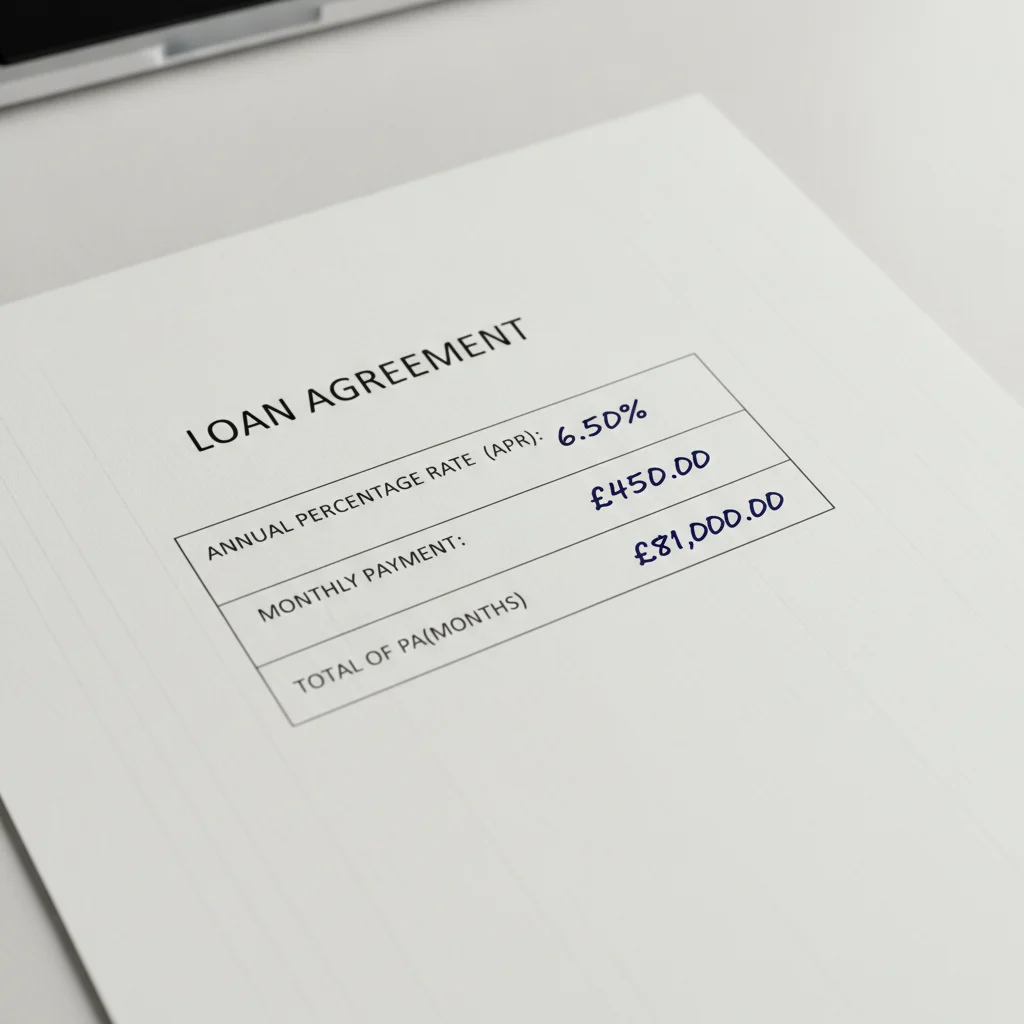
The RISC is a legally binding document. Once you sign it, every number in it is locked in — including fees you may not have noticed. Here's how to approach it before putting pen to paper:
- Find the 'Amount Financed' — This is the total amount the lender is advancing on your behalf. It should equal the vehicle price minus your down payment plus any rolled-in fees or products. If it's higher than you expected, something was added.
- Check the 'Total of Payments' — This is the sum of all scheduled payments over the loan's life. It's the true cost of the financed deal, including all interest. Compare it to the vehicle price to understand how much financing is costing you.
- Review the itemization of amount financed — This section lists every component of the financed amount. Look for line items you don't recognize. Ask about each one before signing.
- Verify the APR — Confirm the interest rate matches what you were quoted. Even a 0.5% difference on a $35,000 loan over 72 months adds up to hundreds of dollars.
- Look for arbitration clauses — Many contracts include mandatory arbitration language that limits your ability to sue the dealership if a dispute arises. Note it, but understand that removing it is rare.
Don't let anyone rush you. Take the time you need. If the finance manager says the computer system is about to close or the lender's approval expires, that's a pressure tactic — not a genuine deadline.
Ask for the Total Cost, Not the Monthly Payment
Whenever a finance manager quotes a monthly figure, respond by asking for the total of payments and the full out-the-door cost. This reframes the conversation from what's comfortable per month to what you're actually spending. It also makes rolled-in add-ons immediately visible as cost increases.
Request a Blank Contract to Review in Advance
Before your appointment in the finance office, ask the dealership to email you a blank sample of the RISC they use. Familiarizing yourself with the format and section headings before you're sitting under pressure makes it much easier to spot anomalies when the actual contract is presented.
If you're also concerned about what happens after signing, particularly with financing that isn't yet finalized, review how spot delivery contracts enable yo-yo financing.
What to Do Before You Walk Into the Finance Office
The best defense against contract obscurement is preparation that happens before you sit down in that second room. Here's the sequence that gives you the most control:
1. Know Your Out-the-Door Number
Before finalizing anything on the sales floor, ask for the out-the-door price in writing. This should include the vehicle price, all dealer fees, taxes, and registration. Anything added later in the finance office should be clearly disclosed and separately itemized. The dealer negotiation hub has guidance on how to hold this line effectively.
2. Secure Financing Before You Arrive
Get pre-approved by your bank or a credit union. This gives you a benchmark rate and removes the dealer's monopoly on your financing options. You can still use dealer financing if it's genuinely better — but only if you can verify it's better.
3. Decline Add-Ons Until You've Researched Them
Don't feel pressured to decide on GAP insurance, extended warranties, or protection packages in the moment. Tell the finance manager you'll consider them separately. If they're truly valuable, they'll still be available — and often cheaper — through third-party providers.
4. Ask for a Worksheet Before the Final Contract
Request a deal worksheet that itemizes every number before the RISC is printed. Review it carefully. Any number you don't recognize should be explained before you proceed.
5. Read Everything Before Signing
Take your time with the contract itself. Initial each page. Ask about any section you don't understand. A trustworthy finance manager will have no problem answering your questions clearly.


All claims are backed by peer-reviewed research. Sources on request.