
Key Takeaways
Why Used Car Paperwork Is a Profit Center, Not Just a Formality
The moment you agree on a sale price and walk toward the finance office, the real negotiation is just starting. Used car dealers make a significant portion of their profit not on the vehicle itself, but on everything that gets layered into the contract afterward. Documentation fees, dealer-installed accessories, service contracts, and insurance products can quietly add $1,500 to $4,000 or more to a deal that felt settled.
This isn't illegal — most of it is disclosed somewhere in the paperwork. The problem is timing and presentation. By the time you're sitting in the F&I office, you're mentally done negotiating. You're tired, you want the keys, and a finance manager trained to read that exhaustion is presenting products at a rapid pace. Understanding what's in that stack of papers before you get there is the only way to keep control.
For a complete breakdown of what every fee line actually means, see the Dealer Fees Glossary — it decodes every common charge and tells you which ones have room to move.

Used car deals carry unique risks compared to new car purchases. The vehicle itself may have hidden mechanical issues, but the paperwork can hide financial ones just as effectively. Knowing the difference between fees you must pay and fees that are purely optional is the first step to walking out with a fair deal.
The Most Common Mistakes Buyers Make in the Finance Office
These aren't obscure traps — they're predictable patterns that repeat across thousands of used car transactions every day. The buyers who avoid them aren't smarter; they're just prepared.
Agreeing to a monthly payment before seeing the full contract breakdown.
Why it happens: Dealers shift conversations to monthly payment amounts early because it's easier to slip in extra costs when buyers are focused on affordability rather than total price.
Assuming the documentation fee is a fixed, government-mandated charge.
Why it happens: Finance managers often present the doc fee as non-negotiable alongside actual government fees, and most buyers don't know the difference.
Buying an extended service contract or GAP insurance in the finance office without shopping around first.
Why it happens: Buyers are presented with these products at the end of a long, tiring transaction when they're least likely to do comparative research.
Accepting bundled add-on packages without understanding what's inside them.
Why it happens: Dealers often group several low-value products — paint sealant, fabric protection, key replacement — into a single "protection package" priced at $800–$1,500. Individually, each item might cost $20 retail.
Not reading the contract carefully before signing, especially the interest rate and loan term.
Why it happens: By the time you reach the finance office, you're emotionally invested in the deal and rushing toward completion. Finance managers know this and move through paperwork quickly.
Failing to get the "we owe" agreement in writing before taking delivery.
Why it happens: Dealers sometimes promise to add features, fix items, or include accessories verbally — promises that quietly disappear after the ink dries.

One pattern worth calling out: dealers frequently roll optional products into the monthly payment rather than showing the total cost. A $1,200 extended warranty presented as "only $22 more per month" over a 60-month loan sounds manageable. But $22 × 60 = $1,320 — and that's before interest. Always ask for the lump-sum price of every product, not the monthly impact.
$458
Average U.S. dealer documentation fee
According to a 2023 analysis by Edmunds, average doc fees have risen steadily and now exceed $400 in most states, with some dealers charging nearly $1,000.
73%
F&I product profit margin for dealers
Industry research suggests dealers typically mark up finance and insurance products — including extended warranties and GAP — by 50–100% or more above their cost.
$1,830
Average dealer-sold extended warranty price
Consumer Reports found that buyers who purchased extended warranties from dealers paid an average of $1,214 more than those who bought equivalent coverage from third-party providers.
1 in 4
Buyers who don't know their loan's total cost
A J.D. Power survey found that a significant share of auto loan borrowers couldn't accurately state the total amount they would repay over the life of their loan.
For a deeper look at how contract structure itself is used to obscure cost, read how dealerships structure contracts to obscure total cost.
Pre-Installed Add-Ons Are Not Mandatory
Some dealers install products like paint sealant, window tinting, or alarm systems on used vehicles before you see them, then present the cost as non-negotiable. In most states, you have the right to refuse to pay for any add-on not required by law. If the dealer won't budge, ask them to reduce the vehicle price by the same amount — or be prepared to walk away.
Credit Life Insurance Is Almost Never Worth It
Credit life and credit disability insurance — which pay off your car loan if you die or become disabled — are heavily marked up and rarely the best option. If you need this type of protection, a standalone term life policy will almost always provide more coverage at a lower cost. Don't let a finance manager sell you insurance products your own insurer can do better and cheaper.
Spot Delivery Contracts Can Come Back to Haunt You
If a dealer lets you drive home before financing is finalized, you may be operating under a conditional delivery contract. This gives them the legal right to call you back and demand a higher interest rate or larger down payment. Before accepting delivery, confirm in writing that financing is fully approved — not just "pending" — and that you're not signing a conditional sales agreement.
Fees That Are Real vs. Fees That Are Invented
Not every fee on a used car contract is negotiable — but far more of them are than dealers let on. The key is knowing which category each one falls into before you sign.
Fees You Must Pay
- Sales tax: State-mandated. Non-negotiable. Based on the sale price (or trade differential, in some states).
- Title transfer fee: State-mandated. Typically $15–$100 depending on the state.
- Registration fee: State-mandated. Varies by vehicle weight, age, and state.
- Emissions or inspection fee: Required in many states before a vehicle can be registered.
Fees That Vary Widely and May Be Negotiable
- Documentation fee (doc fee): Charged for processing paperwork. Ranges from $75 in low-fee states to $999+ in states with no cap. Some states cap it; most don't. In states without a cap, this is sometimes negotiable — or at least worth questioning.
- Dealer prep fee: Often listed as compensation for cleaning or inspecting the vehicle. Largely invented — the car needs to be presentable regardless.
- Electronic filing fee: A sub-fee within the doc fee at some dealers. Double-dipping by another name.
Fees That Are Purely Optional
- Extended service contracts / warranties
- GAP insurance
- Credit life or disability insurance
- Paint or fabric protection
- Tire and wheel protection
- Key replacement programs
- Nitrogen tire inflation
The last category — optional products — is where the most money changes hands quietly. See dealer add-ons that inflate your final bill for a full breakdown of which extras are worth considering and which ones to decline on principle.
For a side-by-side view of what's mandated vs. what's invented, this guide on dealer fees vs. government fees is worth reading before you set foot in the dealership.
Never Sign Without Your Out-the-Door Number in Writing
Before you enter the finance office, get the complete out-the-door price — vehicle price, all fees, taxes, and any agreed add-ons — documented in writing. This is your legal protection against fee additions during the signing process. If the numbers in the finance office don't match what was agreed on the floor, stop the transaction and demand an explanation before proceeding.
You Can Cancel Finance Office Products After Purchase
In most states, extended service contracts and GAP insurance purchased at a dealership can be cancelled within a specific window — often 30 to 60 days — for a full refund. If you signed under pressure and later regret it, contact the dealer's finance department immediately and request a cancellation form. Any refunded amount should be applied directly to your loan principal.
Extended Warranties and GAP: The Big-Ticket Add-Ons Explained
No finance office products generate more revenue — or more confusion — than extended service contracts and GAP insurance. Both can be legitimate depending on your situation, but the dealership version is rarely the best price available.
Extended Service Contracts
An extended service contract (often called an extended warranty, though that's technically inaccurate) covers repair costs after the manufacturer's warranty expires — or in the case of a used car, often immediately. The problem isn't the concept; it's the markup. Dealers typically mark up service contracts 50–100% above their cost. A contract that costs the dealer $800 gets presented to you at $1,800.
Before you buy one at the dealership, get quotes from third-party providers like Endurance, CARCHEX, or your own insurance carrier. You can also purchase many dealer-backed contracts within 30 days of purchase — you don't have to decide in the finance office.
GAP Insurance
GAP (Guaranteed Asset Protection) covers the difference between what you owe on a loan and what the car is worth if it's totaled. It's a legitimate product for buyers who are financing more than 80% of a vehicle's value, buying with a long loan term (72+ months), or rolling negative equity from a previous loan.
It is almost never worth buying from the dealer. Dealership GAP typically costs $400–$900. Your auto insurer will often sell the same coverage for $20–$40 per year added to your premium. Call your insurer before you sit down with the finance manager.
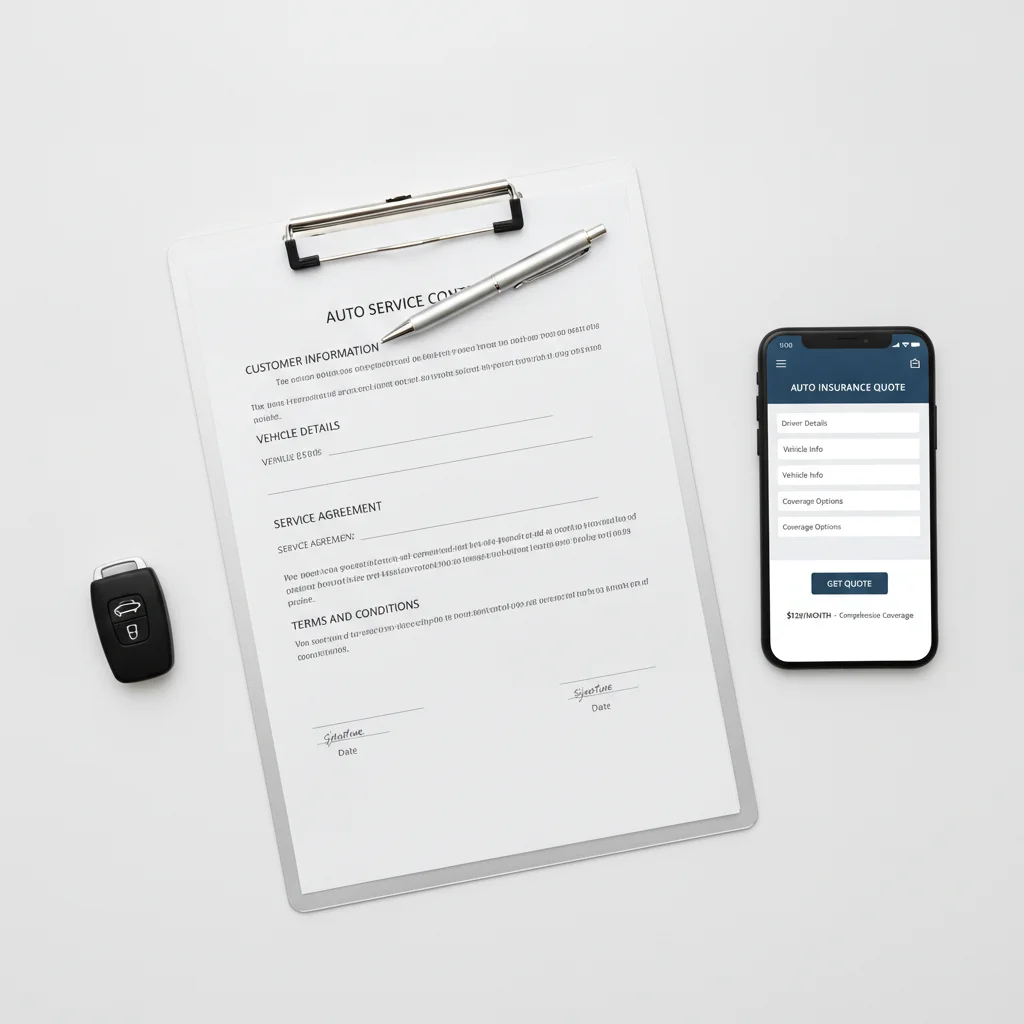
If you're financing a used car, also read the truth about yo-yo financing — some dealers use spot delivery contracts to renegotiate loan terms after you've already driven home, and knowing about it in advance is the only real protection.
For a full picture of how the F&I office makes money, how dealership finance offices make money after the sale lays out every revenue stream so you know what you're walking into.
How to Calculate What You Should Actually Pay Before Signing
The best defense against fee creep is knowing your out-the-door (OTD) number before you get to the finance office. This is the total you'll actually pay, including all taxes, fees, and any add-ons you've agreed to. Never negotiate off the monthly payment — always negotiate off the OTD price.
Building Your OTD Estimate
- Start with the agreed vehicle price. This is your baseline. Get it in writing before you enter the finance office.
- Add your state's sales tax rate. Apply it to the vehicle price (or trade differential if applicable). Your state's DMV website has the current rate.
- Add title and registration fees. These vary by state and vehicle. Call your local DMV or use their online estimator.
- Add the doc fee. Ask upfront what the dealer's standard doc fee is. Research your state's cap if one exists.
- Add only the optional products you've independently decided to include. Price them beforehand from outside sources.
That total is your OTD number. When you sit down to sign, verify every line matches your calculation. For a detailed walkthrough of the math, see how to calculate total tax and fee cost before buying.
Also worth reviewing: the hidden tax in your car's sticker price explains how government-mandated charges are often presented in ways that make them seem like dealer charges — and vice versa.

Before you finalize anything, take time to verify the contract itself for errors. Transposed VINs, incorrect interest rates, and wrong loan terms happen more often than you'd think. The guide to dealership paperwork errors buyers overlook gives you a specific checklist. And if you want the full context on what's fixed vs. what can be challenged in any contract, dealer fees in the contract: what's legitimate and what's negotiable is the definitive reference.
What to Say When the Finance Manager Pushes Back
Declining add-ons in the F&I office isn't rude — it's your right. Finance managers are trained to handle objections, so knowing the likely scripts and how to respond keeps you from caving under pressure.
Common Pressure Tactics and How to Handle Them
- "This warranty is required by the lender."
- It isn't. Lenders require collision and comprehensive insurance on the vehicle — not extended service contracts. Ask to see that requirement in writing from the lender. They won't have it.
- "GAP is included in the deal."
- If it wasn't in your original agreed price, it's not included — it's being added. Ask to see the itemized price and confirm it wasn't in your OTD estimate.
- "We can roll it into your payment for almost nothing extra."
- Calculate the actual cost: monthly payment increase × loan term = real cost, before interest. Say that number out loud and ask if it sounds like nothing.
- "This lot protection was already installed on the vehicle."
- Lot protection packages — paint sealant, fabric guard, perimeter alarm stickers — are often pre-installed specifically so the cost can be presented as unavoidable. Ask to have it removed from the contract or offset by a price reduction. If they refuse, walk.
The most powerful thing you can say in any of these situations is: "I'd like to take these documents home and review them before I sign." A legitimate dealer will give you that time. One that won't is telling you something important about how they operate.
If you're buying a used car that's certified pre-owned, many of these same dynamics apply — with some additional complexity around deductibles and coverage limits. The hidden costs nobody mentions when buying CPO covers those specifics in detail.
For broader negotiation strategy, the dealer negotiation hub and the paperwork and contracts hub are both worth bookmarking before your next dealership visit.
Never Sign Without Your Out-the-Door Number in Writing
Before you enter the finance office, get the complete out-the-door price — vehicle price, all fees, taxes, and any agreed add-ons — documented in writing. This is your legal protection against fee additions during the signing process. If the numbers in the finance office don't match what was agreed on the floor, stop the transaction and demand an explanation before proceeding.
You Can Cancel Finance Office Products After Purchase
In most states, extended service contracts and GAP insurance purchased at a dealership can be cancelled within a specific window — often 30 to 60 days — for a full refund. If you signed under pressure and later regret it, contact the dealer's finance department immediately and request a cancellation form. Any refunded amount should be applied directly to your loan principal.

All claims are backed by peer-reviewed research. Sources on request.