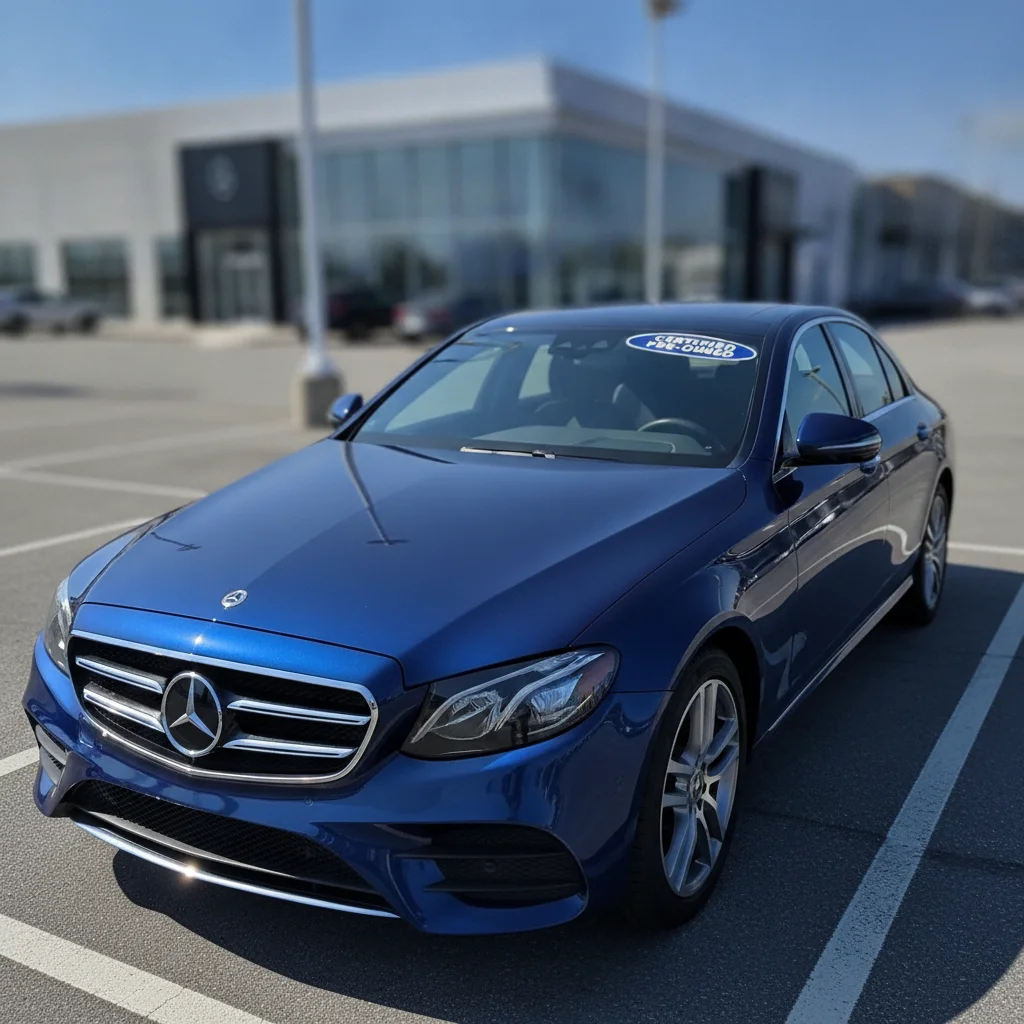
Key Takeaways
Certified Pre-Owned (CPO)
A certified pre-owned car is a used vehicle that has passed a manufacturer- or dealer-defined inspection process and typically comes with an extended warranty. The word 'certified' implies a higher standard than a regular used car — but what that standard actually means varies dramatically depending on who's doing the certifying. Manufacturer CPO programs (like Toyota Certified or BMW Certified) follow strict brand guidelines, while independent dealer certifications may have little formal oversight.
Only automakers' own franchise dealers can offer manufacturer-backed CPO programs. Third-party or dealer-certified programs are not regulated by any federal standard and the term 'certified' carries no legal definition in the U.S.
Why 'Certified' Means Different Things on Different Platforms
When you're shopping for a used car online and see a listing tagged as 'certified,' your instinct is to trust it. That's exactly what sellers are counting on. The word 'certified' carries the psychological weight of an official stamp of approval — but in the U.S., there is no federal standard that defines what the term actually requires. A vehicle sold by a Toyota dealership under the Toyota Certified Used Vehicles program and a car sold on a third-party marketplace with a 'dealer certified' badge are both technically 'certified.' The gap between what each label guarantees can be enormous.
This ambiguity matters even more when you're buying online, where you can't physically walk around the car, hear the engine, or have your own mechanic look it over before you sign. Understanding exactly what tier of certification you're dealing with is the first — and most important — question to ask before you commit.
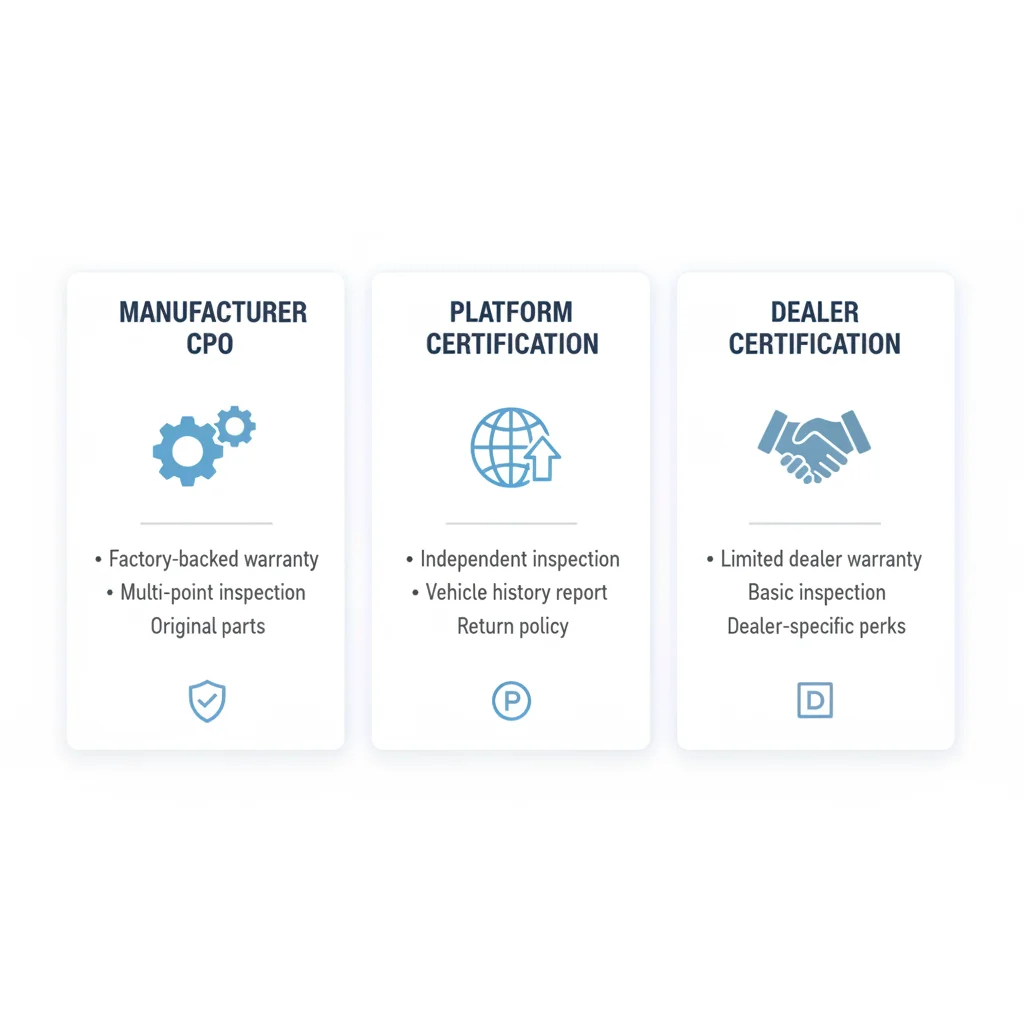
There are three distinct tiers of certification you'll encounter in the online car market:
- Manufacturer CPO programs: Run by the automaker, sold exclusively through franchise dealers. These follow documented inspection checklists, offer factory-backed extended warranties, and must meet eligibility rules — typically age and mileage caps.
- Online platform certifications: Proprietary programs run by companies like CarMax, Carvana, and Vroom. Rigorous by retail standards but not backed by the manufacturer. Coverage and standards differ platform to platform.
- Independent dealer certifications: The loosest category. Any dealer can call a car 'certified' based on their own internal process, which may be as simple as an oil change and a visual walk-around.
For a side-by-side breakdown of what separates a true CPO vehicle from a standard used car, see what you actually get with a CPO badge versus a regular used car.
Manufacturer CPO Programs: The Gold Standard — With Caveats
Manufacturer-backed CPO programs are the most standardized option. Brands like Honda, Toyota, Mercedes-Benz, BMW, and Ford each publish detailed requirements for what makes a vehicle eligible. Typical eligibility rules include a maximum age (usually five to seven years) and a mileage cap (often under 80,000 miles), though these vary by brand. Vehicles must pass a multi-point inspection — typically 100 to 200 checkpoints — performed by a factory-trained technician at an authorized dealership.
“The manufacturer CPO warranty is essentially the automaker saying: we're confident enough in this vehicle's condition to back it with our name. When you move away from that into dealer or platform certifications, you're relying on the seller's word — and their financial interest runs in the opposite direction from yours.”
— Desmond Kimathi, Former dealership finance manager and auto financing expert
What makes manufacturer CPO genuinely valuable is the warranty. The powertrain warranty on a manufacturer CPO vehicle often extends the original coverage — sometimes adding two or three years on top of what remains from the original factory warranty. Many programs also include roadside assistance, complimentary maintenance, and trip interruption reimbursement. These are real, quantifiable benefits.
The caveat: even within manufacturer programs, inspection quality varies by technician and dealership. The checklist exists on paper; whether every item was actually evaluated with the same rigor is another matter. CPO inspections have real limits that buyers should understand before putting full faith in the badge.
2.8M+
Manufacturer CPO vehicles sold in the U.S. annually
According to Autodata and industry reporting, manufacturer-backed CPO sales have consistently topped 2.8 million units per year in recent pre-pandemic data.
Up to $2,500
Typical CPO price premium over non-certified
Edmunds data has shown CPO vehicles frequently command a $1,000–$2,500 premium over comparable non-certified used cars, depending on brand and model.
100–200
Inspection checkpoints in top manufacturer programs
Manufacturer CPO programs like Toyota and BMW publish inspection checklists ranging from roughly 100 to over 200 individual points, significantly more than most dealer programs.
30 days
Typical return window for major online platforms
CarMax offers a 30-day return guarantee; most other major online retailers offer 7 days, giving buyers limited time to surface issues post-delivery.
No legal standard
Federal oversight of the term 'certified'
The Federal Trade Commission does not regulate the term 'certified' as applied to used vehicles, meaning any dealer can use it regardless of what inspection process, if any, was performed.
When shopping manufacturer CPO online — through a brand's own digital storefront or a third-party aggregator listing franchise inventory — always confirm the certification is active and tied to the specific VIN. It's not unheard of for vehicles to be listed as CPO-eligible but not yet formally certified at the time of listing.
Manufacturer CPO Requires a Franchise Dealer
A manufacturer-backed CPO vehicle can only be sold through an authorized franchise dealership for that brand. If you see a Toyota listed as 'Toyota Certified' on a non-Toyota dealership lot or a third-party online platform, the label is inaccurate — those vehicles cannot carry an active manufacturer CPO designation. Confirm the selling dealer's franchise status before assuming the manufacturer warranty applies.
CPO Does Not Mean Accident-Free
A vehicle can qualify for many manufacturer CPO programs even if it has a prior accident on record, provided the damage was properly repaired and the vehicle meets structural and mechanical standards. Do not assume a CPO badge means a clean history — always pull a CARFAX or AutoCheck report separately. Some programs do exclude vehicles with significant prior damage, but policies vary by brand.
How Online Platforms Define 'Certified' — And Where They Fall Short
Online-only retailers have built their businesses on the promise of a better, more transparent used-car experience. As part of that pitch, each platform developed its own certification framework. The inspection standards are often published, which is a plus. But none of these programs are manufacturer-backed, and that distinction matters for warranty depth.
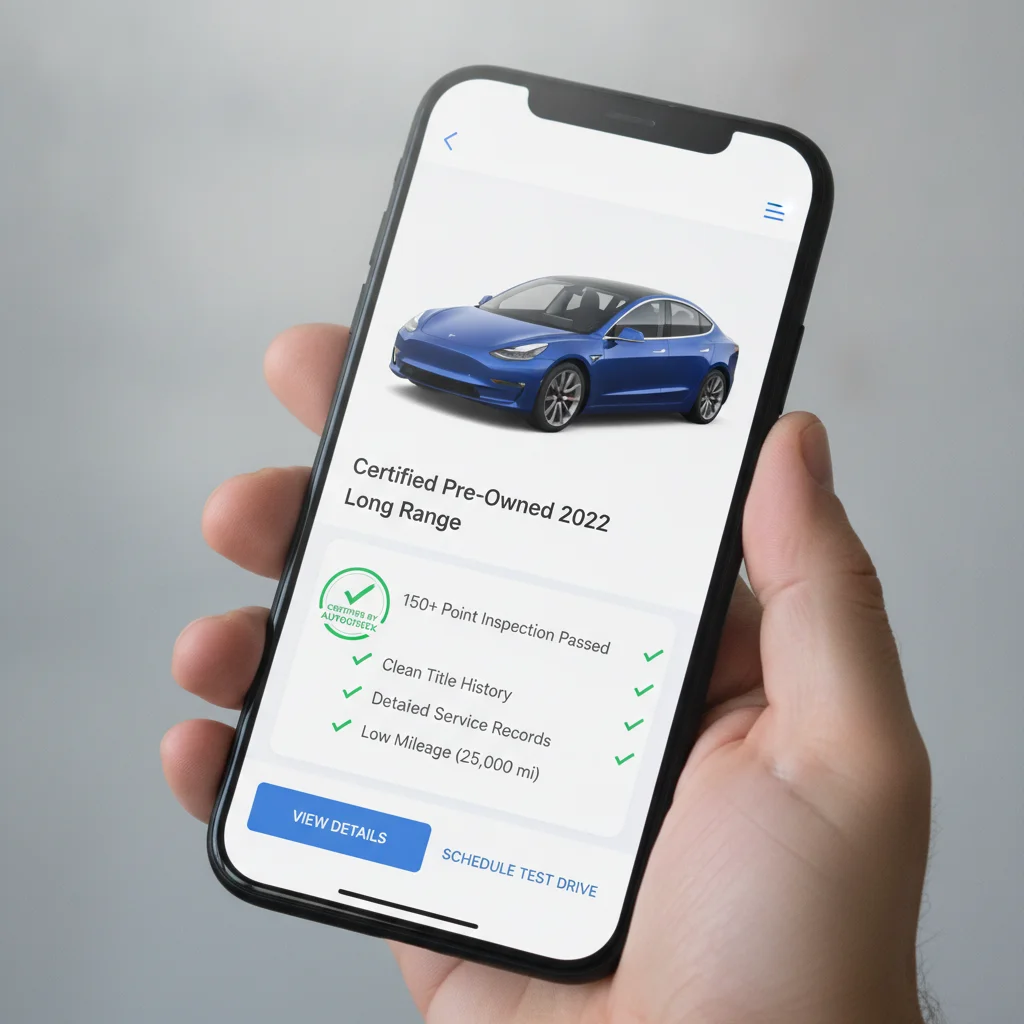
Here's how the major platforms approach certification:
| Platform | Inspection Points | Warranty Offered | Return Policy |
|---|---|---|---|
| CarMax | 125+ point inspection | 30-day/1,500-mile limited; MaxCare upgrade available | 30-day money-back guarantee |
| Carvana | 150-point inspection | Limited powertrain warranty (varies by vehicle) | 7-day money-back return |
| Vroom | Multi-point inspection | 90-day/6,000-mile limited warranty | 7-day/250-mile return window |
These programs are meaningfully better than buying from an unknown private seller or a small independent lot with no formal process. But they're not equivalent to a manufacturer CPO. A five-year-old Toyota Camry sold through Carvana will not come with Toyota's Certified Used Vehicle powertrain warranty — it comes with Carvana's warranty, which is a different thing entirely.
The most important thing to understand about platform certifications: the company inspecting the car is also the company selling the car and collecting a profit on the sale. That's not inherently dishonest — it's just a structural reality that means independent verification still matters.
Always Request the Inspection Report by Name
Don't ask 'can I see the inspection?' — ask for 'the itemized written inspection report for VIN [number].' Vague requests get vague responses. Naming the document specifically signals that you know what you're entitled to and makes it harder to fob you off with a summary sheet. Any legitimate certification will have this document on file.
Run the Numbers Before Paying the CPO Premium
Find a comparable non-certified used vehicle of the same year, trim, and mileage and note the price gap. Then look up average repair costs for that model over the warranty coverage period. If the premium significantly exceeds the likely warranty benefit, you may be better off buying the non-certified vehicle and setting aside the savings as a self-funded repair buffer.
The Loosest Use of 'Certified': Independent Dealer Listings
The most misleading use of 'certified' happens at the independent dealer level, and it's particularly common in online marketplace listings on platforms like AutoTrader, Cars.com, and Facebook Marketplace, where any dealer can upload inventory and label it however they choose.
Independent dealers — those not affiliated with a manufacturer franchise — cannot offer manufacturer CPO programs. What they can do is create their own 'certification' process, name it whatever they like, and market it accordingly. 'Certified Pre-Owned,' 'Dealer Certified,' 'Platinum Certified' — none of these terms are regulated. The actual inspection behind the badge might be thorough, or it might be cursory.
This doesn't mean every independent dealer certification is worthless. Some independent dealers run legitimate, detailed inspections and back them with third-party service contracts. But the burden of proof is entirely on the buyer to find out what that certification actually included. Ask specifically:
- Who performed the inspection — a licensed mechanic or a lot attendant?
- Can you provide the written, itemized inspection report?
- What warranty is attached, and who underwrites it?
- Is the warranty backed by the dealer or by a third-party administrator?
If a dealer hesitates or can't produce a written report, the 'certified' label is marketing, not a guarantee. For a full picture of what a legitimate CPO program should include, here's what certified pre-owned actually means in practice.
How to Verify Certification Before You Buy Online
Buying a car remotely means you're relying on documentation more than any other purchasing channel. Here's a practical verification sequence that every online buyer should run before finalizing a CPO purchase:
- Confirm the program type by name. Ask whether the certification is a manufacturer program, a platform program, or an independent dealer program. Get the specific program name in writing.
- Pull the VIN history. A CARFAX or AutoCheck report will flag accidents, title issues, odometer rollbacks, and service history gaps. A CPO badge does not substitute for this — run it regardless.
- Request the inspection report. Any legitimate certification will produce an itemized written report. If the seller can only offer a summary or a checklist with no detail, push back. You're entitled to know what was actually checked.
- Read the warranty document — not the summary. The marketing language on a listing says 'warranty included.' The warranty document tells you what's excluded, which is what actually matters when something breaks.
- Arrange an independent pre-purchase inspection. Many online retailers will allow this during a trial period. If buying before delivery, ask whether you can schedule an inspection at a local shop once the vehicle arrives. A mechanic who has no financial stake in the sale is your best protection.

For a complete walkthrough of the CPO buying process from research through paperwork, the complete roadmap to buying a certified pre-owned car covers every step in detail.
Manufacturer CPO Requires a Franchise Dealer
A manufacturer-backed CPO vehicle can only be sold through an authorized franchise dealership for that brand. If you see a Toyota listed as 'Toyota Certified' on a non-Toyota dealership lot or a third-party online platform, the label is inaccurate — those vehicles cannot carry an active manufacturer CPO designation. Confirm the selling dealer's franchise status before assuming the manufacturer warranty applies.
CPO Does Not Mean Accident-Free
A vehicle can qualify for many manufacturer CPO programs even if it has a prior accident on record, provided the damage was properly repaired and the vehicle meets structural and mechanical standards. Do not assume a CPO badge means a clean history — always pull a CARFAX or AutoCheck report separately. Some programs do exclude vehicles with significant prior damage, but policies vary by brand.
Is the CPO Premium Worth It When Buying Online?
Certified pre-owned vehicles command a price premium — sometimes a significant one. The question of whether that premium is justified depends on three variables: the depth of the certification, the remaining warranty coverage, and the specific vehicle's reliability history.
A manufacturer CPO vehicle with 30,000 miles remaining on a powertrain warranty is a genuinely different value proposition than a dealer-certified vehicle with a 30-day guarantee. The former gives you years of protected driving. The latter gives you just enough time to discover any obvious problems before you're on your own.
Always Request the Inspection Report by Name
Don't ask 'can I see the inspection?' — ask for 'the itemized written inspection report for VIN [number].' Vague requests get vague responses. Naming the document specifically signals that you know what you're entitled to and makes it harder to fob you off with a summary sheet. Any legitimate certification will have this document on file.
Run the Numbers Before Paying the CPO Premium
Find a comparable non-certified used vehicle of the same year, trim, and mileage and note the price gap. Then look up average repair costs for that model over the warranty coverage period. If the premium significantly exceeds the likely warranty benefit, you may be better off buying the non-certified vehicle and setting aside the savings as a self-funded repair buffer.
The math to run is straightforward: find the price difference between a comparable non-certified used vehicle and the CPO version. Then estimate the value of the warranty by looking at typical repair costs for that model and the probability of a major repair in the coverage window. For most mainstream vehicles with strong reliability records, the CPO premium often exceeds the actuarial value of the warranty. For luxury vehicles or models with historically higher repair costs, the warranty can be worth considerably more.
Online buyers should also factor in the return policy as a component of value. A 30-day return window effectively functions as an extended test period that lets you surface problems before you're fully committed. That's a real benefit when you haven't been able to test-drive the vehicle before purchase.
Ultimately, 'certified' should be treated as a starting point for due diligence, not a conclusion. The label signals that someone applied a process — it doesn't guarantee the car is problem-free. Your job as a buyer is to find out exactly what that process involved and decide whether the premium it commands is money well spent. For a direct comparison of what CPO actually adds over a standard used purchase, see what the CPO label actually gets you versus a standard used car.
More resources for evaluating used vehicles are available in the buying used cars hub and the certified pre-owned guide.

All claims are backed by peer-reviewed research. Sources on request.