Key Takeaways
Online Car Buying
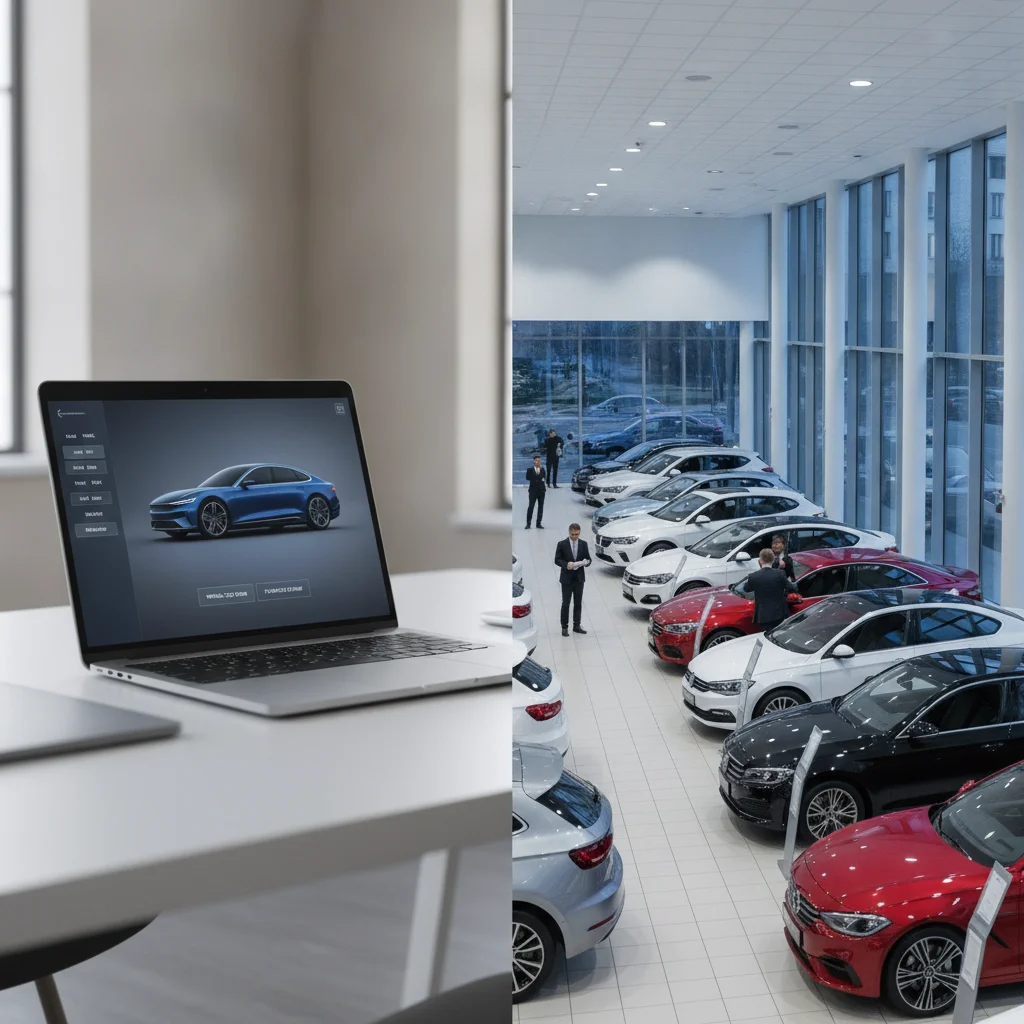
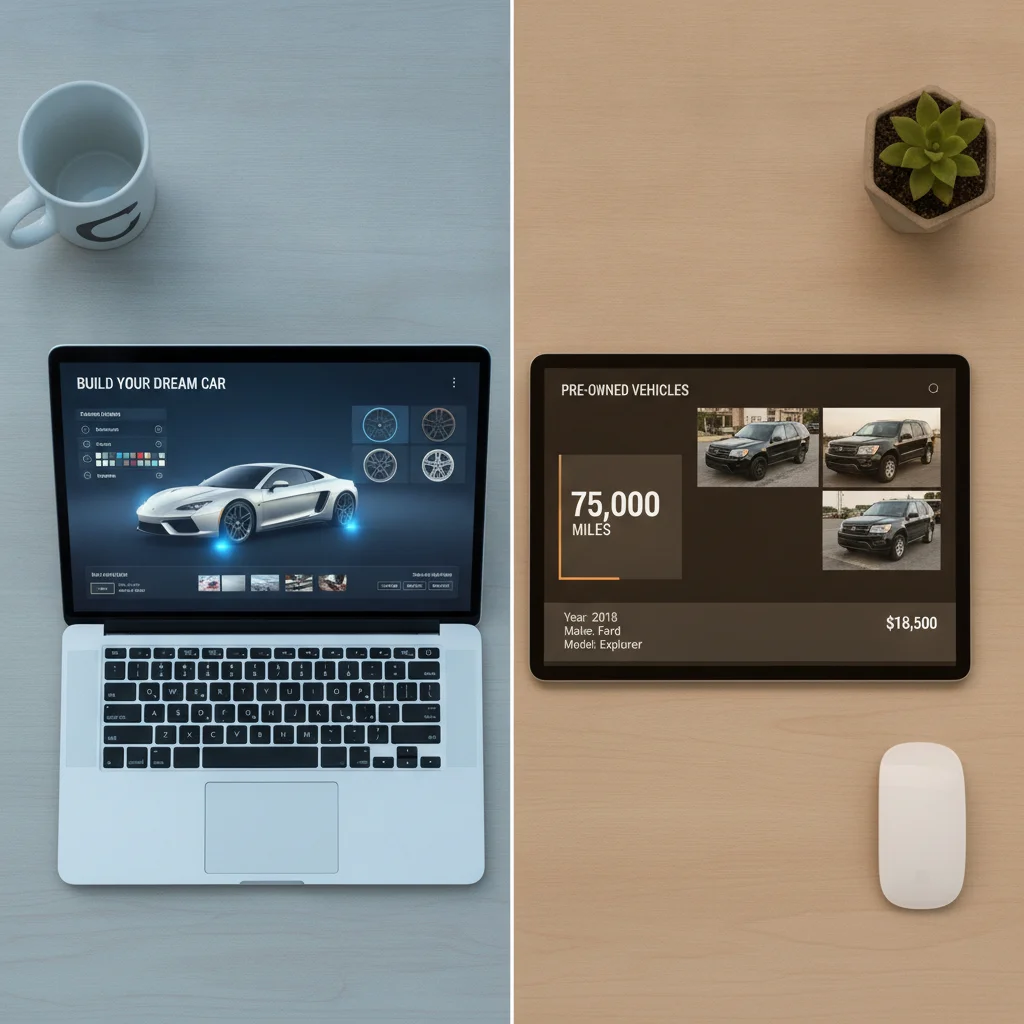
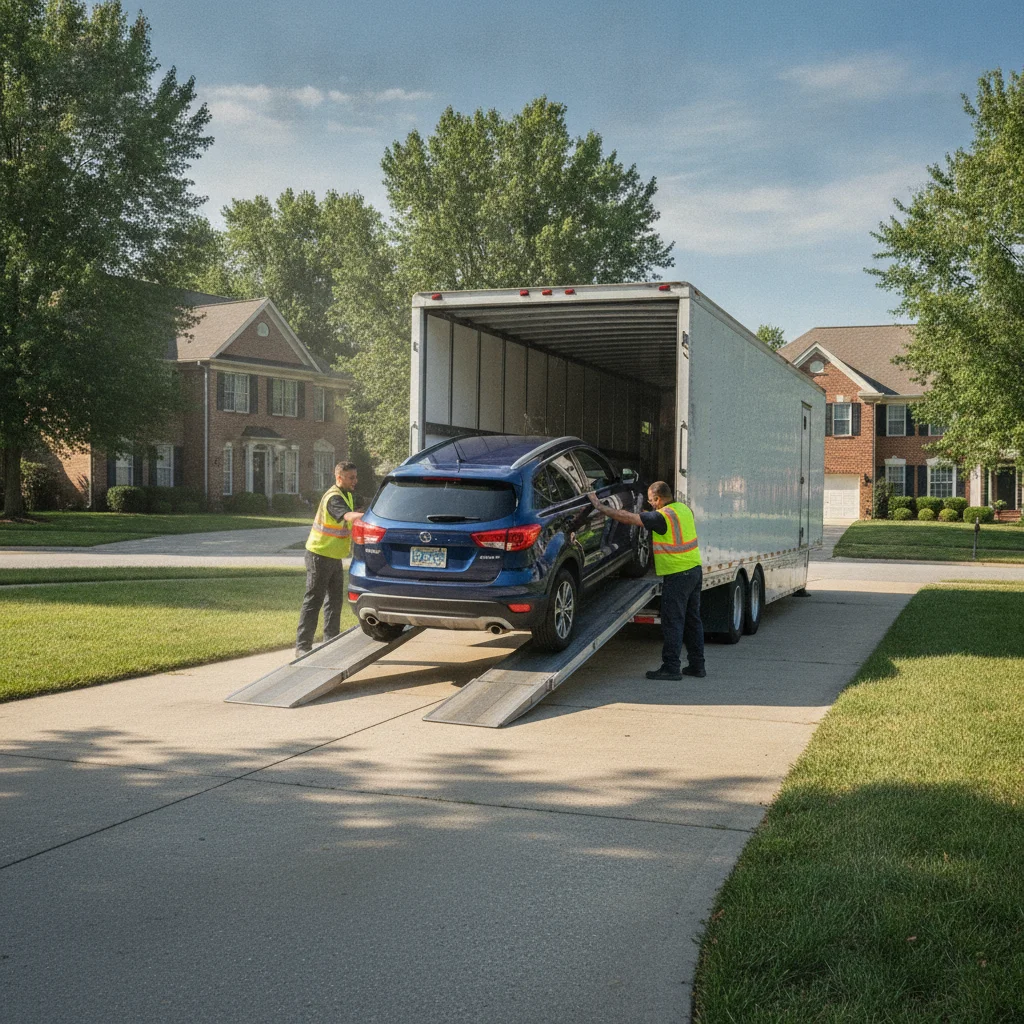
Online car buying is the process of researching, selecting, financing, and purchasing a vehicle primarily or entirely through digital platforms — without requiring an in-person visit to a dealership. Buyers can complete every step from browsing inventory and securing a loan to signing paperwork and arranging home delivery through a website or app. The model ranges from hybrid experiences where you start online and finish in-store, to fully remote transactions where the car is delivered to your driveway.
Fully digital transactions typically involve electronic title transfer, remote notarization of documents, and third-party vehicle history integration (e.g., Carfax or AutoCheck APIs) to verify condition without a physical inspection.
How We Got Here: A Decade of Digital Disruption
For most of the 20th century, buying a car meant submitting to one of the most uncomfortable retail experiences in American commerce — the dealership showroom. You walked in, got attached to a vehicle you'd spent weeks researching, and then handed control of the transaction to a salesperson whose job was to extract maximum margin from you. The financing office came next, where a second round of pressure tactics waited. That model persisted because buyers had no alternative.
Then the internet changed information access. Sites like Edmunds, Kelley Blue Book, and TrueCar gave buyers invoice pricing data in the late 1990s and 2000s, eroding one of the dealer's core advantages: information asymmetry. Suddenly, a buyer walking in knew roughly what the dealer paid for the vehicle. But the physical transaction still happened on dealer turf.
The real disruption began around 2013 when Carvana launched its fully online used car model — no dealership, no negotiation, home delivery included. The idea seemed fringe at first. Analysts questioned whether Americans would really buy a $20,000 asset without sitting in it. The answer, it turned out, was yes — especially when the alternative was spending four hours at a traditional dealer.
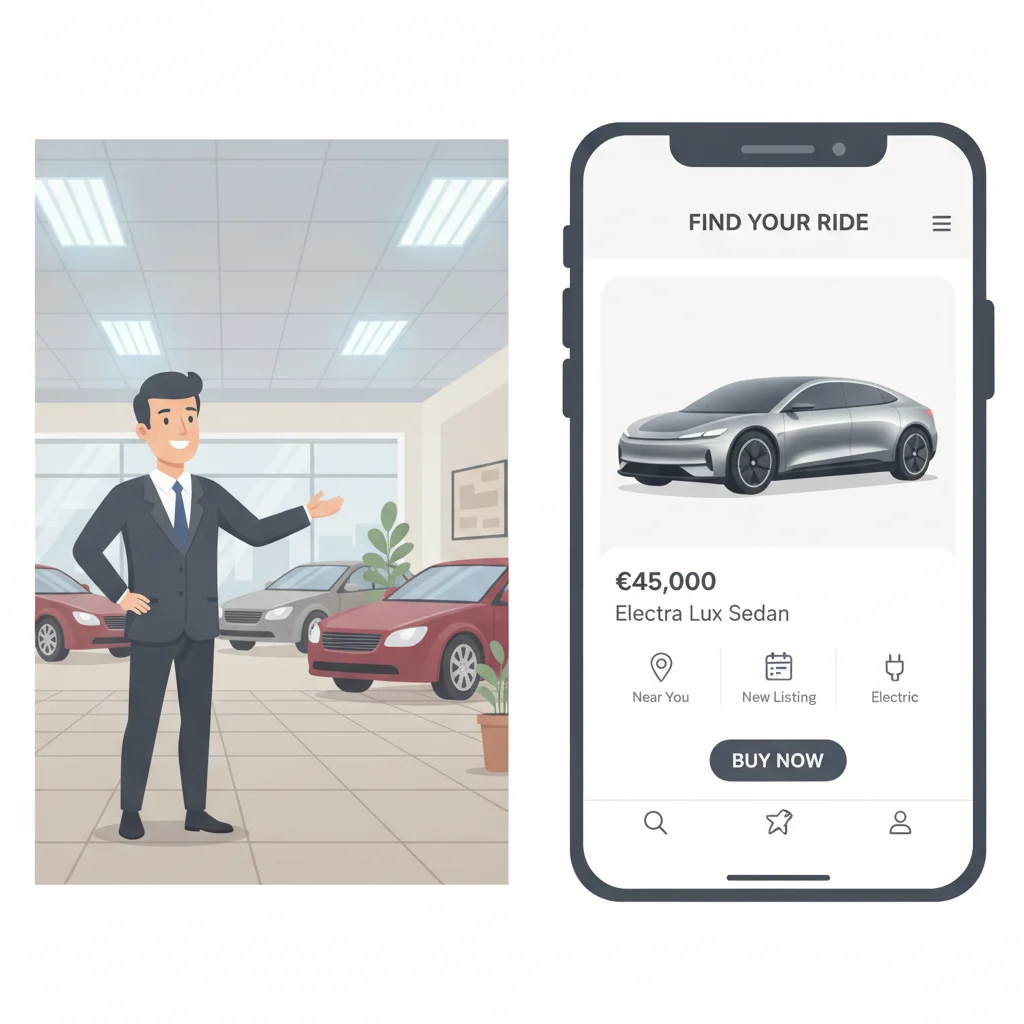
Then COVID-19 arrived in 2020 and collapsed whatever hesitation remained. Dealership showrooms closed or restricted access nationwide. Manufacturers and dealers scrambled to build digital retailing tools overnight. Consumers who had never considered buying a car online suddenly had no other option. According to Cox Automotive, digital retail interactions increased by over 50% during 2020. When showrooms reopened, a meaningful share of buyers simply didn't return to the old way of doing things.
50%+
Increase in digital retail interactions during 2020
According to Cox Automotive's annual Dealer Impact Study, digital retail engagement with dealerships rose by more than 50% during the pandemic year of 2020.
30%
Of car buyers open to fully online purchase
Cox Automotive's 2023 Car Buyer Journey Study found nearly 30% of car buyers were comfortable completing an entire vehicle purchase online without visiting a dealership.
3–4 hrs
Average time spent at a dealership completing a purchase
J.D. Power's U.S. Sales Satisfaction Index consistently identifies transaction time as a top pain point, with buyers averaging three to four hours at a traditional dealership.
$1,500+
Potential variation in trade-in offers across platforms
Industry data and consumer reports frequently document $1,000–$2,000 spreads between the highest and lowest trade-in offers for the same vehicle across competing online platforms.
64%
Of buyers who research vehicles primarily online before purchase
According to a 2022 Google/Kantar study, nearly two-thirds of auto buyers conduct the majority of their vehicle research digitally before any in-person or remote transaction.
What 'Online Car Buying' Actually Encompasses
The phrase gets used loosely, so it's worth being precise. Online car buying is not one thing — it's a spectrum with several distinct models operating in the market today.
Fully Digital Platforms
Carvana, Vroom, and CarMax's online channel offer end-to-end digital transactions. You browse inventory, get prequalified for financing, receive a trade-in offer, sign documents electronically, and schedule delivery — all without human interaction unless you choose it. These platforms own their inventory, set fixed prices (no negotiation), and manage logistics directly.
Manufacturer Direct-to-Consumer Models
Tesla was the earliest automaker to eliminate the franchise dealer entirely, selling only through company-owned stores and its website. Rivian and Lucid followed the same model. When you buy a Tesla online, you're transacting directly with the manufacturer — a fundamentally different legal and financial arrangement than buying from a franchised dealer.
Dealer Hybrid Models
Most traditional dealers now offer some form of digital retailing: online inventory browsing, credit application submission, payment calculator tools, and even the ability to reserve a vehicle with a deposit. But many of these tools hand off to a salesperson at some point. The line between "started online" and "completed online" is blurry. Be clear on where the handoff happens and what it means for your ability to negotiate.
Hybrid Models Can Be Misleading
Many traditional dealers advertise "buy online" capabilities, but the process often stalls at the financing step — requiring an in-store visit to finalize terms. Before investing time in a dealer's online tool, confirm explicitly which steps can be completed 100% remotely and which require a showroom appearance. The distinction matters for your time and your negotiating position.
State Laws Still Govern Online Car Sales
Online car buying does not exist in a legal vacuum. State franchise laws, title transfer requirements, and sales tax rules still apply — and they vary significantly. Some states restrict or prohibit manufacturer direct-to-consumer sales entirely, which is why Tesla and Rivian cannot sell directly in certain markets. Always verify that your chosen platform operates legally in your state before initiating a transaction.
Third-Party Marketplace Models
Sites like Cars.com, AutoTrader, and CarGurus aggregate inventory from multiple dealers and private sellers. You browse and initiate contact online, but the actual transaction happens with the individual dealer or seller. These platforms are research tools first, transaction tools second — though they're adding more transactional features over time.
Understanding which model you're dealing with matters because each carries different pricing dynamics, negotiation leverage, consumer protections, and financing options. See our detailed comparison of online and traditional dealerships for a full breakdown of what each model gives up and gains.
Why the Shift Happened: Forces Behind the Change
Online car buying didn't gain traction simply because the technology existed. Several converging forces pushed both buyers and the industry toward digital transactions.

Consumer Distrust of the Traditional Process
Surveys consistently show the dealership experience ranks among the most stressful retail interactions Americans endure. The J.D. Power 2023 U.S. Sales Satisfaction Index found that transaction time remains one of the top pain points — buyers spending three to four hours completing a purchase they had already largely decided on. Online platforms directly target this frustration, promising transactions that take 30 minutes from decision to signature.
Price Transparency Becoming the New Normal
Once buyers could look up market value data in seconds, fixed-price no-haggle models became viable. Dealers resisted for years, but the rise of TrueCar deals and CarMax's no-negotiation approach demonstrated that a segment of buyers actively prefers to skip the negotiation theater — even if it means paying slightly more than a skilled negotiator might extract in a traditional setting.
Smartphone-Native Younger Buyers
Millennials and Gen Z entered the car-buying market expecting to conduct major financial transactions from their phones. These are generations that apply for mortgages, manage investment portfolios, and file taxes digitally. The expectation of a smooth, app-based experience wasn't a luxury to them — it was a baseline.
“The single biggest shift in automotive retail over the past decade isn't electric vehicles or autonomous driving — it's the transfer of information power from dealers to consumers. The internet didn't just change where people shop; it changed who knows what when the negotiation starts.”
— Charlie Vogelheim, Automotive industry analyst and former executive editor at Kelley Blue Book
Inventory Shortages Shifting Power Dynamics
The 2021–2022 chip shortage and resulting new car inventory crisis inadvertently accelerated online adoption. With dealer lots sparse, buyers spread their search nationally rather than limiting themselves to local inventory. Buying from a dealer 800 miles away with home delivery became a practical necessity for some, normalizing the concept of remote vehicle purchase.
What Actually Changed for the Buyer
The shift to online car buying is not just a change in where the transaction happens. It fundamentally alters the power dynamics of the purchase in ways that benefit informed buyers — and expose unprepared ones to new risks.
The Elimination of In-Person Pressure Tactics
When I worked in a dealership finance office, the playbook was clear: keep the buyer in the building, create urgency, and introduce add-ons when they're mentally fatigued. That model depends entirely on physical presence. An online transaction strips away those tactics. You can close your laptop, sleep on it, and come back. There's no salesperson reading your body language and adjusting the pitch.
New Responsibility Falls on the Buyer
Here's the honest counterpoint: the dealer's pressure was also doing some of the transactional work for you. In a showroom, someone walks you through the paperwork, explains (in their favor, admittedly) what each product does, and ensures the deal closes. Online, you're the one who has to read the fine print on financing terms, decode the warranty language, and catch fees buried in the purchase agreement before clicking sign. The information is there — but you have to actively look for it.
Read the Full Purchase Agreement Before Signing
Electronic signatures make it easy to click through contracts quickly — which is exactly what platforms are counting on. Before you sign, download the complete purchase agreement as a PDF and check for documentation fees, dealer add-ons (paint protection, GAP insurance, extended warranties), and financing terms. These are the same items buried in traditional F&I office paperwork, just delivered digitally.
Get Preapproved Before You Browse
Arriving at an online platform without financing preapproval puts you in the same position as walking into a dealership with no rate benchmark — you have nothing to compare the platform's offer against. Apply for preapproval through your bank or credit union first. It takes 15 minutes and gives you the leverage to accept or decline the platform's financing on your terms.
Trade-In Dynamics Are Simpler — But Watch the Numbers
Online platforms have made trade-in valuation faster. You enter your VIN, answer a few condition questions, and receive an offer in minutes. But that speed can create complacency. Platforms calibrate their trade-in offers to their business model. Instant offer platforms are convenient, but getting two or three competing offers before accepting one is still the right move. A $1,500 difference in trade-in value is real money.
Financing Has Both Improved and Gotten Trickier
Online platforms typically present financing in monthly payment terms — the same framing traditional finance offices use because it obscures total cost. A $450/month payment sounds manageable whether the loan is for 48 months or 84 months, but the difference in total interest paid is enormous. Always calculate total cost of the loan, not just the monthly figure. Better yet, arrive with a preapproval from your bank or credit union so you have a rate benchmark before the platform shows you its offer.
The Platforms That Defined the Category
A few players deserve specific attention because they set the standards — and the expectations — that now define online car buying for most Americans.
These platforms didn't just build websites — they redesigned the entire purchase funnel. Return policies, delivery logistics, digital title transfer, and remote notarization capabilities had to be built from scratch in an industry that had handled paperwork the same way for decades. Their success created competitive pressure that pushed traditional dealers to modernize their own digital retailing tools, which benefits buyers across the board.
If you're considering your first online purchase, our guide on online car buying for first-timers covers the full process step-by-step. And if you're weighing a used purchase specifically, the dynamics are meaningfully different — see how online used car buying differs from new.
Why This Matters for Your Next Purchase
Understanding the history and mechanics of online car buying isn't just trivia — it directly affects how well you can protect your own interests when you shop.
The buyers who get the worst outcomes online are the ones who assume that "digital" automatically means "fair" or "transparent." Platforms can still mark up financing rates, bundle unwanted add-ons into contracts, and price vehicles at above-market rates if they calculate that convenience-seeking buyers won't compare shop. The digital wrapper doesn't change the underlying economics.
The buyers who come out ahead understand which model they're dealing with, arrive with independent financing preapproval, pull their own vehicle history report rather than relying solely on what the platform provides, and read the full purchase agreement before signing electronically. None of that is complicated — it just requires treating an online car purchase with the same diligence you'd apply to any major financial commitment.
Read the Full Purchase Agreement Before Signing
Electronic signatures make it easy to click through contracts quickly — which is exactly what platforms are counting on. Before you sign, download the complete purchase agreement as a PDF and check for documentation fees, dealer add-ons (paint protection, GAP insurance, extended warranties), and financing terms. These are the same items buried in traditional F&I office paperwork, just delivered digitally.
Get Preapproved Before You Browse
Arriving at an online platform without financing preapproval puts you in the same position as walking into a dealership with no rate benchmark — you have nothing to compare the platform's offer against. Apply for preapproval through your bank or credit union first. It takes 15 minutes and gives you the leverage to accept or decline the platform's financing on your terms.
The broader context matters too. Used car inventory, interest rates, and regional supply-demand conditions all affect online pricing just as they affect dealer lots. The used car buying process involves evaluation steps that don't disappear just because the platform is digital.
For a full accounting of where digital buying wins and where it creates genuine tradeoffs, see the real tradeoffs of buying a car online. And if you want to develop the habits that separate smart online shoppers from impulsive ones, these principles are worth reviewing before you start browsing inventory.
The online car market is still maturing. Return policies are not standardized. Title transfer laws vary by state. Delivery quality depends on third-party logistics carriers that platforms don't always control. The buyer who understands these realities goes in clear-eyed — and that clarity is worth more than any single negotiation tactic.
Hybrid Models Can Be Misleading
Many traditional dealers advertise "buy online" capabilities, but the process often stalls at the financing step — requiring an in-store visit to finalize terms. Before investing time in a dealer's online tool, confirm explicitly which steps can be completed 100% remotely and which require a showroom appearance. The distinction matters for your time and your negotiating position.
State Laws Still Govern Online Car Sales
Online car buying does not exist in a legal vacuum. State franchise laws, title transfer requirements, and sales tax rules still apply — and they vary significantly. Some states restrict or prohibit manufacturer direct-to-consumer sales entirely, which is why Tesla and Rivian cannot sell directly in certain markets. Always verify that your chosen platform operates legally in your state before initiating a transaction.

All claims are backed by peer-reviewed research. Sources on request.